Results by title
28164 books match the query 'History' and 842 start with e
Empire of Sand
The Seri Indians and the Struggle for Spanish Sonora, 1645–1803Compiled and edited by Thomas E. Sheridan
University of Arizona Press, 1999
Empire of Tea
The Asian Leaf that Conquered the WorldMarkman Ellis, Richard Coulton, and Matthew Mauger
Reaktion Books, 2015
This impressively detailed book offers a rich cultural history of tea, from its ancient origins in China to its spread around the world. The authors recount tea’s arrival in London and follow its increasing salability and import via the East India Company throughout the eighteenth century, inaugurating the first regular exchange—both commercial and cultural—between China and Britain. They look at European scientists’ struggles to understand tea’s history and medicinal properties, and they recount the ways its delicate flavor and exotic preparation have enchanted poets and artists. Exploring everything from its everyday use in social settings to the political and economic controversies it has stirred—such as the Boston Tea Party and the First Opium War—they offer a multilayered look at what was ultimately an imperial industry, a collusion—and often clash—between the world’s greatest powers over control of a simple beverage that has become an enduring pastime.
Empire of the Superheroes
America’s Comic Book Creators and the Making of a Billion-Dollar IndustryBy Mark Cotta Vaz
University of Texas Press, 2021
Superman may be faster than a speeding bullet, but even he can't outrun copyright law. Since the dawn of the pulp hero in the 1930s, publishers and authors have fought over the privilege of making money off of comics, and the authors and artists usually have lost. Jerry Siegel and Joe Shuster, the creators of Superman, got all of $130 for the rights to the hero.
In Empire of the Superheroes, Mark Cotta Vaz argues that licensing and litigation do as much as any ink-stained creator to shape the mythology of comic characters. Vaz reveals just how precarious life was for the legends of the industry. Siegel and Shuster—and their heirs—spent seventy years battling lawyers to regain rights to Superman. Jack Kirby and Joe Simon were cheated out of their interest in Captain America, and Kirby's children brought a case against Marvel to the doorstep of the Supreme Court. To make matters worse, the infant comics medium was nearly strangled in its crib by censorship and moral condemnation. For the writers and illustrators now celebrated as visionaries, the "golden age" of comics felt more like hard times.
The fantastical characters that now earn Hollywood billions have all-too-human roots. Empire of the Superheroes digs them up, detailing the creative martyrdom at the heart of a pop-culture powerhouse.
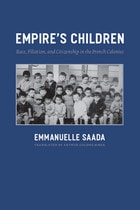
Empire's Children
Race, Filiation, and Citizenship in the French ColoniesEmmanuelle Saada
University of Chicago Press, 2012
Europe’s imperial projects were often predicated on a series of legal and scientific distinctions that were frequently challenged by the reality of social and sexual interactions between the colonized and the colonizers.When Emmanuelle Saada discovered a 1928 decree defining the status of persons of mixed parentage born in French Indochina—the métis—she found not only a remarkable artifact of colonial rule, but a legal bombshell that introduced race into French law for the first time. The decree was the culmination of a decades-long effort to resolve the “métis question”: the educational, social, and civil issues surrounding the mixed population. Operating at the intersection of history, anthropology, and law, Empire’s Children reveals the unacknowledged but central role of race in the definition of French nationality.
Through extensive archival work in both France and Vietnam, and a close reading of primary and secondary material from the Pacific islands and sub-Saharan and North Africa, Saada has created in Empire’s Children an original and compelling perspective on colonialism, law, race, and culture from the end of the nineteenth century until decolonization.
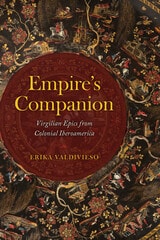
Empire's Companion
Virgilian Epics from Colonial IberoamericaErika Valdivieso
University of Chicago Press, 2026
A study of how Latin poetry shaped colonial aspirations in sixteenth- to eighteenth-century South and Central America.
Accompanying Iberian colonizers to the Americas, Virgil’s Aeneid inspired generations of colonial elites to write their own epic poems in Latin—priming imaginations for Spanish and Portuguese rule in the Americas. In Empire’s Companion, Erika Valdivieso recovers this lost strain of poetry for classicists and early Americanists alike. Each chapter introduces readers to a new poem that adapts Virgil for a different geographic context. These epics, Valdivieso argues, show elites working to reshape the New World in their own image, drawing on Virgil to think about the conquest of Indigenous peoples, to form new ideas about the globe, and to consider the shifting power dynamics between America and Europe. A powerful corrective to prevailing ideas about the reception of Virgil in the Americas, Empire’s Companion reveals the imperial potential of the Aeneid in the hands of governing elites.
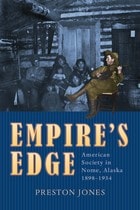
Empire's Edge
American Society in Nome, Alaska, 1898-1934Preston Jones
University of Alaska Press, 2006
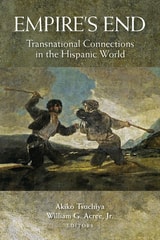
Empire's End
Transnational Connections in the Hispanic WorldAkiko Tsuchiya
Vanderbilt University Press, 2015
Empire's End showcases the work of scholars of literature, cultural studies, and history, centering on four interrelated issues crucial to understanding the end of the Spanish empire: the mappings of the Hispanic Atlantic, race, human rights, and the legacies of empire.
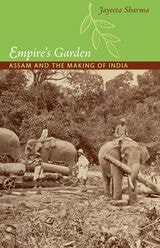
Empire's Garden
Assam and the Making of IndiaJayeeta Sharma
Duke University Press, 2011

Empire's Law
The American Imperial Project and the 'War to Remake the World'Edited by Amy Bartholomew
Pluto Press, 2006
Jean L. Cohen Professor of Political Science, Columbia University
"This remarkable collection of essays illuminates -- more fully than any other volume -- the world order costs of the Iraq War, especially the radical denial of the relevance of international law in the US's pursuit of global empire. To understand this overarching geopolitical challenge of the early 21st century, citizens the world over should treat Empire's Law as required reading."
Richard A. Falk, Albert G. Milbank Professor of International Law and Practice Emeritus, Princeton University and currently Visiting Professor of Global and International Studies, University of California, Santa Barbara
"Right now there can't be enough discussion of America's role in world politics ... This is a much-needed collection from leading scholars."
Neil Stammers, Senior Lecturer in the Department of International Relations and Politics, University of Sussex
What is the legacy of the war in Iraq? Can democracy and human rights really be imposed "by fire and sword"? This book brings together some of the world's most outstanding theorists in the debate over empire and international law. They provide a uniquely lucid account of the relationship between American imperialism, the use and abuse of "humanitarian intervention", and its legal implications. Empire's Law is ideal for students who want a comprehensive critical introduction to the impact that the doctrine of pre-emptive war has had on our capacity to protect human rights and promote global justice.
Leading contributors including Leo Panitch, Sam Gindin, Jurgen Habermas, Ulrich Preuss, Andrew Arato, Samir Amin, Reg Whitaker, Denis Halliday and Hans von Sponeck tackle a broad range of issues. Covering everything from the role of Europe and the UN, to people's tribunals, to broader theoretical accounts of the contradictions of war and human rights, the contributors offer new and innovative ways of examining the problems that we face. It is essential reading for all students who want a systematic framework for understanding the long-term consequences of imperialism.
Amy Bartholomew is an Associate Professor in the Department of Law at Carleton University.
Empire-Building and Nation-Building in Central Europe
Zoltán László (1881–1961) in the Turmoil of the 20th CenturyKrisztián Csaplár-Degovics
Central European University Press, 2026
Before 1914, László established himself as a journalist, writer, academic, and willing agent of Austro-Hungarian imperial policy. In the interwar period and during the Second World War, his expertise as a propagandist found expression in racist circles.
By examining László’s life as a case study, the book offers a microhistorical perspective on how members of the educated middle classes became implicated in, and often willing participants of, imperial, racist, and totalitarian projects. It demonstrates how the lived experience of one individual illuminates the complex entanglement of ideology, identity, and power in East-Central Europe’s modern history.
Empires in Collision in Late Antiquity
G. W. Bowersock
Brandeis University Press, 2012

Empires of Hygiene, Volume 6
Judith Farquhar and Marta E. Hanson, eds.
Duke University Press, 0
Featuring a variety of topics and methods, essays in Empires of Hygiene compare the disease that is physically suffered to that which is scientifically classified and identified as a social problem. Diseases such as leprosy and STDs, which have biomedical identities in Western settings but in Asia emerge as inseparable from certain colonial regimes, are examined. Spermatorrhea—a disease that compromises the male body’s ability to reproduce—is discussed in relation to the disarray of the Chinese Republic during the mid-twentieth century. The collection also addresses imperial themes of prewar Japan in the literary works of Mori Rintaro and Shimazaki Tison.
Contributors. Warwick Anderson, Michael Bourdaghs, Judith Farquhar, Marta Hanson, Thomas LaMarre, Philippa Levine, Hugh Shapiro, Nathan Sivin
Empires of Vision
A ReaderMartin Jay and Sumathi Ramaswamy, eds.
Duke University Press, 2014
Contributors. Jordanna Bailkin, Roger Benjamin, Daniela Bleichmar, Zeynep Çelik, David Ciarlo, Natasha Eaton, Simon Gikandi, Serge Gruzinski, James L. Hevia, Martin Jay, Brian Larkin, Olu Oguibe, Ricardo Padrón, Christopher Pinney, Sumathi Ramaswamy, Benjamin Schmidt, Terry Smith, Robert Stam, Eric A. Stein, Nicholas Thomas, Krista A. Thompson

Empires to Nations
Expansion in America, 1713-1824Max Savelle
University of Minnesota Press, 1976
Empires to Nations was first published in 1974. Minnesota Archive Editions uses digital technology to make long-unavailable books once again accessible, and are published unaltered from the original University of Minnesota Press editions.
This history traces the growth of the Euroamerican societies in the Western Hemisphere during the eighteenth-century period of European expansion. Professor Savelle reviews the continuation and completion of the exploration of the American continent and describes the evolution of the New World empires of the English, French, Spanish, Portuguese, and Dutch, He devotes separate chapters to the development of the political structures of the colonies and the rivalries, wars, and diplomatic exchanges among the empires. He also reviews and analyzes the economic history of the colonial societies in their three-way relationships – with their mother countries, with each other, and within themselves as regional or local entities. Final chapters are devoted to the birth and growth of national self-consciousness among the new societies.
Empirical Models Challenging Biblical Criticism
Raymond F. Person
SBL Press, 2016
Cutting edge reflections on biblical text formation
Empirical models based on ancient Near Eastern literature and variations between different textual traditions have been used to lend credibility to the identification of the sources behind biblical literature and the different editorial layers. In this volume, empirical models are used to critique the exaggerated results of identifying sources and editorial layers by demonstrating that, even though much of ancient literature had such complex literary histories, our methods are often inadequate for the task of precisely identifying sources and editorial layers. The contributors are Maxine L. Grossman, Bénédicte Lemmelijn, Alan Lenzi, Sara J. Milstein, Raymond F. Person Jr., Robert Rezetko, Stefan Schorch, Julio Trebolle Barrera, Ian Young, and Joseph A. Weaks.
Features:
- Evidence that many ancient texts are composite texts with complex literary histories
- Ten essays and an introduction cover texts from Mesopotamia, the Hebrew Bible, the New Testament, and the Dead Sea Scrolls
Emptiness
Feeling Christian in AmericaJohn Corrigan
University of Chicago Press, 2015
Corrigan examines different kinds of emptiness essential to American Christianity, such as the emptiness of deep longing, the emptying of the body through fasting or weeping, the emptiness of the wilderness, and the emptiness of historical time itself. He argues, furthermore, that emptiness is closely connected to the ways Christian groups differentiate themselves: many groups foster a sense of belonging not through affirmation, but rather avowal of what they and their doctrines are not. Through emptiness, American Christians are able to assert their identities as members of a religious community.
Drawing much-needed attention to a crucial aspect of American Christianity, Emptiness expands our understanding of historical and contemporary Christian practices.
Empty Beds
Indian Student Health at Sherman Institute, 1902-1922Jean A. Keller
Michigan State University Press, 0
Empty Beds explores the early era of change in Indian education ideology as it pertained to student health at Sherman Institute in Southern California between 1902 and 1922. Beginning with the establishment of Carlisle Indian School in 1879, nonreservation boarding schools earned a reputation for being physically unhealthy environments for Indian children. By the turn of the century, a growing recognition of the importance of student health in Indian education began to emerge throughout the country. Unlike other nonreservation boarding schools, Sherman Institute tried to contain the devastating effects of epidemic diseases, accidents, and illnesses that were common during the early decades of the twentieth century. Strict compliance with new Indian Office preventive health policies and the implementation of school-specific health practices resulted in a relatively healthy student population compared with other nonreservation schools.
The fact that the student population at Sherman Institute during the period between 1902 and 1922 evidenced good health is at odds with widespread perceptions that nonreservation boarding schools essentially functioned as death factories for Native American children. Empty Beds is the first comprehensive study of Indian student health at a nonreservation boarding school. Keller’s exciting and provocative new conclusions will inspire a wide range of scholarship in this hitherto bypassed field of inquiry.

Empty Nets, 2nd ed
Indians, Dams, and the Columbia RiverRoberta Ulrich
Oregon State University Press, 2007
Empty Spaces
perspectives on emptiness in modern historyEdited by Courtney J. Campbell, Allegra Giovine, and Jennifer Keating
University of London Press, 2019
En-Gendering India
Woman and Nation in Colonial and Postcolonial NarrativesSangeeta Ray
Duke University Press, 2000
Through her readings of works by writers including Bankimchandra Chatterjee, Rabindranath Tagore, Harriet Martineau, Flora Annie Steel, Anita Desai, and Bapsi Sidhaa, Ray demonstrates that Indian women were presented as upper class and Hindu, an idealization that paradoxically served the needs of both colonial and nationalist discourses. The Indian nation’s goal of self-rule was expected to enable women’s full participation in private and public life. On the other hand, British colonial officials rendered themselves the protectors of passive Indian women against their “savage” male countrymen. Ray shows how the native woman thus became a symbol for both an incipient Indian nation and a fading British Empire. In addition, she reveals how the figure of the upper-class Hindu woman created divisions with the nationalist movement itself by underscoring caste, communal, and religious differences within the newly emerging state. As such, Ray’s study has important implications for discussions about nationalism, particularly those that address the concepts of identity and nationalism.
Building on recent scholarship in feminism and postcolonial studies, En-Gendering India will be of interest to scholars in those fields as well as to specialists in nationalism and nation-building and in Victorian, colonial, and postcolonial literature and culture.
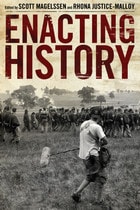
Enacting History
Edited by Scott Magelssen and Rhona Justice-Malloy
University of Alabama Press, 2011
Where performance meets the past: exploring how we stage, shape, and experience history.
Enacting History is a collection of new essays exploring the world of historical performances. The volume focuses on performances outside the traditional sphere of theatre, among them living history museums, battle reenactments, pageants, renaissance festivals, and adventure-tourism destinations. This volume argues that the recent surge in such performances have raised significant questions about the need for, interest in, and value of such nontraditional theater. Many of these performances claim a greater or lesser degree of historical "accuracy" or "authenticity," and the authors tease out the representational and historiographic issues related to these arguments. How, for instance, are issues of race, ethnicity, and gender dealt with at museums that purport to be accurate windows into the past? How are politics and labor issues handled in local- or state-funded institutions that rely on volunteer performers? How do tourists' expectations shape the choices made by would-be purveyors of the past? Where do matters of taste or censorship enter in when reconciling the archival evidence with a family-friendly mission?
Essays in the collection address, among other subjects, reenactments of period cookery and cuisine at a Maryland renaissance festival; the roles of women as represented at Minnesota's premiere living history museum, Historic Fort Snelling; and the Lewis and Clark bicentennial play as cultural commemoration. The editors argue that historical performances like these-regardless of their truth-telling claims-are an important means to communicate, document, and even shape history, and allow for a level of participation and accessibility that is unique to performance. Enacting History is an entertaining and informative account of the public's fascination with acting out and watching history and of the diverse methods of fulfilling this need.
Enchanted Ground
The Spirit Room of Jonathan KoonsSharon Hatfield
Ohio University Press, 2018
In Enchanted Ground, Sharon Hatfield brings to life the true story of a nineteenth-century farmer-turned-medium, Jonathan Koons, one of thousands of mediums throughout the antebellum United States. In the hills outside Athens, Ohio, Koons built a house where it was said the dead spoke to the living, and where ancient spirits communicated the wisdom of the ages. Curious believers, in homespun and in city attire, traveled from as far as New Orleans to a remote Appalachian cabin whose marvels would rival any of P. T. Barnum’s attractions.
Yet Koons’s story is much more than showmanship and sleight of hand. His enterprise, not written about in full until now, embodied the excitement and optimism of citizens breaking free from societal norms. Reform-minded dreamers were drawn to Koons’s seances as his progressive brand of religion displaced the gloomy Calvinism of previous generations. As heirs to the Second Great Awakening, which stretched from New York State to the far reaches of the Northwest Territory, the curious, the faithful, and Koons himself were part of a larger, uniquely American moment that still marks the cultural landscape today.
Enchanted Islands
Picturing the Allure of Conquest in Eighteenth-Century FranceMary D. Sheriff
University of Chicago Press, 2018
Enchanted Modernities
Ancestral Vitalizations in the Upper MekongMicah F. Morton
University of Wisconsin Press, 2025
Although modernity and its colonial legacies are often portrayed as severing or at least attenuating people’s ancestral ties, Enchanted Modernities shows that those ties persist and, in fact, are on the rise. Akha and other Indigenous ancestral and animist resurgences are blossoming despite the paradigmatic Western framing of modernity as fundamentally at odds with Ancestors and, for that matter, kinship and even religion. Morton demonstrates that modernity and modernization proceed alongside the reproduction of new and old forms of enchantment.
Encore!
The Renaissance of Wisconsin Opera HousesBrian Leahy Doyle
Wisconsin Historical Society Press, 2009
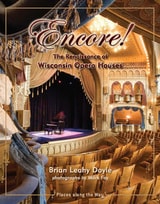
A remarkable number of Wisconsin towns and cities were home to an opera house in the late 1800s and early 1900s. Some were freestanding structures built by local benefactors, industrialists, and capitalists. Others were located within a city hall building and financed by local tax dollars with the support of government officials who believed in the value of the arts for their community
In Encore! The Renaissance of Wisconsin Opera Houses, Brian Leahy Doyle chronicles the histories of ten Wisconsin opera houses and theaters, from their construction to their heydays as live performance spaces and through the periods when many of these stages went dark. But what makes these stories so compelling is that all but one of the featured theaters has been restored to its original splendor. Just as the beginnings of these theaters were often the result of the efforts of local citizens, Doyle discovers that their restoration is due to the commitment of dedicated and passionate people. More than one of these revived theaters has spurred the revitalization of its surrounding downtown business district as well.
Encore! is the second book in the Places along the Way series. Richly illustrated with historic and contemporary photos, the Places along the Way series links Wisconsin's past with its present, exploring the state's history through its architecture.
Encounter with the Plumed Serpent
Drama and Power in the Heart of MesoamericaMaarten Jansen
University Press of Colorado, 2007
By analyzing and cross-referencing the codices, which have been fragmented and dispersed in far-flung archives, the authors attempt to reconstruct Mixtec history. Their synthesis here builds on long examination of the ancient manuscripts. Adding useful interpretation and commentary, Jansen and Pérez Jiménez synthesize the large body of surviving documents into the first unified narrative of Mixtec sacred history.
Archaeologists and other scholars as well as readers with an interest in Mesoamerican cultures will find this lavishly illustrated volume a compelling and fascinating history and a major step forward in knowledge of the Mixtec.

Encountering the Past in Nature
Essays in Environmental HistoryTimo Myllyntaus
Ohio University Press, 2000
The essays in Encountering the Past in Nature provide various approaches to the new discipline. Experts with diverse educational backgrounds tackle important issues in environmental history, ranging from the intellectual formation of environmental concepts to case studies of forest history and animal extinction. Most essays in the collection focus on the issue of wilderness and the various uses of forest resources. Encountering the Past in Nature also offers introductory essays on the historiography and methodology of this field of historical study.
Encountering the Past in Nature is a useful addition to the introductory texts currently available in the United States.
Encounters in Video Art in Latin America
Elena Shtromberg
J. Paul Getty Trust, The, 2023
The emergence of video art in Latin America is marked by multiple points of development, across more than a dozen artistic centers, over a period of more than twenty-five years. When it was first introduced during the 1960s, video was seen as empowering: the portability of early equipment and the possibility of instant playback allowed artists to challenge and at times subvert the mainstream media. Video art in Latin America was—and still is—closely related to the desire for social change. Themes related to gender, ethnic, and racial identity as well as the consequences of social inequality and ecological disasters have been fundamental to many artists’ practices.
This compendium explores the history and current state of artistic experimentation with video throughout Latin America. Departing from the relatively small body of existing scholarship in English, much of which focuses on individual countries, this volume approaches the topic thematically, positioning video artworks from different periods and regions throughout Latin America in dialogue with each other. Organized in four broad sections—Encounters, Networks and Archives, Memory and Crisis, and Indigenous Perspectives—the book’s essays and interviews encourage readers to examine the medium of video across varied chronologies and geographies.
Encounters in the New World
Jesuit Cartography of the AmericasMirela Altic
University of Chicago Press, 2022
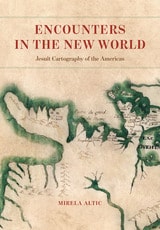
In 1540, in the wake of the tumult brought on by the Protestant Reformation, Saint Ignatius of Loyola founded the Society of Jesus, also known as the Jesuits. The Society’s goal was to revitalize the faith of Catholics and to evangelize to non-Catholics through charity, education, and missionary work. By the end of the century, Jesuit missionaries were sent all over the world, including to South America. In addition to performing missionary and humanitarian work, Jesuits also served as cartographers and explorers under the auspices of the Spanish, Portuguese, and French crowns as they ventured into remote areas to find and evangelize to native populations.
In Encounters in the New World, Mirela Altic analyzes more than 150 of their maps, most of which have never previously been published. She traces the Jesuit contribution to mapping and mapmaking from their arrival in the New World into the post-suppression period, placing it in the context of their worldwide undertakings in the fields of science and art. Altic’s analysis also shows the incorporation of indigenous knowledge into the Jesuit maps, effectively making them an expression of cross-cultural communication—even as they were tools of colonial expansion. This ambiguity, she reveals, reflects the complex relationship between missions, knowledge, and empire. Far more than just a physical survey of unknown space, Jesuit mapping of the New World was in fact the most important link to enable an exchange of ideas and cultural concepts between the Old World and the New.
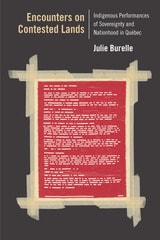
Encounters on Contested Lands
Indigenous Performances of Sovereignty and Nationhood in QuébecJulie Burelle
Northwestern University Press, 2019
Winner, 2020 Ann Saddlemyer Award
Finalist, ATHE Outstanding Book Award for 2020
Mention Spéciale, Société québécoise d'études théâtrale
In Encounters on Contested Lands, Julie Burelle employs a performance studies lens to examine how instances of Indigenous self-representation in Québec challenge the national and identity discourses of the French Québécois de souche—the French-speaking descendants of white European settlers who understand themselves to be settlers no more but rather colonized and rightfully belonging to the territory of Québec.
Analyzing a wide variety of performances, Burelle brings together the theater of Alexis Martin and the film L'Empreinte, which repositions the French Québécois de souche as métis, with protest marches led by Innu activists; the Indigenous company Ondinnok's theater of repatriation; the films of Yves Sioui Durand, Alanis Obomsawin, and the Wapikoni Mobile project; and the visual work of Nadia Myre. These performances, Burelle argues, challenge received definitions of sovereignty and articulate new ones while proposing to the province and, more specifically, to the French Québécois de souche, that there are alternative ways to imagine Québec's future and remember its past.
The performances insist on Québec's contested nature and reframe it as animated by competing sovereignties. Together they reveal how the "colonial present tense" and "tense colonial present" operate in conjunction as they work to imagine an alternative future predicated on decolonization. Encounters on Contested Lands engages with theater and performance studies while making unique and needed contributions to Québec and Canadian studies, as well as to Indigenous and settler-colonial studies.

Encounters with Kenneth Burke
William H. Rueckert
University of Illinois Press, 1994
1963 study, Kenneth Burke and the Drama of Human Relations, is often
credited with bringing the field of Burke studies into existence. Here, Rueckert
has gathered his "encounters" with Burke over the past thirty years--brieft
talks, position papers, rethinking and reformation of earlier ideas, and detailed
analyses of individual texts--into one volume that offers readers the best of
Burkean criticism.

Encyclopaedia of Midrash
Biblical Interpretation in Formative JudaismJacob Neusner
SBL Press, 2016
Now in Paperback!
The Encyclopedia of Midrash provides readers with a deep, broad treatment of midrash unavailable in any other single source. Through the writings of top scholars in each of their fields, it sets out the current state of the question for the many topics discussed throughout the two-volume set. The encyclopedia treats interpretations of Scripture that came to closure prior to, or outside of, the framework of rabbinic midrash: Hellenistic Jewish midrash, Josephus, Pseudo-Philo, Jubilees, as well as to the New Testament, Karaite and Samaritan writings, and the Dead Sea Scrolls.
Features:
- Paperback format of an essential Brill hardcover reference set
- A general introduction to rabbinic midrash and its traits
- Discussion of rabbinic midrashic documents focused on specific books of Scripture, the theology expressed by rabbinic midrashic compilations, and the historical context in which rabbinic Midrash took shape
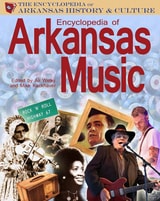
Encyclopedia of Arkansas Music
Ali Welky
Butler Center for Arkansas Studies, 2013
What do a rockabilly musician turned cinematic swamp monster, a composer of player-piano music, an avant-garde cellist, a musical instrument that lent its name to a weapon, a rock musician turned Catholic monk, some of the best audio speakers in the world, and the creator of Schoolhouse Rock! have in common? That’s right–they all come from Arkansas.
Encyclopedia of Arkansas Music is a special project of the Encyclopedia of Arkansas History & Culture (EOA), an online encyclopedia launched in 2006 by the Butler Center for Arkansas Studies at the Central Arkansas Library System.
This colorful, photo-filled reference work spanning all aspects of Arkansas’s musical past and present includes more than 150 entries on musicians, ensembles, musical works, and events.

Encyclopedia of Romantic Nationalism in Europe, Vol. 1 and 2
Edited by Joep Leerssen
Amsterdam University Press, 2016
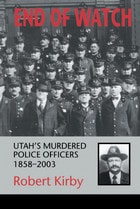
End Of Watch
Robert Kirby
University of Utah Press, 2004
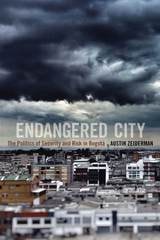
Endangered City
The Politics of Security and Risk in BogotáAustin Zeiderman
Duke University Press, 2016
Ending the Civil War and Consequences for Congress
Paul Finkelman
Ohio University Press, 2019
The social changes and human and economic costs of the Civil War led to profound legal and constitutional developments after it ended, not least of which were the Fourteenth and Fifteenth Amendments and the many laws devised to protect the civil rights of newly freed African Americans. These amendments and laws worked for a while, but they were ineffective or ineffectively enforced for more than a century.
In Ending the Civil War and the Consequences for Congress, contributors explore how the end of the war both continued the trauma of the conflict and enhanced the potential for the new birth of freedom that Lincoln promised in the Gettysburg Address. Collectively, they bring their multidisciplinary expertise to bear on the legal, economic, social, and political aspects of the aftermath of the war and Reconstruction era. The book concludes with the reminder of how the meaning of the war has changed over time. The Civil War is no longer the “felt” history it once was, Clay Risen reminds us, and despite the work of many fine scholars it remains contested.
Contributors: Jenny Bourne, Carole Emberton, Paul Finkelman, Lorien Foote, William E. Nelson, Clay Risen, Anne Sarah Rubin, and Peter Wallenstein
Endless Empire
Spain's Retreat, Europe's Eclipse, America's DeclineEdited by Alfred W. McCoy, Josep M. Fradera, and Stephen Jacobson
University of Wisconsin Press, 2012
- erosion of economic and fiscal strength needed for military power on a global scale
- misuse of military power through micro-military misadventures
- breakdown of alliances among major powers
- weakened controls over the subordinate elites critical for any empire’s exercise of global power
- insufficient technological innovation to sustain global force projection.
Ends in Sight
Marx/Fukuyama/Hobsbawm/AndersonGregory Elliott
Pluto Press, 2008
Gregory Elliott argues that Marx is central to all three accounts and that, along with the Manifesto, they form a quartet of analyses of the results and prospects of capitalism and socialism, which are of enduring significance for the Left.
Senses of an Ending provides a readable survey of key historical and political thinkers that will appeal to anyone interested in modern political thought.
Ends of Empire
Asian American Critique and the Cold WarJodi Kim
University of Minnesota Press, 2010
Enduring Cancer
Life, Death, and Diagnosis in DelhiDwaipayan Banerjee
Duke University Press, 2020
Enduring Images
A Future History of New Left CinemaMorgan Adamson
University of Minnesota Press, 2018
An integrated look at the political films of the 1960s and ’70s and how the New Left transformed cinema
A timely reassessment of political film culture in the 1960s and ’70s, Enduring Images examines international cinematic movements of the New Left in light of sweeping cultural and economic changes of that era. Looking at new forms of cinematic resistance—including detailed readings of particular films, collectives, and movements—Morgan Adamson makes a case for cinema’s centrality to the global New Left.
Enduring Images details how student, labor, anti-imperialist, Black Power, and second-wave feminist movements broke with auteur cinema and sought to forge local and international solidarities by producing political essay films, generating new ways of being and thinking in common. Adamson produces a comparative and theoretical account of New Left cinema that engages with discussions of work, debt, information, and resistance. Enduring Images argues that the cinemas of the New Left are sites to examine, through the lens of struggle, the reshaping of global capitalism during the pivotal moment in which they were made, while at the same time exploring how these movements endure in contemporary culture and politics.
Including in-depth discussions of Third Cinema in Argentina, feminist cinema in Italy, Newsreel movements in the United States, and cybernetics in early video, Enduring Images is an essential examination of the political films of the 1960s and ’70s.
Enduring Legacies
Ethnic Histories and Cultures of ColoradoArturo J. Aldama
University Press of Colorado, 2011
Addressing the dearth of scholarship on the varied communities within Colorado-a zone in which collisions structured by forces of race, nation, class, gender, and sexuality inevitably lead to the transformation of cultures and the emergence of new identities-this volume is the first to bring together comparative scholarship on historical and contemporary issues that span groups from Chicanas and Chicanos to African Americans to Asian Americans.
This book will be relevant to students, academics, and general readers interested in Colorado history and ethnic studies.
Enduring Legacy
Rhetoric and Ritual of the Lost CauseW. Stuart. Towns
University of Alabama Press, 2013
Explores the crucial role of rhetoric and oratory in creating and propagating a “Lost Cause” public memory of the American South
Enduring Legacy explores the vital place of ceremonial oratory in the oral tradition in the South and analyses how rituals such as Confederate Memorial Day, Confederate veteran reunions, and dedication of Confederate monuments have contributed to creating and sustaining a Lost Cause paradigm for Southern identity. Towns studies in detail secessionist and Civil War speeches and how they laid the groundwork for future generations, including Southern responses to the civil rights movement, and beyond.
The Lost Cause orators that came after the Civil War, Towns argues, helped to shape a lasting mythology of the brave Confederate martyr, and the Southern positions for why the Confederacy lost and who was to blame. Innumerable words were spent—in commemorative speeches, newspaper editorials, and statehouse oratory—condemning the evils of Reconstruction, redemption, reconciliation, and the new and future South. Towns concludes with an analysis of how Lost Cause myths still influence Southern and national perceptions of the region today, as evidenced in debates over the continued deployment of the Confederate flag and the popularity of Civil War reenactments.
Enduring Nations
Native Americans in the MidwestEdited by R. David Edmunds
University of Illinois Press, 2007
Enduring Nations documents how tribal peoples have adapted to cultural change while shaping midwestern history. Examining the transformation of Native American communities, which often occurred in response to shifting government policy, the contributors explore the role of women, controversial tribal enterprises and economies, social welfare practices, and native peoples' frequent displacement to locations such as reservations and urban centers. Central to both past and contemporary discussions of Native American cultural change is whether Native American identity should be determined by genetics, shared cultural values, or a combination of the two.
Contributors are Bradley J. Birzer, Brenda J. Child, Thomas Burnell Colbert, Gregory Evans Dowd, R. David Edmunds, Brian Hosmer, Rebecca Kugel, James B. LaGrand, Melissa L. Meyer, Lucy Eldersveld Murphy, Alan G. Shackelford, Susan Sleeper-Smith, and Stephen Warren.
Enduring Roots
Encounters with Trees, History, and the American LandscapeGayle Brandow Samuels
Rutgers University Press, 2005
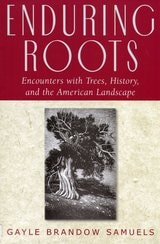
Trees are the grandest and most beautiful plant creations on earth. From their shade-giving, arching branches and strikingly diverse bark to their complex root systems, trees represent shelter, stability, place, and community as few other living objects can.
Enduring Roots tells the stories of historic American trees, including the oak, the apple, the cherry, and the oldest of the world’s trees, the bristlecone pine. These stories speak of our attachment to the land, of our universal and eternal need to leave a legacy, and demonstrate that the landscape is a gift, to be both received and, sometimes, tragically, to be destroyed.
Each chapter of this book focuses on a specific tree or group of trees and its relationship to both natural and human history, while exploring themes of community, memory, time, and place. Readers learn that colonial farmers planted marker trees near their homes to commemorate auspicious events like the birth of a child, a marriage, or the building of a house. They discover that Benjamin Franklin’s Newtown Pippin apples were made into a pie aboard Captain Cook’s Endeavour while the ship was sailing between Tahiti and New Zealand. They are told the little-known story of how the Japanese flowering cherry became the official tree of our nation’s capital—a tale spanning many decades and involving an international cast of characters. Taken together, these and many other stories provide us with a new ways to interpret the American landscape.
“It is my hope,” the author writes, “that this collection will be seen for what it is, a few trees selected from a great forest, and that readers will explore both—the trees and the forest—and find pieces of their own stories in each.”
Enduring Truths
Sojourner's Shadows and SubstanceDarcy Grimaldo Grigsby
University of Chicago Press, 2015
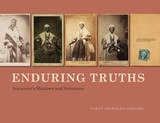
Featuring the largest collection of Truth’s photographs ever published, Enduring Truths is the first book to explore how she used her image, the press, the postal service, and copyright laws to support her activism and herself. Darcy Grimaldo Grigsby establishes a range of important contexts for Truth’s portraits, including the strategic role of photography and copyright for an illiterate former slave; the shared politics of Truth’s cartes de visite and federal banknotes, which were both created to fund the Union cause; and the ways that photochemical limitations complicated the portrayal of different skin tones. Insightful and powerful, Enduring Truths shows how Truth made her photographic portrait worth money in order to end slavery—and also became the strategic author of her public self.
Enemies for a Day
Antisemitism and Anti-Jewish Violence in Lithuania under the TsarsDarius Staliunas
Central European University Press, 2015
It begins by illustrating how widespread anti-Jewish feelings were among the Christian population in 19 th century, focusing on blood libel accusations as well as describing the role of modern antisemitism. Secondly, it tries to identify the structural preconditions as well as specific triggers that turned anti-Jewish feelings into collective violence and analyzes the nature of this violence. Lastly, pogroms in Lithuania are compared to anti-Jewish violence in other regions of the Russian Empire and East Galicia.
This research is inspired by the cultural turn in social sciences, an approach that assumes that violence is filled with meaning, which is “culturally constructed, discursively mediated, symbolically saturated, and ritually regulated.” The author argues that pogroms in Lithuania instead followed a communal pattern of ethnic violence and was very different from deadly pogroms in other parts of the Russian Empire.
Enemies of All Humankind
Fictions of Legitimate ViolenceSonja Schillings
Dartmouth College Press, 2016
Enemies of the People
The Destruction of Soviet Literary, Theater, and FKatherine Bliss Eaton
Northwestern University Press, 2002