Results by title
435 books match the query 'Asian American & Pacific Islander Studies' and 20 start with f
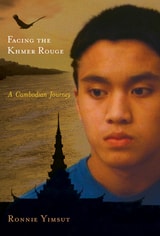
Facing the Khmer Rouge
A Cambodian JourneyRonnie Yimsut
Rutgers University Press, 2011
As a child growing up in Cambodia, Ronnie Yimsut played among the ruins of the Angkor Wat temples, surrounded by a close-knit community. As the Khmer Rouge gained power and began its genocidal reign of terror, his life became a nightmare. In this stunning memoir, Yimsut describes how, in the wake of death and destruction, he decides to live.
Escaping the turmoil of Cambodia, he makes a perilous journey through the jungle into Thailand, only to be sent to a notorious Thai prison. Fortunately, he is able to reach a refugee camp and ultimately migrate to the United States, where he attended the University of Oregon and became an influential leader in the community of Cambodian immigrants. Facing the Khmer Rouge shows Ronnie Yimsut’s personal quest to rehabilitate himself, make a new life in America, and then return to Cambodia to help rebuild the land of his birth.
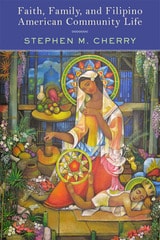
Faith, Family, and Filipino American Community Life
Cherry, Stephen M
Rutgers University Press, 2014
Stephen M. Cherry draws upon a rich set of ethnographic and survey data, collected over a six-year period, to explore the roles that Catholicism and family play in shaping Filipino American community life. From the planning and construction of community centers, to volunteering at health fairs or protesting against abortion, this book illustrates the powerful ways these forces structure and animate not only how first-generation Filipino Americans think and feel about their community, but how they are compelled to engage it over issues deemed important to the sanctity of the family.
Revealing more than intimate accounts of Filipino American lives, Cherry offers a glimpse of the often hidden but vital relationship between religion and community in the lives of new immigrants, and allows speculation on the broader impact of Filipino immigration on the nation. The Filipino American community is the second-largest immigrant community in the United States, and the Philippines is the second-largest source of Catholic immigration to this country. This ground-breaking study outlines how first-generation Filipino Americans have the potential to reshape American Catholicism and are already having an impact on American civic life through the engagement of their faith.
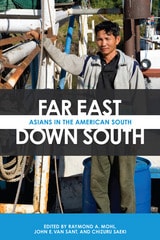
Far East, Down South
Asians in the American SouthEdited by Raymond A. Mohl, John E. Van Sant, and Chizuru Saeki
University of Alabama Press, 2016
Uncovering the overlooked histories of Asians in the American South.
In sharp contrast to the “melting pot” reputation of the United States, the American South—with its history of slavery, Jim Crow, and the civil rights movement—has been perceived in stark and simplistic demographic terms. In Far East, Down South, editors Raymond A. Mohl, John E. Van Sant, and Chizuru Saeki provide a collection of essential essays that restores and explores an overlooked part of the South’s story—that of Asian immigration to the region.
These essays form a comprehensive overview of key episodes and issues in the history of Asian immigrants to the South. During Reconstruction, southern entrepreneurs experimented with the replacement of slave labor with Chinese workers. As in the West, Chinese laborers played a role in the development of railroads. Japanese farmers also played a more widespread role than is usually believed. Filipino sailors recruited by the US Navy in the early decades of the twentieth century often settled with their families in the vicinity of naval ports such as Corpus Christi, Biloxi, and Pensacola. Internment camps brought Japanese Americans to Arkansas. Marriages between American servicemen and Japanese, Korean, Filipina, Vietnamese, and nationals in other theaters of war created many thousands of blended families in the South. In recent decades, the South is the destination of internal immigration as Asian Americans spread out from immigrant enclaves in West Coast and Northeast urban areas.
Taken together, the book’s essays document numerous fascinating themes: the historic presence of Asians in the South dating back to the mid-nineteenth century; the sources of numerous waves of contemporary Asian immigration to the South; and the steady spread of Asians out from the coastal port cities. Far East, Down South adds a vital new dimension to popular understanding of southern history.
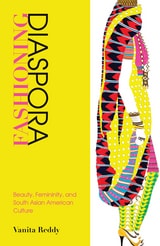
Fashioning Diaspora
Beauty, Femininity, and South Asian American CultureVanita Reddy
Temple University Press, 2015
One of the first books to consider beauty and fashion as a point of entry into an examination of South Asian diasporic public cultures, Fashioning Diaspora examines a range of literature, visual art, and live performance. Through careful analyses of novels by Bharati Mukherjee and Jhumpa Lahiri, young adult literature, performance art by Shailja Patel, as well as objects of popular culture including an Indian American fashion doll, and beauty and adornment practices, Reddy challenges fashion and beauty as a set of dematerialized, overly commodified cultural practices. She argues instead that beauty and fashion structure South Asian Americans’ uneven access to social mobility, capital, and citizenship, and demonstrates their varying capacities to produce social attachments across national, class, racial, gender, and generational divides.
Feeling Asian American
Racial Flexibility Between Assimilation and OppressionWen Liu
University of Illinois Press, 2024
Asian Americans have become the love-hate subject of the American psyche: at times celebrated as the model minority, at other times hated as foreigners. Wen Liu examines contemporary Asian American identity formation while placing it within a historical and ongoing narrative of racial injury. The flexible racial status of Asian Americans oscillates between oppression by the white majority and offers to assimilate into its ranks. Identity emerges from the tensions produced between those two poles. Liu dismisses the idea of Asian Americans as a coherent racial population. Instead, she examines them as a raced, gendered, classed, and sexualized group producing varying physical and imaginary boundaries of nation, geography, and citizenship. Her analysis reveals repeated norms and acts that capture Asian Americanness as part of a racial imagination that buttresses capitalism, white supremacy, neoliberalism, and the US empire.
An innovative challenge to persistent myths, Feeling Asian American ranges from the wartime origins of Asian American psychology to anti-Asian attacks to present Asian Americanness as a complex political assemblage.
Feeling Yellow
Asian Americans and Yellowface in Twenty-First-Century Musical TheatreDonatella Galella
University of Michigan Press, 2026
Feeling Yellow examines how yellowface has persisted on the contemporary musical stage and how Asian Americans have contested yellowface, as they stake their own claim to the theatrical stage and nation state. Donatella Galella boldly argues that the pleasures of musical theatre and the disavowal of systemic anti-Asian racism enable the ongoing portrayal of Asian and Asian American characters by non-Asian actors. Galella offers two concepts to understand these phenomena: feeling yellow and yellowface without yellowed faces. Feeling yellow encapsulates the racialized anger, despair, and alienation of Asian American artists and audiences. Yellowface without yellowed faces denotes subtle ways of conveying Asianness, such as performing Asianness with exaggerated irony, using racialized costumes rather than yellow skin and slanted eye makeup, and setting musicals in fantasy Asian lands populated by multiracial casts.
Galella utilizes musicals such as Thoroughly Modern Millie, Anything Goes, The Mikado, and Soft Power, to understand how Asian and Asian American representation is connected to larger questions: How does racial identity shape emotional reactions to musical theatre? Why does yellowface and anti-Asian racism persist? What are the terms for Asian Americans belonging in the United States? Using a range of approaches from dramaturgy to auto-ethnography and materials from interviews to Reddit posts, Feeling Yellow spotlights Asian American affect, artistry, and activism.
Fight the Tower
Asian American Women Scholars’ Resistance and Renewal in the AcademyKieu Linh Caroline Valverde
Rutgers University Press, 2020
However, change is in the air. Fight the Tower is a continuation of the Fight the Tower movement, which supports women standing up for their rights to claim their earned place in academia and to work for positive change for all within academic institutions. The essays provide powerful portraits, reflections, and analyses of a population often rendered invisible by the lies that sustain intersectional injustices in order to operate an oppressive system.
Fighting Invisibility
Asian Americans in the MidwestMonica Mong Trieu
Rutgers University Press, 2023
Drawing from in-depth interviews, census data, and cultural productions from Asian Americans in Ohio, Wisconsin, Nebraska, Minnesota, Illinois, Iowa, Indiana, and Michigan, this interdisciplinary research examines how post-1950s Midwest Asian Americans navigate identity and belonging, racism, educational settings, resources within co-ethnic communities, and pan-ethnic cultural community. Their experiences and life narratives are heavily framed by three pervasive themes of spatially defined isolation, invisibility, and racialized visibility.
Fighting Invisibility makes an important contribution to racialization literature, while also highlighting the necessity to further expand the scope of Asian American history-telling and knowledge production.
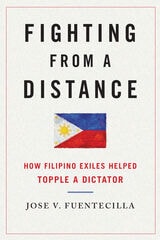
Fighting from a Distance
How Filipino Exiles Helped Topple a DictatorJose V. Fuentecilla
University of Illinois Press, 2013
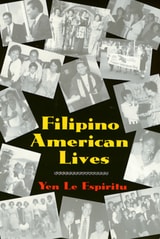
Filipino American Lives
Yen Le Espiritu
Temple University Press, 1995
Filipino Americans are now the second largest group of Asian Americans as well as the second largest immigrant group in the United States. As reflected in this collection, their lives represent the diversity of the immigrant experience and their narratives are a way to understand ethnic identity and Filipino American history.
Men and women, old and young, middle and working class, first and second generation, all openly discuss their changing sense of identity, the effects of generational and cultural differences on their families, and the role of community involvement in their lives. Pre- and post-1965 immigrants share their experiences, from the working students who came before WWII, to the manongs in the field, to the stewards and officers in the U.S. Navy, to the "brain drain" professionals, to the Filipinos born and raised in the United States.
As Yen Le Espiritu writes in the Introduction, "each of the narratives reveals ways in which Filipino American identity has been and continues to be shaped by a colonial history and a white-dominated culture. It is through recognizing how profoundly race has affected their lives that Filipino Americans forge their ethnic identities—identities that challenge stereotypes and undermine practices of cultural domination."
In the series Asian American History and Culture, edited by Sucheng Chan, David Palumbo-Liu, Michael Omi, K. Scott Wong, and Linda Trinh Võ.
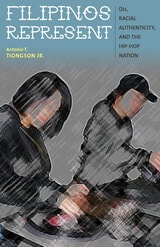
Filipinos Represent
DJs, Racial Authenticity, and the Hip-hop NationAntonio T. Tiongson Jr.
University of Minnesota Press, 2013
The “Hip-hop Nation” has been scouted, staked out, and settled by journalists and scholars alike. Antonio T. Tiongson Jr. steps into this well-mapped territory with questions aimed at interrogating how nation is conceptualized within the context of hip-hop. What happens, Tiongson asks, to notions of authenticity based on hip-hop’s apparent blackness when Filipino youth make hip-hop their own?
Tiongson draws on interviews with Bay Area–based Filipino American DJs to explore the authenticating strategies they rely on to carve out a niche within DJ culture. He shows how Filipino American youth involvement in DJing reconfigures the normal boundaries of Filipinoness predicated on nostalgia and cultural links with an idealized homeland. Filipinos Represent makes the case that while the engagement of Filipino youth with DJ culture speaks to the broadening racial scope of hip-hop—and of what it means to be Filipino—such involvement is also problematic in that it upholds deracialized accounts of hip-hop and renders difference benign.
Looking at the ways in which Filipino DJs legitimize their place in an expressive form historically associated with African Americans, Tiongson examines what these complex forms of identification reveal about the contours and trajectory of contemporary U.S. racial formations and discourses in the post–civil rights era.
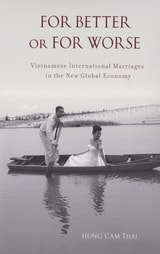
For Better or For Worse
Vietnamese International Marriages in the New Global EconomyThai, Hung Cam
Rutgers University Press, 2008
In For Better or For Worse, Hung Cam Thai takes a closer look at marriage and migration, with a specific focus on the unions between Vietnamese men living in the United States and the women who marry them. Weaving together a series of personal stories, he underscores the ironies and challenges that these unions face. He includes the voices of working-class immigrant men dealing with marginalization in their adopted country. These men speak about wanting "traditional" wives who they hope will recognize their gendered authority. Meanwhile, young Vietnamese college-educated women, undesirable to bachelors in their own country who are seeking subservient wives, express a preference for men of the same ethnicity but with a more liberal outlook on gender-men they imagine they will find in the United States.
A sense of foreboding pervades the book as Thai captures the incompatible viewpoints of the couples who appear to be separated not only geographically but ideologically.
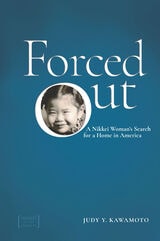
Forced Out
A Nikkei Woman's Search for a Home in AmericaJudy Y. Kawamoto
University Press of Colorado, 2020
Forced Out: A Nikkei Woman’s Search for a Home in America offers insight into “voluntary evacuation,” a little-known Japanese American experience during World War II, and the lasting effects of cultural trauma. Of the roughly 120,000 people forced from their homes by Executive Order 9066, around 5,000 were able to escape incarceration beforehand by fleeing inland. In a series of beautifully written essays, Judy Kawamoto recounts her family’s flight from their home in Washington to Wyoming, their later moves to Montana and Colorado, and the influence of those experiences on the rest of her life. Hers is a story shared by the many families who lost everything and had to start over in often suspicious and hostile environments.
Kawamoto vividly illustrates the details of her family’s daily life, the discrimination and financial hardship they experienced, and the isolation that came from experiencing the horrors of the 1940s very differently than many other Japanese Americans. Chapters address her personal and often unconscious reactions to her parents’ trauma, as well as her own subsequent travels around much of the world, exploring, learning, enjoying, but also unconsciously acting out a continual search for a home.
Showing how the impacts of traumatic events are collective and generational, Kawamoto draws
interconnections between her family’s displacement and later aspects of her life and juxtaposes the impact of her early experiences and questions of identity, culture, and assimilation. Forced Out will be of great interest to the general reader as well as students and scholars of ethnic studies, Asian American studies, history, education, and mental health.
2022 Asian/Pacific American Award for Literature, Honor Title, Adult Non-Fiction Literature
2022 Evans Handcart Award Winner
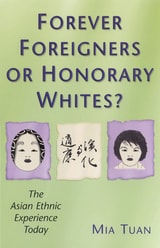
Forever Foreigners or Honorary Whites?
The Asian Ethnic Experience TodayMia Tuan
Rutgers University Press, 1999
What does it mean to be an Asian-American in the United States today? Are Asian-Americans considered "honorary whites" or forever thought of as "foreigners?"
Mia Tuan examines the salience and meaning of ethnicity for later generation Chinese- and Japanese-Americans, and asks how their concepts of ethnicity differ from that of white ethnic Americans. She interviewed 95 middle-class Chinese and Japanese Californians and analyzes the importance of ethnic identities and the concept of becoming a "real" American for both Asian and white ethnics. She asks her subjects about their early memories and experiences with Chinese/Japanese culture; current lifestyle and emerging cultural practices; experiences with racism and discrimination; and attitudes toward current Asian immigration.
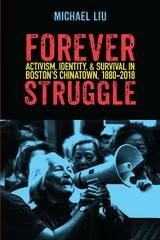
Forever Struggle
Activism, Identity, and Survival in Boston's Chinatown, 1880–2018Michael Liu
University of Massachusetts Press, 2020
In writing about Boston Chinatown's long history, Michael Liu, a lifelong activist and scholar of the community, charts its journey and efforts for survival—from its emergence during a time of immigration and deep xenophobia to the highway construction and urban renewal projects that threatened the neighborhood after World War II to its more recent efforts to keep commercial developers at bay. At the ground level, Liu depicts its people, organizations, internal battles, and varied and complex strategies against land-taking by outside institutions and public authorities. The documented courage, resilience, and ingenuity of this low-income immigrant neighborhood of color have earned it a place amongst our urban narratives. Chinatown has much to teach us about neighborhood agency, the power of organizing, and the prospects of such neighborhoods in rapidly growing and changing cities.
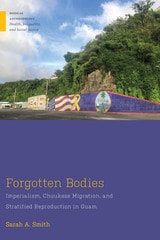
Forgotten Bodies
Imperialism, Chuukese Migration, and Stratified Reproduction in GuamSarah A. Smith
Rutgers University Press, 2024
From Canton Restaurant to Panda Express
A History of Chinese Food in the United StatesLiu, Haiming
Rutgers University Press, 2015
Finalist in the Culinary History category of the 2016 Gourmand World Cookbook Awards
From Canton Restaurant to Panda Express takes readers on a compelling journey from the California Gold Rush to the present, letting readers witness both the profusion of Chinese restaurants across the United States and the evolution of many distinct American-Chinese iconic dishes from chop suey to General Tso’s chicken. Along the way, historian Haiming Liu explains how the immigrants adapted their traditional food to suit local palates, and gives readers a taste of Chinese cuisine embedded in the bittersweet story of Chinese Americans.
Treating food as a social history, Liu explores why Chinese food changed and how it has influenced American culinary culture, and how Chinese restaurants have become places where shared ethnic identity is affirmed—not only for Chinese immigrants but also for American Jews. The book also includes a look at national chains like P. F. Chang’s and a consideration of how Chinese food culture continues to spread around the globe.
Drawing from hundreds of historical and contemporary newspaper reports, journal articles, and writings on food in both English and Chinese, From Canton Restaurant to Panda Express represents a groundbreaking piece of scholarly research. It can be enjoyed equally as a fascinating set of stories about Chinese migration, cultural negotiation, race and ethnicity, diverse flavored Chinese cuisine and its share in American food market today.
From Concentration Camp to Campus
Japanese American Students and World War IIAllan W. Austin
University of Illinois Press, 2003
Austin argues that the resettled students transformed the attempts at assimilation to create their own meanings and suit their own purposes, and succeeded in reintegrating themselves into the wider American society without sacrificing their connections to community and their Japanese cultural heritage.
From Confinement to Containment
Japanese/American Arts during the Early Cold WarEdward Tang
Temple University Press, 2019
During the early part of the Cold War, Japan emerged as a model ally, and Japanese Americans were seen as a model minority. From Confinement to Containment examines the work of four Japanese and Japanese/American artists and writers during this period: the novelist Hanama Tasaki, the actor Yamaguchi Yoshiko, the painter Henry Sugimoto, and the children’s author Yoshiko Uchida. The backgrounds of the four figures reveal a mixing of nationalities, a borrowing of cultures, and a combination of domestic and overseas interests.
Edward Tang shows how the film, art, and literature made by these artists revealed to the American public the linked processes of U.S. actions at home and abroad. Their work played into—but also challenged—the postwar rehabilitated images of Japan and Japanese Americans as it focused on the history of transpacific relations such as Japanese immigration to the United States, the Asia-Pacific War, U.S. and Japanese imperialism, and the wartime confinement of Japanese Americans. From Confinement to Containment shows the relationships between larger global forces as well as how the artists and writers responded to them in both critical and compromised ways.
From Honolulu to Brooklyn
Running the American Empire’s Base Paths with Buck Lai and the Travelers from Hawai’iJoel S. Franks
Rutgers University Press, 2022