Results by title
501 books match the query 'Catholic Church' and 21 start with f
Faith and the Historian
CATHOLIC PERSPECTIVESEdited by Nick Salvatore
University of Illinois Press, 2006
Faith and the Historian collects essays from eight experienced historians discussing the impact of being "touched" by Catholicism on their vision of history. That first graduate seminar, these essays suggest, did not mark the inception of one's historical sensibilities; rather, that process had deeper, and earlier, roots. The authors--ranging from "cradle to the grave" Catholics to those who haven’t practiced for forty years, and everywhere in between--explicitly investigate the interplay between their personal lives and beliefs and the sources of their professional work. A variety of heartfelt, illuminating, and sometimes humorous experiences emerge from these stories of intelligent people coming to terms with their Catholic backgrounds as they mature and enter the academy. Contributors include: Philip Gleason, David Emmons, Maureen Fitzgerald, Joseph A. McCartin, Mario T. Garcia, Nick Salvatore, James R. Barrett, and Anne M. Butler.
Faith and the Sacraments
A Commentary on The International Theological Commission's <i>The Reciprocity of Faith and Sacraments in the Sacramental Economy</i>: With Official Revised English TranslationThomas G. International Theological Comission
Catholic University of America Press, 2022
Faithful Fictions
The Catholic Novel in British LiteratureThomas M. Woodman
Catholic University of America Press, 2022
Faithful Interpretations
Truth and Islam in Catholic Theology of ReligionsPhilip Geister
Catholic University of America Press, 2021
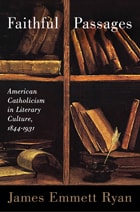
Faithful Passages
American Catholicism in Literary Culture, 1844–1931James Emmett Ryan
University of Wisconsin Press, 2013
Faithful Passages also reveals new dimensions in American religious literary culture by moving beyond the antebellum period to consider how the first important cohort of Catholic writers shaped their message for subsequent generations of readers in the late nineteenth and early twentieth centuries. Perhaps most strikingly, Ryan shows that by the early twentieth century, Roman Catholic themes and traditions in American literature would be advanced in complex ways by mainstream, non-Catholic modernist writers like Kate Chopin and Willa Cather.
Catholic literary culture in the United States took shape in a myriad of ways and at the hands of diverse participants. The process by which Roman Catholic ideas, themes, and moralities were shared and adapted by writers with highly differentiated beliefs, Ryan contends, illuminates a surprising fluidity of religious commitment and expression in early U.S. literary culture.
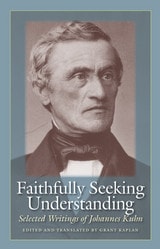
Faithfully Seeking Understanding
Selected Writings of Johannes KuhnJohannes Kuhn
Catholic University of America Press, 2009
Fare Well, Illyria
David Binder
Central European University Press, 2014
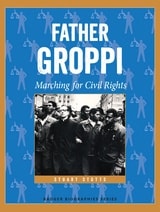
Father Groppi
Marching for Civil RightsStuart Stotts
Wisconsin Historical Society Press, 2013
Father Groppi Marched to Change Milwaukee
"Father Groppi: Marching for Civil Rights" tells the story of Father James Groppi, a Catholic priest from Milwaukee, Wis., who stood up for civil rights in the 1960s and 1970s.
This important new addition to the Badger Biographies series for young readers also tells about a turbulent time in Wisconsin history and sheds light on the civil rights movement and its place in the North.
Growing up on the south side of Milwaukee as the son of Italian immigrants, young James Groppi learned early on what it felt like to be made fun of just because of who you are, and he learned to respect people from other races and ethnic groups. Later, while studying to become a priest, he saw the discrimination African Americans faced. It made him angry, and he vowed to do whatever he could to fight racism.
Father Groppi marched with Dr. Martin Luther King Jr. and other leaders of the civil rights movement. But he knew there was work to be done in his own city. In Milwaukee, he teamed up with the NAACP and other organizations, protesting discrimination and segregation wherever they saw it. It wasn't always easy, and Father Groppi and the other civil rights workers faced great challenges.
Florentine Essays
Selected Writings of Marvin B. BeckerMarvin B. Becker
University of Michigan Press, 2002
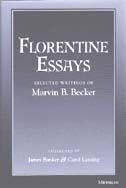
In the capital of humanism, he initiated what was to be a lifelong examination of the Western civil tradition. In Florence he could study the interplay of ideas and action in what he was to call the "public world." The rise of this world out of the private, feudal and corporate structures of the medieval commune, its functioning and its eventual subversion by the authoritarian structures of the early modern state were, he thought, valuable information for modern political cultures. In the 1950s and 1960s, Becker produced approximately twenty papers dealing with a wide variety of themes and issues raised by the work of other scholars such as Davidson, Salvemini, Ottokar, Panella, Rodolico, Barbadoro, Baron, and others. He also introduced his own formulations on a range of subjects including the political role of Florence's minor guilds, usury, taxation, public debt, popular heresy, church-state relations, the city's chroniclers, the influence of "new men" upon Florentine government and changing mentalities.
These papers, in their originality, their richness of documentation and their suggestiveness, are still relevant for current scholarship. The editors of this volume have chosen the papers for the convenience of readers who may know Becker only through his books, or from the myriad of footnotes of other scholars who have drawn so much from his work. This volume will be of interest to scholars, students, and others interested in Renaissance history, whether it be social or political.
Marvin B. Becker is Professor Emeritus in the Department of History, University of Michigan. James Banker is Professor of History, North Carolina State University. Carol Lansing is Professor of History, University of California, Santa Barbara.
Follow Your Conscience
The Catholic Church and the Spirit of the SixtiesPeter Cajka
University of Chicago Press, 2021
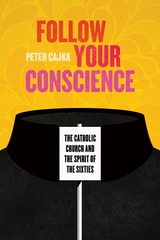
Peter Cajka’s erudite book shows how even staunch Catholics were transformed by the maelstrom of the American Sixties, turning away from powerful and corrupt institutions and toward the inner moral compass provided by their own consciences.
What is your conscience? Is it, as Peter Cajka asks in this provocative book, “A small, still voice? A cricket perched on your shoulder? An angel and devil who compete for your attention?” Going back at least to the thirteenth century, Catholics viewed their personal conscience as a powerful and meaningful guide to align their conduct with worldly laws. But, as Cajka shows in Follow Your Conscience, during the national cultural tumult of the 1960s, the divide between the demands of conscience and the demands of the law, society, and even the church itself grew increasingly perilous. As growing numbers of Catholics started to consider formerly stout institutions to be morally hollow—especially in light of the Vietnam War and the church’s refusal to sanction birth control—they increasingly turned to their own consciences as guides for action and belief. This abandonment of higher authority had radical effects on American society, influencing not only the broader world of Christianity, but also such disparate arenas as government, law, health care, and the very vocabulary of American culture. As this book astutely reveals, today’s debates over political power, religious freedom, gay rights, and more are all deeply infused by the language and concepts outlined by these pioneers of personal conscience.
For Both Cross and Flag
Catholic Action, Anti-Catholicism, and National Security Politics in World War II San FranciscoAuthored by William Issel
Temple University Press, 2010
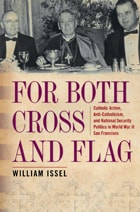
In this fascinating, detailed history, William Issel recounts the civil rights abuses suffered by Sylvester Andriano, an Italian American Catholic civil leader whose religious and political activism in San Francisco provoked an Anti-Catholic campaign against him. A leading figure in the Catholic Action movement, Andriano was falsely accused in state and federal Un-American Activities Committee hearings of having Fascist sympathies prior to and during World War II. As his ordeal began, Andriano was subjected to a hostile investigation by the FBI, whose confidential informants were his political rivals. Furthermore, the U.S. Army ordered him to be relocated on the grounds that he was a security risk.
For Both Cross and Flag provides a dramatic illustration of what can happen when parties to urban political rivalries, rooted in religious and ideological differences, seize the opportunity provided by a wartime national security emergency to demonize their enemy as “a potentially dangerous person.”
Issel presents a cast of characters that includes archbishops, radicals, the Kremlin, and J. Edgar Hoover, to examine the significant role faith-based political activism played in the political culture that violated Andriano’s constitutional rights. Exploring the ramifications of this story, For Both Cross and Flag presents interesting implications for contemporary events and issues relating to urban politics, ethnic groups, and religion in a time of war.

For Faith and Fortune
The Education of Catholic Immigrants in Detroit, 1805-1925JoEllen McNergney Vinyard
University of Illinois Press, 1998
JoEllen McNergney Vinyard's comprehensive examination of parochial education in Detroit within the broader context of that city's urbanization patterns yields a richly detailed addition to our understanding of the European immigrant experience.
For Faith and Fortune will be of interest to historians and scholars of urban studies, particularly immigration, schooling, and the Catholic experience.
Foundational Arts
Mural Painting and Missionary Theater in New SpainMichael K. Schuessler
University of Arizona Press, 2013
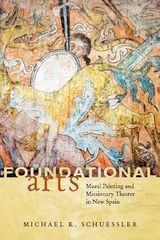
In Foundational Arts Michael K. Schuessler asserts that the literature of New Spain begins with missionary theater and its intimate relationship to mural painting. In particular, he examines the relationships between texts and visual images that emerged in Mexico at two Augustinian monasteries in Hidalgo, Mexico, during the century following the Spanish Conquest. The forced combination of the ideographical tradition of Nahuatl with Latin-based language alphabets led to a fascinating array of new cultural expressions.
Missionary theater was organized by ingenious friars with the intent to convert and catechize indigenous populations. Often performed in Nahuatl or other local languages, the actors combined Latin-based language texts with visual contexts that corresponded to indigenous ways of knowing: murals, architectural ornamentation, statuary, altars, and other modes of visual representation. By concentrating on the interrelationship between mural painting and missionary theater, Foundational Arts explores the artistic and ideological origins of Mexican plastic arts and literature.
Fragments of a World
William of Auvergne and His Medieval LifeLesley Smith
University of Chicago Press, 2023
Today, William of Auvergne (1180?–1249) is remembered for his scholarship about the afterlife as well as the so-called Trial of the Talmud. But the medieval bishop of Paris also left behind nearly 600 sermons delivered to all manner of people—from the royal court to the poorest in his care. In Fragments of a World, Lesley Smith uses these sermons to paint a vivid picture of this extraordinary cleric, his parishioners, and their bustling world. The first modern biography of the influential teacher, bishop, and theologian, Fragments of a World casts a new image of William of Auvergne for our times—deeply attuned to both the spiritual and material needs of an ever-changing populace in the medieval city.
Free Markets with Solidarity and Sustainability
Martin Schlag
Catholic University of America Press, 2016

Freedom Made Manifest
Peter Joseph Fritz
Catholic University of America Press, 2019
From Dark Night to Gentle Surrender
On the Ethics and Spirituality of Hospice CarePatricia Kobielus Thompson
University of Scranton Press, 2010
Drawing from her many years of experience as a hospice nurse and her training as a theologian, Patricia Kobielus Thompson offers in The Dark Night of the Soul instruction to those providing care for terminally ill patients. Thompson finds in the poetry and other writings of Spanish mystic Saint John of the Cross a wisdom that she argues will assist caregivers in comforting their patients through the trying times just before death. Though much has been written on Saint John of the Cross, Thompson’s application of these works is wholly new and rooted in deep empathy.
From Popular to Insurgent Intellectuals
Peasant Catechists in the Salvadoran RevolutionLeigh Binford
Rutgers University Press, 2023
From the Dust of the Earth
Benedict XVI, the Bible , and the Theory of EvolutionMatthew J. Ramage
Catholic University of America Press, 2022
From the Trinity
The Coming of God in Revelation and TheologyPiero Coda
Catholic University of America Press, 2020
Fundamental Theology
Guy Mansini, OSB
Catholic University of America Press, 2018
Since no word is spoken unless it is heard, fundamental theology also investigates the conditions of hearing the word of God, the very hearing itself in the assent of faith, and a necessary consequence of this hearing. The remote conditions of hearing are also what theology calls our ability to come to the knowledge of the preambula fidei- the things about God than can be known by the natural light (chapter 5). The immediate condition of hearing is the credibility of the word (chapter 6). Hearing is faith (chapter 7). And true hearing gives the hearer to recapitulate what is heard in his own wondering and thankful voice in theology (chapter 8). The introduction to theology in the last chapter is by way of considering the history of Catholic theology in the 20th century.