Results by title
718 books match the query 'Civil rights' and 31 start with f
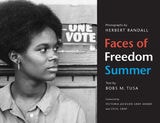
Faces of Freedom Summer
Herbert Randall and Bobs M. Tusa
University of Alabama Press, 2001
Witness the faces that defined a movement for freedom and equality
The old adage “One picture is worth ten thousand words” is definitely true for Faces of Freedom Summer. There are simply not enough words to describe the period in our history that is recorded by the pictures in this book.
As this book afirms, the resurgence of overt activities by hate groups—both the old traditional ones (e.g., the Ku Klux Klan) and the new ones (e.g., the Skin Heads)—however much the hard work and sacrifices of the modern civil rights movement humanized American society, much still remains to be done. The modern civil rights movement associated with the 1960s was not in vain, yet it did not eradicate from our society the evils of racism and sexism. While we activists made the United States more of an open society than it has ever been in its history, our vision and desire for the beloved community did not reach into all sectors of American society. “Freedom,” it has been said, “is a constant struggle, a work of eternal vigilance.”
Faces of Freedom Summer brings to life that there was such a time and there were such people and, if such a people were once, then they are still among us. Yet, they may only become aware of themselves when they are confronted with visible evidence, such as the evidence contained in the pictures of Herbert Randall.
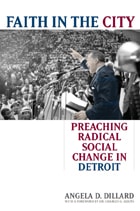
Faith in the City
Preaching Radical Social Change in DetroitAngela D. Dillard
University of Michigan Press, 2009
“The dynamics of Black Theology were at the center of the ‘Long New Negro Renaissance,’ triggered by mass migrations to industrial hubs like Detroit. Finally, this crucial subject has found its match in the brilliant scholarship of Angela Dillard. No one has done a better job of tracing those religious roots through the civil rights–black power era than Professor Dillard.”
—Komozi Woodard, Professor of History, Public Policy & Africana Studies at Sarah Lawrence College and author of A Nation within a Nation: Amiri Baraka (LeRoi Jones) and Black Power Politics
“Angela Dillard recovers the long-submerged links between the black religious and political lefts in postwar Detroit. . . . Faith in the City is an essential contribution to the growing literature on the struggle for racial equality in the North.”
—Thomas J. Sugrue, University of Pennsylvania, author of The Origins of the Urban Crisis: Race and Inequality in Postwar Detroit
Spanning more than three decades and organized around the biographies of Reverends Charles A. Hill and Albert B. Cleage Jr., Faith in the City is a major new exploration of how the worlds of politics and faith merged for many of Detroit’s African Americans—a convergence that provided the community with a powerful new voice and identity. While other religions have mixed politics and creed, Faith in the City shows how this fusion was and continues to be particularly vital to African American clergy and the Black freedom struggle.
Activists in cities such as Detroit sustained a record of progressive politics over the course of three decades. Angela Dillard reveals this generational link and describes what the activism of the 1960s owed to that of the 1930s. The labor movement, for example, provided Detroit’s Black activists, both inside and outside the unions, with organizational power and experience virtually unmatched by any other African American urban community.
Angela D. Dillard is Associate Professor of Afroamerican and African Studies at the University of Michigan. She specializes in American and African American intellectual history, religious studies, critical race theory, and the history of political ideologies and social movements in the United States.
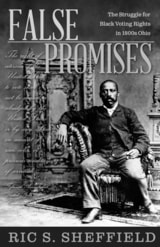
False Promises
The Struggle for Black Voting Rights in 1800s OhioRic S. Sheffield
Ohio University Press, 0
Brings to life the struggle for Black suffrage in nineteenth-century Ohio
In False Promises, the fight for Black voting rights in Ohio comes alive through narratives of men of color who defied the state’s nineteenth-century restrictions on suffrage. Though ratification of the Fifteenth Amendment ostensibly extended the franchise, state election laws still forced men of color into a perilous struggle for full citizenship. Ric S. Sheffield depicts their courage and determination, revealing their humanity through stories of sacrifice, resistance, and hope.
Drawing on Saidiya Hartman’s concept of critical fabulation, Sheffield weaves together historical records with imaginative reconstructions of dialogue, setting, and descriptive elements beyond the dusty courthouse pages. Grounded in archival evidence yet reimagined to fill in the silences, these stories recount the lived experiences of those who risked everything to exercise their right to vote.
False Promises also connects these historical battles to the present, illustrating how voter-suppression tactics in today’s Ohio have roots in the racial exclusions of the nineteenth century. By exposing the enduring legacy of white supremacist policies, the book challenges the widespread misconception that racial disenfranchisement was solely a southern problem. Ohio’s complex racial history—noted for its role in the Underground Railroad but also for its repressive Black Laws—also includes a fierce and ongoing struggle over the right to vote. Through compelling storytelling, historical analysis, and a reclamation of voices lost to history, False Promises urges readers to reconsider their understanding of democracy and the right to vote.
Familiar Perversions
The Racial, Sexual, and Economic Politics of LGBT FamiliesMontegary, Liz
Rutgers University Press, 2018
Over the past two decades, same-sex couples raising children have become more visible within US political and popular culture. Thanks to widely circulated images of well-mannered, well-dressed, and well-off two-parent families, a select number of LGBT-identified parents have gained recognition as model American citizens. In Familiar Perversions, Liz Montegary shows how this seemingly progressive view of same-sex parenting has taken shape during a period of growing racial inequality and economic insecurity in the United States. This book evaluates the recent successes of the “family equality” movement, while asking important questions about its relationship to neoliberalism, the policing of sexual cultures, and the broader context of social justice organizing at the turn of the twenty-first century.
Montegary’s investigation of the politics of LGBT family life takes us on a journey that includes not only activist events and the courtrooms where landmark decisions about same-sex families were made, but also parenting workshops, cruise ships, and gay resort towns. Through its sustained historical analysis, Familiar Perversions lays critical groundwork for imagining a queer family movement that can support and strengthen the diverse networks of care, kinship, and intimacy on which our collective survival depends.
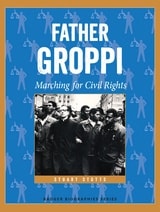
Father Groppi
Marching for Civil RightsStuart Stotts
Wisconsin Historical Society Press, 2013
Father Groppi Marched to Change Milwaukee
"Father Groppi: Marching for Civil Rights" tells the story of Father James Groppi, a Catholic priest from Milwaukee, Wis., who stood up for civil rights in the 1960s and 1970s.
This important new addition to the Badger Biographies series for young readers also tells about a turbulent time in Wisconsin history and sheds light on the civil rights movement and its place in the North.
Growing up on the south side of Milwaukee as the son of Italian immigrants, young James Groppi learned early on what it felt like to be made fun of just because of who you are, and he learned to respect people from other races and ethnic groups. Later, while studying to become a priest, he saw the discrimination African Americans faced. It made him angry, and he vowed to do whatever he could to fight racism.
Father Groppi marched with Dr. Martin Luther King Jr. and other leaders of the civil rights movement. But he knew there was work to be done in his own city. In Milwaukee, he teamed up with the NAACP and other organizations, protesting discrimination and segregation wherever they saw it. It wasn't always easy, and Father Groppi and the other civil rights workers faced great challenges.
Fear and the First Amendment
Controversial Cases of the Roberts CourtKevin A. Johnson and Craig R. Smith
University of Alabama Press, 2024
DISTINGUISHED PUBLICATION AWARD FOR THE NATIONAL COMMUNICATION ASSOCIATION'S COMMUNICATION AND LAW DIVISION
The First Amendment: protected by law, threatened by fear in the Roberts Supreme Court.
In Fear and the First Amendment: Controversial Cases of the Roberts Court, Kevin A. Johnson and Craig R. Smith offer a deeply considered examination of the ways fear figures in First Amendment questions. Bringing together literature on theories of fear in rhetorical and philosophical traditions, Johnson and Smith focus on the rulings from the Roberts Court, which form a pivotal era of dramatic precedents. Each chapter analyzes one or more First Amendment cases and a variety of related fears—whether evidentiary or not—that pertain to a given case.
These cases include Morse v. Frederick, which takes up the competing fears of school administrators’ loss of authority and students’ loss of free speech rights. The authors touch on corporate funding of elections in Citizens United v. Federal Elections Commission, from the fear of corporate influence on electoral politics to corporate fears of alienating their consumers by backing political candidates. They explore religious freedom and fears of homosexuality in Christian Legal Society v. Martinez. Similarly, in Snyder v. Phelps, the authors delve further into fears of God, death, emotional distress, failing as a parent, and losing one’s reputation. Next, they investigate parents’ anxieties about violence in video games in Brown v. Entertainment Merchants Association. Finally, Johnson and Smith examine the role of fear in indecent, obscene, and graphic communication in three cases: FCC v. Fox Television Stations, Ashcroft v. American Civil Liberties Union, and United States v. Stevens.
Together these cases reveal fear to be an endemic factor in the rhetoric of First Amendment cases. This fascinating and original work will appeal to current legal practitioners and students of law, rhetoric, philosophy, and the First Amendment.
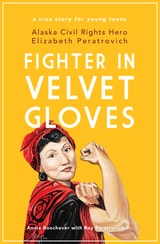
Fighter in Velvet Gloves
Alaska Civil Rights Hero Elizabeth PeratrovichAnnie Boochever with Roy Peratrovich Jr.
University of Alaska Press, 2019
In 1945, Peratrovich stood before the Alaska Territorial Legislative Session and gave a powerful speech about her childhood and her experiences being treated as a second-class citizen. Her heartfelt testimony led to the passing of the landmark Alaska Anti-Discrimination Act, America’s first civil rights legislation. Today, Alaska celebrates Elizabeth Peratrovich Day every February 16, and she was honored on the gold one-dollar coin in 2020.
Annie Boochever worked with Elizabeth’s eldest son, Roy Peratrovich Jr., to bring Elizabeth’s story to life in the first book written for young teens on this remarkable Alaska Native woman.
Finding the Lost Year
What Happened When Little Rock Closed Its Public SchoolsSondra Gordy
University of Arkansas Press, 2009
Much has been written about the Little Rock School Crisis of 1957, but very little has been devoted to the following year—the Lost Year, 1958–59—when Little Rock schools were closed to all students, both black and white. Finding the Lost Year is the first book to look at the unresolved elements of the school desegregation crisis and how it turned into a community crisis, when policymakers thwarted desegregation and challenged the creation of a racially integrated community and when competing groups staked out agendas that set Arkansas’s capital on a path that has played out for the past fifty years.
In Little Rock in 1958, 3,665 students were locked out of a free public education. Teachers’ lives were disrupted, but students’ lives were even more confused. Some were able to attend schools outside the city, some left the state, some joined the military, some took correspondence courses, but fully 50 percent of the black students went without any schooling. Drawing on personal interviews with over sixty former teachers and students, black and white, Gordy details the long-term consequences for students affected by events and circumstances over which they had little control.
“Fifty years ago segregationists trying to keep black students out of Little Rock Central High inadvertently broke up one of the country’s greatest football dynasties. . . . Wait a minute. . . . Who said you can’t have a high school football team just because you don’t have a high school? Canceling football, Faubus decreed, would be ‘a cruel and unnecessary blow to the children.’ O.K. then, everyone agreed. Play ball!”
—“Blinded by History,” Sports Illustrated
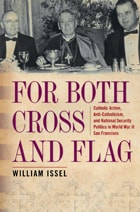
For Both Cross and Flag
Catholic Action, Anti-Catholicism, and National Security Politics in World War II San FranciscoAuthored by William Issel
Temple University Press, 2010
In this fascinating, detailed history, William Issel recounts the civil rights abuses suffered by Sylvester Andriano, an Italian American Catholic civil leader whose religious and political activism in San Francisco provoked an Anti-Catholic campaign against him. A leading figure in the Catholic Action movement, Andriano was falsely accused in state and federal Un-American Activities Committee hearings of having Fascist sympathies prior to and during World War II. As his ordeal began, Andriano was subjected to a hostile investigation by the FBI, whose confidential informants were his political rivals. Furthermore, the U.S. Army ordered him to be relocated on the grounds that he was a security risk.
For Both Cross and Flag provides a dramatic illustration of what can happen when parties to urban political rivalries, rooted in religious and ideological differences, seize the opportunity provided by a wartime national security emergency to demonize their enemy as “a potentially dangerous person.”
Issel presents a cast of characters that includes archbishops, radicals, the Kremlin, and J. Edgar Hoover, to examine the significant role faith-based political activism played in the political culture that violated Andriano’s constitutional rights. Exploring the ramifications of this story, For Both Cross and Flag presents interesting implications for contemporary events and issues relating to urban politics, ethnic groups, and religion in a time of war.
For Dear Life
Women's Decriminalization and Human Rights in FocusCarol Jacobsen
University of Michigan Press, 2019

For Freedom's Sake
The Life of Fannie Lou HamerChana Kai Lee
University of Illinois Press, 1999
The youngest of twenty children of sharecroppers in rural Mississippi, Fannie Lou Hamer witnessed throughout her childhood the white cruelty, political exclusion, and relentless economic exploitation that defined African American existence in the Delta.
In this intimate biography, Chana Kai Lee documents Hamer's lifelong crusade to empower the poor through collective action, her rise to national prominence as a civil rights activist, and the personal costs of her ongoing struggle to win a political voice and economic self-sufficiency for blacks in the segregated South. Lee looks at Hamer's early work as a field secretary for the Student Nonviolent Coordinating Committee in Mississippi, her dramatic appearance at the 1964 Democratic National Convention, and her ongoing work as a militant grassroots leader in her own community.
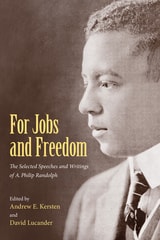
For Jobs and Freedom
Selected Speeches and Writings of A. Philip RandolphAndrew E. Kersten
University of Massachusetts Press, 2014
This volume documents Randolph's life and work through his own writings. The editors have combed through the files of libraries, manuscript collections, and newspapers, selecting more than seventy published and unpublished pieces that shed light on Randolph's most significant activities. The book is organized thematically around his major interests—dismantling workplace inequality, expanding civil rights, confronting racial segregation, and building international coalitions. The editors provide a detailed biographical essay that helps to situate the speeches and writings collected in the book. In the absence of an autobiography, this volume offers the best available presentation of Randolph's ideas and arguments in his own words.
Forever Suspect
Racialized Surveillance of Muslim Americans in the War on TerrorSelod, Saher
Rutgers University Press, 2018
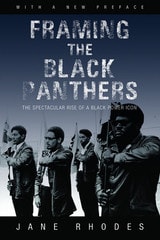
Framing the Black Panthers
The Spectacular Rise of a Black Power IconJane Rhodes
University of Illinois Press, 2017
Free Speech and Censorship Around the Globe
Peter Molnar
Central European University Press, 2015
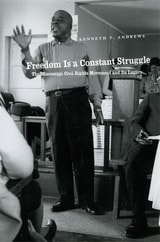
Freedom Is a Constant Struggle
The Mississippi Civil Rights Movement and Its LegacyKenneth T. Andrews
University of Chicago Press, 2004
Freedom Is a Constant Struggle is also the first book of its kind to detail the activities of white supremacists in Mississippi, revealing how white repression and intimidation sparked black activism and simultaneously undermined the movement's ability to achieve far-reaching goals. Andrews shows that the federal government's role was important but reactive as federal actors responded to the sustained struggles between local movements and their opponents. He tracks the mobilization of black activists by the NAACP, the creation of Freedom Summer, efforts to galvanize black voters, the momentous desegregation of public schools and the rise of all-white private academies, and struggles over the economic development of black communities. From this complex history, Andrews shows how the civil rights movement built innovative organizations and campaigns that empowered local leadership and had a lasting legacy in Mississippi and beyond.
Based on an original and creative research design that combines extensive archival research, interviews with activists, and quantitative historical data, Freedom Is a Constant Struggle provides many new insights into the civil rights struggle, and it presents a much broader theory to explain whether and how movements have enduring impacts on politics and society. What results is a work that will be invaluable to students of social movements, democratic politics, and the struggle for racial freedom in the U.S.
Freedom from the Press
Journalism and State Power in SingaporeCherian George
National University of Singapore Press, 2011
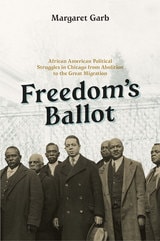
Freedom's Ballot
African American Political Struggles in Chicago from Abolition to the Great MigrationMargaret Garb
University of Chicago Press, 2014
Freedom’s Ballot is the history of three generations of African American activists—the ministers, professionals, labor leaders, clubwomen, and entrepreneurs—who transformed twentieth-century urban politics. This is a complex and important story of how black political power was institutionalized in Chicago in the half-century following the Civil War. Margaret Garb explores the social and political fabric of Chicago, revealing how the physical makeup of the city was shaped by both political corruption and racial empowerment—in ways that can still be seen and felt today.
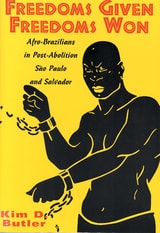
Freedoms Given, Freedoms Won
Afro-Brazilians in Post-Abolition São Paolo and SalvadorButler, Kim D
Rutgers University Press, 1998
Freedoms Given, Freedoms Won explores the ways Afro-Brazilians in two major cities adapted to the new conditions of life after the abolition of slavery and how they confronted limitations placed on their new freedom. The book sets forth new ways of understanding why the abolition of slavery did not yield equitable fruits of citizenship, not only in Brazil, but throughout the Americas and the Caribbean.
Afro-Brazilians in Sao Paulo and Salvador lived out their new freedom in ways that raise issues common to the entire Afro-Atlantic diaspora. In Sao Paulo, they initiated a vocal struggle for inclusion in the creation of the nation's first black civil rights organization and political party, and they appropriated a discriminatory identity that isolated blacks. In contrast, African identity prevaled over black identity in Salvador, where social protest was oriented toward protecting the right of cultural pluralism.
Of all the eras and issues studied in Afro-Brazilian history, post-abolition social and political action has been the most neglected. Butler provides many details of this period for the first time in English and supplements published sources with original oral histories, Afro-Brazilian newspapers, and new state archival documents currently being catalogued in Bahia. Freedoms Given, Freedoms Won sets the Afro-Brazilian experience in a national context as well as situating it within the Afro-Atlantic diaspora through a series of explicit parallels, particularly with Cuba and Jamaica.
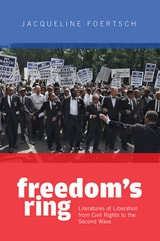
Freedom’s Ring
Literatures of Liberation from Civil Rights to the Second WaveJacqueline Foertsch
Rutgers University Press, 2021
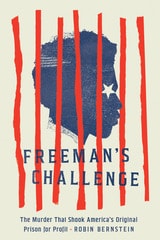
Freeman's Challenge
The Murder That Shook America's Original Prison for ProfitRobin Bernstein
University of Chicago Press, 2024
An award-winning historian tells a gripping, morally complicated story of murder, greed, race, and the true origins of prison for profit.
In the early nineteenth century, as slavery gradually ended in the North, a village in New York State invented a new form of unfreedom: the profit-driven prison. Uniting incarceration and capitalism, the village of Auburn built a prison that enclosed industrial factories. There, “slaves of the state” were leased to private companies. The prisoners earned no wages, yet they manufactured furniture, animal harnesses, carpets, and combs, which consumers bought throughout the North. Then one young man challenged the system.
In Freeman’s Challenge, Robin Bernstein tells the story of an Afro-Native teenager named William Freeman who was convicted of a horse theft he insisted he did not commit and sentenced to five years of hard labor in Auburn’s prison. Incensed at being forced to work without pay, Freeman demanded wages. His challenge triggered violence: first against him, then by him. Freeman committed a murder that terrified and bewildered white America. And white America struck back—with aftereffects that reverberate into our lives today in the persistent myth of inherent Black criminality. William Freeman’s unforgettable story reveals how the North invented prison for profit half a century before the Thirteenth Amendment outlawed slavery “except as a punishment for crime”—and how Frederick Douglass, Harriet Tubman, and other African Americans invented strategies of resilience and resistance in a city dominated by a citadel of unfreedom.
Through one Black man, his family, and his city, Bernstein tells an explosive, moving story about the entangled origins of prison for profit and anti-Black racism.
From Du Bois to Obama
African American Intellectuals in the Public ForumCharles Pete Banner-Haley
Southern Illinois University Press, 2014
In his groundbreaking new book Charles Pete Banner-Haley explores the history of African American intellectualism and reveals the efforts of black intellectuals in the ongoing struggle against racism, showing how they have responded to Jim Crow segregation, violence against black Americans, and the more subtle racism of the postintegration age. Banner-Haley asserts that African American intellectuals—including academicians, social critics, activists, and writers—serve to generate debate, policy, and change, acting as a moral force to persuade Americans to acknowledge their history of slavery and racism, become more inclusive and accepting of humanity, and take responsibility for social justice.
Other topics addressed in this insightful study include the disconnection over time between black intellectuals and the masses for which they speak; the ways African American intellectuals identify themselves in relation to the larger black community, America as a whole, and the rest of the world; how black intellectuals have gained legitimacy in American society and have accrued moral capital, especially in the area of civil rights; and how that moral capital has been expended. Among the influential figures covered in the book are W. E. B. Du Bois, Ralph Ellison, Richard Wright, James Weldon Johnson, E. Franklin Frazier, Ralph Bunche, Oliver C. Cox, George S. Schuyler, Zora Neale Hurston, Martin Luther King, Jr., Jesse Jackson, Cornel West, Toni Morrison, bell hooks, Charles Johnson, and Barack Obama.
African American intellectuals, as Banner-Haley makes clear, run the political gamut from liberal to conservative. He discusses the emergence of black conservatism, with its accompanying questions about affirmative action, government intervention on behalf of African Americans, and the notion of a color-blind society. He also looks at how popular music—particularly rap and hip-hop—television, movies, cartoons, and other media have functioned as arenas for investigating questions of identity, exploring whether African American intellectuals can also be authentically black.
A concluding discussion of the so-called browning of America, and the subsequent rise in visibility and influence of black intellectuals culminates with the historic election of President Barack Obama, an African American intellectual who has made significant contributions to American society through his books, articles, and speeches. Banner-Haley ponders what Obama’s election will mean for the future of race relations and black intellectualism in America.
From Enron to Evo
Pipeline Politics, Global Environmentalism, and Indigenous Rights in BoliviaDerrick Hindery; Foreword by Susanna B. Hecht
University of Arizona Press, 2013
Drawing upon extensive interviews and document analysis, Hindery argues that many of the structural conditions created by neoliberal policies—including partial privatization of the oil and gas sector—still persist under Morales. Tactics employed by both Morales and his neoliberal predecessors utilize the rhetoric of environmental protection and Indigenous rights to justify oil, gas, mining, and road development in Indigenous territories and sensitive ecoregions.
Indigenous peoples, while mindful of gains made during Morales’s tenure, are increasingly dissatisfied with the administration’s development model, particularly when it infringes upon their right to self-determination. From Enron to Evo demonstrates their dynamic and pragmatic strategies to cope with development and adversity, while also advancing their own aims.
Offering a critique of both free-market piracy and the dilemmas of resource nationalism, this is a groundbreaking book for scholars, policy-makers, and advocates concerned with Indigenous politics, social movements, environmental justice, and resistance in an era of expanding resource development.
From Good Will To Civil Rights
Transforming Federal Disability PolicyRichard K. Scotch
Temple University Press, 2001
The first edition of From Good Will to Civil Rights traced the changes in federal disability policy, focusing on the development and implementation of Section 504 of the Rehabilitation Act of 1973. Richard K. Scotch's extensive interviews with policymakers, leaders of the disability rights movement, and other advocates, supplemented the sketchy official history of the legislation with the detailed, behind-the-scenes story, illuminating the role of the disability rights movement in shaping Section 504. Charting the shifts in policy and activist agendas through the 1990's, this new edition surveys the effects and disappointments associated with the Americans with Disabilities Act, passed in 1990, in the context of the continuing movement to secure civil rights for disabled people.
From Rebellion to Riots
Collective Violence on Indonesian BorneoJamie S. Davidson
University of Wisconsin Press, 2008
“A comprehensive case study . . . . Essential reading for students of the West Kalimantan violence.”—Dave McRae, Indonesia
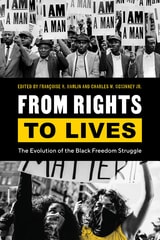
From Rights to Lives
The Evolution of the Black Freedom StruggleEdited by Françoise N. Hamlin and Charles W. McKinney Jr.
Vanderbilt University Press, 2024
From Rights to Lives critically engages the dynamic relationship between these two moments of liberatory possibility on the Black Freedom Struggle timeline. The book’s contributors explore what we can learn when we place these moments of struggle in dialogue with each other. They grapple with how our understanding of the postwar moment shapes our analysis of #BLM and wherein lie the discontinuities, in order to glean lessons for future moments of insurgency.
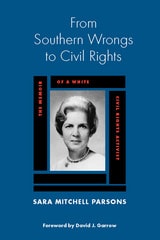
From Southern Wrongs to Civil Rights
The Memoir of a White Civil Rights ActivistSara Mitchell Parsons
University of Alabama Press, 2009
This first-hand account tells the story of turbulent civil rights era Atlanta through the eyes of a white upper-class woman who became an outspoken advocate for integration and racial equality
As a privileged white woman who grew up in segregated Atlanta, Sara Mitchell Parsons was an unlikely candidate to become a civil rights agitator. After all, her only contacts with blacks were with those who helped raise her and those who later helped raise her children. As a young woman, she followed the conventional path expected of her, becoming the dutiful wife of a conservative husband, going to the country club, and playing bridge. But unlike many of her peers, Parsons harbored an increasing uneasiness about racial segregation.In a memoir that includes candid diary excerpts, Parsons chronicles her moral awakening. With little support from her husband, she runs for the Atlanta Board of Education on a quietly integrationist platform and, once elected, becomes increasingly outspoken about inequitable school conditions and the slow pace of integration. Her activities bring her into contact with such civil rights leaders as Martin Luther King, Jr., and his wife, Coretta Scott King. For a time, she leads a dual existence, sometimes traveling the great psychic distance from an NAACP meeting on Auburn Avenue to an all-white party in upscale Buckhead. She eventually drops her ladies' clubs, and her deepening involvement in the civil rights movement costs Parsons many friends as well as her first marriage.
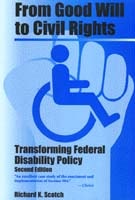
From good will to civil rights
transforming federal disability policyRichard K. Scotch
Temple University Press, 1984
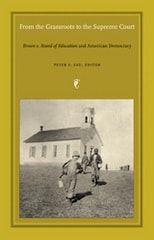
From the Grassroots to the Supreme Court
Brown v. Board of Education and American DemocracyPeter F. Lau, ed.
Duke University Press, 2004
The contributors illuminate the breadth of developments that led to Brown, from the parallel struggles for social justice among African Americans in the South and Mexican, Asian, and Native Americans in the West during the late nineteenth century to the political and legal strategies implemented by the National Association for the Advancement of Colored People (naacp) in the twentieth century. Describing the decision’s impact on local communities, essayists explore the conflict among African Americans over the implementation of Brown in Atlanta’s public schools as well as understandings of the ruling and its relevance among Puerto Rican migrants in New York City. Assessing the legacy of Brown today, contributors analyze its influence on contemporary law, African American thought, and educational opportunities for minority children.
Contributors
Tomiko Brown-Nagin
Davison M. Douglas
Raymond Gavins
Laurie B. Green
Christina Greene
Blair L. M. Kelley
Michael J. Klarman
Peter F. Lau
Madeleine E. Lopez
Waldo E. Martin Jr.
Vicki L. Ruiz
Christopher Schmidt
Larissa M. Smith
Patricia Sullivan
Kara Miles Turner
Mark V. Tushnet
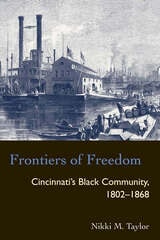
Frontiers of Freedom
Cincinnati’s Black Community 1802–1868Nikki M. Taylor
Ohio University Press, 2004
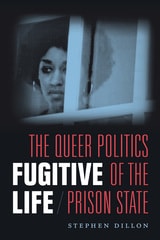
Fugitive Life
The Queer Politics of the Prison StateStephen Dillon
Duke University Press, 2018