Results by title
808 books match the query 'Civilization' and 34 start with f
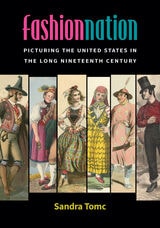
Fashion Nation
Picturing the United States in the Long Nineteenth CenturySandra Tomc
University of Michigan Press, 2021

Fault Lines and Controversies in the Study of Seventeenth-Century English Literature
Edited & Intro Claude J. Summers & Ted-Lary Pebworth
University of Missouri Press, 2002

Fears and Symbols
An Introduction to the Study of Western CivilizationElemér Hankiss
Central European University Press, 2001
This is a serious scholarly work that is, at the same time, somewhat unorthodox. On the one hand, it elaborates a systematic theory of civilization. It surveys the major theories of civilization and develops a new hypothesis, according to which existential fear has been a major factor in the generation of human culture. The author argues that in order to mitigate this fear and anxiety, human beings and communities have surrounded themselves not only with the walls of their houses and cities, with tools and weapons, laws and institutions, but also with protective spheres of symbols: myths and religions, values and belief systems, ideas and scientific theories, moral and practical rules of behavior, and a multitude of everyday rituals and trivialities. In a word, with the brilliant construct: civilization.
It is, on the other hand, an unorthodox book in that it studies an unusually wide range of examples and shows that the struggle for safety and freedom, for a meaningful life and human dignity, is present not only in the great symbolic systems of humankind but also in the most trivial of everyday activities and aspects of human existence; in tragedies as well as jokes, in the sacred as well as the profane, in the symbolism of medieval cathedrals as well as in that of contemporary shopping malls, in the great drama of Sin and Salvation as well as in the trivial mythology of perfumes. Ultimately, our trivialities are not trivial at all.

Fernando Ortiz
Caribbean and Mediterranean CounterpointsEdited by Stephan Palmié
HAU, 2023
Fernando Ortiz (1881–1969) coined the term “transculturation” in 1940. This was an early case of theory from the South: concepts developed from an explicitly peripheral epistemological vantage point and launched as a corrective to European and North American theoretical formulations. What Ortiz proposed was a contrapuntal vision of complexly entangled processes that we, today, would conceptualize as cultural emergence.
Inspired by Ortiz, this volume engineers an unprecedented conversation between Mediterraneanists and Caribbeanists. It harnesses Ortiz’s mid-twentieth-century theoretical formulations to early twenty-first-century issues pertinent to both regions, including migration, territorial sovereignty, and cultural diversity. The contributors explore this perspective (arguably formed during Ortiz’s youth in late nineteenth-century Menorca) in a dialogue between scholars of the contemporary Caribbean and Mediterranean to enable novel analytics for both regions and to more broadly to probe the promises and limits of Ortiz’s contribution for contemporary anthropological research and theorizing.
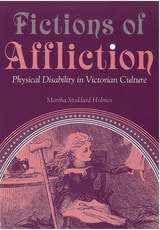
Fictions of Affliction
Physical Disability in Victorian CultureMartha Stoddard Holmes
University of Michigan Press, 2010
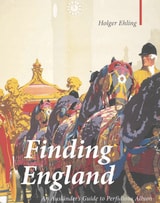
Finding England
An Auslander's Guide to Perfidious AlbionHolger Ehling
Haus Publishing, 2013
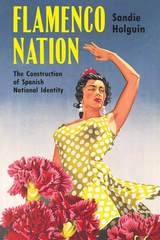
Flamenco Nation
The Construction of Spanish National IdentitySandie Holguín
University of Wisconsin Press, 2019
Holguín brings forth an important interplay between regional nationalists and image makers actively involved in building a tourist industry. Soon they realized flamenco performances could be turned into a folkloric attraction that could stimulate the economy. Tourists and Spaniards alike began to cultivate flamenco as a representation of the country's national identity. This study reveals not only how Spain designed and promoted its own symbol but also how this cultural form took on a life of its own.

Flour for Man’s Bread
A History of MillingWalter Dorwin TeagueJohn Storck, EditorIllustrations by Harold Rydell
University of Minnesota Press, 1952
Flour for Man's Bread was first published in 1952. Minnesota Archive Editions uses digital technology to make long-unavailable books once again accessible, and are published unaltered from the original University of Minnesota Press editions.
From prehistoric times to the present, the ways in which man has made flour for his bread have forged the patterns of technological progress and have greatly influenced his social development. This book describes in detail how people of the western world have ground their grain - by hand, by animal-driven wheels, by crude water-powered mills, and, finally, by complex engineering methods. The story of milling provides a graphic history of man's ingenuity in the mechanical arts, his harnessing of power sources, and his development of agricultural skill.
While the central theme is the improvement of technical processes, this development is presented, not in a vacuum, but in the context of economic geography and social history. Thus the volume offers much of importance to students of social economic history, archaeology, anthropology, sociology, agriculture, and general technology, as well as those with a specific interest in milling methods.
The book brings to readers some of the advantages of what was originally projected as a museum of flour milling several years ago by General Mills. Walter Dorwin Teague, the noted industrial designer, drew plans for the museum and arranged for the fundamental research, which was carried out by Dr. John Storck, anthropologist and former professor at Columbia University and Sarah Lawrence College. Hundreds of detailed drawings illustrating the processes and devices described were prepared under their direction. Although plans for the museum had to be abandoned, the extensive research and excellent illustrative material are now made available in this comprehensive, single volume history of milling and its social and economic implications.
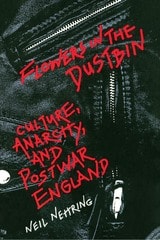
Flowers in the Dustbin
Culture, Anarchy, and Postwar EnglandNeil Nehring
University of Michigan Press, 1993
Flowers in the Dustbin looks at the volatile relations between literature, rock music, and youth subcultures in postwar England. Neil Nehring traces the continuities between the original avant-garde of the twenties and thirties and the postwar youth culture, arguing that anarchism never really disappeared from the world. The author shows that British youth groups like the Mods, the Rockers, Punks, and Teddy Boys and the music that inspired them appear increasingly more acute than their literary counterparts, belying conventional assumptions about the relative powers of "high" and "low" culture. By examining literary texts as part of a larger sampling of cultural forms and their uses in everyday life, Flowers in the Dustbin provides a striking illustration of the significance the field of cultural studies holds for studies in English.
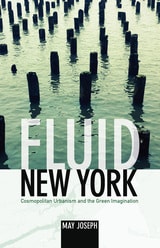
Fluid New York
Cosmopolitan Urbanism and the Green ImaginationMay Joseph
Duke University Press, 2013
Joseph considers New York's relation to the water that surrounds and defines it. Her reflections reach back to the city's heyday as a world-class port—a past embodied in a Dutch East India Company cannon recently unearthed from the rubble at the World Trade Center site—and they encompass the devastation caused by Hurricane Sandy in 2012. They suggest that New York's future lies in the reclamation of its great water resources—for artistic creativity, civic engagement, and ecological sustainability.

Folded Selves
Colonial New England Writing in the World SystemMichelle Burnham
Dartmouth College Press, 2014

Follow Your Conscience
The Catholic Church and the Spirit of the SixtiesPeter Cajka
University of Chicago Press, 2021
Peter Cajka’s erudite book shows how even staunch Catholics were transformed by the maelstrom of the American Sixties, turning away from powerful and corrupt institutions and toward the inner moral compass provided by their own consciences.
What is your conscience? Is it, as Peter Cajka asks in this provocative book, “A small, still voice? A cricket perched on your shoulder? An angel and devil who compete for your attention?” Going back at least to the thirteenth century, Catholics viewed their personal conscience as a powerful and meaningful guide to align their conduct with worldly laws. But, as Cajka shows in Follow Your Conscience, during the national cultural tumult of the 1960s, the divide between the demands of conscience and the demands of the law, society, and even the church itself grew increasingly perilous. As growing numbers of Catholics started to consider formerly stout institutions to be morally hollow—especially in light of the Vietnam War and the church’s refusal to sanction birth control—they increasingly turned to their own consciences as guides for action and belief. This abandonment of higher authority had radical effects on American society, influencing not only the broader world of Christianity, but also such disparate arenas as government, law, health care, and the very vocabulary of American culture. As this book astutely reveals, today’s debates over political power, religious freedom, gay rights, and more are all deeply infused by the language and concepts outlined by these pioneers of personal conscience.
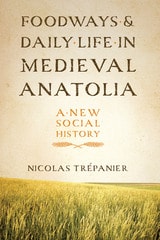
Foodways and Daily Life in Medieval Anatolia
A New Social HistoryBy Nicolas Trépanier
University of Texas Press, 2014
Byzantine rule over Anatolia ended in the eleventh century, leaving the population and its Turkish rulers to build social and economic institutions throughout the region. The emerging Anatolian society comprised a highly heterogeneous population of Christians and Muslims whose literati produced legal documents in Arabic, literary texts in Persian, and some of the earliest written works in the Turkish language. Yet the cultural landscape that emerged as a result has received very little attention—until now.
Investigating daily life in Anatolia during the fourteenth century, Foodways and Daily Life in Medieval Anatolia draws on a creative array of sources, including hagiographies, archaeological evidence, Sufi poetry, and endowment deeds, to present an accessible portrait of a severely under-documented period. Grounded in the many ways food enters the human experience, Nicolas Trépanier’s comprehensive study delves into the Anatolian preparation of meals and the social interactions that mealtime entails—from a villager’s family supper to an elaborately arranged banquet—as well as the production activities of peasants and gardeners; the marketplace exchanges of food between commoners, merchants, and political rulers; and the religious landscape that unfolded around food-related beliefs and practices. Brimming with enlightening details on such diverse topics as agriculture, nomadism, pastoralism, medicine, hospitality, and festival rituals, Foodways and Daily Life in Medieval Anatolia presents a new understanding of communities that lived at a key juncture of world history.
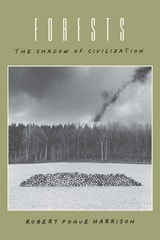
Forests
The Shadow of CivilizationRobert Pogue Harrison
University of Chicago Press, 1992
"Forests is one of the most remarkable essays on the human place in nature I have ever read, and belongs on the small shelf that includes Raymond Williams' masterpiece, The Country and the City. Elegantly conceived, beautifully written, and powerfully argued, [Forests] is a model of scholarship at its passionate best. No one who cares about cultural history, about the human place in nature, or about the future of our earthly home, should miss it.—William Cronon, Yale Review
"Forests is, among other things, a work of scholarship, and one of immense value . . . one that we have needed. It can be read and reread, added to and commented on for some time to come."—John Haines, The New York Times Book Review
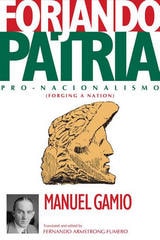
Forjando Patria
Pro-NacionalismoManuel Gamio
University Press of Colorado, 2026
Armstrong-Fumero's translation allows readers to develop a more nuanced understanding of this foundational work, which is often misrepresented in contemporary critical analyses. As much about national identity as anthropology, this text gives Anglophone readers access to a particular set of topics that have been mentioned extensively in secondary literature but are rarely discussed with a sense of their original context. Forjando Patria also reveals the many textual ambiguities that can lend themselves to different interpretations.
The book highlights the history and development of Mexican anthropology and archaeology at a time when scholars in the United States are increasingly recognizing the importance of cross-cultural collaboration with their Mexican colleagues. It will be of interest to anthropologists and archaeologists studying the region, as well as those involved in the history of the discipline.
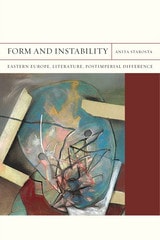
Form and Instability
Eastern Europe, Literature, Postimperial DifferenceAnita Starosta
Northwestern University Press, 2015
Located at the intersection of comparative literature, area studies, and literary theory, this interdisciplinary study has a twofold commitment: to Eastern Europe on the one hand and to literature on the other. It aims to intervene in the way we conceive of Eastern Europe by seeking to develop a more equitable way of thinking, one that avoids subordinating it to Eurocentric narratives of progress. At the same time, it marshals literature as both object and method of this rethinking, in order to extend existing conceptions of the usefulness and of the proper organization of literary studies. The three terms in the title of this book mark a passage—via literature—from “Eastern Europe” as an inadequate and obsolescent category to “post-imperial difference” as a more accurate, if provisional, account of the region. By way of original readings of particular texts, and by attending to literature as a critical
Formations of Colonial Modernity in East Asia
Tani E. Barlow, ed.
Duke University Press, 1997
Demonstrating an impatience with social science models of knowledge, the contributors show that binary categories focused on during the Cold War are no longer central to the project of history writing. By bringing together articles previously published in the journal positions: east asia cultures critique, editor Tani Barlow has demonstrated how scholars construct identity and history, providing cultural critics with new ways to think about these concepts—in the context of Asia and beyond.
Chapters address topics such as the making of imperial subjects in Okinawa, politics and the body social in colonial Hong Kong, and the discourse of decolonization and popular memory in South Korea. This is an invaluable collection for students and scholars of Asian studies, postcolonial studies, and anthropology.
Contributors. Charles K. Armstrong, Tani E. Barlow, Fred Y. L. Chiu, Chungmoo Choi, Alan S. Christy, Craig Clunas, James A. Fujii, James L. Hevia, Charles Shiro Inouye, Lydia H. Liu, Miriam Silverberg, Tomiyama Ichiro, Wang Hui
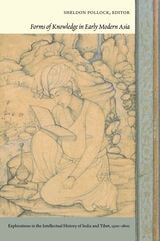
Forms of Knowledge in Early Modern Asia
Explorations in the Intellectual History of India and Tibet, 1500-1800Sheldon Pollock, ed.
Duke University Press, 2011
Contributors. Muzaffar Alam, Imre Bangha, Aditya Behl, Allison Busch, Sumit Guha, Janet Gyatso, Matthew T. Kapstein, Françoise Mallison, Sheldon Pollock, Velcheru Narayana Rao, Kurtis R. Schaeffer, Sunil Sharma, David Shulman, Sanjay Subrahmanyam, Mohamad Tavakoli-Targhi

Forms of Nationhood
The Elizabethan Writing of EnglandRichard Helgerson
University of Chicago Press, 1992
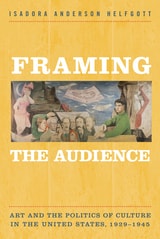
Framing the Audience
Art and the Politics of Culture in the United States, 1929-1945Isadora Helfgott
Temple University Press, 2015
Framing the Audience explores the cultural politics of the Great Depression and World War II through the prism of art appreciation. Isadora Helfgott interrogates the ideological and political motivations for breaking down barriers between fine art and popular culture. She charts the impact that changes in art appreciation had on the broader political, social, cultural, and artistic landscape.
Framing the Audience argues that efforts to expand the social basis of art became intertwined with—and helped shape—broader debates about national identity and the future of American political economy. Helfgott chronicles artists’ efforts toinfluence the conditions of artistic production and display. She highlights the influence of the Federal Art Project, the impact of the Museum of Modern Art as an institutional home for modernism in America and as an organizer of traveling exhibitions, and the efforts by LIFE and Fortune magazines to integrate art education into their visual record of modern life. In doing so, Helfgott makes critical observations about the changing relationship between art and the American public.

Francophonie en Orient
Aux croisements France-Asie (1840-1940)Mathilde Kang
Amsterdam University Press, 2017

Free to All
Carnegie Libraries & American Culture, 1890-1920Abigail A. Van Slyck
University of Chicago Press, 1996
"The whole story is told here in this book. Carnegie's wishes, the conflicts among local groups, the architecture, development of female librarians. It's a rich and marvelous story, lovingly told."—Alicia Browne, Journal of American Culture
"This well-written and extensively researched work is a welcome addition to the history of architecture, librarianship, and philanthropy."—Joanne Passet, Journal of American History
"Van Slyck's book is a tremendous contribution for its keenness of scholarship and good writing and also for its perceptive look at a familiar but misunderstood icon of the American townscape."—Howard Wight Marshall, Journal of the Society of Architectural Historians
"[Van Slyck's] reading of the cultural coding implicit in the architectural design of the library makes a significant contribution to our understanding of the limitations of the doctrine 'free to all.'"—Virginia Quarterly Review
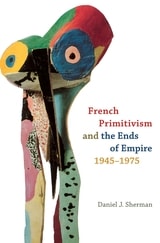
French Primitivism and the Ends of Empire, 1945-1975
Daniel J. Sherman
University of Chicago Press, 2011
For over a century, the idea of primitivism has motivated artistic modernism. Focusing on the three decades after World War II, known in France as “les trentes glorieuses” despite the loss of most of the country’s colonial empire, this probing and expansive book argues that primitivism played a key role in a French society marked by both economic growth and political turmoil.
Friars, Nobles and Burghers – Sermons, Images and Prints
Studies of Culture and Society in Early-Modern Europe - In Memoriam István György TóthLászló Kontler
Central European University Press, 2010

Frigid Embrace
Politics, Economics, and Environment in AlaskaStephen Haycox
Oregon State University Press, 2002

From Civilization To Segregation
Social Ideals and Social Control in Southern Rhodesia, 1890–1934Carol Summers
Ohio University Press, 1994
This study examines the social changes that took place in Southern Rhodesia after the arrival of the British South Africa Company in the 1890s. Summer’s work focuses on interactions among settlers, the officials of the British South America Company and the administration, missionaries, humanitarian groups in Britain, and the most vocal or noticeable groups of Africans. Through this period of military conquest and physical coercion, to the later attempts at segregationist social engineering, the ideals and justifications of Southern Rhodesians changed drastically. Native Policy, Native Education policies, and, eventually, segregationist Native Development policies changed and evolved as the white and black inhabitants of Southern Rhodesia (colonial Zimbabwe) struggled over the region’s social form and future.
Summers’s work complements a handful of other recent works reexamining the social history of colonial Zimbabwe and demonstrating how knowledge, perception, and ideologies interacted with the economic and political dimensions of the region’s past.

From Counter-Reformation to Glorious Revolution
Hugh Trevor-Roper
University of Chicago Press, 1992
The pieces here range from an account of the Jesuit Matteo Ricci's mission in China in the sixteenth century to a discussion of the Anglo-Scottish Union. They include essays on medicine at the early Stuart Court, on the plunder of artistic treasures in Europe during the wars of the seventeenth century, on the plans of Hugo Grotius to create a new universal church on an Anglican base, on the Glorious Revolution of 1688 and religious toleration thereafter. There are also biographical studies of Archbishop Laud, Matthew Wren, the Earl of Clarendon, and Prince Rupert.
As Noel argument wrote in Our Age, Hugh Trevor-Roper has "perfected the historical essay as the most beguiling form of enlightening readers about the past. He is the most eloquent, sophisticated and assured historian of Our Age, and has never written an inelegant sentence or produced an incoherent arguement."
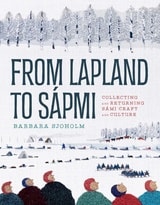
From Lapland to Sápmi
Collecting and Returning Sámi Craft and CultureBarbara Sjoholm
University of Minnesota Press, 2023
A cultural history of Sápmi and the Nordic countries as told through objects and artifacts
Material objects—things made, used, and treasured—tell the story of a people and place. So it is for the Indigenous Sámi living in Norway, Sweden, Finland, and Russia, whose story unfolds across borders and centuries, in museums and private collections. The objects created by the Sámi for daily and ceremonial use were purchased and taken by Scandinavians and foreign travelers in Lapland from the seventeenth century to the present, and the collections described in From Lapland to Sápmi map a complex history that is gradually shifting to a renaissance of Sámi culture and craft, along with the return of many historical objects to Sápmi, the Sámi homeland.
The Sámi objects first collected in Lapland by non-Indigenous people were drums and other sacred artifacts, but later came to include handmade knives, decorated spoons, clothing, and other domestic items owned by Sámi reindeer herders and fishers, as well as artisanal crafts created for sale. Barbara Sjoholm describes how these objects made their way via clergy, merchants, and early scientists into curiosity cabinets and eventually to museums in Copenhagen, Stockholm, Oslo, and abroad. Musicians, writers, and tourists also collected Sámi culture for research and enjoyment. Displays of Sámi material culture in Scandinavia and England, Germany, and other countries in museums, exhibition halls, and even zoos often became part of racist and colonial discourse as examples of primitive culture, and soon figured in the debates of ethnographers and curators over representations of national folk traditions and “exotic” peoples. Sjoholm follows these objects and collections from the Age of Enlightenment through the twentieth century, when artisanship took on new forms in commerce and museology and the Sámi began to organize politically and culturally. Today, several collections of Sámi objects are in the process of repatriation, while a new generation of artists, activists, and artisans finds inspiration in traditional heritage and languages.
Deftly written and amply illustrated, with contextual notes on language and Nordic history, From Lapland to Sápmi brings to light the history of collecting, displaying, and returning Sámi material culture, as well as the story of Sámi creativity and individual and collective agency.
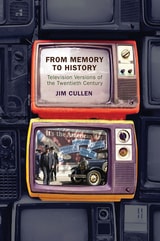
From Memory to History
Television Versions of the Twentieth CenturyJim Cullen
Rutgers University Press, 2021
From Memory to History takes readers on a journey through over fifty years of historical dramas and sitcoms that were set in earlier decades of the twentieth century. Along the way, it explores how comedies like M*A*S*H and Hogan’s Heroes offered veiled commentary on the Vietnam War, how dramas ranging like Mad Men echoed current economic concerns, and how The Americans and Halt and Catch Fire used the Cold War and the rise of the internet to reflect upon the present day. Cultural critic Jim Cullen is lively, informative, and incisive, and this book will help readers look at past times, present times, and prime time in a new light.
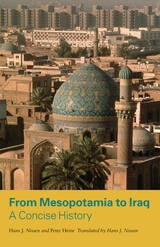
From Mesopotamia to Iraq
A Concise HistoryHans J. Nissen and Peter Heine
University of Chicago Press, 2009
The recent reopening of Iraq’s National Museum attracted worldwide attention, underscoring the country’s dual image as both the cradle of civilization and a contemporary geopolitical battleground. A sweeping account of the rich history that has played out between these chronological poles, From Mesopotamia to Iraq looks back through 10,000 years of the region’s deeply significant yet increasingly overshadowed past.
Hans J. Nissen and Peter Heine begin by explaining how ancient Mesopotamian inventions—including urban society, a system of writing, and mathematical texts that anticipated Pythagoras—profoundly influenced the course of human history. These towering innovations, they go on to reveal, have sometimes obscured the major role Mesopotamia continued to play on the world stage. Alexander the Great, for example, was fascinated by Babylon and eventually died there. Seventh-century Muslim armies made the region one of their first conquests outside the Arabian peninsula. And the Arab caliphs who ruled for centuries after the invasion built the magnificent city of Baghdad, attracting legions of artists and scientists. Tracing the evolution of this vibrant country into a contested part of the Ottoman Empire, a twentieth-century British colony, a republic ruled by Saddam Hussein, and the democracy it has become, Nissen and Heine repair the fragmented image of Iraq that has come to dominate our collective imagination.
In hardly any other continuously inhabited part of the globe can we chart such developments in politics, economy, and culture across so extended a period of time. By doing just that, the authors illuminate nothing less than the forces that have made the world what it is today.

From Walden Pond to Jurassic Park
Activism, Culture, and American StudiesPaul Lauter
Duke University Press, 2001
With anecdote peppered discussions ranging from specific literary texts and movies to the future of higher education and the efficacy of unions, From Walden Pond to Jurassic Park entertains even as it offers a twenty-first century account of how and why Americanists at home and abroad now do what they do. Drawing on his forty-five years of teaching and research as well as his experience as a political activist and a cultural radical, Lauter shows how a multifaceted increase in the United States’ global dominion has infused a particular political urgency into American Studies. With its military and economic influence, its cultural and linguistic reach, the United States is—for better or for worse—too formidable and potent not to be understood clearly and critically.

Fruitful Sites
Garden Culture in Ming Dynasty ChinaCraig Clunas
Duke University Press, 1996
Who owned Ming gardens? Who visited them? How were they represented in words, in paintings, and in visual culture generally, and what meanings did these representations hold at different levels of Chinese society? How did the discourse of gardens intersect with other discourses such as those of aesthetics, agronomy, geomancy, and botany? By examining the gardens of the city of Suzhou from a number of different angles, Craig Clunas provides a rich picture of a complex cultural phenomenon—one that was of crucial importance to the self-fashioning of the Ming elite.
Drawing on a wide range of recent work in cultural theory, the author provides for the first time a historical and materialist account of Chinese garden culture, and replaces broad generalizations and orientalist fantasy with a convincing picture of the garden’s role in social life. Fruitful Sites will appeal to all students of China’s cultural history, to students of garden history from any part of the world, to art historians, and to readers engaged in Asian and cultural studies.
Functions of Victorian Culture at the Present Time
Christine L. Krueger
Ohio University Press, 2002
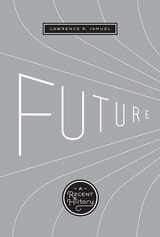
Future
A Recent HistoryBy Lawrence R. Samuel
University of Texas Press, 2009
The future is not a fixed idea but a highly variable one that reflects the values of those who are imagining it. By studying the ways that visionaries imagined the future—particularly that of America—in the past century, much can be learned about the cultural dynamics of the time.
In this social history, Lawrence R. Samuel examines the future visions of intellectuals, artists, scientists, businesspeople, and others to tell a chronological story about the history of the future in the past century. He defines six separate eras of future narratives from 1920 to the present day, and argues that the milestones reached during these years—especially related to air and space travel, atomic and nuclear weapons, the women's and civil rights movements, and the advent of biological and genetic engineering—sparked the possibilities of tomorrow in the public's imagination, and helped make the twentieth century the first century to be significantly more about the future than the past.
The idea of the future grew both in volume and importance as it rode the technological wave into the new millennium, and the author tracks the process by which most people, to some degree, have now become futurists as the need to anticipate tomorrow accelerates.