Results by title
341 books match the query 'Cooking' and 32 start with f
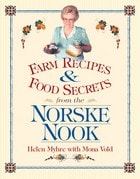
Farm Recipes and Food Secrets from the Norske Nook
Helen Myhre and Mona Vold
University of Wisconsin Press, 2001
When a small-town cafe in Osseo, Wisconsin, was praised for "some of the world’s best pies" in the best-selling guidebook Roadfood, Helen Myhre and the Norske Nook became famous! The same home-cooking tips Helen shared on "Late Night with David Letterman" she now shares with you. From breads to gravies, meats to jellies, and of course, that celebrated sour cream raisin pie, Myhre shows you how to bring a rich, thick slice of Midwest cooking into your kitchen.
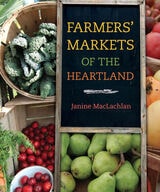
Farmers' Markets of the Heartland
Janine MacLachlan
University of Illinois Press, 2012
A visual feast of the Midwest's homegrown bounty
In this splendidly illustrated book, food writer and self-described farm groupie Janine MacLachlan embarks on a tour of seasonal markets and farmstands throughout the Midwest, sampling local flavors from Michigan, Ohio, Indiana, Illinois, Missouri, Iowa, Minnesota, and Wisconsin. She conducts delicious research as she meets farmers, tastes their food, and explores how their businesses thrive in the face of an industrial food supply. She tells the stories of a pair of farmers growing specialty crops on a few acres of northern Michigan for just a few months out of the year, an Ohio cattle farm that has raised heritage beef since 1820, and a Minnesota farmer who tirelessly champions the Jimmy Nardello sweet Italian frying pepper. Along the way, she savors vibrant red carrots, slurpy peaches, vast quantities of specialty cheeses, and some of the tastiest pie to cross anyone's lips.
Informed by debates about eating local, seasonal crops, organic farming, sanitation, and biodiversity, Farmers' Markets of the Heartland tantalizes with special recipes from farm-friendly chefs and dozens of luscious color photographs that will inspire you to harvest the homegrown flavors in your own neighborhood.
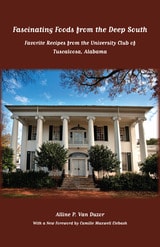
Fascinating Foods from the Deep South
Favorite Recipes from the University Club of Tuscaloosa, AlabamaAlline P. Van Duzor
University of Alabama Press, 2010
250 Recipes from the University of Alabama’s famed University Club in Tuscaloosa
The historic mansion at the corner of University Boulevard and Queen City Avenue in Tuscaloosa, Alabama has been home to the University of Alabama University Club since 1944. In its early years, the Club took shape around the vision and culinary expertise of the formidable Atlantan Alline P. Van Duzor, still remembered in Tuscaloosa for her impeccable and exacting standards. This book reveals her most beloved recipes.
Commissioned in the early 1960s by a New York publisher, this collection of her gastronomic creations sold through more than eight printings, further spreading her reputation.
The more than 250 favorite Southern recipes in this now-classic cookbook are written in Van Duzor’s straight-forward style, using common fresh and store-bought ingredients. This new edition has been augmented by a guide to portions and food brand names, an index to the recipes, and an appendix of past presidents of the University Club Board.
Cookbook collectors, local history buffs, the university community, and happy cooks everywhere will welcome this reissue of a popular cookbook that has won decades of fans.
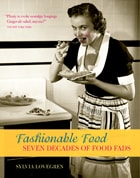
Fashionable Food
Seven Decades of Food FadsSylvia Lovegren
University of Chicago Press, 2005
Well researched and delightfully illustrated, this collection of faddish recipes from the 1920s to the 1990s is a decade-by-decade tour of a hungry American century. From the Three P's Salad—that's peas, pickles, and peanuts—of the post-World War I era to the Fruit Cocktail and Spam Buffet Party loaf—all the rage in the ultra-modern 1950s, when cooking from a can epitomized culinary sophistication—Fashionable Food details the origins of these curious delicacies. In two chapters devoted to "exotic foods of the East," for example, Lovegren explores the long American love affair with Chinese food and the social status conferred upon anyone chic enough to eat pu-pu platters from Polynesia. Throughout, Lovegren supplements recipes—some mouth-watering, some appalling—from classic cookbooks and family magazines, with humorous anecdotes that chronicle how society and kitchen technology influenced the way we lived and how we ate.
Equal parts American and culinary history, Fashionable Food examines our collective past from the kitchen counter. Even if it's been a while since you last had Tang Pie and your fondue set is collecting dust in the back of the cupboard, Fashionable Food will inspire, entertain, and inform.

Favorite Dishes
A Columbian Autograph Souvenir Cookery BookCompiled by Carrie V. Shuman
University of Illinois Press, 2001
The world's fair in Chicago was the first event of its kind that offered women a conspicuous and responsible role. A Woman's Building was designed by a woman architect, decorated with the statues and paintings of prominent women artists, and overseen by a Board of Lady Managers, comprised of 115 wives and daughters of prominent political and business leaders from every state and territory.
Carrie Shuman approached the president of this unprecedented body, Bertha Honoré Palmer, with the idea of producing a charitable cookbook, endorsed and autographed by the Lady Managers, of their prize recipes. The books would be offered to women of limited means--women who dreamed "longingly and hopelessly of the Exposition"--who could sell them to raise money to cover the expense of a visit to the fair.
This reissue of Favorite Dishes is set off by a pair of new introductions. Reid Badger discusses the phenomenon of world's fairs and the particular success and significance of the 1893 Exposition in Chicago. Bruce Kraig examines the culinary significance of the book and sets it in the context of the era's food standardization, changing cooking technology, recipe book conventions, and social practices.
Fear of Food
A History of Why We Worry about What We EatHarvey Levenstein
University of Chicago Press, 2012
Feast or Famine
Food and Drink in American Westward ExpansionReginald Horsman
University of Missouri Press, 2008
Feast or Famine is the first comprehensive account of food and drink in the winning of the West, describing the sustenance of successive generations of western pioneers. Drawing on journals of settlers and travelers—as well as a lifetime of research on the American West—Reginald Horsman examines more than one hundred years of history, from the first advance of explorers into the Mississippi valley to the movement of ranchers and farmers onto the Great Plains, recording not only the components of their diets but food preparation techniques as well.
Most settlers were able to obtain food beyond the dreams of ordinary Europeans, for whom meat was a luxury. Not only were buffalo, deer, and wild turkey there for the taking, pioneers also gathered greens such as purslane, dandelion, and pigweed—as well as wild fruits, berries, and nuts. They replaced sugar with wild honey or maple syrup, and when they had no tea, they made drinks out of sage, sassafras, and mint. Horsman also reveals the willingness of Indians to convey their knowledge of food to newcomers, sharing salmon in the Pacific Northwest, agricultural crops in the arid Southwest.
Horsman tells how agricultural expansion and transportation opened a veritable cornucopia and how the development of canning soon made it possible for meals to transcend simple frontier foods, with canned oysters and crystallized eggs in airtight cans on merchants’ shelves. He covers food on different regional frontiers, as well as the cuisines of particular groups such as fur traders, soldiers, miners, and Mormons. He also discusses food shortages that resulted from poor preparation, temporary scarcity of game, marginal soil, or simply bad luck. At times, as with the ill-fated Donner Party, pioneers starved.
Engagingly written and meticulously researched, Feast or Famine is a one-of-a-kind look at a subject too long ignored in histories of the West. By revealing the spectrum of frontier fare across years and regions, it shows us that the land of opportunity was often a land of plenty.
Feasting and Fasting in Opera
From Renaissance Banquets to the Callas DietPierpaolo Polzonetti
University of Chicago Press, 2021
In this book, opera scholar Pierpaolo Polzonetti explores how convivial culture shaped the birth of opera and opera-going rituals until the mid-nineteenth century, when eating and drinking at the opera house were still common. Through analyses of convivial scenes in operas, the book also shows how the consumption of food and drink, and sharing or the refusal to do so, define characters’ identity and relationships.
Feasting and Fasting in Opera moves chronologically from around 1480 to the middle of the nineteenth century, when Wagner’s operatic reforms banished refreshments during the performance and mandated a darkened auditorium and absorbed listening. The book focuses on questions of comedy, pleasure, embodiment, and indulgence—looking at fasting, poisoning, food disorders, body types, diet, and social, ethnic, and gender identities—in both tragic and comic operas from Monteverdi to Puccini. Polzonetti also sheds new light on the diet Maria Callas underwent in preparation for her famous performance as Violetta, the consumptive heroine of Verdi’s La traviata. Neither food lovers nor opera scholars will want to miss Polzonetti’s page-turning and imaginative book.
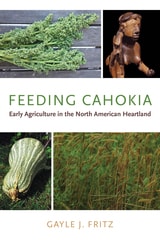
Feeding Cahokia
Early Agriculture in the North American HeartlandGayle J. Fritz
University of Alabama Press, 2019
WINNER OF THE 2020 SOCIETY FOR ECONOMIC BOTANY'S MARY W. KLINGER BOOK AWARD
An authoritative and thoroughly accessible overview of farming and food practices at Cahokia
Agriculture is rightly emphasized as the center of the economy in most studies of Cahokian society, but the focus is often predominantly on corn. This farming economy is typically framed in terms of ruling elites living in mound centers who demanded tribute and a mass surplus to be hoarded or distributed as they saw fit. Farmers are cast as commoners who grew enough surplus corn to provide for the elites.
Feeding Cahokia: Early Agriculture in the North American Heartland presents evidence to demonstrate that the emphasis on corn has created a distorted picture of Cahokia’s agricultural practices. Farming at Cahokia was biologically diverse and, as such, less prone to risk than was maize-dominated agriculture. Gayle J. Fritz shows that the division between the so-called elites and commoners simplifies and misrepresents the statuses of farmers—a workforce consisting of adult women and their daughters who belonged to kin groups crosscutting all levels of the Cahokian social order. Many farmers had considerable influence and decision-making authority, and they were valued for their economic contributions, their skills, and their expertise in all matters relating to soils and crops. Fritz examines the possible roles played by farmers in the processes of producing and preparing food and in maintaining cosmological balance.
This highly accessible narrative by an internationally known paleoethnobotanist highlights the biologically diverse agricultural system by focusing on plants, such as erect knotweed, chenopod, and maygrass, which were domesticated in the midcontinent and grown by generations of farmers before Cahokia Mounds grew to be the largest Native American population center north of Mexico. Fritz also looks at traditional farming systems to apply strategies that would be helpful to modern agriculture, including reviving wild and weedy descendants of these lost crops for redomestication. With a wealth of detail on specific sites, traditional foods, artifacts such as famous figurines, and color photos of significant plants, Feeding Cahokia will satisfy both scholars and interested readers.
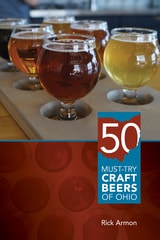
Fifty Must-Try Craft Beers of Ohio
Rick Armon
Ohio University Press, 2017
Every craft beer has a story, and part of the fun is learning where the liquid gold in your glass comes from. In Fifty Must-Try Craft Beers of Ohio, veteran beer writer Rick Armon picks the can’t-miss brews in a roundup that will handily guide everyone from the newest beer aficionado to those with the most seasoned palates. Some are crowd pleasers, some are award winners, some are just plain unusual—the knockout beers included here are a tiny sample of what Ohio has to offer.
In the midst of the ongoing nationwide renaissance in local beer culture, Ohio has become a major center for the creation of quality craft brews, and Armon goes behind the scenes to figure out what accounts for the state’s beer alchemy. He asked the brewers themselves about the great idea or the happy accident that made each beer what it is. The book includes brewer profiles, quintessentially Ohio food pairings (sauerkraut balls and Cincinnati chili!), and more.

Finding Betty Crocker
The Secret Life of America’s First Lady of FoodSusan Marks
University of Minnesota Press, 2007
While Betty Crocker is often associated with 1950s happy homemaking, she originally belonged to a different generation. Created in 1921 as a “friend to homemakers” for the Washburn Crosby Company (a forerunner to General Mills) in Minneapolis, her purpose was to answer consumer mail. “She” was actually the women of the Home Service Department who signed Betty’s name. Eventually, Betty Crocker’s local radio show on WCCO expanded, and audiences around the nation tuned her in, tried her money-saving recipes, and wrote Betty nearly 5,000 fan letters per day. In Finding Betty Crocker, Susan Marks offers an utterly unique look at the culinary and marketing history of America’s First Lady of Food.
Susan Marks is a writer/producer/director with her own production company, Lazy Susan Productions.

Fixin Fish
A Guide to Handling, Buying, Preserving, and Preparing FishJeffrey Gunderson
University of Minnesota Press, 1984
Fixin' Fish was first published in 1984. Minnesota Archive Editions uses digital technology to make long-unavailable books once again accessible, and are published unaltered from the original University of Minnesota Press editions.
Whether you catch it yourself or buy it, fish can be a delicious, nutritious meal or an experience you'd rather forget. Because fish are delicate and perishable, preserving their fresh-caught flavor requires careful handling. Fixin' Fish provides anglers and fish buyers with helpful techniques, not covered in most cookbooks, for handling, cleaning, preserving, preparing, and buying fish of all kinds. Topics covered include: maintaining the quality of fresh fish, building a smokehouse, smoking, canning, pickling, making fish jerky and caviar, and checking fish for parasites. Sport fishermen will find the section on field dressing and packing especially useful.
Minnesota and neighboring states have an abundance of fish that are usually overlooked as a food source. These underutilized fish, which include suckers, eelpout (burbot), carp, bullheads, herring, and freshwater drum, can be delicious if handled and prepared properly. The special techniques described in this book will help anyone make good use of this inexpensive and tasty source of protein.
Fixin' Fish is published by the University of Minnesota Sea Grant Extension Program. This new edition updates the text and adds information on parasites that can be found on freshwater fish in the Minnesota region.
Flavor of Wisconsin for Kids
A Feast of History, with Stories and Recipes Celebrating the Land and People of Our StateTerese Allen
Wisconsin Historical Society Press, 2012
What are some food favorites in Wisconsin, and why are they special to us? How have our landscape and the people who have inhabited it contributed to our food heritage? This unique blend of history book and cookbook gives kids a real taste for hands-on history by showing them how to create and sample foods that link us to the resources found in our state and the heritage of those who produce them.
Designed for kids and adults to use together, The Flavor of Wisconsin for Kids draws upon the same source material that makes The Flavor of Wisconsin by Harva Hachten and Terese Allen a fascinating and authoritative document of the history and traditions of food in our state, and presents it in a colorful, kid-friendly format that’s both instructional and fun. Mindful of the importance of teaching kids about where the foods they eat come from, each chapter examines a different food source—forests; waters; vegetable, meat, and dairy farms; gardens; and communities. The authors explore our state’s foodways, from their origins to how they have changed over the years, and then offer a selection of related recipes. The recipes are written for modern kitchens but use many traditional ingredients and techniques. Level of difficulty is clearly noted, as well as whether a recipe requires a heat source to prepare.
Fonda San Miguel
Forty Years of Food and ArtBy Tom Gilliland and Miguel Ravago
University of Texas Press, 2016
“Walking through the old wooden doors at Fonda San Miguel is like a journey back to colonial Mexico. . . . World-class Mexican art and antiques decorate the interior, and famed Mexican chefs have taught and cooked here. Acclaimed as one of the best Mexican restaurants in the country serving authentic interior food . . .” —USA Today
“The stately yet bright and colorful hacienda decor and standout Mexican-interior cooking . . . will transport you straight to Guanajuato.” —Vogue
“It anchors the city as its premier Mexican restaurant institution.” —The Daily Meal, which named Fonda San Miguel one of “America’s 50 Best Mexican Restaurants”
Updated and reissued to celebrate the restaurant’s four decades of success, Fonda San Miguel presents more than one hundred recipes. The selections include many of Fonda’s signature dishes—Ceviche Veracruzano, Enchiladas Suizas, Cochinita Pibil, Pescado Tikin Xik, and Carne Asada—as well as a delicious assortment of dishes from Mexico’s diverse regional cuisines. Supplementary sections contain tips on buying and cooking with the various chiles and other ingredients, along with information on basic preparation techniques, equipment, and mail-order sources. Full-color photographs illustrate special dishes, and representative works from the impressive Fonda San Miguel art collection are also featured, along with notes on the artists.
Food Across Borders
Garcia, Matt
Rutgers University Press, 2017
The stories told in Food Across Borders highlight the contiguity between the intimate decisions we make as individuals concerning what we eat and the social and geopolitical processes we enact to secure nourishment, territory, and belonging.
Published in cooperation with the William P. Clements Center for Southwest Studies, Southern Methodist University.

Food Democracy
Critical Lessons in Food, Communication, Design and ArtOliver Vodeb
Intellect Books, 2017
Food Instagram
Identity, Influence, and NegotiationEdited by Emily J. H. Contois and Zenia Kish
University of Illinois Press, 2022
Image by image and hashtag by hashtag, Instagram has redefined the ways we relate to food. Emily J. H. Contois and Zenia Kish edit contributions that explore the massively popular social media platform as a space for self-identification, influence, transformation, and resistance. Artists and journalists join a wide range of scholars to look at food’s connection to Instagram from vantage points as diverse as Hong Kong’s camera-centric foodie culture, the platform’s long history with feminist eateries, and the photography of Australia’s livestock producers. What emerges is a portrait of an arena where people do more than build identities and influence. Users negotiate cultural, social, and economic practices in a place that, for all its democratic potential, reinforces entrenched dynamics of power.
Interdisciplinary in approach and transnational in scope, Food Instagram offers general readers and experts alike new perspectives on an important social media space and its impact on a fundamental area of our lives.
Contributors: Laurence Allard, Joceline Andersen, Emily Buddle, Robin Caldwell, Emily J. H. Contois, Sarah E. Cramer, Gaby David, Deborah A. Harris, KC Hysmith, Alex Ketchum, Katherine Kirkwood, Zenia Kish, Stinne Gunder Strøm Krogager, Jonathan Leer, Yue-Chiu Bonni Leung, Yi-Chieh Jessica Lin, Michael Z. Newman, Tsugumi Okabe, Rachel Phillips, Sarah Garcia Santamaria, Tara J. Schuwerk, Sarah E. Tracy, Emily Truman, Dawn Woolley, and Zara Worth
Food Plants of the Sonoran Desert
Wendy C. Hodgson
University of Arizona Press, 2001
The seemingly inhospitable Sonoran Desert has provided sustenance to indigenous peoples for centuries. Although it is to all appearances a land bereft of useful plants, fully one-fifth of the desert's flora are edible.
This volume presents information on nearly 540 edible plants used by people of more than fifty traditional cultures of the Sonoran Desert and peripheral areas. Drawing on thirty years of research, Wendy Hodgson has synthesized the widely scattered literature and added her own experiences to create an exhaustive catalog of desert plants and their many and varied uses.
Food Plants of the Sonoran Desert includes not only plants such as gourds and legumes but also unexpected food sources such as palms, lilies, and cattails, all of which provided nutrition to desert peoples. Each species entry lists recorded names and describes indigenous uses, which often include nonfood therapeutic and commodity applications. The agave, for example, is cited for its use as food and for alcoholic and nonalcoholic beverages, syrup, fiber, cordage, clothing, sandals, nets, blankets, lances, fire hearths, musical instruments, hedgerows, soap, and medicine, and for ceremonial purposes. The agave entry includes information on harvesting, roasting, and consumption—and on distinguishing between edible and inedible varieties.
No other source provides such a vast amount of information on traditional plant uses for this region. Written to be easily accessible to general readers, the book is an invaluable compendium for anyone interested in the desert's hidden bounty.
Food for the Soul
The Recipes of Schubert OgdenSchubert Ogden
Bridwell Press, 2022
Food in Missouri
A Cultural StewMadeline Matson
University of Missouri Press, 1994
Corn, squash, and beans from the Native Americans; barbecue sauces from the Spanish; potatoes and sausages from the Germans: Missouri's foods include a bountiful variety of ingredients. In Food in Missouri: A Cultural Stew, Madeline Matson takes readers on an enticing journey through the history of this state's food, from the hunting and farming methods of the area's earliest inhabitants, through the contributions of the state's substantial African American population, to the fast-food purveyors of the microwave age.
Tracing the history of food preparation, preservation, and marketing, while highlighting the cultural traditions that engendered each change, Matson shows how advances in farming methods, the invention of the electric range, the development of cookbooks, and three waves of immigration have profoundly influenced what Missourians eat today. Along the way, she highlights some of the key people, places, and institutions in Missouri's food history: Irma S. Rombauer, author of Joy of Cooking; Stark Bro's Nurseries and Orchards in Louisiana, Missouri, the largest family-owned fruit-tree nursery in the world and the home of Delicious, Golden Delicious, and Gala apples; St. Louis's Soulard Market, established in 1779 and said to be the oldest public market west of the Mississippi; and Stone Hill Winery, a leader in Hermann's nationally recognized wine- making industry.
By bringing to life the traditions behind the foods we eat every day, Food in Missouri provides a unique perspective on the people who explored and settled the state, showing that Missouri's rich heritage truly is a cultural stew.
Food in the American Gilded Age
Helen Zoe Veit
Michigan State University Press, 2017
Food in the Civil War Era
The NorthHelen Zoe Veit
Michigan State University Press, 2014
Food in the Civil War Era
The SouthHelen Zoe Veit
Michigan State University Press, 2015
Food, Diaspora, and Memory
Edited by Zoë Antoinette Eddy
Lever Press, 2027
Across diasporic communities, food serves as a repository of memory, a marker of identity, and a powerful means of creating and sustaining belonging in the face of displacement. Food, Diaspora, and Memory brings together an international collection of contributors to explore how food mediates the complex relationships among migration, culture, family, and place. The essays explore how recipes, meals, culinary traditions, and food narratives function as living archives through which individuals and communities maintain connections to ancestral homelands while simultaneously creating new forms of belonging in their adopted homes. Together, the contributors reveal food as both a deeply personal and profoundly social medium through which diasporic communities navigate questions of identity, memory, and cultural negotiation.
By bringing together global perspectives on food, diaspora, and cultural resilience, Food, Diaspora, and Memory offers a timely contribution to some of the most pressing social and cultural questions of our time and demonstrates the continuing power of food to sustain communities across borders, generations, and histories.
Food, Texts, and Cultures in Latin America and Spain
Rafael Climent-Espino
Vanderbilt University Press, 2020
The studies span from the Middle Ages to the twenty-first century, and the contributing scholars occupy diverse fields within Latin American and Hispanic Studies. As such, their essays showcase eclectic critical and theoretical approaches to the subject of Latin American and Iberian food.
Food, Texts, and Cultures in Latin America and Spain also introduces the first English-language publication of works from such award-winning scholars as Adolfo Castañón of the Mexican Academy of Language; Sergio Ramírez, winner of the 2017 Miguel de Cervantes Prize in Literature; and Carmen Simón Palmer, winner of the 2015 Julián Marías Prize for Research.
Foodways and Daily Life in Medieval Anatolia
A New Social HistoryBy Nicolas Trépanier
University of Texas Press, 2014
Byzantine rule over Anatolia ended in the eleventh century, leaving the population and its Turkish rulers to build social and economic institutions throughout the region. The emerging Anatolian society comprised a highly heterogeneous population of Christians and Muslims whose literati produced legal documents in Arabic, literary texts in Persian, and some of the earliest written works in the Turkish language. Yet the cultural landscape that emerged as a result has received very little attention—until now.
Investigating daily life in Anatolia during the fourteenth century, Foodways and Daily Life in Medieval Anatolia draws on a creative array of sources, including hagiographies, archaeological evidence, Sufi poetry, and endowment deeds, to present an accessible portrait of a severely under-documented period. Grounded in the many ways food enters the human experience, Nicolas Trépanier’s comprehensive study delves into the Anatolian preparation of meals and the social interactions that mealtime entails—from a villager’s family supper to an elaborately arranged banquet—as well as the production activities of peasants and gardeners; the marketplace exchanges of food between commoners, merchants, and political rulers; and the religious landscape that unfolded around food-related beliefs and practices. Brimming with enlightening details on such diverse topics as agriculture, nomadism, pastoralism, medicine, hospitality, and festival rituals, Foodways and Daily Life in Medieval Anatolia presents a new understanding of communities that lived at a key juncture of world history.

Forklore
Recipes and Tales from an American BistroEllen Yin
Temple University Press, 2007
Forklore tells the tale of this extraordinary dining establishment, while dishing out some delectable recipes. Yin brings to her writing the same qualities of careful attention and lively enthusiasm that characterize her best dishes. With great gusto, she describes how she fell in love with food, how Fork was born, and how her chefs have helped to create its unique cuisine. And throughout her story she liberally sprinkles recipes -- simple, delicious, and easy to cook at home -- that represent the best of New American Bistro cooking. There are nearly 100 recipes in all, and every one has a story, served up by Yin with relish and delight.
For anyone who likes a juicy story, well seasoned with zesty anecdotes and mouthwatering recipes, Forklore is a treat.
French Gastronomy and the Magic of Americanism
Rick Fantasia
Temple University Press, 2019
A tectonic shift has occurred in the gastronomic field in France, upsetting the cultural imagination. In a European country captivated by a high-stakes power struggle between chefs and restaurants in the culinary field, the mass marketing of factory-processed industrial cuisine and fast foods has created shock waves in French society, culture, and the economy.
In this insightful book, French Gastronomy and the Magic of Americanism, Rick Fantasia examines how national identity and the dynamics of cultural meaning-making within gastronomy have changed during a crucial period of transformation, from the 1970s through the 1990s. He illuminates the tensions and surprising points of cooperation between the skill, expertise, tradition, artistry, and authenticity of grand chefs and the industrial practices of food production, preparation, and distribution.
Fantasia examines the institutions and beliefs that have reinforced notions of French cultural supremacy—such as the rise and reverence of local cuisine—as well as the factors that subvert those notions, such as when famous French chefs lend their names to processed, frozen, and pre-packaged foods available at the supermarket. Ultimately, French Gastronomy and the Magic of Americanism shows what happens to a cultural field, like French gastronomy, when the logic and power of the economic field imposes itself upon it.
Fresh Tastes from the Garden State
Byrd-Bredbenner, Carol
Rutgers University Press, 2002
With this cookbook you will have the pleasure of preparing recipes that showcase the delicious bounty of fruit and vegetables that come from New Jersey’s gardens, orchards, and farmstands. While it is the country’s fifth-smallest state, the appropriately named Garden State produces tons of succulent produce every year. What a feast for the senses! The state is ablaze with colors—picture vivid green peppers and inky blueberries. Imagine the intense pleasure of biting into a juicy red tomato or a crisp, tangy apple. Think about the scent of strawberries or the sweet flavor of corn-on-the-cob. Recall the feel of plump, fuzzy peaches and smooth slick cranberries.
Fresh Tastes from the Garden State presents new ways for you to savor the flavors of New Jersey’s top fruits and vegetables and capitalize on the health dividends they pay. Presented in an easy-to-use format, the book features dozens of color photographs. It is conveniently divided into chapters brimming with luscious recipes spotlighting New Jersey berries (strawberries, blueberries, and cranberries), peaches, apples, tomatoes, peppers, and corn. Many of the recipes are quick and easy enough to fit into anyone’s hectic lifestyle and so delectable they’ll become family favorites for everyday. Health-conscious cooks will be happy to know that fat is never used gratuitously and the calorie and nutrient content of each recipe is included. Carol Byrd-Bredbenner also includes information on the history, botany, and safe storage of fruits and vegetables. Every recipe has been kitchen tested and tasted by discerning diners to be certain that they are absolutely delicious. When you serve them, you’ll hear forks clanking, lips smacking, and rave reviews. Enjoy!
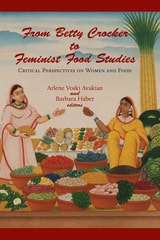
From Betty Crocker to Feminist Food Studies
Critical Perspectives on Women and FoodArlene Voski Avakian
University of Massachusetts Press, 2005
Applying the insights of feminist scholarship to the study of food, the thirteen essays in this volume are arranged under four headings—the marketplace, histories, representations, and resistances. The editors open the book with a substantial introduction that traces the history of scholarly writing on food and maps the terrain of feminist food studies. In the essays that follow, contributors pay particular attention to the ways in which gender, race, ethnicity, class, colonialism, and capitalism have both shaped and been shaped by the production and consumption of food.
In the first section, four essays analyze the influence of large corporations in determining what came to be accepted as proper meals in the United States, including what mothers were expected to feed their babies. The essays in the second section explore how women have held families together by keeping them nourished, from the routines of an early nineteenth-century New Englander to the plight of women who endured the siege of Leningrad.
The essays in the third section focus on the centrality of gender and race in the formation of identities as enacted through food discourse and practices. These case studies range from the Caribbean to the San Luis Valley of Colorado. The final section documents acts of female resistance within the contexts of national or ethnic oppression. From women in colonial India to Armenian American feminists, these essays show how food has served as a means to assert independence and personal identity.
In addition to the editors, contributors include Amy Bentley, Carole M. Counihan, Darra Goldstein, Nancy Jenkins, Alice P. Julier, Leslie Land, Laura Lindenfield, Beheroze F. Shroff, Sharmila Sen, Laura Shapiro, and Jan Whitaker.
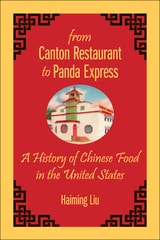
From Canton Restaurant to Panda Express
A History of Chinese Food in the United StatesLiu, Haiming
Rutgers University Press, 2015
Finalist in the Culinary History category of the 2016 Gourmand World Cookbook Awards
From Canton Restaurant to Panda Express takes readers on a compelling journey from the California Gold Rush to the present, letting readers witness both the profusion of Chinese restaurants across the United States and the evolution of many distinct American-Chinese iconic dishes from chop suey to General Tso’s chicken. Along the way, historian Haiming Liu explains how the immigrants adapted their traditional food to suit local palates, and gives readers a taste of Chinese cuisine embedded in the bittersweet story of Chinese Americans.
Treating food as a social history, Liu explores why Chinese food changed and how it has influenced American culinary culture, and how Chinese restaurants have become places where shared ethnic identity is affirmed—not only for Chinese immigrants but also for American Jews. The book also includes a look at national chains like P. F. Chang’s and a consideration of how Chinese food culture continues to spread around the globe.
Drawing from hundreds of historical and contemporary newspaper reports, journal articles, and writings on food in both English and Chinese, From Canton Restaurant to Panda Express represents a groundbreaking piece of scholarly research. It can be enjoyed equally as a fascinating set of stories about Chinese migration, cultural negotiation, race and ethnicity, diverse flavored Chinese cuisine and its share in American food market today.

From Gluttony to Enlightenment
The World of Taste in Early Modern EuropeViktoria von Hoffmann
University of Illinois Press, 2016
Viktoria von Hoffmann explores four kinds of early modern texts--culinary, medical, religious, and philosophical--to follow taste's ascent from the sinful to the beautiful. Combining food studies and sensory history, she takes readers on an odyssey that redefined a fundamental human experience. Scholars and cooks rediscovered a vast array of ways to prepare and present foods. Far-sailing fleets returned to Europe bursting with new vegetables, exotic fruits, and pungent spices. Hosts refined notions of hospitality in the home while philosophers pondered the body and its perceptions. As von Hoffmann shows, these labors produced a sea change in perception and thought, one that moved taste from the base realm of the tongue to the ethereal heights of aesthetics.