Results by title
679 books match the query 'Ecology' and 32 start with f
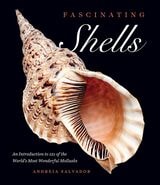
Fascinating Shells
An Introduction to 121 of the World’s Most Wonderful MollusksAndreia Salvador
University of Chicago Press, 2022
Beautiful photographs of stunning shells from London's Natural History Museum, home to one of the most significant and comprehensive collections in the world.
Collected and treasured for their beauty, used in religious rituals, or even traded as currency, shells have fascinated humans for millennia. Ancient and enchanting, dazzling in form and variety, these beautiful objects come from mollusks, one of the most diverse groups in the animal kingdom, including snails, oysters, cuttlefish, and chitons. Soft-bodied, these creatures rely on shells for protection from enemies and their environments, from snowy mountains to arid deserts, in deep-sea hydrothermal vents and the jungles of the tropics, on rocky shores, and in coral reefs.
In this book, mollusk expert Andreia Salvador profiles some of the world’s most beautiful and quirky shells, each selected from the more than eight million specimens held in the collection at London’s Natural History Museum. We lock eyes with the hundred-eyed cowry, named after "the all-seeing one," the giant Argus Panoptes of Greek mythology. We see how shells' appearances translate into defense strategies, as with the zigzag nerite, which varies its patterning to deceive and confuse predators. And we meet shell inhabitants, such as the amber snail, which eats earthworms by sucking them up like spaghetti. Reproduced in full color and striking detail, these shells have much to reveal about the history of collecting, the science of taxonomy, and the human desire to understand the natural world.
Feeding the World as if People Mattered
How Small Farms Produce Value Beyond YieldsAndrew Flachs
University of Arizona Press, 2026
The dominant view of agriculture has focused only on what we produce. It sees value in terms of capital gains or yield efficiency, masking how our global food system produces tremendous amounts of food commodities while failing to feed people, support rural communities, or enhance ecological well-being. Feeding the World as if People Mattered asks us to look more deeply and more humanely at what we perceive to be most valuable in our agricultural systems.
This book draws on fifteen years of anthropological research, taking readers to fields in South India, Eastern Europe, and North America, where people are already feeding the future amid global change. From these fields, Flachs shows us how a radical rethinking of the value of small farms and farmers is already happening. Bringing together conversations in agriculture, economics, anthropology, and the environmental humanities, Flachs deftly shows how small farms reproduce social and ecological relationships that are the only sustainable path forward.
For anyone who is curious about the food on their plate and the people who helped to get it there, Feeding the World as if People Mattered will offer a new way to find value in the food we grow and the people who grow it.
Feminism, Capitalism, and Ecology
Johanna Oksala
Northwestern University Press, 2023
In the face of ecological catastrophe, neither feminists nor environmentalists have the option of merely supporting an environmental politics that would preserve an imagined nature somewhere outside capitalism. As Johanna Oksala contends, the political goal must be more radical: to challenge the capitalist economic system itself and the mechanisms by which it expropriates life on the planet.
Feminism, Capitalism, and Ecology lays the critical groundwork for this political project. It develops a new way of bringing feminist and ecological responses to capitalism together into a cohesive framework. By exposing the systemic logic by which environmental destruction and gender oppression are jointly rooted in capitalism, Oksala establishes the theoretical foundations for an effective political alliance. The traditions of materialist ecofeminism and Marxist feminism are critical starting points. But the rapid rise of biotechnology and the steady increase of precarity necessitate a model of resistance that responds to the distinctive challenges of contemporary biocapitalism. Timely and urgent, this book articulates a theoretically sophisticated response and maps out our real-world options in this existential struggle.
Feral Future
The Untold Story of Australia's Exotic InvadersTim Low
University of Chicago Press, 2002
Australia is far from alone in facing horrific ecological and economic damage from invading plants and animals, and in Low's capable hands, Australia's experiences serve as a wake-up call for all of us. He covers how invasive species like cane toads and pond apple got to Australia (often through misguided but intentional introductions) and what we can do to stop them. He also covers the many pests that Australia has exported to the world, including the paperbark tree (Melaleuca) that infests hundreds of thousands of acres in south Florida.
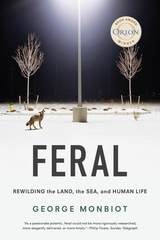
Feral
Rewilding the Land, the Sea, and Human LifeGeorge Monbiot
University of Chicago Press, 2014
So what if we stopped hedging? What if we grounded our efforts to solve environmental problems in hope instead, and let nature make our case for us? That’s what George Monbiot does in Feral, a lyrical, unabashedly romantic vision of how, by inviting nature back into our lives, we can simultaneously cure our “ecological boredom” and begin repairing centuries of environmental damage. Monbiot takes readers on an enchanting journey around the world to explore ecosystems that have been “rewilded”: freed from human intervention and allowed—in some cases for the first time in millennia—to resume their natural ecological processes. We share his awe, and wonder, as he kayaks among dolphins and seabirds off the coast of Wales and wanders the forests of Eastern Europe, where lynx and wolf packs are reclaiming their ancient hunting grounds. Through his eyes, we see environmental success—and begin to envision a future world where humans and nature are no longer separate and antagonistic, but are together part of a single, healing world.
Monbiot’s commitment is fierce, his passion infectious, his writing compelling. Readers willing to leave the confines of civilization and join him on his bewitching journey will emerge changed—and ready to change our world for the better.
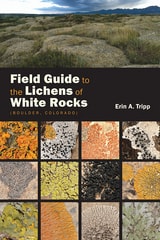
Field Guide to the Lichens of White Rocks
(Boulder, Colorado)Erin Tripp
University Press of Colorado, 2017
This extensively illustrated field guide presents detailed information on the macroscopic and microscopic features needed to identify species, as well as extensive notes on how to differentiate closely related lichens—both those present at White Rocks and those likely to be found elsewhere in western North America. This guide is one of the only complete lichen inventories of a sandstone formation in North America and covers all constituents including the crustose microlichen biota, traditionally excluded from other inventories. A short introduction and glossary equip the reader with basic information on lichen morphology, reproduction, and ecology.
Visitors to White Rocks Nature Preserve must schedule staff-led public tours or set up sponsored research projects through the City of Boulder Open Space and Mountain Parks, and there are many other outcroppings of Fox Hills sandstone across the West, making Field Guide to the Lichens of White Rocks a significant resource for anyone interested in this unique environment. This accessible, user-friendly guide will also be valuable to naturalists and lichenologists around the world as well as educators, conservationists, and land managers concerned with the growing significance of open spaces and other protected urban areas throughout North America.
The University Press of Colorado gratefully acknowledges the generous support of the University of Colorado Natural History Museum, City of Boulder Parks & Open Spaces, and the Colorado Native Plant Society board and members toward the publication of this book.
Field Rhetoric
Ethnography, Ecology, and Engagement in the Places of PersuasionEdited by Candice Rai and Caroline Gottschalk Druschke
University of Alabama Press, 2018
A survey of the innovative scholarship emerging at the intersections of rhetoric, and fieldwork
A variety of research areas within rhetorical studies—including everyday and public rhetorics, space and place-based work, material and ecological approaches, environmental communication, technical communication, and critical and participatory action research, among others—have increasingly called for ethnographic fieldwork that grounds the study of rhetoric within the contexts of its use and circulation. Employing field methods more commonly used by ethnographers allows researchers to capture rhetoric in action and to observe the dynamic circumstances that shape persuasion in ordinary life.
Field Rhetoric: Ethnography, Ecology, and Engagement in the Places of Persuasion gathers new essays that describe and theorize this burgeoning transdisciplinary mode of field-based scholarship. Contributors document and support this ethnographic turn in rhetorical studies through sustained examination of the diverse trends, methods, tools, theories, practices, and possibilities for engaging in rhetorical field research.
This fascinating volume offers an introduction to these inquiries and serves as both a practical resource and theoretical foundation for scholars, teachers, and students interested in the intersection of rhetoric and field studies. Editors Candice Rai and Caroline Gottschalk Druschke have assembled scholars working in diverse field sites to map and initiate key debates on the practices, limitations, and value of rhetorical field methods and research. Working synthetically at the junction of rhetorical theory and field practices, the contributors to this collection build from myriad field-based cases to examine diverse theoretical and methodological considerations. The volume also serves as a useful reference for interdisciplinary qualitative researchers interested in doing research from a rhetorical or discursive perspective in various disciplines and fields, such as English, composition, communication, natural resources, geography, sociology, urban planning, anthropology, and more.
Fields of the Tzotzil
The Ecological Bases of Tradition in Highland ChiapasBy George A. Collier
University of Texas Press, 1975
Fields of the Tzotzil is the first study of social processes in contemporary highland Maya communities to encompass a regional view of the highlands of Chiapas as a system. In viewing tradition, not as a survival of traits, but as a dynamic process of adaptation by local systems to their placement in larger social and economic systems, it lays to rest the theory that tribal peoples apparently are politically and economically isolated. In addition, its broad regional perspective sheds light on the problems of understanding the position of traditional ethnic groups in contemporary society.
The approach of the book is ecological in two senses. First, all the topics dealt with concern the traditional behavior of Indian groups as revealed in their relationship to the land. Second, the analysis seeks out factors that condition land use, not just locally, but as part of a larger system that includes influences of the market and the impact of nationalist agrarian policy. Thus, the author examines land inheritance patterns and food production, as well as the interethnic relations in the region in which Indians are subordinate to mestizos. He discusses in detail corn farming, craft specialization, wage labor, and Indian colonization efforts under the Mexican ejido—all factors that directly affect land use and are thus part of the environment in highland Chiapas.
The study is unique in its use of previously inaccessible historical source material and its use of novel methodological aids. Aerial photography was used in data collection, and the computer was used in ethnographic census analysis. The result is a book that reveals the Indian groups of Chiapas as apparent enclaves whose ethnicity is a dynamic, adaptive response to their position of marginal dependency. While their plight is extreme, it is nevertheless structurally similar to the position of ethnic groups in most large social systems.
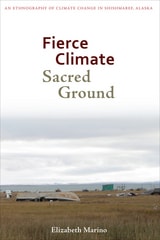
Fierce Climate, Sacred Ground
An Ethnography of Climate Change in Shishmaref, AlaskaElizabeth Marino
University of Alaska Press, 2015
Publications from the New York Times to Esquire have covered this disappearing village, yet few have taken the time to truly show the community and the two millennia of traditions at risk. In Fierce Climate, Sacred Ground, Elizabeth Marino brings Shishmaref into sharp focus as a place where people in a close-knit, determined community are confronting the realities of our changing planet every day. She shows how physical dangers challenge lives, while the stress and uncertainty challenge culture and identity. Marino also draws on Shishmaref’s experiences to show how disasters and the outcomes of climate change often fall heaviest on those already burdened with other social risks and often to communities who have contributed least to the problem. Stirring and sobering, Fierce Climate, Sacred Ground proves that the consequences of unchecked climate change are anything but theoretical.

Finding the Singing Spruce
Musical Instrument Makers and Appalachia's Mountain ForestsJasper Waugh-Quasebarth
West Virginia University Press, 2023
Environment, craft, and meaning in the work of Appalachian instrument makers.
How can the craft of musical instrument making help reconnect people to place and reenchant work in Appalachia? How does the sonic search for musical tone change relationships with trees and forests? Following three craftspeople in the mountain forests of Appalachia through their processes of making instruments, Finding the Singing Spruce considers the meanings of work, place, and creative expression in drawing music from wood.
Jasper Waugh-Quasebarth explores the complexities and contradictions of instrument-making labor, which is deeply rooted in mountain forests and expressive traditions but also engaged with global processes of production and consumption. Using historical narratives and sensory ethnography, among other approaches, he finds that the craft of lutherie speaks to the past, present, and future of the region’s work and nature.
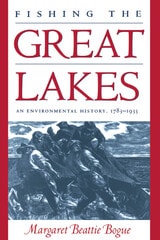
Fishing the Great Lakes
An Environmental History, 1783–1933Margaret Beattie Bogue
University of Wisconsin Press, 2000
Fishing the Great Lakes is a sweeping history of the destruction of the once-abundant fisheries of the great "inland seas" that lie between the United States and Canada. Though lake trout, whitefish, freshwater herring, and sturgeon were still teeming as late as 1850, Margaret Bogue documents here how overfishing, pollution, political squabbling, poor public policies, and commercial exploitation combined to damage the fish populations even before the voracious sea lamprey invaded the lakes and decimated the lake trout population in the 1940s.
From the earliest records of fishing by native peoples, through the era of European exploration and settlement, to the growth and collapse of the commercial fishing industry, Fishing the Great Lakes traces the changing relationships between the fish resources and the people of the Great Lakes region. Bogue focuses in particular on the period from 1783, when Great Britain and the United States first politically severed the geographic unity of the Great Lakes, through 1933, when the commercial fishing industry had passed from its heyday in the late nineteenth century into very serious decline. She shows how fishermen, entrepreneurial fish dealers, the monopolistic A. Booth and Company (which distributed and marketed much of the Great Lakes catch), and policy makers at all levels of government played their parts in the debacle. So, too, did underfunded scientists and early conservationists unable to spark the interest of an indifferent public. Concern with the quality of lake habitat and the abundance of fish increasingly took a backseat to the interests of agriculture, lumbering, mining, commerce, manufacturing, and urban development in the Great Lakes region. Offering more than a regional history, Bogue also places the problems of Great Lakes fishing in the context of past and current worldwide fishery concerns.
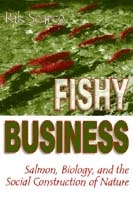
Fishy Business
Rik Scarce
Temple University Press, 2000
About Pacific salmon -- a game fish and food source that is protected and manages for economic and environmental abundance -- Scarce writes, "What other living thing receives such extensive attention from science and society, is used in so many ways, yet retains so much of what we would like to think is its 'wild' character?" He shows how political, bureaucratic, and economic forces have directed salmon science for their own purposes and how control remains a central feature in salmon biology.
Identifying a countertrend rooted in environmental activism, Scarce also argues that an ecocentric perspective is gaining ground even as pressures mount simultaneously to save endangered salmon populations and to bring every last salmon to market. Thus, while external forces control much of the biologists' work, a movement is underway to free biology from political and economic pressures. In rich, ethnographic detail, Scarce develops this portrait of a science struggling with nature and itself. The old-line "fisheries biologists" tell how they work under immense pressure to unravel the unknowns of salmon existence to fulfill objectives of politically-motivated funding agencies. In contrast, the new breed of "conservation biology" researchers struggles to maintain the genetic diversity of salmon populations while minimizing the ways humans determine the fate of the salmon.
Fishy Business provides new ways for regarding about human interactions with other species, from appealing ones like wolves, whales, and redwood tress to less popular ones like snail darters and kangaroo rats. Society struggles to decide what parts of nature matter and why. Ultimately, Scarce argues, nature is a social product: what shall we make of it?
Flora of the Gran Desierto and Río Colorado Delta
Richard Stephen Felger
University of Arizona Press, 2001
Common names of plants are given in English, Spanish, and O'odham. While emphasizing scientific accuracy, the book is written in an accessible style. Felger's observations and knowledge of plant ecology, geographic distribution, evolution, ethnobotany, plant variation and special adaptations, and the history of the region provides botanists, naturalists, ecologists, conservationists, and anyone else celebrating the desert with readable, interesting, and important information. With two of Mexico's newest biosphere reserves—the Pinacate and the Upper Gulf of California—this region is a keystone for desert conservation efforts. Its location linking vast preserves to the north makes this book especially useful for anyone interested in borderland studies and the Sonoran Desert. Flora of the Gran Desierto represents a most creative, definitive, and enthusiastic treatment of Sonoran Desert plant life and is highly relevant to ecological restoration in deserts and wetlands in arid places worldwide.
Florida
A Fire SurveyStephen J. Pyne
University of Arizona Press, 2016
In this important new collection of essays on the region, Stephen J. Pyne colorfully explores the ways the region has approached fire management. Florida has long resisted national models of fire suppression in favor of prescribed burning, for which it has ideal environmental conditions and a robust culture. Out of this heritage the fire community has created institutions to match. The Tallahassee region became the ignition point for the national fire revolution of the 1960s. Today, it remains the Silicon Valley of prescription burning. How and why this happened is the topic of a fire reconnaissance that begins in the panhandle and follows Floridian fire south to the Everglades.
Florida is the first book in a multivolume series describing the nation’s fire scene region by region. The volumes in To the Last Smoke will also cover California, the Northern Rockies, the Great Plains, the Southwest, and several other critical fire regions. The series serves as an important punctuation point to Pyne’s fifty-year career with wildland fire—both as a firefighter and a fire scholar. These unique surveys of regional pyrogeography are Pyne’s way of “keeping with it to the end,” encompassing the directive from his rookie season to stay with every fire “to the last smoke.”
Food Systems in an Unequal World
Pesticides, Vegetables, and Agrarian Capitalism in Costa RicaRyan E. Galt
University of Arizona Press, 2014
Food Systems in an Unequal World examines the agrochemical-dependent agriculture of Costa Rica and how its uneven regulation in export versus domestic markets affects Costa Rican vegetable farmers. Examining pesticide-dependent vegetable production within two food systems, the author shows that pesticide use is shaped by three main forces: agrarian capitalism, the governance of food systems throughout the commodity chain, and ecological dynamics driving local food production. Those processes produce unequal outcomes that disadvantage less powerful producers who have more limited choices than larger farmers, who usually have access to better growing environments and thereby can reduce pesticide use and production costs.
Food Webs
Stuart L. Pimm
University of Chicago Press, 2002
Although it was first published twenty years ago, Stuart Pimm's Food Webs remains the clearest introduction to the study of food webs. Reviewing various hypotheses in the light of theoretical and empirical evidence, Pimm shows that even the most complex food webs follow certain patterns and that those patterns are shaped by a limited number of biological processes, such as population dynamics and energy flow. Pimm provides a variety of mathematical tools for unravelling these patterns and processes, and demonstrates their application through concrete examples. For this edition, he has written a new foreword covering recent developments in the study of food webs and demonstrates their continuing importance to conservation biology.
Food Webs at the Landscape Level
Edited by Gary A. Polis, Mary E. Power, and Gary R. Huxel
University of Chicago Press, 2004
But given the complexities of food webs—think of following the flow of nutrients through the microbes, fungi, roots, worms, ants, and birds that pass over or through a single cubic meter of prairie soil—it's not difficult to see why most experiments on food-web dynamics focus on small, local habitats. Yet as this book convincingly shows, important insights come when scientists expand the temporal and spatial scope of their research to look at the ways energy, organisms, nutrients, and pollutants flow not just at the local level, but across whole landscapes—between and among food webs in a wide variety of habitats.
Paying special attention to the fertile boundaries between terrestrial, freshwater, and marine ecosystems, Food Webs at the Landscape Level not only shows what this new methodology means for ecology, conservation, and agriculture but also serves as a fitting tribute to Gary Polis and his major contributions to the field.
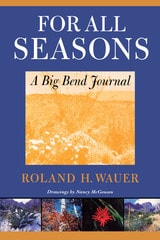
For All Seasons
A Big Bend JournalBy Roland H. Wauer
University of Texas Press, 1997
Something about Big Bend National Park draws visitors again and again. Maybe it's the spare beauty of the mountains and desert, the dawn chorus of birds, or the vivid stars in the velvet night. All of these things have made it Roland Wauer's favorite place. In this book, he shares his love of the Big Bend through journal entries that chronicle a year in the life of the park.
Wauer worked as Chief Park Naturalist from 1966 to 1972 and has visited the park frequently ever since. His journal entries span these thirty years, providing not only a composite portrait of a typical year but also a clear sense of how the park's natural history has changed over three decades. He spices his account with anecdotes, often humorous, ranging from stumbling across a herd of javelinas to being trailed by a mountain lion in the dark to discovering new species of plants and animals.
Few authors know the Big Bend as Roland Wauer does or have written about it in a more engaging way. This beautifully illustrated book is the perfect companion for a visit to the park, whether in person or by armchair.
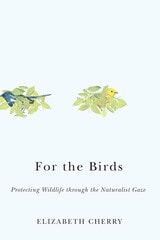
For the Birds
Protecting Wildlife through the Naturalist GazeElizabeth Cherry
Rutgers University Press, 2019
One in five people in the United States is a birdwatcher, yet the popular understanding of birders reduces them to comical stereotypes, obsessives who only have eyes for their favorite rare species. In real life, however, birders are paying equally close attention to the world around them, observing the devastating effects of climate change and mass extinction, while discovering small pockets of biodiversity in unexpected places.
For the Birds offers readers a glimpse behind the binoculars and reveals birders to be important allies in the larger environmental conservation movement. With a wealth of data from in-depth interviews and over three years of observing birders in the field, environmental sociologist Elizabeth Cherry argues that birders learn to watch wildlife in ways that make an invaluable contribution to contemporary conservation efforts. She investigates how birders develop a “naturalist gaze” that enables them to understand the shared ecosystem that intertwines humans and wild animals, an appreciation that motivates them to participate in citizen science projects and wildlife conservation.
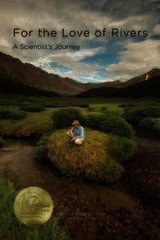
For the Love of Rivers
A Scientist's JourneyKurt D. Fausch
Oregon State University Press, 2015
In For the Love of Rivers, stream ecologist Kurt Fausch draws readers across the reflective surface of streams to view and ponder what is beneath, and how they work. While celebrating their beauty and mystery, he uses his many years of experience as a field biologist to explain the underlying science connecting these aquatic ecosystems to their streamside forests and the organisms found there—including humans.
For the Love of Rivers introduces readers to the life and work of Shigeru Nakano, a pioneering river ecologist who inspired other scientists around the world with his innovative research on stream-forest connections. Fausch takes readers along as he journeys to Japan, where he awakens to an unfamiliar culture, to Nakano, and his research.
Nakano’s life was abruptly ended in a tragic field accident, and his death was deeply mourned. Fausch joins Japanese and American colleagues to continue Nakano’s research legacy, learn everything they can about the effects that humans have on rivers, fish, and their intricate links with riparian zones, and share this knowledge with others.
More than a book about stream ecology, For the Love of Rivers is a celebration of the interconnectedness of life. It is an authoritative and accessible look at the science of rivers and streams, but it also ponders the larger questions of why rivers are important to humans, why it is in our nature to want to be near them, and what we can do now to ensure the future of these essential ecosystems.
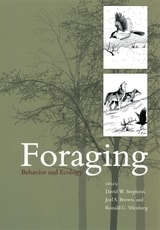
Foraging
Behavior and EcologyEdited by David W. Stephens, Joel S. Brown, and Ronald C. Ydenberg
University of Chicago Press, 2007
Foraging is the first comprehensive review of the topic in more than twenty years. A monumental undertaking, this volume brings together twenty-two experts from throughout the field to offer the latest on the mechanics of foraging, modern foraging theory, and foraging ecology. The fourteen essays cover all the relevant issues, including cognition, individual behavior, caching behavior, parental behavior, antipredator behavior, social behavior, population and community ecology, herbivory, and conservation. Considering a wide range of taxa, from birds to mammals to amphibians, Foraging will be the definitive guide to the field.

Foundations of Biogeography
Classic Papers with CommentariesEdited by Mark V. Lomolino, Dov F. Sax, and James H. Brown
University of Chicago Press, 2004
List of Contributors
John C. Briggs, James H. Brown, Vicki A. Funk, Paul S. Giller, Nicholas J. Gotelli, Lawrence R. Heaney, Robert Hengeveld, Christopher J. Humphries, Mark V. Lomolino, Alan A. Myers, Brett R. Riddle, Dov F. Sax, Geerat J. Vermeij, Robert J. Whittaker
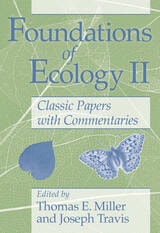
Foundations of Ecology II
Classic Papers with CommentariesEdited by Thomas E. Miller and Joseph Travis
University of Chicago Press, 2022
The period of 1970 to 1995 was a time of tremendous change in all areas of ecology—from an increased rigor for experimental design and analysis to the reevaluation of paradigms, new models for understanding, and theoretical advances. Edited by ecologists Thomas E. Miller and Joseph Travis, Foundations of Ecology II includes facsimiles of forty-six papers from this period alongside expert commentaries that discuss a total of fifty-three key studies, addressing topics of diversity, predation, complexity, competition, coexistence, extinction, productivity, resources, distribution, abundance, and conservation. The result is more than a catalog of historic firsts; this book offers diverse perspectives on the foundational papers that led to today’s ecological work. Like this book’s 1991 predecessor, Foundations of Ecology edited by Leslie A. Real and James H. Brown, Foundations of Ecology II promises to be the essential primer for graduate students and practicing ecologists for decades to come.
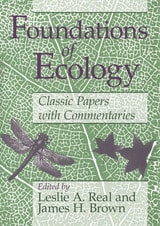
Foundations of Ecology
Classic Papers with CommentariesEdited by Leslie A. Real and James H. Brown
University of Chicago Press, 1991
The papers span nearly nine decades of ecological research, from 1887 on, and are organized in six sections: foundational papers, theoretical advances, synthetic statements, methodological developments, field studies, and ecological experiments. Selections range from Connell's elegant account of experiments with barnacles to Watt's encyclopedic natural history, from a visionary exposition by Grinnell of the concept of niche to a seminal essay by Hutchinson on diversity.
Six original essays by contemporary ecologists and a historian of ecology place the selections in context and discuss their continued relevance to current research. This combination of classic papers and fresh commentaries makes Foundations of Ecology both a convenient reference to papers often cited today and an essential guide to the intellectual and conceptual roots of the field.
Published with the Ecological Society of America.
Foundations of Macroecology
Classic Papers with CommentariesEdited by Felisa A. Smith, John L. Gittleman, and James H. Brown
University of Chicago Press, 2014
Foundations of Macroecology charts the evolutionary trajectory of these concepts—from the species-area relationship and the latitudinal gradient of species richness to the relationship between body size and metabolic rate—through forty-six landmark papers originally published between 1920 and 1998. Divided into two parts—“Macroecology before Macroecology” and “Dimensions of Macroecology”—the collection also takes the long view, with each paper accompanied by an original commentary from a contemporary expert in the field that places it in a broader context and explains its foundational role. Providing a solid, coherent assessment of the history, current state, and potential future of the field, Foundations of Macroecology will be an essential text for students and teachers of ecology alike.
Foundations of Stream and River Ecology
A Guide to the Classic LiteratureEdited by Wyatt F. Cross, Jonathan P. Benstead, Amy M. Marcarelli, and Ryan A. Sponseller
University of Chicago Press, 2024
The study of streams and rivers combines ecology, chemistry, hydrology, and geology to reveal the factors that control the biological diversity and functioning of these unique ecosystems. Although stream ecology is a relatively young discipline, foundational papers published over the past half century have shaped our current understanding of these ecosystems and have informed our efforts to manage and protect them. Organized by topics such as the physical template, community structure, food webs, ecosystem energetics, and nutrient dynamics, the chapters of this book offer summaries of the key literature, historical and contextual information, and insightful discussions of how past research has influenced present studies and may shape future work.
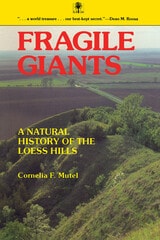
Fragile Giants
A Natural History of the Loess HillsCornelia F. Mutel
University of Iowa Press, 1989
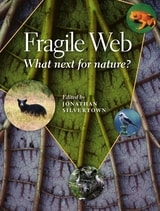
Fragile Web
What Next for Nature?Edited by Jonathan Silvertown
University of Chicago Press, 2010
Biodiversity is as close as your breakfast table. Your cereal and coffee are the products of at least a dozen species of plants and animals. And believe it or not, you are related to your morning meal—all life on earth is descended from a common ancestor, giving new meaning to the old saying “You are what you eat.”
Making clear why the future of biodiversity matters, Fragile Web—which takes its name from the delicate mechanism that holds all life together—unites a team of international experts to explore the wonder of the natural world. Drawing on the very latest research, the book explains what biodiversity is and explores its evolution, from 3.5 billion years ago to the present day. It discusses the importance of the world’s ecosystems and how directly or indirectly humans are responsible for the fate of nature. Crucially, it also examines what can be done to protect the natural world and why it matters. Although we cannot undo all that we have done, ignoring the current crisis facing biodiversity could fundamentally change the lives of future generations.
Fully illustrated with color photographs, diagrams, and maps, and edited by celebrated ecologist Jonathan Silvertown, this book is a timely snapshot of the state of life on Earth. From the plant and animal products that make up our breakfast to the ecosystems that help to produce clean water, our very survival depends upon the variety of plant and animal life on our planet. The year 2010 has been declared by the United Nations the International Year of Biodiversity, and The Fragile Web will be an essential guidebook for our time.

Freshwater Marshes
Ecology and Wildlife ManagementMilton W. Weller
University of Minnesota Press, 1994
Freshwater Marshes was first published in 1994. Minnesota Archive Editions uses digital technology to make long-unavailable books once again accessible, and are published unaltered from the original University of Minnesota Press editions.
Prairie potholes, wetland edges of lakes and rivers, and other freshwater marshes play a vital role in maintaining a clean and plentiful water supply for wildlife and human use. These wetland areas provide habitat for spawning fish, feed waterfowl, purify and retain water, and control erosion. In this updated third edition, Milton W. Weller describes the components of the freshwater marsh: its annual and seasonal dynamics as affected by rainfall cycles and the plant and animal population's response to such changes. Weller discusses how such wetland areas are managed for wildlife populations and diversity, and how such processes can be used in wetland conservation and restoration. He considers the impact society has on wetlands and offers conservation goals for freshwater wetland complexes.
Weller broadens the third edition to include an analysis of how prairie wetlands compare in water dynamics with swamps, tidal marshes, and other wetlands. He also expands the discussion of wetland classification, evaluation, mitigation, and restoration, and introduces a new glossary of current wetland terminology.Freshwater Marshes is Volume 1 of Wildlife Habitats.
Milton W. Weller is professor emeritus and former Kleberg Chair in Wildlife Ecology, at Texas A&M University.
From Enron to Evo
Pipeline Politics, Global Environmentalism, and Indigenous Rights in BoliviaDerrick Hindery; Foreword by Susanna B. Hecht
University of Arizona Press, 2013
Drawing upon extensive interviews and document analysis, Hindery argues that many of the structural conditions created by neoliberal policies—including partial privatization of the oil and gas sector—still persist under Morales. Tactics employed by both Morales and his neoliberal predecessors utilize the rhetoric of environmental protection and Indigenous rights to justify oil, gas, mining, and road development in Indigenous territories and sensitive ecoregions.
Indigenous peoples, while mindful of gains made during Morales’s tenure, are increasingly dissatisfied with the administration’s development model, particularly when it infringes upon their right to self-determination. From Enron to Evo demonstrates their dynamic and pragmatic strategies to cope with development and adversity, while also advancing their own aims.
Offering a critique of both free-market piracy and the dilemmas of resource nationalism, this is a groundbreaking book for scholars, policy-makers, and advocates concerned with Indigenous politics, social movements, environmental justice, and resistance in an era of expanding resource development.
From Mastery to Mystery
A Phenomenological Foundation for an Environmental EthicBryan E. Bannon
Ohio University Press, 2014
From Mastery to Mystery is an original and provocative contribution to the burgeoningfield of ecophenomenology. Informed by current debates in environmental philosophy, Bannon critiques the conception of nature as u200a“substance” that he finds tacitly assumed by the major environmental theorists. Instead, this book reconsiders the basic goals of an environmental ethic by questioning the most basic presupposition that most environmentalists accept: that nature is in need of preservation.
Beginning with Bruno Latour’s idea that continuing to speak of nature in the way we popularly conceive of it is ethically and politically disastrous, this book describes a way in which the concept of nature can retain its importance in our discussion of the contemporary state of the environment. Based upon insights from the phenomenological tradition, specifically the work of Martin Heidegger and Maurice Merleau-Ponty, the concept of nature developed in the book preserves the best antihumanistic intuitions of environmentalists without relying on either a reductionistic understanding of nature and the sciences or dualistic metaphysical constructions.
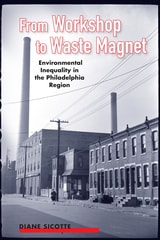
From Workshop to Waste Magnet
Environmental Inequality in the Philadelphia RegionSicotte, Diane
Rutgers University Press, 2016