Results by title
733 books match the query 'Environmental Conservation & Protection' and 25 start with f
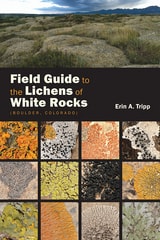
Field Guide to the Lichens of White Rocks
(Boulder, Colorado)Erin Tripp
University Press of Colorado, 2017
This extensively illustrated field guide presents detailed information on the macroscopic and microscopic features needed to identify species, as well as extensive notes on how to differentiate closely related lichens—both those present at White Rocks and those likely to be found elsewhere in western North America. This guide is one of the only complete lichen inventories of a sandstone formation in North America and covers all constituents including the crustose microlichen biota, traditionally excluded from other inventories. A short introduction and glossary equip the reader with basic information on lichen morphology, reproduction, and ecology.
Visitors to White Rocks Nature Preserve must schedule staff-led public tours or set up sponsored research projects through the City of Boulder Open Space and Mountain Parks, and there are many other outcroppings of Fox Hills sandstone across the West, making Field Guide to the Lichens of White Rocks a significant resource for anyone interested in this unique environment. This accessible, user-friendly guide will also be valuable to naturalists and lichenologists around the world as well as educators, conservationists, and land managers concerned with the growing significance of open spaces and other protected urban areas throughout North America.
The University Press of Colorado gratefully acknowledges the generous support of the University of Colorado Natural History Museum, City of Boulder Parks & Open Spaces, and the Colorado Native Plant Society board and members toward the publication of this book.
Fighting Sprawl and City Hall
Resistance to Urban Growth in the SouthwestMichael F. Logan
University of Arizona Press, 1995
Fighting Sprawl and City Hall now sets the record straight, tracing the roots of antigrowth activism in two southwestern cities, Tucson and Albuquerque, where urbanization proceeded in the face of constant protest. Logan tells how each of these cities witnessed multifaceted opposition to post-war urbanization and a rise in political activism during the 1950s. For each city, he describes the efforts by civic boosters and local government to promote development, showing how these booster-government alliances differed in effectiveness; tells how middle-class Anglos first voiced opposition to annexations and zoning reforms through standard forms of political protest such as referendums and petitions; then documents the shift to ethnic resistance as Hispanics opposed urban renewal plans that targeted barrios. Environmentalism, he reveals, was a relative latecomer to the political arena and became a focal point for otherwise disparate forms of resistance.
Logan's study enables readers to understand not only these similarities in urban activism but also important differences; for example, Tucson provides the stronger example of resistance based on valuation of the physical environment, while Albuquerque better demonstrates anti-annexation politics. For each locale, it offers a testament to grass-roots activism that will be of interest to historians as well as to citizens of its subject cities.
Finding the River
An Environmental History of the ElwhaJeff Crane
Oregon State University Press, 2011
Finite Media
Environmental Implications of Digital TechnologiesSean Cubitt
Duke University Press, 2017
Fishing Lessons
Artisanal Fisheries and the Future of Our OceansKevin M. Bailey
University of Chicago Press, 2018
Bailey knows these waters, the artisanal fisheries, and their relationship with larger ocean ecology intimately. In a series of place-based portraits, he shares stories of decline and success as told by those at the ends of the long lines and hand lines, channeling us through the changing dynamics of small-scale fisheries and the sustainability issues they face—both fiscal and ecological. We encounter Paolo Vespoli and his tiny boat, the Giovanni Padre,in the Gulf of Naples; Wenche, a sea Sámi, one of the indigenous fisherwomen of Norway; and many more. From salmon to abalone, the Bay of Fundy to Monterey and the Amazon, Bailey’s catch is no fish tale. It is a global story, casting a net across waters as vast and distinct as Puget Sound and the Chilean coast. Sailing across the world, Bailey explores the fast-shifting current of how we gather food from the sea, what we gain and what we lose with these shifts, and potential solutions for the murky passage ahead.
Fishy Business
Rik Scarce
Temple University Press, 2000
About Pacific salmon -- a game fish and food source that is protected and manages for economic and environmental abundance -- Scarce writes, "What other living thing receives such extensive attention from science and society, is used in so many ways, yet retains so much of what we would like to think is its 'wild' character?" He shows how political, bureaucratic, and economic forces have directed salmon science for their own purposes and how control remains a central feature in salmon biology.
Identifying a countertrend rooted in environmental activism, Scarce also argues that an ecocentric perspective is gaining ground even as pressures mount simultaneously to save endangered salmon populations and to bring every last salmon to market. Thus, while external forces control much of the biologists' work, a movement is underway to free biology from political and economic pressures. In rich, ethnographic detail, Scarce develops this portrait of a science struggling with nature and itself. The old-line "fisheries biologists" tell how they work under immense pressure to unravel the unknowns of salmon existence to fulfill objectives of politically-motivated funding agencies. In contrast, the new breed of "conservation biology" researchers struggles to maintain the genetic diversity of salmon populations while minimizing the ways humans determine the fate of the salmon.
Fishy Business provides new ways for regarding about human interactions with other species, from appealing ones like wolves, whales, and redwood tress to less popular ones like snail darters and kangaroo rats. Society struggles to decide what parts of nature matter and why. Ultimately, Scarce argues, nature is a social product: what shall we make of it?
Florida
A Fire SurveyStephen J. Pyne
University of Arizona Press, 2016
In this important new collection of essays on the region, Stephen J. Pyne colorfully explores the ways the region has approached fire management. Florida has long resisted national models of fire suppression in favor of prescribed burning, for which it has ideal environmental conditions and a robust culture. Out of this heritage the fire community has created institutions to match. The Tallahassee region became the ignition point for the national fire revolution of the 1960s. Today, it remains the Silicon Valley of prescription burning. How and why this happened is the topic of a fire reconnaissance that begins in the panhandle and follows Floridian fire south to the Everglades.
Florida is the first book in a multivolume series describing the nation’s fire scene region by region. The volumes in To the Last Smoke will also cover California, the Northern Rockies, the Great Plains, the Southwest, and several other critical fire regions. The series serves as an important punctuation point to Pyne’s fifty-year career with wildland fire—both as a firefighter and a fire scholar. These unique surveys of regional pyrogeography are Pyne’s way of “keeping with it to the end,” encompassing the directive from his rookie season to stay with every fire “to the last smoke.”
Flowering Plants
Smartweeds to HazelnutsRobert H. Mohlenbrock and Paul M. Thomson Jr.
Southern Illinois University Press, 2009
Since the publication of the first edition of Smartweeds to Hazelnuts in 1987, thirteen additional species and one hybrid have been discovered in Illinois. In addition, numerous nomenclatural changes have occurred for plants already known.
This second edition updates the status of the Polygonaceae, Hamamelidaceae, Platanaceae, Fagaceae, Betulaceae, and Corylaceae in Illinois. Each of the newly discovered species has been added and is fully illustrated. Updated nomenclature as well as Illinois distributional data are included for each species. In addition to the fourteen new plant illustrations, the appendix contains new information on the descriptions and the geographical locations of plants in the first edition, and revised identification keys.
Robert H. Mohlenbrock and Paul M. Thomson Jr. have included a complete description, illustrations showing diagnostic features, distribution maps, and ecological notes for each plant included in this volume.
This new edition will be invaluable to scholars of botany as well as laypersons interested in observing plants in their natural habitat.
Fly-Fishing
Christopher Schaberg
Duke University Press, 2023
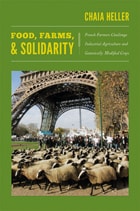
Food, Farms, and Solidarity
French Farmers Challenge Industrial Agriculture and Genetically Modified CropsChaia Heller
Duke University Press, 2012
Foodloose in Washtenaw
A Foodie's Guide to Washtenaw CountyTaylor Landeryou and Raymond De Young
Michigan Publishing Services, 2018
Inspired by a classic walking guidebook of the area, Foodloose in Washtenaw County takes readers on tours to discover food-related treasures throughout the county. What better way to get to know this place—or experience something new—than to bike, bus, carpool, walk, even kayak your way through food-filled Washtenaw County?
From centennial farms to trendy upscale restaurants, the self-guided tours of Foodloose offer an opportunity to explore where our food is grown, produced, distributed, and enjoyed in Washtenaw County. Within these pages lies a chance to celebrate the local food community, learn more about our unique food system, and maybe even find a new favorite place to dine.
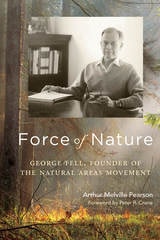
Force of Nature
George Fell, Founder of the Natural Areas MovementArthur Melville Pearson
University of Wisconsin Press, 2020
Force of Nature reveals how a failed civil servant, with few assets apart from his tenacity and vision, initiated the natural areas movement. In the boom years following World War II, as undeveloped lands were being mined, drained, or bulldozed, Fell transformed a loose band of ecologists into The Nature Conservancy, drove the passage of the influential Illinois Nature Preserves Act, and helped spark allied local and national conservation organizations in the United States and beyond.
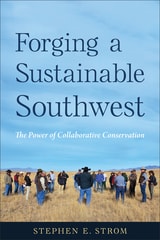
Forging a Sustainable Southwest
The Power of Collaborative ConservationStephen E. Strom
University of Arizona Press, 2024
Forging a Sustainable Southwest introduces readers to four conservation efforts that provide insight into how diverse groups of citizens have worked collaboratively to develop visions for land use that harmonized sometimes conflicting ecological, economic, cultural, and community needs. Through the voices of more than seventy individuals involved in these efforts, we learn how they’ve developed plans for protecting, restoring, and stewarding lands sustainably; the management and funding tools they’ve used; and their perceptions of the challenges that remain and how to meet them.
This book details efforts to craft the Sonoran Desert Conservation Plan, establish Las Cienegas National Conservation Area, protect Cienega Ranch, and create the Malpai Borderlands Group. It will appeal to anyone interested in grassroots efforts to protect the vital ecosystems of the western United States.
These inspiring stories of citizens and groups working together demonstrate a path for the future built day-by-day: breaking bread at potlucks, holding informal front-porch discussions, and later finding common purpose in community-wide meetings. Might their efforts reveal a path to rebuilding our democratic systems from the ground up?
Fostering Reasonableness
Supportive Environments for Bringing Out Our BestRachel Kaplan and Avik Basu, editors
Michigan Publishing Services, 2015
Foundations of Conservation Biology
A Guide to the Classic LiteratureEdited by Jeffrey D. Brawn, Erica Fleishman, Curt Meine
University of Chicago Press, 2026
This book summarizes over a century of multidisciplinary scientific literature that contributed to the development of conservation biology. It explores how different scientific, social, and cultural traditions have informed that literature, enabling a deeper comprehension of the natural world and conservation practices. The volume traces conservation biology’s scientific and cultural foundations and its emergence in the mid-1980s in response to the accelerating effects of human activity on biological diversity. As conservation moved beyond its early emphasis on sustaining yields of selected natural resources and responding to environmental degradation, it both reflected and required changes in its scope and foundations. Today, conservation biologists aim to understand the complex ecological and social causes of biodiversity loss and apply that integrated understanding to sustain life and ecological integrity at all levels.
Examining this evolving field’s foundations in philosophy and culture, population genetics, landscape ecology, management techniques, law, the social sciences, and climate change science, the contributors to this volume identify and provide historical and contextual interpretations of the key literature. Foundations of Conservation Biology shows how insights from the past have influenced contemporary studies, and how they may continue to shape future research and actions.

Foundations of Ecology II
Classic Papers with CommentariesEdited by Thomas E. Miller and Joseph Travis
University of Chicago Press, 2022
The period of 1970 to 1995 was a time of tremendous change in all areas of ecology—from an increased rigor for experimental design and analysis to the reevaluation of paradigms, new models for understanding, and theoretical advances. Edited by ecologists Thomas E. Miller and Joseph Travis, Foundations of Ecology II includes facsimiles of forty-six papers from this period alongside expert commentaries that discuss a total of fifty-three key studies, addressing topics of diversity, predation, complexity, competition, coexistence, extinction, productivity, resources, distribution, abundance, and conservation. The result is more than a catalog of historic firsts; this book offers diverse perspectives on the foundational papers that led to today’s ecological work. Like this book’s 1991 predecessor, Foundations of Ecology edited by Leslie A. Real and James H. Brown, Foundations of Ecology II promises to be the essential primer for graduate students and practicing ecologists for decades to come.
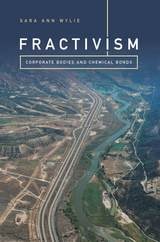
Fractivism
Corporate Bodies and Chemical BondsSara Ann Wylie
Duke University Press, 2018
Fractured Communities
Risk, Impacts, and Protest Against Hydraulic Fracking in U.S. Shale RegionsLadd, Anthony E.
Rutgers University Press, 2017
Fragile Web
What Next for Nature?Edited by Jonathan Silvertown
University of Chicago Press, 2010
Biodiversity is as close as your breakfast table. Your cereal and coffee are the products of at least a dozen species of plants and animals. And believe it or not, you are related to your morning meal—all life on earth is descended from a common ancestor, giving new meaning to the old saying “You are what you eat.”
Making clear why the future of biodiversity matters, Fragile Web—which takes its name from the delicate mechanism that holds all life together—unites a team of international experts to explore the wonder of the natural world. Drawing on the very latest research, the book explains what biodiversity is and explores its evolution, from 3.5 billion years ago to the present day. It discusses the importance of the world’s ecosystems and how directly or indirectly humans are responsible for the fate of nature. Crucially, it also examines what can be done to protect the natural world and why it matters. Although we cannot undo all that we have done, ignoring the current crisis facing biodiversity could fundamentally change the lives of future generations.
Fully illustrated with color photographs, diagrams, and maps, and edited by celebrated ecologist Jonathan Silvertown, this book is a timely snapshot of the state of life on Earth. From the plant and animal products that make up our breakfast to the ecosystems that help to produce clean water, our very survival depends upon the variety of plant and animal life on our planet. The year 2010 has been declared by the United Nations the International Year of Biodiversity, and The Fragile Web will be an essential guidebook for our time.
Framing the Problem
Causes and Consequences of a Shrinking Great Salt LakeKevin D. Perry
University of Utah Press, 2024

Friendly Fallout 1953
Ann Ronald
University of Nevada Press, 2011
Friendly Fallout 1953 is a hybrid work of literature that combines the actual history of aboveground atomic testing in the Nevada desert in 1953 with fictional vignettes that explore the impact of the tests on the people who participated in them and on civilian "downwinders." The book brings to life a turbulent era when Cold War fears, patriotic enthusiasm, scientific progress, and unacknowledged political agendas often collided with the welfare of ordinary citizens and the environment.

Frigid Embrace
Politics, Economics, and Environment in AlaskaStephen Haycox
Oregon State University Press, 2002
Future Remains
A Cabinet of Curiosities for the AnthropoceneEdited by Gregg Mitman, Marco Armiero, Robert S. Emmett
University of Chicago Press, 2018
Future Remains is a thoughtful and creative meditation on these questions. The fifteen objects gathered in this book resemble more the tarots of a fortuneteller than the archaeological finds of an expedition—they speak of planetary futures. Marco Armiero, Robert S. Emmett, and Gregg Mitman have assembled a cabinet of curiosities for the Anthropocene, bringing together a mix of lively essays, creatively chosen objects, and stunning photographs by acclaimed photographer Tim Flach. The result is a book that interrogates the origins, implications, and potential dangers of the Anthropocene and makes us wonder anew about what exactly human history is made of.
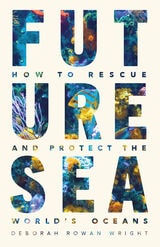
Future Sea
How to Rescue and Protect the World’s OceansDeborah Rowan Wright
University of Chicago Press, 2020
The world’s oceans face multiple threats: the effects of climate change, pollution, overfishing, plastic waste, and more. Confronted with the immensity of these challenges and of the oceans themselves, we might wonder what more can be done to stop their decline and better protect the sea and marine life. Such widespread environmental threats call for a simple but significant shift in reasoning to bring about long-overdue, elemental change in the way we use ocean resources. In Future Sea, ocean advocate and marine-policy researcher Deborah Rowan Wright provides the tools for that shift. Questioning the underlying philosophy of established ocean conservation approaches, Rowan Wright lays out a radical alternative: a bold and far-reaching strategy of 100 percent ocean protection that would put an end to destructive industrial activities, better safeguard marine biodiversity, and enable ocean wildlife to return and thrive along coasts and in seas around the globe.
Future Sea is essentially concerned with the solutions and not the problems. Rowan Wright shines a light on existing international laws intended to keep marine environments safe that could underpin this new strategy. She gathers inspiring stories of communities and countries using ocean resources wisely, as well as of successful conservation projects, to build up a cautiously optimistic picture of the future for our oceans—counteracting all-too-prevalent reports of doom and gloom. A passionate, sweeping, and personal account, Future Sea not only argues for systemic change in how we manage what we do in the sea but also describes steps that anyone, from children to political leaders (or indeed, any reader of the book), can take toward safeguarding the oceans and their extraordinary wildlife.
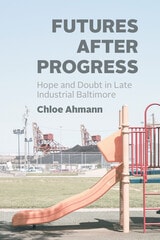
Futures after Progress
Hope and Doubt in Late Industrial BaltimoreChloe Ahmann
University of Chicago Press, 2024
Factory fires, chemical explosions, and aerial pollutants have inexorably shaped South Baltimore into one of the most polluted places in the country. In Futures after Progress, anthropologist Chloe Ahmann explores the rise and fall of industrial lifeways on this edge of the city and the uncertainties that linger in their wake. Writing from the community of Curtis Bay, where two hundred years of technocratic hubris have carried lethal costs, Ahmann also follows local efforts to realize a good future after industry and the rifts competing visions opened between neighbors.
Examining tensions between White and Black residents, environmental activists and industrial enthusiasts, local elders and younger generations, Ahmann shows how this community has become a battleground for competing political futures whose stakes reverberate beyond its six square miles in a present after progress has lost steam. And yet—as one young resident explains—“that’s not how the story ends.” Rigorous and moving, Futures after Progress probes the deep roots of our ecological predicament, offering insight into what lies ahead for a country beset by dreams deferred and a planet on the precipice of change.