Results by title
70 books match the query 'Essay' and 5 start with f
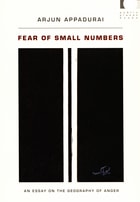
Fear of Small Numbers
An Essay on the Geography of AngerArjun Appadurai
Duke University Press, 2006
Fear of Small Numbers is Arjun Appadurai’s answer to that question. A leading theorist of globalization, Appadurai turns his attention to the complex dynamics fueling large-scale, culturally motivated violence, from the genocides that racked Eastern Europe, Rwanda, and India in the early 1990s to the contemporary “war on terror.” Providing a conceptually innovative framework for understanding sources of global violence, he describes how the nation-state has grown ambivalent about minorities at the same time that minorities, because of global communication technologies and migration flows, increasingly see themselves as parts of powerful global majorities. By exacerbating the inequalities produced by globalization, the volatile, slippery relationship between majorities and minorities foments the desire to eradicate cultural difference.
Appadurai analyzes the darker side of globalization: suicide bombings; anti-Americanism; the surplus of rage manifest in televised beheadings; the clash of global ideologies; and the difficulties that flexible, cellular organizations such as Al-Qaeda present to centralized, “vertebrate” structures such as national governments. Powerful, provocative, and timely, Fear of Small Numbers is a thoughtful invitation to rethink what violence is in an age of globalization.
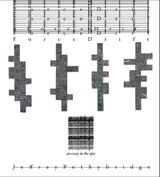
Force Drift
An Essay in the EpicJeffrey Pethybridge
Tupelo Press, 2025
The poems in Force Drift recall Gilles Deleuze’s insight that art “is not a matter of reproducing or inventing forms, but of capturing forces.” Through the formal range of this dynamic sequence, Pethybridge achieves something like a synthesis of Deleuze’s opposition whereby the invention of poetic form becomes the very means of capturing, registering forces: “a reckoning lyric.”
The task of reckoning renders visible the violence of the state that lies at the heart of the matter precisely because the state intends to conceal or justify its brutality through the invocation of emergency powers, as well as the state of exception, or how the state disappears persons in its network of black site prisons. As the political scientist Darius Rejali has demonstrated, it is in fact democracies that have refined “invisible tortures” such as sensory deprivation, stress-positions, and the waterboard.
Working at the intersection of documentary poetics and theories of the epic, Pethybridge recommits poetry to a responsibility for a description of history. As a poet-researcher, he asks: “what would be possible…if listening / were the leading-form of being.” Driven by argument, abstraction, and assemblage, the poems in Force Drift address themselves to the irreparable, the “traumaeffect,” within the war on terror’s record of atrocity. Force Drift is a cri de coeur, political critique, and essay in the epic.
Against the world-destroying violence of the US torture program, Force Drifts juxtaposes a catalog of energies, forms, and genres. It is abolitionist, citational, architectural, chromatic, and replete with visual poetries ranging from the arabasques of tzahibs to erasures to extreme measures of leading and kerning. Even when its language is reduced to the pure transcription of pain––”aiai aiai aiai”––Force Drift is committed to aliveness and embodiment as “final treaty of the person,” as conscience and counterworld to the history as catastrophe of US imperialism, “irrefutable as the sun to the eye.”
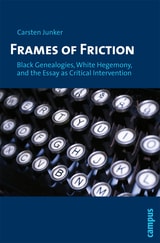
Frames of Friction
Black Genealogies, White Hegemony, and the Essay as Critical InterventionCarsten Junker
Campus Verlag, 2010
In Frames of Friction, Carsten Junker maps out a dazzling panorama of critical cultural debatesfrom the twentieth century to explore the ways in which African American speakers and writers established their authority and gained recognition. Taking into account the latest ideas from gender studies and African American studies, as well as current essay theory, Junker juxtaposes the ways in which African American authors and speakers from the 1920s to the 1970s debated critical topics with their white and Jewish contemporaries in order to emphasize the dialogic nature of the essay form. Ultimately, Junker hones in on the genre of essay itself, arguing that it is repeatedly questioned and reconstituted during times of social change.
Free Verse
An Essay on ProsodyCharles O. Hartman
Northwestern University Press, 1996
Freedom's Moment
An Essay on the French Idea of Liberty from Rousseau to FoucaultPaul M. Cohen
University of Chicago Press, 1997
Arranged not according to the lives and times of its protagonists but to the narrative themes and structures they held in common, Cohen’s study discerns a single master narrative of liberty in modern France. He captures these radicals, whose tradition bids them to resist the authority of power structures and public opinion. They denounce bourgeois and utilitarian values, the power of Church and State, and the corrupting influence of everyday politics, and they dream of a revolutionary rupture, a fleeting instant of sometimes violent but always meaningful transgression.
An eloquent and insightful work on French political culture, Freedom's Moment also helps explain how France, even as it has oscillated between political stagnation and crisis, has held onto its faith that liberty, equality, and fraternity remain within its grasp.
Examines the ideas of Rousseau, Robespierre, Stendahl, Michelet, Bergson, Peguy, Sartre, and Foucault.