Results by title
198 books match the query 'Food' and 42 start with f

Families and Food in Hard Times
European Comparative ResearchRebecca O'Connell and Julia Brannen
University College London, 2021
Food is fundamental, yet food poverty has increased in the Global North. Adopting a comparative case approach, Food and Families in Hard Times addresses the global problem of economic retrenchment and the burden it places on the most vulnerable. This timely book examines food poverty in the United Kingdom, Portugal, and Norway following the 2008 financial crisis, examining the resources available to families in relation to the intersection of public policies, local institutions, and kinship networks. The book explores the ways that low income impacts household food provisioning, formal and informal support for struggling families, the provision and role of school meals, and constraints upon families’ social participation. Drawing upon extensive and intensive knowledge on the conditions and experiences of low-income families, the book also draws upon current research in European social science literature to shed light on the causes and consequences of food poverty in austerity-era Europe.
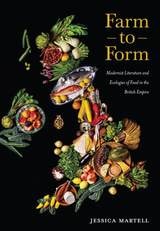
Farm to Form
Modernist Literature and Ecologies of Food in the British EmpireJessica Martell
University of Nevada Press, 2020
Deeply informed by Martell’s extensive knowledge of modern British, Irish, American, and World Literatures, this progressive work positions modernism as central to the study of narratives of resistance against social and environmental degradation. Analyzed works include those of Thomas Hardy, E. M. Forster, Virginia Woolf, Joseph Conrad, George Russell, and James Joyce.
In light of climate change, fossil fuel supremacy, nutritional dearth, and other pressing food issues, modernist texts bring to life an era of crisis and anxiety similar to our own. In doing so, Martell summons the past as a way to employ the modernist term of “defamiliarizing” the present so that entrenched perceptions can be challenged. Our current food regime is both new and constantly evolving with the first industrial food trades. Studying earlier cultural responses to them invites us to return to persistent problems with new insights and renewed passion.

Farming, Hunting, and Fishing in the Olmec World
By Amber M. VanDerwarker
University of Texas Press, 2006
The Olmec who anciently inhabited Mexico's southern Gulf Coast organized their once-egalitarian society into chiefdoms during the Formative period (1400 BC to AD 300). This increase in political complexity coincided with the development of village agriculture, which has led scholars to theorize that agricultural surpluses gave aspiring Olmec leaders control over vital resources and thus a power base on which to build authority and exact tribute.
In this book, Amber VanDerwarker conducts the first multidisciplinary analysis of subsistence patterns at two Olmec settlements to offer a fuller understanding of how the development of political complexity was tied to both agricultural practices and environmental factors. She uses plant and animal remains, as well as isotopic data, to trace the intensification of maize agriculture during the Late Formative period. She also examines how volcanic eruptions in the region affected subsistence practices and settlement patterns. Through these multiple sets of data, VanDerwarker presents convincing evidence that Olmec and epi-Olmec lifeways of farming, hunting, and fishing were driven by both political and environmental pressures and that the rise of institutionalized leadership must be understood within the ecological context in which it occurred.

Fashionable Food
Seven Decades of Food FadsSylvia Lovegren
University of Chicago Press, 2005
Well researched and delightfully illustrated, this collection of faddish recipes from the 1920s to the 1990s is a decade-by-decade tour of a hungry American century. From the Three P's Salad—that's peas, pickles, and peanuts—of the post-World War I era to the Fruit Cocktail and Spam Buffet Party loaf—all the rage in the ultra-modern 1950s, when cooking from a can epitomized culinary sophistication—Fashionable Food details the origins of these curious delicacies. In two chapters devoted to "exotic foods of the East," for example, Lovegren explores the long American love affair with Chinese food and the social status conferred upon anyone chic enough to eat pu-pu platters from Polynesia. Throughout, Lovegren supplements recipes—some mouth-watering, some appalling—from classic cookbooks and family magazines, with humorous anecdotes that chronicle how society and kitchen technology influenced the way we lived and how we ate.
Equal parts American and culinary history, Fashionable Food examines our collective past from the kitchen counter. Even if it's been a while since you last had Tang Pie and your fondue set is collecting dust in the back of the cupboard, Fashionable Food will inspire, entertain, and inform.
Fear of Food
A History of Why We Worry about What We EatHarvey Levenstein
University of Chicago Press, 2012
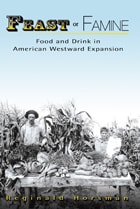
Feast or Famine
Food and Drink in American Westward ExpansionReginald Horsman
University of Missouri Press, 2008
Feast or Famine is the first comprehensive account of food and drink in the winning of the West, describing the sustenance of successive generations of western pioneers. Drawing on journals of settlers and travelers—as well as a lifetime of research on the American West—Reginald Horsman examines more than one hundred years of history, from the first advance of explorers into the Mississippi valley to the movement of ranchers and farmers onto the Great Plains, recording not only the components of their diets but food preparation techniques as well.
Most settlers were able to obtain food beyond the dreams of ordinary Europeans, for whom meat was a luxury. Not only were buffalo, deer, and wild turkey there for the taking, pioneers also gathered greens such as purslane, dandelion, and pigweed—as well as wild fruits, berries, and nuts. They replaced sugar with wild honey or maple syrup, and when they had no tea, they made drinks out of sage, sassafras, and mint. Horsman also reveals the willingness of Indians to convey their knowledge of food to newcomers, sharing salmon in the Pacific Northwest, agricultural crops in the arid Southwest.
Horsman tells how agricultural expansion and transportation opened a veritable cornucopia and how the development of canning soon made it possible for meals to transcend simple frontier foods, with canned oysters and crystallized eggs in airtight cans on merchants’ shelves. He covers food on different regional frontiers, as well as the cuisines of particular groups such as fur traders, soldiers, miners, and Mormons. He also discusses food shortages that resulted from poor preparation, temporary scarcity of game, marginal soil, or simply bad luck. At times, as with the ill-fated Donner Party, pioneers starved.
Engagingly written and meticulously researched, Feast or Famine is a one-of-a-kind look at a subject too long ignored in histories of the West. By revealing the spectrum of frontier fare across years and regions, it shows us that the land of opportunity was often a land of plenty.
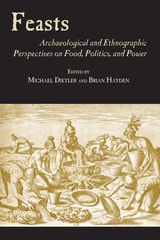
Feasts
Archaeological and Ethnographic Pespectives on Food, Politics, and PowerMichael Dietler
University of Alabama Press, 2010
From the ancient Near East to modern-day North America, communal consumption of food and drink punctuates the rhythms of human societies. Feasts serve many social purposes, establishing alliances for war and marriage, mobilizing labor, creating political power and economic advantages, and redistributing wealth. In this collection of fifteen essays, archaeologists and ethnographers explore the material record of food and its consumption as social practice. They examine the locations of roasting pits, hearths, and refuse deposits, or the presence of special decorative ceramics, and infer ways in which feasting traditions reveal social structures of lineage, clan, moiety, and polity.

Feeding Strategy
Jennifer Owen
University of Chicago Press, 1982
Among both plants and animals elaborate strategies have evolved for exploring the surrounding life as food. The feeding behavior of predators is based on a search and strike strategy. In contrast, grazers live surrounded by their food and are relatively immobile. Such animals as impalas and grasshoppers, whose persistent feeding make them ready prey, have evolved means of avoiding the notice of predators or methods of speedy escape. Plants that digest animal tissue have evolved complex and devious means to attract prey.
The variations in style of these feeding encounters and the precision involved in some of the feeding mechanisms are the themes of Feeding Strategy.

Feeding the Future
School Lunch Programs as Global Social PolicyRutledge, Jennifer Geist
Rutgers University Press, 2016

Fighting for the Future of Food
Activists versus Agribusiness in the Struggle over BiotechnologyRachel Schurman
University of Minnesota Press, 2010
Fighting for the Future of Food tells the story of how a small group of social activists, working together across tables, continents, and the Internet, took on the biotech industry and achieved stunning success. Rachel Schurman and William A. Munro detail how the anti-biotech movement managed to alter public perceptions about GMOs and close markets to such products. Drawing strength from an alternative worldview that sustained its members' sense of urgency and commitment, the anti-GMO movement exploited political opportunities created by the organization and culture of the biotechnology industry itself.
Fighting for the Future of Food ultimately addresses society's understanding and trust (or mistrust) of technological innovation and the complexities of the global agricultural system that provides our food.

Fonda San Miguel
Forty Years of Food and ArtBy Tom Gilliland and Miguel Ravago
University of Texas Press, 2016
“Walking through the old wooden doors at Fonda San Miguel is like a journey back to colonial Mexico. . . . World-class Mexican art and antiques decorate the interior, and famed Mexican chefs have taught and cooked here. Acclaimed as one of the best Mexican restaurants in the country serving authentic interior food . . .” —USA Today
“The stately yet bright and colorful hacienda decor and standout Mexican-interior cooking . . . will transport you straight to Guanajuato.” —Vogue
“It anchors the city as its premier Mexican restaurant institution.” —The Daily Meal, which named Fonda San Miguel one of “America’s 50 Best Mexican Restaurants”
Updated and reissued to celebrate the restaurant’s four decades of success, Fonda San Miguel presents more than one hundred recipes. The selections include many of Fonda’s signature dishes—Ceviche Veracruzano, Enchiladas Suizas, Cochinita Pibil, Pescado Tikin Xik, and Carne Asada—as well as a delicious assortment of dishes from Mexico’s diverse regional cuisines. Supplementary sections contain tips on buying and cooking with the various chiles and other ingredients, along with information on basic preparation techniques, equipment, and mail-order sources. Full-color photographs illustrate special dishes, and representative works from the impressive Fonda San Miguel art collection are also featured, along with notes on the artists.
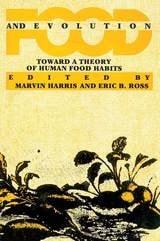
Food And Evolution
Toward a Theory of Human Food Habitsedited by Marvin Harris and Eric B. Ross
Temple University Press, 1989

Food Hoarding in Animals
Stephen B. Vander Wall
University of Chicago Press, 1990
Drawings, photographs, and appendixes document complex and intrinsically interesting food-hoarding behaviors, and the bibliography of nearly 1,500 sources is itself an invaluable and unique reference.
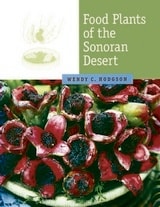
Food Plants of the Sonoran Desert
Wendy C. Hodgson
University of Arizona Press, 2001
The seemingly inhospitable Sonoran Desert has provided sustenance to indigenous peoples for centuries. Although it is to all appearances a land bereft of useful plants, fully one-fifth of the desert's flora are edible.
This volume presents information on nearly 540 edible plants used by people of more than fifty traditional cultures of the Sonoran Desert and peripheral areas. Drawing on thirty years of research, Wendy Hodgson has synthesized the widely scattered literature and added her own experiences to create an exhaustive catalog of desert plants and their many and varied uses.
Food Plants of the Sonoran Desert includes not only plants such as gourds and legumes but also unexpected food sources such as palms, lilies, and cattails, all of which provided nutrition to desert peoples. Each species entry lists recorded names and describes indigenous uses, which often include nonfood therapeutic and commodity applications. The agave, for example, is cited for its use as food and for alcoholic and nonalcoholic beverages, syrup, fiber, cordage, clothing, sandals, nets, blankets, lances, fire hearths, musical instruments, hedgerows, soap, and medicine, and for ceremonial purposes. The agave entry includes information on harvesting, roasting, and consumption—and on distinguishing between edible and inedible varieties.
No other source provides such a vast amount of information on traditional plant uses for this region. Written to be easily accessible to general readers, the book is an invaluable compendium for anyone interested in the desert's hidden bounty.
Food Production in Native North America
An Archaeological PerspectiveKristen J. Gremillion
University Press of Colorado, 2018
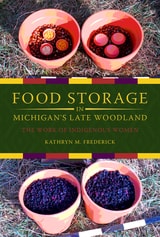
Food Storage in Michigan's Late Woodland
The Work of Indigenous WomenKathryn M. Frederick
University of Alabama Press, 2026
Incorporates experimental archaeology to understand the food-caching strategies led by Indigenous women in Late Woodland Michigan.
This experimental archaeology book centers on the decision of Indigenous women in Michigan’s Late Woodland to store food in cache pits for later use, to ensure a stable food supply. These food storage techniques were efforts to increase communal chances of survival in direct responses to sociopolitical changes. Kathryn M. Frederick highlights the importance of food storage in these communities and the decision-making and behaviors behind it.
To discover why food storage became a popular practice at that period, Frederick considered the efficacy of subterranean food storage and constructed experiments to understand the timing and use of cache pits and to test their reliability and efficiency. She also compiled ethnographic data on location, environmental conditions, movement strategies, and types of foodstuffs stored for dozens of hunter-gatherer groups. Two distinct patterns of food storage emerged: “reliant” and “redundant.” Frederick argues that the Indigenous women utilized a system of reliant storage during times of abundance but could switch to a redundant system as the socioeconomic climate shifted. This book will interest a wide swath of archaeologists and others interested in Indigenous foodways and women’s key roles.

Food and France
What Food Studies Can Teach Us about HistoryErica J. Peters and Bertram M. Gordon, editors
Duke University Press, 0
This special issue offers a broad range of social and cultural insights into the history of French gastronomy. At a moment when French cuisine no longer dominates the world of fine dining, the history of French food has drawn increasing attention in the academic world. The contributors address topics spanning the seventeenth to the twentieth centuries, such as coffee’s relationship to slavery and exoticism; the promotion of terroir to an aspiring middle class; the contrast between the romanticized images of Parisian shop girls and their efforts to survive on street food in the early twentieth century; the "standard meal" imagined by nineteenth-century nutritionists and the divergent reality of meager lunches for the working class; and the inequitable experience of wartime deprivation. The articles in this issue both model how the study of the culture of food can ground our understanding of France’s place in the world and illuminate questions of nationalism, global networks, gender, race, ethnicity, and class.
Contributors: Martin Bruegel, Bertram M. Gordon, Julia Landweber, Philippe Meyzie, Kenneth Mouré, Erica J. Peters, Patricia A. Tilburg
Food and Poverty
Food Insecurity and Food Sovereignty among America's PoorLeslie Hossfeld
Vanderbilt University Press, 2018
Food and Transformation in Ancient Mediterranean Literature
Meredith J. C. Warren
SBL Press, 2019
New research that transforms how to understand food and eating in literature
Meredith J. C. Warren identifies and defines a new genre in ancient texts that she terms hierophagy, a specific type of transformational eating where otherworldly things are consumed. Multiple ancient Mediterranean, Jewish, and Christian texts represent the ramifications of consuming otherworldly food, ramifications that were understood across religious boundaries. Reading ancient texts through the lens of hierophagy helps scholars and students interpret difficult passages in Joseph and Aseneth, 4 Ezra, Revelation 10, and the Persephone myths, among others.
Features:
- Exploration of how ancient literature relies on bending, challenging, inverting, and parodying cultural norms in order to make meaning out of genres
- Analysis of hierophagy as social action that articulates how patterns of communication across texts and cultures emerge and diverge
- A new understanding of previously confounding scenes of literary eating
Food and Work in the Americas
Susan Levine and Steve Striffler, special issue editors
Duke University Press, 0
Susan Levine is Professor of History and Director of the Institute for the Humanities at the University of Illinois at Chicago. She is the author of School Lunch Politics: The Surprising History of America’s Favorite Welfare Program. Steve Striffler is the Doris Zemurray Stone Chair in Latin American Studies and Professor of Anthropology at the University of New Orleans. He is the author of In the Shadows of State and Capital: The United Fruit Company, Popular Struggle, and Agrarian Restructuring in Ecuador, 1900–1995, also published by Duke University Press.
Contributors: William Bauer, Sarah Besky, Sandy Brown, Rachel Herrmann, Felicia Kornbluh, Susan Levine, Sarah Lyon, Vanessa May, April Merleaux, Liesl Orenic, Sara Ries, Steve Striffler
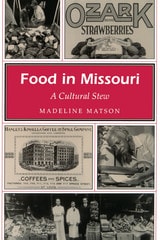
Food in Missouri
A Cultural StewMadeline Matson
University of Missouri Press, 1994
Corn, squash, and beans from the Native Americans; barbecue sauces from the Spanish; potatoes and sausages from the Germans: Missouri's foods include a bountiful variety of ingredients. In Food in Missouri: A Cultural Stew, Madeline Matson takes readers on an enticing journey through the history of this state's food, from the hunting and farming methods of the area's earliest inhabitants, through the contributions of the state's substantial African American population, to the fast-food purveyors of the microwave age.
Tracing the history of food preparation, preservation, and marketing, while highlighting the cultural traditions that engendered each change, Matson shows how advances in farming methods, the invention of the electric range, the development of cookbooks, and three waves of immigration have profoundly influenced what Missourians eat today. Along the way, she highlights some of the key people, places, and institutions in Missouri's food history: Irma S. Rombauer, author of Joy of Cooking; Stark Bro's Nurseries and Orchards in Louisiana, Missouri, the largest family-owned fruit-tree nursery in the world and the home of Delicious, Golden Delicious, and Gala apples; St. Louis's Soulard Market, established in 1779 and said to be the oldest public market west of the Mississippi; and Stone Hill Winery, a leader in Hermann's nationally recognized wine- making industry.
By bringing to life the traditions behind the foods we eat every day, Food in Missouri provides a unique perspective on the people who explored and settled the state, showing that Missouri's rich heritage truly is a cultural stew.
Food in the American Gilded Age
Helen Zoe Veit
Michigan State University Press, 2017
Food in the Civil War Era
The NorthHelen Zoe Veit
Michigan State University Press, 2014
Food in the Civil War Era
The SouthHelen Zoe Veit
Michigan State University Press, 2015
Food, Diaspora, and Memory
Edited by Zoë Antoinette Eddy
Lever Press, 2027
Across diasporic communities, food serves as a repository of memory, a marker of identity, and a powerful means of creating and sustaining belonging in the face of displacement. Food, Diaspora, and Memory brings together an international collection of contributors to explore how food mediates the complex relationships among migration, culture, family, and place. The essays explore how recipes, meals, culinary traditions, and food narratives function as living archives through which individuals and communities maintain connections to ancestral homelands while simultaneously creating new forms of belonging in their adopted homes. Together, the contributors reveal food as both a deeply personal and profoundly social medium through which diasporic communities navigate questions of identity, memory, and cultural negotiation.
By bringing together global perspectives on food, diaspora, and cultural resilience, Food, Diaspora, and Memory offers a timely contribution to some of the most pressing social and cultural questions of our time and demonstrates the continuing power of food to sustain communities across borders, generations, and histories.
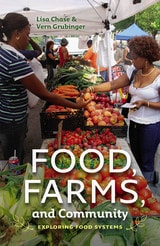
Food, Farms, and Community
Exploring Food SystemsLisa Chase
University of New Hampshire Press, 2014
Throughout the United States, people are increasingly concerned about where their food comes from, how it is produced, and how its production affects individuals and their communities. The answers to these questions reveal a complex web of interactions. While large, distant farms and multinational companies dominate at national and global levels, innovative programs including farmers' markets, farm-to-school initiatives, and agritourism are forging stronger connections between people and food at local and regional levels. At all levels of the food system, energy use, climate change, food safety, and the maintenance of farmland for the future are critical considerations. The need to understand food systems—what they are, who's involved, and how they work (or don't)—has never been greater.
Food, Farms, and Community: Exploring Food Systems takes an in-depth look at critical issues, successful programs, and challenges for improving food systems spanning a few miles to a few thousand miles. Case studies that delve into the values that drive farmers, food advocates, and food entrepreneurs are interwoven with analysis supported by the latest research. Examples of entrepreneurial farms and organizations working together to build sustainable food systems are relevant to the entire country—and reveal results that are about much more than fresh food.
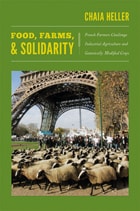
Food, Farms, and Solidarity
French Farmers Challenge Industrial Agriculture and Genetically Modified CropsChaia Heller
Duke University Press, 2012
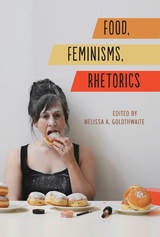
Food, Feminisms, Rhetorics
Edited by Melissa A. Goldthwaite
Southern Illinois University Press, 2017
Contributors analyze messages about food and bodies—from what a person watches and reads to where that person shops—taken from sources mundane and literary, personal and cultural. This collection begins with analyses of the historical, cultural, and political implications of cookbooks and recipes; explores definitions of feminist food writing; and ends with a focus on bodies and cultures—both self-representations and representations of others for particular rhetorical purposes. The genres, objects, and practices contributors study are varied—from cookbooks to genre fiction, from blogs to food systems, from product packaging to paintings—but the overall message is the same: food and its associated practices are worthy of scholarly attention.
Food, Fiber, and the Arid Lands
Edited by William G. McGinnies, Bram J. Goldman, and Patricia G. Paylore
University of Arizona Press, 1971
The world’s dramatic awakening to the impact of ecology on the quality of human life, and a new awareness of the potential for exploitation of the desert environment—in which our particular interest lies—give rise to more thoughtful, even sober, attention to the problems faced by those aspiring only to bigger yields from crops and more protein from animals. To these very basic needs of food and fiber, we are, therefore, addressing ourselves further to a consideration of housing, educational programs, and nonagrarian resource evolution, to the end that the planners and the decision makers may have the benefit of the most intelligent and contemporary understanding possible of the cultural and social aspects of arid lands as well as the latest technological advances on a wide-ranging spectrum of scientific developments.
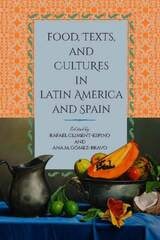
Food, Texts, and Cultures in Latin America and Spain
Rafael Climent-Espino
Vanderbilt University Press, 2020
The studies span from the Middle Ages to the twenty-first century, and the contributing scholars occupy diverse fields within Latin American and Hispanic Studies. As such, their essays showcase eclectic critical and theoretical approaches to the subject of Latin American and Iberian food.
Food, Texts, and Cultures in Latin America and Spain also introduces the first English-language publication of works from such award-winning scholars as Adolfo Castañón of the Mexican Academy of Language; Sergio Ramírez, winner of the 2017 Miguel de Cervantes Prize in Literature; and Carmen Simón Palmer, winner of the 2015 Julián Marías Prize for Research.
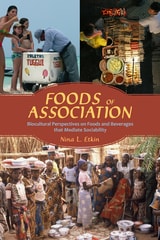
Foods of Association
Biocultural Perspectives on Foods and Beverages that Mediate SociabilityNina L. Etkin
University of Arizona Press, 2009
This fascinating book examines the biology and culture of foods and beverages that are consumed in communal settings, with special attention to their health implications. Nina Etkin covers a wealth of topics, exploring human evolutionary history, the Slow Food movement, ritual and ceremonial foods, caffeinated beverages, spices, the street foods of Hawaii and northern Nigeria, and even bottled water. Her work is framed by a biocultural perspective that considers both the physiological implications of consumption and the cultural construction and circulation of foods. For Etkin, the foods and beverages we consume are simultaneously “biodynamic substances and cultural objects.”
The book begins with a look at the social eating habits of our primate relatives and discusses our evolutionary adaptations. It then offers a history of social foods in the era of European expansion, with a focus on spices and “caffeinated cordials.” (Of course, there were some powerful physiological consequences of eating foods brought home by returning explorers, and those are considered too—along with consequences for native peoples.) From there, the book describes “street food,” which is always served in communal settings. Etkin then scrutinizes ceremonial foods and beverages, and considers their pharmacological effects as well. Her extensive examination concludes by assessing the biological and cultural implications of bottled water.
While intended primarily for scholars, this enticing book serves up a tantalizing smorgasbord of food for thought.
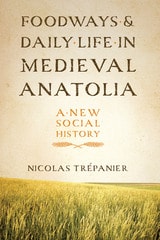
Foodways and Daily Life in Medieval Anatolia
A New Social HistoryBy Nicolas Trépanier
University of Texas Press, 2014
Byzantine rule over Anatolia ended in the eleventh century, leaving the population and its Turkish rulers to build social and economic institutions throughout the region. The emerging Anatolian society comprised a highly heterogeneous population of Christians and Muslims whose literati produced legal documents in Arabic, literary texts in Persian, and some of the earliest written works in the Turkish language. Yet the cultural landscape that emerged as a result has received very little attention—until now.
Investigating daily life in Anatolia during the fourteenth century, Foodways and Daily Life in Medieval Anatolia draws on a creative array of sources, including hagiographies, archaeological evidence, Sufi poetry, and endowment deeds, to present an accessible portrait of a severely under-documented period. Grounded in the many ways food enters the human experience, Nicolas Trépanier’s comprehensive study delves into the Anatolian preparation of meals and the social interactions that mealtime entails—from a villager’s family supper to an elaborately arranged banquet—as well as the production activities of peasants and gardeners; the marketplace exchanges of food between commoners, merchants, and political rulers; and the religious landscape that unfolded around food-related beliefs and practices. Brimming with enlightening details on such diverse topics as agriculture, nomadism, pastoralism, medicine, hospitality, and festival rituals, Foodways and Daily Life in Medieval Anatolia presents a new understanding of communities that lived at a key juncture of world history.
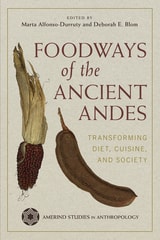
Foodways of the Ancient Andes
Transforming Diet, Cuisine, and SocietyMarta P Alfonso-Durruty
University of Arizona Press, 2023
Exploring the multiple social, ecological, cultural, and ontological dimensions of food in the Andean past, the contributors of Foodways of the Ancient Andes offer diverse theoretical perspectives and methodological approaches that reveal the richness, sophistication, and ingenuity of Andean peoples. The volume spans time periods and localities in the Andean region to reveal how food is intertwined with multiple aspects of the human experience, from production and consumption to ideology and sociopolitical organization. It illustrates the Andean peoples’ resilience in the face of challenges brought about by food scarcity and environmental change. Chapters dissect the intersection of food, power, and status in early states and empires; examine the impact of food during times of conflict and instability; and illuminate how sacred and high-status foods contributed to the building of the Inka Empire.
Featuring forty-six contributors from ten countries, the chapters employ new analytical methods, integrating different food data and interdisciplinary research to show that food can provide not only simple nutrition but also a multitude of strategies, social and political relationships, and ontologies that are otherwise invisible in the archaeological record.
Contributors
Aleksa K. Alaica
Sonia Alconini
Marta Alfonso-Durruty
Sarah I. Baitzel
Véronique Bélisle
Carolina Belmar
Carrie Anne Berryman
Matthew E. Biwer
Deborah E. Blom
Tamara L. Bray
Matthew T. Brown
Maria C. Bruno
José M. Capriles
Katherine L. Chiou
Susan D. deFrance
Lucia M. Diaz
Richard P. Evershed
Maureen E. Folk
Alexandra Greenwald
Chris Harrod
Christine A. Hastorf
Iain Kendall
Kelly J. Knudson
BrieAnna S. Langlie
Cecilia Lemp
Petrus le Roux
Marcos Martinez
Anahí Maturana-Fernández
Weston C. McCool
Melanie J. Miller
Nicole Misarti
Flavia Morello
Patricia Quiñonez Cuzcano
Omar Reyes
Arturo F. Rivera Infante
Manuel San Román
Francisca Santana-Sagredo
Beth K. Scaffidi
Augusto Tessone
Andrés Troncoso
Tiffiny A. Tung
Mauricio Uribe
Natasha P. Vang
Sadie L. Weber
Kurt M. Wilson
Michelle E. Young

Foragers and Farmers
Population Interaction and Agricultural Expansion in Prehistoric EuropeSusan Alling Gregg
University of Chicago Press, 1988
Gregg examines anthropological, ecological, and archaeological dimensions of prehistoric population interaction. She then examines the ecological requirements of both crops and livestock and, in order to identify an optimal farming strategy for Early Neolithic populations, develops a computer simulation to examine various resource mixes. Turning to the foragers, she models the effects that interaction with the farmers would have had on the foragers' subsistence-settlement system.
Supporting her model with archaeological, ecological, and ethnobotanical evidence from southwest Germany, Gregg shows that when foragers and farmers occur contemporaneously, both need to be considered before either can be understood. Theoretically and methodologically, her work builds upon earlier studies of optimal diet and foraging strategy, extending the model to food-producing populations. The applicability of Gregg's generalized model for both wild and domestic resources reaches far beyond her case study of Early Neolithic Germany; it will interest both Old and New World archaeologists.
Foraging for Survival
Yearling Baboons in AfricaStuart A. Altmann
University of Chicago Press, 1998

Foraging
Behavior and EcologyEdited by David W. Stephens, Joel S. Brown, and Ronald C. Ydenberg
University of Chicago Press, 2007
Foraging is the first comprehensive review of the topic in more than twenty years. A monumental undertaking, this volume brings together twenty-two experts from throughout the field to offer the latest on the mechanics of foraging, modern foraging theory, and foraging ecology. The fourteen essays cover all the relevant issues, including cognition, individual behavior, caching behavior, parental behavior, antipredator behavior, social behavior, population and community ecology, herbivory, and conservation. Considering a wide range of taxa, from birds to mammals to amphibians, Foraging will be the definitive guide to the field.
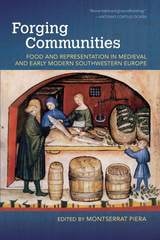
Forging Communities
Food and Representation in Medieval and Early Modern Southwestern EuropeMontserrat Piera
University of Arkansas Press, 2018
This interdisciplinary study of food in medieval and early modern communities connects threads of history conventionally examined separately or in isolation. The intersection of foodstuffs with politics, religion, economics, and culture enhances our understanding of historical developments and cultural continuities through the centuries, giving insight that today, as much as in the past, we are what we eat and what we eat is never devoid of meaning.
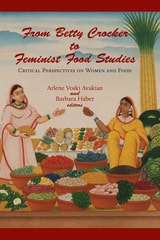
From Betty Crocker to Feminist Food Studies
Critical Perspectives on Women and FoodArlene Voski Avakian
University of Massachusetts Press, 2005
Applying the insights of feminist scholarship to the study of food, the thirteen essays in this volume are arranged under four headings—the marketplace, histories, representations, and resistances. The editors open the book with a substantial introduction that traces the history of scholarly writing on food and maps the terrain of feminist food studies. In the essays that follow, contributors pay particular attention to the ways in which gender, race, ethnicity, class, colonialism, and capitalism have both shaped and been shaped by the production and consumption of food.
In the first section, four essays analyze the influence of large corporations in determining what came to be accepted as proper meals in the United States, including what mothers were expected to feed their babies. The essays in the second section explore how women have held families together by keeping them nourished, from the routines of an early nineteenth-century New Englander to the plight of women who endured the siege of Leningrad.
The essays in the third section focus on the centrality of gender and race in the formation of identities as enacted through food discourse and practices. These case studies range from the Caribbean to the San Luis Valley of Colorado. The final section documents acts of female resistance within the contexts of national or ethnic oppression. From women in colonial India to Armenian American feminists, these essays show how food has served as a means to assert independence and personal identity.
In addition to the editors, contributors include Amy Bentley, Carole M. Counihan, Darra Goldstein, Nancy Jenkins, Alice P. Julier, Leslie Land, Laura Lindenfield, Beheroze F. Shroff, Sharmila Sen, Laura Shapiro, and Jan Whitaker.

From Canton Restaurant to Panda Express
A History of Chinese Food in the United StatesLiu, Haiming
Rutgers University Press, 2015
Finalist in the Culinary History category of the 2016 Gourmand World Cookbook Awards
From Canton Restaurant to Panda Express takes readers on a compelling journey from the California Gold Rush to the present, letting readers witness both the profusion of Chinese restaurants across the United States and the evolution of many distinct American-Chinese iconic dishes from chop suey to General Tso’s chicken. Along the way, historian Haiming Liu explains how the immigrants adapted their traditional food to suit local palates, and gives readers a taste of Chinese cuisine embedded in the bittersweet story of Chinese Americans.
Treating food as a social history, Liu explores why Chinese food changed and how it has influenced American culinary culture, and how Chinese restaurants have become places where shared ethnic identity is affirmed—not only for Chinese immigrants but also for American Jews. The book also includes a look at national chains like P. F. Chang’s and a consideration of how Chinese food culture continues to spread around the globe.
Drawing from hundreds of historical and contemporary newspaper reports, journal articles, and writings on food in both English and Chinese, From Canton Restaurant to Panda Express represents a groundbreaking piece of scholarly research. It can be enjoyed equally as a fascinating set of stories about Chinese migration, cultural negotiation, race and ethnicity, diverse flavored Chinese cuisine and its share in American food market today.
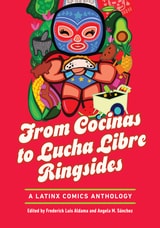
From Cocinas to Lucha Libre Ringsides
A Latinx Comics AnthologyEdited by Frederick Luis Aldama and Angela M. Sánchez
The Ohio State University Press, 2025
Contributors:
Aleasha Acevedo, José Alaniz, Frederick Luis Aldama, Julio Anta, Charlene Bowles, David Bowles, Adrian Carrillo, José Cabrera, Valerie Martinez Cabrera, Mauricio Alberto Cordero, Jaime Crespo, Celeste Cruz, Ernesto Cuevas Jr., Chris Escobar, Rolando Esquivel, Tim Fielder, Dustin Garcia, Eric J. García, Jorge Garza, Oscar Garza, Lucas Gattoni, Blas Goncalves-Borrego, Estella González, Carina Guevara, Aaron Guzman, Javier Hernandez, Sam Jimenez, Eric Kittelberger, Alberto Ledesma, Pablo Leon, Darren López, Patrick Lugo, Jarred A. Luján, Eliamaría Madrid, Miguel Martinez, Paloma Martínez-Cruz, Carlos Meyer, Marisol Meyer Driovínto, Paul Meyer, Rosie Murillo, Rafael Navarro, Daniel Parada, Stephanie Nina Pitsirilos, Jazmin Puente, Raúl the Third, Anna Maria Richardson, Hector Rodriguez III, Theresa Rojas, Rafael Rosado, Andrea Rosales, Justin Rueff, Irma Ruiz, Angela M. Sánchez, Serenity Serseción, Javier Solórzano, Josh Trujillo, Cayetano Valenzuela, Diana “Dianita” Vargas Sampieri, Andrés Vera Martínez

From Gluttony to Enlightenment
The World of Taste in Early Modern EuropeViktoria von Hoffmann
University of Illinois Press, 2016
Viktoria von Hoffmann explores four kinds of early modern texts--culinary, medical, religious, and philosophical--to follow taste's ascent from the sinful to the beautiful. Combining food studies and sensory history, she takes readers on an odyssey that redefined a fundamental human experience. Scholars and cooks rediscovered a vast array of ways to prepare and present foods. Far-sailing fleets returned to Europe bursting with new vegetables, exotic fruits, and pungent spices. Hosts refined notions of hospitality in the home while philosophers pondered the body and its perceptions. As von Hoffmann shows, these labors produced a sea change in perception and thought, one that moved taste from the base realm of the tongue to the ethereal heights of aesthetics.

From the Jewish Heartland
Two Centuries of Midwest FoodwaysEllen F. Steinberg and Jack H. Prost
University of Illinois Press, 2013