Results by title
767 books match the query 'Hispanic & Latino Studies' and 31 start with f
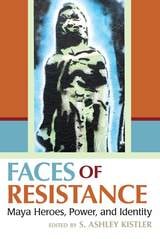
Faces of Resistance
Maya Heroes, Power, and IdentityEdited by S. Ashley Kistler
University of Alabama Press, 2018
In the sixteenth century, Q’eqchi’ Maya leader Aj Poop B’atz’ changed the course of Q’eqchi’ history by welcoming Spanish invaders to his community in peace to protect his people from almost certain violence. Today, he is revered as a powerful symbol of Q’eqchi’ identity. Aj Poop B’atz’ is only one of many indigenous heroes who has been recognized by Maya in Mexico and Guatemala throughout centuries of subjugation, oppression, and state-sponsored violence.
Faces of Resistance: Maya Heroes, Power, and Identity explores the importance of heroes through the analyses of heroic figures, some controversial and alternative, from the Maya area. Contributors examine stories of hero figures as a primary way through which Maya preserve public memory, fortify their identities, and legitimize their place in their country’s historical and political landscape. Leading anthropologists, linguists, historians, and others incorporate ethnographic, ethnohistoric, and archival material into their chapters, resulting in a uniquely interdisciplinary book for scholars as well as students.
The essays offer the first critical survey of the broad significance of these figures and their stories and the ways that they have been appropriated by national governments to impose repressive political agendas. Related themes include the role of heroic figures in the Maya resurgence movement in Guatemala, contemporary Maya concepts of “hero,” and why some assert that all contemporary Maya are heroes.
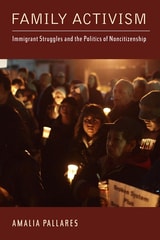
Family Activism
Immigrant Struggles and the Politics of NoncitizenshipPallares, Amalia
Rutgers University Press, 2014

Fatherhood in the Borderlands
A Daughter's Slow ApproachDomino Renee Perez
University of Texas Press, 2022
2026 Best Book Award, Association for Borderlands Studies
2023 Finalist, Best Academic Themed Book, College Level – English, International Latino Book Awards
A contemplative exploration of cultural representations of Mexican American fathers in contemporary media.
As a young girl growing up in Houston, Texas, in the 1980s, Domino Perez spent her free time either devouring books or watching films—and thinking, always thinking, about the media she consumed. The meaningful connections between these media and how we learn form the basis of Perez’s “slow” research approach to race, class, and gender in the borderlands. Part cultural history, part literary criticism, part memoir, Fatherhood in the Borderlands takes an incisive look at the value of creative inquiry while it examines the nuanced portrayal of Mexican American fathers in literature and film.
Perez reveals a shifting tension in the literal and figurative borderlands of popular narratives and shows how form, genre, and subject work to determine the roles Mexican American fathers are allowed to occupy. She also calls our attention to the cultural landscape that has allowed such a racialized representation of Mexican American fathers to continue, unopposed, for so many years. Fatherhood in the Borderlands brings readers right to the intersection of the white cultural mainstream in the United States and Mexican American cultural productions, carefully considering the legibility and illegibility of Brown fathers in contemporary media.
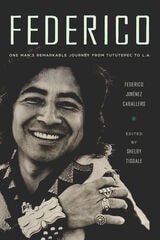
Federico
One Man’s Remarkable Journey from Tututepec to L.A.Federico Jiménez Caballero, Edited by Shelby Tisdale
University of Arizona Press, 2021
From the day he was born, Federico Jiménez Caballero was predicted to be a successful man. So, how exactly did a young boy from Tututepec, Oaxaca, become a famous Indigenous jewelry artist and philanthropist in Los Angeles? Federico tells the remarkable story of willpower, curiosity, hard work, and passion coming together to change one man’s life forever.
As a child growing up in a small rural town in southern Mexico, Federico Jiménez Caballero faced challenges that most of us cannot imagine, let alone overcome. From a young age, Federico worked tirelessly to contribute to his large family, yet his restless spirit often got him into trouble. Finding himself in the middle of a village-wide catastrophe, he was exiled to a boarding school in Oaxaca City where he was forced to become independent, resilient, and razor-sharp in order to stay afloat. Through his incredible people skills, bravery, and a few nudges from his bold mother, Federico found himself excelling in his studies and climbing the ranks in Oaxaca City. He always held a deep love and respect for his Mixtec Indigenous roots and began to collect Indigenous jewelry and textiles. Through a series of well-timed connections, Federico met his wife Ellen, and, shortly afterward, he came to the United States as a researcher at the University of California, Los Angeles, in the late 1960s.
Carrying his passion for Indigenous jewelry with him from Oaxaca, Federico owned a series of shops in Los Angeles and sold jewelry at flea markets to well-known Hollywood stars. Over the years, he cultivated relationships and became a philanthropist as well as the owner of a museum in Oaxaca City. This book is the inspiring first-person account of eighty years in the life of a man who moved from humble beginnings to the bright lights of Hollywood, following his passion and creating long-lasting relationships as he climbed the ladder of success.
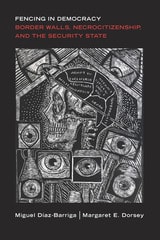
Fencing in Democracy
Border Walls, Necrocitizenship, and the Security StateMiguel Díaz-Barriga and Margaret Dorsey
Duke University Press, 2019
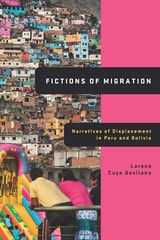
Fictions of Migration
Narratives of Displacement in Peru and BoliviaLorena Cuya Gavilano
The Ohio State University Press, 2021

Fictions of the Real
Synergies Between Screen and Stage in Argentine PerformanceBrenda Werth
University of Michigan Press, 2026
Brenda Werth’s Fictions of the Real traces the transformation of “the real” and its transnational conceptualization by Argentine artists in the twenty-first century, focusing on artists who engage in both documentary theater and filmmaking. Werth places the work of Lola Arias, Romina Paula, Federico León, Mariano Pensotti, and Grupo Krapp in dialogue with the distinct but intertwined lineages of theater and film, exploring the intermedial dimensions of these artists’ theatrical work, resonances in their documentary films, and the transmedial relationships between their documentary plays and films. Focusing on the dynamic and shifting context of Argentina between 1998 and 2023, a period roughly bookmarked by the economic crisis of 2001 and the COVID-19 pandemic, this book explores how these artists disrupt the relations of power and counter political manipulation with their own evocative fictions of the real as they engage in the roles of translators, curators, researchers, archivists, and collaborators.
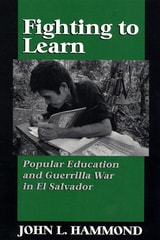
Fighting to Learn
Popular Education and Guerilla War in El SalvadorHammond, John L
Rutgers University Press, 1998
Popular education played a vital role in the twelve-year guerrilla war against the Salvadoran government. Fighting to Learn is a study of its pedagogy and politics. Inspired by Paulo Freire's literacy work in Brazil in the 1950s, popular education brought literacy to poor rural communities abandoned by the official education system and to peasant combatants in the guerrilla army. Those who had little education taught those who had none. Popular education taught people skills, raised the morale that sustained them in unequal combat, and stimulated the creation of an organizational network to hold them together.
Hammond interviewed more than 100 Salvadoran students and teachers for this book. He recounts their experiences in their own words, vividly conveying how they coped with the hardships of war and organized civilian communities politically to support a guerrilla insurgency. Fighting to Learn tells how poorly educated peasants overcame their sense of inferiority to discover that they could teach each other and work together in a common struggle.
First examining the Christian base communities through which popular education came to El Salvador, Hammond then discusses how guerrilla combatants, political prisoners, and refugees learned. He shows that education was both a pedagogical and a political practice: he discusses the training of completely inexperienced teachers, the linking of basic literacy skills with politics, and the organizing of communities. Fighting to Learn offers both a detailed account of an historical moment and a broad theoretical discussion of the relationship between education, community organizing, and the political process.

Figures of Deportation
Borders, Mobilities, and Andean World-MakingUlla D. Berg
Duke University Press, 2027
First-Generation Faculty of Color
Reflections on Research, Teaching, and ServiceTracy Lachica Buenavista
Rutgers University Press, 2023
Fitness Fiesta!
Selling Latinx Culture through ZumbaPetra R. Rivera-Rideau
Duke University Press, 2024
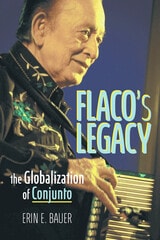
Flaco’s Legacy
The Globalization of ConjuntoErin E. Bauer
University of Illinois Press, 2023
A combination of button accordion and bajo sexto, conjunto originated in the Texas-Mexico borderlands as a popular dance music and became a powerful form of regional identity. Today, listeners and musicians around the world have embraced the genre and the work of conjunto masters like Flaco Jiménez and Mingo Saldívar.
Erin E. Bauer follows conjunto from its local origins through three processes of globalization--migration via media, hybridization, and appropriation--that boosted the music’s reach. As Bauer shows, conjunto’s encounter with globalizing forces raises fundamental questions. What is conjunto stylistically and socioculturally? Does context change how we categorize it? Do we consider the music to be conjunto based on its musical characteristics or due to its performance by Jiménez and other regional players? How do similar local genres like Tejano and norteño relate to ideas of categorization?
A rare look at a fascinating musical phenomenon, Flaco’s Legacy reveals how conjunto came to encompass new people, places, and styles.
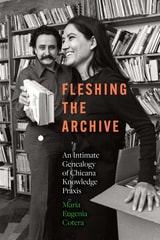
Fleshing the Archive
An Intimate Genealogy of Chicana Knowledge PraxisMaría Eugenia Cotera
University of Texas Press, 2025
The history of the Chicana por mi Raza Digital Memory Collective, an archive dedicated to preserving Chicana feminist knowledge of the 1970s and memory work.
The late 1960s and early 1970s witnessed an explosion of publishing by Chicana activists as they took part in the Movimiento against oppression of ethnic Mexicans in the United States. Today, thousands of these documents, including written works and oral histories, have been assembled by the Chicana por mi Raza Digital Memory Collective. Drawing on these unique resources, Fleshing the Archive traces the innovative Chicana knowledge projects of the Movimiento years.
Seeking to think with the past rather than about it, María Cotera explores transgressive sites and discourses of Chicana knowledge, from poems and essays to newspapers, bibliographies, and testimonies. Often published independently and distributed by readers themselves, these works embodied a praxis of feminist and queer consciousness-raising. Observing the startling convergences between Chicana praxis of the 1970s and digital knowledge production in the present, Cotera argues that the Chicana archive enables transformative moments of recognition across time that unsettle supposedly objective accounts of history. The materials preserved by Chicana por mi Raza offer Chicana scholars a model of teaching and learning liberated from a corporate academy that is increasingly hostile to intellectual inquiry.
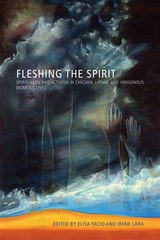
Fleshing the Spirit
Spirituality and Activism in Chicana, Latina, and Indigenous Women’s LivesEdited by Elisa Facio and Irene Lara
University of Arizona Press, 2014
The anthology incorporates different genres of writing—such as poetry, testimonials, critical essays, and historical analysis—and stimulates the reader to engage spirituality in a critical, personal, and creative way. This interdisciplinary work is the first that attempts to theorize the radical interconnection between women of color, spirituality, and social activism. Before transformative political work can be done, the authors say in multiple ways, we must recognize that our spiritual need is a desire to more fully understand our relations with others. Conflict experienced on many levels sometimes severs those relations, separating us from others along racial, class, gender, sexual, national, or other socially constructed lines.
Fleshing the Spirit offers a spiritual journey of healing, health, and human revolution. The book’s open invitation to engage in critical dialogue and social activism—with the spirit and spirituality at the forefront—illuminates the way to social change and the ability to live in harmony with life’s universal energies.
Contributors
Volume Editors
Elisa Facio
Irene Lara
Chapter Authors
Angelita Borbón
Norma E. Cantú
Berenice Dimas
C. Alejandra Elenes
Alicia Enciso Litschi
Oliva M. Espín
Maria Figueroa
Patrisia Gonzales
Inés Hernández- Avila
Rosa María Hernández Juárez
Cinthya Martinez
Lara Medina
Felicia Montes
Sarahi Nuñez- Mejia
Laura E. Pérez
Brenda Sendejo
Inés Talamantez
Michelle Téllez
Beatriz Villegas
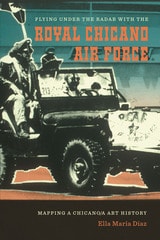
Flying Under the Radar with the Royal Chicano Air Force
Mapping a Chicano/a Art HistoryBy Ella Maria Diaz
University of Texas Press, 2017
Winner, National Association for Chicana and Chicano Studies Book Award, 2019
The Royal Chicano Air Force produced major works of visual art, poetry, prose, music, and performance during the second half of the twentieth century and first decades of the twenty-first. Materializing in Sacramento, California, in 1969 and established between 1970 and 1972, the RCAF helped redefine the meaning of artistic production and artwork to include community engagement projects such as breakfast programs, community art classes, and political and labor activism. The collective’s work has contributed significantly both to Chicano/a civil rights activism and to Chicano/a art history, literature, and culture.
Blending RCAF members’ biographies and accounts of their artistic production with art historical, cultural, and literary scholarship, Flying under the Radar with the Royal Chicano Air Force is the first in-depth study of this vanguard Chicano/a arts collective and activist group. Ella Maria Diaz investigates how the RCAF questioned and countered conventions of Western art, from the canon taught in US institutions to Mexican national art history, while advancing a Chicano/a historical consciousness in the cultural borderlands. In particular, she demonstrates how women significantly contributed to the collective’s output, navigating and challenging the overarching patriarchal cultural norms of the Chicano Movement and their manifestations in the RCAF. Diaz also shows how the RCAF’s verbal and visual architecture—a literal and figurative construction of Chicano/a signs, symbols, and texts—established the groundwork for numerous theoretical interventions made by key scholars in the 1990s and the twenty-first century.

Folklórico in the United States
Unwritten HistoriesEdited by Norma E. Cantú and Olga Nájera-Ramírez
University of Illinois Press, 2027
Multidimensional and enlightening, Folklórico in the United States expands our knowledge of a powerful and creative dance tradition central to Mexican Americans’ sense of self and community.
Contributors: Erica Acevedo-Ontiveros, Jenna Cortez-Aguirre, Manuel R. Cuellar, Alma Ixchel Flores-Pérez, Guadalupe Friaz, Ennio García-Miera, Javier Sepúlveda Garibay, Jacquelyn Y. Guzmán, Aida Hurtado, Cándida F. Jácquez, Gabriela Mendoza-García, Mona Lisa Montgomery, Cassondra Montoya, Felisa Patiño-Longoria, Cindy Padilla, Russell C. Rodriguez, Gema Sandoval, Sarahí Lay Trigo
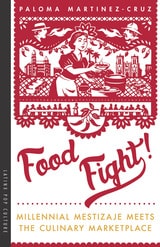
Food Fight!
Millennial Mestizaje Meets the Culinary MarketplacePaloma Martinez-Cruz
University of Arizona Press, 2019
In Food Fight! author Paloma Martinez-Cruz takes us on a Chicanx gastronomic journey that is powerful and humorous. Martinez-Cruz tackles head on the real-world politics of food production from the exploitation of farmworkers to the appropriation of Latinx bodies and culture, and takes us right into transformative eateries that offer a homegrown, mestiza consciousness.
The hard-hitting essays in Food Fight! bring a mestiza critique to today’s pressing discussions of labeling, identity, and imaging in marketing and dining. Not just about food, restaurants, and coffee, this volume employs a decolonial approach and engaging voice to interrogate ways that mestizo, Indigenous, and Latinx peoples are objectified in mainstream ideology and imaginary.
Forging Arizona
A History of the Peralta Land Grant and Racial Identity in the WestAnita Huizar-Hernández
Rutgers University Press, 2019
Freak Performances
Dissidence in Latin American TheaterAnalola Santana
University of Michigan Press, 2018
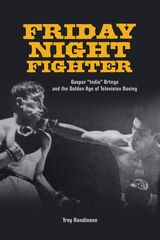
Friday Night Fighter
Gaspar "Indio" Ortega and the Golden Age of Television BoxingTroy Rondinone
University of Illinois Press, 2013
Friday Night Fighter relives a lost moment in American postwar history, when boxing ruled as one of the nation's most widely televised sports. During the 1950s and 1960s, viewers tuned in weekly, sometimes even daily, to watch widely recognized fighters engage in primordial battle; the Gillette Cavalcade of Sports Friday Night Fights was the most popular fight show. Troy Rondinone follows the dual narratives of the Friday Night Fights show and the individual story of Gaspar "Indio" Ortega, a boxer who appeared on prime-time network television more than almost any other boxer in history. From humble beginnings growing up poor in Tijuana, Mexico, Ortega personified the phenomenon of postwar boxing at its greatest, appearing before audiences of millions to battle the biggest names of the time, such as Carmen Basilio, Tony DeMarco, Chico Vejar, Benny "Kid" Paret, Emile Griffith, Kid Gavilan, Florentino Fernández, and Luis Manuel Rodriguez.
Rondinone explores the factors contributing to the success of televised boxing, including the rise of television entertainment, the role of a "reality" blood sport, Cold War masculinity, changing attitudes toward race in America, and the influence of organized crime. At times evoking the drama and spectacle of the Friday Night Fights themselves, this volume is a lively examination of a time in history when Americans crowded around their sets to watch the main event.
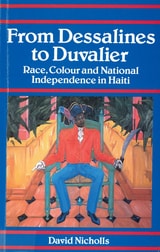
From Dessalines to Duvalier
Race, Colour and National Independence in HaitiNicholls, David
Rutgers University Press, 1996
From Dessalines to Duvalier
Race, Colour and National Independence in HaitiNicholls, David
Rutgers University Press, 1996
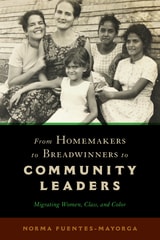
From Homemakers to Breadwinners to Community Leaders
Migrating Women, Class, and ColorNorma Fuentes-Mayorga
Rutgers University Press, 2022
From Peones to Politicos
Class and Ethnicity in a South Texas Town, 1900–1987By Douglas E Foley, with Clarice Mota, Donald E. Post, and Ignacio Lozano
University of Texas Press, 1988
How does a relatively powerless ethnic group deal with the problems of economic inequality and racial discrimination? How do they gain power in the community? From Peones to Politicos examines these questions in detail, focusing on the changes in Mexicano-Anglo relations in one small South Texas community called North Town. These changes are typical of evolving Mexicano-Anglo relations in much of Texas and the Southwest.
The authors divide their study into three historical periods: the rancho era (1900–1930), the colonia era (1930–1970), and the contemporary period (1970–1977). They trace how Mexicano-Anglo relations have evolved away from the extremely exploitative, paternalistic sharecropper system of the rancho era, when open racism, strict social segregation, and effective Anglo political machines prevailed. They reveal, by contrast, how Mexicanos have become a power to be reckoned with by developing their own economic and political leaders and ethnic political organizations and challenging the Anglo control of the city, school, and county governments. The study also shows how Mexican American family practices have been changed by this transformation of the local political economy.
This revised edition of From Peones to Politicos presents updated fieldwork and additional discussion of class theory and the study of racial orders. Of special interest are reactions to the study by North Town residents themselves, which appear in the new Part IV.
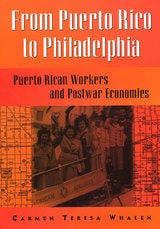
From Puerto Rico To Philadelphia
Puerto Rican Workers and Postwar EconomiesCarmen Whalen
Temple University Press, 2001
Puerto Rican migration to the mainland following World War II took place for a range of reasons -- globalization of the economy, the colonial relationship between the United States and Puerto Rico, state policies, changes in regional and local economies, social networks, and, not least, the decisions made by individual immigrants. In this wide-ranging book, Carmen Whalen weaves them all into a tapestry of Puerto Rican immigration to Philadelphia.
Like African Americans and Mexicans, Puerto Ricans were recruited for low-wage jobs, only to confront racial discrimination as well as economic restructuring. As Whalen shows, they were part of that wave of newcomers who came from areas in the Caribbean, Latin America, and Asia characterized by a heavy U.S. military and economic presence, especially export processing zones looking for a new life in depressed urban environments already populated by earlier labor migrants. But Puerto Rican in-migration was also unique, especially in its regional and gender dimensions. Many migrants came as part of contract labor programs shaped by competing agendas.
By the 1990s, economic conditions, government policies, and racial ideologies had transformed Puerto Rican labor migrants into what has been called "the other underclass." The author analyzes this continuation of "culture and poverty" interpretations and contrasts it with the efforts of Philadelphia's Puerto Ricans to recreate their communities and deal with the impact of economic restructuring and residential segregation in the City of Brotherly Love.
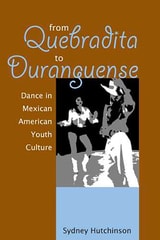
From Quebradita to Duranguense
Dance in Mexican American Youth CultureSydney Hutchinson
University of Arizona Press, 2007
Quebradita, meaning “little break,” is a modern Mexican American dance style that became hugely popular in Los Angeles and across the southwestern United States during the early to mid 1990s. Over the decade of its popularity, this dance craze offered insights into the social and cultural experience of Mexican American youth. Accompanied by banda, an energetic brass band music style, quebradita is recognizable by its western clothing, hat tricks, and daring flips. The dance’s combination of Mexican, Anglo, and African American influences represented a new sensibility that appealed to thousands of young people. Hutchinson argues that, though short-lived, the dance filled political and sociocultural functions, emerging as it did in response to the anti-immigrant and English-only legislation that was then being enacted in California. Her fieldwork and interviews yield rich personal testimony as to the inner workings of the quebradita’s aesthetic development and social significance. The emergence of pasito duranguense, a related yet distinct style originating in Chicago, marks the evolution of the Mexican American youth dance scene.
Like the quebradita before it, pasito duranguense has picked up the task of demonstrating the relevance of regional Mexican music and dance within the U.S. context.
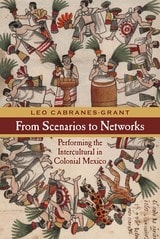
From Scenarios to Networks
Performing the Intercultural in Colonial MexicoLeo Cabranes-Grant
Northwestern University Press, 2016
In this innovative study, Leo Cabranes-Grant analyzes four intercultural events in the Viceroyalty of New Spain that took place between 1566 and 1690. Rather than relying on racial labels to describe alterations of identity, Cabranes-Grant focuses on experimentation, rehearsal, and the interaction between bodies and objects. His analysis shows how scenarios are invested with affective qualities, which in turn enable cultural and semiotic change. Central to his argument is Bruno Latour’s Actor-Network Theory, which figures society as a constantly evolving web of relationships among objects, people, and spaces. In examining these scenarios, Cabranes-Grant attempts to discern the reasons why the conditions of an intensified moment within this ceaseless flow take on a particular value and inspire their re-creation. Cabranes-Grant offers a fresh perspective on Latour’s theory and reorients debates concerning history and historiography in the field of performance studies.
From Threatening Guerrillas to Forever Illegals
US Central Americans and the Cultural Politics of Non-BelongingYajaira M. Padilla
University of Texas Press, 2022
The experience of Central Americans in the United States is marked by a vicious contradiction. In entertainment and information media, Salvadorans, Guatemalans, Nicaraguans, and Hondurans are hypervisible as threatening guerrillas, MS-13 gangsters, maids, and “forever illegals.” Central Americans are unseen within the broader conception of Latinx community, foreclosing avenues to recognition.
Yajaira M. Padilla explores how this regime of visibility and invisibility emerged over the past forty years—bookended by the right-wing presidencies of Ronald Reagan and Donald Trump—and how Central American immigrants and subsequent generations have contested their rhetorical disfiguration. Drawing from popular films and TV, news reporting, and social media, Padilla shows how Central Americans in the United States have been constituted as belonging nowhere, imagined as permanent refugees outside the boundaries of even minority representation. Yet in documentaries about cross-border transit through Mexico, street murals, and other media, US Central Americans have counteracted their exclusion in ways that defy dominant paradigms of citizenship and integration.
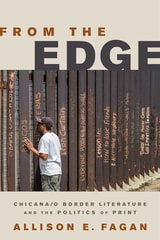
From the Edge
Chicana/o Border Literature and the Politics of PrintFagan, Allison E
Rutgers University Press, 2016
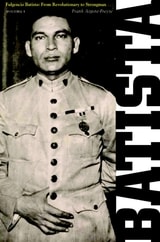
Fulgencio Batista
The Making of a DictatorArgote-Freyre, Frank
Rutgers University Press, 2000
Pawn of the U.S. government. Right-hand man to the mob. Iron-fisted dictator. For decades, public understanding of the pre-Revolutionary Cuban dictator Fulgencio Batista has been limited to these stereotypes. While on some level they all contain an element of truth, these superficial characterizations barely scratch the surface of the complex and compelling career of this important political figure.
Second only to Fidel Castro, Batista is the most controversial leader in modern Cuban history. And yet, until now, there has been no objective biography written about him. Existing biographical literature is predominantly polemical and either borders on hero worship or launches a series of attacks aimed at denigrating his entire legacy.
In this book, the first of two volumes, Frank Argote-Freyre provides a full and balanced portrait of this historically shadowed figure. He describes Batista's rise to power as part of a revolutionary movement and the intrigues and dangers that surrounded him. Drawing on an extensive review of Cuban newspapers, government records, memos, oral history interviews, and a selection of Batista's personal documents, Argote-Freyre moves beyond simplistic caricatures to uncover the real man-one with strengths and weaknesses and with a career marked by accomplishments as well as failures.
This volume focuses on Batista's role as a revolutionary leader from 1933 to 1934 and his image as a "strongman" in the years between 1934 and 1939. Argote-Freyre also uses Batista as an interpretive prism to review an entire era that is usually ignored by scholars-the Republican period of Cuban history. Bringing together global and local events, he considers the significance and relationship of the worldwide economic depression, the beginnings of World War II, and in Cuba, the Revolution of 1933, the expansion of the middle class, and the gradual development of democratic institutions.
Fulgencio Batista and most of Cuba's past prior to the Revolution of 1959 has been lost in the historical mists. Cuba had a rich and fascinating history before the Marxist Revolution and the reign of Fidel Castro. This captivating and long-overdue book uncovers it.
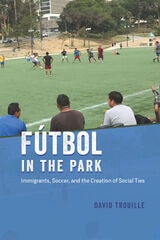
Fútbol in the Park
Immigrants, Soccer, and the Creation of Social TiesDavid Trouille
University of Chicago Press, 2021