Results by title
433 books match the query 'Immigrants' and 13 start with f
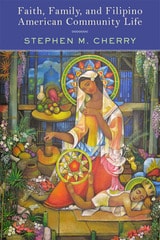
Faith, Family, and Filipino American Community Life
Cherry, Stephen M
Rutgers University Press, 2014
Stephen M. Cherry draws upon a rich set of ethnographic and survey data, collected over a six-year period, to explore the roles that Catholicism and family play in shaping Filipino American community life. From the planning and construction of community centers, to volunteering at health fairs or protesting against abortion, this book illustrates the powerful ways these forces structure and animate not only how first-generation Filipino Americans think and feel about their community, but how they are compelled to engage it over issues deemed important to the sanctity of the family.
Revealing more than intimate accounts of Filipino American lives, Cherry offers a glimpse of the often hidden but vital relationship between religion and community in the lives of new immigrants, and allows speculation on the broader impact of Filipino immigration on the nation. The Filipino American community is the second-largest immigrant community in the United States, and the Philippines is the second-largest source of Catholic immigration to this country. This ground-breaking study outlines how first-generation Filipino Americans have the potential to reshape American Catholicism and are already having an impact on American civic life through the engagement of their faith.
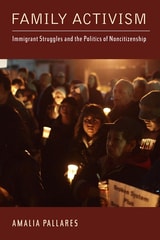
Family Activism
Immigrant Struggles and the Politics of NoncitizenshipPallares, Amalia
Rutgers University Press, 2014
Fear, Anxiety, and National Identity
Immigration and Belonging in North America and Western Europesimon
Russell Sage Foundation, 2015
Fifty years of large-scale immigration has brought significant ethnic, racial, and religious diversity to North America and Western Europe, but has also prompted hostile backlashes. In Fear, Anxiety, and National Identity, a distinguished multidisciplinary group of scholars examine whether and how immigrants and their offspring have been included in the prevailing national identity in the societies where they now live and to what extent they remain perpetual foreigners in the eyes of the long-established native-born. What specific social forces in each country account for the barriers immigrants and their children face, and how do anxieties about immigrant integration and national identity differ on the two sides of the Atlantic?
Western European countries such as Germany, the Netherlands, and the United Kingdom have witnessed a significant increase in Muslim immigrants, which has given rise to nativist groups that question their belonging. Contributors Thomas Faist and Christian Ulbricht discuss how German politicians have implicitly compared the purported “backward” values of Muslim immigrants with the German idea of Leitkultur, or a society that values civil liberties and human rights, reinforcing the symbolic exclusion of Muslim immigrants. Similarly, Marieke Slootman and Jan Willem Duyvendak find that in the Netherlands, the conception of citizenship has shifted to focus less on political rights and duties and more on cultural norms and values. In this context, Turkish and Moroccan Muslim immigrants face increasing pressure to adopt “Dutch” culture, yet are simultaneously portrayed as having regressive views on gender and sexuality that make them unable to assimilate.
Religion is less of a barrier to immigrants’ inclusion in the United States, where instead undocumented status drives much of the political and social marginalization of immigrants. As Mary C. Waters and Philip Kasinitz note, undocumented immigrants in the United States. are ineligible for the services and freedoms that citizens take for granted and often live in fear of detention and deportation. Yet, as Irene Bloemraad points out, Americans’ conception of national identity expanded to be more inclusive of immigrants and their children with political mobilization and changes in law, institutions, and culture in the wake of the Civil Rights Movement. Canadians’ views also dramatically expanded in recent decades, with multiculturalism now an important part of their national identity, in contrast to Europeans’ fear that diversity undermines national solidarity.
With immigration to North America and Western Europe a continuing reality, each region will have to confront anti-immigrant sentiments that create barriers for and threaten the inclusion of newcomers. Fear, Anxiety, and National Identity investigates the multifaceted connections among immigration, belonging, and citizenship, and provides new ways of thinking about national identity.
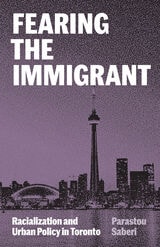
Fearing the Immigrant
Racialization and Urban Policy in TorontoParastou Saberi
University of Minnesota Press, 2022
A fascinating deep dive into one city’s urban policy—and the anxiety over immigrants that informs it
The city of Toronto is often held up as a leader in diversity and inclusion. In Fearing the Immigrant, however, Parastou Saberi argues that Toronto’s urban policies are influenced by a territorialized and racialized security agenda—one that parallels the “War on Terror.” Focusing on the figure of the immigrant and so-called immigrant neighborhoods as the targets of urban policy, Saberi offers an innovative, multidisciplinary approach to the politics of racialization and the governing of alterity through space in contemporary cities.
A comprehensive study of urban policymaking in Canada’s largest city from the 1990s to the late 2010s, Fearing the Immigrant uses Toronto as a jumping-off point to understand how the nexus of development, racialization, and security works at the urban and international levels. Saberi situates urban policymaking in Toronto in relation to the dominant policies of international development and public health, counterinsurgency, and humanitarian intervention. Engaging with the genealogies and contemporary developments of major policy techniques involving mapping and policy concepts such as poverty, security, policing, development, empowerment, as well as social determinants of health, equity, and prevention, she scrutinizes the parallel ways these techniques and concepts operate in urban policy and international relations.
Fearing the Immigrant ultimately asserts that the geopolitical fear of the immigrant is central to the formation of urban policy in Toronto. Rather than addressing the root causes of poverty, urban policy as it has been practiced aims to pacify the specter of urban unrest and to secure the production of a neocolonial urban order. As such, this book is an urgent call to reimagine urban policy in the name of equality and social justice.

Filipino Crosscurrents
Oceanographies of Seafaring, Masculinities, and GlobalizationKale Bantigue Fajardo
University of Minnesota Press, 2011
Filipino seamen currently compose approximately twenty percent of the 1.2 million international maritime transportation workers. Ninety percent of the world’s goods and commodities are transported by ship. Taken together, these statistics attest to the critical role Filipino seamen play in worldwide maritime trade. In Filipino Crosscurrents, an interdisciplinary ethnography, Kale Bantigue Fajardo examines the cultural politics of seafaring, Filipino maritime masculinities, and globalization in the Philippines and the Filipino diaspora.
Drawing on fieldwork conducted on ships and in the ports of Manila and Oakland, as well as on an industrial container ship that traveled across the Pacific, Fajardo argues that Filipino seamen have become key figures through which the Philippine state and economic elites promote Filipino masculinity and neoliberal globalization. From government officials to working-class seamen and seafarers’ advocates, Fajardo’s wide-ranging analysis exposes the gaps in dominant narratives of Filipino seamen in national, regional, and global contexts.
Writing in a hybrid style that weaves together ethnographic description, cultural critique, travelogue, and autobiography, Fajardo invites readers to reconsider the meanings of masculinity and manhood.

Forever 17
Coming of Age in the German Asylum SystemUlrike Bialas
University of Chicago Press, 2023
Heartbreaking images of children in distress have propelled some of the most urgent calls for action on immigration crises, and that compassion often affects how state asylum policies are structured. In Germany, for example, the immigration system is engineered to protect minors, which leads to unintended consequences for migrants.
In Forever 17, Ulrike Bialas follows young African and Central Asian migrants in Germany as they navigate that system. Without official paperwork or even, in many cases, knowledge of their exact age, migrants must decide how to present their complicated life stories to government officials. They quickly realize that their age can have an outsized effect on the outcome of their cases. A migrant under 18, for example, can’t be deported, but might instead be placed in a youth home, where they will be subject to strict curfew laws. An 18-year-old adult, on the other hand, can get permission to work, but not opportunities to go to school.
Regardless of their age—actual or assumed—migrants face great difficulties. Those classified as minors must live with the psychological burden of being treated like children, while those classified as adults must live without the practical support and legal protections reserved for minors. The significance of age stands in stark contrast to the ambiguities inherent in its determination. Though Germany’s infamous bureaucracy is designed to issue clear statements about refugees and migrants, the truth is often more complicated, and officials are forced to grapple with the difficult implications of their decisions. Ultimately, Bialas shows, policies surrounding asylum seekers fall dramatically short of their humanitarian ideals. Even those policies designed to help the most vulnerable can lead to outcomes that drastically limit the possibilities for migrants in real need of protection and keep them from leading fulfilling lives.
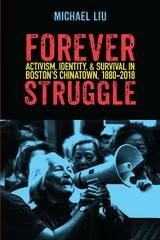
Forever Struggle
Activism, Identity, and Survival in Boston's Chinatown, 1880–2018Michael Liu
University of Massachusetts Press, 2020
In writing about Boston Chinatown's long history, Michael Liu, a lifelong activist and scholar of the community, charts its journey and efforts for survival—from its emergence during a time of immigration and deep xenophobia to the highway construction and urban renewal projects that threatened the neighborhood after World War II to its more recent efforts to keep commercial developers at bay. At the ground level, Liu depicts its people, organizations, internal battles, and varied and complex strategies against land-taking by outside institutions and public authorities. The documented courage, resilience, and ingenuity of this low-income immigrant neighborhood of color have earned it a place amongst our urban narratives. Chinatown has much to teach us about neighborhood agency, the power of organizing, and the prospects of such neighborhoods in rapidly growing and changing cities.
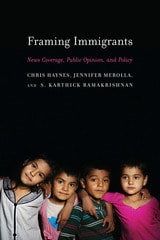
Framing Immigrants
News Coverage, Public Opinion, and PolicyChris Haynes
Russell Sage Foundation, 2016
The authors analyze media coverage of several key immigration policy issues—including mass deportations, comprehensive immigration reform, and measures focused on immigrant children, such as the DREAM Act—to chart how news sources across the ideological spectrum produce specific “frames” for the immigration debate. In the past few years, liberal and mainstream outlets have tended to frame immigrants lacking legal status as “undocumented” (rather than “illegal”) and to approach the topic of legalization through human-interest stories, often mentioning children. Conservative outlets, on the other hand, tend to discuss legalization using impersonal statistics and invoking the rule of law. Yet, regardless of the media’s ideological positions, the authors’ surveys show that “negative” frames more strongly influence public support for different immigration policies than do positive frames. For instance, survey participants who were exposed to language portraying immigrants as law-breakers seeking “amnesty” tended to oppose legalization measures. At the same time, support for legalization was higher when participants were exposed to language referring to immigrants living in the United States for a decade or more.
Framing Immigrants shows that despite heated debates on immigration across the political aisle, the general public has yet to form a consistent position on undocumented immigrants. By analyzing how the media influences public opinion, this book provides a valuable resource for immigration advocates, policymakers, and researchers.
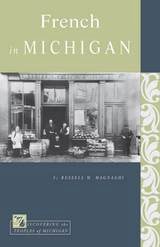
French in Michigan
Russell M. Magnaghi
Michigan State University Press, 2016
The colonial French served as explorers, soldiers, missionaries, fur traders, and colonists. Later, French priests and nuns were influential in promoting Catholicism in the state and in developing schools and hospitals. Father Gabriel Richard fled the violence of the French Revolution and became a prominent and influential citizen of the state as a U.S. Congressman and one of the founders of the University of Michigan. French observers of Michigan life included Alexis de Tocqueville. French entrepreneurs opened copper mines and a variety of service-oriented businesses. Louis Fasquelle became the first foreign-language instructor at the University of Michigan, and François A. Artault introduced photography to the Upper Peninsula. As pioneers of the early automobile, the French made a major contribution to the language used in auto manufacturing.

Fresh Blood
THE NEW AMERICAN IMMIGRANTSSanford J. Ungar
University of Illinois Press, 1998
end of the country to the other, veteran journalist Sanford J. Ungar documents
the real-life struggles and triumphs of America's newest immigrants. He
finds that the self-chosen who arrive every day, most of them legally,
still enrich our national character and experience and make invaluable
political, economic, social, cultural, and even gastronomic contributions.
"First-class journalism, a book scholars will use decades from now
to find out what it 'felt like' to be an immigrant in the 90s. I do not
know of a better description and analysis of contemporary immigration."
-- Roger Daniels, author of Coming to America: A History of Immigration
and Ethnicity in American Life
"An excellent overview of contemporary immigration issues set within
the context of developments in the past fifty years. Ungar makes a strong
case for the contributions of recent immigrants and for maintaining a
relatively open door in the face of sometimes shrill opposition."
-- Thomas Dublin, editor of Immigrant Voices: New Lives in America
"Exactly the right book at the right time. [Ungar] looks at the
national controversy over immigration policy with a clear eye, producing
a history and a convincing argument why this is no time to reverse a liberal
welcome to newcomers that has always—in good times and bad—made
this a better and more prosperous democracy." -- Ben H. Bagdikian,
author of Double Vision
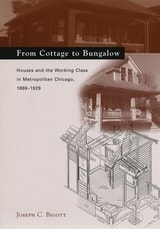
From Cottage to Bungalow
Houses and the Working Class in Metropolitan Chicago, 1869-1929Joseph C. Bigott
University of Chicago Press, 2001
Joseph C. Bigott takes on all of these fields in From Cottage to Bungalow, a sophisticated study of domestic structures and ethnic working-class neighborhoods in Chicago during the critical period of 1869 to 1929, when the city attracted huge numbers of immigrants. Exploring the meaning of home ownership in this context, Bigott develops two case studies that combine the intimate lives of ordinary people (primarily in Chicago's Polish and German communities) with broad analysis of everything from real estate markets to the very carpentry practices used to construct houses. His progressive methods and the novel conclusions they support chronicle not only the history of housing in Chicago, but also the organizations of people's lives, and the ways in which housing has affected notions of who is—and who is not—a worthy American citizen.
From Cuenca to Queens
An Anthropological Story of Transnational MigrationBy Ann Miles
University of Texas Press, 2004
Transnational migration is a controversial and much-discussed issue in both the popular media and the social sciences, but at its heart migration is about individual people making the difficult choice to leave their families and communities in hopes of achieving greater economic prosperity. Vicente Quitasaca is one of these people. In 1995 he left his home in the Ecuadorian city of Cuenca to live and work in New York City. This anthropological story of Vicente's migration and its effects on his life and the lives of his parents and siblings adds a crucial human dimension to statistics about immigration and the macro impact of transnational migration on the global economy.
Anthropologist Ann Miles has known the Quitasacas since 1989. Her long acquaintance with the family allows her to delve deeply into the factors that eventually impelled the oldest son to make the difficult and dangerous journey to the United States as an undocumented migrant. Focusing on each family member in turn, Miles explores their varying perceptions of social inequality and racism in Ecuador and their reactions to Vicente's migration. As family members speak about Vicente's new, hard-to-imagine life in America, they reveal how transnational migration becomes a symbol of failure, hope, resignation, and promise for poor people in struggling economies. Miles frames this fascinating family biography with an analysis of the historical and structural conditions that encourage transnational migration, so that the Quitasacas' story becomes a vivid firsthand illustration of this growing global phenomenon.
Fútbol in the Park
Immigrants, Soccer, and the Creation of Social TiesDavid Trouille
University of Chicago Press, 2021