84 books match the query 'In motion pictures' and 6 start with f
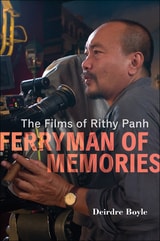
cover of Ferryman of Memories: The Films of Rithy Panh

Ferryman of Memories

The Films of Rithy Panh

Deirdre Boyle

Rutgers University Press, 2023
Ferryman of Memories: The Films of Rithy Panh is an unconventional book about an unconventional filmmaker. Rithy Panh survived the Cambodian genocide and found refuge in France where he discovered in film a language that allowed him to tell what happened to the two million souls who suffered hunger, overwork, disease, and death at the hands of the Khmer Rouge. His innovative cinema is made with people, not about them—even those guilty of crimes against humanity.  Whether he is directing Isabelle Huppert in The Sea Wall, following laborers digging trenches, or interrogating the infamous director of S-21 prison, aesthetics and ethics inform all he does.  With remarkable access to the director and his work, Deirdre Boyle introduces readers to Panh’s groundbreaking approach to perpetrator cinema and dazzling critique of colonialism, globalization, and the refugee crisis. Ferryman of Memories reveals the art of one of the masters of world cinema today, focusing on nineteen of his award-winning films, including Rice People, The Land of Wandering Souls, S-21: The Khmer Rouge Killing Machine, and The Missing Picture.
[more]
cover of Film Nation: Hollywood Looks at U.S. History

Film Nation

Hollywood Looks at U.S. History

Robert Burgoyne

University of Minnesota Press, 1997

Our movies have started talking back to us, and Film Nation takes a close look at what they have to say. In movies like JFK and Forrest Gump, Robert Burgoyne sees a filmic extension of the debates that exercise us as a nation--debates about race and culture and national identity, about the nature and makeup of American history. In analyses of five films that challenge the traditional myths of the nation-state--Glory, Thunderheart, JFK, Born on the Fourth of July, and Forrest Gump--Burgoyne explores the reshaping of our collective imaginary in relation to our history. These movies, exploring the meaning of "nation" from below, highlight issues of power that underlie the narrative construction of nationhood. Film Nation exposes the fault lines between national myths and the historical experience of people typically excluded from those myths. Throughout, Burgoyne demonstrates that these films, in their formal design, also preserve relics of the imaginary past they contest. Here we see how the "genre memory" of the western, the war film, and the melodrama shapes these films, creating a complex exchange between old concepts of history and the alternative narratives of historical experience that contemporary texts propose. The first book to apply theories of nationalism and national identity to contemporary American films, Film Nation reveals the cinematic rewriting of history now taking place as a powerful attempt to rearticulate the cultural narratives that define America as a nation. "The chief merit of Film Nation is that it outlines a study of an important but neglected period of American film--the 1980s--from a sophisticated historiographical perspective, a complex version of postmodernism and cultural studies. That is, it arises, conceptually speaking, from within the film studies orbit and takes advantage in a provocative, and in my view, compelling way, the resources and perspectives of contemporary critical theory more generally." Nick Brown "Film Nation makes a real contribution to film studies by underscoring how much the 'war film' has been revived for the purpose of contemplating nationhood, and how, more implicitly, the idea of 'America' or even 'identity' has become increasingly problematic in the era of international democratic capitalism." Tom Conley "A brilliant and elegant series of essays which demonstrate how the best contemporary historical films provide a powerful counternarrative to traditional history and help us to rethink the American past. Burgoyne's is by far the best book to date on the important relationship between American history and American film." Robert A. Rosenstone Contents: Introduction Race and Nation in Glory History vs. Folklore Two Historical Trajectories Racial Identity into National Identity Native America, Thunderheart, and the National Imaginary Reversing the Territorial Imaginary The Western and the National Imaginary The Western and its Tropes of Space and Nation War and the Forging of Ethnic Community National Identity, Gender Identity and the "Rescue Fantasy" in Born on the 4th of July Melodrama and National Identity The Critique of Masculinity as "Punitive Agency" Imaging the Nation Modernism and the Narrative of Nation in JFK The Temporality of Trauma The Imagined Community as Lost Object Prosthetic Memory/National Memory: Forrest Gump Memory and National Identity Nation and Religion Redefining the Sixties Conclusion Robert Burgoyne is professor of English and film studies at Wayne State University and is chair of the Department of English. He is the author of Bertolucci's 1900: A Narrative and Historical Analysis (1991) and coauthor, with Robert Stam and Sandy Flitterman-Lewis, of New Vocabularies in Film Semiotics (1992).
[more]
cover of Film Nation: Hollywood Looks at U.S. History, Revised Edition

Film Nation

Hollywood Looks at U.S. History, Revised Edition

Robert Burgoyne

University of Minnesota Press, 2010
Events of the past decade have dramatically rewritten the American national narrative, bringing to light an alternate history of nation, marked since the country’s origins by competing geopolitical interests, by mobility and migration, and by contending ethnic and racial groups.
 
In this revised and expanded edition of Film Nation, Robert Burgoyne analyzes films that give shape to the counternarrative that has emerged since 9/11—one that challenges the traditional myths of the American nation-state. The films examined here, Burgoyne argues, reveal the hidden underlayers of nation, from the first interaction between Europeans and Native Americans (The New World), to the clash of ethnic groups in nineteenth-century New York (Gangs of New York), to the haunting persistence of war in the national imagination (Flags of Our Fathers and Letters from Iwo Jima) and the impact of the events of 9/11 on American identity (United 93 and World Trade Center).
 
Film Nation provides innovative readings of attempts by such directors as Martin Scorsese, Clint Eastwood, and Oliver Stone to visualize historical events that have acquired a mythical aura in order to open up the past to the contemporary moment.
[more]
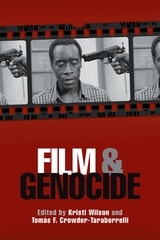
cover of Film and Genocide

Film and Genocide

Kristi M. Wilson

University of Wisconsin Press, 2011

Film and Genocide brings together scholars of film and of genocide to discuss film representations, both fictional and documentary, of the Holocaust, the Armenian genocide, and genocides in Chile, Australia, Rwanda, and the United States. Since 1955, when Alain Resnais created his experimental documentary Night and Fog about the Nazis’ mass killings of Jews and other ostracized groups, filmmakers have struggled with using this medium to tell such difficult stories, to re-create the sociopolitical contexts of genocide, and to urge awareness and action among viewers. This volume looks at such issues as realism versus fiction, the challenge of depicting atrocities in a manner palatable to spectators and film distributors, the Holocaust film as a model for films about other genocides, and the role of new technologies in disseminating films about genocide.
    Film and Genocide also includes interviews with three film directors, who discuss their experiences in working with deeply disturbing images and bringing hidden stories to life: Irek Dobrowolski, director of The Portraitist (2005) a documentary about Wilhelm Brasse, an Auschwitz-Birkenau prisoner ordered to take more than 40,000 photos at the camp; Nick Hughes, director of 100 Days (2005) a dramatic film about the Rwandan mass killings; and Greg Barker, director of Ghosts of Rwanda (2004), a television documentary for Frontline.
[more]
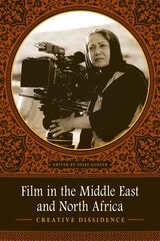
cover of Film in the Middle East and North Africa: Creative Dissidence

Film in the Middle East and North Africa

Creative Dissidence

Edited by Josef Gugler

University of Texas Press, 2011

This is the first study to cover cinemas from Iran to Morocco. Nine essays present the region's major national cinemas, devoting special attention to the work of directors who have given image and voice to dissent from political regimes, from patriarchal customs, from fundamentalist movements, and from the West. These country essays are complemented by in-depth discussions of eighteen films that have been selected for both their excellence and their critical engagement with pressing current issues. The introduction provides a comprehensive overview of filmmaking throughout the region, including important films produced outside the national cinemas. The long history of Iranian cinema, its international renown, and the politics of directors confronting the state, earns it a special place in this volume. The other major emphasis is on the Israel/Palestine conflict, featuring films by Palestinian directors, Israelis, and an Egyptian working in Syria.

Nineteen authors collaborated on this book, among them Walter Armbrust, Roy Armes, Kevin Dwyer, Eric Egan, Nurith Gertz, Lina Khatib, Florence Martin, and Nadia Yaqub. About half of the contributors are film scholars; the others range across literary studies and the social sciences to two film directors and a novelist. Beyond differences in disciplinary orientation, there is considerable variation among contributors in the perspectives that inform their writing. They offer an illuminating range of approaches to the cinemas of the region.

The book is richly illustrated with posters of the featured films, photos of their directors at work, and stills illustrating critical arguments in the film essays.
[more]
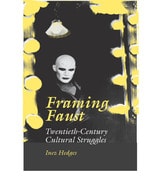
cover of Framing Faust: Twentieth-Century Cultural Struggles

Framing Faust

Twentieth-Century Cultural Struggles

Inez Hedges

Southern Illinois University Press, 2009

In this interdisciplinary cultural history that encompasses film, literature, music, and drama, Inez Hedges follows the thread of the Faustian rebel in the major intellectual currents of the last hundred years. She presents Faust and his counterpart Mephistopheles as antagonistic—yet complementary—figures whose productive conflict was integral to such phenomena as the birth of narrative cinema, the rise of modernist avant-gardes before World War II, and feminist critiques of Western cultural traditions.

Framing Faust: Twentieth-Century Cultural Struggles pursues a dialectical approach to cultural history. Using the probing lens of cultural studies, Hedges shows how claims to the Faustian legacy permeated the struggle against Nazism in the 1930s while infusing not only the search for socialist utopias in Russia, France, and Germany, but also the quest for legitimacy on both sides of the Cold War divide after 1945.

Hedges balances new perspectives on such well-known works as Thomas Mann’s Dr. Faustus and Jack Kerouac’s Dr. Sax with discussions of previously overlooked twentieth-century expressions of the Faust myth, including American film noir and the Faust films of Stan Brakhage. She evaluates musical compositions—Hanns Eisler’s Faust libretto, the opera Votre Faust by Henri Pousseur and Michel Butor, and Alfred Schnittke’s Faust Cantata—as well as works of fiction and drama in French and German, many of which have heretofore never been discussed outside narrow disciplinary confines.

Enhanced by twenty-four illustrations, Framing Faust provides a fascinating and focused narrative of some of the major cultural struggles of the past century as seen through the Faustian prism, and establishes Faust as an important present-day frame of reference.

[more]