Results by title
751 books match the query 'International Relations' and 26 start with f
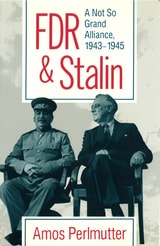
FDR & Stalin
A Not So Grand Alliance, 1943–1945Amos Perlmutter
University of Missouri Press, 1993
Perlmutter's hard-hitting, revisionist history of Roosevelt's foreign policy explores FDR's not-so-grand alliance with the ruthless Soviet leader. As the first Western scholar granted access to key foreign ministry documents recently declassified in the former Soviet Union, Perlmutter provides a provocative portrait of a popular leader whose failure to comprehend Stalin's long-range goals had devastating results for the postwar world.
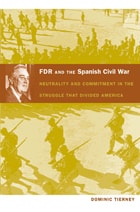
FDR and the Spanish Civil War
Neutrality and Commitment in the Struggle that Divided AmericaDominic Tierney
Duke University Press, 2007
Between 1936 and 1939, Roosevelt’s perceptions of the Spanish Civil War were transformed. Initially indifferent toward which side won, FDR became an increasingly committed supporter of the leftist government. He believed that German and Italian intervention in Spain was part of a broader program of fascist aggression, and he worried that the Spanish Civil War would inspire fascist revolutions in Latin America. In response, Roosevelt tried to send food to Spain as well as illegal covert aid to the Spanish government, and to mediate a compromise solution to the civil war. However unsuccessful these initiatives proved in the end, they represented an important stage in Roosevelt’s emerging strategy to aid democracy in Europe.

FDR's Good Neighbor Policy
Sixty Years of Generally Gentle ChaosBy Fredrick B. Pike
University of Texas Press, 1995
During the 1930s, the United States began to look more favorably on its southern neighbors. Latin America offered expanded markets to an economy crippled by the Great Depression, while threats of war abroad nurtured in many Americans isolationist tendencies and a desire for improved hemispheric relations.
One of these Americans was Franklin Delano Roosevelt, the primary author of America's Good Neighbor Policy. In this thought-provoking book, Fredrick Pike takes a wide-ranging look at FDR's motives for pursuing the Good Neighbor Policy, at how he implemented it, and at how its themes have played out up to the mid-1990s.
Pike's investigation goes far beyond standard studies of foreign and economic policy. He explores how FDR's personality and Eleanor Roosevelt's social activism made them uniquely simpático to Latin Americans. He also demonstrates how Latin culture flowed north to influence U.S. literature, film, and opera. The book will be essential reading for everyone interested in hemispheric relations.
Faces of Internationalism
Public Opinion and American Foreign PolicyEugene R. Wittkopf
Duke University Press, 1990
The breakdown of the “consensus” approach to American foreign policy after the Cold War years has become the subject of much analysis. This study contributes to revisionist scholarship by describing the beliefs and preferences that have emerged in the wake of this breakdown. Wittkopf counters traditional views by demonstrating the persistence of U.S. public opinion defined by two dominant and distinct attitudes in the post-Vietnam war years—cooperative and militant internationalism.
The author explores the nature of these two “faces” of internationalism, focusing on the extent to which elites and masses share similar opinions and the political and sociodemographic correlates of belief systems. Wittkopf also offers an original examination of the relationship between beliefs and preferences.
Failed States and Fragile Societies
A New World Disorder?Ingo Trauschweizer
Ohio University Press, 2014
Since the end of the Cold War, a new dynamic has arisen within the international system, one that does not conform to established notions of the state’s monopoly on war. In this changing environment, the global community must decide how to respond to the challenges posed to the state by military threats, political and economic decline, and social fragmentation. This insightful work considers the phenomenon of state failure and asks how the international community might better detect signs of state decay at an early stage and devise legally and politically legitimate responses.
This collection of essays brings military and social historians into conversation with political and social scientists and former military officers. In case studies from the former Yugoslavia, Somalia, Iraq, and Colombia, the distinguished contributors argue that early intervention to stabilize social, economic, and political systems offers the greatest promise, whereas military intervention at a later stage is both costlier and less likely to succeed.
Contributors: David Carment, Yiagadeesen Samy, David Curp, Jonathan House, James Carter, Vanda Felbab-Brown, Robert Rotberg, and Ken Menkhaus.
Faith in Paper
The Ethnohistory and Litigation of Upper Great Lakes Indian TreatiesCharles E. Cleland
University of Michigan Press, 2011
Faking It
U.S. Hegemony in a “Post-Phallic” EraCynthia Weber
University of Minnesota Press, 1999
Fallout
Nuclear Diplomacy in an Age of Global FractureGrégoire Mallard
University of Chicago Press, 2014
In Fallout, Grégoire Mallard seeks to understand why some nations agreed to these limitations of their sovereign will—and why others decidedly did not. He builds his investigation around the 1968 signing of the Nuclear Nonproliferation Treaty (NPT), which, though binding in nature, wasn’t adhered to consistently by all signatory nations. Mallard looks at Europe’s observance of treaty rules in contrast to the three holdouts in the global nonproliferation regime: Israel, India, and Pakistan. He seeks to find reasons for these discrepancies, and makes the compelling case that who wrote the treaty and how the rules were written—whether transparently, ambiguously, or opaquely—had major significance in how the rules were interpreted and whether they were then followed or dismissed as regimes changed. In honing in on this important piece of the story, Mallard not only provides a new perspective on our diplomatic history, but, more significantly, draws important conclusions about potential conditions that could facilitate the inclusion of the remaining NPT holdouts. Fallout is an important and timely book sure to be of interest to policy makers, activists, and concerned citizens alike.
Fatal Future?
Transnational Terrorism and the New Global DisorderBy Richard M. Pearlstein
University of Texas Press, 2004
The nature and goals of terrorist organizations have changed profoundly since the Cold War standoff among the U.S., Soviet, and Chinese superpowers gave way to the current "polyplex" global system, in which the old rules of international engagement have been shattered by a new struggle for power among established states, non-state actors, and emerging nations. In this confusing state of global disorder, terrorist organizations that are privately funded and highly flexible have become capable of carrying out incredibly destructive attacks anywhere in the world in support of a wide array of political, religious, and ethnic causes.
This groundbreaking book examines the evolution of terrorism in the context of the new global disorder. Richard M. Pearlstein categorizes three generations of terrorist organizations and shows how each arose in response to the global conditions of its time. Focusing extensively on today's transnational (i.e., privately funded and internationally operating) terrorist organizations, he devotes thorough attention to the two most virulent types: ethnoterrorism and radical Islamic terrorism. He also discusses the terrorist race for weapons of mass destruction and the types of attacks, including cyberterrorism, that are likely to occur in coming years. Pearlstein concludes with a thought-provoking assessment of the many efforts to combat transnational terrorism in the post-September 11 period.
First Do No Harm
Humanitarian Intervention and the Destruction of YugoslaviaDavid N. Gibbs
Vanderbilt University Press, 2009
The book focuses on the 1991-99 breakup of Yugoslavia, which helped forge the idea that the United States and its allies could stage humanitarian interventions that would end ethnic strife. It is widely believed that NATO bombing campaigns in Bosnia and Kosovo played a vital role in stopping Serb-directed aggression, and thus resolving the conflict.
Gibbs challenges this view, offering an extended critique of Samantha Power's Pulitzer Prize-winning book, A Problem from Hell: America in the Age of Genocide. He shows that intervention contributed to the initial breakup of Yugoslavia, and then helped spread the violence and destruction. Gibbs also explains how the motives for U.S. intervention were rooted in its struggle for continued hegemony in Europe.
First Do No Harm argues for a new, noninterventionist model for U.S. foreign policy, one that deploys nonmilitary methods for addressing ethnic violence.
Floundering Stability
US Foreign Policy in EgyptAmir Magdy Kamel
University of Michigan Press, 2023
The US commitment to stability—both domestically and abroad—has been a consistent feature in the way Washington, DC carries out international relations. This commitment is complimented by the increased overlap between the economic and political spheres in international affairs. Consequently, this US approach to foreign interaction is informed by an assumption that foreign policy tools can influence global stability for the better. In order to investigate this assumption, this book details the foundations of what Amir Magdy Kamel refers to as the US Stability Policy—how it evolved over time and how it was implemented in Egypt. He finds that domestic and global forces were left unaccounted for by the Stability Policy, ultimately leading to a failure to achieve the self-stated stability goals.
Kamel’s analysis is informed through a unique mixed-method approach that sheds light on how and why this policy fared so poorly under Mubarak’s Egypt. He develops and tests a unique and particular way of examining the Stability Policy and presents a framework for future work to replicate and build on in the quest to understand other state-on-state relationships and the effectiveness of other foreign economic policies in achieving stability goals. Floundering Stability reflects on what Kamel’s findings mean for the relationship between the US and Egypt, as well as specific US foreign policy suggestions on how the same mistakes can be avoided in the future.

Fools' Crusade
Yugoslavia, NATO and Western DelusionsDiana Johnstone
Pluto Press, 2002
Thanks to massive deception and self-deception by media and politicians, even the anti-globalisation movement failed to grasp the implications of the aggressive military globalisation pursued by the United States, from Iraq to Afghanistan and beyond.
In this study, Diana Johnstone identifies the common geopolitical interests running through all these past, present and future military interventions. She argues persuasively that outside intervention creates rather than solves problems and cannot be justified.
Johnstone shows that the 'War in Kosovo' was in reality the model for future destruction of countries seen as potential threats to the hegemony of the 'International Community', led by the United States.
Foreign Aid
Diplomacy, Development, Domestic PoliticsCarol Lancaster
University of Chicago Press, 2006
A twentieth-century innovation, foreign aid has become a familiar and even expected element in international relations. But scholars and government officials continue to debate why countries provide it: some claim that it is primarily a tool of diplomacy, some argue that it is largely intended to support development in poor countries, and still others point out its myriad newer uses. Carol Lancaster effectively puts this dispute to rest here by providing the most comprehensive answer yet to the question of why governments give foreign aid. She argues that because of domestic politics in aid-giving countries, it has always been—and will continue to be—used to achieve a mixture of different goals.
Drawing on her expertise in both comparative politics and international relations and on her experience as a former public official, Lancaster provides five in-depth case studies—the United States, Japan, France, Germany, and Denmark—that demonstrate how domestic politics and international pressures combine to shape how and why donor governments give aid. In doing so, she explores the impact on foreign aid of political institutions, interest groups, and the ways governments organize their giving. Her findings provide essential insight for scholars of international relations and comparative politics, as well as anyone involved with foreign aid or foreign policy.
Foreign Policy and Congress
An International Relations PerspectiveMarie T. Henehan
University of Michigan Press, 2000
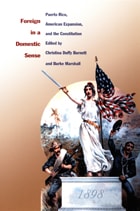
Foreign in a Domestic Sense
Puerto Rico, American Expansion, and the ConstitutionChristina Duffy Burnett and Burke Marshall, eds.
Duke University Press, 2001
More than four million U.S. citizens currently live in five “unincorporated” U.S. territories. The inhabitants of these vestiges of an American empire are denied full representation in Congress and cannot vote in presidential elections. Focusing on Puerto Rico, the largest and most populous of the territories, Foreign in a Domestic Sense sheds much-needed light on the United States’ unfinished colonial experiment and its legacy of racially rooted imperialism, while insisting on the centrality of these “marginal” regions in any serious treatment of American constitutional history. For one hundred years, Puerto Ricans have struggled to define their place in a nation that neither wants them nor wants to let them go. They are caught in a debate too politicized to yield meaningful answers. Meanwhile, doubts concerning the constitutionality of keeping colonies have languished on the margins of mainstream scholarship, overlooked by scholars outside the island and ignored by the nation at large.
This book does more than simply fill a glaring omission in the study of race, cultural identity, and the Constitution; it also makes a crucial contribution to the study of American federalism, serves as a foundation for substantive debate on Puerto Rico’s status, and meets an urgent need for dialogue on territorial status between the mainland and the territories.
Contributors. José Julián Álvarez González, Roberto Aponte Toro, Christina Duffy Burnett, José A. Cabranes, Sanford Levinson, Burke Marshall, Gerald L. Neuman, Angel R. Oquendo, Juan Perea, Efrén Rivera Ramos, Rogers M. Smith, E. Robert Statham Jr., Brook Thomas, Richard Thornburgh, Juan R. Torruella, José Trías Monge, Mark Tushnet, Mark Weiner
Forging the World
Strategic Narratives and International RelationsAlister Miskimmon, Ben O'Loughlin, and Laura Roselle, Editors
University of Michigan Press, 2017

Foundations of World Order
The Legalist Approach to International Relations, 1898–1922Francis Anthony Boyle
Duke University Press, 1999
Although both the League of Nations and the Permanent Court of International Justice were rejected by the U.S. Senate, Boyle shows how the early governance of these institutions—precursors, respectively, to the United Nations and the International Court of Justice—informed later efforts to reduce and regulate transnational threats and the use of military force. Delving into such topics as the United States and its initial stance of neutrality in World War I and its imperial policy toward Latin America and the Caribbean, Boyle offers detailed readings of the relevant treaties, tribunals, and conferences, and assesses the political actors involved. Taking up the legalist point of view, he discusses the codification of customary international law, the obligatory arbitration of international disputes, and the creation of a new regime for the settlement of such disputes.
Boyle has provided in Foundations of World Order a compelling portrait of the relationship between political power and law, and of the impact of these forces on U.S. diplomacy. This volume will serve as a valuable resource to students, scholars, and practitioners of international law; it will also be of great interest to historians and political scientists engaged with issues of U.S. foreign policy and diplomatic history.
Fragmented Lives, Assembled Parts
Culture, Capitalism, and Conquest at the U.S.-Mexico BorderBy Alejandro Lugo
University of Texas Press, 2008
Southwest Book Award, Border Regional Library Association, 2008
Association of Latina and Latino Anthropologists Book Award, 2009
Established in 1659 as Misión de Nuestra Señora de Guadalupe de los Mansos del Paso del Norte, Ciudad Juárez is the oldest colonial settlement on the U.S.-Mexico border-and one of the largest industrialized border cities in the world. Since the days of its founding, Juárez has been marked by different forms of conquest and the quest for wealth as an elaborate matrix of gender, class, and ethnic hierarchies struggled for dominance. Juxtaposing the early Spanish invasions of the region with the arrival of late-twentieth-century industrial "conquistadors," Fragmented Lives, Assembled Parts documents the consequences of imperial history through in-depth ethnographic studies of working-class factory life.
By comparing the social and human consequences of recent globalism with the region's pioneer era, Alejandro Lugo demonstrates the ways in which class mobilization is itself constantly being "unmade" at both the international and personal levels for border workers. Both an inside account of maquiladora practices and a rich social history, this is an interdisciplinary survey of the legacies, tropes, economic systems, and gender-based inequalities reflected in a unique cultural landscape. Through a framework of theoretical conceptualizations applied to a range of facets—from multiracial "mestizo" populations to the notions of border "crossings" and "inspections," as well as the recent brutal killings of working-class women in Ciudad Juárez—Fragmented Lives, Assembled Parts provides a critical understanding of the effect of transnational corporations on contemporary Mexico, calling for official recognition of the desperate need for improved working and living conditions within this community.

Free Burma
Transnational Legal Action and Corporate AccountabilityJohn G. Dale
University of Minnesota Press, 2010
Through the experience of the Free Burma movement, John G. Dale demonstrates how social movements create and appropriate legal mechanisms for generating new transnational political opportunities. He presents three corporate accountability campaigns waged by the Free Burma movement. The cases focus on the legislation of “Free Burma” laws in local governments throughout the United States; the effort to force the state of California to de-charter Unocal Oil Corporation for its flagrant abuse of human rights; and the first-ever use of the U.S. Alien Tort Claims Act to sue a corporation in a U.S. court for human rights abuses committed abroad. Dale’s work also raises the issue of how foreign policies of so-called constructive engagement actually pose a threat to the hope of Burma’s activists—and others worldwide—for more democratic economic development.

Free India in Asia
Werner Levi
University of Minnesota Press, 1952
Free India in Asia was first published in 1952. Minnesota Archive Editions uses digital technology to make long-unavailable books once again accessible, and are published unaltered from the original University of Minnesota Press editions.
The critical importance of India to the global future of democracy is recognized throughout the world, but perhaps less well understood is the significance to India's future political course of her relations with the other Asian nations. This carefully documented study surveys India's position in the whole of Asia and her relations with each of the countries in the area, with emphasis on developments since India's independence in 1947. Much of the material is based on Dr. Levi's personal observations and interviews with Indian leaders during a recent visit to the country.
In contrast to most studies of India's foreign policy, which are either speculative or partisan, Dr. Levi's work is based on factual findings, not on preconceived ideas.
Friendship in Islamic Ethics and World Politics
Edited by Mohammad Jafar Amir Mahallati
University of Michigan Press, 2019
Based on a decade of direct diplomatic engagement with the United Nations, a decade of teaching on international relations, and another decade of research and teaching on Islamic and comparative peace studies, this book offers a friendship-related academic framework that examines shared moral concepts, philosophical paradigms, and political experiences that can develop and expand multidisciplinary conversations between the Christian West and the Muslim East. By advancing multicultural and interreligious discourses on friendship, this book helps promote actual friendships among diverse cultures and peoples.
This is not a monologue. It provides a model of conversations among scholars and political actors who come from diverse international and interreligious backgrounds. The word “Islamic” should not mislead the reader to suspect that this edited volume delves only into religious discourses. Rather, it provides a forum for conversations within and between religious and philosophical perspectives. It sparks friendship conversations thematically and through disciplinary and cultural diversity. The result of the work of many prominent international scholars and diplomats over many years, it conveys at least one message clearly: friendship matters for not only our happiness but also for our survival.

From Here to Free Trade
Essays in Post-Uruguay Round Trade StrategyErnest H. Preeg
University of Chicago Press, 1998
The first essay assesses U.S. interests in economic globalization, the second examines recent steps toward free trade at the multilateral and regional levels, and the next three offer an in-depth critique of U.S. regional free trade objectives in the Americas, across the Pacific, and possibly with Europe. The final essay presents a multilateral/regional synthesis for going from here to free trade over the coming decade.
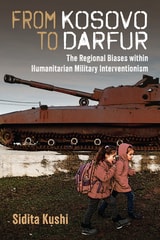
From Kosovo to Darfur
The Regional Biases within Humanitarian Military InterventionismSidita Kushi
University of Michigan Press, 2025
Using in-depth case studies and new data on all post–Cold War internal armed conflicts matched to third-party responses, From Kosovo to Darfur offers the first regionally sensitive analysis of humanitarian military intervention since the end of the Cold War. It shows that international military interventions in the context of acute humanitarian crises are driven by different pathways within the Western versus the non-Western world and fueled by elite perceptions of the crisis, making interventions closer to the geographic and cultural West most probable and most intense. As our international community becomes increasingly interdependent and aware of human suffering across borders, From Kosovo to Darfur points to new pathways of conflict trajectories and reveals vital implications for leaders, scholars, and nongovernmental actors advocating for or against international military intervention as a policy choice.
From Washington to Moscow
US-Soviet Relations and the Collapse of the USSRLouis Sell
Duke University Press, 2016
From the Far Right to the Mainstream
Islamophobia in Party Politics and the MediaEdited by Humayun Ansari and Farid Hafez
Campus Verlag, 2012
Fundamentals of World Organization
Werner Levi
University of Minnesota Press, 1950
Fundamentals of World Organization was first published in 1950. Minnesota Archive Editions uses digital technology to make long-unavailable books once again accessible, and are published unaltered from the original University of Minnesota Press editions.
This book offers fresh insight into the possibility of one peaceful world. It stresses pragmatic realities; it does not rest on formulation of the ideal.
Anti-democratic forces can be prevented from controlling the future course of world events only if plans are made now for a realistic world organization. The plans must be based on recognition and knowledge of all the problems involved.
Dr. Levi's approach to the broad subject of world organization is analytical, in contrast to most previous studies, which have been historical or descriptive.
With the calm, dispassionate viewpoint of a social scientist, the author upsets such common fallacies as the belief that world tension is caused primarily by clashes of ideologies or that world public opinion is effective in shaping the foreign policies of nations.