Results by title
448 books match the query 'Interviews' and 19 start with f

Fashion Projects
15 Years of Fashion in DialogueEdited by Francesca Granata
Intellect Books, 2025
Fashion Projects was founded in New York in 2005 as a zine. It gradually morphed into a larger journal straddling the academic and general interest worlds, with international distribution and an ardent readership. It served as a platform to highlight the importance of fashion within current critical discourses through long-form interviews with a range of curators, critics, artists, and designers. This book collects the best articles from the journal, most issues of which are now unavailable.
From exploring the rise of digital fashion media with Penny Martin (the founding editor-in-chief of SHOWstudio) to the continued importance of connoisseurship with Harold Koda (former curator-in-chief of the Met’s Costume Institute), the anthology records the increasing centrality of fashion to contemporary critical discourse. The book is an index of a particular time within the fashion studies landscape and the attendant fields of fashion writing, fashion curation, and critical fashion practice during which the field witnessed a meteoric rise.
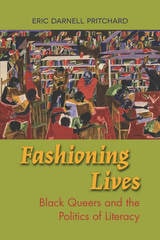
Fashioning Lives
Black Queers and the Politics of LiteracyEric Darnell Pritchard
Southern Illinois University Press, 2017
Winner, Lavender Rhetorics Award for Excellence in Queer Scholarship from CCCC, 2018
Winner, Advancement of Knowledge Award from CCCC, 2018
Winner, Outstanding Book Award from the Conference on Community Writing, 2017
Fashioning Lives: Black Queers and the Politics of Literacy analyzes the life stories of sixty Black lesbian, gay, bisexual, transgender, and queer (LGBTQ) people along with archival documents, literature, and film. Author Eric Darnell Pritchard provides a theoretical framework for studying the literacy work of Black LGBTQ people, who do not fit into the traditional categories imposed on their language practices and identities. Examining the myriad ways literacy is used to inflict harm, Pritchard discusses how these harmful events prompt Black LGBTQ people to ensure their own survival by repurposing literacy through literacy performances fueled by accountability to self and communal love towards social and political change, a process the author calls “restorative literacies.” Pritchard highlights restorative literacies in literacy institutions (e.g., libraries, schools), historical records repositories, religious and spiritual spaces, parties, community events, activist organizations, and digital spheres. This trailblazing study draws connections between race and queerness in literacy, composition, and rhetoric and provides the basis for a sustainable dialogue on their intersections in the discipline.
Feedback
The Video Data Bank Catalog of Video Art and Artist InterviewsKate Horsfield
Temple University Press, 2006
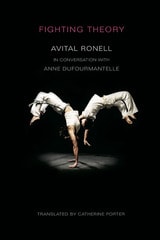
Fighting Theory
Avital Ronell, in conversation with Anne Dufourmantelle
University of Illinois Press, 2010
International interest in the work of Avital Ronell has expressed itself in reviews, articles, essays, and dissertations. For Fighting Theory, psychoanalyst and philosopher Anne Dufourmantelle conducted twelve interviews with Ronell, each focused on a key topic in one of Ronell's books or on a set of issues that run throughout her work.
What do philosophy and literary studies have to learn from each other? How does Ronell place her work within gender studies? What does psychoanalysis have to contribute to contemporary thought? What propels one in our day to Nietzsche, Derrida, Nancy, Bataille, and other philosophical writers? How important are courage and revolt? Ronell's discussions of such issues are candid, thoughtful, and often personal, bringing together elements from several texts, illuminating hints about them, and providing her up-to-date reflections on what she had written earlier.
Intense and often ironic, Fighting Theory is a poignant self-reflection of the worlds and walls against which Avital Ronell crashed.
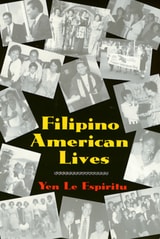
Filipino American Lives
Yen Le Espiritu
Temple University Press, 1995
Filipino Americans are now the second largest group of Asian Americans as well as the second largest immigrant group in the United States. As reflected in this collection, their lives represent the diversity of the immigrant experience and their narratives are a way to understand ethnic identity and Filipino American history.
Men and women, old and young, middle and working class, first and second generation, all openly discuss their changing sense of identity, the effects of generational and cultural differences on their families, and the role of community involvement in their lives. Pre- and post-1965 immigrants share their experiences, from the working students who came before WWII, to the manongs in the field, to the stewards and officers in the U.S. Navy, to the "brain drain" professionals, to the Filipinos born and raised in the United States.
As Yen Le Espiritu writes in the Introduction, "each of the narratives reveals ways in which Filipino American identity has been and continues to be shaped by a colonial history and a white-dominated culture. It is through recognizing how profoundly race has affected their lives that Filipino Americans forge their ethnic identities—identities that challenge stereotypes and undermine practices of cultural domination."
In the series Asian American History and Culture, edited by Sucheng Chan, David Palumbo-Liu, Michael Omi, K. Scott Wong, and Linda Trinh Võ.
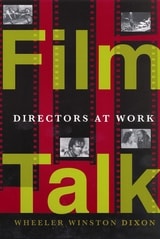
Film Talk
Directors at WorkDixon, Wheeler Winston
Rutgers University Press, 2007
The answers to these questions, along with many more little-known facts and insights, can be found in Film Talk, an in-depth, behind-the-scenes look at filmmaking from the 1940s to the present. In eleven intimate and revealing interviews, contemporary film directors speak frankly about their work-their successes and their disappointments, their personal aspirations, struggles, relationships, and the politics that affect the industry.
A medley of directors including those working in pop culture and documentary, as well as feminist filmmakers, social satirists, and Hollywood mavericks recount stories that have never before been published. Among them are Monte Hellman, the auteur of the minimalist masterpiece Two-Lane Blacktop; Albert Maysles, who with his late brother David, created some of the most important documentaries of the 1960s, including Salesman and The Beatles: What's Happening?; Robert Downey Sr., whose social satires Putney Swope and Greaser's Palace paved the way for a generation of filmmakers; Bennett Miller, whose film Capote won an Academy Award in 2005; and Jamie Babbit, a lesbian crossover director whose low-budget film But I'm a Cheerleader! became a mainstream hit.
The candid conversations, complimented by more than fifty photographs, including many that are rare, make this book essential reading for aspiring moviemakers, film scholars, and everyone interested in the how movies are made and who the fascinating individuals are who make them.
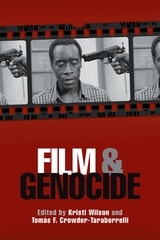
Film and Genocide
Kristi M. Wilson
University of Wisconsin Press, 2011
Film and Genocide brings together scholars of film and of genocide to discuss film representations, both fictional and documentary, of the Holocaust, the Armenian genocide, and genocides in Chile, Australia, Rwanda, and the United States. Since 1955, when Alain Resnais created his experimental documentary Night and Fog about the Nazis’ mass killings of Jews and other ostracized groups, filmmakers have struggled with using this medium to tell such difficult stories, to re-create the sociopolitical contexts of genocide, and to urge awareness and action among viewers. This volume looks at such issues as realism versus fiction, the challenge of depicting atrocities in a manner palatable to spectators and film distributors, the Holocaust film as a model for films about other genocides, and the role of new technologies in disseminating films about genocide.
Film and Genocide also includes interviews with three film directors, who discuss their experiences in working with deeply disturbing images and bringing hidden stories to life: Irek Dobrowolski, director of The Portraitist (2005) a documentary about Wilhelm Brasse, an Auschwitz-Birkenau prisoner ordered to take more than 40,000 photos at the camp; Nick Hughes, director of 100 Days (2005) a dramatic film about the Rwandan mass killings; and Greg Barker, director of Ghosts of Rwanda (2004), a television documentary for Frontline.
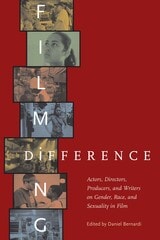
Filming Difference
Actors, Directors, Producers, and Writers on Gender, Race, and Sexuality in FilmEdited by Daniel Bernardi
University of Texas Press, 2009
Addressing representation and identity in a variety of production styles and genres, including experimental film and documentary, independent and mainstream film, and television drama, Filming Difference poses fundamental questions about the ways in which the art and craft of filmmaking force creative people to confront stereotypes and examine their own identities while representing the complexities of their subjects.
Selections range from C. A. Griffith's "Del Otro Lado: Border Crossings, Disappearing Souls, and Other Transgressions" and Celine Perreñas Shimizu's "Pain and Pleasure in the Flesh of Machiko Saito's Experimental Movies" to Christopher Bradley's "I Saw You Naked: 'Hard' Acting in 'Gay' Movies," along with Kevin Sandler's interview with Paris Barclay, Yuri Makino's interview with Chris Eyre, and many other perspectives on the implications of film production, writing, producing, and acting.
Technical aspects of the craft are considered as well, including how contributors to filmmaking plan and design films and episodic television that feature difference, and how the tools of cinema—such as cinematography and lighting—influence portrayals of gender, race, and sexuality. The struggle between economic pressures and the desire to produce thought-provoking, socially conscious stories forms another core issue raised in Filming Difference. Speaking with critical rigor and creative experience, the contributors to this collection communicate the power of their media.
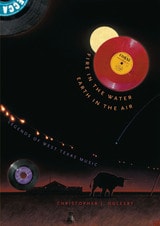
Fire in the Water, Earth in the Air
Legends of West Texas MusicBy Christopher J. Oglesby
University of Texas Press, 2006
From Buddy Holly and the Crickets to the Flatlanders, Terry Allen, and Natalie Maines, Lubbock, Texas, has produced songwriters, musicians, and artists as prolifically as cotton, conservatives, and windstorms. While nobody questions where the conservatives come from in a city that a recent nonpartisan study ranked as America's second most conservative, many people wonder why Lubbock is such fertile ground for creative spirits who want to expand the boundaries of thought in music and art. Is it just that "there's nothing else to do," as some have suggested, or is there something in the character of Lubbock that encourages creativity as much as conservatism?
In this book, Christopher Oglesby interviews twenty-five musicians and artists with ties to Lubbock to discover what it is about this community and West Texas in general that feeds the creative spirit. Their answers are revealing. Some speak of the need to rebel against conventional attitudes that threaten to limit their horizons. Others, such as Joe Ely, praise the freedom of mind they find on the wide open plains. "There is this empty desolation that I could fill if I picked up a pen and wrote, or picked up a guitar and played," he says. Still others express skepticism about how much Lubbock as a place contributes to the success of its musicians. Jimmie Dale Gilmore says, "I think there is a large measure of this Lubbock phenomenon that is just luck, and that is the part that you cannot explain."
As a whole, the interviews create a portrait not only of Lubbock's musicians and artists, but also of the musical community that has sustained them, including venues such as the legendary Cotton Club and the original Stubb's Barbecue. This kaleidoscopic portrait of the West Texas music scene gets to the heart of what it takes to create art in an isolated, often inhospitable environment. As Oglesby says, "Necessity is the mother of creation. Lubbock needed beauty, poetry, humor, and it needed to get up and shake its communal ass a bit or go mad from loneliness and boredom; so Lubbock created the amazing likes of Jimmie Dale Gilmore, Butch Hancock, Terry Allen, and Joe Ely."
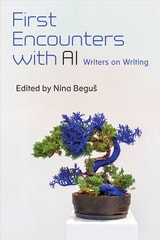
First Encounters with AI
Writers on WritingEdited by Nina Beguš
University of Michigan Press, 2026
First Encounters with AI gathers some of today’s most original literary minds to explore one of the central artistic and cultural questions of our era: What happens to writing when language is no longer used only by humans? As large language models enter the public imagination and everyday creative practice, writers across genres—novelists, poets, screenwriters, essayists, translators, scholars, technologists, language artists—are grappling with profound shifts in how stories are conceived, crafted, and shared.
Allison Parrish, Ted Chiang, Annelyse Gelman, Sasha Stiles, James Yu, Hannes Bajohr, Ken Liu, Qiufan Chen, Joseph Dumit, Gerardo Con Diaz, Iain S. Thomas, Sheila Heti, Nicholas Nardini, Jasmin B. Frelih, Katy Ilonka Gero, and Alex Saum-Pascual reflect on their early, intimate encounters with generative text at a moment when artificial intelligence feels at once thrilling, unsettling, and unavoidable. Their essays portray AI not as a monolith, but as a dynamic field of possibility and tension between creativity and computation, where longstanding human questions about intention, desire, authorship, labor, and value gain new urgency. Ranging from deeply personal meditations to critical provocations, from philosophical investigations to playful experiments, these writers reveal how writing tools shape writing itself—and what is at stake when those tools begin to imitate us. Curated and introduced by editor Nina Beguš, First Encounters with AI offers readers an essential guide to navigating this new literary landscape. Together, these essays map the terrain of our first contact zone with AI, offering clarity, insight, and imaginative depth at a moment of radical change.
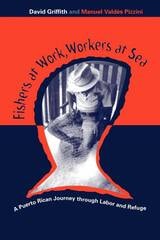
Fishers At Work, Workers At Sea
Puerto Rican Journey Thru Labor & RefugeDavid Griffith and Manuel Valdés Pizzini
Temple University Press, 2002
Fishers at Work, Workers at Sea describes Puerto Rican fishing families as they negotiate homeland and diaspora. It considers how wage work affects their livelihoods and identities at home and how these independent producers move in and out of global commodity markets. Drawing on some 100 life histories and years of fieldwork, David Griffith and Manuel Valdés Pizzini have developed a complex, often moving portrait of the men and women who fiercely struggle to hang onto the coastal landscapes and cultural heritage tied to the Caribbean Sea.
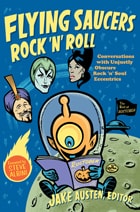
Flying Saucers Rock 'n' Roll
Conversations with Unjustly Obscure Rock 'n' Soul EccentricsJake Austen, ed.
Duke University Press, 2011
Contributors
Steve Albini
Ben Austen
Jake Austen
John Battles
Bosco
Ken Burke
Mike Maltese
King Merinuk
Ken Mottet
Jonathan Poletti
James Porter
"Colonel" Dan Sorenson
Jacqueline Stewart
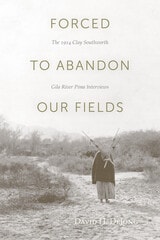
Forced to Abandon Our Fields
The 1914 Clay Southworth Gila River Pima InterviewsDavid H. DeJong
University of Utah Press, 2011
During the nineteenth century, upstream diversions from the Gila River decreased the arable land on the Gila River Indian Reservation to only a few thousand acres. As a result the Pima Indians, primarily an agricultural people, fell into poverty. Many Pima farmers and leaders lamented this suffering and in 1914 the United States Indian Irrigation Service assigned a 33-year-old engineer named Clay “Charles” Southworth to oversee the Gila River adjudication. As part of that process, Southworth interviewed 34 Pima elders, thus putting a face on the depth of hardships facing many Indians in the late nineteenth century.
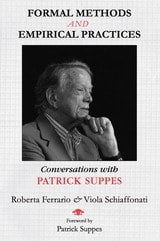
Formal Methods and Empirical Practices
Conversations with Patrick SuppesRoberta Ferrario and Viola Schiaffonati
CSLI, 2012
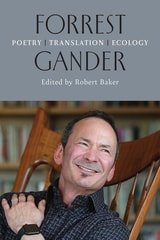
Forrest Gander
Poetry, Translation, EcologyEdited by Robert Baker
University of Michigan Press, 2026
Pulitzer Prize winner Forrest Gander is widely celebrated as a love poet, a meditative poet, and a poet of ecological awareness. He has always been a writer drawn to cross-cultural encounter, as active in translation as any poet of his generation. This collection of essays on his work brings together an international range of poets, novelists, critics, and translators, including Charles Altieri, Stephanie Burt, Julia Fiedorczuk, Jorie Graham, and Jeanette Winterson.
The collection features interviews as well as essays of different kinds—reviews, appreciations, and interpretations—and they address Gander’s poetry, fiction, and translations. They illuminate major concerns at the heart of all his work: eros, companionship, loss, renewal, an openness to the life all around us, and a rapt attention to the natural world.
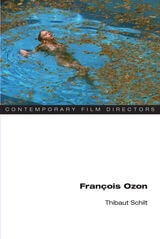
Francois Ozon
Thibaut Schilt
University of Illinois Press, 2011

Frauen
German Women Recall the Third ReichOwings, Alison
Rutgers University Press, 1993
A vivid picture of Germany under the Nazis emerges from this collection of unsettling interviews conducted by freelance TV writer Owings with 29 women of diverse backgrounds, both Aryan and Jewish. Among the women whose lives in Germany's war-torn homefront are chronicled are the widow of a resistance leader and the wife of an SS guard, who refers to her husband's work in the Ravensbrook and Buchenwald "manufacturing plants." Not only did Hitler attract the young but, according to one supporter, "he understood how to fascinate women." Some of these women claim that they privately protested mistreatment of Jews and prisoners and risked their lives to assist them. Only one non-Jewish woman, however, admits to "hearing" that Jews were gassed.
From Library Journal
Owings, a freelance television writer who is neither a German nor a Jew, has compiled and edited a groundbreaking set of oral histories. She interviews women from many spectrums of the Third Reich: Germans, Jews, individuals of "mixed" parentage, a countess, a camp guard, women who hid Jews, Nazi supporters, Communists, and other women who witnessed and participated in everyday and extraordinary events. Owings has tried, as much as possible, to quote her interviewees directly yet still manages to create an even and engaging text. This volume is an excellent companion to Claudia Koonz's Mothers in the Fatherland: Women, Family Life, and Nazi Ideology , 1919-1945 ( LJ 11/1/86). Highly recommended.
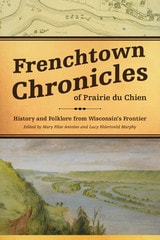
Frenchtown Chronicles of Prairie du Chien
History and Folklore from Wisconsin's FrontierMary Elise Antoine
Wisconsin Historical Society Press, 2016
Albert Coryer, the grandson of a fur trade voyageur-turned-farmer, had a gift for storytelling. Born in 1877, he grew up in Prairie du Chien hearing tales of days gone by from his parents, grandparents, and neighbors who lived in the Frenchtown area. Throughout his life, Albert soaked up the local oral traditions, including narratives about early residents, local landmarks, interesting and funny events, ethnic customs, myths, and folklore.
Late in life, this lively man who had worked as a farm laborer and janitor drew a detailed illustrated map of the Prairie du Chien area and began to write his stories out longhand, in addition to sharing them in an interview with a local historian and folklore scholar. The map, stories, and interview transcript provide a colorful account of Prairie du Chien in the late nineteenth century, when it was undergoing significant demographic, social, and economic change. With sharp historical context provided by editors Lucy Eldersveld Murphy and Mary Elise Antoine, Coryer’s tales offer an unparalleled window into the ethnic community comprised of the old fur trade families, Native Americans, French Canadian farmers, and their descendants.
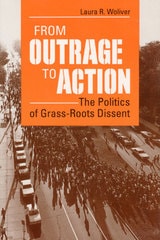
From Outrage to Action
The Politics of Grass-Roots DissentLaura R. Woliver
University of Illinois Press, 1993
Through in-depth interviews with activists, Laura Woliver examines these community actions, studying the groups involved and linking her conclusions to larger questions of political power and the impact of social movements. Her findings will make fascinating reading for those interested in the rise and fall of grass-roots interest groups, the nature of dissent, and the reasons why people volunteer countless hours, sometimes in the face of community opposition and isolation, to dedicate themselves to a cause. The ad hoc interest groups studied are the Committee to Recall Judge Archie Simonson (Madison), the Coalition for Justice for Ernest Lacy (Milwaukee), Concerned Citizens for Children (Grant County, Wisconsin), and Citizens Taking Action (Madison). Woliver relates the community responses in these cases to those in the Jeffrey Dahmer mass murder case and the beating by Los Angeles police of Rodney King.