Results by title
4030 books match the query 'Language Arts & Disciplines' and 150 start with f

FRBR, Before and After
A Look at Our Bibliographic ModelsKaren Coyle
American Library Association, 2015
FRBR
A Guide for the PerplexedRobert L. Maxwell
American Library Association, 2008
Facing the Center
Toward an Identity Politics of One-to-One MentoringHarry C. Denny
Utah State University Press, 2010
The face of the writing center, be it mainstream or marginal, majority or miority, orthodox or subversive, always has implications for teaching and learning. Facing the Center will extend current research in writing center theory to bring it in touch with theories now common in cultural studies curricula. Denny takes up issues of power, agency, language, and meaning, and pushes his readers to ask how they themselves, or the centers in which they work, might be perpetuating cultures that undermine inclusive, progressive education.
Faculty Writing Support
Emerging Research from Rhetoric and Composition StudiesJaclyn Wells
University Press of Colorado, 2025
Faculty and Librarian Partnerships (2-Volume Set)
edited by Amy Dye-Reeves and Erica Watson
Assoc of College & Research Libraries, 2026
Academic librarians and disciplinary faculty have many partnership opportunities that can contribute greatly to student learning and experience and the academic community as a whole. Planning and scoping these collaborations, and beginning them with a clear understanding of each other’s roles and responsibilities, can help make them as rewarding and beneficial as possible.
Faculty and Librarian Partnerships is packed with practical insights, real-world examples, and inspiration for the many types of faculty collaboration—from instruction to technology to outreach to collection development. Volume 1, Information Literacy and Faculty Empowerment, contains ideas, lesson plans, and sample documents for collaborating with faculty on instruction and research. Volume 2, Customized Program Support, provides information on discipline-specific projects, leveraging liaison roles, and maximizing the use of special collections. Both volumes contain detailed descriptions of different kinds of collaborations from all types of institutions: one-on-one partnerships, larger team efforts, on campus and with the wider community, virtual collaborations, and strategic organizational alliances.
Whether you’re teaching one-shots or courses, are part of the student success team, or are just navigating the complex world of faculty engagement, Faculty and Librarian Partnerships can provide easy-to-implement strategies, relatable stories, and innovative ideas to inspire and guide your work.
Faculty and Librarian Partnerships, Volume 1
Information Literacy and Faculty EmpowermentEdited by Amy Dye-Reeves and Erica Watson
Assoc of College & Research Libraries, 2026
Academic librarians and disciplinary faculty have many partnership opportunities that can contribute greatly to student learning and experience and the academic community as a whole. Planning and scoping these collaborations, and beginning them with a clear understanding of each other’s roles and responsibilities, can help make them as rewarding and beneficial as possible.
Faculty and Librarian Partnerships is packed with practical insights, real-world examples, and inspiration for the many types of faculty collaboration—from instruction to technology to outreach to collection development. Volume 1, Information Literacy and Faculty Empowerment, contains ideas, lesson plans, and sample documents for collaborating with faculty on instruction and research. Volume 2, Customized Program Support, provides information on discipline-specific projects, leveraging liaison roles, and maximizing the use of special collections. Both volumes contain detailed descriptions of different kinds of collaborations from all types of institutions: one-on-one partnerships, larger team efforts, on campus and with the wider community, virtual collaborations, and strategic organizational alliances.
Whether you’re teaching one-shots or courses, are part of the student success team, or are just navigating the complex world of faculty engagement, Faculty and Librarian Partnerships can provide easy-to-implement strategies, relatable stories, and innovative ideas to inspire and guide your work.
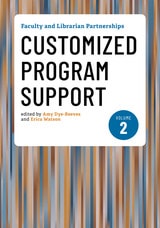
Faculty and Librarian Partnerships, Volume 2
Customized Program SupportEdited by Amy Dye-Reeves and Erica Watson
Assoc of College & Research Libraries, 2026
Academic librarians and disciplinary faculty have many partnership opportunities that can contribute greatly to student learning and experience and the academic community as a whole. Planning and scoping these collaborations, and beginning them with a clear understanding of each other’s roles and responsibilities, can help make them as rewarding and beneficial as possible.
Faculty and Librarian Partnerships is packed with practical insights, real-world examples, and inspiration for the many types of faculty collaboration—from instruction to technology to outreach to collection development. Volume 1, Information Literacy and Faculty Empowerment, contains ideas, lesson plans, and sample documents for collaborating with faculty on instruction and research. Volume 2, Customized Program Support, provides information on discipline-specific projects, leveraging liaison roles, and maximizing the use of special collections. Both volumes contain detailed descriptions of different kinds of collaborations from all types of institutions: one-on-one partnerships, larger team efforts, on campus and with the wider community, virtual collaborations, and strategic organizational alliances.
Whether you’re teaching one-shots or courses, are part of the student success team, or are just navigating the complex world of faculty engagement, Faculty and Librarian Partnerships can provide easy-to-implement strategies, relatable stories, and innovative ideas to inspire and guide your work.

Faculty-Librarian Collaborations
Michael Stöpel
Assoc of College & Research Libraries, 2020
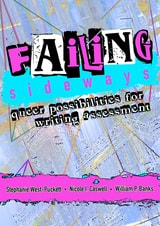
Failing Sideways
Queer Possibilities for Writing AssessmentStephanie West-Puckett
Utah State University Press, 2023
A failure-oriented assessment model unsettles some of the most common practices, like rubrics and portfolios, and challenges many deeply held assumptions about validity and reliability in order to ask what could happen if assessment was oriented toward possibility and potential. Working to engage a more capacious writing construct, the authors propose queer validity inquiry (QVI) as a model for assessment that values failure, affect, identity, and materiality. These overlapping lenses help teachers honor parts of writing and learning that writing studies faculty have struggled to hold onto in a world overly focused on quickness and efficiency in schools.
Through programmatic and classroom examples, Failing Sideways privileges what is valued in the classroom but traditionally ignored in assessments. Reimagining what matters in the teaching and learning of writing and using assessment data differently, this book demonstrates what writing can be and could do in a more diverse and just world.
Fairy Tale Fun!
American Library Association, 2012
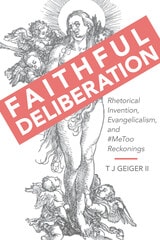
Faithful Deliberation
Rhetorical Invention, Evangelicalism, and #MeToo ReckoningsT J Geiger II
University of Alabama Press, 2022
Investigates the rhetorical practices used by contemporary evangelical Christian women to confront theological and cultural issues that stymie deliberation within their communities
While often perceived as an insular enclave with a high level of in-group agreement about political and social issues, predominantly white evangelicalism includes prominent voices urging deliberation about appropriate responses to sexual abuse, domestic violence, and the discourses surrounding these traumas. In Faithful Deliberation: Rhetorical Invention, Evangelicalism, and #MeToo Reckonings, T J Geiger II examines theologically reflective rhetorical invention that reconfigures trauma-minimizing commonplaces in order to facilitate community-internal deliberation.
Resting at the intersection of feminist rhetorical studies and religious rhetorics, this book contains four related theological-rhetorical case studies that consider how figures such as Beth Moore, Jen Hatmaker, Rachael Denhollander, Karen Swallow Prior, and others engaged in rhetorical invention. Each juxtaposes differing approaches to contending with rape, domestic violence, sexual abuse, and other traumas. Each case contrasts an approach based on appeals to highly circumscribed understandings of grace, purity, and other denomination-specific traditions and values with approaches rooted in those same traditions and values, but with an eye toward community transformation, healing through justice, and reinvigorated forms of forgiveness. Geiger skillfully argues that this faithful deliberation involves practices of thinking, reflecting, storytelling, and acting within a tightly bounded community that can foster change through a recommitment to core values.
These rhetorical practices exemplify the kind of inventive listening deliberative discourse requires, point to the sort of healing they may promote in response to trauma and trauma discourses, and occur within a range of genres including social media posts, blog entries, published interviews, victim impact statements, and petitions. This study of invention for evangelical-to-other-evangelical deliberative discourse contributes to rhetorical studies by demonstrating the civic and social possibilities of rhetoric within religious enclaves. By locating the case studies as recent moments in longer US public and evangelical histories of activism, deliberative practice, and politics, Faithful Deliberation brings into focus how enclaves and the dominant public sphere interact.
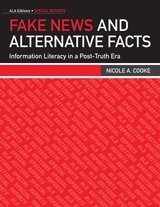
Fake News and Alternative Facts
Information Literacy in a Post-Truth EraNicole A. Cooke
American Library Association, 2018
Family Literacy Storytimes
Readymade Storytimes Suitable for the Whole FamilyAmerican Library Association, 2009
Family Storytime
24 Creative Programs for All AgesAmerican Library Association, 1999
Family-Centered Library Handbook
American Library Association, 2007
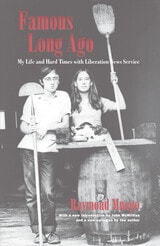
Famous Long Ago
My Life and Hard Times with Liberation News ServiceRaymond Mungo
University of Massachusetts Press, 2012
Originally published in 1970, Raymond Mungo's picaresque account of his adventures with Liberation News Service in the wild years of 1967 and 1968 has been variously described as youthful, passionate, lyrical, demented, and an iconic symbol of the sixties counterculture. A review in The Nation described it as “hip Huck Finn.”
A college editor at the height of the Vietnam War, Mungo found himself smack in the middle of a mad swirl of activism and dissent, vigorously protesting everything from the draft to abortion laws to the university itself. Then he connected with Marshall Bloom to cofound LNS in Washington, D.C., as a news service catering to the burgeoning underground press. One thing led to another, until LNS, like so many other radical organizations, eventually disintegrated into violently warring factions. Mungo's memoir tracks its development and destruction with wicked humor and literary panache.
In an introduction to this new edition, John McMillian discusses the enduring appeal of Famous Long Ago and situates it within its broader historical context, while the author provides his own retrospective take in a new afterword.
Fang-tastic Fiction
Patricia American Library Association
American Library Association, 2011
Fanti Kinship and the Analysis of Kinship Terminologies
David B. Kronenfeld
University of Illinois Press, 2008
This book examines Fanti kinship terminology from a variety of analytic and formal perspectives. Based on work with a broad number of informants, David B. Kronenfeld details and analyzes internal variation in usage within the Fanti community, shows the relationship between terminology and social groups and communicative usage, and relates these findings to major theoretical work on kinship and on the intersections of language, thought, and culture.
The terminological analysis in this study employs a great variety of formal approaches, assesses the strengths and weaknesses of each approach, and covers a wide range of types of usage. This work also performs a systematic, formal analysis of behavior patterns among kin, joining this approach with the analysis of a kinship terminological system. Rather than treating kinship terminology as a special, isolated piece of culture, this study also ties its analysis to more general semantic and cultural theoretical issues. Including computational and comparative studies of kinship terminologies, this volume represents the fullest analysis of any kinship terminological system in the ethnographic record.
Fashioning Lives
Black Queers and the Politics of LiteracyEric Darnell Pritchard
Southern Illinois University Press, 2017
Winner, Lavender Rhetorics Award for Excellence in Queer Scholarship from CCCC, 2018
Winner, Advancement of Knowledge Award from CCCC, 2018
Winner, Outstanding Book Award from the Conference on Community Writing, 2017
Fashioning Lives: Black Queers and the Politics of Literacy analyzes the life stories of sixty Black lesbian, gay, bisexual, transgender, and queer (LGBTQ) people along with archival documents, literature, and film. Author Eric Darnell Pritchard provides a theoretical framework for studying the literacy work of Black LGBTQ people, who do not fit into the traditional categories imposed on their language practices and identities. Examining the myriad ways literacy is used to inflict harm, Pritchard discusses how these harmful events prompt Black LGBTQ people to ensure their own survival by repurposing literacy through literacy performances fueled by accountability to self and communal love towards social and political change, a process the author calls “restorative literacies.” Pritchard highlights restorative literacies in literacy institutions (e.g., libraries, schools), historical records repositories, religious and spiritual spaces, parties, community events, activist organizations, and digital spheres. This trailblazing study draws connections between race and queerness in literacy, composition, and rhetoric and provides the basis for a sustainable dialogue on their intersections in the discipline.
Fatal Words
Communication Clashes and Aircraft CrashesSteven Cushing
University of Chicago Press, 1994
In Fatal Words, Steven Cushing explains how miscommunication has led to dozens of aircraft disasters, and he proposes innovative solutions for preventing them. He examines ambiguities in language when aviation jargon and colloquial English are mixed, when a word is used that has different meanings, and when different words are used that sound alike. To remedy these problems, Cushing proposes a visual communication system and a computerized voice mechanism to help clear up confusing language.
Fatal Words is an accessible explanation of some of the most notorious aircraft tragedies of our time, and it will appeal to scholars in communications, linguistics, and cognitive science, to aviation experts, and to general readers.

Fatwas and Court Judgments
A Genre Analysis of Arabic Legal OpinionAhmed Fakhri
The Ohio State University Press, 2014
The differences between the two genres stem from elements of their socio-cultural context, such as the role relations of the participants and the characteristics of the institutions to which the genres belong. Moving beyond these contexts, Fatwas and Court Judgments reveals generic practices that have broad implications for understanding various aspects of wider Arab culture, including the tension between modern secular ideologies and traditional religious beliefs, the male-dominated access to discourse, and the prevalence of utilitarian attitudes exhibited in “fatwa shopping.”
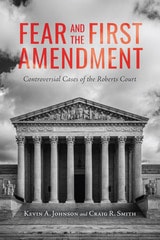
Fear and the First Amendment
Controversial Cases of the Roberts CourtKevin A. Johnson and Craig R. Smith
University of Alabama Press, 2024
DISTINGUISHED PUBLICATION AWARD FOR THE NATIONAL COMMUNICATION ASSOCIATION'S COMMUNICATION AND LAW DIVISION
The First Amendment: protected by law, threatened by fear in the Roberts Supreme Court.
In Fear and the First Amendment: Controversial Cases of the Roberts Court, Kevin A. Johnson and Craig R. Smith offer a deeply considered examination of the ways fear figures in First Amendment questions. Bringing together literature on theories of fear in rhetorical and philosophical traditions, Johnson and Smith focus on the rulings from the Roberts Court, which form a pivotal era of dramatic precedents. Each chapter analyzes one or more First Amendment cases and a variety of related fears—whether evidentiary or not—that pertain to a given case.
These cases include Morse v. Frederick, which takes up the competing fears of school administrators’ loss of authority and students’ loss of free speech rights. The authors touch on corporate funding of elections in Citizens United v. Federal Elections Commission, from the fear of corporate influence on electoral politics to corporate fears of alienating their consumers by backing political candidates. They explore religious freedom and fears of homosexuality in Christian Legal Society v. Martinez. Similarly, in Snyder v. Phelps, the authors delve further into fears of God, death, emotional distress, failing as a parent, and losing one’s reputation. Next, they investigate parents’ anxieties about violence in video games in Brown v. Entertainment Merchants Association. Finally, Johnson and Smith examine the role of fear in indecent, obscene, and graphic communication in three cases: FCC v. Fox Television Stations, Ashcroft v. American Civil Liberties Union, and United States v. Stevens.
Together these cases reveal fear to be an endemic factor in the rhetoric of First Amendment cases. This fascinating and original work will appeal to current legal practitioners and students of law, rhetoric, philosophy, and the First Amendment.
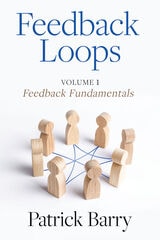
Feedback Loops
How to Give and Receive High-Quality FeedbackPatrick Barry
Michigan Publishing Services, 2023
Learning how to give and receive feedback is fundamental to the development of every student and professional. Yet few of us are ever taught anything like “feedback skills.”
This book, which is the first in the Feedback Loops series, is designed to change that. Here is what students who have taken the University of Michigan Law School course on which the series is based have said about it:
-
“One of the most memorable and useful classes I have taken in law school!”
-
“Excellent, full stop.”
-
“This class was always a fun highlight of my week.”
Feminism Beyond Modernism
Elizabeth Flynn
Southern Illinois University Press, 2002
Misunderstanding and denigration of postmodern feminism are widespread. Elizabeth Flynn’s Feminism Beyond Modernism comes to its defense in a cogent and astute manner by first distinguishing between postmodern and antimodern feminisms and then reclaiming postmodern feminism by reconfiguring its relationship to modernism.
Too often postmodern feminism is unfairly identified as opposed to modernism and associated with subjectivism and relativism. Flynnaddresses these problems by provisionally defining postmodern feminism as problematizing and critiquing modernism without directly opposing it. Flynn also suggests that feminist traditions that reject modernism, such as radical and cultural feminisms, are antimodern rather than postmodern.
In this interdisciplinary study, Flynn defines feminist traditions broadly, situating her discussions within the contexts of literary studies and rhetoric and composition while simultaneously exploring the troubled relationship between these fields. Departing from accepted definitions of modernism, Flynn distinguishes between aesthetic modernism and Enlightenment modernism and uses the work of John Locke, Sigmund Freud, Charlotte Perkins Gilman, Michel Foucault, Donna Haraway, and others as benchmarks for historical placement. In addition, rereadings of works by Virginia Woolf, Adrienne Rich, Alice Walker, Louise Rosenblatt, and others demonstrate the complex ways in which they respond to modernist pressures and tendencies. From this context, Flynn’s Feminism Beyond Modernism reconfigures feminist traditions by defining postmodern feminism as a critique of modernism rather than as an antimodern opponent.

Feminism and Affect at the Scene of Argument
Beyond the Trope of the Angry FeministAuthored by Barbara Tomlinson
Temple University Press, 2010
Are feminists really angry, unreasoning, man-haters who argue only from an emotional perspective as some claim? Does the incessant repetition of this trope make anti-feminism and misogyny a routine element in everyday speech? And does this repetition work towards delegitimizing feminist arguments and/or undermining feminist politics? How do skilled feminist writers deploy affect to advance feminist ideas? In Feminismand Affect at the Scene of Argument, Barbara Tomlinson addresses these questions, providing a lucid examination of the role of affect in feminist and antifeminist academic arguments.
Using case studies from controversies in socio-legal studies, musicology, and science studies, among other disciplines, Tomlinson examines the rhetorics of anger, contempt, betrayal, intensification, and ridicule. She employs a set of critical tools—feminist “socio-forensic” discursive analysis—that will prove indispensible for understanding and countering tropes like that of the angry feminist. Moreover, these tools will advance feminism, which, she argues, is generated in and by arguments with allies and antagonists.
In an era of debates that generate more heat than light, Feminism and Affectat the Scene of Argument offers a timely provocation for transforming the terms of reading and writing in scholarship and civic life.

Feminist Book Work
Reading with the Women's PressRosy Mack
Duke University Press, 2027
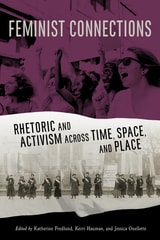
Feminist Connections
Rhetoric and Activism across Time, Space, and PlaceEdited by Katherine Fredlund, Kerri Hauman, and Jessica Ouellette
University of Alabama Press, 2020
Tracing the rhetoric of feminist activism across generations, cultures, and movements.
In 1917, Alice Paul and other suffragists famously picketed in front of the White House while holding banners with short, pithy sayings such as “Mr. President: How long must women wait for Liberty?” Their juxtaposition of this short phrase with the image of the White House (a symbol of liberty and justice) relies on the same rhetorical tactics as memes, a genre contemporary feminists use frequently to make arguments about reproductive rights, Black Lives Matter, sex-positivity, and more. Many such connections between feminists of different spaces, places, and eras have yet to be considered, let alone understood. Feminist Connections: Rhetoric and Activism across Time, Space, and Place reconsiders feminist rhetorical strategies as linked, intergenerational, and surprisingly consistent despite the emergence of new forms of media and intersectional considerations.
Contributors to this volume highlight continuities in feminist rhetorical practices that are often invisible to scholars, obscured by time, new media, and wildly different cultural, political, and social contexts. Thus, this collection takes a nonchronological approach to the study of feminist rhetoric, grouping chapters by rhetorical practice rather than time, content, or choice of media.
By connecting historical, contemporary, and future trajectories, this collection develops three feminist rhetorical frameworks: revisionary rhetorics, circulatory rhetorics, and response rhetorics. A theorization of these frameworks explains how feminist rhetorical practices (past and present) rely on similar but diverse methods to create change and fight oppression. Identifying these strategies not only helps us rethink feminist rhetoric from an academic perspective but also allows us to enact feminist activist rhetorics beyond the academy during a time in which feminist scholarship cannot afford to remain behind its hallowed yet insular walls.
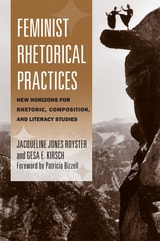
Feminist Rhetorical Practices
New Horizons for Rhetoric, Composition, and Literacy StudiesJacqueline Jones Royster and Gesa E. Kirsch
Southern Illinois University Press, 2012
To contextualize a new and changed landscape for narratives in the history of rhetoric, Royster and Kirsch present four critical terms of engagement—critical imagination, strategic contemplation, social circulation, and globalization—as the foundation for a new analytical model for understanding, interpreting, and evaluating feminist rhetorical inquiry and the study and teaching of rhetoric in general. This model draws directly on the wealth of knowledge and understanding gained from feminist rhetorical practices, especially sensitivity toward meaningfully and respectfully rendering the work, lives, cultures, and traditions of historical and contemporary women in rhetorical scholarship.
Proposing ambitious new standards for viewing and valuing excellence in feminist rhetorical practice, Royster and Kirsch advocate an ethos of respect and humility in the analysis of communities and specific rhetorical performances neglected in rhetorical history, recasting rhetorical studies as a global phenomenon rather than a western one. They also reflect on their own personal and professional development as researchers as they highlight innovative feminist research over the past thirty years to articulate how feminist work is changing the field and pointing to the active participation of women in various discourse arenas and to the practices and genres they use.
Valuable to new and established scholars of rhetoric, Feminist Rhetorical Practice: New Horizons for Rhetoric, Composition, and Literacy Studies is essential for understanding the theoretical, methodological, and ethical impacts of feminist rhetorical studies on the wider field.
Winner, 2014 Winifred Bryan Horner Outstanding Book Award
Feminist Rhetorical Resilience
Elizabeth A. Flynn, Patricia Sotirin, and Ann Brady
Utah State University Press, 2012
Although it is well known in other fields, the concept of “resilience” has not been addressed explicitly by feminist rhetoricians. This collection develops it in readings of rhetorical situations across a range of social contexts and national cultures. Contributors demonstrate that resilience offers an important new conceptual frame for feminist rhetoric, with emphasis on agency, change, and hope in the daily lives of individuals or groups of individuals disempowered by social or material forces. Collectively, these chapters create a robust conception of resilience as a complex rhetorical process, redeeming it from its popular association with individual heroism through an important focus on relationality, community, and an ethics of connection. Resilience, in this volume, is a specifically rhetorical response to complicated forces in individual lives. Through it, Feminist Rhetorical Resilience widens the interpretive space within which rhetoricians can work.
Feminist Rhetorical Science Studies
Human Bodies, Posthumanist WorldsEdited by Amanda K. Booher and Julie Jung
Southern Illinois University Press, 2018
Each essay addresses a question: How can feminist rhetoricians of science engage responsibly with emerging theories of the posthuman? Some contributors respond with case studies in medical practice (fetal ultrasound; patient noncompliance), medical science (the neuroscience of sex differences), and health policy (drug trials of the U.S. Food and Drug Administration); others respond with a critical review of object-oriented ontology and a framework for researching women technical writers in the workplace. The contributed essays are in turn framed by a comprehensive introduction and a final chapter from the editors, who argue that a key contribution of feminist posthumanist rhetoric is that it rethinks the agencies of people, things, and practices in ways that can bring about more ethical human relations.
Individually the contributions offer as much variety as consensus on matters of methodology. Together they demonstrate how feminist posthumanist and materialist approaches to science expand our notions of what rhetoric is and does, yet they manage to do so without sacrificing what makes their inquiries distinctively rhetorical.
Feminist Technical Communication
Apparent Feminisms, Slow Crisis, and the Deepwater Horizon DisasterErin A. Clark
Utah State University Press, 2023
The first book to situate feminisms and technical communication in relationship as the focal point, Feminist Technical Communication traces the thread of feminisms through technical communication’s connection to social justice studies. Clark theorizes “slow crisis,” a concept made readable to technical communicators by apparent feminisms that can help technical communicators readily recognize and address social justice problems. Clark then applies this framework to the Deepwater Horizon Disaster, an extended crisis that has been publicly framed by a traditional view of efficiency that privileges economic impact. Through rich description of apparent feminist information-gathering techniques and a layered analysis this study offers application far beyond this single disaster, making available new crisis-response possibilities that consider the economy without eliding ecological and human health concerns.
Feminist Technical Communication offers a methodological approach to the systematic interrogation of power structures that operate on hidden misogynies. This book is useful to technical communicators, scholars of technical communication and rhetoric, and readers interested in gender studies and public health and is an ideal text for graduate-level seminars focused on feminisms, social justice, and cultural studies.
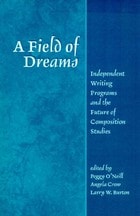
Field Of Dreams
edited by Peggy O'Neill, Angela Crow, and Larry Burton
Utah State University Press, 2002
One of the first collections to focus on independent writing programs, A Field of Dreams offers a complex picture of the experience of the stand-alone. Included here are narratives of individual programs from a wide range of institutions, exploring such issues as what institutional issues led to their independence, how independence solved or created administrative problems, how it changed the culture of the writing program and faculty sense of purpose, success, or failure.
Further chapters build larger ideas about the advantages and disadvantages of stand-alone status, covering labor issues, promotion/tenure issues, institutional politics, and others. A retrospective on the famous controversy at Minnesota is included, along with a look at the long-established independent programs at Harvard and Syracuse.
Finally, the book considers disciplinary questions raised by the growth of stand-alone programs. Authors here respond with critique and reflection to ideas raised by other chapters—do current independent models inadvertently diminish the influence of rhetoric and composition scholarship? Do they tend to ignore the outward movement of literacy toward technology? Can they be structured to enhance interdisciplinary or writing-across-the-curriculum efforts? Can independent programs play a more influential role in the university than they do from the English department?
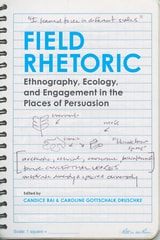
Field Rhetoric
Ethnography, Ecology, and Engagement in the Places of PersuasionEdited by Candice Rai and Caroline Gottschalk Druschke
University of Alabama Press, 2018
A survey of the innovative scholarship emerging at the intersections of rhetoric, and fieldwork
A variety of research areas within rhetorical studies—including everyday and public rhetorics, space and place-based work, material and ecological approaches, environmental communication, technical communication, and critical and participatory action research, among others—have increasingly called for ethnographic fieldwork that grounds the study of rhetoric within the contexts of its use and circulation. Employing field methods more commonly used by ethnographers allows researchers to capture rhetoric in action and to observe the dynamic circumstances that shape persuasion in ordinary life.
Field Rhetoric: Ethnography, Ecology, and Engagement in the Places of Persuasion gathers new essays that describe and theorize this burgeoning transdisciplinary mode of field-based scholarship. Contributors document and support this ethnographic turn in rhetorical studies through sustained examination of the diverse trends, methods, tools, theories, practices, and possibilities for engaging in rhetorical field research.
This fascinating volume offers an introduction to these inquiries and serves as both a practical resource and theoretical foundation for scholars, teachers, and students interested in the intersection of rhetoric and field studies. Editors Candice Rai and Caroline Gottschalk Druschke have assembled scholars working in diverse field sites to map and initiate key debates on the practices, limitations, and value of rhetorical field methods and research. Working synthetically at the junction of rhetorical theory and field practices, the contributors to this collection build from myriad field-based cases to examine diverse theoretical and methodological considerations. The volume also serves as a useful reference for interdisciplinary qualitative researchers interested in doing research from a rhetorical or discursive perspective in various disciplines and fields, such as English, composition, communication, natural resources, geography, sociology, urban planning, anthropology, and more.
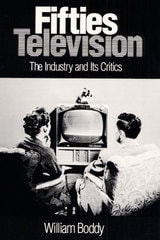
Fifties Television
THE INDUSTRY AND ITS CRITICSWilliam Boddy
University of Illinois Press, 1990
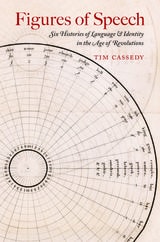
Figures of Speech
Six Histories of Language and Identity in the Age of RevolutionsTim Cassedy
University of Iowa Press, 2018
Tim Cassedy’s fascinating study examines the role that language played at the turn of the nineteenth century as a marker of one’s identity. During this time of revolution (U.S., French, and Haitian) and globalization, language served as a way to categorize people within a world that appeared more diverse than ever. Linguistic differences, especially among English-speakers, seemed to validate the emerging national, racial, local, and regional identity categories that took shape in this new world order.
Focusing on six eccentric characters of the time—from the woman known as “Princess Caraboo” to wordsmith Noah Webster—Cassedy shows how each put language at the center of their identities and lived out the possibilities of their era’s linguistic ideas. The result is a highly entertaining and equally informative look at how perceptions about who spoke what language—and how they spoke it—determined the shape of communities in the British American colonies and beyond.
This engagingly written story is sure to appeal to historians of literature, culture, and communication; to linguists and book historians; and to general readers interested in how ideas about English developed in the early United States and throughout the English-speaking world.
Film Preservation
Competing Definitions of Value, Use, and PracticeKaren F. Gracy
American Library Association, 2009
Film Programming for Public Libraries
Kati Irons
American Library Association, 2014
Financial Management In Academic Libraries
Data-DrivenRobert E. Dugan
Assoc of College & Research Libraries, 2018

Financial Management for Libraries
William W. Sannwald
American Library Association, 2018
Presenting financial management principles and best practices applicable to both public and academic libraries, this comprehensive text elucidates a broad array of issues crucial for those entering a managerial position. Both thorough and straightforward, Sannwald's treatment
- gives readers a solid grounding in the basics of accounting and finance, with an emphasis on applicability to library management and operations;
- ties budgets and strategic planning to library vision, mission, goals, and objectives;
- discusses the roles of stakeholders such as boards, governmental/municipal bodies, the university, and the community;
- looks at a variety of funding sources, from tax revenue to gifts and donations, and presents sound strategies for including them when projecting income and expenses;
- articulates and discusses the pros and cons of various budget strategies;
- includes sample budgets and forms that can be customized as needed;
- offers expert guidance on modifying budgets for windfalls and shortfalls;
- explains operating ratios, fiscal benchmarking, and metrics, demonstrating how to use these to effectively create and manage a budget and assess the fiscal health of the library; and
- advises on how to effectively prepare and present a budget and annual financial statements to a library's governing agency.

Find Your Story, Write Your Memoir
Lynn C. Miller and Lisa Lenard-Cook
University of Wisconsin Press, 2013
Bronze winner, Foreword Book of the Year, Writing Guides

Finding True North
First-Hand Stories of the Booms that Built Modern AlaskaMolly Rettig
University of Alaska Press, 2021
Melting sea ice and rumbling volcanoes. Sled dogs racing through unnamed valleys.
These were the images that came to mind when Molly Rettig moved to Fairbanks, Alaska to work as a reporter at the local newspaper. An avid environmentalist, she couldn’t wait to explore the vast, untamed spaces that had largely been paved over on the east coast. But when her 72-year-old neighbor, Clutch, invites her on a tour of his gold mine—an 800-foot tunnel blasted into the side of his house–she begins to question many of her ideas about Alaska, and about herself.
In Finding True North, Rettig takes us on a gripping journey through Alaska's past that brings alive the state's magnificent country and its quirky, larger-than-life characters. She meets a trapper who harvests all she needs from the land, a bush pilot who taught himself how to fly, and an archaeologist who helped build an oil pipeline through pristine wilderness. While she learns how airplanes, mines, and oil fields have paved the way for newcomers like herself, she also stumbles upon a bigger question: what has this quest for Alaska’s natural resources actually cost, and how much more is at stake?
This is a book about all the ways wild places teach us about ourselves. Rettig writes both playfully and honestly about how one place can be many things to many people—and how all of it can be true.
Finding a Public Voice
Barbara Fister as a Case StudyDanielle Theiss
Assoc of College & Research Libraries, 2013
Finding a Public Voice
Barbara Fister as a Case StudyDanielle Theiss
Assoc of College & Research Libraries, 2013
Finding the Answers to Legal Questions
Virginia M. Tucker
American Library Association, 2017
Finding the Answers to Legal Questions
A How-To-Do-It ManualAmerican Library Association, 2011
Finite-State Morphology
Kenneth R. Beesley and Lauri Karttunen
CSLI, 2003
Included are graded introductions, examples, and exercises suitable for individual study as well as formal courses. These take advantage of widely-tested lexc and xfst applications that are just becoming available for noncommercial use via the Internet.
First Have Something to Say
Writing for the Library ProfessionAmerican Library Association, 2003
First Person Squared
A Study of Co-Authoring in the AcademyKami Day & Michele Eodice
Utah State University Press, 2001
In (First Person)2, Day and Eodice offer one of the few book-length studies of co-authoring in academic fields since Lunsford and Ede published theirs over a decade ago. The central research here involves in-depth interviews with ten successful academic collaborators from a range of disciplines and settings. The interviews explore the narratives of these informants' experience—what brought them to collaborate, what cognitive and logistical processes were involved as they worked together, what is the status of collaborated work in their field, and so on—and situate these informants within the broader discussion of collaboration theory and research as it has been articulated over the last ten years.
As the study develops, Day and Eodice become most interested in the affective domain of co-authorship, and they find the most promising explorations of that domain in the work of feminist theorists in composition.
First Semester
Graduate Students, Teaching Writing, and the Challenge of Middle GroundJessica Restaino
Southern Illinois University Press, 2012
Jessica Restaino offers a snapshot of the first semester experiences of graduate student writing teachers as they navigate predetermined course syllabi and materials, the pressures of grading, the influences of foundational scholarship, and their own classroom authority. With rich qualitative data gathered from course observations, interviews, and correspondence, Restaino traces four graduate students’ first experiences as teachers at a large, public university. Yet the circumstances and situations she relates will ring familiar at widely varying institutions.
First Semester: Graduate Students, Teaching Writing, and the Challenge of Middle Ground presents a fresh and challenging theoretical approach to understanding and improving the preparation of graduate students for the writing classroom. Restaino uses a three-part theoretical construct—labor, action, and work, as defined in Hannah Arendt’s work of political philosophy, The Human Condition—as a lens for reading graduate students’ struggles to balance their new responsibilities as teachers with their concurrent roles as students. Arendt’s concepts serve as access points for analysis, raising important questions about graduate student writing teachers’ first classrooms and uncovering opportunities for improved support and preparation by university writing programs.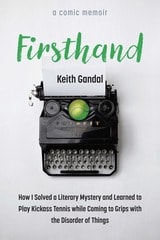
Firsthand
How I Solved a Literary Mystery and Learned to Play Kickass Tennis while Coming to Grips with the Disorder of ThingsKeith Gandal
University of Michigan Press, 2024
Keith Gandal combines this scholarly detective story with a comic personal narrative about how a midlife crisis accidentally sent him on a journey to write a research monograph that many in his profession—including at times himself—were dubious about. While researching how Hemingway, Fitzgerald, and Faulkner faced their forgotten crises of masculinity, Gandal discovers that his own crisis is instrumental to his creative process. Incorporating stories from Gandal’s comic romp through the hyper-competitive world of middle-aged men’s tennis, adopting pitbulls, and discussing Michel Foucault, Firsthand gives readers an inside look at how to acquire accurate knowledge—about the world, about history, and about oneself.