Results by title
998 books match the query 'Life' and 44 start with f

Fannie Bloomfield-Zeisler
The Life and Times of a Piano VirtuosoBeth Abelson Macleod
University of Illinois Press, 2015
In this new biography, Beth Abelson Macleod reintroduces a figure long, and unjustly, overlooked by music history. Trained in Vienna, Bloomfield-Zeisler significantly advanced the development of classical music in the United States. Her powerful and sensitive performances, both in recital and with major orchestras, won her followers across the United States and Europe and often provided her American audiences with their first exposure to the pieces she played. The European-style salon in her Chicago home welcomed musicians, scientists, authors, artists, and politicians, while her marriage to attorney Sigmund Zeisler placed her at the center of a historical moment when Sigmund defended the anarchists in the 1886 Haymarket trial.
In its re-creation of a musical and social milieu, Fannie Bloomfield-Zeisler paints a vivid portrait of a dynamic artistic life.
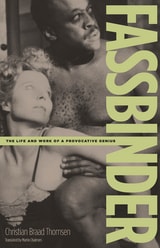
Fassbinder
The Life And Work Of A Provocative GeniusChristian Braad Thomsen
University of Minnesota Press, 2004
The revealing biography of this highly productive and radical film director
Rainer Werner Fassbinder was the most innovative practitioner of New German Cinema. He worked at breakneck speed and in fourteen years made forty-four films, including Ali: Fear Eats the Soul (1973) and The Marriage of Maria Braun (1978). Fassbinder ruthlessly attacked both German bourgeois society and the larger limitations of humanity, and his films detail the desperate yearning for love and freedom and the many ways in which society defeats that desire.
In Fassbinder, Christian Thomsen, a close friend of the director, illuminates Fassbinder’s body of work while revealing his insider views of a man who, despite a furious temper, manic working habits, and rampant drug addiction, supported an extended family—including his mother, a string of male lovers, lovelorn women, and even a pair of frustrated wives—with his intoxicating and prolific imagination. This book, like Fassbinder’s often-used image of the mirror, brilliantly reflects the sexual, political, and overwhelmingly human contradictions inherent in the life of this intensely creative man and the remarkable films he directed.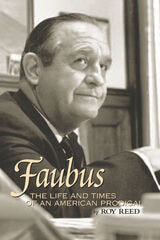
Faubus
The Life and Times of an American ProdigalRoy Reed
University of Arkansas Press, 1999
New York Times Book Review Notable Book for 1997
1998 Certificate of Commendation, American Association for State and Local History
Fault Lines
Life and Landscape in Saskatchewan's Oil EconomyValerie Zink
University of Manitoba Press, 2016
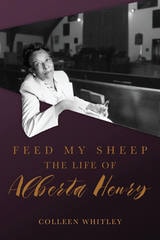
Feed My Sheep
The Life of Alberta HenryColleen Whitley
University of Utah Press, 2019
Henry endured intolerance by leaning on her faith and her commitment to a cause that she believed God had called her to follow. When she came to Utah in 1949 she thought it would be a brief stay, but she ended up making it her home for more than fifty years. In Utah, Henry committed herself to helping all races, religions, and ethnic groups coexist in appreciation of each other. While Martin Luther King Jr., Medgar Evers, and Malcolm X led the struggle for civil rights at a national level, Alberta Henry campaigned tirelessly for equality at a local level, talking at school board meetings, before city councils, and in the homes of her neighbors.
Henry was a member or officer of more than forty civic organizations and served for twelve years as president of the Salt Lake City branch of the NAACP, where she lobbied for civil rights, education, and justice. The dozens of awards and commendations she received speak to her accomplishments. While much of Henry’s story is told in her own words, Colleen Whitley provides expert and personal context to her speeches, writing, and interviews. The result is an exceptional first-person account of an African American woman leader and her role in the Civil Rights Movement in Utah.
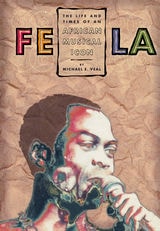
Fela
Life And Times Of An AfricanMichael Veal
Temple University Press, 2000
Although harassed, beaten, and jailed by Nigerian authorities, he continued his outspoken and derisive criticism of political corruption at home and economic exploitation from abroad. A volatile mixture of personal characteristics -- charisma, musical talent, maverick lifestyle, populist ideology, and persistence in the face of persecution -- made him a legend throughout Africa and the world. Celebrated during the 1970s as a musical innovator and spokesman for the continent's oppressed masses, he enjoyed worldwide celebrity during the 1980s and was recognized in the 1990s as a major pioneer and elder statesman of African music. By the time of his death in 1997 from AIDS-related complications, Fela had become something of a Nigerian institution.
In Africa, the idea of transnational alliance, once thought to be outmoded, has gained new currency. In African America, during a period of increasing social conservatism and ethnic polarization, Africa has re-emerged as a symbol of cultural affirmation. At such an historical moment, Fela's music offers a perspective on race, class, and nation on both sides of the Atlantic. As Professor Veal demonstrates, over three decades Fela synthesized a unique musical language while also clearing -- if only temporarily -- a space for popular political dissent and a type of counter-cultural expression rarely seen in West Africa. In the midst of political turmoil in Africa, as well as renewal of pro-African cultural nationalism throughout the diaspora, Fela's political music functions as a post-colonial art form that uses cross-cultural exchange to voice a unique and powerful African essentialism.

Field Man
Life as a Desert ArchaeologistJulian D. Hayden; Edited by Bill Broyles and Diane E. Boyer
University of Arizona Press, 2012
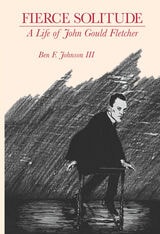
Fierce Solitude
A Life of John Gould FletcherBen Johnson
University of Arkansas Press, 1993
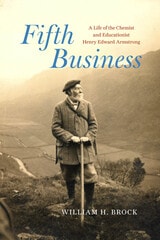
Fifth Business
A Life of the Chemist and Educationist Henry Edward ArmstrongWilliam H. Brock
University of Chicago Press, 2025
Fifth Business is a biography of the English chemist, educator, and scientific critic Henry Edward Armstrong. Today, Armstrong, who was a central figure in the development of the science of chemistry between 1885 and 1914, is more remembered for his campaigns to improve the teaching of chemistry, and science generally, and less for his theory of residual affinity and reverse electrolysis—or his hostility toward physical chemistry. However, right up until his retirement, Armstrong was a significant and prolific organic chemist, as well as a major figure in the academic and social life of the Chemical Society.
Fifth Business is structured as chronologically as possible, with Armstrong’s life and achievements as an active chemist in Part I (1848–1911) and as a critic in his long retirement in Part II (1911–1937). Brock’s authoritative biography provides a unique inside look at its subject, allowing us to better understand the history of British science, scientific institutions, scientific education, pedagogical theory, and social relations of science during the last third of the nineteenth century and the first third of the twentieth.

Fighting for Equality
A Life of May Wright SewallRay E. Boomhower
Indiana Historical Society Press, 2007

Final Light
The Life and Art of V. Douglas SnowFrank McEntire
University of Utah Press, 2013
A nationally recognized artist, Snow chose to stay in Utah where, when not teaching at the University of Utah, he roamed the southern Utah desert gaining inspiration from the red rock formations, especially the Cockscomb outside his studio near Capitol Reef National Park. Snow said, “Every artist probably wonders if he or she made the right decision to dig in to a certain place.” He dug into the landscape in and around Southern Utah and never regretted it. Just as “Tennessee Williams’s South, William Faulkner’s Mississippi, [or] John Steinbeck’s West Coast, formed their work,” the desert lands of the Colorado Plateau formed Snow’s. Their sense of place, “without provincialism,” said Snow “is what gives their art its enduring power.” Final Light will appeal to art historians and art lovers, especially those interested in abstract expressionism and the art of Utah, the West, and the Southwest.
Chosen by 15 Bytes, Utah's art magazine, as the most exceptional art book for 2014.
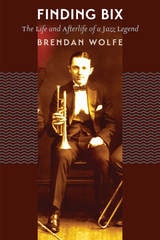
Finding Bix
The Life and Afterlife of a Jazz LegendBrendan Wolfe
University of Iowa Press, 2017
A native of Beiderbecke’s hometown of Davenport, Iowa, Wolfe grew up seeing Bix’s iconic portrait on everything from posters to parking garages. He never heard his music, though, until cast to play a bit part in an Italian biopic filmed in Davenport. Then, after writing a newspaper review of a book about Beiderbecke, Wolfe unexpectedly received a letter from the late musician's nephew scolding him for getting a number of facts wrong. This is where Finding Bix begins: in Wolfe's good-faith attempt to get the facts right.
What follows, though, is anything but straightforward, as Wolfe discovers Bix Beiderbecke to be at the heart of furious and ever-timely disputes over addiction, race and the origins of jazz, sex, and the influence of commerce on art. He also uncovers proof that the only newspaper interview Bix gave in his lifetime was a fraud, almost entirely plagiarized from several different sources. In fact, Wolfe comes to realize that the closer he seems to get to Bix, the more the legend retreats.
Finding Dora Maar
An Artist, an Address Book, a LifeBrigitte Benkemoun
J. Paul Getty Trust, The, 2020
“[A] spirited and deeply researched project…. [Benkemoun’s] affection for her subject is infectious. This book gives a satisfying treatment to a woman who has been confined for decades to a Cubist’s limited interpretation.” — Joumana Khatib, The New York Times
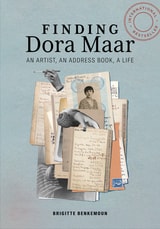
Merging biography, memoir, and cultural history, this compelling book, a bestseller in France, traces the life of Dora Maar through a serendipitous encounter with the artist’s address book.
In search of a replacement for his lost Hermès agenda, Brigitte Benkemoun’s husband buys a vintage diary on eBay. When it arrives, she opens it and finds inside private notes dating back to 1951—twenty pages of phone numbers and addresses for Balthus, Brassaï, André Breton, Jean Cocteau, Paul Éluard, Leonor Fini, Jacqueline Lamba, and other artistic luminaries of the European avant-garde.
After realizing that the address book belonged to Dora Maar—Picasso’s famous “Weeping Woman” and a brilliant artist in her own right—Benkemoun embarks on a two-year voyage of discovery to learn more about this provocative, passionate, and enigmatic woman, and the role that each of these figures played in her life.
Longlisted for the prestigious literary award Prix Renaudot, Finding Dora Maar is a fascinating and breathtaking portrait of the artist.
This work received support from the French Ministry of Foreign Affairs and the Cultural Services of the French Embassy in the United States through their publishing assistance program.
Finding Higher Ground
A Life Of TravelsCatharine Savage Brosman
University of Nevada Press, 2003
Essayist Catharine Savage Brosman explores the relationship of human beings to their environment, traveling from American deserts to dense European urban settings. Whether sipping wine in a Parisian café, partying with the jet set in Aspen, or contemplating the arid desert West that she loves, Brosman inhabits these settings, and many others, with a sense of adventure and discovery. To read these essays is to enjoy the company of a lively, thoughtful, original mind. Brosman’s "higher ground" is that place we all seek, where we can find and express our own best selves.

Finding the Trail of Life
Rufus M. Jones
QuakerPress, 2014
Flight Dreams
A Life in the Midwestern LandscapeLisa Knopp
University of Iowa Press, 1998
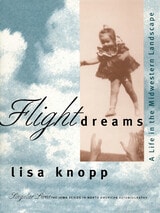
“When I was eleven the world was filled with birds,”writes Lisa Knopp of her girlhood in Burlington, Iowa. Picking up where she left off in her first book, Field of Vision, Knopp knits together sections of her life story through a pattern of images drawn from nature. The most prevalent of these unifying themes are metaphors of flight—birds, wind, moving upward and outward and across the midwestern landscape from Nebraska and Iowa to southern Illinois.
Reminiscent of Thoreau's introspective nature writing and Dillard's taut, personal prose, each chapter in Flight Dreams stands alone as a distinct narrative, yet each is linked by profoundly personal descriptions of dreams, the natural world, defining experiences, and chance encounters with people that later prove to be fateful. Part Eastern meditation, part dream sequence, part historical reconstruction, Flight Dreams testifies to a deep understanding of how the natural world—its visible and invisible elements—guides our destinies.
Flinders Petrie
A Life in ArchaeologyMargaret S. Drower
University of Wisconsin Press, 1995
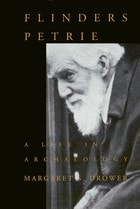
Flinders Petrie has been called the “Father of Modern Egyptology”—and indeed he is one of the pioneers of modern archaeological methods. This fascinating biography of Petrie was first published to high acclaim in England in 1985. Margaret S. Drower, a student of Petrie’s in the early 1930s, traces his life from his boyhood, when he was already a budding scholar, through his stunning career in the deserts of Egypt to his death in Jerusalem at the age of eighty-nine. Drower combines her first-hand knowledge with Petrie’s own voluminous personal and professional diaries to forge a lively account of this influential and sometimes controversial figure.
Drower presents Petrie as he was: an enthusiastic eccentric, diligently plunging into the uncharted past of ancient Egypt. She tells not only of his spectacular finds, including the tombs of the first Pharaohs, the earliest alphabetic script, a Homer manuscript, and a collection of painted portraits on mummy cases, but also of Petrie’s important contributions to the science of modern archaeology, such as orderly record-keeping of the progress of a dig and the use of pottery sherds in historical dating. Petrie's careful academic methods often pitted him against such rival archaeologists as Amélineau, who boasted he had smashed the stone jars he could not carry away to be sold, and Maspero and Naville, who mangled a pyramid at El Kula they had vainly tried to break into.
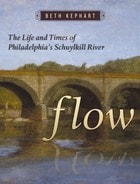
Flow
The Life and Times of Philadelphia's Schuylkill RiverBeth Kephart
Temple University Press, 2014
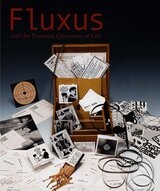
Fluxus and the Essential Questions of Life
Edited by Jacquelynn Baas
University of Chicago Press, 2011
Fluxus—from the Latin, meaning “to flow”—was a radical, international network of artists, composers, and designers in the 1960s and 1970s noted for blurring the boundaries between what we term “art” and what makes up everyday life. Following the work of American Fluxus founder George Maciunus, Fluxus and the Essential Questions of Life presents a variety of objects that express the Fluxus mission, while empowering readers to challenge the presumptions we bring to the concept and practice of art making.
Based on a large-scale traveling exhibition first organized at Dartmouth College’s Hood Museum of Art, this book chronicles the movement in the form of an art self-help book, playfully providing answers to fourteen key questions such as “Art—what is it good for?” and “What am I?” via Fluxus works. Featuring over eighty color and black-and-white illustrations, accompanied by essays from curator Jacquelynn Baas, Fluxus scholars Hannah Higgins and Jacob Proctor, and Fluxus artist Ken Friedman, this book will make an original contribution to our understanding of this provocative moment in modern art.

Foggy Mountain Troubadour
The Life and Music of Curly SecklerPenny Parsons
University of Illinois Press, 2016
Written in close collaboration with Mr. Seckler and those who know him, Foggy Mountain Troubadour is the first full-length biography of an American original. Penny Parsons follows a journey from North Carolina schoolhouses to the Grand Ole Opry stage and the Bluegrass Hall of Fame, from boarding houses to radio studios and traveling five to a car on two-lane roads to make the next show. Throughout, she captures the warm humor, hard choices, and vivid details of a brilliant artist's life as he criss-crosses a nation and a century making music.
Football U.
Spectator Sports in the Life of the American UniversityJ. Douglas Toma
University of Michigan Press, 2003

For Freedom's Sake
The Life of Fannie Lou HamerChana Kai Lee
University of Illinois Press, 1999
The youngest of twenty children of sharecroppers in rural Mississippi, Fannie Lou Hamer witnessed throughout her childhood the white cruelty, political exclusion, and relentless economic exploitation that defined African American existence in the Delta.
In this intimate biography, Chana Kai Lee documents Hamer's lifelong crusade to empower the poor through collective action, her rise to national prominence as a civil rights activist, and the personal costs of her ongoing struggle to win a political voice and economic self-sufficiency for blacks in the segregated South. Lee looks at Hamer's early work as a field secretary for the Student Nonviolent Coordinating Committee in Mississippi, her dramatic appearance at the 1964 Democratic National Convention, and her ongoing work as a militant grassroots leader in her own community.
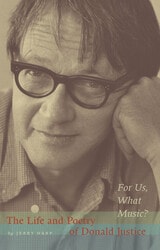
For Us, What Music?
The Life and Poetry of Donald JusticeJerry Harp
University of Iowa Press, 2010
When Donald Justice wrote in “On a Picture by Burchfield” that “art keeps long hours,” he might have been describing his own life. Although he early on struggled to find a balance between his life and art, the latter became a way of experiencing his life more deeply. He found meaning in human experience by applying traditional religious language to his artistic vocation. Central to his work was the translation of the language of devotion to a learned American vernacular. Art not only provided him with a wealth of intrinsically worthwhile experiences but also granted rich and nuanced ways of experiencing, understanding, and being in the world. For Donald Justice—recipient of some of poetry’s highest laurels, including the Pulitzer Prize, the Bollingen Prize, and the Lannan Literary Award for Poetry—art was a way of life.
Because Jerry Harp was Justice’s student, his personal knowledge of his subject—combined with his deep understanding of Justice’s oeuvre—works to remarkable advantage in For Us, What Music? Harp reads with keen intelligence, placing each poem within the precise historical moment it was written and locating it in the context of the literary tradition within which Justice worked. Throughout the text runs the narrative of Justice’s life, tying together the poems and informing Harp’s interpretation of them. For Us, What Music? grants readers a remarkable understanding of one of America’s greatest poets.
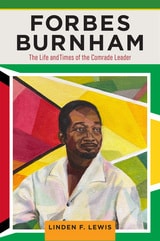
Forbes Burnham
The Life and Times of the Comrade LeaderLinden F. Lewis
Rutgers University Press, 2024
Forbes Burnham: The Life and Times of the Comrade Leader is the first political biography of this complex and influential figure. It charts how the political party he founded, the People’s National Congress, combined nationalist rhetoric, socialist policies, and Pan-Africanist philosophies. It also explores how, in a country already deeply divided between the descendants of African slaves and Indian indentured servants, Burnham consolidated political power by intensifying ethnic polarizations. Drawing from historical archives as well as new interviews with the people who knew Burnham best, sociologist Linden F. Lewis examines how his dictatorial tendencies coexisted with his progressive convictions. Forbes Burnham is a compelling study of the nature of postcolonial leadership and its pitfalls.
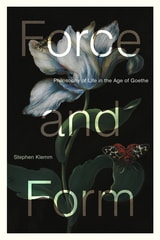
Force and Form
Philosophy of Life in the Age of GoetheStephen Klemm
Bucknell University Press, 2027
This book offers a bold rethinking of how modern ideas of life, nature, and subjectivity took shape in late-eighteenth- and early-nineteenth-century German thought. Moving beyond familiar narratives based on Kantian autonomy or Romantic irrationalism, it uncovers a vitalist tradition stretching from Herder to Schiller and Goethe, one that understood nature as dynamic, self-forming, and internally animated by life-force. Drawing on philosophy, the life sciences, and aesthetics, this innovative study reveals how these thinkers challenged mechanistic models of matter and resisted strict divisions between mind and nature. In doing so, they developed a historically contingent and embodied concept of subjectivity in which reason emerges from natural, cultural, and physiological processes rather than standing outside them. By situating this tradition within debates about epigenesis, form, and development, the book not only reshapes our understanding of German intellectual history but also sheds new light on contemporary debates about naturalism, posthumanism, and theories of life.
Published by Bucknell University Press. Distributed worldwide by Rutgers University Press.

Forged under the Sun/Forjada bajo el sol
The Life of Maria Elena LucasEdited and with an Introduction by Fran Leeper Buss
University of Michigan Press, 1993
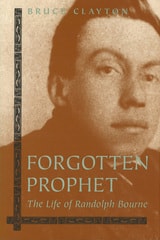
Forgotten Prophet
The Life of Randolph BourneBruce Clayton
University of Missouri Press, 1998
Rarely has an individual's life been so inseparable from his writing as was Randolph Bourne's. His work reveals not only his political viewpoints but also his humanistic personality and the tumultuous era during which he lived. Forgotten Prophet carefully examines the intellect and personality of the "born essayist" who saw clearly both his century's potential for harmony and the danger that it faced from the lingering tides of nineteenth-century European nationalism.
Disfigured and hunchbacked, Bourne reacted to his disability not with bitterness or self-pity, but rather with an exuberant love for beauty and a compassion for humanity that created in him a longing for a truly cosmopolitan society—a "trans-national America" that would draw its strength from ethnic diversity and political pluralism. Nearly alone among American intellectuals, Bourne actively denounced involvement in World War I. He foresaw that, beyond the horrible cost in young lives, the war would bring in its wake the spiritual impoverishment of the nation and the disillusionment of its youth; it would strangle reform and social tolerance, exacerbate racism and nativism, and plant the seeds for further international instability. Although derided and largely ignored at the time they were written, Bourne's fearful predictions would all too quickly be confirmed in the dissolute frenzy of the jazz age, the turmoil of the 1930s, and the social chaos that brought about the rise of fascism in Europe and, soon, an even more destructive war.
Bourne did not live to witness this terrifying unfolding of events. His career as a social critic was brief but prolific. When he died in 1918 at the age of thirty-two, a victim of the flu epidemic, he had completed three books and more than a hundred essays. His first book, Youth and Life, is considered by some to be the original manifesto of the counterculture. From his earliest years as a writer, Bourne was identified as a voice for youth, idealism, and progress in human relations. Forgotten Prophet characterizes Bourne not just as a foreseer of this century's bloodshed but, equally important, as an apostle of hope—a champion of what was best, most truthful in the arts, in politics, and in the conduct of our daily lives.

Fragile Dignity
Intercontextual Conversations on Scriptures, Family, and ViolenceL. Juliana Claassens
SBL Press, 2013
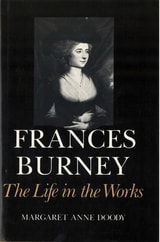
Frances Burney
The Life in the WorksDoody, Margaret A
Rutgers University Press, 1988
Frances Burney
The Life in the WorksDoody, Margaret A
Rutgers University Press, 1988
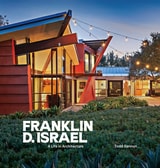
Franklin D. Israel
A Life in ArchitectureTodd Gannon
J. Paul Getty Trust, The, 2024
Acclaimed Los Angeles architect Franklin D. Israel (1945–1996) created innovative residential projects and office interiors that made him one of the most talked-about designers of his generation. In this vivid account, architectural historian Todd Gannon draws on archival resources, analyses of Israel’s buildings, and recent interviews with the architect’s colleagues, clients, and contemporaries, including Frank Gehry, Thom Mayne, and Robert A. M. Stern. Gannon traces Israel’s development from his early years and career on the East Coast to his formative world travels and residence at the American Academy in Rome. The author guides readers through the Los Angeles architectural context, Israel’s influential teaching at UCLA, his dalliance with Hollywood, and the personal motivations behind his architecture and design work—all aspects of an influential career that was cut short by his death from AIDS-related complications at the age of fifty.
Franklin D. Israel is a compelling work of architectural history and biography, chronicling one gay man’s engagement with the largely heteronormative world of American architectural culture. It explores the achievement of this central figure in the still largely unstudied history of late twentieth-century avant-garde Los Angeles architecture.
Franklin in His Own Time
A Biographical Chronicle of His Life, Drawn from Recollections, Interviews, and Memoirs by Family, Friends, and AssociatesKevin J. Hayes
University of Iowa Press, 2011
@font-face { font-family: "Courier New";}@font-face { font-family: "Times";}@font-face { font-family: "Cambria";}@font-face { font-family: "Palatino";}p.MsoNormal, li.MsoNormal, div.MsoNormal { margin: 0in 0in 0.0001pt; font-size: 12pt; font-family: "Times New Roman"; }div.Section1 { page: Section1; }
In his time Benjamin Franklin (1706–1790) was the most famous American in the world. Even those personally unacquainted with the man knew him as the author of Poor Richard’s Almanack, as a pioneer in the study of electricity and a major figure in the American Enlightenment, as the creator of such life-changing innovations as the lightning rod and America’s first circulating library, and as a leader of the American Revolution. His friends also knew him as a brilliant conversationalist, a great wit, an intellectual filled with curiosity, and most of all a master anecdotist whose vast store of knowledge complemented his conversational skills. In Franklin in His Own Time, by reprinting the original documents in which those anecdotes occur, Kevin Hayes and Isabelle Bour restore those oft-told stories to their cultural contexts to create a comprehensive narrative of his life and work.
The thirty-five recollections gathered in Franklin in His Own Time form an animated, collaborative biography designed to provide a multitude of perspectives on the “First American.” Opening with an account by botanist Peter Kalm showing that Franklin was doing all he could to encourage the development of science in North America, it includes on-the-spot impressions from Daniel Fisher’s diary, the earliest surviving interview with Franklin, recollections from James Madison and Abigail Adams, Manasseh Cutler’s detailed description of the library at Franklin Court, and extracts from Alexander Hamilton’s unvarnished Minutes of the Tuesday Club. Franklin’s political missions to Great Britain and France, where he took full advantage of rich social and intellectual opportunities, are a source of many reminiscences, some published here in new translations. Genuine memories from such old friends as Thomas Jefferson and John Adams, as opposed to memories influenced by the Autobiography, clarify Franklin’s reputation. Robert Carr may have been the last remaining person who knew Franklin personally, and thus his recollections are particularly signific
From Prairie to Prison
The Life of Social Activist Kate Richards O'HareSally M. Miller
University of Missouri Press, 1993
This is the first full-length biography of the woman who crusaded tirelessly for women, workers, and children, and became the most celebrated socialist woman from the West.
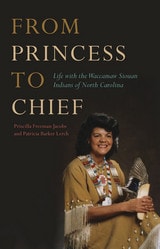
From Princess to Chief
Life with the Waccamaw Siouan Indians of North CarolinaPriscilla Freeman Jacobs
University of Alabama Press, 2013
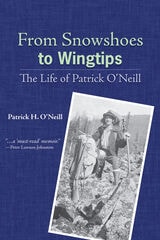
From Snowshoes to Wingtips
The Life of Patrick O'NeillPatrick H. O'Neill
University of Alaska Press, 2007
O'Neill shares his story in this homespun tale full of anecdotes about mining and life in Alaska.
Published by the University of Alaska Foundation; distributed by the University of Alaska Press.

From the Blue Windows
Recollections of Life in Queenstown, Singapore, in the 1960s and 1970sTan Kok Yang
National University of Singapore Press, 2013
From the Blue Windows is a collection of Tan Kok Yang's memories of growing up in Queenstown back when the tallest residential building there was fourteen storeys, the Alexandra Canal flooded regularly, and wayang shows were a regular feature on Mei Ling Street. He stayed in Princess Estate, an area that was colloquially known as "the Blue Windows" because of its unique blue glass louvred windows.
With nostalgia and a sense of loss, this memoir is a personal tribute to and celebration of Queenstown and a simple but fulfilling way of life that has all but vanished from modern Singapore.
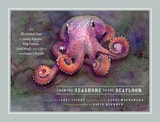
From the Seashore to the Seafloor
An Illustrated Tour of Sandy Beaches, Kelp Forests, Coral Reefs, and Life in the Ocean's DepthsJanet Voight and Peggy Macnamara
University of Chicago Press, 2022
Have you ever walked along the beach and wondered what kind of creatures can be found beneath the waves? Have you pictured what it would be like to see the ocean not from the shore but from its depths? These questions drive Janet Voight, an expert on mollusks who has explored the seas in the submersible Alvin that can dive some 14,000 feet below the water’s surface. In this book, she partners with artist Peggy Macnamara to invite readers to share her undersea journeys of discovery.
With accessible scientific descriptions, Voight introduces the animals that inhabit rocky and sandy shores, explains the fragility of coral reefs, and honors the extraordinary creatures that must search for food in the ocean’s depths, where light and heat are rare. These fascinating insights are accompanied by Macnamara’s stunning watercolors, which illuminate these ecosystems and other scenes from Voight’s research. Together, they show connections between life at every depth—and warn of the threats these beguiling places and their eccentric denizens face.
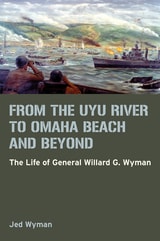
From the Uyu River to Omaha Beach and Beyond
The Life of General Willard G. WymanJed Wyman
University of Missouri Press, 2027
While many scholarly works explore the lives and careers of the United States’ senior WWII commanders—Eisenhower, Bradley, Patton, and MacArthur in particular—the stories of the brigadier and major generals who led at the division and corps level have not received the same degree of focus. Jed Wyman gives these general officers their due by telling the story of his grandfather, General Willard G. Wyman in From the Uyu River to Omaha Beach and Beyond: The Life of General Willard G. Wyman. Although General Wyman is best known for his decisive action on Omaha Beach as assistant division commander of the First Infantry Division, for which he won the Distinguished Service Cross, his career both before and after D-Day is as varied and fascinating as those of his more familiar colleagues.
Wyman’s WWII story is exceptional in its range both geographical—he was one of only a handful of general officers to serve in both the Asian/Pacific and European Theaters—and in rank, as he rose from colonel to major general and division commander over the course of the war. The array of important individuals he encountered and worked with during this demanding time is equally exceptional, including such military luminaries as Joseph Stilwell, Omar Bradley, George Patton, Dwight Eisenhower. There were political encounters as well, the most significant with Chinese Nationalist leader Chiang Kai-shek in Burma, and encounters with prominent journalists and entertainers. None of these people meant as much, however, to Wyman as the GIs under his command, for whom he worked tirelessly to ensure a safe and free return to a normal life.
While many questions about Wyman remain unanswered, the author brings him to life as a reliable, efficient combat commander unhindered by the extreme caution associated with General Lucas at Anzio, free from the impetuous nature exhibited by General Patton with the Brolo landing and Hammelburg raid, and lacking in the vainglorious publicity-seeking of some other prominent generals. More broadly, From the Uyu River to Omaha Beach and Beyond conveys the energy, stamina, presence of mind, critical thinking skills, and rapid decision-making of a number of the United States’ lesser-known brigadier and major generals.
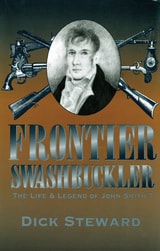
Frontier Swashbuckler
The Life and Legend of John Smith TDick Steward
University of Missouri Press, 2000
Few frontiersmen in the late eighteenth century and early nineteenth century epitomized the reckless energies of the West and the lust for adventure as did John Smith T—pioneer, gunfighter, entrepreneur, militia colonel, miner, judge, and folk hero. In this fascinating biography, Dick Steward traces the colorful Smith T's life from his early days in Virginia through his young adulthood. He then describes Smith T's remarkable career in the wilds of Missouri and his armed raids to gain land from Indians, Spaniards, and others.
Born into the fifth generation of Virginia gentry, young Smith first made his name on the Tennessee frontier. It was there that he added the "T" to his name to distinguish his land titles and other enterprises from those of the hosts of other John Smiths. By the late 1790s he owned or laid claim to more than a quarter million acres in Tennessee and northern Alabama.
In 1797, Smith T moved to Missouri, then a Spanish territory, and sought to gain control of its lead-mining district by displacing the most powerful American in the region, Moses Austin. He acquired such public positions as judge of the court of common pleas, commissioner of weights and levies, and lieutenant colonel of the militia, which enabled him to mount a spirited assault on Austin's virtual monopoly of the lead mines. Although neither side emerged a winner from that ten-year-old conflict, it was during this period that Smith T's fame as a gunfighter and duelist spread across the West. Known as the most dangerous man in Missouri, he was said to have killed fourteen men in duels.
Smith T was also recognized by many for his good works. He donated land for churches and schools and was generous to the poor and downtrodden. He epitomized the opening of the West, helping to build towns, roads, and canals and organizing trading expeditions.
Even though Smith T was one of the most notorious characters in Missouri history, by the late nineteenth century he had all but disappeared from the annals of western history. Frontier Swashbuckler seeks to rescue both the man and the legend from historical obscurity. At the same time, it provides valuable insights into the economic, political, and social dynamics of early Missouri frontier history.
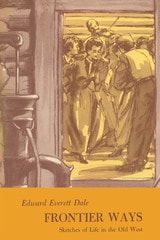
Frontier Ways
Sketches of Life in the Old WestBy Edward Everett Dale
University of Texas Press, 1959
Edward Everett Dale gives a first-hand account of the way pioneer families and cowboys of the frontier lived. Dr. Dale has lived in a sod house, and he once rode the range as cook to a group of cowboys. In this book he draws on his varied experiences to describe all aspects of frontier life—the building of a home, the problems of finding wood and water, the procuring and cooking of food, medical practices, and the cultural, social, and religious life of pioneer families.
This edition is a digital facsimile of the 1959 edition.
Fruit of Life
Poems, A Bilingual EditionKim Myeong-sun
Rutgers University Press, 2026
Kim Myeong-sun is Korea's first published woman writer. Fruit of Life: Poems (생명의 과실: 김명순 시선) is the first book-length, Korean-to-English translation of her poetry. Kim’s poems offer a raw portrait of 1920s–30s Korea, driven by her personal experiences of sexual assault, misogynistic journalism and criticism, displacement, and poverty during the Japanese colonial occupation (1910–1945). Alongside feminist critique, Kim also writes about sapphic desire, familial affection, and nature, in styles that range from the traditional to the experimental. While Kim’s work was erased from the canon by Korea’s misogynistic literary establishment, Fruit of Life celebrates the legacy of Kim’s radical, versatile poetry, which paved the way for contemporary Korean women writers.
English-Korean Bilingual Edition
영-한 이중언어판
This book is published with the support of the Literature Translation Institute of Korea (LTI Korea).
‘한국 여성 최초 등단 작가’ 김명순의 시가 영문 완역본 『생명의 과실: 김명순 시선』으로 영어권 독자들을 만난다. 1920–30년대 조선 사회의 민낯을 강렬하고 가감 없는 언어로 담아낸 김명순의 시는, 일제강점기 아래 성폭력과 여성혐오적 언론 및 비평, 이주와 빈곤을 직접 겪어낸 작가의 여성주의적·반식민주의적 저항 정신을 생생히 드러낸다. 또한 전통과 실험을 넘나드는 다채로운 형식과 기법으로 여성 간 연대와 사랑, 가족애, 자연에 대하여 노래한다. 『생명의 과실: 김명순 시선』은 여성혐오적 문단으로부터 소외당한 김명순의 작품을 재조명하며, 한국 여성문학의 새로운 지평을 연 그의 업적을 기념한다.
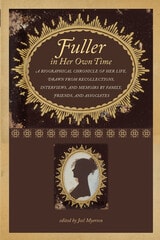
Fuller in Her Own Time
A Biographical Chronicle of Her Life, Drawn from Recollections, Interviews, and Memoirs by Family, Friends, and AssociatesJoel Myerson
University of Iowa Press, 2008
The forty-one remembrances from Nathaniel Hawthorne, Oliver Wendell Holmes, Ralph Waldo Emerson, Thomas Carlyle, Harriet Martineau, Henry James, and twenty-four others chart Fuller’s expanding influence from schooldays in Boston, meetings at the Transcendental Club, teaching in Providence and Boston, work on the New York Tribune, publications and conversations, travels in the British Isles, and life and love in Italy before her tragic early death. Joel Myerson’s perceptive introduction assesses the pre- and postmortem building of Fuller’s reputation as well as her relationship to the prominent Transcendentalists, reformers, literati, and other personalities of her time, and his headnotes to each selection present valuable connecting contexts.
The woman who admitted that “at nineteen she was the most intolerable girl that ever took a seat in a drawing-room,” whose Woman in the Nineteenth Century is considered the first major book-length feminist call to action in America, never conformed to nineteenth-century expectations of self-effacing womanhood. The fascinating contradictions revealed by these narratives create a lively, lifelike biography of Fuller’s “rare gifts and solid acquirements . . . and unfailing intellectual sympathy.”

Fundamental Soteriology
On the Fullness of LifeMichal Paluch
Catholic University of America Press, 2026

Futureproof
Security Aesthetics and the Management of LifeD. Asher Ghertner, Daniel M. Goldstein, and Hudson McFann, editors
Duke University Press, 2020
Contributors. Victoria Bernal, Jon Horne Carter, Alexandra Demshock, Zaire Z. Dinzey-Flores, Didier Fassin, D. Asher Ghertner, Daniel M. Goldstein, Rachel Hall, Rivke Jaffe, Ieva Jusionyte, Catherine Lutz, Alejandra Leal Martínez, Hudson McFann, Limor Samimian-Darash, AbdouMaliq Simone, Austin Zeiderman