Results by title
1210 books match the query 'Mexico' and 53 start with f
Fabrica San Jose and Middle Formative Society in the Valley of Oaxaca
Robert D. Drennan
University of Michigan Press, 2019
Fair Trade Rebels
Coffee Production and Struggles for Autonomy in ChiapasLindsay Naylor
University of Minnesota Press, 2019
Reassessing interpretations of development with a new approach to fair trade
Is fair trade really fair? Who is it for, and who gets to decide? Fair Trade Rebels addresses such questions in a new way by shifting the focus from the abstract concept of fair trade—and whether it is “working”—to the perspectives of small farmers. It examines the everyday experiences of resistance and agricultural practice among the campesinos/as of Chiapas, Mexico, who struggle for dignified livelihoods in self-declared autonomous communities in the highlands, confronting inequalities locally in what is really a global corporate agricultural chain.
Based on extensive fieldwork, Fair Trade Rebels draws on stories from Chiapas that have emerged from the farmers’ interaction with both the fair-trade–certified marketplace and state violence. Here Lindsay Naylor discusses the racialized and historical backdrop of coffee production and rebel autonomy in the highlands, underscores the divergence of movements for fairer trade and the so-called alternative certified market, traces the network of such movements from the highlands and into the United States, and evaluates existing food sovereignty and diverse economic exchanges.
Putting decolonial thinking in conversation with diverse economies theory, Fair Trade Rebels evaluates fair trade not by the measure of its success or failure but through a unique, place-based approach that expands our understanding of the relationship between fair trade, autonomy, and economic development.

Farming, Hunting, and Fishing in the Olmec World
By Amber M. VanDerwarker
University of Texas Press, 2006
The Olmec who anciently inhabited Mexico's southern Gulf Coast organized their once-egalitarian society into chiefdoms during the Formative period (1400 BC to AD 300). This increase in political complexity coincided with the development of village agriculture, which has led scholars to theorize that agricultural surpluses gave aspiring Olmec leaders control over vital resources and thus a power base on which to build authority and exact tribute.
In this book, Amber VanDerwarker conducts the first multidisciplinary analysis of subsistence patterns at two Olmec settlements to offer a fuller understanding of how the development of political complexity was tied to both agricultural practices and environmental factors. She uses plant and animal remains, as well as isotopic data, to trace the intensification of maize agriculture during the Late Formative period. She also examines how volcanic eruptions in the region affected subsistence practices and settlement patterns. Through these multiple sets of data, VanDerwarker presents convincing evidence that Olmec and epi-Olmec lifeways of farming, hunting, and fishing were driven by both political and environmental pressures and that the rise of institutionalized leadership must be understood within the ecological context in which it occurred.
Fatefully, Faithfully Feminist
A Critical History of Women, Patriarchy, and Mexican National DiscourseCarlos Monsiváis, edited by Norma Kahn and Ilana Luna
Vanderbilt University Press, 2024
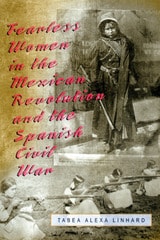
Fearless Women in the Mexican Revolution and the Spanish Civil War
Tabea Alexa Linhard
University of Missouri Press, 2005
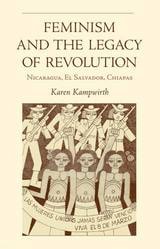
Feminism and the Legacy of Revolution
Nicaragua, El Salvador, ChiapasKaren Kampwirth
Ohio University Press, 2004
In many Latin American countries, guerrilla struggle and feminism have been linked in surprising ways. Women were mobilized by the thousands to promote revolutionary agendas that had little to do with increasing gender equality. They ended up creating a uniquely Latin American version of feminism that combined revolutionary goals of economic equality and social justice with typically feminist aims of equality, nonviolence, and reproductive rights.
Drawing on more than two hundred interviews with women in Nicaragua, El Salvador, and the Mexican state of Chiapas, Karen Kampwirth tells the story of how the guerrilla wars led to the rise of feminism, why certain women became feminists, and what sorts of feminist movements they built. Feminism and the Legacy of Revolution: Nicaragua, El Salvador, Chiapas explores how the violent politics of guerrilla struggle could be related to the peaceful politics of feminism. It considers the gains, losses, and internal conflicts within revolutionary women’s organizations.
Feminism and the Legacy of Revolution challenges old assumptions regarding revolutionary movements and the legacy of those movements for the politics of daily life. It will appeal to a broad, interdisciplinary audience in political science, sociology, anthropology, women’s studies, and Latin American studies as well as to general readers with an interest in international feminism.
Feminist Rehearsals
Gender at the Theatre in Early Twentieth-Century Argentina and MexicoMay Summer Farnsworth
University of Iowa Press, 2023
2023 George Freedley Memorial Award, Finalist
As feminism gained prominence in twentieth-century popular culture, dramatic conventions progressed accordingly, offering larger and more diverse roles for women characters. Feminist Rehearsals documents the early stages of feminist theatre in Argentina and Mexico, revealing how various aspects of performance culture—spectator formation, playwriting, professional acting and directing, and dramatic techniques—paralleled political activism and championed the goals of the women’s rights movement. Through performance and protest, feminists enacted new identities and pushed for myriad social and legislative reforms during a time when women were denied suffrage and full citizenship status. Together, feminist theatre and demonstrations politicized women spectators’ collective presence and promoted women’s rights in the public sphere.

Fencing in Democracy
Border Walls, Necrocitizenship, and the Security StateMiguel Díaz-Barriga and Margaret Dorsey
Duke University Press, 2019
Fernando de Alva Ixtlilxochitl and His Legacy
Edited by Galen Brokaw and Jongsoo Lee
University of Arizona Press, 2016
His seventeenth-century writings have had a lasting effect on the understanding of Mexican culture and history from the colonial period to the present. But because Alva Ixtlilxochitl frequently used Tetzcocan oral traditions and pictorial codices of his ancestors’ heroic achievements, scholars have long said that his writings exhibit a Tetzcocan bias that distorts representations and understandings of Prehispanic Mexican history and culture.
Fernando de Alva Ixtlilxochitl and His Legacy is a collection of essays providing deeper perspective on the life, work, and legacy of Alva Ixtlilxochitl. The contributors revise and broaden previous understandings of Alva Ixtlilxochitl’s racial and cultural identity, including his method of transcribing pictorial texts, his treatment of gender, and his influence on Mexican nationalism. Chapter authors coming from the fields of anthropology, history, linguistics, and literature offer valuable new perspectives on the complexities of Alva Ixtlilxochitl’s life and his contributions to the history and scholarship of Mexico.
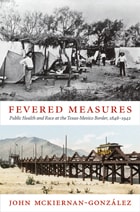
Fevered Measures
Public Health and Race at the Texas-Mexico Border, 1848–1942John Mckiernan-González
Duke University Press, 2012
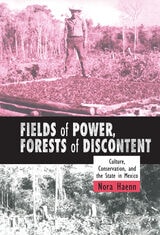
Fields of Power, Forests of Discontent
Culture, Conservation, and the State in MexicoNora Haenn
University of Arizona Press, 2005
In Fields of Power, Forests of Discontent, Nora Haenn questions the rise and fall of this conservation program to examine conservation at the intersection of national-international agendas and local political-economic interests. While other assessments of such programs have typically focused on why they do or do not succeed, Haenn instead considers conservation’s encounter with people’s everyday lives—and how those experiences affect environmental management.
Haenn explores conservation and development from two perspectives: first regionally, to look at how people used conservation to create a new governing entity on a tropical frontier once weakly under national rule; then locally, focusing on personal histories and aspects of community life that shape people's daily lives, farming practices, and immersion in development programs—even though those programs ultimately fail to resolve economic frustrations. She identifies how key political actors, social movements, and identity politics contributed to the instability of the Calakmul alliance. Drawing on extensive interviews with Reserve staff, including its director, she connects regional trends to village life through accounts of disputes at ejido meetings and the failure of ejido development projects.
In the face of continued difficulty in creating a popular conservation in Calakmul, Haenn uses lessons from people's lives—history, livelihood, village organization, expectations—to argue for a "sustaining conservation," one that integrates social justice and local political norms with a new, more robust definition of conservation. In this way, Fields of Power, Forests of Discontent goes beyond local ethnography to encourage creative discussion of conservation's impact on both land and people.
Fields of the Tzotzil
The Ecological Bases of Tradition in Highland ChiapasBy George A. Collier
University of Texas Press, 1975
Fields of the Tzotzil is the first study of social processes in contemporary highland Maya communities to encompass a regional view of the highlands of Chiapas as a system. In viewing tradition, not as a survival of traits, but as a dynamic process of adaptation by local systems to their placement in larger social and economic systems, it lays to rest the theory that tribal peoples apparently are politically and economically isolated. In addition, its broad regional perspective sheds light on the problems of understanding the position of traditional ethnic groups in contemporary society.
The approach of the book is ecological in two senses. First, all the topics dealt with concern the traditional behavior of Indian groups as revealed in their relationship to the land. Second, the analysis seeks out factors that condition land use, not just locally, but as part of a larger system that includes influences of the market and the impact of nationalist agrarian policy. Thus, the author examines land inheritance patterns and food production, as well as the interethnic relations in the region in which Indians are subordinate to mestizos. He discusses in detail corn farming, craft specialization, wage labor, and Indian colonization efforts under the Mexican ejido—all factors that directly affect land use and are thus part of the environment in highland Chiapas.
The study is unique in its use of previously inaccessible historical source material and its use of novel methodological aids. Aerial photography was used in data collection, and the computer was used in ethnographic census analysis. The result is a book that reveals the Indian groups of Chiapas as apparent enclaves whose ethnicity is a dynamic, adaptive response to their position of marginal dependency. While their plight is extreme, it is nevertheless structurally similar to the position of ethnic groups in most large social systems.
Fifty Years of Change on the U.S.-Mexico Border
Growth, Development, and Quality of LifeBy Joan B. Anderson and James Gerber
University of Texas Press, 2007
Winner, Book Award, Associaton for Borderland Studies, 2008
The U.S. and Mexican border regions have experienced rapid demographic and economic growth over the last fifty years. In this analysis, Joan Anderson and James Gerber offer a new perspective on the changes and tensions pulling at the border from both sides through a discussion of cross-border economic issues and thorough analytical research that examines not only the dramatic demographic and economic growth of the region, but also shifts in living standards, the changing political climate, and environmental pressures, as well as how these affect the lives of people in the border region.
Creating what they term a Border Human Development Index, the authors rank the quality of life for every U.S. county and Mexican municipio that touches the 2,000-mile border. Using data from six U.S. and Mexican censuses, the book adeptly illustrates disparities in various aspects of economic development between the two countries over the last six decades.
Anderson and Gerber make the material accessible and compelling by drawing an evocative picture of how similar the communities on either side of the border are culturally, yet how divided they are economically. The authors bring a heightened level of insight to border issues not just for academics but also for general readers. The book will be of particular value to individuals interested in how the border between the two countries shapes the debates on quality of life, industrial growth, immigration, cross-border integration, and economic and social development.
Fires on the Border
The Passionate Politics of Labor Organizing on the Mexican FronteraRosemary Hennessy
University of Minnesota Press, 2013
The history of the maquiladoras has been punctuated by workers’ organized resistance to abysmal working and living conditions. Over years of involvement in such movements, Rosemary Hennessy was struck by an elusive but significant feature of these struggles: the extent to which organizing is driven by attachments of affection and antagonism, belief, betrayal, and identification.
What precisely is the “affective” dimension of organizing for justice? Are affects and emotions the same? And how can their value be calculated? Fires on the Border takes up these questions of labor and community organizing—its “affect-culture”—on Mexico’s northern border from the early 1970s to the present day. Through these campaigns, Hennessy illuminates the attachments and identifications that motivate people to act on behalf of one another and that bind them to a common cause. The book’s unsettling, even jarring, narratives bring together empirical and ethnographic accounts—of specific campaigns, the untold stories of gay and lesbian organizers, love and utopian longing—in concert with materialist theories of affect and the critical good sense of Mexican organizers.
Teasing out the integration of affect-culture in economic relations and cultural processes, Hennessy provides evidence that sexuality and gender as strong affect attractors are incorporated in the harvesting of surplus labor. At the same time, workers’ testimonies confirm that the capacities for bonding and affective attachment, far from being entirely at the service of capital, are at the very heart of social movements devoted to sustaining life.
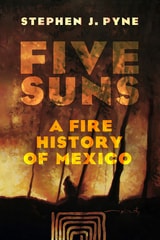
Five Suns
A Fire History of MexicoStephen J. Pyne
University of Arizona Press, 2024
Narrating Mexico’s evolution of fire through five eras, historian Stephen J. Pyne describes the pre-human, pre-Hispanic, colonial, industrializing (1880–1980), and contemporary (1980–2015) fire biography of this diverse and dynamic country. Creatively deploying the Aztec New Fire Ceremony and the “five suns” that it birthed, Pyne addresses the question, “Why does fire appear in Mexico the way it does?” Five Suns tells the saga through a pyric prism.
Mexico has become one of the top ten “firepowers” in the world today through its fire suppression capabilities, fire research, and industrial combustion, but also by those continuing customary practices that have become increasingly significant to a world that suffers too much combustion and too little fire.
Five Suns completes a North American fire-history trilogy written by Pyne over the past 40 years, complementing his histories of Canada and the United States.
Flora of the Gran Desierto and Río Colorado Delta
Richard Stephen Felger
University of Arizona Press, 2001
Common names of plants are given in English, Spanish, and O'odham. While emphasizing scientific accuracy, the book is written in an accessible style. Felger's observations and knowledge of plant ecology, geographic distribution, evolution, ethnobotany, plant variation and special adaptations, and the history of the region provides botanists, naturalists, ecologists, conservationists, and anyone else celebrating the desert with readable, interesting, and important information. With two of Mexico's newest biosphere reserves—the Pinacate and the Upper Gulf of California—this region is a keystone for desert conservation efforts. Its location linking vast preserves to the north makes this book especially useful for anyone interested in borderland studies and the Sonoran Desert. Flora of the Gran Desierto represents a most creative, definitive, and enthusiastic treatment of Sonoran Desert plant life and is highly relevant to ecological restoration in deserts and wetlands in arid places worldwide.
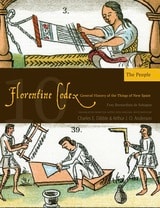
Florentine Codex
Book 10: Book 10: The PeopleBernardino de Sahagun
University of Utah Press, 1981
Two of the world’s leading scholars of the Aztec language and culture have translated Sahagún’s monumental and encyclopedic study of native life in Mexico at the time of the Spanish Conquest. This immense undertaking is the first complete translation into any language of Sahagún’s Nahuatl text, and represents one of the most distinguished contributions in the fields of anthropology, ethnography, and linguistics.
Written between 1540 and 1585, the Florentine Codex (so named because the manuscript has been part of the Laurentian Library’s collections since at least 1791) is the most authoritative statement we have of the Aztecs’ lifeways and traditions—a rich and intimate yet panoramic view of a doomed people.
The Florentine Codex is divided by subject area into twelve books and includes over 2,000 illustrations drawn by Nahua artists in the sixteenth century.
Book Ten gives a broad overview of the different occupations, classes, and characteristics of Aztecs during this time period. Arguably the most fascinating part of this book is the detailed documentation of human anatomy and commonly used cures for physical ailments.
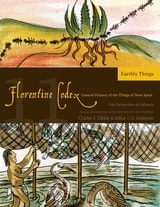
Florentine Codex
Book 11: Book 11: Earthly ThingsBernardino de Sahagun
University of Utah Press, 1963
Two of the world’s leading scholars of the Aztec language and culture have translated Sahagún’s monumental and encyclopedic study of native life in Mexico at the time of the Spanish Conquest. This immense undertaking is the first complete translation into any language of Sahagún’s Nahuatl text, and represents one of the most distinguished contributions in the fields of anthropology, ethnography, and linguistics.
Written between 1540 and 1585, the Florentine Codex (so named because the manuscript has been part of the Laurentian Library’s collections since at least 1791) is the most authoritative statement we have of the Aztecs’ lifeways and traditions—a rich and intimate yet panoramic view of a doomed people.
The Florentine Codex is divided by subject area into twelve books and includes over 2,000 illustrations drawn by Nahua artists in the sixteenth century.
Book Eleven is a beautifully written and careful documentation of all of the animals and plants known to the Aztecs in the sixteenth century. As the volume with the most illustrations, Earthly Things allows the reader to look at the natural world through the eyes of the Aztec.
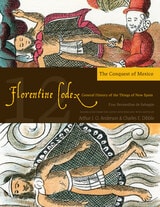
Florentine Codex
Book 12: Book 12: The Conquest of MexicoBernardino de Sahagun
University of Utah Press, 1975
Two of the world’s leading scholars of the Aztec language and culture have translated Sahagún’s monumental and encyclopedic study of native life in Mexico at the time of the Spanish Conquest. This immense undertaking is the first complete translation into any language of Sahagún’s Nahuatl text, and represents one of the most distinguished contributions in the fields of anthropology, ethnography, and linguistics.
Written between 1540 and 1585, the Florentine Codex (so named because the manuscript has been part of the Laurentian Library’s collections since at least 1791) is the most authoritative statement we have of the Aztecs’ lifeways and traditions—a rich and intimate yet panoramic view of a doomed people.
The Florentine Codex is divided by subject area into twelve books and includes over 2,000 illustrations drawn by Nahua artists in the sixteenth century.
Book Twelve contains a meticulous retelling of the Spanish conquest of Mexico, from the days leading up to the first arrival of Cortes to the eventual submission of the Tlatilulcans, the Tenochtitlans, and their rulers to the Spaniards.

Florentine Codex
Book 2: The CeremoniesBernardino de Sahagun
University of Utah Press, 1981
Two of the world’s leading scholars of the Aztec language and culture have translated Sahagún’s monumental and encyclopedic study of native life in Mexico at the time of the Spanish Conquest. This immense undertaking is the first complete translation into any language of Sahagún’s Nahuatl text, and represents one of the most distinguished contributions in the fields of anthropology, ethnography, and linguistics.
Written between 1540 and 1585, the Florentine Codex (so named because the manuscript has been part of the Laurentian Library’s collections since at least 1791) is the most authoritative statement we have of the Aztecs’ lifeways and traditions—a rich and intimate yet panoramic view of a doomed people.
The Florentine Codex is divided by subject area into twelve books and includes over 2,000 illustrations drawn by Nahua artists in the sixteenth century.
Book Two gives comprehensive accounts of the religious ceremonies and days of feasting during the time of the Aztecs, including prayers, songs, and the duties and roles of Aztecs inside the temples during the ceremonies. This book also details the various tributes and sacrifices given to specific gods.

Florentine Codex
Book 3: Book 3: The Origin of the GodsBernardino de Sahagun
University of Utah Press, 1981
Two of the world’s leading scholars of the Aztec language and culture have translated Sahagún’s monumental and encyclopedic study of native life in Mexico at the time of the Spanish Conquest. This immense undertaking is the first complete translation into any language of Sahagún’s Nahuatl text, and represents one of the most distinguished contributions in the fields of anthropology, ethnography, and linguistics.
Written between 1540 and 1585, the Florentine Codex (so named because the manuscript has been part of the Laurentian Library’s collections since at least 1791) is the most authoritative statement we have of the Aztecs’ lifeways and traditions—a rich and intimate yet panoramic view of a doomed people.
The Florentine Codex is divided by subject area into twelve books and includes over 2,000 illustrations drawn by Nahua artists in the sixteenth century.
Book Three describes in detail the excitingand sometimes bloody—origin stories of Uitzilopochtli, Titlacauan, and Quetzalcoatl. The appendix discusses other significant religious aspects of the Aztec religion, such as how boys are raised to be high priests and what happens to Aztecs after death.

Florentine Codex
Book 6: Book 6: Rhetoric and Moral PhilosophyBernardino de Sahagun
University of Utah Press, 1969
Two of the world’s leading scholars of the Aztec language and culture have translated Sahagún’s monumental and encyclopedic study of native life in Mexico at the time of the Spanish Conquest. This immense undertaking is the first complete translation into any language of Sahagún’s Nahuatl text, and represents one of the most distinguished contributions in the fields of anthropology, ethnography, and linguistics.
Written between 1540 and 1585, the Florentine Codex (so named because the manuscript has been part of the Laurentian Library’s collections since at least 1791) is the most authoritative statement we have of the Aztecs’ lifeways and traditions—a rich and intimate yet panoramic view of a doomed people.
The Florentine Codex is divided by subject area into twelve books and includes over 2,000 illustrations drawn by Nahua artists in the sixteenth century.
Book Six includes prayers to various gods asking for cures, riches, rain, and for the gods to bless or admonish a chosen ruler. In addition to these prayers, the book displays examples of formal conversation used in Aztec life, from the ruler and ambassador to others in the noble class.

Florentine Codex
Book 7: Book 7: The Sun, the Moon and Stars, and the Binding of the YearsBernardino de Sahagun
University of Utah Press, 1953
Two of the world’s leading scholars of the Aztec language and culture have translated Sahagún’s monumental and encyclopedic study of native life in Mexico at the time of the Spanish Conquest. This immense undertaking is the first complete translation into any language of Sahagún’s Nahuatl text, and represents one of the most distinguished contributions in the fields of anthropology, ethnography, and linguistics.
Written between 1540 and 1585, the Florentine Codex (so named because the manuscript has been part of the Laurentian Library’s collections since at least 1791) is the most authoritative statement we have of the Aztecs’ lifeways and traditions—a rich and intimate yet panoramic view of a doomed people.
The Florentine Codex is divided by subject area into twelve books and includes over 2,000 illustrations drawn by Nahua artists in the sixteenth century.
Book Seven tells the origin stories of the sun, the moon, and the stars—which gods created them, what powers they each embody, and how they are related to Aztec astrology. This book also discusses the meaning and cause behind hail, lightning, rainbows, wind, and different types of weather.

Florentine Codex
Book 8: Book 8: Kings and LordsBernardino de Sahagun
University of Utah Press, 1954
Two of the world’s leading scholars of the Aztec language and culture have translated Sahagún’s monumental and encyclopedic study of native life in Mexico at the time of the Spanish Conquest. This immense undertaking is the first complete translation into any language of Sahagún’s Nahuatl text, and represents one of the most distinguished contributions in the fields of anthropology, ethnography, and linguistics.
Written between 1540 and 1585, the Florentine Codex (so named because the manuscript has been part of the Laurentian Library’s collections since at least 1791) is the most authoritative statement we have of the Aztecs’ lifeways and traditions—a rich and intimate yet panoramic view of a doomed people.
The Florentine Codex is divided by subject area into twelve books and includes over 2,000 illustrations drawn by Nahua artists in the sixteenth century.
Book Eight lists the rulers of Tenochtitlan from the first, Acamapichtli, to the sixteenth, Don Cristobal Cecepatic. It also documents the rulers of the ancient Aztec cities of Tlatillco, Texcoco, and Uexotla. Several chapters are devoted to describing the various articles of clothing that the rulers and noblemen wore and the foods they ate for differing ceremonies and activities.

Florentine Codex
Book 9: Book 9: The MerchantsBernardino de Sahagun
University of Utah Press, 1959
Two of the world’s leading scholars of the Aztec language and culture have translated Sahagún’s monumental and encyclopedic study of native life in Mexico at the time of the Spanish Conquest. This immense undertaking is the first complete translation into any language of Sahagún’s Nahuatl text, and represents one of the most distinguished contributions in the fields of anthropology, ethnography, and linguistics.
Written between 1540 and 1585, the Florentine Codex (so named because the manuscript has been part of the Laurentian Library’s collections since at least 1791) is the most authoritative statement we have of the Aztecs’ lifeways and traditions—a rich and intimate yet panoramic view of a doomed people.
The Florentine Codex is divided by subject area into twelve books and includes over 2,000 illustrations drawn by Nahua artists in the sixteenth century.
Book Nine begins with how commerce grew in Mexico from the trade of only feathers to jewelry, precious stones, animal skins, embroidered clothing, and chocolate. It discusses how the merchants prepare for a journey and the celebrations that take place when they arrive home safely. This book also lists different types of merchants, such as lapidaries, who worked with precious stones, and ornamenters, who made feather articles.

Florentine Codex
Books 4 and 5: Book 4 and 5: The Soothsayers, the OmensBernardino de Sahagun
University of Utah Press, 1981
Two of the world’s leading scholars of the Aztec language and culture have translated Sahagún’s monumental and encyclopedic study of native life in Mexico at the time of the Spanish Conquest. This immense undertaking is the first complete translation into any language of Sahagún’s Nahuatl text, and represents one of the most distinguished contributions in the fields of anthropology, ethnography, and linguistics.
Written between 1540 and 1585, the Florentine Codex (so named because the manuscript has been part of the Laurentian Library’s collections since at least 1791) is the most authoritative statement we have of the Aztecs’ lifeways and traditions—a rich and intimate yet panoramic view of a doomed people.
The Florentine Codex is divided by subject area into twelve books and includes over 2,000 illustrations drawn by Nahua artists in the sixteenth century.
Book Four delves into the Aztec’s complex astrological beliefs. The date of birth was so significant that it ultimately determined one’s personality and future; for example, almost all born on the second day sign—called One Ocelot—became slaves.
Book Five explains the meaning of the many evil omens Aztecs believed in, which usually took the form of animals and insects. It describes the consequences of each omen and the remedies, if any, that will reverse these effects.
Florentine Codex
Introduction and Indices: Introductory BookBernardino de Sahagun
University of Utah Press, 1982
Two of the world’s leading scholars of the Aztec language and culture have translated Sahagún’s monumental and encyclopedic study of native life in Mexico at the time of the Spanish Conquest. This immense undertaking is the first complete translation into any language of Sahagún’s Nahuatl text, and represents one of the most distinguished contributions in the fields of anthropology, ethnography, and linguistics.
Written between 1540 and 1585, the Florentine Codex (so named because the manuscript has been part of the Laurentian Library’s collections since at least 1791) is the most authoritative statement we have of the Aztecs’ lifeways and traditionsa rich and intimate yet panoramic view of a doomed people.
The Florentine Codex is divided by subject area into twelve books and includes over 2,000 illustrations drawn by Nahua artists in the sixteenth century.
This introduction to the Florentine Codex contains the original prologues to each volume written by Bernadino de Sahagun, which detail his intentions and personal experiences in compiling the Codex. Authors Dibble and Anderson dig into Sahagun’s past in “Sahagun’s Historia” and “Sahagun: Career and Character,” and discuss dating the Codex in “The Watermarks in the Florentine Codex.” This volume also includes indices of subject matter, persons and deities, and places for all twelve books.
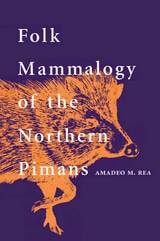
Folk Mammalogy of the Northern Pimans
Amadeo M. Rea
University of Arizona Press, 1998
Rea describes the relationship of the River Pima, Tohono O'odham (Papago), Pima Bajo, and Mountain Pima to the furred creatures of their environment: how they are named and classified, hunted, prepared for consumption, and incorporated into myth. He also identifies associations between mammals and Piman notions of illness by establishing correlations between the geographical distribution of mammals and ideas regarding which animals do or do not cause staying sickness. This information reveals how historical and ecological factors can directly influence the belief systems of a people. At the heart of the book are detailed species accounts that relate Piman knowledge of the bats, rabbits, rodents, carnivores, and hoofed mammals in their world, encompassing creatures ranging from deer mouse to mule deer, cottontail to cougar.
Rea has been careful to emphasize folk knowledge in these accounts by letting the Pimans tell their own stories about mammals, as related in transcribed conversations. This wide-reaching study encompasses an area from the Rio Yaqui to the Gila River and the Gulf of California to the Sierra Madre Occidental and incorporates knowledge that goes back three centuries. Folk Mammalogy of the Northern Pimans preserves that knowledge for scholars and Pimans alike and invites all interested readers to see natural history through another people's eyes.
Folklore and Culture on the Texas-Mexican Border
By Américo Paredes
University of Texas Press, 1995
In an illustrious career spanning over forty years, Américo Paredes has often set the standard for scholarship and writing in folklore and Chicano studies. In folklore, he has been in the vanguard of important theoretical and methodological movements. In Chicano studies, he stands as one of the premier exponents.
Paredes's books are widely known and easily available, but his scholarly articles are not so familiar or accessible. To bring them to a wider readership, Richard Bauman has selected eleven essays that eloquently represent the range and excellence of Paredes's work. The hardcover edition of Folklore and Culture was published in 1993. This paperback edition will make the book more accessible to the general public and more practical for classroom use.
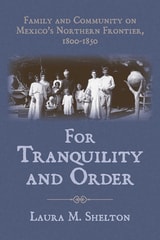
For Tranquility and Order
Family and Community on Mexico's Northern Frontier, 1800–1850By Laura M. Shelton
University of Arizona Press, 2010
Laura Shelton has plumbed the legal archives of early Sonora to reveal the extent to which both court officials and quarreling relatives imagined connections between gender hierarchies and civilized order. As she describes how the region’s nascent legal system became the institution through which spouses, parents, children, employers, and servants settled disputes over everything from custody to assault to debt, she reveals how these daily encounters between men and women in the local courts contributed to the formation of republican governance on Mexico’s northwestern frontier.
Through an analysis of some 700 civil and criminal trial records—along with census data, military reports, church records, and other sources—Shelton describes how courtroom encounters were conditioned by an Iberian legal legacy; brutal ethnic violence; emerging liberal ideas about trade, citizenship, and property rights; and a growing recognition that honor—buenas costumbres—was dependent more on conduct than on bloodline. For Tranquility and Order offers new insight into a legal system too often characterized as inept as it provides a unique gender analysis of family relations on the frontier.
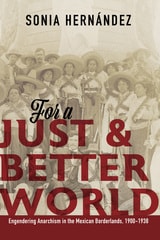
For a Just and Better World
Engendering Anarchism in the Mexican Borderlands, 1900-1938Sonia Hernandez
University of Illinois Press, 2021
A vivid look at a radical activist and her times, For a Just and Better World illuminates the lives and work of Mexican women battling for labor rights and gender equality in the early twentieth century.
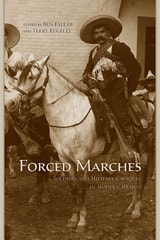
Forced Marches
Soldiers and Military Caciques in Modern MexicoEdited by Ben Fallaw and Terry Rugeley
University of Arizona Press, 2012
When Mexico first became a nation, its military and militias were two of the country’s few major institutions besides the Catholic Church. The army and local provincial militias functioned both as political pillars, providing institutional stability of a crude sort, and as springboards for the ambitions of individual officers. Military service provided upward social mobility, and it taught a variety of useful skills, such as mathematics and bookkeeping.
In the postcolonial era, however, militia units devoured state budgets, spending most of the national revenue and encouraging locales to incur debts to support them. Men with rifles provided the principal means for maintaining law and order, but they also constituted a breeding-ground for rowdiness and discontent. As these chapters make clear, understanding the history of state-making in Mexico requires coming to terms with its military past.
Forging Arizona
A History of the Peralta Land Grant and Racial Identity in the WestAnita Huizar-Hernández
Rutgers University Press, 2019
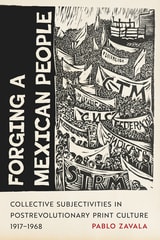
Forging a Mexican People
Collective Subjectivities in Postrevolutionary Print Culture, 1917–1968Pablo Zavala
University of Arizona Press, 2026
Forging a Mexican People shows how illustrated print culture helped to construct and deconstruct versions of “a people” in postrevolutionary Mexico.
Through meticulous research, Pablo Zavala uncovers the ways photographers, graphic artists, writers, and activists used print culture to challenge hegemonic conceptions of state-guided narratives and forge alternative collective subjectivities. This book offers a fresh perspective on the sociopolitical landscape of postrevolutionary Mexico, revealing how cultural artifacts simultaneously crafted and reflected the people vis-à-vis different political and social categories. By examining print culture, editorial practices, and related processes such as the creation, consumption, and distribution of said culture, Zavala’s research contributes to scholarship that has recently reexamined the construction of nationalism by moving away from the focus on state formation and addressing the horizontal and aesthetic dimensions in products by cultural producers from nonstate and grassroots political sectors.
Zavala examines the conceptual parameters of el pueblo by analyzing El Universal Ilustrado, El Machete, the Taller de Gráfica Popular, the protest graphic art used in Mexico City’s 1968 popular student movement, and graphic art used in California’s Chicano farmworkers’ struggle. Based on in-depth archival research, the work includes primary sources that have never been digitized, offering readers unique insights into the visual manifestations of Mexico’s postrevolutionary identity and their enduring significance.
Forgotten Futures, Colonized Pasts
Transnational Collaboration in Nineteenth-Century Greater MexicoCara Anne Kinnally
Bucknell University Press, 2019
Published by Bucknell University Press. Distributed worldwide by Rutgers University Press.
Forjando Patria
Pro-NacionalismoManuel Gamio
University Press of Colorado, 2026
Armstrong-Fumero's translation allows readers to develop a more nuanced understanding of this foundational work, which is often misrepresented in contemporary critical analyses. As much about national identity as anthropology, this text gives Anglophone readers access to a particular set of topics that have been mentioned extensively in secondary literature but are rarely discussed with a sense of their original context. Forjando Patria also reveals the many textual ambiguities that can lend themselves to different interpretations.
The book highlights the history and development of Mexican anthropology and archaeology at a time when scholars in the United States are increasingly recognizing the importance of cross-cultural collaboration with their Mexican colleagues. It will be of interest to anthropologists and archaeologists studying the region, as well as those involved in the history of the discipline.
Forty Miles from the Sea
Xalapa, the Public Sphere, and the Atlantic World in Nineteenth-Century MexicoRachel A. Moore
University of Arizona Press, 2011
Over the course of the nineteenth century, despite its inland location, Xalapa became an important Atlantic community as it came to represent both a haven and a place of fortification for residents of Veracruz. Yellow fever, foreign invasion, and domestic discord drove thousands of residents of Veracruz, as well as foreign travelers, to seek refuge in Xalapa. At the same time, these adverse circumstances prompted the Mexican government to use Xalapa as a bulwark against threats originating in the Atlantic.
The influence of the Atlantic world thus stretched far into central Mexico, thanks to both the instability of the coastal region and the desire of government officials to “protect” central Mexico from volatile Atlantic imports. The boundaries established at Xalapa, however, encouraged goods, information, and people to collect in the city and thereby immerse the population in the developments of the Atlantic sphere. Thus, in seeking to protect the center of the country, government authorities more firmly situated Xalapa in the Atlantic world. This connection would be trumped by national affiliation only when native residents of Xalapa became more comfortable with their participation in the Mexican public sphere later in the nineteenth century.
The interdisciplinary and comparative nature of this study will make it appeal to those studying Atlantic history, including historians of Britain, the United States, Latin America, and Africa, as well as those studying communication, print culture, and postal history more broadly.
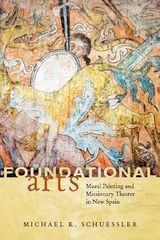
Foundational Arts
Mural Painting and Missionary Theater in New SpainMichael K. Schuessler
University of Arizona Press, 2013
In Foundational Arts Michael K. Schuessler asserts that the literature of New Spain begins with missionary theater and its intimate relationship to mural painting. In particular, he examines the relationships between texts and visual images that emerged in Mexico at two Augustinian monasteries in Hidalgo, Mexico, during the century following the Spanish Conquest. The forced combination of the ideographical tradition of Nahuatl with Latin-based language alphabets led to a fascinating array of new cultural expressions.
Missionary theater was organized by ingenious friars with the intent to convert and catechize indigenous populations. Often performed in Nahuatl or other local languages, the actors combined Latin-based language texts with visual contexts that corresponded to indigenous ways of knowing: murals, architectural ornamentation, statuary, altars, and other modes of visual representation. By concentrating on the interrelationship between mural painting and missionary theater, Foundational Arts explores the artistic and ideological origins of Mexican plastic arts and literature.
Fragmented Lives, Assembled Parts
Culture, Capitalism, and Conquest at the U.S.-Mexico BorderBy Alejandro Lugo
University of Texas Press, 2008
Southwest Book Award, Border Regional Library Association, 2008
Association of Latina and Latino Anthropologists Book Award, 2009
Established in 1659 as Misión de Nuestra Señora de Guadalupe de los Mansos del Paso del Norte, Ciudad Juárez is the oldest colonial settlement on the U.S.-Mexico border-and one of the largest industrialized border cities in the world. Since the days of its founding, Juárez has been marked by different forms of conquest and the quest for wealth as an elaborate matrix of gender, class, and ethnic hierarchies struggled for dominance. Juxtaposing the early Spanish invasions of the region with the arrival of late-twentieth-century industrial "conquistadors," Fragmented Lives, Assembled Parts documents the consequences of imperial history through in-depth ethnographic studies of working-class factory life.
By comparing the social and human consequences of recent globalism with the region's pioneer era, Alejandro Lugo demonstrates the ways in which class mobilization is itself constantly being "unmade" at both the international and personal levels for border workers. Both an inside account of maquiladora practices and a rich social history, this is an interdisciplinary survey of the legacies, tropes, economic systems, and gender-based inequalities reflected in a unique cultural landscape. Through a framework of theoretical conceptualizations applied to a range of facets—from multiracial "mestizo" populations to the notions of border "crossings" and "inspections," as well as the recent brutal killings of working-class women in Ciudad Juárez—Fragmented Lives, Assembled Parts provides a critical understanding of the effect of transnational corporations on contemporary Mexico, calling for official recognition of the desperate need for improved working and living conditions within this community.
Fragments of a Golden Age
The Politics of Culture in Mexico Since 1940Gilbert M. Joseph, Anne Rubenstein, and Eric Zolov, eds.
Duke University Press, 2001
Each essay in its own way addresses the fragmentation of a cultural consensus that prevailed during the “golden age” of post–revolutionary prosperity, a time when the state was still successfully bolstering its power with narratives of modernization and shared community. Combining detailed case studies—both urban and rural—with larger discussions of political, economic, and cultural phenomena, the contributors take on such topics as the golden age of Mexican cinema, the death of Pedro Infante as a political spectacle, the 1951 “caravan of hunger,” professional wrestling, rock music, and soap operas.
Fragments of a Golden Age will fill a particular gap for students of modern Mexico, Latin American studies, cultural studies, political economy, and twentieth century history, as well as to others concerned with rethinking the cultural dimensions of nationalism, imperialism, and modernization.
Contributors. Steven J. Bachelor, Quetzil E. Castañeda, Seth Fein, Alison Greene, Omar Hernández, Jis & Trino, Gilbert M. Joseph, Heather Levi, Rubén Martínez, Emile McAnany, John Mraz, Jeffrey M. Pilcher, Elena Poniatowska, Anne Rubenstein, Alex Saragoza, Arthur Schmidt, Mary Kay Vaughan, Eric Zolov
Framing Complexity in Formative Mesoamerica
Lisa Delance
University Press of Colorado, 2022
Contributors present multiple lines of evidence demonstrating the process of social complexity and reconsider a number of traditionally accepted models and presumed tenets as a result of the wealth of empirical data that has been gathered over the past four decades. Their chapters approach complexity as a process rather than a state of being by exploring social aggregation, the emergence of ethnic affiliations, and aspects of regional and macroregional variability.
Framing Complexity in Formative Mesoamerica presents some of the most recent data—and the implications of that data—for understanding the development of complex societies as human beings moved into urban environments. The book is an especially important volume for researchers and students working in Mesoamerica, as well as archaeologists taking a comparative approach to questions of complexity.
Contributors: Jaime J. Awe, Sarah B. Barber, Jeffrey S. Brezezinski, M. Kathryn Brown, Ryan H. Collins, Kaitlin Crow, Lisa DeLance, Gary M. Feinman, Sara Dzul Gongora, Guy David Hepp, Arthur A. Joyce, Rodrigo Martin Morales, George Micheletti, Deborah L. Nichols, Terry G. Powis, Zoe J. Rawski, Prudence M. Rice, Michael P. Smyth, Katherine E. South, Jon Spenard, Travis W. Stanton, Wesley D. Stoner, Teresa Tremblay Wagner
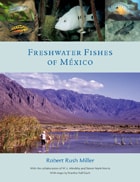
Freshwater Fishes of Mexico
Robert Rush Miller, W. L. Minckley, and Steven Mark Norris
University of Chicago Press, 2006
No one knew these Mexican freshwaters or the fish that inhabit them better than the late world-renowned ichthyologist Robert Rush Miller. A pioneer of the field, Miller undertook his first field excursion more than fifty years ago and, in the decades following, amassed the information necessary to write the first encyclopedia of Mexican inland ichthyology. Providing keys to more than 500 native species—accompanied by detailed distribution maps and illustrations—Freshwater Fishes of México offers a historical overview of the country's ichthyology, as well as syntheses of the unique biogeography of Mexican fishes and their current conservation status. Organized by family, the species accounts are supplemented with color galleries containing photographs of live fishes in their native environments and natural habitats. Exploring ecological, biological, and taxonomic issues, the book also considers the evolutionary history of the ichthyofauna itself and the human history of the scientists who researched it during the last several centuries.
The life's work of Robert Rush Miller, the long-awaited Freshwater Fishes of México will be welcomed not only by students of Mexican fishes, but by all ichthyologists working in Central and North America. This book will also find an audience among home aquarium hobbyists, fishery managers, conservation biologists, and environmental planners and managers.

Friar Bringas Reports to the King
Methods of Indoctrination on the Frontier of New Spain, 1796–97Translated and Edited by Daniel S. Matson and Bernard L. Fontana
University of Arizona Press, 1977
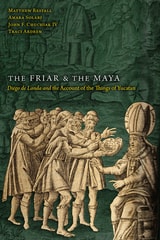
Friar and the Maya
Diego de Landa and the Account of the Things of Yucatanby Matthew Restall, Amara Solari, John F. Chuchiak IV & Traci Ardren
University Press of Colorado, 2023
For generations, scholars used (and misused) the Account as the sole eyewitness insight into an ancient civilization. It is credited to the sixteenth-century Spanish Franciscan, monastic inquisitor, and bishop Diego de Landa, whose legacy is complex and contested. His extensive writings on Maya culture and history were lost in the seventeenth century, save for the fragment that is the Account, discovered in the nineteenth century, and accorded near-biblical status in the twentieth as the first “ethnography” of the Maya. However, the Account is not authored by Landa alone; it is a compilation of excerpts, many from writings by other Spaniards—a significant revelation made here for the first time.
This new translation accurately reflects the style and vocabulary of the original manuscript. It is augmented by a monograph—comprising an introductory chapter, seven essays, and hundreds of notes—that describes, explains, and analyzes the life and times of Diego de Landa, the Account, and the role it has played in the development of modern Maya studies. The Friar and the Maya is an innovative presentation on an important and previously misunderstood primary source.
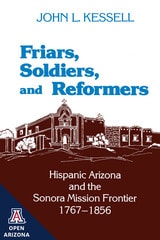
Friars, Soldiers, and Reformers
Hispanic Arizona and the Sonora Mission Frontier, 1767–1856John L. Kessell
University of Arizona Press, 1976
Kessell provides exciting accounts of the explorations of Francisco Garcés, de Anza's expeditions, and the Yuma massacre. Drawing from widely scattered archival materials, he vividly describes the epic struggle between Bishop Reyes and Father President Barbastro, the missionary scandals of 1815–18, and the bloody victory of Mexican civilian volunteers over Apaches in Arivaipa Canyon in 1832. Numerous missionaries, presidials, and bureaucrats—nameless in histories until now—emerge as living, swearing, praying, individuals.
This authoritative chronicle offers an engrossing picture of the continually threatened mission frontier. Reformers championing civil rights for mission Indians time and again challenged the friars' "tight-fisted paternalistic control" over their wards. Expansionists repeatedly saw their plans dashed by Indian raids, uncooperative military officials, or lack of financial support.
Frairs, Soldiers, and Reformers brings into sharp focus the long, blurry period between Jesuit Sonora and Territorial Arizona.
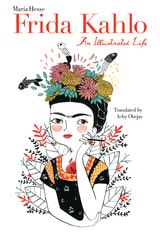
Frida Kahlo
An Illustrated LifeBy María Hesse, translated by Achy Obejas
University of Texas Press, 2018
One of the most important artists of the twentieth century and an icon of courageous womanhood, Frida Kahlo lives on in the public imagination, where her popularity shows no signs of waning. She is renowned for both her paintings and her personal story, which were equally filled with pain and anguish, celebration and life. Thousands of words, including her own, have been written about Kahlo, but only one previous biography has recorded her fascinating, difficult life. Frida Kahlo by María Hesse offers a highly unique way of getting to know the artist by presenting her life in graphic novel form, with striking illustrations that reimagine many of Kahlo’s famous paintings.
Originally published in Spanish in 2016, Frida Kahlo has already found an enthusiastic audience in the Spanish-speaking world, with some 20,000 copies sold in just a few months. This translation introduces English-language readers to Kahlo’s life, from her childhood and the traumatic accident that would change her life and her artwork, to her complicated love for Diego Rivera and the fierce determination that drove her to become a major artist in her own right. María Hesse tells the story in a first-person narrative, which captures both the depths of Frida’s suffering and her passion for art and life.
From Homemakers to Breadwinners to Community Leaders
Migrating Women, Class, and ColorNorma Fuentes-Mayorga
Rutgers University Press, 2022
From Moon Goddesses to Virgins
The Colonization of Yucatecan Maya Sexual DesireBy Pete Sigal
University of Texas Press, 2000
For the preconquest Maya, sexuality was a part of ritual discourse and performance, and all sex acts were understood in terms of their power to create, maintain, and destroy society. As postconquest Maya adapted to life under colonial rule, they neither fully abandoned these views nor completely adopted the formulation of sexuality prescribed by Spanish Catholicism. Instead, they evolved hybridized notions of sexual desire, represented in the figure of the Virgin Mary as a sexual goddess, whose sex acts embodied both creative and destructive components.
This highly innovative book decodes the process through which this colonization of Yucatan Maya sexual desire occurred. Pete Sigal frames the discussion around a series of texts, including the Books of Chilam Balam and the Ritual of the Bacabs, that were written by seventeenth and eighteenth century Maya nobles to elucidate the history, religion, and philosophy of the Yucatecan Maya communities. Drawing on the insights of philology, discourse analysis, and deconstruction, he analyzes the sexual fantasies, fears, and desires that are presented, often unintentionally, in the "margins" of these texts and shows how they illuminate issues of colonialism, power, ritual, and gender.

From Santa Anna to Selena
Notable Mexicanos and Tejanos in Texas History since 1821Harriett Denise Joseph
University of North Texas Press, 2018
From Scenarios to Networks
Performing the Intercultural in Colonial MexicoLeo Cabranes-Grant
Northwestern University Press, 2016
In this innovative study, Leo Cabranes-Grant analyzes four intercultural events in the Viceroyalty of New Spain that took place between 1566 and 1690. Rather than relying on racial labels to describe alterations of identity, Cabranes-Grant focuses on experimentation, rehearsal, and the interaction between bodies and objects. His analysis shows how scenarios are invested with affective qualities, which in turn enable cultural and semiotic change. Central to his argument is Bruno Latour’s Actor-Network Theory, which figures society as a constantly evolving web of relationships among objects, people, and spaces. In examining these scenarios, Cabranes-Grant attempts to discern the reasons why the conditions of an intensified moment within this ceaseless flow take on a particular value and inspire their re-creation. Cabranes-Grant offers a fresh perspective on Latour’s theory and reorients debates concerning history and historiography in the field of performance studies.