Results by title
364 books match the query 'Michigan' and 15 start with f
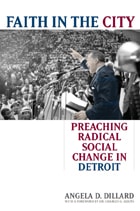
Faith in the City
Preaching Radical Social Change in DetroitAngela D. Dillard
University of Michigan Press, 2009
“The dynamics of Black Theology were at the center of the ‘Long New Negro Renaissance,’ triggered by mass migrations to industrial hubs like Detroit. Finally, this crucial subject has found its match in the brilliant scholarship of Angela Dillard. No one has done a better job of tracing those religious roots through the civil rights–black power era than Professor Dillard.”
—Komozi Woodard, Professor of History, Public Policy & Africana Studies at Sarah Lawrence College and author of A Nation within a Nation: Amiri Baraka (LeRoi Jones) and Black Power Politics
“Angela Dillard recovers the long-submerged links between the black religious and political lefts in postwar Detroit. . . . Faith in the City is an essential contribution to the growing literature on the struggle for racial equality in the North.”
—Thomas J. Sugrue, University of Pennsylvania, author of The Origins of the Urban Crisis: Race and Inequality in Postwar Detroit
Spanning more than three decades and organized around the biographies of Reverends Charles A. Hill and Albert B. Cleage Jr., Faith in the City is a major new exploration of how the worlds of politics and faith merged for many of Detroit’s African Americans—a convergence that provided the community with a powerful new voice and identity. While other religions have mixed politics and creed, Faith in the City shows how this fusion was and continues to be particularly vital to African American clergy and the Black freedom struggle.
Activists in cities such as Detroit sustained a record of progressive politics over the course of three decades. Angela Dillard reveals this generational link and describes what the activism of the 1960s owed to that of the 1930s. The labor movement, for example, provided Detroit’s Black activists, both inside and outside the unions, with organizational power and experience virtually unmatched by any other African American urban community.
Angela D. Dillard is Associate Professor of Afroamerican and African Studies at the University of Michigan. She specializes in American and African American intellectual history, religious studies, critical race theory, and the history of political ideologies and social movements in the United States.

Faithful Unto Death
Becky Thacker
University of Michigan Press, 2011
Benzonia, Michigan, 1894: a sleepy Congregationalist community, dedicated to the education of hardworking and virtuous young people of both sexes and all races. Anna Spencer Thacker is the daughter of missionaries, a faithful wife, and mother of five, pious to a fault. She is suddenly stricken with a mysterious ailment that soon proves fatal. Was it truly an unfortunate illness? Or was it murder—or suicide?
Taking a true story of a murder in her own family, Becky Thacker has crafted a historical mystery novel whose cast of characters rapidly builds, including William Henry Thacker as deputy sheriff, deacon in his church, a kind man . . . but perhaps just a trifle too fond of the attractive young housekeeper; and Charlotte Spencer, the pretty missionary sister, almost saintly in her efforts to bring Jesus to the Armenians in the mountains of Turkey, though a bit prone to exaggeration. She could be a suspect—or the next target.
The children are Roy, 19: musical, a good student, but a little too wild for Benzonia; Ralph, 17: trying to shoulder the responsibilities of farm and family; and Lottie, 14: a talented young artist trying to take care of young Will and Josie. Faithful Unto Death provides a window into the daily lives of small-town Michiganders at the turn of the century wrapped up in a riveting whodunit.
Cover image by Hemera/Thinkstock
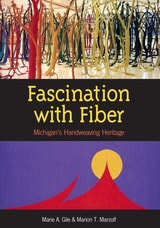
Fascination with Fiber
Michigan's Handweaving HeritageMarie A. Gile and Marion T. Marzolf
University of Michigan Press, 2006
"A premiere work offering a rich chronicle of weaving in Michigan. Colorful stories tell of Michigan's textile people, places, and events, and show the important role that this state played in preserving and progressing the culture of cloth locally and nationally. I came away with a new sense of pride and joy at being a part of this rich human history and inspired to continue exploring within this great tradition!"
---Chris Triola, Fiber Artist
"Fascination with Fiber is a well-documented history, with consequence! The authors reveal surprising continuity in relationships, with results that are far-reaching. Readers will be moved beyond border as they come to realize the extensive influences generated in Michigan."
---Gerhardt Knodel, Director, Cranbrook Academy of Art
Fascination with Fiber is the first complete look at Michigan's rich tradition of handweaving, from pioneer log cabin days to the contemporary era of digital computer-aided looms.
Michigan has been at the center of handweaving and fiber arts and crafts since early settlers brought their skills with them from countries where handicrafts and weaving were traditionally strong. The textiles they produced in their new country, from linens to coverlets to rugs, took on a distinctly American expression. In the twentieth century, the formation of guilds, craft communities, and formal art programs created a revival of interest in handweaving as an opportunity for artistic expression so that by latter part of the century the state played a vital role in the national fiber movement.
Weavers and historians themselves, authors Marie A. Gile and Marion T. Marzolf focus on the people and forces that have kept the craft of handweaving alive in Michigan and indeed throughout the country for over two centuries: a passionate group of individuals and weaving communities enlivened through shared necessity, opportunity, and creativity.
Gile and Marzolf base their book on oral histories, interviews, and documentary and artifact research. With its tales of colorful characters such as Mary Atwater, the gun-toting weaver from Montana who helped organize the handweaving industry; to the formation of the Michigan League of Handweavers in 1959; and the "Fascination with Fiber" exhibit that opened in 2004; Fascination with Fiber brings the story of handweaving in Michigan to life like no other book.
Marie A. Gile is Textile Specialist and Research Associate at Michigan State University Museum in Lansing. She has been a weaver and fiber artist for twenty-five years. Marion T. Marzolf is Professor Emerita in the Department of Journalism and Communication at the University of Michigan. Since retiring in 1995, she has taught basic weaving, has served as president of the Michigan League of Handweavers, and has exhibited in galleries statewide.

Field Manual of Michigan Flora
Edward G. Voss and Anton A. Reznicek
University of Michigan Press, 2012
Field Manual of Michigan Flora is the most up-to-date guide available for all seed plants growing wild in Michigan. Significantly expanding and updating the three-volume Michigan Flora, the book incorporates the discoveries of numerous additional species, recent systematic research, and a vast trove of new information on the shifting distributions of Michigan species. It presents concise identification keys, information about habitats, and completely updated distribution maps for all the seed plants, native or naturalized, that have been recorded from the state, fully treating over 2,700 species. All non-native species are included with notes on their first discovery in the state and comments on invasive tendencies. Rare native species that appear to be declining or to have shrinking ranges are also noted. This book is an essential reference for anyone interested in appreciating Michigan's natural heritage and understanding our ever-changing environment.

Finland-Swedes in Michigan
Mika Roinila
Michigan State University Press, 2012
Who are the Finland-Swedes? Defined as citizens of Finland with a Swedish mother tongue, many know these people as “Swede- Finns” or simply “Swedes.” This book, the first ever to focus on this ethnolinguistic minority living in Michigan, examines the origins of the Finland-Swedes and traces their immigration patterns, beginning with the arrival of hundreds in the United States in the 1860s. A growing population until the 1920s, when immigration restrictions were put in place, the Finland-Swedes brought with them unique economic, social, cultural, religious, and political institutions, explored here in groundbreaking detail. Drawing on archival, church, and congregational records, interviews, and correspondence, this book paints a vivid portrait of Finland-Swedish life in photographs and text, and also includes detailed maps that show the movement of this group over time. The latest title in the Discovering the Peoples of Michigan series even includes a sampling of traditional Finland-Swedish recipes.
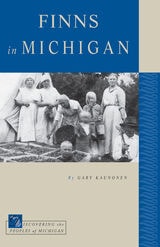
Finns in Michigan
Gary Kaunonen
Michigan State University Press, 2009
In Finns in Michigan Gary Kaunonen probes the intricacies of immigration, labor, and ideology among the members of this intriguing and historically important ethnic group. He skillfully traces the evolution of a vibrant, diverse, dramatic, and at times deeply quarrelsome people who left an indelible mark on the state's history.
Kaunonen examines the many schisms and splits that define the course of Finnish social life in Michigan. Michigan's Finns flocked to diverse cultural organizations that span a broad ideological spectrum. This book examines an extraordinarily wide range of organizations, including religious institutions, temperance societies, working-class political and labor groups, the cooperative movement, and a nationalist association of Finns.
Finns in Michigan is a study of the contributions of Michigan's Finns in the workplace, in society, and in cultural life. Unlike previous, sometimes mythologized, histories of the Finns in Michigan, Kaunonen's rendition strives to be a more accurate representation of "the good, the bad, and the other" activities of a group he calls "possibly America's most diverse family."

Fire Point
John Smolens
Michigan State University Press, 2017
A story of love, vengeance, and renewal, Fire Point depicts the young couple’s attempt to rebuild their lives. But when Hannah’s former boyfriend Sean Colby returns home after a mysterious early discharge from the army, he cannot accept the fact that she has a new lover and commits a series of increasingly violent acts against Hannah, Martin, and the house that has come to represent their future.

Food Storage in Michigan's Late Woodland
The Work of Indigenous WomenKathryn M. Frederick
University of Alabama Press, 2026
Incorporates experimental archaeology to understand the food-caching strategies led by Indigenous women in Late Woodland Michigan.
This experimental archaeology book centers on the decision of Indigenous women in Michigan’s Late Woodland to store food in cache pits for later use, to ensure a stable food supply. These food storage techniques were efforts to increase communal chances of survival in direct responses to sociopolitical changes. Kathryn M. Frederick highlights the importance of food storage in these communities and the decision-making and behaviors behind it.
To discover why food storage became a popular practice at that period, Frederick considered the efficacy of subterranean food storage and constructed experiments to understand the timing and use of cache pits and to test their reliability and efficiency. She also compiled ethnographic data on location, environmental conditions, movement strategies, and types of foodstuffs stored for dozens of hunter-gatherer groups. Two distinct patterns of food storage emerged: “reliant” and “redundant.” Frederick argues that the Indigenous women utilized a system of reliant storage during times of abundance but could switch to a redundant system as the socioeconomic climate shifted. This book will interest a wide swath of archaeologists and others interested in Indigenous foodways and women’s key roles.

For Faith and Fortune
The Education of Catholic Immigrants in Detroit, 1805-1925JoEllen McNergney Vinyard
University of Illinois Press, 1998
JoEllen McNergney Vinyard's comprehensive examination of parochial education in Detroit within the broader context of that city's urbanization patterns yields a richly detailed addition to our understanding of the European immigrant experience.
For Faith and Fortune will be of interest to historians and scholars of urban studies, particularly immigration, schooling, and the Catholic experience.

Ford Road
Amy Kenyon
University of Michigan Press, 2012
After the death of her mother, Kay Seger abandons her career as a historical consultant to a Los Angeles film company and returns to her childhood home in Michigan. There, she rekindles a teenage love affair with Joe Chase, now a Vietnam War veteran and Ford auto worker. Afflicted by grief and the mysterious symptoms of an unidentified ailment, Kay, at Joe's urging, begins an investigation of her family's past.
As Kay pores over the boxes of papers, letters, and photo albums her mother left behind, vivid recollections of a bygone Detroit, ragged and teeming at the start of the automotive age, come to life alongside snapshots of Michigan's rural western counties after the settlement of the frontier. In the midst of her searches, Kay comes across the long-forgotten medical history of nostalgia, and it is this new knowledge that helps her to recover the lost histories of her family and find a resolution to her troubled relationship with Joe.
An exploration of memory as both pathology and promise, Ford Roadoffers a moving examination of the injuries we inflict on the people closest to us, the worldly injuries that are often beyond our control, and our astonishing ability to act upon and inhabit our own stories. It is also a meditation on American car culture, the road, and the role of early Hollywood in the creation of America's vision of itself. Written in spare, evocative prose, historian Amy Kenyon's first novel is as heartbreaking as it is thought-provoking.

Forever in the Path
The Black Experience at Michigan State UniversityPero G Dagbovie
Michigan State University Press, 2025
Michigan State University—founded in 1855 as the Agricultural College of the State of Michigan—has a fascinating past, a history shaped by vacillating local and national contexts as well as by people from different walks of life. The first Black students arrived on campus during the late nineteenth and early twentieth centuries, and the first full-time Black faculty member was hired in the late 1940s. Before and after the modern Civil Rights Movement, African Americans from various backgrounds were transformed by MSU while also profoundly contributing in vital ways to the institution’s growth and evolving identity.

Four Days in Michigan
A NovelPhilip Zazove
Gallaudet University Press, 2012
As a young, deaf Jewish woman living in a small town in Michigan in 1942, Sandra Horowitz felt deeply frustrated by her limited prospects. Even though she had just graduated from junior college, she knew that she had two strikes against her in fulfilling her dream to become a veterinarian. Better to marry Jacob Winter, her parents urged her, a deaf Jewish man who made a good living. Then, Sandra met Rudy Townsend, a hearing soldier on leave before shipping out to the war in Europe.
In just four days, both Sandra and Rudy’s worlds were turned upside down. Sandra’s parents feared him for being hearing and a Gentile, while Rudy’s parents expressed openly their bias against her ethnic background and her deafness. Even so, Sandra and Rudy soon realized that they had fallen in love, deeply and passionately. As they shared the brief time they had together, they learned about each other’s dreams for the future — Sandra’s desire to be a vet and Rudy’s determination to serve in Congress. Then, Rudy had to leave for the war.
Philip Zazove’s novel Four Days in Michigan captures perfectly the power of irrepressible love between two individuals from opposite backgrounds. The struggles they encounter in an era when such differences were never more sharply drawn also reveal great detail about deaf and hearing life. Despite all, their triumph comes ultimately because of their long-lasting individual respect and love.
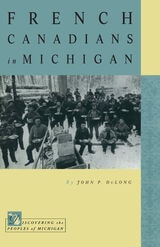
French Canadians in Michigan
John P. DuLong
Michigan State University Press, 2001
As the first European settlers in Michigan, the French Canadians left an indelible mark on the place names and early settlement patterns of the Great Lakes State. Because of its importance in the fur trade, many French Canadians migrated to Michigan, settling primarily along the Detroit- Illinois trade route, and throughout the fur trade avenues of the Straits of Mackinac. When the British conquered New France in 1763, most Europeans in Michigan were Francophones. John DuLong explores the history and influence of these early French Canadians, and traces, as well, the successive 19th- and 20th-century waves of industrial migration from Quebec, creating new communities outside the old fur trade routes of their ancestors.

French in Michigan
Russell M. Magnaghi
Michigan State University Press, 2016
The colonial French served as explorers, soldiers, missionaries, fur traders, and colonists. Later, French priests and nuns were influential in promoting Catholicism in the state and in developing schools and hospitals. Father Gabriel Richard fled the violence of the French Revolution and became a prominent and influential citizen of the state as a U.S. Congressman and one of the founders of the University of Michigan. French observers of Michigan life included Alexis de Tocqueville. French entrepreneurs opened copper mines and a variety of service-oriented businesses. Louis Fasquelle became the first foreign-language instructor at the University of Michigan, and François A. Artault introduced photography to the Upper Peninsula. As pioneers of the early automobile, the French made a major contribution to the language used in auto manufacturing.

From Vermont to Michigan
Correspondence of James Burrill Angell: 1869-1871Edited by Wilfred B. Shaw
University of Michigan Press, 1936