Results by title
3785 books match the query 'Poetry' and 124 start with f

FASTING FOR RAMADAN
Notes from a Spiritual PracticeKazim Ali
Tupelo Press, 2011
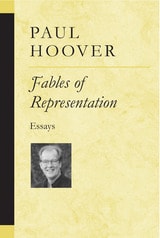
Fables of Representation
EssaysPaul Hoover
University of Michigan Press, 2004
With its title essay, "Fables of Representation," one of the most cogent studies ever written of the New York School of poets (a group that includes the influential poet John Ashbery), this book is required reading for anyone who seeks to understand the poetry and culture of the postmodern period.
Author Paul Hoover's wide-ranging subjects include African-American interdisciplinary studies; the position of poetry in the electronic age; the notion of doubleness in the work of Harryette Mullen and others; the lyricism of the New York School poets; and the role of reality in American poetry. Hoover also introduces two provocative essays sure to generate attention and discussion: "The Postmodern Era: A Final Exam" and "The New Millennium: Fifty Statements on Literature and Culture."
Paul Hoover is the editor of the anthology Postmodern American Poetry and author of nine poetry collections, including Totem and Shadow: New and Selected Poems and Viridian. His poetry has appeared in American Poetry Review, The New Republic, and The Paris Review, among others. He is Poet-in-Residence at Columbia College, Chicago.
Fabulae
Joy Katz
Southern Illinois University Press, 2002
In Fabulae, Joy Katz interrogates the physical world, constructing a sensual and striking autobiography. She turns to the familiarity and strangeness of the female body, its surfaces and inner workings, often, although her subjects range from Thomas Jefferson to an Adam and Eve plagued with obsessive-compulsive disorder to the streets of New York’s diamond district. The poems, by turns funny and philosophical, point to how we suffer from desire: the danger, she writes, is that we might love the world “like heaven and be lost.” But they come back to delight in a flawed world especially the palpable beauty of words, and even the erotic shapes of the letterforms that make them up.
Fair Copy
Rebecca Hazelton
The Ohio State University Press, 2012
Faith Run
Ray Gonzalez
University of Arizona Press, 2009
For Gonzalez, it seems, we humans can transcend the ordinary—just as these poems transcend genre and create a poetic realm of their own—but we never actually leave behind our rooted, earthbound lives. Although our landscape may be invisible to us, we never escape its powerful magnetism. Nor do we ever abandon our ancestors. No matter how fast or far we run, we can never outrun them. Like gravity, their influence is inexorable.
These poems enchant with their language, which often leaps unexpectedly from worldly to otherworldly in the same stanza, but they cling and linger in our memories—not unlike the voices of friends and relatives.
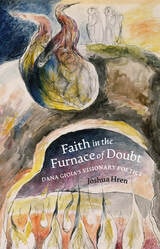
Faith in the Furnace of Doubt
Dana Gioia's Poetics of BeliefJoshua Hren
Catholic University of America Press, 2025
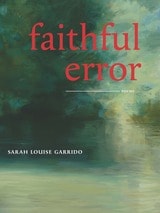
Faithful Error
Sarah Louise Garrido
University Press of Colorado, 2026
Exploring the tension between freedom and fidelity, Faithful Error meditates on life’s most sacred and often difficult loves—romantic, parental, familial, and spiritual—against a backdrop of environmental unease. These poems, rich in natural imagery, trace an emotional journey from intimate contemplation to transcendent questioning, grappling with the value of devotion in a world seemingly designed to extinguish hope. A palpable emotional intensity simmers beneath the restrained language, mirroring the manuscript's central dynamic: a yearning to err, yet ultimately finding freedom in a return—however complicated—to faith.
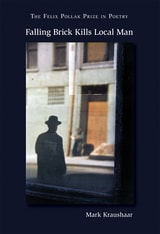
Falling Brick Kills Local Man
Mark Kraushaar
University of Wisconsin Press, 2009
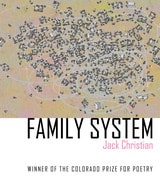
Family System
Jack Christian
University Press of Colorado, 2012
"Family System is one of the most specific and clarifying books of poetry I’ve ever read. It is filled with choices—made, to be made, not made—handled with a poetic understanding that what seems arbitrary will be inevitable when said with the right words while singing the right songs. This is a stand-out first book, introducing a first-rate original talent, doing powerful work, making quintessentially lyrical choices. Don’t miss this book.”
—Dara Wier
“It seems that Jack Christian’s brain is able to produce tiny lucid creatures, have them run and sprinkle over a map of an unknown world with joy, speed and delight. Even stranger, he’s somehow the spiritual offspring of very different ancestors: Pascal’s Esprit de Geometrie and Scandinavian mythology. ‘I was eulogizing a squirrel in a shoebox.’ Brilliant.”
—Tomaž Šalamun
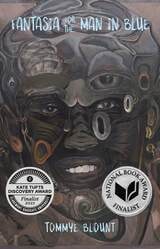
Fantasia for the Man in Blue
Tommye Blount
Four Way Books, 2020
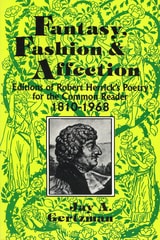
Fantasy, Fashion, and Affection
Editions of Robert Herrick's Poetry for the Common Reader, 1810–1968Jay Gertzman
University of Wisconsin Press, 1986
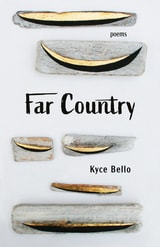
Far Country
PoemsKyce Bello
University of Nevada Press, 2025
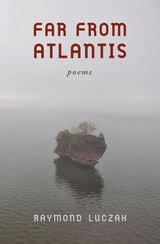
Far from Atlantis
PoemsRaymond Luczak
Gallaudet University Press, 2023
Fast Break to Line Break
Poets on the Art of BasketballTodd Davis
Michigan State University Press, 2012
If baseball is the sport of nostalgic prose, basketball’s movement, myths, and culture are truly at home in verse. In this extraordinary collection of essays, poets meditate on what basketball means to them: how it has changed their perspective on the craft of poetry; how it informs their sense of language, the body, and human connectedness; how their love of the sport made a difference in the creation of their poems and in the lives they live beyond the margins. Walt Whitman saw the origins of poetry as communal, oral myth making. The same could be said of basketball, which is the beating heart of so many neighborhoods and communities in this country and around the world. On the court and on the page, this “poetry in motion” can be a force of change and inspiration, leaving devoted fans wonderstruck.
Fat Art, Thin Art
Eve Kosofsky Sedgwick
Duke University Press, 1994
Embodying a decades-long adventure, the poems collected here offer the most accessible and definitive formulations to appear anywhere in Sedgwick’s writing on some characteristic subjects and some new ones: passionate attachments within and across genders; queer childhoods of many kinds; the performativity of a long, unconventional marriage; depressiveness, hilarity, and bliss; grave illness; despised and magnetic bodies and bodily parts. In two long fictional poems, a rich narrative momentum engages readers in the mysterious places—including Victorian novels—where characters, sexualities, and fates are unmade and made. Sedgwick’s poetry opens an unfamiliar, intimate, daring space that steadily refigures not only what a critic may be, but what a poem can do.
Fate News
Norma Cole
Omnidawn, 2018
Fathering the Map
New and Selected Later PoemsRobert Pack
University of Chicago Press, 1993
A selection from his last five books, along with a collection of new poems, Fathering the Map takes us from the personal reflections distilled in the lyrics of Waking to My Name (1980) to the worldly reckonings of Inheritance (1992) and back again. In the dramatic monologues of Faces in a Single Tree (1984), in the narrative of a wayward life from womb to double ending in Clayfield Rejoices, Clayfield Laments (1987), in a cosmic tour conducted by the physicist Heinz Pagels with Before It Vanishes (1990), Pack has fashioned poems of intimate experience, scientific meditations, philosophical wonder, poems that breathe the knowledge of man and woman, young and old, artist and human animal.
Pack's work has won the acclaim of writers, critics, and readers from Robert Penn Warren to Cynthia Ozick to Stephen Jay Gould, who comments that the "precious contacts of science and poetry are now sadly rare, but Bob Pack revitalizes the ancient union with incisive poems that sing with lyricism or bite with insight—but always seem to add wisdom to the scientist's epigram."
"The poet improves his style and spirit as he extends his reach," Howard Nemerov has written, and in his new work Pack reaches back to some of his earliest memories, and so forward to a personal mythology that circles from the primal instant to the present ecological crisis. "Robert Pack's poetry is deeply rooted in his won family life," Richard Wilbur has remarked, "and yet his imagination has always included us all."
And Cynthia Ozick has said of Pack's poetry: "We rejoice as we read."

Faust
A Tragedy, Part IEugene Stelzig
Bucknell University Press, 2019
Published by Bucknell University Press. Distributed worldwide by Rutgers University Press.
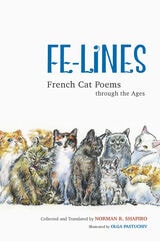
Fe-Lines
French Cat Poems through the AgesCollected and Translated by Norman Shapiro
University of Illinois Press, 2015
Norman R. Shapiro lionizes the feline's limitless allure in this one-of-a-kind collection. Spanning centuries and styles, he draws on she-cats and toms, and an honor roll of French poets, well known and lesser known, who have served as their devoted champions. He reveals the remarkable range of French cat poems, with most works presented here for the first time in English translation. Scrupulously devoted to evoking the meaning and music of the originals, Shapiro also respects the works' formal structures. Pairing Shapiro's translations with Olga Pastuchiv's elegant illustrations, Fe-Lines guides the reader through the marvels and inscrutabilities of the Mystique féline.
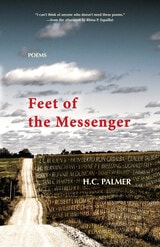
Feet of the Messenger
poemsH. C. Palmer
BkMk Press, 2017
Winner, Kansas Notable Book
Balcones Poetry Prize Finalist
Feet of the Messenger explores H.C. Palmer’s experiences as a medical doctor, especially as an army surgeon in the Vietnam War, and his feelings for and memories of his native Kansas, especially the Flint Hills. Although he has only been writing poetry for ten years, Palmer’s work reflects decades of discovering how the war kept coming back to him, even on the prairie.
Felling
Kelan Nee
University of North Texas Press, 2024
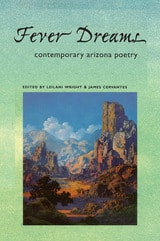
Fever Dreams
Contemporary Arizona PoetryLeilani Wright
University of Arizona Press, 1997
William Aberg
Ai
Jed Allen
Barbara Anderson
Jon Anderson
Michael Bowden
Becky Byrkit
Cordelia Candelaria
James Cervantes
David Chorlton
Jeanne E. Clark
Jane Candia Coleman
Michael Cuddihy
Barbara Cully
Alison Hawthorne Deming
Norman Dubie
Beckian Fritz Goldberg
Catherine Hammond
Rex Lee Jim
Ramson Lomatewama
Rita Magdaleno
Jane Miller
Paul Morris
Sheila Murphy
Rick Noguchi
Steve Orlen
Henry Quintero
Alberto R¡os
William Pitt Root
Jeannine Savard
Richard Shelton
Jim Simmerman
Virginia Chase Sutton
Laura Tohe
Tracy Trefethen
Peter Wild
Leilani Wright
Brian Young
Ofelia Zepeda
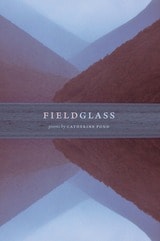
Fieldglass
Catherine Pond
Southern Illinois University Press, 2021
Fraught with obsession, addiction, and unrequited love, Catherine Pond’s Fieldglass immerses us in the speaker’s transition from childhood to adulthood. A queer coming-of-age, this collection is a candid exploration of sexual identity, family dynamics, and friendships that elude easy categorization, offering insight on the ambiguous nature of identity.
Saturated by her surroundings and permeated by the emotional lives of those close to her, the speaker struggles with feelings of displacement, trauma, and separateness. She is perpetually in transit, with long drives, flights, and train rides—moving most often between the city and the foothills of the Adirondack Mountains. As the collection unfolds, the speaker journeys toward adulthood, risking intimacy and attempting to undo her embedded impulses toward silence and absorption.
Reflective, graceful, and understated, Pond’s images accumulate power through restraint and suggestion. Deeply personal and intense, searching and yearning, associative and lyric, Fieldglass is a confessional about growing up, loving hard, and letting go.
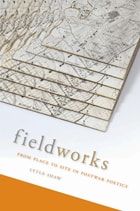
Fieldworks
From Place to Site in Postwar PoeticsLytle Shaw
University of Alabama Press, 2013
Fieldworks offers a historical account of the social, rhetorical, and material attempts to ground art and poetry in the physicality of a site.
Arguing that place-oriented inquiries allowed poets and artists to develop new, experimental models of historiography and ethnography, Lytle Shaw draws out the shifting terms of this practice from World War II to the present through a series of illuminating case studies. Beginning with the alternate national genealogies unearthed by William Carlos Williams in Paterson and Charles Olson in Gloucester, Shaw demonstrates how subsequent poets sought to ground such inquiries in concrete social formations—to in effect live the poetics of place: Gary Snyder in his back-to-the-land familial compound, Kitkitdizze; Amiri Baraka in a black nationalist community in Newark; Robert Creeley and the poets of Bolinas, California, in the capacious “now” of their poet-run town. Turning to the work of Robert Smithson—who called one of his essays an “appendix to Paterson,” and who in turn has exerted a major influence on poets since the 1970s—Shaw then traces the emergence of site-specific art in relation both to the poetics of place and to the larger linguistic turn in the humanities, considering poets including Clark Coolidge, Bernadette Mayer, and Lisa Robertson.
By putting the poetics of place into dialog with site-specificity in art, Shaw demonstrates how poets and artists became experimental explicators not just of concrete locations and their histories, but of the discourses used to interpret sites more broadly. It is this dual sense of fieldwork that organizes Shaw’s groundbreaking history of site-specific poetry.
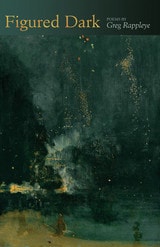
Figured Dark
PoemsGreg Rappleye
University of Arkansas Press, 2007
Greg Rappleye’s Figured Dark is a collection of contemporary lyric and narrative poems, set in an American landscape, which takes as its implicit theme the journey of the soul from darkness into light.
The voices in the collection call across a vast landscape of myth, memory, and horrific wreckage. In the title poem, speaking of the phenomenon of fireflies rising at night from a southern field, he writes, “I could read this down to a million tiny bodies, / blazing the midnight trees,” but the reader is left to wonder whether any extravagant numbering can account for the massed starlings, dreamy raptors, dome-lighted Firebirds, flaming bodies, junk cars, and deadly archangels that come to ground in Rappleye’s world, where the spiritual exhaustion of Odysseus is visited upon Brian Wilson, and the young John Berryman seeks recompense from a wily family in northern Michigan.
These poems are by turns wise, elegiac, ironic, and wickedly funny. This is a poet who refuses easy categories. If these poems are anything, they are affidavits of a heart at work, building out of darkness a kind of wild redemption, hard-earned in the real world.
Figured Dark is part of the University of Arkansas’s Poetry Series, edited by Enid Shomer.
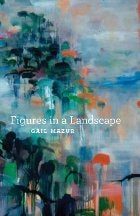
Figures in a Landscape
Gail Mazur
University of Chicago Press, 2011
A new inclusiveness, a heady freedom, grounded in the facts of mortality, inform Gail Mazur’s recent poems, as if making them has served as both a bunker and a promontory, a way to survive, and to be exposed to, the profound underlying subject of this book: a husband’s approaching death. The intimate particulars of a shared life are seen from a great height—and then there’s the underlife of the bunker: endurance, holding on, life as uncompromising reality. This new work, possessed by the unique devil-may-care intensity of someone writing at the end of her nerves, makes Figures in a Landscape feel radiant, visionary, and exhilarating, rather than elegiac. Mazur’s masterly fusion of abstraction with the facts of a life creates a coming to terms with what Yeats called “the aboriginal ice.”
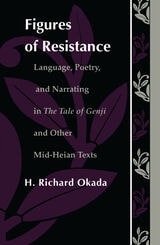
Figures of Resistance
Language, Poetry, and Narrating in The Tale of the Genji and Other Mid-Heian TextsH. Richard Okada
Duke University Press, 1991
Okada develops a highly original and sophisticated reading strategy that demonstrates how readers might understand texts belonging to a different time and place without being complicit in their assimilation to categories derived from Western literary traditions. The author’s reading stratgey is based on the texts’ own resistance to modes of analysis that employ such Western canonical terms as novel, lyric, and third-person narrative. Emphasis is also given to the distinctive cultural circles, as well as socio-political and genealogical circumstances that surrounded the emergence of the texts.
Indispensable readings for specialists in literature, cultural studies, and Japanese literature and history, Figures of Resistance will also appeal to general readers interested in the problems and complexities of studying another culture.
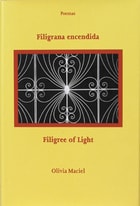
Filigrana encendida / Filigree of Light
Poemas / PoemsOlivia Maciel
Swan Isle Press, 2002
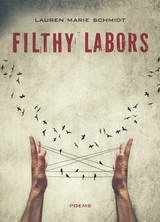
Filthy Labors
PoemsLauren Marie Schmidt
Northwestern University Press, 2017
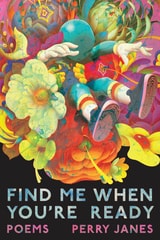
Find Me When You're Ready
PoemsPerry Janes
Northwestern University Press, 2024
A powerful debut and a lyric coming-of-age narrative that interrogates the myths we carry
In Find Me When You’re Ready, Perry Janes traces a sweeping journey from Detroit to Los Angeles. As he leaves home and forges toward California, the speaker in these poems considers how we learn and mislearn ideas about manhood, confronts the aftershocks of childhood sexual abuse, and questions the human need for belonging. By embracing the touchstones of youth—movies, lore, graphic novels—these poems assert the speaker’s defiant right to childhood even amid damage.
As the collection arcs toward adulthood, the speaker embodies a vision of healing that refuses easy binaries and embraces the joys of intimacy. Across each of its five acts, Perry Janes’s debut collection is driven by an interest troubling our creation myths, asking who built them, why we carry them, and how we might set them aside.
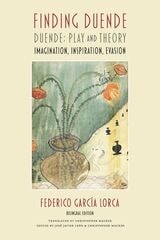
Finding Duende
Duende: Play and Theory | Imagination, Inspiration, EvasionFederico García Lorca
Swan Isle Press, 2023
For years, Federico García Lorca’s lecture on duende has been a source of insight for writers and performers, including Ted Hughes, Nick Cave, Patti Smith, and Amanda Gorman.
Duende: Play and Theory not only provides a path into Lorca’s poetics and the arts of Spain; it is one of the strangest, most compelling accounts of inspiration ever offered by a poet. Contrasting the demon called duende with the Angel and the Muse, Lorca describes a mysterious telluric, diabolical current, an irreducible “it,” that can draw the best from both performer and audience.
This new translation by Christopher Maurer, based on a thoroughly revised edition of the Spanish original of 1933, also included in this volume, offers a more accurate and fully annotated version of the lecture, with an introduction by eminent philologist José Javier León. Drawing on a deep knowledge of flamenco, and correcting decades of discussion about duende and its supposed origins in Spanish folklore and popular speech, León shows to what extent the concept of duende—understood as the imp of artistic inspiration—was the playful, yet deadly serious, invention of Lorca himself.
Lorca’s bravura performance of duende is foreshadowed here with a bilingual version—the most complete ever—of his other major text on inspiration, “Imagination, Inspiration, Evasion,” in which he calls for greater freedom in poetry as if searching for duende and its “constant baptism of newly created things.”
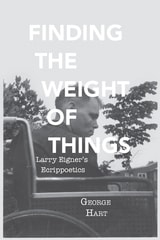
Finding the Weight of Things
Larry Eigner's EcrippoeticsGeorge Hart
University of Alabama Press, 2022
Where language, body, and form converge in the poetry of Larry Eigner.
Larry Eigner (1927–1996) wrote thousands of poems in his lifetime, despite profound physical limitations caused by cerebral palsy. Using only the thumb and index finger of his right hand, Eigner generated a torrent of urgent and rich language, participating in vital correspondences as well as publishing widely in literary magazines and poetry journals.
While Eigner wrote before the emergence of ecopoetics, his poetry reflected a serious engagement with scientific writing and media, including Rachel Carson’s seminal Silent Spring. Eigner was writing about environmental disasters and climate change long before such concerns took on a moral incumbency. Similarly, Eigner was ahead of his time in his exploration of disability. The field of disability studies has expanded rapidly in the new millennium. Eigner was not an overtly biographical poet, at least as far as his physical limitations were concerned, but his poetry spoke volumes on the idea of embodiment in all its forms.
Finding the Weight of Things: Larry Eigner’s Ecrippoetics is the first full-length study of Eigner’s poetry, covering his entire career from the beginning of his mature work in the 1950s to his last poems of the 1990s. George Hart charts where Eigner’s two central interests intersect, and how their interaction fueled his work as a poet-critic—one whose work has much to tell us about the ecology and embodiment of our futures. Hart sees Eigner’s overlapping concerns for disability, ecology, and poetic form as inextricable, and coins the phrase ecrippoetics here to describe Eigner’s prescient vision.
Fire Baton
PoemsElizabeth Hadaway
University of Arkansas Press, 2006
Fire Is Not a Country
PoemsCynthia Dewi Oka
Northwestern University Press, 2022
As she builds a lyric portrait of her own family, Oka interrogates how migration, economic exploitation, patriarchal violence, and a legacy of political repression shape the beauties and limitations of familial love and obligation. Woven throughout are speculative experiments that intervene in the popular apocalyptic narratives of our time with the wit of an unassimilable other.
Oka’s speakers mourn, labor, argue, digress, avenge, and fail, but they do not retreat. Born of conflicts public and private, this collection is for anyone interested in what it means to engage the multitudes within ourselves.
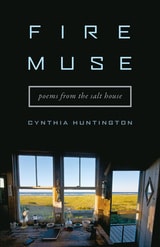
Fire Muse
Poems from the Salt HouseCynthia Huntington
Dartmouth College Press, 2016
Fire Pond
Jessica Garratt
University of Utah Press, 2009
Fire Sale
PoemsD. G. (Greg) Geis
Tupelo Press, 2017
Fire Season
PoemsPatrick Coleman
Tupelo Press, 2018
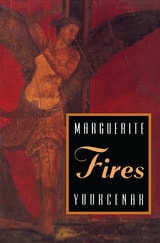
Fires
Marguerite Yourcenar
University of Chicago Press, 1994
"The unwritten novel among the fantasies and aphorisms of Fires is a classic tale."—Stephen Koch, New York Times Book Review
First Loves and Other Adventures
Grace Schulman
University of Michigan Press, 2009
Grace Schulman's acclaimed poetry is often about joy, the celebration of the miraculous, and the birth of beauty from adversity. In her new prose collection, she explores the passion for reading and other disciplines that led her to exult in her craft.
In First Loves and Other Adventures Schulman explores how she became a writer; her wide-ranging influences; and some of the many writers and works that have enchanted her over the years, ranging from Genesis and Song of Songs in the King James Bible to T. S. Eliot to Walt Whitman. These reflections on her art and career touch on a variety of other disciplines, including science, the novel, music, and art, and their relation to poetry as a field. Her belief that art transcends formal boundaries is a recurring theme throughout her discussion of these influences, as well as in her own work.
Grace Schulman is the author of six books of poems. Among her honors are the Aiken Taylor Award for poetry, the Delmore Schwartz Memorial Award, a Guggenheim Fellowship, and New York University's Distinguished Alumni Award. Her poems have won three Pushcart Prizes, and her collection Days of Wonder was selected by Library Journal as one of the best poetry books of 2002. Schulman is the former director of the Poetry Center and former poetry editor of the Nation and currently is Distinguished Professor of English at Baruch College, City University of New York.
A volume in the POETS ON POETRY series, which collects critical works by contemporary poets, gathering together the articles, interviews, and book reviews by which they have articulated the poetics of a new generation.
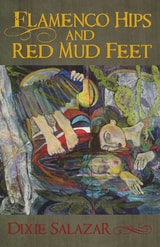
Flamenco Hips and Red Mud Feet
Dixie Salazar
University of Arizona Press, 2010
In the two sections of the book—“Inside” and “Outside”—parallelism and symmetry interact with themes both public and private. Flamenco Hips and Red Mud Feet presents thirty-nine poems in free verse and traditional poetic forms, especially the sonnet and adaptations of the sonnet. The sonnet—usually consisting of the octet (eight lines) that sets up the main idea of the poem and the sestet (six lines) that resolves, answers or completes the poem—is a natural form for a poet whose identity is divided. Double sonnets and “double-linked sonnets doubled” reflect the duality the poet feels inside her skin. And the poems written to and for a “lost sister” reinforce the theme.
Throughout this provocative book, Salazar navigates the alienation of her cultural in-between-ness. By the end, she appears to become more comfortable with her status of “outsider,” deciding that she doesn’t need to give in to pressures to pick a side or to accept others’ ideas of where her own “borders” begin or end.
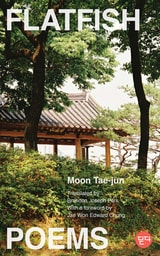
Flatfish
Poems, A Bilingual EditionMoon Tae-jun
Rutgers University Press, 2026
While Korea is certainly the setting of these poems, the works remain largely free of cultural-specific imagery and are, instead, naturalistic or universal. This first bilingual edition is a critical resource for students, poets, translators, and general readers alike.
English-Korean Bilingual Edition
영-한 이중언어판
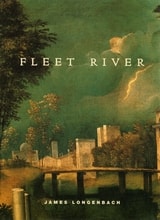
Fleet River
James Longenbach
University of Chicago Press, 2003
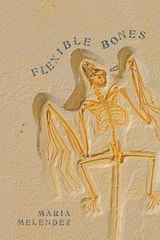
Flexible Bones
Maria Melendez
University of Arizona Press, 2010
The most modern of roller coasters ride on soft rubber tires and slithery smooth tracks. Gone are the days of jouncing along on steel wheels, smacking over hard metal joints. So it is with this book. Although readers are hurtled through time, space, and a universe of emotions, the ride is seductively smooth—and the transitions surprisingly seamless.
In the prologue, our attention bends to bridges, free-tail bats, soldiers, and peacemakers. These poems prepare us to watch for hopeful signs in the work ahead. In the first section, the spiritual seems to flow into the geopolitical—not in a hammer-you-over-the-head kind of way but in a blood-through-the-heart sort of way. In the second section, the spiritual mingles with the organic in a more personal way. By the end of the ride, we are aware that we have taken a trip with an intellectually fearless bushwhacker leading the way.
Anyone who has ever contemplated The Simpsons, sex-offender registries, desert internment camps, bats in flight, wars that never end, “la virgen,” grasshoppers, Google, or the cosmos will find a kindred spirit in Maria Melendez and a warm welcome in her work.
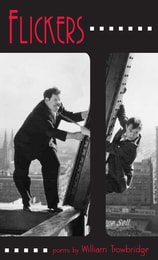
Flickers
PoemsWilliam Trowbridge
University of Arkansas Press, 2000
These poems are dark comedies that capture both the eerie and the ordinary. This balance is not easily achieved, but like a veteran comedian executing a pratfall, Trowbridge makes it all seem natural. His surreal family, the Glads, satirizes life in suburbia and reflects the often absurd margins of our urban lifestyle. By contrast, a group of poems revolving around a packing house in Kansas City (Trowbridge worked there as a young man), reminds us of those darker places in our lives that exist just “across the street from the ledgers and lapels.”
The variety of subjects Trowbridge works with is refreshing. Whether he is writing about Buster Keaton, Fred Astaire, June bugs, baseball, the holocaust, Cadillacs, or old dogs, his eye is always focused on the turn of phrase that will catch us off guard. His well-crafted lines are full of wit and humor. He approaches his subjects like Coyote approaches Fox—smiling, ready to expose his dear friend to the reality of his existence through sleight of hand. And, like Coyote, he teaches us to laugh at ourselves or perish under the weight of our everyday lives.
Flight from the Mother Stone
PoemsLaurence Lieberman
University of Arkansas Press, 2000
In his newest collection of poetry, Laurence Leiberman widens the scope of his previous Caribbean collections by drawing attention to the small enchanting islands of the Grenadines, a chain running between Grenada and St. Vincent. These outposts, often frequented by sailors, are mainly off the beaten tourist tracks. Lieberman’s poems bring to life all the overlooked people, hidden places, and indigenous but rarely seen animals which can be found on these islands.
These poems are as powerful as voodoo, full of energetic narratives in which Lieberman acts as observer while his characters—native “Caribs” and friends—guide us through the mystifying world of Guyana and the Caribbean: the planting of tree farms, local myths and religious sects, the daily crises of manual laborers working in the gold and diamond mines, and encounters with watras and harpy eagles.
Lieberman’s lines are rhythmic and strong; voices swirl in and out of his stanzas. From Lieberman’s own precise observations to his inclusion of Caribbean dialects, the language created here is deeply textured and unique. The majority of these poems are narratives, stories about a culture that is extremely attuned to the richness of its past. They remind their readers that no matter how diverse a society becomes, it remains irrevocably connected to the land it was born of and the plants and animals that struggle to survive in its midst.
Flight
Sunken Garden Poetry PrizeChaun Ballard
Tupelo Press, 2018
Flights of Victory/Vuelos de Victoria
Ernesto Cardenal
Northwestern University Press, 1995
Flinch of Song
Jennifer Militello
Tupelo Press, 2009
Floridoro
A Chivalric RomanceModerata Fonte
University of Chicago Press, 2006
First published in 1581, Floridoro remains a vivacious and inventive narrative by a singular poet.