Results by title
2018 books match the query 'Political aspects' and 81 start with f
FUTURE/PRESENT
Arts in a Changing AmericaDaniela Alvarez, Roberta Uno, and Elizabeth M. Webb, editors
Duke University Press, 2024
Selected contributors. Dahlak Brathwaite, adrienne maree brown, Jeff Chang, Tameca Cole, Ofelia Esparza, Antoine Hunter, Nobuko Miyamoto, Wendy Red Star, Spel, Jose Antonio Vargas, Carrie Mae Weems, Hinaleimoana Kwai Kong Wong-Kalu
Facing the Center
Toward an Identity Politics of One-to-One MentoringHarry C. Denny
Utah State University Press, 2010
The face of the writing center, be it mainstream or marginal, majority or miority, orthodox or subversive, always has implications for teaching and learning. Facing the Center will extend current research in writing center theory to bring it in touch with theories now common in cultural studies curricula. Denny takes up issues of power, agency, language, and meaning, and pushes his readers to ask how they themselves, or the centers in which they work, might be perpetuating cultures that undermine inclusive, progressive education.
Facing the Planetary
Entangled Humanism and the Politics of SwarmingWilliam E. Connolly
Duke University Press, 2017

Facts on the Ground
Archaeological Practice and Territorial Self-Fashioning in Israeli SocietyNadia Abu El-Haj
University of Chicago Press, 2002
Boldly uncovering an Israel in which science and politics are mutually constituted, this book shows the ongoing role that archaeology plays in defining the past, present, and future of Palestine and Israel.

Faith, Family, and Flag
Branson Entertainment and the Idea of AmericaJoanna Dee Das
University of Chicago Press, 2025
Branson, Missouri, the Ozark Mountain mecca of wholesome entertainment, has been home to countless stage shows espousing patriotism and Christianity, welcoming over ten million visitors a year. Some consider it “God’s Country” and others “as close to Hell as anything on Earth.” For Joanna Dee Das, Branson is a political, religious, and cultural harbinger of a certain enduring dream of what America is. She takes Branson more seriously than the light-hearted fun it advertises—and maybe we should too.
For Das, Branson’s performers offer visions of the American Dream that embody a set of values known as the three Fs: faith, family, and flag. Branson boosters insist that these are universal values that welcome all people; the city aims to capture as many tourists as possible. But over the past several decades, faith, family, and flag have become markers of contemporary conservatism. The shows and culture of Branson, for all their fun and laughter, have been a galvanizing political force for white, working-and-middle class, Christian Americans. For social and economic conservatives alike, Branson is practically proof-of-concept for America as they want it to be.
Faith, Family, and Flag is a comprehensive history of the Branson entertainment industry, within the context of America’s long culture wars. Das reveals how and why a town known for popular entertainment, a domain associated most often with the political left (“Hollywood liberals”), came to be so important to the political right and its vision for America.

Faithful Renderings
Jewish-Christian Difference and the Politics of TranslationNaomi Seidman
University of Chicago Press, 2006
Bringing together central issues in translation studies with episodes in Jewish–Christian history, Naomi Seidman considers a range of texts, from the Bible to Elie Wiesel’s Night, delving into such controversies as the accuracy of various Bible translations, the medieval use of converts from Judaism to Christianity as translators, the censorship of anti-Christian references in Jewish texts, and the translation of Holocaust testimony. Faithful Renderings ultimately reveals that translation is not a marginal phenomenon but rather a crucial issue for understanding the relations between Jews and Christians and indeed the development of each religious community.
Faking It
U.S. Hegemony in a “Post-Phallic” EraCynthia Weber
University of Minnesota Press, 1999

Families in War and Peace
Chile from Colony to NationSarah C. Chambers
Duke University Press, 2015
Family Activism
Immigrant Struggles and the Politics of NoncitizenshipPallares, Amalia
Rutgers University Press, 2014
Fanatical Schemes
Proslavery Rhetoric and the Tragedy of ConsensusPatricia Roberts-Miller
University of Alabama Press, 2009

Fanatics and Fire-eaters
Newspapers and the Coming of the Civil WarLorman A. Ratner and Dwight L. Teeter Jr.
University of Illinois Press, 2003
In the troubled years leading up to the Civil War, newspapers in the North and South presented the arguments for and against slavery, debated the right to secede, and in general denounced opposing viewpoints with imagination and vigor. At the same time, new technologies like railroads and the telegraph lent the debates an immediacy that both enflamed emotions and brought the slavery issue into every home.
Lorman A. Ratner and Dwight L. Teeter Jr. look at the power of America's fast-growing media to influence perception and the course of events prior to the Civil War. Drawing on newspaper accounts from across the United States, the authors look at how the media covered—and the public reacted to—major events like the Dred Scott decision, John Brown's raid on Harper's Ferry, and the election of 1860. They find not only North-South disputes about the institution of slavery but differing visions of the republic itself—and which region was the true heir to the legacy of the American Revolution.

Fantasies of Ito Michio
Tara Rodman
University of Michigan Press, 2024
Winner of the 2025 Dance Studies Association Oscar Brockett Book Prize
Born in Japan and trained in Germany, dancer and choreographer Ito Michio (1893–1961) achieved prominence in London before moving to the U.S. in 1916 and building a career as an internationally acclaimed artist. During World War II, Ito was interned for two years, and then repatriated to Japan, where he contributed to imperial war efforts by creating propaganda performances and performing revues for the occupying Allied Forces in Tokyo. Throughout, Ito continually invented stories of voyages made, artists befriended, performances seen, and political activities carried out—stories later dismissed as false.
Fantasies of Ito Michio argues that these invented stories, unrealized projects, and questionable political affiliations are as fundamental to Ito’s career as his ‘real’ activities, helping us understand how he sustained himself across experiences of racialization, imperialism, war, and internment. Tara Rodman reveals a narrative of Ito’s life that foregrounds the fabricated and overlooked to highlight his involvement with Japanese artists, such as Yamada Kosaku and Ishii Baku, and global modernist movements. Rodman offers “fantasy” as a rubric for understanding how individuals such as Ito sustain themselves in periods of violent disruption and as a scholarly methodology for engaging the past.
Fascism Comes to America
A Century of Obsession in Politics and CultureBruce Kuklick
University of Chicago Press, 2022
From the time Mussolini took power in Italy in 1922, Americans have been obsessed with and brooded over the meaning of fascism and how it might migrate to the United States. Fascism Comes to America examines how we have viewed fascism overseas and its implications for our own country. Bruce Kuklick explores the rhetoric of politicians, who have used the language of fascism to smear opponents, and he looks at the discussions of pundits, the analyses of academics, and the displays of fascism in popular culture, including fiction, radio, TV, theater, and film. Kuklick argues that fascism has little informational meaning in the United States, but instead, it is used to denigrate or insult. For example, every political position has been besmirched as fascist. As a result, the term does not describe a phenomenon so much as it denounces what one does not like. Finally, in displaying fascism for most Americans, entertainment—and most importantly film—has been crucial in conveying to citizens what fascism is about. Fascism Comes to America has been enhanced by many illustrations that exhibit how fascism was absorbed into the US public consciousness.
Fascist Virilities
Rhetoric, Ideology, and Social Fantasy in ItalyBarbara Spackman
University of Minnesota Press, 1996

Fear Of A Queer Planet
Queer Politics and Social TheoryMichael Warner
University of Minnesota Press, 1993

Fear Reverence Terror
Carlo Ginzburg
Seagull Books, 2017
Fear, Reverence, Terror invites us to look at images slowly, with the help of a few examples: Picasso’s Guernica, the “Lord Kitchener Wants You” World War I recruitment poster, Jacques-Louis David’s Marat, the frontispiece of Thomas Hobbes’s Leviathan, and a cup of gilded silver with scenes from the conquest of the New World. Are these political images, Carlo Ginzburg asks? Yes, because every image is, in a sense, political—an instrument of power. Tacitus once wrote, unforgettably, that we are enslaved by lies of which we ourselves are the authors. Is it possible to break this bond? Fear, Reverence, Terror will answer this question.

Fear and the First Amendment
Controversial Cases of the Roberts CourtKevin A. Johnson and Craig R. Smith
University of Alabama Press, 2024
DISTINGUISHED PUBLICATION AWARD FOR THE NATIONAL COMMUNICATION ASSOCIATION'S COMMUNICATION AND LAW DIVISION
The First Amendment: protected by law, threatened by fear in the Roberts Supreme Court.
In Fear and the First Amendment: Controversial Cases of the Roberts Court, Kevin A. Johnson and Craig R. Smith offer a deeply considered examination of the ways fear figures in First Amendment questions. Bringing together literature on theories of fear in rhetorical and philosophical traditions, Johnson and Smith focus on the rulings from the Roberts Court, which form a pivotal era of dramatic precedents. Each chapter analyzes one or more First Amendment cases and a variety of related fears—whether evidentiary or not—that pertain to a given case.
These cases include Morse v. Frederick, which takes up the competing fears of school administrators’ loss of authority and students’ loss of free speech rights. The authors touch on corporate funding of elections in Citizens United v. Federal Elections Commission, from the fear of corporate influence on electoral politics to corporate fears of alienating their consumers by backing political candidates. They explore religious freedom and fears of homosexuality in Christian Legal Society v. Martinez. Similarly, in Snyder v. Phelps, the authors delve further into fears of God, death, emotional distress, failing as a parent, and losing one’s reputation. Next, they investigate parents’ anxieties about violence in video games in Brown v. Entertainment Merchants Association. Finally, Johnson and Smith examine the role of fear in indecent, obscene, and graphic communication in three cases: FCC v. Fox Television Stations, Ashcroft v. American Civil Liberties Union, and United States v. Stevens.
Together these cases reveal fear to be an endemic factor in the rhetoric of First Amendment cases. This fascinating and original work will appeal to current legal practitioners and students of law, rhetoric, philosophy, and the First Amendment.

Federal Judiciary and Institutional Change
Deborah J. Barrow, Gary Zuk, and Gerard S. Gryski
University of Michigan Press, 1996
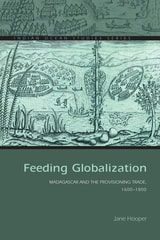
Feeding Globalization
Madagascar and the Provisioning Trade, 1600–1800Jane Hooper
Ohio University Press, 2017
Between 1600 and 1800, the promise of fresh food attracted more than seven hundred English, French, and Dutch vessels to Madagascar. Throughout this period, European ships spent months at sea in the Atlantic and Indian Oceans, but until now scholars have not fully examined how crews were fed during these long voyages. Without sustenance from Madagascar, European traders would have struggled to transport silver to Asia and spices back to Europe. Colonies in Mozambique, Mauritius, and at the Cape relied upon frequent imports from Madagascar to feed settlers and slaves.
In Feeding Globalization, Jane Hooper draws on challenging and previously untapped sources to analyze Madagascar’s role in provisioning European trading networks within and ultimately beyond the Indian Ocean. The sale of food from the island not only shaped trade routes and colonial efforts but also encouraged political centralization and the slave trade in Madagascar. Malagasy people played an essential role in supporting European global commerce, with far-reaching effects on their communities.
Feeding Globalization reshapes our understanding of Indian Ocean and global history by insisting historians should pay attention to the role that food played in supporting other exchanges.
Feeling Media
Potentiality and the Afterlife of ArtMiryam Sas
Duke University Press, 2022

Female Body Image and Beauty Politics in Contemporary Indian Literature and Culture
Edited by Srirupa Chatterjee and Shweta Rao Garg
Temple University Press, 2024
Influences from the colonial period through the age of the internet and globalization have reinforced Eurocentric ideals about femininity and womanhood. This long overdue volume addresses the pressures of beautification that Indian women face as they struggle with body acceptance and are often denied pride in their natural bodies.
Contributors: Annika Taneja, Anurima Chanda, Aratrika Bose, Kavita Daiya, Ketaki Chowkhani, Nishat Haider, Samrita Sinha, Shailendra Kumar Singh, Shubhra Ray, Sucharita Sarkar, Sukshma Vedere, Swatie, Tanupriya, Turni Chakrabarti, and the editors.

Feminism against Cisness
Emma Heaney, editor
Duke University Press, 2024
Contributors. Cameron Awkward-Rich, Marquis Bey, Kay Gabriel, Jules Gill-Peterson, Emma Heaney, Margaux L. Kristjansson, Greta LaFleur, Grace Lavery, Durba Mitra, Beans Velocci, Joanna Wuest

Feminism and Political Theory
Edited by Cass R. Sunstein
University of Chicago Press, 1990

Feminist Connections
Rhetoric and Activism across Time, Space, and PlaceEdited by Katherine Fredlund, Kerri Hauman, and Jessica Ouellette
University of Alabama Press, 2020
Tracing the rhetoric of feminist activism across generations, cultures, and movements.
In 1917, Alice Paul and other suffragists famously picketed in front of the White House while holding banners with short, pithy sayings such as “Mr. President: How long must women wait for Liberty?” Their juxtaposition of this short phrase with the image of the White House (a symbol of liberty and justice) relies on the same rhetorical tactics as memes, a genre contemporary feminists use frequently to make arguments about reproductive rights, Black Lives Matter, sex-positivity, and more. Many such connections between feminists of different spaces, places, and eras have yet to be considered, let alone understood. Feminist Connections: Rhetoric and Activism across Time, Space, and Place reconsiders feminist rhetorical strategies as linked, intergenerational, and surprisingly consistent despite the emergence of new forms of media and intersectional considerations.
Contributors to this volume highlight continuities in feminist rhetorical practices that are often invisible to scholars, obscured by time, new media, and wildly different cultural, political, and social contexts. Thus, this collection takes a nonchronological approach to the study of feminist rhetoric, grouping chapters by rhetorical practice rather than time, content, or choice of media.
By connecting historical, contemporary, and future trajectories, this collection develops three feminist rhetorical frameworks: revisionary rhetorics, circulatory rhetorics, and response rhetorics. A theorization of these frameworks explains how feminist rhetorical practices (past and present) rely on similar but diverse methods to create change and fight oppression. Identifying these strategies not only helps us rethink feminist rhetoric from an academic perspective but also allows us to enact feminist activist rhetorics beyond the academy during a time in which feminist scholarship cannot afford to remain behind its hallowed yet insular walls.

Fencing in Democracy
Border Walls, Necrocitizenship, and the Security StateMiguel Díaz-Barriga and Margaret Dorsey
Duke University Press, 2019

Fernando
A Song by ABBAKay Dickinson
Duke University Press, 2025
Fictions of Land and Flesh
Blackness, Indigeneity, SpeculationMark Rifkin
Duke University Press, 2019

Fidel between the Lines
Paranoia and Ambivalence in Late Socialist Cuban CinemaLaura-Zoë Humphreys
Duke University Press, 2019

Fidel's Ethics of Violence
The Moral Dimension of the Political Thought of Fidel CastroDayan Jayatilleka
Pluto Press, 2007
This book makes a timely intervention into the question of Castro's historical role and contribution. The author argues that Castro's doctrine of armed struggle is the logical development of his idea of the ethical liberation fighter. At its core is an unremitting emphasis on the ethical use of violence.
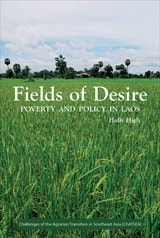
Fields of Desire
Poverty and Policy in LaosHolly High
National University of Singapore Press, 2014
Based on long-term fieldwork in a Lao village that has been the subject of multiple poverty reduction and development programs, High’s account looks at implementation on the ground. While these efforts were laudable in their aims of reducing poverty, they often failed to achieve their objectives. Local people received them with suspicion and disillusionment. Nevertheless, poverty reduction policies continued to be renewed by planners and even desired locally. High relates this to the force of aspirations among rural Lao, ambivalent understandings of power and the “post-rebellious” moment in contemporary Laos.
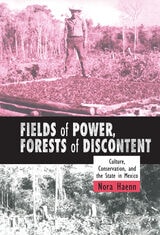
Fields of Power, Forests of Discontent
Culture, Conservation, and the State in MexicoNora Haenn
University of Arizona Press, 2005
In Fields of Power, Forests of Discontent, Nora Haenn questions the rise and fall of this conservation program to examine conservation at the intersection of national-international agendas and local political-economic interests. While other assessments of such programs have typically focused on why they do or do not succeed, Haenn instead considers conservation’s encounter with people’s everyday lives—and how those experiences affect environmental management.
Haenn explores conservation and development from two perspectives: first regionally, to look at how people used conservation to create a new governing entity on a tropical frontier once weakly under national rule; then locally, focusing on personal histories and aspects of community life that shape people's daily lives, farming practices, and immersion in development programs—even though those programs ultimately fail to resolve economic frustrations. She identifies how key political actors, social movements, and identity politics contributed to the instability of the Calakmul alliance. Drawing on extensive interviews with Reserve staff, including its director, she connects regional trends to village life through accounts of disputes at ejido meetings and the failure of ejido development projects.
In the face of continued difficulty in creating a popular conservation in Calakmul, Haenn uses lessons from people's lives—history, livelihood, village organization, expectations—to argue for a "sustaining conservation," one that integrates social justice and local political norms with a new, more robust definition of conservation. In this way, Fields of Power, Forests of Discontent goes beyond local ethnography to encourage creative discussion of conservation's impact on both land and people.
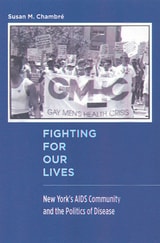
Fighting For Our Lives
New York's AIDS Community and the Politics of DiseaseChambré, Susan M
Rutgers University Press, 2006
In the first decade of the AIDS epidemic, New York City was struck like no other. By the early nineties, it was struggling with more known cases than the next forty most infected cities, including San Francisco, combined.
Fighting for Our Lives is the first comprehensive social history of New York's AIDS community-a diverse array of people that included not only gay men, but also African Americans, Haitians, Latinos, intravenous drug users, substance abuse professionals, elite supporters, and researchers. Looking back over twenty-five years, Susan Chambré focuses on the ways that these disparate groups formed networks of people and organizations that-both together and separately-supported persons with AIDS, reduced transmission, funded research, and in the process, gave a face to an epidemic that for many years, whether because of indifference, homophobia, or inefficiency, received little attention from government or health care professionals.
Beyond the limits of New York City, and even AIDS, this case study also shows how any epidemic provides a context for observing how societies respond to events that expose the inadequacies of their existing social and institutional arrangements. By drawing attention to the major faults of New York's (and America's) response to a major social and health crisis at the end of the twentieth century, the book urges more effective and sensitive actions-both governmental and civil-in the future.

Figures of Time
Affect and the Television of PreemptionToni Pape
Duke University Press, 2019
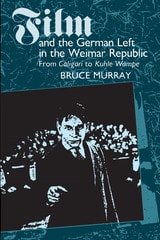
Film and the German Left in the Weimar Republic
From Caligari to Kuhle WampeBy Bruce Murray
University of Texas Press, 1990
The Weimar Republic of Germany, covering the post-World War I period of civil and governmental strife, witnessed a great struggle among a variety of ideologies, a struggle for which the arts provided one important arena. Leftist individuals and organizations critiqued mainstream art production and attempted to counter what they perceived as its conservative-to-reactionary influence on public opinion. In this groundbreaking study, Bruce Murray focuses on the leftist counter-current in Weimar cinema, offering an alternative critical approach to the traditional one of close readings of the classical films.
Beginning with a brief review of pre-Weimar cinema (1896-1918), he analyzes the film activity of the Social Democratic Party, the German Communists, and independent leftists in the Weimar era. Leftist filmmakers, journalists, and commentators, who in many cases contributed significantly to marginal leftist as well as mainstream cinema, have, until now, received little scholarly attention. Drawing on exhaustive archival research and personal interviews, Murray shows how the plurality of aesthetic models represented in the work of individuals who participated in leftist experiments with cinema in the 1920S collapsed as Germany underwent the transition from parliamentary democracy to fascist dictatorship. He suggests that leftists shared responsibility for that collapse and asserts the value of such insights for those who contemplate alternatives to institutional forms of cinematic discourse today.

Film in the Middle East and North Africa
Creative DissidenceEdited by Josef Gugler
University of Texas Press, 2011
This is the first study to cover cinemas from Iran to Morocco. Nine essays present the region's major national cinemas, devoting special attention to the work of directors who have given image and voice to dissent from political regimes, from patriarchal customs, from fundamentalist movements, and from the West. These country essays are complemented by in-depth discussions of eighteen films that have been selected for both their excellence and their critical engagement with pressing current issues. The introduction provides a comprehensive overview of filmmaking throughout the region, including important films produced outside the national cinemas. The long history of Iranian cinema, its international renown, and the politics of directors confronting the state, earns it a special place in this volume. The other major emphasis is on the Israel/Palestine conflict, featuring films by Palestinian directors, Israelis, and an Egyptian working in Syria.
Nineteen authors collaborated on this book, among them Walter Armbrust, Roy Armes, Kevin Dwyer, Eric Egan, Nurith Gertz, Lina Khatib, Florence Martin, and Nadia Yaqub. About half of the contributors are film scholars; the others range across literary studies and the social sciences to two film directors and a novelist. Beyond differences in disciplinary orientation, there is considerable variation among contributors in the perspectives that inform their writing. They offer an illuminating range of approaches to the cinemas of the region.
The book is richly illustrated with posters of the featured films, photos of their directors at work, and stills illustrating critical arguments in the film essays.
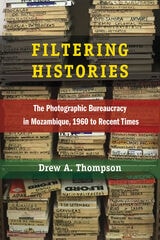
Filtering Histories
The Photographic Bureaucracy in Mozambique, 1960 to Recent TimesDrew A. Thompson
University of Michigan Press, 2021
Photographers and their images were critical to the making of Mozambique, first as a colony of Portugal and then as independent nation at war with apartheid in South Africa. When the Mozambique Liberation Front came to power, it invested substantial human and financial resources in institutional structures involving photography, and used them to insert the nation into global debates over photography's use. The materiality of the photographs created had effects that neither the colonial nor postcolonial state could have imagined.
Filtering Histories: The Photographic Bureaucracy in Mozambique, 1960 to Recent Times tells a history of photography alongside state formation to understand the process of decolonization and state development after colonial rule. At the center of analysis are an array of photographic and illustrated materials from Mozambique, South Africa, Portugal, and Italy. Thompson recreates through oral histories and archival research the procedures and regulations that engulfed the practice and circulation of photography. If photographers and media bureaucracy were proactive in placing images of Mozambique in international news, Mozambicans were agents of self-representation, especially when it came to appearing or disappearing before the camera lens. Drawing attention to the multiple images that one published photograph may conceal, Filtering Histories introduces the popular and material formations of portraiture and photojournalism that informed photography's production, circulation, and archiving in a place like Mozambique. The book reveals how the use of photography by the colonial state and the liberation movement overlapped, and the role that photography played in the transition of power from colonialism to independence.

Financial Derivatives and the Globalization of Risk
Edward LiPuma and Benjamin Lee
Duke University Press, 2005
LiPuma and Lee explain how derivatives are essentially wagers—often on the fluctuations of national currencies—based on models that aggregate and price risk. They describe how these financial instruments are changing the face of capitalism, undermining the power of nations and perpetrating a new and less visible form of domination on postcolonial societies. As they ask: How does one know about, let alone demonstrate against, an unlisted, virtual, offshore corporation that operates in an unregulated electronic space using a secret proprietary trading strategy to buy and sell arcane financial instruments? LiPuma and Lee provide a necessary look at the obscure but consequential role of financial derivatives in the global economy.
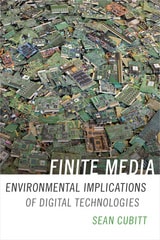
Finite Media
Environmental Implications of Digital TechnologiesSean Cubitt
Duke University Press, 2017

Fire Management in the American West
Forest Politics and the Rise of MegafiresMark Hudson
University Press of Colorado, 2011
Drawing on correspondence both between and within the Forest Service and the major timber industry associations, newspaper articles, articles from industry outlets, and policy documents from the late 1800s through the present, Hudson shows how the US forest industry, under the constraint of profitability, pushed the USFS away from private industry regulation and toward fire exclusion, eventually changing national forest policy into little more than fire policy.
More recently, the USFS has attempted to move beyond the policy of complete fire suppression. Interviews with public land managers in the Pacific Northwest shed light on the sources of the agency's struggles as it attempts to change the way we understand and relate to fire in the West.
Fire Management in the American West will be of great interest to environmentalists, sociologists, fire managers, scientists, and academics and students in environmental history and forestry.
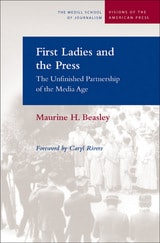
First Ladies and the Press
The Unfinished Partnership of the Media AgeMaurine H. Beasley
Northwestern University Press, 2005

Fish For All
An Oral History of Multiple Claims and Divided Sentiment on Lake MichiganMichael J. Chiarappa
Michigan State University Press, 2003
The contentious claims of groups seeking to use Lake Michigan’s fisheries resources were at the center of modern America’s emerging environmental politics in the middle of the twentieth century. Inheriting the environmental abuse, political oversights, and cultural inclinations of an earlier era, Lake Michigan’s later twentieth century fisheries stakeholders found themselves relentlessly divided by a series of disputes arising from the promotion of sport fishing over commercial fishing, policy-making positions of state government, the ecological changes wrought by nonindigenous species, and the reclamation of treaty-rights fishing by Native Americans.
Going beyond the chronicling of past events, Fish for All contextualizes the shared experiences that shape each group’s collective memory and presents their historical narratives as discourse that legitimizes their current claims to the resource. Fish for All highlights the historically charged consciousness of fishing communities and points to the evolving communication that will take place between them, fisheries historians, fisheries anthropologists, scientists, and policymakers.

Flash Effect
Science and the Rhetorical Origins of Cold War AmericaDavid J. Tietge
Ohio University Press, 2002
The ways science and technology are portrayed in advertising, in the news, in our politics, and in the culture at large inform the way we respond to these particular facts of life. The better we are at recognizing the rhetorical intentions of the purveyors of information and promoters of mass culture, the more adept we become at responding intelligently to them.
Flash Effect, a startling book by David J. Tietge, documents the manner in which those at the highest levels of our political and cultural institutions conflated the rhetoric of science and technology with the rhetorics of religion and patriotism to express their policies for governance at the onset of the Cold War and to explain them to the American public.
Professor Tietge details our cultural attitudes about science in the early years of the Cold War, when on the heels of a great technological victory Americans were faced with the possibility of destruction by the very weapons that had saved them.
In Flash Effect we learn how, by symbolizing the scientist as both a father figure and a savior—and by celebrating the technological objects of his labor—the campaign to promote science took hold in the American consciousness. The products of that attitude are with us today more than ever.
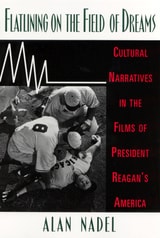
Flatlining on the Field of Dreams
Cultural Narratives in the Films of President Reagan's AmericaNadel, Alan
Rutgers University Press, 1997
-Film Quarterly
"From Back to the Future to Forrest Gump, Nadel shows not only how notions of cinematic time re-script political change but how our very conceptualizations of change are thematized by our experiences of watching movies. This is not simply film history, or film as history, but film affirming "history" in the same way that Ronald Reagan affirmed film narratives."
-Susan Jeffords, University of Washington
"Flatlining on the Field of Dreams brilliantly restages the cultural narratives associated with Reaganism within a neo-imperialist cinematic space and reveals the heretofore unexamined role class played in the reproduction of those narratives."
-Donald E. Pease, Dartmouth College
Flatlining on the Field of Dreams demonstrates, with witty prose and careful analysis, how the overindulgent, image-conscious years of the Reagan administration are reflected in sundry aspects of American films produced during that era. Discussing dozens of films, including Home Alone, Beetlejuice, Ghost, The Little Mermaid, Working Girl, Who Framed Roger Rabbit?, and Trading Places, Alan Nadel identifies narratives about credit, deregulation, gender, race, and masculinity that defined "President Reagan's America." Linking the way Hollywood films work to the stories they tell, he explains how the ideas and values of Reaganism became the symbolic food of a hyper-consumptive society. The book provides hard-to-ignore demonstrations of the extensive synergy between politics, history, and popular culture.

Food, Farms, and Solidarity
French Farmers Challenge Industrial Agriculture and Genetically Modified CropsChaia Heller
Duke University Press, 2012

Football and Colonialism
Body and Popular Culture in Urban MozambiqueNuno Domingos
Ohio University Press, 2017
In articles for the newspaper O Brado Africano in the mid-1950s, poet and journalist José Craveirinha described the ways in which the Mozambican football players in the suburbs of Lourenço Marques (now Maputo) adapted the European sport to their own expressive ends. Through gesture, footwork, and patois, they used what Craveirinha termed “malice”—or cunning—to negotiate their places in the colonial state. “These manifestations demand a vast study,” Craveirinha wrote, “which would lead to a greater knowledge of the black man, of his problems, of his clashes with European civilization, in short, to a thorough treatise of useful and instructive ethnography.”
In Football and Colonialism, Nuno Domingos accomplishes that study. Ambitious and meticulously researched, the work draws upon an array of primary sources, including newspapers, national archives, poetry and songs, and interviews with former footballers. Domingos shows how local performances and popular culture practices became sites of an embodied history of Mozambique. The work will break new ground for scholars of African history and politics, urban studies, popular culture, and gendered forms of domination and resistance.
For Emplacement
Political Ontology in Two ActsMario Blaser
Duke University Press, 2025
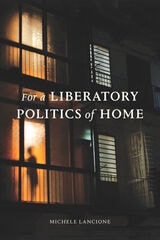
For a Liberatory Politics of Home
Michele Lancione
Duke University Press, 2023

For the Birds
Protecting Wildlife through the Naturalist GazeElizabeth Cherry
Rutgers University Press, 2019
One in five people in the United States is a birdwatcher, yet the popular understanding of birders reduces them to comical stereotypes, obsessives who only have eyes for their favorite rare species. In real life, however, birders are paying equally close attention to the world around them, observing the devastating effects of climate change and mass extinction, while discovering small pockets of biodiversity in unexpected places.
For the Birds offers readers a glimpse behind the binoculars and reveals birders to be important allies in the larger environmental conservation movement. With a wealth of data from in-depth interviews and over three years of observing birders in the field, environmental sociologist Elizabeth Cherry argues that birders learn to watch wildlife in ways that make an invaluable contribution to contemporary conservation efforts. She investigates how birders develop a “naturalist gaze” that enables them to understand the shared ecosystem that intertwines humans and wild animals, an appreciation that motivates them to participate in citizen science projects and wildlife conservation.
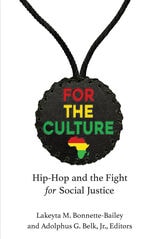
For the Culture
Hip-Hop and the Fight for Social JusticeLakeyta M. Bonnette-Bailey and Adolphus G. Belk, Jr., Editors
University of Michigan Press, 2022

Forced Marches
Soldiers and Military Caciques in Modern MexicoEdited by Ben Fallaw and Terry Rugeley
University of Arizona Press, 2012
When Mexico first became a nation, its military and militias were two of the country’s few major institutions besides the Catholic Church. The army and local provincial militias functioned both as political pillars, providing institutional stability of a crude sort, and as springboards for the ambitions of individual officers. Military service provided upward social mobility, and it taught a variety of useful skills, such as mathematics and bookkeeping.
In the postcolonial era, however, militia units devoured state budgets, spending most of the national revenue and encouraging locales to incur debts to support them. Men with rifles provided the principal means for maintaining law and order, but they also constituted a breeding-ground for rowdiness and discontent. As these chapters make clear, understanding the history of state-making in Mexico requires coming to terms with its military past.