Results by title
1325 books match the query 'Psychology' and 46 start with f
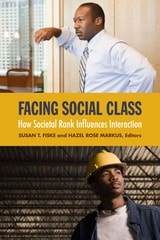
Facing Social Class
How Societal Rank Influences InteractionSusan T. Fiske
Russell Sage Foundation, 2012
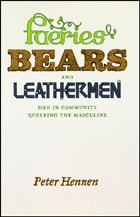
Faeries, Bears, and Leathermen
Men in Community Queering the MasculinePeter Hennen
University of Chicago Press, 2008
Hennen’s colorful study focuses on a trio of groups: the Radical Faeries, who parody effeminacy by playfully embracing it, donning prom dresses and glitter; the Bears, who strive to appear like “regular guys” and celebrate their larger, hairier bodies; and the Leathermen, who emulate hypermasculine biker culture, simultaneously paying homage to and undermining notions of manliness. Along with a historical analysis of the association between effeminacy and homosexuality, Hennen examines how this connection affects the groups’ sexual practices. Ultimately, he argues, while all three groups adopt innovative approaches to gender issues and sexual pleasure, masculine norms continue to constrain members of each community.
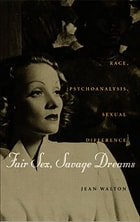
Fair Sex, Savage Dreams
Race, Psychoanalysis, Sexual DifferenceJean Walton
Duke University Press, 2001
Charting the fantasies of racial difference in these women’s writings, Walton establishes that race—particularly during this period—was inseparable from accounts of gender and sexuality. While arguing that these women remained notably oblivious to the racial meanings embedded in their own attempts to rearticulate feminine sexuality, Walton uses these very blindspots to understand how race and sex are deeply imbricated in the constitution of subjectivity. Challenging the notion that subjects acquire gender identities in isolation from racial ones, she thus demonstrates how white-centered psychoanalytic theories have formed the basis for more contemporary feminist and queer explorations of fantasy, desire, power, and subjectivity.
Fair Sex, Savage Dreams will appeal to scholars of psychoanalysis, literary and cinematic modernism, race studies, queer theory, feminist theory, and anthropology.
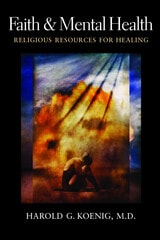
Faith and Mental Health
Religious Resources for HealingHarold G. Koenig
Templeton Press, 2005
Dr. Harold Koenig opens a window on mental health, providing an unprecedented source of practical information about the relationship between religion and mental health. He examines how Christianity and other world religions deliver mental health services today, and he makes recommendations, based on research, expertise, and experience, for new programs to meet local needs.
Meticulously researched and documented, Faith and Mental Health includes
- Research on the relationship between religion and positive emotions, psychiatric illnesses, and severe and persistent mental disorders
- Ways in which religion has influenced mental health historically, and how now and in the future it can be involved with mental health
- A comprehensive description and categorization of Christian and non-Christian faith-based organizations that provide mental health resources
- Resources for religious professionals and faith communities on how to design effective programs
Presenting a combination of the history and current research of mental health and religion along with a thorough examination of faith-based organizations operating in the field, this book is a one-of-a-kind resource for the healthcare community; its valuable research and insights will benefit medical and religious professionals, and anyone concerned with the future of mental health care.
Fame and Fandom
Functioning On and OfflineCelia Lam
University of Iowa Press, 2022
In case studies including Supernatural, Harry Styles, YouTube influencers, film location sites, Keanu Reeves, and celebrities as fans, readers find new approaches to fan/celebrity encounters and parasocial relationships. This is the go-to volume on the symbiotic relationship between fame and fandom.

Families at the Intersection of Mental Health and Disabilities
Groves Monographs on Marriage and Family (Volume 6)Brian Paul Masciadrelli
Michigan Publishing Services, 2022

Family Trouble
Middle-Class Parents, Children's Problems, and the Disruption of Everyday LifeFrancis, Ara
Rutgers University Press, 2015
Francis interviewed the mothers and fathers of children with such problems as depression, bi-polar disorder, autism, learning disabilities, drug addiction, alcoholism, fetal alcohol syndrome, and cerebral palsy. Children’s problems, she finds, profoundly upset the foundations of parents’ everyday lives, overturning taken-for-granted expectations, daily routines, and personal relationships. Indeed, these problems initiated a chain of disruption that moved through parents’ lives in domino-like fashion, culminating in a crisis characterized by uncertainty, loneliness, guilt, grief, and anxiety. Francis looks at how mothers and fathers often differ in their interpretation of a child’s condition, discusses the gendered nature of child rearing, and describes how parents struggle to find effective treatments and to successfully navigate medical and educational bureaucracies. But above all, Family Trouble examines how children’s problems disrupt middle-class dreams of the “normal” family. It captures how children’s problems “radiate” and spill over into other areas of parents’ lives, wreaking havoc even on their identities, leading them to reevaluate deeply held assumptions about their own sense of self and what it means to achieve the good life.
Engagingly written, Family Trouble offers insight to professionals and solace to parents. The book offers a clear message to anyone in the throes of family trouble: you are in good company, and you are not as different as you might feel...

Fat Activism (Second Edition)
A Radical Social MovementCharlotte Cooper
Intellect Books, 2021
Combining rigorous scholarship with personal, accessible writing, Fat Activism: A Radical Social Movement is not only an invaluable contribution to the burgeoning field of fat studies, but also a vehicle for much-needed social change.
Fatal Words
Communication Clashes and Aircraft CrashesSteven Cushing
University of Chicago Press, 1994
In Fatal Words, Steven Cushing explains how miscommunication has led to dozens of aircraft disasters, and he proposes innovative solutions for preventing them. He examines ambiguities in language when aviation jargon and colloquial English are mixed, when a word is used that has different meanings, and when different words are used that sound alike. To remedy these problems, Cushing proposes a visual communication system and a computerized voice mechanism to help clear up confusing language.
Fatal Words is an accessible explanation of some of the most notorious aircraft tragedies of our time, and it will appeal to scholars in communications, linguistics, and cognitive science, to aviation experts, and to general readers.
Feeding Anorexia
Gender and Power at a Treatment CenterHelen Gremillion
Duke University Press, 2003
Feeding Anorexia is based on fourteen months of ethnographic research in a small inpatient unit located in a major teaching and research hospital in the western United States. Gremillion attended group, family, and individual therapy sessions and medical staff meetings; ate meals with patients; and took part in outings and recreational activities. She also conducted over one hundred interviews-with patients, parents, staff, and clinicians. Among the issues she explores are the relationship between calorie-counting and the management of consumer desire; why the "typical" anorexic patient is middle-class and white; the extent to which power differentials among clinicians, staff, and patients model "anorexic families"; and the potential of narrative therapy to constructively reframe some of the problematic assumptions underlying more mainstream treatments.
Feeding the Family
The Social Organization of Caring as Gendered WorkMarjorie L. DeVault
University of Chicago Press, 1991
Drawing from interviews conducted in 1982-83 in a diverse group of American households, DeVault reveals the effort and skill behind the "invisible" work of shopping, cooking, and serving meals. She then shows how this work can become oppressive for women, drawing them into social relations that construct and maintain their subordinate position in household life.
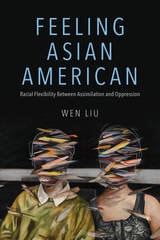
Feeling Asian American
Racial Flexibility Between Assimilation and OppressionWen Liu
University of Illinois Press, 2024
Asian Americans have become the love-hate subject of the American psyche: at times celebrated as the model minority, at other times hated as foreigners. Wen Liu examines contemporary Asian American identity formation while placing it within a historical and ongoing narrative of racial injury. The flexible racial status of Asian Americans oscillates between oppression by the white majority and offers to assimilate into its ranks. Identity emerges from the tensions produced between those two poles. Liu dismisses the idea of Asian Americans as a coherent racial population. Instead, she examines them as a raced, gendered, classed, and sexualized group producing varying physical and imaginary boundaries of nation, geography, and citizenship. Her analysis reveals repeated norms and acts that capture Asian Americanness as part of a racial imagination that buttresses capitalism, white supremacy, neoliberalism, and the US empire.
An innovative challenge to persistent myths, Feeling Asian American ranges from the wartime origins of Asian American psychology to anti-Asian attacks to present Asian Americanness as a complex political assemblage.

Feminism and Affect at the Scene of Argument
Beyond the Trope of the Angry FeministAuthored by Barbara Tomlinson
Temple University Press, 2010
Are feminists really angry, unreasoning, man-haters who argue only from an emotional perspective as some claim? Does the incessant repetition of this trope make anti-feminism and misogyny a routine element in everyday speech? And does this repetition work towards delegitimizing feminist arguments and/or undermining feminist politics? How do skilled feminist writers deploy affect to advance feminist ideas? In Feminismand Affect at the Scene of Argument, Barbara Tomlinson addresses these questions, providing a lucid examination of the role of affect in feminist and antifeminist academic arguments.
Using case studies from controversies in socio-legal studies, musicology, and science studies, among other disciplines, Tomlinson examines the rhetorics of anger, contempt, betrayal, intensification, and ridicule. She employs a set of critical tools—feminist “socio-forensic” discursive analysis—that will prove indispensible for understanding and countering tropes like that of the angry feminist. Moreover, these tools will advance feminism, which, she argues, is generated in and by arguments with allies and antagonists.
In an era of debates that generate more heat than light, Feminism and Affectat the Scene of Argument offers a timely provocation for transforming the terms of reading and writing in scholarship and civic life.
Fighting for Their Lives
Inside the Experience of Capital Defense AttorneysSusannah Sheffer
Vanderbilt University Press, 2013
Through vivid interviews amplified by the author's responses and commentary, these attorneys reveal aspects of their internal experience that they have never talked about until now. How do capital defenders manage the weight of the responsibility they carry? To what extent do they experience symptoms of trauma in the aftermath of losing a client to execution or as a result of the cumulative effects of engaging in capital defense work? What motivates them, and what do they draw upon, in order to keep engaging in such emotionally demanding work? Have they considered practicing other types of law? What can we learn from capital defenders not only about the deep and long-term effects of the death penalty but also about broader human questions of hope, effectiveness, success, failure, strength, fragility, and perseverance?
Figurations
Child, Bodies, WorldsClaudia Castañeda
Duke University Press, 2002
Castañeda investigates the construction of the child as both a natural and cultural body, the character of its embodiment, and its imaginative appeal in various settings. The sites through which she tracks the bodily production and deployment of the child include nineteenth-century developmental science; cognitive neuroscience in the late twentieth century; international adoption; rumors and media coverage of child-organ stealing; and poststructuralist theory. Her work reveals the extent to which the child's cultural significance and value lie in its status as a body whose incompleteness makes it "available" for such varied uses. Figurations establishes the child as a key figure for understanding and rethinking the politics of nature, culture, bodies, and subjects in changing "global" worlds.
Final Negotiations
A Story of Love, Loss, and Chronic IllnessCarolyn Ellis
Temple University Press, 2018
Taking an autoethnographic perspective, Ellis focuses on her feeling and thinking self in relationships, narrating particular lived experiences that offer a gateway into understanding interpersonal and cultural life. In her new epilogue, “From New Endings to New Beginnings,” Ellis describes her changed identity and how Final Negotiations informs her life and her understanding of how she and her current partner grow older together. She hopes her book provides companionship and comfort to readers who also will suffer loss in their lives.

Finding Mr. Perfect
K-Drama, Pop Culture, Romance, and RaceMin Joo Lee
Rutgers University Press, 2026

Finding the Right Psychiatrist
A Guide for Discerning ConsumersRobert L. Taylor, M.D.
Rutgers University Press, 2014
Combining over forty years of experience as a practicing psychiatrist with an insider’s perspective of current psychiatric practice, Dr. Robert Taylor provides invaluable guidance to persons considering psychiatric treatment or contemplating a change of doctor in an effort to find better treatment. Cautioning readers against settling for a psychiatrist who views psychodrugs as the treatment, Dr. Taylor provides specific suggestions for avoiding the growing number of psychiatrists who write scripts automatically.
In recent decades, psychiatric care has been overly reliant on psychodrugs. Patient diagnoses are being seriously questioned. Finding the Right Psychiatrist encourages people to seek care from a complete psychiatrist—one able and willing to pursue matters of mind and brain/body, rather than settling on psychodrugs as the main treatment.
Throughout the book, readers learn about the proper uses and limits of psychiatric diagnosis. Dr. Taylor carefully outlines an individualized approach to psychiatric care guided more by a patient’s particular problems and situation than by diagnoses that often mislead more than help. He provides a realistic appraisal of psychiatric medications: what they can and cannot do as well, a discussion of mind work tools, traits of effective psychiatrists, suggestions for how to deal with common insurance company obstacles, and an explanation of the confusing politics of psychiatry.
An indispensable resource for anyone seeking psychiatric help or tasked with advising someone of what to look for in a doctor, Finding the Right Psychiatrist gives hope and guidance to those searching for complete and personalized care.
View a three minute video of Dr. Robert L. Taylor speaking about Finding the Right Psychiatrist.
Firefighter and Paramedic Burnout
The Survival Guide - The Role You PlayGerald Loren Fishkin, Ph.D.
Parkhurst Brothers, Inc., 0
Firefighter and Paramedic Burnout was the first comprehensive book dealing with the recognition and treatment of burnout among firefighter and paramedic personnel. Today, this standard still serves to provide readers with a system of identification of early warning signs of excessive stress, its personal and social consequences, and interventions that have been proven to assist firefighters and their family members to return to a state of health and productivity.
First Find Your Child a Good Mother
The Construction of Self in Two African CommunitiesRiesman, Paul
Rutgers University Press, 1992
Through a systematic comparison of the life circumstances, child-rearing practices, and personalities of the FulBe and their former slaves, the RiimaayBe, this book develops an alternative theory of the way personality is formed in the Fulani society of West Africa. Riesman discusses the different characters, economies, and life plans of adult men and women of both groups, focusing on their ideas about the value of relatives. He further presents detailed observations of child-rearing practices, and concludes that the FulBe and RiimaayBe do not differ in these practices. Contrasting Fulani and Western notions of parenting, he suggests that child-rearing practices are themselves irrelevant to the formation of adult personality, but that a people's ideas about the meaning of life, social relations, and the development of character are very important. Finally, Riesman outlines a sociocultural theory of personality and its formation, and uses this theory to make sense of the differences between FulBe and RiimaayBe.
Fitting the Facts of Crime
An Invitation to Biopsychosocial CriminologyChad Posick, Michael Rocque, and J.C. Barnes
Temple University Press, 2022
Biosocial criminology—and biosocial criminologists—focuses on both the environmental and biological factors that contribute to antisocial behavior. Importantly, these two domains are not separate parts of an equation but pieces of the same puzzle that fit together for a complete picture of the causes of crime/antisocial behavior.
Fitting the Facts of Crime applies a biopsychosocial lens to the “13 facts of crime” identified by John Braithwaite in his classic book, Crime, Shame and Reintegration. The authors unpack established facts—about gender and sex, age, environment, education, class, social bonds and associations, stress, and other influences—providing both empirical research and evidence from biopsychosocial criminology to address the etiology behind these facts and exactly how they are related to deviant behavior.
With their approach, the authors show how biopsychosocial criminology can be a unifying framework to enrich our understanding of the most robust and well-established topics in the field. In so doing, they demonstrate how biological and psychological findings can be responsibly combined with social theories to lend new insight into existing inquiries and solutions. Designed to become a standard text for criminology in general, Fitting the Facts of Crime introduces key concepts and applies them to real-world situations.
Flights of Fancy, Leaps of Faith
Children's Myths in Contemporary AmericaCindy Dell Clark
University of Chicago Press, 1995
"A very enjoyable read, this book is a seriously researched record of children's myths, written with the observant accuracy of an anthropologist."—Nadja Reissland, Common Knowledge
"Clark posits some novel interpretations as well as intriguing glimpses for parents, teachers, and psychologists into the ways children shape our culture rather than merely being passive inheritors of it."—Booklist
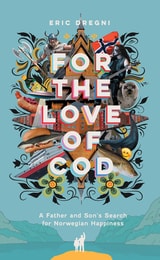
For the Love of Cod
A Father and Son's Search for Norwegian HappinessEric Dregni
University of Minnesota Press, 2021
A journey to find Norway’s supposed bliss makes for a comic travelogue that asks, seriously, what makes Norwegians so damn happy—and does it translate?
Norway is usually near or at the top of the World Happiness Report. But is it really one of the happiest countries on Earth? Eric Dregni had his doubts. Years ago he and his wife had lived in this country his great-great-grandfather once fled. When their son Eilif was born there, the Norwegian government paid for the birth, gave them $5,000, and deposited $150 into their bank account every month, but surely happiness was more than a generous health care system. What about all those grim months without sun? When Eilif turned fifteen, father and son decided to go back together and investigate. For the Love of Cod is their droll report on the state of purported Norwegian bliss.
Arriving in May, a month of festivals and eternal sun, the Dregnis are thrust into Norway at its merriest—and into the reality of the astronomical cost of living, which forces them to find lodging with friends and relatives. But this gives them an inside look at the secrets to a better life. It’s not the massive amounts of money flowing from the North Sea oil fields but how these funds are distributed that fuels the Norwegian version of democratic socialism—resulting in miniscule differences between rich and poor. Locals introduce them to the principles underlying their avowed contentment, from an active environmentalism that translates into flyskam (flight shame), which keeps Norwegians in the family cabin for the long vacations prescribed by law and charges a 150 percent tax on gas guzzlers (which, Eilif observes, means more Teslas seen in one hour than in a year in Minnesota!).
From a passion for dugnad or community volunteerism and sakte or “slow,” a rejection of the mad pace of modernity, to the commodification of Viking history and the dark side of Black Metal music that turns the idea of quaint, traditional Norway upside down, this idiosyncratic father and son tour lets readers, free of flyskam, see how, or whether, Norwegian happiness translates.
Forbidden History
The State, Society, and the Regulation of Sexuality in Modern EuropeEdited by John C. Fout
University of Chicago Press, 1992
This anthology encompasses a broad range of essays on sexuality spanning European history from the fifteenth century to the present. The topics in this collection of fifteen essays have both historic importance and current relevance. All crucial issues in the regulation of sexuality are addressed, from incest to infanticide, from breast-feeding and women's sexuality to female prostitution, from pornography to reproductive politics, and from the first homosexual rights movement to AIDS.
Contributions from a diverse group of prominent scholars representing a variety of disciplines are included in this anthology. Essays by Randolph Trumbach on "Sex, Gender, and Identity in Modern Culture: Male Sodomy and Female Prostitution in Enlightenment London"; Ruth Perry on "Colonizing the Breast: Sexuality and Maternity in Eighteenth Century England"; Theo van der Meer on "Female Same-Sex Offenders in Late Eighteenth Century Amsterdam"; Robin Ann Sheets on "Pornography, Fairy Tales, and Feminism: Angela Carter's 'The Bloody Chamber'"; and James W. Jones on "Discourses on and of AIDS in West Germany, 1986-1990."
Offering the most up-to-date scholarship from a significant and growing field, this collection is essential for both students and faculty in social history, family history, women's and gender studies, gay studies, sociology and literature.
Force, Drive, Desire
A Philosophy of PsychoanalysisRudolf Bernet, Translated from the French by Sarah Allen
Northwestern University Press, 2019
Rereading the long history of metaphysics (or at least a few of its key moments) in light of psychoanalytic inquiries into the nature and function of drive and desire also allows for a rewriting of the history of philosophy. Specifically, it allows Bernet to bring to light a different history of metaphysics, one centered less on Aristotelian substance (ousia) and more on the concept of dunamis—a power or potentiality for a realization toward which it strives with all its might. Relating human drives to metaphysical forces also bears fruit for a renewed philosophy of life and subjectivity.

Forensic Accounting and Fraud Examination
Knowledge, Skills, and AbilitiesRichard Dull
MOOC Books, 2015
This book was written to provide a basic perspective of forensic accounting and fraud investigation. It includes topics such as the elements of fraud, the typical perpetrator of fraud (as well as predators), and the attributes of most fraudsters (such as the fraud triangle and diamond).There are also discussions of internal controls, and data analysis tools and techniques to help identify red flags that frequently exist long before a fraud is detected.
The authors also include a description of money laundering, including common schemes. The money laundering topic leads into the final topic of the book, which is whistleblowing. That topic includes best practices for effective anti-fraud hotlines. WorldCom is used as an example to demonstrate the outcome of a large fraud, and the impact on those involved, from the whistleblower to those who allegedly perpetrated the fraud.
Each of the book’s five chapters includes a fifteen-question quiz to facilitate knowledge proficiency.
While the book was initially designed to accompany a massive open online course (MOOC), it provides a reader with information to help understand the basics of fraud and forensic accounting, including anti-fraud tools and techniques.
Forensic Mental Health Assessment With the MMPI-3
Dustin Wygant
University of Minnesota Press, 2026
A comprehensive, evidence-based handbook for using the MMPI-3 in forensic evaluations
Since its release in 2020, the MMPI-3 has become a cornerstone of clinical and forensic assessment. Forensic Mental Health Assessment With the MMPI-3 is an essential, evidence-based resource that explores use of the MMPI-3 in a variety of forensic contexts. In addition to elucidating the test’s development and the interpretation of its scales, this comprehensive guide delves into critical forensic issues including admissibility (e.g., Daubert criteria), telehealth assessment, cross-cultural considerations, and response bias.
Dustin B. Wygant and Martin Sellbom draw on contemporary research to discuss the unique challenges of forensic evaluations. Through case analyses, this book illustrates how to interpret and integrate MMPI-3 profiles into clinical and diagnostic impressions, and it addresses common psycholegal questions in criminal (e.g., competency to stand trial, insanity), civil (e.g., disability), and family (e.g., child custody) contexts.
Providing practical insights into real-world MMPI-3 applications, Forensic Mental Health Assessment With the MMPI-3 is an indispensable resource for forensic practitioners and legal professionals.
Fostering Reasonableness
Supportive Environments for Bringing Out Our BestRachel Kaplan and Avik Basu, editors
Michigan Publishing Services, 2015
Foundations of Feeling
Theorizing Emotions in Late Medieval LiteratureJessica Rosenfeld
University of Chicago Press, 2026
A fresh reading of medieval literature as deeply concerned with thinking about feelings.
Are emotions primarily bodily or cognitive? Do “natural” emotions exist? What is the relationship between emotion and gender? In Foundations of Feeling, Jessica Rosenfeld shows how medieval literature informs contemporary ideas about how emotions operate. Ranging widely from love poetry to pastoral and theological writings, to political satire and more, Rosenfeld reveals a wealth of attention to emotions in both scientific and philosophical discourses of the time. By mining Latin, medieval French, and Middle English traditions, she relates medieval concerns to the most central, current debates (and impasses) in the fields of history of emotion and affect theory today, reframing how we think about and define feelings.
Framing Fan Fiction
Literary and Social Practices in Fan Fiction CommunitiesKristina Busse
University of Iowa Press, 2017
Framing Fan Fiction deploys personal history and the interpretations of specific stories to contextualize fan fiction culture and its particular forms of intertextuality and performativity. In doing so, it highlights the way fans use fan fiction’s reimagining of the source material to explore issues of identities and peformativities, gender and sexualities, within a community of like-minded people. In contrast to the celebration of originality in many other areas of artistic endeavor, fan fiction celebrates repetition, especially the collective creation and circulation of tropes.
An essential resource for scholars, Framing Fan Fiction is also an ideal starting point for those new to the study of fan fiction and its communities of writers.

Frantz Fanon
Philosopher of the BarricadesPeter Hudis
Pluto Press, 2015
With FranzFanon, Peter Hudis presents a penetrating critical biography of the activist’s life and work. Countering the prevailing belief that Fanon’s contributions to modern thought can be wholly defined by an advocacy of violence, Hudis presents his work instead as an integrated whole, showing that its nuances—and thus its importance—can only be appreciated in light of Fanon’s efforts to fuse philosophical theory and actual practice. By taking seriously Fanon’s philosophical and psychological contributions, as well as his political activism, Hudis presents a powerful and perceptive new view of the man and his achievement.
This brief, richly perceptive introduction to Fanon will give new force to his ideas, his life, and his example for people engaged in radical political theory and taking action against oppression around the world today.
Freedom in Fulani Social Life
An Introspective EthnographyPaul Riesman
University of Chicago Press, 1977
"Freedom in Fulani Social Life richly documents how the ethnographer's own personal and cultural background is implicated in the research process. . . . For this reason, [Riesman's] book will be of paramount interest to all ethnographers."—Philip L. Kilbride, Reviews in Anthropology
"A remarkably well-written and insightful account of Fulani life. . . . In addition to using the conventional approaches of participating in and observing the daily activities of the Jelgobe . . . Riesman enriches his account by examining his personal feelings about particular incidents."—Library Journal
"An interesting and provocative study."—Choice
At the time of his death in 1988, Paul Riesman was an anthropologist who taught at Carleton College.
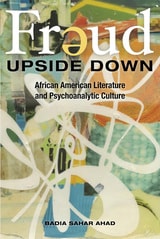
Freud Upside Down
African American Literature and Psychoanalytic CultureBadia Sahar Ahad
University of Illinois Press, 2010

Freud or Jung
Edward Glover
Northwestern University Press, 1950
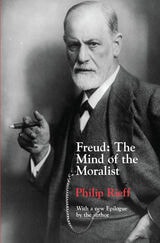
Freud
The Mind of the MoralistPhilip Rieff
University of Chicago Press, 1979
"This remarkably subtle and substantial book, with its nicely ordered sequences of skilled dissections and refined appraisals, is one of those rare products of profound analytic thought. . . . The author weighs each major article of the psychoanalytic canon in the scales of his sensitive understanding, then gives a superbly balanced judgement."—Henry A. Murray, American Sociological Review
"Rieff's tremendous scholarship and rich reflections fill his pages with memorable treasures."—Robert W. White, Scientific American
"Philip Rieff's book is a brilliant and beautifully reasoned example of what Freud's influence has really been: an increasing intellectual vigilance about human nature. . . . What the analyst does for the patient—present the terms for his new choices as a human being—Mr. Rieff does in respect to the cultural significance of Freudianism. His style has the same closeness, the same undertone of hypertense alertness. Again and again he makes brilliant points."—Alfred Kazin, The Reporter

Freudian Slips
Cartoons on PsychologySidney Harris
Rutgers University Press, 1997
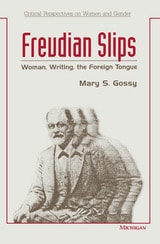
Freudian Slips
Woman, Writing, the Foreign TongueMary S. Gossy
University of Michigan Press, 1995
Gossy believes that Freud's most popular statement of a theory of the unconscious is written over foreign and feminized texts, bodies, and places, by way of anecdotes that range from the Dora case to menstruation to travel phobias. Freudian Slips: Woman, Writing, the Foreign Tongue does a feminist psychoanalytic reading of Freud's book and shows how slippery- textually, erotically, and historically- the writing of theory can be, and also how much we can learn from our slips when we are willing to admit that we have made them.
Bringing together autobiography, psychoanalysis, close readings, pedagogy, and politics in provocative and innovative ways, Gossy discusses Freud's work from both textual and theoretical perspectives and asks what his writing can teach us about authority, theory, home, and the foreign. Arguing that the dominant metaphor in the Psychopathology is that of the female body as foreign text, and that this body, writing, and the foreign tongue are identified with a feminized unconscious that threatens authoritative discourse, Freudian Slips moves toward fashioning a feminist theory that is both "slippery and (para)practical" and constantly searches for ways of writing theory that free, rather than sacrifice, the bodies of women.
"The readings of individual slips are often highly productive; the argument is both hardworking and playful. Freudian Slips is a book that people will enjoy reading and from which they will learn a great deal."-- Helena Michie, Rice University
Mary S. Gossy is Associate Professor of Spanish and Comparative Literature, Rutgers University. She is the author of The Untold Story: Women and Theory in Golden Age Texts.

Freudian Slips
Woman, Writing, the Foreign TongueMary S. Gossy
University of Michigan Press, 1995
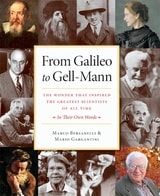
From Galileo to Gell-Mann
The Wonder that Inspired the Greatest Scientists of All Time: In Their Own WordsMarco Bersanelli
Templeton Press, 2009
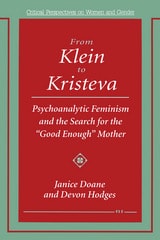
From Klein to Kristeva
Psychoanalytic Feminism and the Search for the "Good Enough" MotherJanice Doane and Devon Hodges
University of Michigan Press, 1993
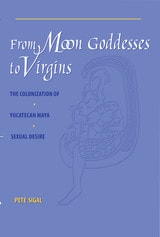
From Moon Goddesses to Virgins
The Colonization of Yucatecan Maya Sexual DesireBy Pete Sigal
University of Texas Press, 2000
For the preconquest Maya, sexuality was a part of ritual discourse and performance, and all sex acts were understood in terms of their power to create, maintain, and destroy society. As postconquest Maya adapted to life under colonial rule, they neither fully abandoned these views nor completely adopted the formulation of sexuality prescribed by Spanish Catholicism. Instead, they evolved hybridized notions of sexual desire, represented in the figure of the Virgin Mary as a sexual goddess, whose sex acts embodied both creative and destructive components.
This highly innovative book decodes the process through which this colonization of Yucatan Maya sexual desire occurred. Pete Sigal frames the discussion around a series of texts, including the Books of Chilam Balam and the Ritual of the Bacabs, that were written by seventeenth and eighteenth century Maya nobles to elucidate the history, religion, and philosophy of the Yucatecan Maya communities. Drawing on the insights of philology, discourse analysis, and deconstruction, he analyzes the sexual fantasies, fears, and desires that are presented, often unintentionally, in the "margins" of these texts and shows how they illuminate issues of colonialism, power, ritual, and gender.

From Single to Serious
Relationships, Gender, and Sexuality on American Evangelical CampusesMalone, Dana M.
Rutgers University Press, 2018
In From Single to Serious, Dana M. Malone shines a light on friendship, dating, and, sexuality, in both the ideals and the practical experiences of heterosexual students at U. S. evangelical colleges. She examines the struggles they have in balancing their gendered and religious presentations of self, the expectations of their campus community, and their desire to find meaningful romantic relationships.
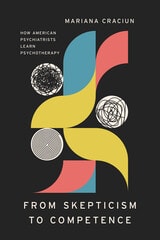
From Skepticism to Competence
How American Psychiatrists Learn PsychotherapyMariana Craciun
University of Chicago Press, 2024
While many medical professionals can physically examine the body to identify and understand its troubles—a cardiologist can take a scan of the heart, an endocrinologist can measure hormone levels, an oncologist can locate a tumor—psychiatrists have a much harder time unlocking the inner workings of the brain or its metaphysical counterpart, the mind.
In From Skepticism to Competence, sociologist Mariana Craciun delves into the radical uncertainty of psychiatric work by following medical residents in the field as they learn about psychotherapeutic methods. Most are skeptical at the start. While they are well equipped to treat brain diseases through prescription drugs, they must set their expectations aside and learn how to navigate their patients’ minds. Their instructors, experienced psychotherapists, help the budding psychiatrists navigate this new professional terrain by revealing the inner workings of talk and behavioral interventions and stressing their utility in a world dominated by pharmaceutical treatments. In the process, the residents examine their own doctoring assumptions and develop new competencies in psychotherapy. Exploring the world of contemporary psychiatric training, Craciun illuminates novice physicians’ struggles to understand the nature and meaning of mental illness and, with it, their own growing medical expertise.

Frontier Romance
Environment, Culture, and Alaska IdentityJudith Kleinfeld
University of Alaska Press, 2012
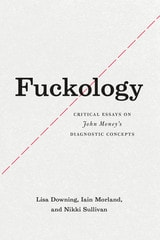
Fuckology
Critical Essays on John Money's Diagnostic ConceptsLisa Downing, Iain Morland, and Nikki Sullivan
University of Chicago Press, 2014
In Fuckology, the authors contextualize and interrogate Money's writings and practices. The book focuses on his three key diagnostic concepts, “hermaphroditism,” “transsexualism,” and “paraphilia,” but also addresses his lesser-known work on topics ranging from animal behavior to the philosophy of science. The result is a comprehensive collection of new insights for researchers and students within cultural, historical, and gender studies, as well as for practitioners and activists in sexology, psychology, and patient rights.