Results by title
144 books match the query 'Reading' and 6 start with f

Family Literacy Storytimes
Readymade Storytimes Suitable for the Whole FamilyAmerican Library Association, 2009
Family-Centered Library Handbook
American Library Association, 2007

Feminist Book Work
Reading with the Women's PressRosy Mack
Duke University Press, 2027

Following Michigan's Ink Trails
Writing Michigan, Reading MichiganDave Dempsey
Michigan State University Press, 2027
Michigan is renowned for its natural beauty and automotive history, yet its rich literary heritage often goes unrecognized. This engaging and extensively researched book aims to change that by providing vivid portraits of both well-known and overlooked authors. It also offers an enjoyable tour through the state’s libraries and bookstores. The book takes readers on a fascinating journey across the back roads and highways of Michigan writing, showcasing the remarkable diversity of authors who have called the state home as well as those who have found it inspirational. It is perfect for anyone interested in reading, Michigan’s literary heritage, and its culture.
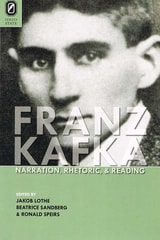
Franz Kafka
Narration, Rhetoric, and ReadingEdited by Jakob Lothe, Beatrice Sandberg, and Ronald Speirs
The Ohio State University Press, 2011
Franz Kafka: Narration, Rhetoric, and Reading presents essays by noted Kafka critics and by leading narratologists who explore Kafka’s original and innovative uses of narrative throughout his career. Collectively, these essays by Stanley Corngold, Anniken Greve, Gerhard Kurz, Jakob Lothe, J. Hillis Miller, Gerhard Neumann, James Phelan, Beatrice Sandberg, Ronald Speirs, and Benno Wagner examine a number of provocative questions that arise in narration and narratives in Kafka’s fiction. The arguments of the essays relate both to the peculiarities of Kafka’s story-telling and to general issues in narrative theory. They reflect, for example, the complexity of the issues surrounding the “somebody” doing the telling, the attitude of the narrator to what is told, the perceived purpose(s) of the telling, the implied or actual reader, the progression of events, and the progression of the telling. As the essays also demonstrate, Kafka’s narratives still present a considerable challenge to, as well as a great resource for, narrative theory and analysis.
From Papyrus to Hypertext
Toward the Universal Digital LibraryChristian Vandendorpe. Translated by Phyllis Aronoff & Howard Scott.
University of Illinois Press, 2008
Surveying the conventions of reading and writing that have appeared and disappeared in the Internet's wake, Vandendorpe considers various forms of organization, textual design, the use (and distrust) of illustrations, and styles of reference and annotation. He also examines the novel components of digital texts, including hyperlinks and emoticons, and looks at emergent, collaborative genres such as blogs and wikis, which blur the distinction between author and reader. Looking to the future, reading and writing will continue to evolve based on the current, contested trends of universal digitization and accessibility.