Results by title
939 books match the query 'Religious aspects' and 48 start with f
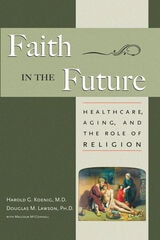
Faith In The Future
Healthcare, Aging and the Role of ReligionHarold Koenig
Templeton Press, 2012
After an interview in Newsweek about his book Spirituality in Patient Care and his research in religion and health, Dr. Harold Koenig became the international voice on spirituality, health, and aging. In this book, Faith in the Future, he is joined by two other experts on aging and human development. They present a compelling look at one of the most severe issues in today’s society: health care in America.
How will we provide quality healthcare to older adults needing it during the next thirty to fifty years? Who will provide this care? How will it be funded? How can we establish systems of care now to be in place as demographic and health-related economic pressures mount?
Alongside the sobering reality of our country’s challenges, there are reasons for optimism. Innovative programs created and maintained by volunteers and religious congregations are emerging as pivotal factors in meeting healthcare needs. Summarizing decades of scientific research and providing numerous inspirational examples and role models, the authors present practical steps that individuals and institutions may emulate for putting faith into action.
<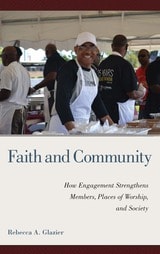
Faith and Community
How Engagement Strengthens Members, Places of Worship, and SocietyRebecca A. Glazier
Temple University Press, 2024
Faith and Community shows the benefits of religious people taking action in their communities. Through more than a decade of multi-method data collection, Rebecca Glazier surveyed over 4,000 congregants and nearly 500 clergy in Little Rock, Arkansas to gather opinions from members and leaders on community issues and engagement. Together with interviews and case studies, her findings indicate that active congregants are happier and more civically involved.
Faith and Community provides valuable insights into the relationship between religion and community engagement. The data illustrates how community engagement benefits individuals, congregations, and democracy and offers one solution to what ails religion in America today.
Faith and Mental Health
Religious Resources for HealingHarold G. Koenig
Templeton Press, 2005
Dr. Harold Koenig opens a window on mental health, providing an unprecedented source of practical information about the relationship between religion and mental health. He examines how Christianity and other world religions deliver mental health services today, and he makes recommendations, based on research, expertise, and experience, for new programs to meet local needs.
Meticulously researched and documented, Faith and Mental Health includes
- Research on the relationship between religion and positive emotions, psychiatric illnesses, and severe and persistent mental disorders
- Ways in which religion has influenced mental health historically, and how now and in the future it can be involved with mental health
- A comprehensive description and categorization of Christian and non-Christian faith-based organizations that provide mental health resources
- Resources for religious professionals and faith communities on how to design effective programs
Presenting a combination of the history and current research of mental health and religion along with a thorough examination of faith-based organizations operating in the field, this book is a one-of-a-kind resource for the healthcare community; its valuable research and insights will benefit medical and religious professionals, and anyone concerned with the future of mental health care.
Faith and the Fragility of Justice
Responses to Gender-Based Violence in South AfricaMeredith Whitnah
Rutgers University Press, 2025
Faith and the Historian
CATHOLIC PERSPECTIVESEdited by Nick Salvatore
University of Illinois Press, 2006
Faith and the Historian collects essays from eight experienced historians discussing the impact of being "touched" by Catholicism on their vision of history. That first graduate seminar, these essays suggest, did not mark the inception of one's historical sensibilities; rather, that process had deeper, and earlier, roots. The authors--ranging from "cradle to the grave" Catholics to those who haven’t practiced for forty years, and everywhere in between--explicitly investigate the interplay between their personal lives and beliefs and the sources of their professional work. A variety of heartfelt, illuminating, and sometimes humorous experiences emerge from these stories of intelligent people coming to terms with their Catholic backgrounds as they mature and enter the academy. Contributors include: Philip Gleason, David Emmons, Maureen Fitzgerald, Joseph A. McCartin, Mario T. Garcia, Nick Salvatore, James R. Barrett, and Anne M. Butler.
Faith in the City
Preaching Radical Social Change in DetroitAngela D. Dillard
University of Michigan Press, 2009
“The dynamics of Black Theology were at the center of the ‘Long New Negro Renaissance,’ triggered by mass migrations to industrial hubs like Detroit. Finally, this crucial subject has found its match in the brilliant scholarship of Angela Dillard. No one has done a better job of tracing those religious roots through the civil rights–black power era than Professor Dillard.”
—Komozi Woodard, Professor of History, Public Policy & Africana Studies at Sarah Lawrence College and author of A Nation within a Nation: Amiri Baraka (LeRoi Jones) and Black Power Politics
“Angela Dillard recovers the long-submerged links between the black religious and political lefts in postwar Detroit. . . . Faith in the City is an essential contribution to the growing literature on the struggle for racial equality in the North.”
—Thomas J. Sugrue, University of Pennsylvania, author of The Origins of the Urban Crisis: Race and Inequality in Postwar Detroit
Spanning more than three decades and organized around the biographies of Reverends Charles A. Hill and Albert B. Cleage Jr., Faith in the City is a major new exploration of how the worlds of politics and faith merged for many of Detroit’s African Americans—a convergence that provided the community with a powerful new voice and identity. While other religions have mixed politics and creed, Faith in the City shows how this fusion was and continues to be particularly vital to African American clergy and the Black freedom struggle.
Activists in cities such as Detroit sustained a record of progressive politics over the course of three decades. Angela Dillard reveals this generational link and describes what the activism of the 1960s owed to that of the 1930s. The labor movement, for example, provided Detroit’s Black activists, both inside and outside the unions, with organizational power and experience virtually unmatched by any other African American urban community.
Angela D. Dillard is Associate Professor of Afroamerican and African Studies at the University of Michigan. She specializes in American and African American intellectual history, religious studies, critical race theory, and the history of political ideologies and social movements in the United States.
Faith in the Market
Religion and the Rise of Urban Commercial CultureEdited by John M. Giggie and Diane Winston
Rutgers University Press, 2002
Faithful Deliberation
Rhetorical Invention, Evangelicalism, and #MeToo ReckoningsT J Geiger II
University of Alabama Press, 2022
Investigates the rhetorical practices used by contemporary evangelical Christian women to confront theological and cultural issues that stymie deliberation within their communities
While often perceived as an insular enclave with a high level of in-group agreement about political and social issues, predominantly white evangelicalism includes prominent voices urging deliberation about appropriate responses to sexual abuse, domestic violence, and the discourses surrounding these traumas. In Faithful Deliberation: Rhetorical Invention, Evangelicalism, and #MeToo Reckonings, T J Geiger II examines theologically reflective rhetorical invention that reconfigures trauma-minimizing commonplaces in order to facilitate community-internal deliberation.
Resting at the intersection of feminist rhetorical studies and religious rhetorics, this book contains four related theological-rhetorical case studies that consider how figures such as Beth Moore, Jen Hatmaker, Rachael Denhollander, Karen Swallow Prior, and others engaged in rhetorical invention. Each juxtaposes differing approaches to contending with rape, domestic violence, sexual abuse, and other traumas. Each case contrasts an approach based on appeals to highly circumscribed understandings of grace, purity, and other denomination-specific traditions and values with approaches rooted in those same traditions and values, but with an eye toward community transformation, healing through justice, and reinvigorated forms of forgiveness. Geiger skillfully argues that this faithful deliberation involves practices of thinking, reflecting, storytelling, and acting within a tightly bounded community that can foster change through a recommitment to core values.
These rhetorical practices exemplify the kind of inventive listening deliberative discourse requires, point to the sort of healing they may promote in response to trauma and trauma discourses, and occur within a range of genres including social media posts, blog entries, published interviews, victim impact statements, and petitions. This study of invention for evangelical-to-other-evangelical deliberative discourse contributes to rhetorical studies by demonstrating the civic and social possibilities of rhetoric within religious enclaves. By locating the case studies as recent moments in longer US public and evangelical histories of activism, deliberative practice, and politics, Faithful Deliberation brings into focus how enclaves and the dominant public sphere interact.

Faithful Fictions
The Catholic Novel in British LiteratureThomas M. Woodman
Catholic University of America Press, 2022
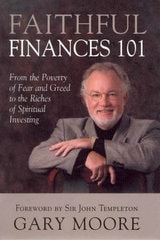
Faithful Finances 101
From the Poverty of Fear and Greed to the Riches of Spiritual InvestingGary Moore
Templeton Press, 2005
Faithful Finances 101 is a first-person narrative by an outspoken advocate of faith-based investing. A senior vice president of investments at Paine Webber before founding his own investment firm as "counsel to ethical and spiritual investors," Gary Moore warns that much of the economic advice emanating from some popular and influential evangelical authors and speakers is based on scare tactics and distortions of what the Bible has to say about finances. He draws on fifty years of studying the Bible, politics, and economics and presents insights for those who want to be faithful in their finances—to use 100 percent of the time, talent, and treasure with which they have been entrusted for the glory of God as well as for the benefit of others and themselves, and not just give 10 percent of their incomes to the church.
Faithful Interpretations
Truth and Islam in Catholic Theology of ReligionsPhilip Geister
Catholic University of America Press, 2021
Faithful Transformations
Islamic Self-Help in Contemporary SingaporeNurhaizatul Jamil
University of Illinois Press, 2025
The Islamic self-help classes in this book exist at the nexus of sacred texts, aphorisms, and social media engagements, scaffolded by the neoliberal economy that shapes idealized Muslim subjectivities. Within a context whereby the Singapore state discursively frames Malayness in terms of cultural deficiency, Malay Muslim women’s inward focus on transformative ethics rather than societal change underscores the appeal of gendered pious self-help discourses. At the same time, Jamil’s referencing of Black, Indigenous, and Ethnic studies offers a compelling analytical frame that places affective transformation within the context of racial capitalism, historical trauma, and embodied healing.
A provocative and rich ethnography, Faithful Transformations tells the stories of Malay Muslim women desiring piety and self-improvement as minoritized subjects in contemporary Singapore while exploring the limitations of self-care.
Family Matters
James Dobson and Focus on the Family’s Crusade for the Christian HomeHilde Løvdal Stephens
University of Alabama Press, 2019
James Dobson—child psychologist, author, radio personality, and founder of the Christian conservative organization Focus on the Family—published his first book, Dare to Discipline, in 1970 and quickly became the go-to family expert for evangelical parents across the United States as American evangelicalism rose as a major political force. The family expert became a leading voice in the Reagan Revolution, and played a role in making American evangelicals even more firmly associated with the Republican Party. Dobson’s principle beliefs are that the family is the center of Christian America and that the traditional family must be defended from perceived threats such as gay rights, feminism, abortion, and the secularization of public schools. Dobson and Focus on the Family dominated Christian media through print, radio, and online venues, and their message reached millions of American evangelical households, shaping the cultural sensibilities and political attitudes of evangelical families throughout the culture wars from the 1980s into the 2000s.
Family Matters: James Dobson and Focus on the Family’s Crusade for the Christian Home by Hilde Løvdal Stephens is an insightful history and analysis of James Dobson’s rise to fame, effect on American evangelical culture, and subsequent descent from relevance. Extensively researched, Løvdal Stephens scoured through Dobson’s books, articles, and other materials published by Focus on the Family in order to explore how evangelicals defined and defended the traditional family as an ideal and as a symbol in an ever-changing world.
By contextualizing the history of Dobson’s reign, Løvdal Stephens’s discerning analysis fills an important gap in our understandings of the politics and culture of late twentieth-century conservative Christianity in the United States. She explores complex topics ranging from Dobson’s celebration of what he believes are timeless biblical values, such as maintaining strict and defined gender roles, to the ways Dobson and Focus on the Family balanced their basic ideals with real everyday lives of average American evangelical families, facing the realities of divorce, working mothers, and other perceived threats to the traditional family.
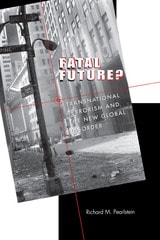
Fatal Future?
Transnational Terrorism and the New Global DisorderBy Richard M. Pearlstein
University of Texas Press, 2004
The nature and goals of terrorist organizations have changed profoundly since the Cold War standoff among the U.S., Soviet, and Chinese superpowers gave way to the current "polyplex" global system, in which the old rules of international engagement have been shattered by a new struggle for power among established states, non-state actors, and emerging nations. In this confusing state of global disorder, terrorist organizations that are privately funded and highly flexible have become capable of carrying out incredibly destructive attacks anywhere in the world in support of a wide array of political, religious, and ethnic causes.
This groundbreaking book examines the evolution of terrorism in the context of the new global disorder. Richard M. Pearlstein categorizes three generations of terrorist organizations and shows how each arose in response to the global conditions of its time. Focusing extensively on today's transnational (i.e., privately funded and internationally operating) terrorist organizations, he devotes thorough attention to the two most virulent types: ethnoterrorism and radical Islamic terrorism. He also discusses the terrorist race for weapons of mass destruction and the types of attacks, including cyberterrorism, that are likely to occur in coming years. Pearlstein concludes with a thought-provoking assessment of the many efforts to combat transnational terrorism in the post-September 11 period.
Feeling Godly
Religious Affections and Christian Contact in Early North AmericaCaroline Wigginton
University of Massachusetts Press, 2021
Feeling Godly brings together well-known and highly regarded scholars of early American history and literature, Native American studies, African American history, and religious studies to investigate the shape, feel, look, theology, and influence of religious affections in early American sites of contact with and between Christians. While remaining focused on the question of religious affections, these essays span a wide range of early North American cultures, affiliations, practices, and devotions, and enable a comparative approach that draws together a history of emotions with a history of religion.
In addition to the volume editors, this collection includes essays from Joanna Brooks, Kathleen Donegan, Melissa Frost, Stephanie Kirk, Jon Sensbach, Scott Manning Stevens, and Mark Valeri, with an afterword by Barbara H. Rosenwein.
Feeling Religion
John Corrigan, editor
Duke University Press, 2018
Contributors. Diana Fritz Cates, John Corrigan, Anna M. Gade, M. Gail Hamner, Abby Kluchin, Jessica Johnson, June McDaniel, David Morgan, Sarah M. Ross, Donovan Schaefer, Mark Wynn
Feeling the Future at Christian End-Time Performances
Jill Stevenson
University of Michigan Press, 2022
The book’s main focus is contemporary Christian End-Time performances and how they theatrically construct encounters with future time—not just images or ideas of a future, but viscerally and immediately real experiences of future time. Author Jill Stevenson’s examples are Hell Houses and Judgement Houses; Rapture House, a similarly styled “walk through drama” in North Carolina; Hell’s Gates, an “outdoor reality drama” in Dawsonville, Georgia; Ark Encounter, a full-size recreation of Noah’s Ark; and Tribulation Trail, an immersive thirteen-scene drama ministry based on the Book of Revelation. The book’s coda considers similarities between these Christian performances and secular survivalist prepper events, especially with respect to constructions of and language about time. In doing so, the author situates these performances within a larger tradition that challenges traditional secular/sacred distinctions and illuminates how the End Times has been employed in our current social and political moment.

Feminist Rereadings of Rabbinic Literature
Inbar Raveh
Brandeis University Press, 2014
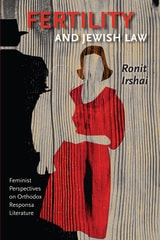
Fertility and Jewish Law
Feminist Perspectives on Orthodox Responsa LiteratureRonit Irshai
Brandeis University Press, 2012
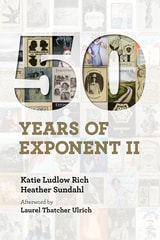
Fifty Years of Exponent II
Katie Ludlow Rich
Signature Books, 2024
On a sweltering day in June 1974, a group of housewives, graduate students, and young professionals gathered in the Boston suburbs. Their mission: to produce the first issue of Exponent II, a “humble yet sincere” newspaper “poised on the dual platforms of Mormonism and Feminism.” They viewed their work as an act of devotion, not rebellion, and were naïve of the cold reception they would soon receive from LDS Church leaders. Nevertheless, the paper became a national platform connecting Mormon feminists. It provided a vital space for them to question and integrate different aspects of their dual—and sometimes dueling—identities. From the Equal Rights Amendment to queer identity, Exponent II has hosted some of the most urgent conversations of its time while also embracing life’s dailiness.
This comprehensive history and anthology celebrate five decades of Exponent II. Through meticulous research and compelling storytelling, the authors chronicle the organization’s evolution from a kitchen-table-style newspaper to a quarterly magazine, blog, and annual retreat. Its transformative impact on the lives of its participants stands as a testament to the power of connection, resilience, and community over ideological purity.
Filled with the Spirit
Sexuality, Gender, and Radical Inclusivity in a Black Pentecostal Church CoalitionEllen Lewin
University of Chicago Press, 2018
In Filled with the Spirit, Ellen Lewin gives us a deeply empathetic ethnography of the worship and community central to TFAM, telling the story of how the doctrine of radical inclusivity has expanded beyond those it originally sought to serve to encompass people of all races, genders, sexualities, and religious backgrounds. Lewin examines the seemingly paradoxical relationship between TFAM and traditional black churches, focusing on how congregations and individual members reclaim the worship practices of these churches and simultaneously challenge their authority. The book looks closely at how TFAM worship is legitimated and enhanced by its use of gospel music and considers the images of food and African American culture that are central to liturgical imagery, as well as how understandings of personal authenticity tie into the desire to be filled with the Holy Spirit. Throughout, Lewin takes up what has been mostly missing from our discussions of race, gender, and sexuality—close attention to spirituality and faith.
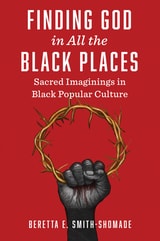
Finding God in All the Black Places
Sacred Imaginings in Black Popular CultureBeretta E. Smith-Shomade
Rutgers University Press, 2025
https://manifold.ecds.emory.edu/projects/finding-god-in-all-the-black-places
(https://dhjhkxawhe8q4.cloudfront.net/rup-wp-v2/wp-content/uploads/2025/01/28132142/9781978839809.pdf)
In Finding God in All the Black Places, Beretta E. Smith-Shomade contends that Black spirituality and Black church religiosity are the critical crux of Black popular culture. She argues that cultural, community, and social support live within the Black church and that spirit, art, and progress are deeply entwined and seal this connection. Including the work of artists such as Mary J. Blige, D’Angelo, Erykah Badu, Prince, Spike Lee, and Oprah Winfrey, the book examines contemporary Black television, film, music and digital culture to demonstrate the role, impact, and dominance of spirituality and religion in Black popular culture. Smith-Shomade believes that acknowledging and comprehending the foundations of Black spirituality and Black church religiosity within Black popular culture provide a way for viewers, listeners, and users not only to endure but also to revitalize.
Flesh Becomes Word
A Lexicography of the Scapegoat or, the History of an IdeaDavid Dawson
Michigan State University Press, 2013
Follow Your Conscience
The Catholic Church and the Spirit of the SixtiesPeter Cajka
University of Chicago Press, 2021
Peter Cajka’s erudite book shows how even staunch Catholics were transformed by the maelstrom of the American Sixties, turning away from powerful and corrupt institutions and toward the inner moral compass provided by their own consciences.
What is your conscience? Is it, as Peter Cajka asks in this provocative book, “A small, still voice? A cricket perched on your shoulder? An angel and devil who compete for your attention?” Going back at least to the thirteenth century, Catholics viewed their personal conscience as a powerful and meaningful guide to align their conduct with worldly laws. But, as Cajka shows in Follow Your Conscience, during the national cultural tumult of the 1960s, the divide between the demands of conscience and the demands of the law, society, and even the church itself grew increasingly perilous. As growing numbers of Catholics started to consider formerly stout institutions to be morally hollow—especially in light of the Vietnam War and the church’s refusal to sanction birth control—they increasingly turned to their own consciences as guides for action and belief. This abandonment of higher authority had radical effects on American society, influencing not only the broader world of Christianity, but also such disparate arenas as government, law, health care, and the very vocabulary of American culture. As this book astutely reveals, today’s debates over political power, religious freedom, gay rights, and more are all deeply infused by the language and concepts outlined by these pioneers of personal conscience.
Food and Transformation in Ancient Mediterranean Literature
Meredith J. C. Warren
SBL Press, 2019
New research that transforms how to understand food and eating in literature
Meredith J. C. Warren identifies and defines a new genre in ancient texts that she terms hierophagy, a specific type of transformational eating where otherworldly things are consumed. Multiple ancient Mediterranean, Jewish, and Christian texts represent the ramifications of consuming otherworldly food, ramifications that were understood across religious boundaries. Reading ancient texts through the lens of hierophagy helps scholars and students interpret difficult passages in Joseph and Aseneth, 4 Ezra, Revelation 10, and the Persephone myths, among others.
Features:
- Exploration of how ancient literature relies on bending, challenging, inverting, and parodying cultural norms in order to make meaning out of genres
- Analysis of hierophagy as social action that articulates how patterns of communication across texts and cultures emerge and diverge
- A new understanding of previously confounding scenes of literary eating
For the Love of God
The Bible as an Open BookOstriker, Alicia Suskin
Rutgers University Press, 2009
For the Love of God is a provocative and inspiring re-interpretation of six essential Biblical texts: The Song of Songs, the Book of Ruth, Psalms, Ecclesiastes, Jonah, and Job. In prose that is personal and probing, analytically acute and compellingly readable, Ostriker sees these writings as “counter-texts,” deviating from convention yet deepening and enriching the Bible, our images of God, and our own potential spiritual lives. Attempting to understand “some of the wildest, strangest, most splendid writing in Western tradition,” she shows how the Bible embraces sexuality and skepticism, boundary crossing and challenges to authority, how it illuminates the human psyche and mirrors our own violent times, and how it asks us to make difficult choices in the quest for justice.
For better or worse, our society is wedded to the Bible. But according to Talmud, “There is always another interpretation.” Ostriker demonstrates that the Bible, unlike its reputation, offers a plenitude of surprises.
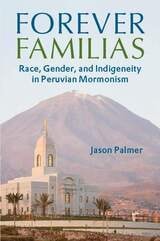
Forever Familias
Race, Gender, and Indigeneity in Peruvian MormonismJason Palmer
University of Illinois Press, 2024
Peruvian members of the Church of Jesus Christ of Latter-day Saints face the dilemma of embracing their faith while finding space to nourish their Peruvianness. Jason Palmer draws on eight years of fieldwork to provide an on-the-ground look at the relationship between Peruvian Saints and the racial and gender complexities of the contemporary Church.
Peruvian Saints discovered that the foundational ideas of kinship and religion ceased being distinct categories in their faith. At the same time, they came to see that LDS rituals and reenactments placed coloniality in opposition to the Peruvians’ indigenous roots and family against the more expansive Peruvian idea of familia. In part one, Palmer explores how Peruvian Saints resolved the first clash by creating the idea of a new pioneer indigeneity that rejected victimhood in favor of subtle engagements with power. Part two illuminates the work performed by Peruvian Saints as they stretched the Anglo Church’s model of the nuclear family to encompass familia.

Forgetful of Their Sex
Female Sanctity and Society, ca. 500-1100Jane Tibbetts Schulenburg
University of Chicago Press, 1998
"A tremendous piece of scholarship. . . . This journey through more than 2,000 saints is anything but dull. Along the way, Schulenburg informs our ideas regarding the role of saints in the medieval psyche, gender-specific identification, and the heroics of virginity." —Library Journal
"[This book] will be a kind of 'roots' experience for some readers. They will hear the voices, haunted and haunting, of their distant ancestors and understand more about themselves." —Christian Science Monitor
"This fascinating book reaches far beyond the history of Christianity to recreate the 'herstory' of a whole gender." —Kate Saunders, The Independent
Forgiveness & Reconciliation
Public Policy & Conflict TransformationRaymond G. Helmick
Templeton Press, 2001
This book brings together a unique combination of experts in conflict resolution and focuses on the role forgiveness can play in the process. It deals with theology, public policy, psychological and social theory, and social policy implementation of forgiveness. This book is essential for libraries, scholars, conflict negotiators, and all people who hope to understand the role of forgiveness in the peace process.
The book's first section explores how ideas like "forgiveness" and "reconciliation" are moving out from the seminary and academy into the world of public policy and how these terms have been used and defined in the past. The second section looks at forgiveness and public policy. One of the chapters, by Donald W. Shriver Jr., addresses forgiveness in a secular political forum.
The third section of the book draws us to a more thorough analysis of the relationship between forgiveness and reconciliation from voices in the academic and theological community, and the final section highlights the work of practitioners currently working with religion, public policy, and conflict transformation, particularly in areas such as Ireland and Africa.
Contributors include Desmond M. Tutu, Rodney L. Petersen, Miroslav Volf, Stanley S. Harakas, Raymond G. Helmick, SJ, Joseph V. Montville, Douglas M. Johnston, Donna Hicks, Donald W. Shriver, Jr., Everett L. Worthington, Jr., John Paul Lederach, Ervin Staub, Laurie Anne Pearlman, John Dawson, Audrey R. Chapman, Olga Botcharova, Anthony da Silva, SJ, Geraldine Smythe, OP, Andrea Bartoli, Ofelia Ortega, and George F. R. Ellis.

Formations of Ritual
Colonial and Anthropological Discourses on the Sinhala YaktovilDavid Scott
University of Minnesota Press, 1994
Formations of Ritual was first published in 1994. Minnesota Archive Editions uses digital technology to make long-unavailable books once again accessible, and are published unaltered from the original University of Minnesota Press editions.
Yaktovil is an elaborate healing ceremony employed by Sinhalas in Sri Lanka to dispel the effects of the eyesight of a pantheon of malevolent supernatural figures known as yakku. Anthropology, traditionally, has articulated this ceremony with the concept metaphor of "demonism." Yet, as David Scott demonstrates in this provocative book, this use of "demonism" reveals more about the discourse of anthropology than it does about the ritual itself. His investigation of yaktovil and yakku within the Sinhala cosmology is also an inquiry into the ways in which anthropology, by ignoring the discursive history of the rituals, religions, and relationships it seeks to describe, tends to reproduce ideological-often, specifically colonial-objects.
To do this, Scott describes the discursive apparatus through which yakku are positioned in the moral universe of Sinhala, traces the appearance of yakku and yaktovil in Western discourse, evaluates the contribution of these figures and this ceremony in anthropology, and attempts to show how the larger anthropology of Buddhism, in which the anthropology of yaktovil is embedded, might be reconfigured. Finally, he offers a rereading of the ritual in terms of the historically selfconscious approach he proposes.The result points to a major rethinking of the historical nature not only of the objects, but also of the concepts through which they are constructed in anthropological discourse.David Scott teaches in the Department of Anthropology at the University of Chicago.

Forsaken
The Menstruant in Medieval Jewish MysticismSharon Faye Koren
Brandeis University Press, 2011
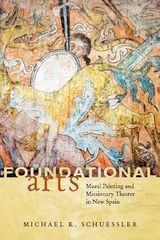
Foundational Arts
Mural Painting and Missionary Theater in New SpainMichael K. Schuessler
University of Arizona Press, 2013
In Foundational Arts Michael K. Schuessler asserts that the literature of New Spain begins with missionary theater and its intimate relationship to mural painting. In particular, he examines the relationships between texts and visual images that emerged in Mexico at two Augustinian monasteries in Hidalgo, Mexico, during the century following the Spanish Conquest. The forced combination of the ideographical tradition of Nahuatl with Latin-based language alphabets led to a fascinating array of new cultural expressions.
Missionary theater was organized by ingenious friars with the intent to convert and catechize indigenous populations. Often performed in Nahuatl or other local languages, the actors combined Latin-based language texts with visual contexts that corresponded to indigenous ways of knowing: murals, architectural ornamentation, statuary, altars, and other modes of visual representation. By concentrating on the interrelationship between mural painting and missionary theater, Foundational Arts explores the artistic and ideological origins of Mexican plastic arts and literature.
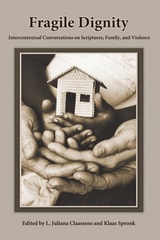
Fragile Dignity
Intercontextual Conversations on Scriptures, Family, and ViolenceL. Juliana Claassens
SBL Press, 2013
Fragile Finitude
A Jewish Hermeneutical TheologyMichael Fishbane
University of Chicago Press, 2021
In Fragile Finitude, Fishbane clears new ground for a theological life through a novel reinterpretation of the Book of Job. On this basis, he offers a contemporary engagement with the four classical types of Jewish Scriptural exegesis. The first focuses on worldly experience, the second on communal forms of practice and thought in the rabbinical tradition, the third on personal development, and the fourth on transcendent, cosmic orientations. Through these four modes, Fishbane manages to transform Jewish theology from within, at once reinvigorating a long tradition and moving beyond it. What he offers is nothing short of a way to reorient our lives in relation to the divine and our fellow humans. Written from within the Jewish tradition, Fragile Finitude is intended for readers across the religious spectrum.
Fragments
The Existential Situation of Our Time: Selected Essays, Volume 1David Tracy
University of Chicago Press, 2020
In the first volume, Fragments, Tracy gathers his most important essays on broad theological questions, beginning with the problem of suffering across Greek tragedy, Christianity, and Buddhism. The volume goes on to address the Infinite, and the many attempts to categorize and name it by Plato, Aristotle, Rilke, Heidegger, and others. In the remaining essays, he reflects on questions of the invisible, contemplation, hermeneutics, and public theology. Throughout, Tracy evokes the potential of fragments (understood both as concepts and events) to shatter closed systems and open us to difference and Infinity. Covering science, literature, philosophy, psychoanalysis, and non-Western religious traditions, Tracy provides in Fragments a guide for any open reader to rethink our fragmenting contemporary culture.

Fraternal Critique
The Politics of Muslim Community in FranceKirsten Wesselhoeft
University of Chicago Press, 2025
The conversation about Islam in France is framed by the presumption that Muslim communities are a threat to secular solidarity or fraternité. In the face of state repression, French Muslims have not closed ranks around a narrow range of voices; instead, Kirsten Wesselhoeft finds that young Muslim activists have continued to purposefully spark debate about the values that anchor community life. Wesselhoeft argues that such disagreements, far from dividing communities, actually constitute a form of belonging. Some activists call this ethic “fraternal critique,” and Wesselhoeft finds in it profound insights about the place for critique in civic life. The French state has reacted to Muslim solidarity with repression, but Wesselhoeft argues that unity need not come at the expense of dissent. Instead, fraternal critique can teach us how to build communities that are worth fighting over and fighting for.
Free Markets with Solidarity and Sustainability
Martin Schlag
Catholic University of America Press, 2016

Freedom Made Manifest
Peter Joseph Fritz
Catholic University of America Press, 2019
Freedom and Necessity
St. Augustine's Teaching on Divine Power and Human FreedomGerald Bonner
Catholic University of America Press, 2007
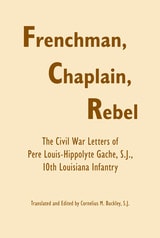
Frenchman, Chaplain, Rebel
The Civil War Letters of Pere Louis-Hippoltye Gache, 10th Louisiana InfantryPere Louis-Hippolyte Gache, S.J.
University of Alabama Press, 2007
The American Civil War through the eyes of a French Jesuit chaplain.
"This book has a tantalizing quality, and it certainly is fresh literature for those who have watched the story of the Civil War unfold. . . . One cannot help but marvel at the research undertaken by Fr. Buckley. These letters of Fr. Gache cover such subjects as the duties of a chaplain, the lack of stimulating conversation in camp, whiskey as medication for diarrhea, the chaplain’s uniform, the oversupply of Catholic chaplains, descriptions of battles—Chancellorsville, Fredericksburg—chaplains as prisoners of war, the possibility of General Lee being chosen as the second president of the Confederacy, making candles for the alter and bleaching wax, procuring sacramental wine, conflicts with Protestant preachers, and the surrender of Richmond. Such subjects allow the personality and character of Hippolyte to stand out. . . . [The book] is interesting reading for all who love and admire the Jesuits. Its wealth of information makes it a must for others whose concern is the Confederate soldier and his God."
—Journal of Southern History

Friends of the Unrighteous Mammon
Northern Christians and Market Capitalism, 1815-1860Stewart Davenport
University of Chicago Press, 2008
Drawing on diverse primary sources, Davenport identifies three distinct Christian responses to market capitalism: assurance from clerical economists who believed in the righteousness of economic development; opposition from contrarians who resisted the changes around them; and adaptation by the pastoral moralists who modified their faith to meet the ethical challenges of the changing economy. Delving into the minds of antebellum Christians as they considered themselves, their God, and their developing American economy, Friends of the Unrighteous Mammon is an ambitious intellectual history of an important development in American religious and economic life.
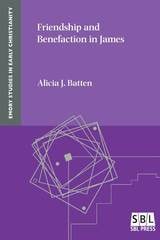
Friendship and Benefaction in James
Alicia J. Batten
SBL Press, 2017
Now available from SBL Press
Employing social description, social scientific models, and rhetorical analysis, Alicia J. Batten argues that the letter of James is conversant with the topic of friendship within Greek and Roman literature, as well as within various texts of early Christianity. She illustrates how James drew upon some of the language and concepts related to friendship with an intriguing density to advocate resistance to wealth, avoidance of rich patrons, and reliance upon God.
Features:
- Use of friendship, benefaction, and patronage as lenses through which James and related texts can be viewed
- A strong case for how the letter appels to the language and ideas of friendship with regard to God's relationships with humans
- Exploration of the relationship between the book of James and the teachings of Jesus
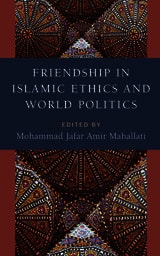
Friendship in Islamic Ethics and World Politics
Edited by Mohammad Jafar Amir Mahallati
University of Michigan Press, 2019
Based on a decade of direct diplomatic engagement with the United Nations, a decade of teaching on international relations, and another decade of research and teaching on Islamic and comparative peace studies, this book offers a friendship-related academic framework that examines shared moral concepts, philosophical paradigms, and political experiences that can develop and expand multidisciplinary conversations between the Christian West and the Muslim East. By advancing multicultural and interreligious discourses on friendship, this book helps promote actual friendships among diverse cultures and peoples.
This is not a monologue. It provides a model of conversations among scholars and political actors who come from diverse international and interreligious backgrounds. The word “Islamic” should not mislead the reader to suspect that this edited volume delves only into religious discourses. Rather, it provides a forum for conversations within and between religious and philosophical perspectives. It sparks friendship conversations thematically and through disciplinary and cultural diversity. The result of the work of many prominent international scholars and diplomats over many years, it conveys at least one message clearly: friendship matters for not only our happiness but also for our survival.
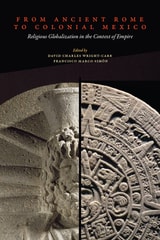
From Ancient Rome to Colonial Mexico
Religious Globalization in the Context of EmpireDavid Charles Wright-Carr
University Press of Colorado, 2023
An international team of specialists in classical scholarship and Mesoamerican studies engage in an interdisciplinary discussion involving ideas from history, anthropology, archaeology, art history, iconography, and philology. Key themes include the role of religion in processes of imperial domination; religion’s use as an instrument of resistance or the imposition, appropriation, incorporation, and adaptation of various elements of religious systems by hegemonic groups and subaltern peoples; the creative misunderstandings that can arise on the “middle ground”; and Christianity’s rejection of ritual violence and its use of this rejection as a pretext for inflicting other kinds of violence against peoples classified as “barbarian,” “pagan,” or “diabolical.”
From Ancient Rome to Colonial Mexico presents a sympathetic vantage point for discussing and attempting to decipher past processes of social communication in multicultural contexts of present-day realities. It will be significant for scholars and specialists in the history of religions, ethnohistory, classical antiquity, and Mesoamerican studies.
Publication supported, in part, by Spain’s Ministry of Economy and Competitiveness.
Contributors: Sergio Botta,Maria Celia Fontana Calvo, Martin Devecka, György Németh, Guilhem Olivier, Francisco Marco Simón, Paolo Taviani, Greg Woolf, David Charles Wright-Carr, Lorenzo Pérez Yarza
Translators: Emma Chesterman, Benjamin Adam Jerue, Layla Wright-Contreras
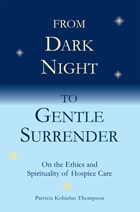
From Dark Night to Gentle Surrender
On the Ethics and Spirituality of Hospice CarePatricia Kobielus Thompson
University of Scranton Press, 2010
Drawing from her many years of experience as a hospice nurse and her training as a theologian, Patricia Kobielus Thompson offers in The Dark Night of the Soul instruction to those providing care for terminally ill patients. Thompson finds in the poetry and other writings of Spanish mystic Saint John of the Cross a wisdom that she argues will assist caregivers in comforting their patients through the trying times just before death. Though much has been written on Saint John of the Cross, Thompson’s application of these works is wholly new and rooted in deep empathy.
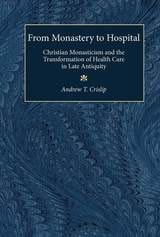
From Monastery to Hospital
Christian Monasticism and the Transformation of Health Care in Late AntiquityAndrew T. Crislip
University of Michigan Press, 2005
From Monastery to Hospital traces the origin of the late Roman hospital to the earliest groups of Christian monastics. Often characterized as holy men and miracle-workers who transformed late antique spirituality, monks held an equally significant impact on the development of medicine in Late Antiquity. Andrew Crislip illuminates the innovative approaches to health care within the earliest monasteries that provided the model for the greatest medical achievement of Late Antiquity: the hospital.
From Monastery to Hospital draws on some of the most vibrant areas of scholarship of the ancient world, including asceticism, the study of the body, history of the family, and the history of medicine. The book will be of interest to scholars and students of early Christianity, Roman History, the history of medicine, and Catholic, Coptic, and Eastern Orthodox history and theology. It will also be of interest to the broader field of history of Christianity, especially with its connections to charitable traditions in the church through the modern period.
Andrew Crislip is Assistant Professor of Religion at the University of Hawaii.

From Single to Serious
Relationships, Gender, and Sexuality on American Evangelical CampusesMalone, Dana M.
Rutgers University Press, 2018
In From Single to Serious, Dana M. Malone shines a light on friendship, dating, and, sexuality, in both the ideals and the practical experiences of heterosexual students at U. S. evangelical colleges. She examines the struggles they have in balancing their gendered and religious presentations of self, the expectations of their campus community, and their desire to find meaningful romantic relationships.
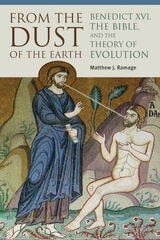
From the Dust of the Earth
Benedict XVI, the Bible , and the Theory of EvolutionMatthew J. Ramage
Catholic University of America Press, 2022