279 books match the query 'Slavery' and 12 start with f
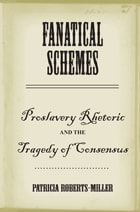
cover of Fanatical Schemes: Proslavery Rhetoric and the Tragedy of Consensus

Fanatical Schemes

Proslavery Rhetoric and the Tragedy of Consensus

Patricia Roberts-Miller

University of Alabama Press, 2009
What was the relationship between rhetoric and slavery, and how did rhetoric fail as an alternative to violence, becoming instead its precursor?
 
Fanatical Schemes is a study of proslavery rhetoric in the 1830s. A common understanding of the antebellum slavery debate is that the increased stridency of abolitionists in the 1830s, particularly the abolitionist pamphlet campaign of 1835, provoked proslavery politicians into greater intransigence and inflammatory rhetoric. Patricia Roberts-Miller argues that, on the contrary, inflammatory rhetoric was inherent to proslavery ideology and predated any shift in abolitionist practices.
 
She examines novels, speeches, and defenses of slavery written after the pamphlet controversy to underscore the tenets of proslavery ideology and the qualities that made proslavery rhetoric effective. She also examines anti-abolitionist rhetoric in newspapers from the spring of 1835 and the history of slave codes (especially anti-literacy laws) to show that anti-abolitionism and extremist rhetoric long preceded more strident abolitionist activity in the 1830s.
 
The consensus that was achieved by proslavery advocates, argues Roberts-Miller, was not just about slavery, nor even simply about race. It was also about manhood, honor, authority, education, and political action. In the end, proslavery activists worked to keep the realm of public discourse from being a place in which dominant points of view could be criticized--an achievement that was, paradoxically, both a rhetorical success and a tragedy.
[more]
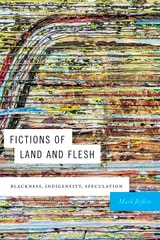
cover of Fictions of Land and Flesh: Blackness, Indigeneity, Speculation

Fictions of Land and Flesh

Blackness, Indigeneity, Speculation

Mark Rifkin

Duke University Press, 2019
In Fictions of Land and Flesh Mark Rifkin explores the impasses that arise in seeking to connect Black and Indigenous movements, turning to speculative fiction to understand those difficulties and envision productive ways of addressing them. Against efforts to subsume varied forms of resistance into a single framework in the name of solidarity, Rifkin argues that Black and Indigenous political struggles are oriented in distinct ways, following their own lines of development and contestation. Rifkin suggests how movement between the two can be approached as something of a speculative leap in which the terms and dynamics of one are disoriented in the encounter with the other. Futurist fiction provides a compelling site for exploring such disjunctions. Through analyses of works by Octavia Butler, Walter Mosley, Nalo Hopkinson, Melissa Tantaquidgeon Zobel, and others, the book illustrates how ideas about fungibility, fugitivity, carcerality, marronage, sovereignty, placemaking, and governance shape the ways Black and Indigenous intellectuals narrate the past, present, and future. In turning to speculative fiction, Rifkin illustrates how speculation as a process provides conceptual and ethical resources for recognizing difference while engaging across it.
[more]
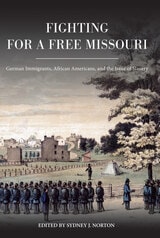
cover of Fighting for a Free Missouri: German Immigrants, African Americans, and the Issue of Slavery

Fighting for a Free Missouri

German Immigrants, African Americans, and the Issue of Slavery

Sydney J. Norton

University of Missouri Press, 2023

Missouri is well-known for its German American heritage, but the story of nineteenth-century German immigrant abolitionists is often neglected in discussions of the state’s history. This collection of ten original essays (with a foreword by renowned Missouri historian Gary Kremer), relates what unfolded when idealistic Germans, many of whom were highly educated and devoted to the ideals of freedom and democracy, left their homeland and settled in a pre–Civil War slave state. Fleeing political persecution during the 1830s and 1840s, immigrants such as Friedrich Münch, Eduard Mühl, Heinrich Boernstein, and Arnold Krekel arrived in the area now known as the Missouri German Heritage Corridor in hopes of finding a land more congenial to their democratic ideals. When they witnessed the state of enslaved Blacks, many of them became abolitionist activists and fervent supporters of Abraham Lincoln and the Union in the emerging Civil War. Editor Sydney Norton and the other contributing authors to Fighting for a Free Missouri explore the Germans’ abolitionist mission, their relationships with African Americans, and their activity in the radical wing of the Republican Party.

 
[more]
cover of Fire under the Ashes: An Atlantic History of the English Revolution

Fire under the Ashes

An Atlantic History of the English Revolution

John Donoghue

University of Chicago Press, 2013

In Fire under the Ashes, John Donoghue recovers the lasting significance of the radical ideas of the English Revolution, exploring their wider Atlantic history through a case study of Coleman Street Ward, London. Located in the crowded center of seventeenth-century London, Coleman Street Ward was a hotbed of political, social, and religious unrest. There among diverse and contentious groups of puritans a tumultuous republican underground evolved as the political means to a more perfect Protestant Reformation. But while Coleman Street has long been recognized as a crucial location of the English Revolution, its importance to events across the Atlantic has yet to be explored.

Prominent merchant revolutionaries from Coleman Street led England’s imperial expansion by investing deeply in the slave trade and projects of colonial conquest. Opposing them were other Coleman Street puritans, who having crossed and re-crossed the ocean as colonists and revolutionaries, circulated new ideas about the liberty of body and soul that they defined against England’s emergent, political economy of empire. These transatlantic radicals promoted social justice as the cornerstone of a republican liberty opposed to both political tyranny and economic slavery—and their efforts, Donoghue argues, provided the ideological foundations for the abolitionist movement that swept the Atlantic more than a century later.
[more]
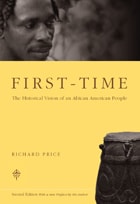
cover of First-Time: The Historical Vision of an African American People

First-Time

The Historical Vision of an African American People

Richard Price

University of Chicago Press, 2002

A classic of historical anthropology, First-Time traces the shape of historical thought among peoples who had previously been denied any history at all. The top half of each page presents a direct transcript of oral histories told by living Saramakas about their eighteenth-century ancestors, "Maroons" who had escaped slavery and settled in the rain forests of Suriname. Below these transcripts, Richard Price provides commentaries placing the Saramaka accounts into broader social, intellectual, and historical contexts.

First-Time's unique style of presentation preserves the integrity of both its oral and documentary sources, uniting them in a profound meditation on the roles of history and memory. This second edition includes a new preface by the author, discussing First-Time's impact and recounting the continuing struggles of the Saramaka people.
[more]
cover of Freebooters and Smugglers: The Foreign Slave Trade in the United States after 1808

Freebooters and Smugglers

The Foreign Slave Trade in the United States after 1808

Ernest Obadele-Starks

University of Arkansas Press, 2007
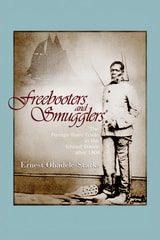
In 1891 a young W. E. B. DuBois addressed the annual American Historical Association on the enforcement of slave trade laws: “Northern greed joined to Southern credulity was a combination calculated to circumvent any law, human or divine.” One law in particular he was referring to was the Abolition Act of 1808. It was specifically passed to end the foreign slave trade. However, as Ernest Obadele-Starks shows, thanks to profiteering smugglers like the Lafitte brothers and the Bowie brothers, the slave trade persisted throughout the south for a number of years after the law was passed. Freebooters and Smugglers examines the tactics and strategies that the adherents of the foreign slave trade used to challenge the law. It reassesses the role that Americans played in the continuation of foreign slave transshipments into the country right up to the Civil War, shedding light on an important topic that has been largely overlooked in the historiography of the slave trade.
[more]
cover of Freedom Seekers: Escaping from Slavery in Restoration London

Freedom Seekers

Escaping from Slavery in Restoration London

Simon P. Newman

University of London Press, 2021

Freedom Seekers reveals the hidden stories of Britain’s enslaved people and their liberation.

This book brings the history of slavery in England to light, revealing the powerful untold stories of resistance by enslaved workers from Africa, South Asia, and First-Nations America forced to work in London as sailors and dockworkers, wet-nurses and washerwomen. Featuring a series of original case studies on those enslaved people who escaped captivity, this volume provides a rich source of information about slavery in eighteenth-century mainland Britain and the “freedom seekers” therein. Using maps, photographs, newspaper advertisements, and more, the book details escape routes, the networks of slaveholders, and the community of people of color across the London region.

Freedom Seekers demonstrates that not only were enslaved people present in Restoration London but that white Londoners were intimately involved in the construction of the system of racial slavery, a process traditionally regarded as happening in the colonies rather than the British Isles. Freedom Seekers is an utterly unmissable and important book that seeks to delve into Britain’s colonial past.
[more]
cover of Freeing Charles: The Struggle to Free a Slave on the Eve of the Civil War

Freeing Charles

The Struggle to Free a Slave on the Eve of the Civil War

Scott Christianson

University of Illinois Press, 2010
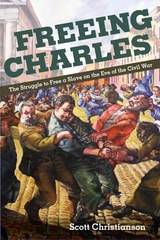
Freeing Charles recounts the life and epic rescue of captured fugitive slave Charles Nalle of Culpeper, Virginia, who was forcibly liberated by Harriet Tubman and others in Troy, New York, on April 27, 1860. Scott Christianson follows Nalle from his enslavement by the Hansborough family in Virginia through his escape by the Underground Railroad and his experiences in the North on the eve of the Civil War. This engaging narrative represents the first in-depth historical study of this crucial incident, one of the fiercest anti-slavery riots after Harpers Ferry. Christianson also presents a richly detailed look at slavery culture in antebellum Virginia and probes the deepest political and psychological aspects of this epic tale. His account underscores fundamental questions about racial inequality, the rule of law, civil disobedience, and violent resistance to slavery in the antebellum North and South.
[more]
cover of From Bondage to Belonging: The Worcester Slave Narratives

From Bondage to Belonging

The Worcester Slave Narratives

B. Eugene McCarthy

University of Massachusetts Press, 2007

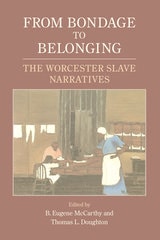
First published between 1842 and 1895, the autobiographical narratives gathered in this volume document the experiences of eight former slaves who eventually took up residence in Worcester, Massachusetts. Each narrative tells a gripping individual story, its author clearly visible in the dress of his or her own words. Together they illuminate not only the inhumanity of slavery but also the dreams and dilemmas of emancipation, tracing the personal journeys of seven men and one woman from bondage to freedom. 

In their well-researched introduction, B. Eugene McCarthy and Thomas L. Doughton situate the Worcester slave narratives within a broader historical framework and analyze their meaning and significance. Drawing on a wide range of sources, they reconstruct the black community of Worcester and compare it with other New England black communities of the time, describing how the town evolved from a society with slaves in the colonial era to a hub for free blacks by the eve of the Civil War. They explain why these writings must be understood as part of a long-established tradition of African American self-representation, and show how the four narratives published before 1865 focus on the experience of slavery, while the four written after the war offer the fresh perspective of living in freedom. Headnotes describe the distinctive literary features of each narrative and provide additional information about the lives of the authors. The editors discuss why these ex-slaves came to Worcester, the circumstances in which each wrote his or her narrative, and the audiences they had in mind. No other collection of slave narratives offers such a diverse range of testimony within a specific historical and literary context, or a more compelling account of the transition from bondage to belonging.
[more]
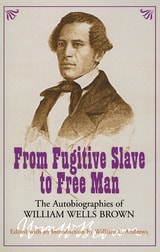
cover of From Fugitive Slave to Free Man: The Autobiographies of William Wells Brown

From Fugitive Slave to Free Man

The Autobiographies of William Wells Brown

Edited with an Introduction by William L. Andrews

University of Missouri Press, 2003
Growing up as a slave in an urban area of Missouri allowed William Wells Brown to live a life that was different from that of the plantation slave so often discussed in slave histories. Born in 1814, the son of a white man and a slave woman, Brown spent the first twenty years of his life mainly in St. Louis and the surrounding areas working as a house servant, a field hand, a tavern keeper’s assistant, a printer’s helper, an assistant in a medical office, and a handyman for James Walker, a Missouri slave trader. During his time with Walker, Brown made three trips up and down the Mississippi River. These trips allowed him to encounter slavery from every perspective and provided experiences he would draw on throughout his writing career.
In From Fugitive Slave to Free Man, two of Brown’s best-known writings, Narrative of William W. Brown, A Fugitive Slave. Written by Himself and My Southern Home: or, The South and Its People, are reprinted together with an expanded introduction by William L. Andrews. Brown’s Narrative, published in 1847, was his first autobiographical writing and was received with wide acclaim, going through four American and five British editions. Only Frederick Douglass’s autobiography sold better, casting a constant shadow over Brown’s works. Douglass and his life were touted as extraordinary, while Brown was referred to as the typical “every man’s slave.” However, the life of William Brown and his writings prove otherwise.
Determined to be a man of letters, Brown was the first African American to write a travel book, Three Years in Europe: or, Places I Have Seen and People I Have Met, which was based on his time abroad in Paris at an international peace conference and in England on an anti-slavery crusade. A year later he published Clotel, the first novel written by an African American and the first to exploit the decades-old rumors of an affair between President Thomas Jefferson and his slave Sally Hemmings. Between 1854 and 1867, Brown published the first drama by an African American, The Escape: or, A Leap for Freedom, and two volumes of black history, one of which is the first military history of the African American in the United States.
In 1880, Brown wrote his final autobiography, My Southern Home. In it he endeavors to explain the complex interrelationships between blacks and whites in the South. Taken together, both of the books included in this volume provide fascinating contrasts, especially in their depictions of slavery, and illustrate the creative innovations Brown developed in various forms of life writing—some of which were more experimental than Douglass’s and more prophetic of the future of African American literature.
[more]
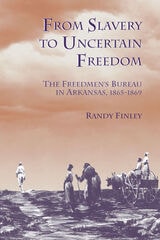
cover of From Slavery to Uncertain Freedom: The Freedman's Bureau in Arkansas 1865-1869

From Slavery to Uncertain Freedom

The Freedman's Bureau in Arkansas 1865-1869

Randy Finley

University of Arkansas Press, 1996

As African Americans in Arkansas emerged from slavery in the aftermath of the Civil War and the Emancipation Proclamation, it was the job o the Federal Freedmen's Bureau to help them build bridges to freedom. The bureau supported former slaves as they assumed new names, searched for lost family members, moved to new homes, worked to provide for their families, learned to read and write, formed and attended their own churches, created their own histories and myths, and struggled to obtain land.

In this account of hte gains made by Arkansas freedman during this period, Randy Finley describes the ways that blacks, whites, and bureau officials undertook their foles in a new society and began to live the complex reality of freedom.

1996 Certificate of Commendation American Association for State and Local History
[more]
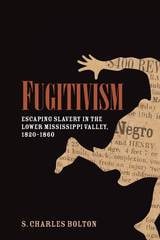
cover of Fugitivism: Escaping Slavery in the Lower Mississippi Valley, 1820-1860

Fugitivism

Escaping Slavery in the Lower Mississippi Valley, 1820-1860

S. Charles Bolton

University of Arkansas Press, 2019

Winner, 2020 Booker Worthen Literary Prize

During the antebellum years, over 750,000 enslaved people were taken to the Lower Mississippi Valley, where two-thirds of them were sold in the slave markets of New Orleans, Natchez, and Memphis. Those who ended up in Louisiana found themselves in an environment of swamplands, sugar plantations, French-speaking creoles, and the exotic metropolis of New Orleans. Those sold to planters in the newly-opened Mississippi Delta cleared land and cultivated cotton for owners who had moved west to get rich as quickly as possible, driving this labor force to harsh extremes.

Like enslaved people all over the South, those in the Lower Mississippi Valley left home at night for clandestine parties or religious meetings, sometimes “laying out” nearby for a few days or weeks. Some of them fled to New Orleans and other southern cities where they could find refuge in the subculture of slaves and free blacks living there, and a few attempted to live permanently free in the swamps and forests of the surrounding area. Fugitives also tried to returnto eastern slave states to rejoin families from whom they had been separated. Some sought freedom on the northern side of the Ohio River; othersfled to Mexico for the same purpose.

Fugitivism provides a wealth of new information taken from advertisements, newspaper accounts, and court records. It explains how escapees made use of steamboat transportation, how urban runaways differed from their rural counterparts, how enslaved people were victimized by slave stealers, how conflicts between black fugitives and the white people who tried to capture them encouraged a culture of violence in the South, and how runaway slaves from the Lower Mississippi Valley influenced the abolitionist movement in the North.

Readers will discover that along with an end to oppression, freedom-seeking slaves wanted the same opportunities afforded to most Americans.

[more]