Results by title
101 books match the query 'Social Activists' and 6 start with f
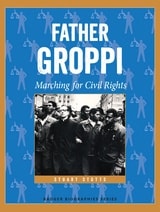
Father Groppi
Marching for Civil RightsStuart Stotts
Wisconsin Historical Society Press, 2013
Father Groppi Marched to Change Milwaukee
"Father Groppi: Marching for Civil Rights" tells the story of Father James Groppi, a Catholic priest from Milwaukee, Wis., who stood up for civil rights in the 1960s and 1970s.
This important new addition to the Badger Biographies series for young readers also tells about a turbulent time in Wisconsin history and sheds light on the civil rights movement and its place in the North.
Growing up on the south side of Milwaukee as the son of Italian immigrants, young James Groppi learned early on what it felt like to be made fun of just because of who you are, and he learned to respect people from other races and ethnic groups. Later, while studying to become a priest, he saw the discrimination African Americans faced. It made him angry, and he vowed to do whatever he could to fight racism.
Father Groppi marched with Dr. Martin Luther King Jr. and other leaders of the civil rights movement. But he knew there was work to be done in his own city. In Milwaukee, he teamed up with the NAACP and other organizations, protesting discrimination and segregation wherever they saw it. It wasn't always easy, and Father Groppi and the other civil rights workers faced great challenges.

Fighter in Velvet Gloves
Study GuideAnnie Boochever
University of Alaska Press, 2021
Annie Boochever worked with Elizabeth’s eldest son, Roy Peratrovich Jr., to bring Elizabeth’s story to life in the first book written for young teens on this remarkable Alaska Native woman. Written about an Alaska Native civil rights leader, Fighter in Velvet Gloves has been incorporated in school curricula around the country, and won the 2019 Lumen Award for Literary Excellence, in addition to receiving many other national recognitions. This study guide is a custom work designed to help instructors teach the story of Elizabeth Peratrovich to students in grades 6 through 12.

For the Long Haul
An Activist Academic's MemoirIra Harkavy with John L. Puckett
Temple University Press, 2027
Ira Harkavy has spent his fifty-plus-year career at the University of Pennsylvania advocating for the democratization of teaching, research, and learning. Since 1992, he has been the Founding Director of the Netter Center for Community Partnerships, whose mission is to develop democratic, mutually beneficial partnerships between Penn and its local community of West Philadelphia.
For the Long Haul is a conversational memoir, moderated by Harkavy’s colleague John Puckett, that features social history and pragmatic arguments stressing the importance of education. The authors discuss Harkavy’s distinguished career and put his life’s work in local and historical context, including his engagement of diverse faculty, students, and staff to take his projects to the nation and the wider world.
Puckett traces Harkavy’s activist origins from his childhood in the Bronx through his undergraduate and graduate studies at Penn. As he developed university-assisted community schools, Harkavy encountered challenges such as the impact of racism and local communities’ distrust of universities. Those experiences show how his learning shaped his thinking about “participation, partnership, and producing change in the world.”
In this era where universities are under attack, For the Long Haul emphasizes Harkavy’s considerable achievements and the importance of higher education for democracy.
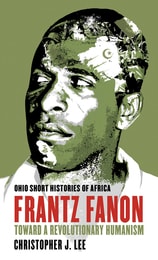
Frantz Fanon
Toward a Revolutionary HumanismChristopher J. Lee
Ohio University Press, 2015
Psychiatrist, philosopher, and revolutionary, Frantz Fanon is one of the most important intellectuals of the twentieth century. He presented powerful critiques of racism, colonialism, and nationalism in his classic books, Black Skin, White Masks (1952) and The Wretched of the Earth (1961). This biography reintroduces Fanon for a new generation of readers, revisiting these enduring themes while also arguing for those less appreciated—namely, his anti-Manichean sensibility and his personal ethic of radical empathy, both of which underpinned his utopian vision of a new humanism. Written with clarity and passion, Christopher J. Lee’s account ultimately argues for the pragmatic idealism of Frantz Fanon and his continued importance today.
From Jail to Jail
Tan Malaka
Ohio University Press, 2020
From Jail to Jail is the political autobiography of Sutan Ibrahim gelar Tan Malaka, an enigmatic and colorful political thinker of twentieth-century Asia, who was one of the most influential figures of the Indonesian Revolution. Variously labeled a communist, Trotskyite, and nationalist, Tan Malaka managed to run afoul of nearly every political group and faction involved in the Indonesian struggle for independence. During his decades of political activity, he spent periods of exile and hiding in nearly every country in Southeast Asia. As a Marxist who was expelled from and became a bitter enemy of his country’s Communist Party and as a nationalist who was imprisoned and murdered by his own government’s forces as a danger to its anticolonial struggle, Tan Malaka was and continues to be soaked in contradiction and controversy.
Translated by Helen Javis and with a new introduction from Harry A. Poeze, this edition of From Jail to Jail contextualizes the life and political accomplishments of Tan Malaka in one of the few known autobiographies by a Marxist of this political era and region.
From Jail to Jail
Mis Sea#83 Tpg#8Tan Malaka
Ohio University Press, 1991
From Jail to Jail is the political autobiography of Sutan Ibrahim gelar Tan Malaka, an enigmatic and colorful political thinker of twentieth-century Asia, who was one of the most influential figures of the Indonesian Revolution. Variously labeled a communist, Trotskyite, and nationalist, Tan Malaka managed to run afoul of nearly every political group and faction involved in the Indonesian struggle for independence. During his decades of political activity, he spent periods of exile and hiding in nearly every country in Southeast Asia. As a Marxist who was expelled from and became a bitter enemy of his country’s Communist Party and as a nationalist who was imprisoned and murdered by his own government’s forces as a danger to its anticolonial struggle, Tan Malaka was and continues to be soaked in contradiction and controversy.