Results by title
238 books match the query 'Social Classes & Economic Disparity' and 9 start with f
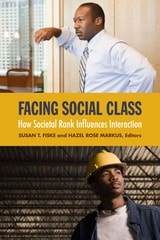
Facing Social Class
How Societal Rank Influences InteractionSusan T. Fiske
Russell Sage Foundation, 2012
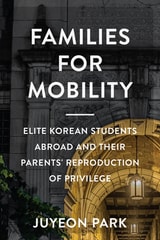
Families for Mobility
Elite Korean Students Abroad and Their Parents' Reproduction of PrivilegeJuyeon Park
Rutgers University Press, 2025
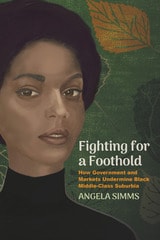
Fighting for a Foothold
How Government and Markets Undermine Black Middle-Class SuburbiaAngela Simms
Russell Sage Foundation, 2026
Prince George’s County, Maryland, is a suburban jurisdiction in the Washington, D.C., metropolitan area and is home to the highest concentration of Black middle-class residents in the United States. As such, it is well positioned to overcome White domination and anti-Black racism and their social and economic consequences. Yet Prince George’s does not raise tax revenue sufficient to provide consistent high-quality public goods and services. In Fighting for a Foothold, sociologist Angela Simms examines the factors contributing to Prince George’s financial troubles.
Simms draws on two years of observations of Prince George’s County’s budget and policy development processes, interviews with nearly 60 Prince George’s leaders and residents, and budget and policy analysis for Prince George’s County and its two Whiter, wealthier neighbors, Montgomery County, Maryland, and Fairfax County, Virginia. She argues legacy and ongoing government policies and business practices—such as federal mortgage insurance policy prior to 1968, local government reliance on property taxes, and private investment patterns—have resulted in disparities in wealth accumulation between Black and White Americans, not only for individuals and families but local jurisdictions as well. Prince George’s County has a lower cost of living than its Whiter, wealthier neighbors. As the most affordable county bordering D.C., it attracts a disproportionate share of the region’s core middle-class, lower middle-class, working class, and low-income residents, resulting in greater budget pressure.
Prince George’s uses the same strategies as majority-White jurisdictions to increase revenue, such as taxing at similar rates and vying for development opportunities but does not attain the same financial returns. Ultimately, Simms contends Prince George’s endures “relative regional burden” and that the county effectively subsidizes Whiter counties’ wealth accumulation. She offers policy recommendations for removing the constraints Prince George’s County and other majority-Black jurisdictions navigate, including increased federal and state taxes on wealthy Americans and corporations, which will enhance the capacity for government to distribute and redistribute resources equitably; increased state-level funding of public goods and services, which would decrease local jurisdictions’ reliance on locally-generated tax revenue; and the creation of equity funds to remediate harms inflicted upon Black Americans.
Fighting for a Foothold is an in-depth analysis of the fiscal challenges experienced by Prince George’s County and by the suburban Black middle-class and majority-Black jurisdictions, more broadly. The book reveals how race, class, and local jurisdiction boundaries in metropolitan areas interact to create different material living conditions for Americans.

Food for Thought
Understanding Older Food InsecurityColleen M. Heflin
Russell Sage Foundation, 2025
Through analysis of national data sets and interviews with lower income older adults, Heflin and Harrington Meyer describe why many older adults do not have enough money to afford food and other essentials. As a result of chronic economic disadvantage, food insecure older adults are often forced to make budget trade-offs between food and other expenses. In these trade-offs, food typically ranks below housing and energy costs and competes with other household bills, such as medical costs, transportation, and phone and internet coverage. While finances play a large role, nonfinancial factors, such as poor physical, cognitive, and mental health, access to healthy food, and transportation challenges, also contribute to food insecurity in old age. In the face of these difficulties, food insecure older adults may go hungry, skip meals, or eat unhealthy foods to help make ends meet.
While SNAP and community-based programs, such as food pantries and home delivered meals, are intended to help address the issue of food insecurity, they are typically inadequate to address the needs of food insecure older adults. SNAP has enrollment and maintenance procedures that are particularly difficult for older adults to navigate, pays out an insufficient amount of money to cover food costs, and varies greatly by state. Availability of community programs varies by municipality, often lacks nutritious foods that are complementary to health conditions common among older adults, and can be difficult to access due to a lack of reliable transportation, disability, or cost. Heflin and Harrington Meyer advocate for addressing all the issues that increase older adults’ risk of food insecurity, not just financial barriers. They suggest updating food insecurity screening tools to include these factors, increasing SNAP benefits and income support for older adults, and other policies to help combat food insecurity in older adults.
Food for Thought highlights the increasingly important issue of food insecurity in old age and lays bare the overlooked challenges faced by food insecure older adults.

Forever Broke
How Baby Boomers are Bankrupting the Millennial GenerationAndrew Stiles
Templeton Press, 2018
Some of his key findings include:
- U.S. debt is approaching 100 percent of GDP, the highest level since World War II.
- By 2050, debt is on track to reach an unprecedented 145 percent of GDP. Under one pessimistic (but probably more realistic) scenario, CBO estimates that debt could rise to 244 percent of GDP, which means lights out.
- By 2050, federal spending is projected to exceed 29 percent of GDP, levels not seen since the height of World War II. We’re on track to spending more money on baby boomers in retirement than we did to defeat the Nazis.
- Since 1984, the median net worth for households headed by someone under the age of 35 has declined 68 percent. For retirement age households, net worth has increased 42 percent over that same period. The result is the largest generational wealth gap in history. Boomers did better than their kids in early adulthood, and will do better than their kids in retirement.
- As millennials remain childless and single for longer, they face one of the highest tax rates (16.9 percent) for their demographic in the developed world.

Four Russian Serf Narratives
Translated, edited, and with an introduction by John MacKay
University of Wisconsin Press, 2009
Four Russian Serf Narratives contains four of these accounts and is the first translated collection of autobiographies by serfs. Scholar and translator John MacKay brings to light for an English-language audience a diverse sampling of Russian serf narratives, ranging from an autobiographical poem to stories of adventure and escape. “Autobiography” (1785) recounts a highly educated serf’s attempt to escape to Europe, where he hoped to study architecture. The long testimonial poem “News About Russia” (ca. 1849) laments the conditions under which the author and his fellow serfs lived. In “The Story of My Life and Wanderings” (1881) a serf tradesman tells of his attempt to simultaneously escape serfdom and captivity from Chechen mountaineers. The fragmentary “Notes of a Serf Woman” (1911) testifies to the harshness of peasant life with extraordinary acuity and descriptive power.
These accounts offer readers a glimpse, from the point of view of the serfs themselves, into the realities of one of the largest systems of unfree labor in history. The volume also allows comparison with slave narratives produced in the United States and elsewhere, adding an important dimension to knowledge of the institution of slavery and the experience of enslavement in modern times.

French Colonial Documentary
Mythologies of HumanitarianismPeter J. Bloom
University of Minnesota Press, 2008
Despite altruistic goals, humanitarianism often propagates foreign, and sometimes unjust, power structures where it is employed. Tracing the visual rhetoric of French colonial humanitarianism, Peter J. Bloom’s unexpected analysis reveals how the project of remaking the colonies in the image of France was integral to its national identity.
French Colonial Documentary investigates how the promise of universal citizenship rights in France was projected onto the colonies as a form of evolutionary interventionism. Bloom focuses on the promotion of French education efforts, hygienic reform, and new agricultural techniques in the colonies as a means of renegotiating the social contract between citizens and the state on an international scale. Bloom’s insightful readings disclose the pervasiveness of colonial iconography, including the relationship between “natural man” and colonial subjectivity; representations of the Senegalese Sharpshooters as obedient, brave, and sexualized colonial subjects; and the appeal of exotic adventure narratives in the trans-Saharan film genre.
Examining the interconnection between French documentary realism and the colonial enterprise, Bloom demonstrates how the colonial archive is crucial to contemporary debates about multiculturalism in France.
Peter J. Bloom is associate professor of film and media studies at the University of California-Santa Barbara.y debates about multiculturalism in France.

From Gift to Commodity
Capitalism and Sacrifice in Nineteenth-Century American FictionHildegard Hoeller
University of New Hampshire Press, 2012

From Parents to Children
The Intergenerational Transmission of AdvantageJohn Ermisch
Russell Sage Foundation, 2012