Results by title
527 books match the query 'Translations into English' and 19 start with f
Faithful Translators
Authorship, Gender, and Religion in Early Modern EnglandJaime Goodrich
Northwestern University Press, 2014

Family Ties
By Clarice Lispector
University of Texas Press, 1972
The silent rage that seizes a matriarch whose family is feting her eighty-ninth year.The tangle of emotions felt by a sophisticated young woman toward her elderly mother. An adolescent girl's obsessive fear of being looked at. The "giddying sense of compassion" that a blind man introduces into a young housewife's settled existence. Of such is made the world of Clarice Lispector, the Brazilian writer whose finest work is acknowledged to be her exquisitely crafted short stories. Here, in these thirteen of Lispector's most brilliantly conceived stories, mysterious and unexpected moments of crisis propel characters to self-discovery or keenly felt intuitions about the human condition. Her characters mirror states of mind. Alienated by their unsettling sense of life's absurdity, they seem at times absorbed in their interior lives and in the passions that dominate and usually defeat them.
Giovanni Pontiero's translation has been lauded by Gregory Rabassa as "magnificent."
Fertility and Other Stories
Vsevolod Ivanov
Northwestern University Press, 1998

Fifty Fables of La Fontaine
Jean de La Fontaine. Translated by Norman R. Shapiro. Illustrated by Alan James Robinson
University of Illinois Press, 1988
Filigrana encendida / Filigree of Light
Poemas / PoemsOlivia Maciel
Swan Isle Press, 2002
Finding Duende
Duende: Play and Theory | Imagination, Inspiration, EvasionFederico García Lorca
Swan Isle Press, 2023
For years, Federico García Lorca’s lecture on duende has been a source of insight for writers and performers, including Ted Hughes, Nick Cave, Patti Smith, and Amanda Gorman.
Duende: Play and Theory not only provides a path into Lorca’s poetics and the arts of Spain; it is one of the strangest, most compelling accounts of inspiration ever offered by a poet. Contrasting the demon called duende with the Angel and the Muse, Lorca describes a mysterious telluric, diabolical current, an irreducible “it,” that can draw the best from both performer and audience.
This new translation by Christopher Maurer, based on a thoroughly revised edition of the Spanish original of 1933, also included in this volume, offers a more accurate and fully annotated version of the lecture, with an introduction by eminent philologist José Javier León. Drawing on a deep knowledge of flamenco, and correcting decades of discussion about duende and its supposed origins in Spanish folklore and popular speech, León shows to what extent the concept of duende—understood as the imp of artistic inspiration—was the playful, yet deadly serious, invention of Lorca himself.
Lorca’s bravura performance of duende is foreshadowed here with a bilingual version—the most complete ever—of his other major text on inspiration, “Imagination, Inspiration, Evasion,” in which he calls for greater freedom in poetry as if searching for duende and its “constant baptism of newly created things.”
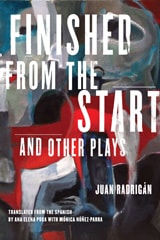
Finished from the Start and Other Plays
Juan Radrigan
Northwestern University Press, 2007
This collection of plays comes from one of Chile’s finest voices of the voiceless: Juan Radrigán. A history marked by personal and political hardship has equipped Radrigán to tell the stories of those his nation left behind. Seven years old when his father abandoned his family, he was forced to work from an early age. As an adult, he worked as a manual laborer during a very dark time for Chile: the demise of Salvador Allende and the rise of General Augusto Pinochet. In a time of torture, exile, and political “disappearances,” his plays stood as quietly powerful anti-regime statements that mourned the country’s loss. Translator Ana Elena Puga’s introduction places Radrigán’s work in its historical and cultural context and provides ample background for the six pieces.
The first work, Testimonies to the Deaths of Sabina, features a fruit seller who may lose her livelihood after she is accused of some mysterious infraction; but she doesn’t know what she has done—if she has truly done anything. The Beasts tells the story of three sisters living in the wilderness who, fearing they have been completely abandoned, devise a means of ultimate escape. Funeral Drums for Lambs and Wolves comes in three parts: Isabel Banished in Isabel, a monologue of a woman left to go mad alone; Without Apparent Motive, a monologue by a murderer who laments the spread of violence; and the dialogue The Guest, a confrontational piece that speaks directly to the spectators, implicating them in their silent, passive tolerance of Pinochet. The title play, Radrigán’s 1981 masterpiece, speaks directly to the specter of the many “disappeared” victims of the military regime.
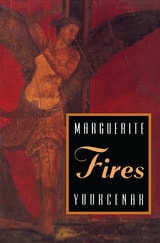
Fires
Marguerite Yourcenar
University of Chicago Press, 1994
"The unwritten novel among the fantasies and aphorisms of Fires is a classic tale."—Stephen Koch, New York Times Book Review
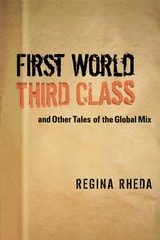
First World Third Class and Other Tales of the Global Mix
By Regina Rheda
University of Texas Press, 2005
Regina Rheda is a contemporary award-winning Brazilian writer whose original voice and style have won her many admirers. First World Third Class and Other Tales of the Global Mix presents some of her finest and most representative work to an English-speaking readership. Stories from the Copan Building consists of eight tales set in a famous residential building in São Paulo. The stories, like the apartment complex, are a microcosm of modern-day urban Brazil. They are witty, consistently caustic, and never predictable.
Also in this volume is the poignant and often hilarious novel First World Third Class. It depicts young middle-class professionals and artists who, as opportunities in Brazil diminished, opted to leave their country, even if it meant taking menial jobs abroad. At the center of the narrative is Rita, a thirty-year-old aspiring filmmaker who migrates to England, and then Italy. She looks for work and love in all the wrong places, moving from city to city and from bed to bed.
The last three stories in this collection also happen to be among the author's most recent. "The Enchanted Princess" is an ironic title for a postfeminist tale of a South American woman being wooed to marry an old-world gentleman who promises to take care of her every need. "The Sanctuary" concerns the living conditions of immigrant workers and farm animals. Equally piquant in nature, "The Front" deals with ecology, labor environments, and gender politics.
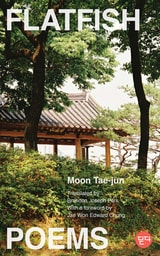
Flatfish
Poems, A Bilingual EditionMoon Tae-jun
Rutgers University Press, 2026
While Korea is certainly the setting of these poems, the works remain largely free of cultural-specific imagery and are, instead, naturalistic or universal. This first bilingual edition is a critical resource for students, poets, translators, and general readers alike.
English-Korean Bilingual Edition
영-한 이중언어판
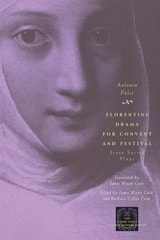
Florentine Drama for Convent and Festival
Seven Sacred PlaysAntonia Pulci
University of Chicago Press, 1996
Available in English for the first time, this volume recovers the long muted voice of an early and important female Italian poet and playwright.
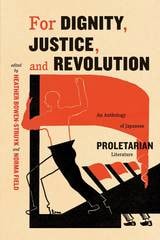
For Dignity, Justice, and Revolution
An Anthology of Japanese Proletarian LiteratureEdited by Heather Bowen-Struyk and Norma Field
University of Chicago Press, 2015
Contextualized by introductory essays, forty expertly translated stories touch on topics like perilous factories, predatory bosses, ethnic discrimination, and the myriad indignities of poverty. Together, they show how even intensely personal issues form a pattern of oppression. Fostering labor consciousness as part of an international leftist arts movement, these writers, lovers of literature, were also challenging the institution of modern literature itself. This anthology demonstrates the vitality of the “red decade” long buried in modern Japanese literary history.
Four Masterworks of American Indian Literature
Quetzalcoatl, the Ritual of Condolence, Cuceb, the Night ChantEdited by John Bierhorst
University of Arizona Press, 1984
"This comparative application of the epic poetry tradition to Amerind literature is a scholarly success.... this book is a most noteworthy item in the field of American Indian studies, and is not to be missed by any serious devotee." --Library Journal
"Biehorst's introductions and notes are brilliant, thorough, and an important contribution to the scholarship on these works. His new translation of the Quetzalcoatl is also excellent." --Choice
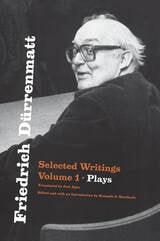
Friedrich Dürrenmatt
Selected Writings, Volume 1, PlaysFriedrich Dürrenmatt
University of Chicago Press, 2006
These translations of Friedrich Dürrenmatt’s plays introduce the writer to a new generation of readers.
The Swiss writer Friedrich Dürrenmatt (1921–90) was one of the most important literary figures of the second half of the twentieth century. During the years of the cold war, arguably only Beckett, Camus, Sartre, and Brecht rivaled him as a presence in European letters. Yet outside Europe, this prolific author is primarily known for only one work, The Visit.
Dürrenmatt’s concerns are timeless, but they are also the product of his Swiss vantage during the cold war: his key plays, gathered in the first volume of Selected Writings, explore such themes as guilt by passivity, the refusal of responsibility, greed and political decay, and the tension between justice and freedom. In The Visit, for instance, an old lady who becomes the wealthiest person in the world returns to the village that cast her out as a young woman and offers riches to the town in exchange for the life of the man, now its mayor, who once disgraced her. Joel Agee’s crystalline translation gives a fresh lease to this play, as well as four others: The Physicists, Romulus the Great, Hercules and the Augean Stables, and The Marriage of Mr. Mississippi.
Dürrenmatt has long been considered a great writer, but one unfairly neglected in the modern world of letters. With these elegantly conceived and expertly translated volumes, a new generation of readers will rediscover his greatest works.
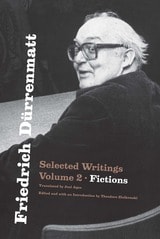
Friedrich Dürrenmatt
Selected Writings, Volume 2, FictionsFriedrich Dürrenmatt
University of Chicago Press, 2006
These translations of Friedrich Dürrenmatt’s fiction introduce the writer to a new generation of readers.
The Swiss writer Friedrich Dürrenmatt (1921–90) was one of the most important literary figures of the second half of the twentieth century. During the years of the cold war, arguably only Beckett, Camus, Sartre, and Brecht rivaled him as a presence in European letters. Yet outside Europe, this prolific author is primarily known for only one work, The Visit.
This second volume of Selected Writings reveals a writer who may stand as Kafka’s greatest heir. Dürrenmatt’s novellas and short stories are searing, tragicomic explorations of the ironies of justice and the corruptibility of institutions. The most well-known work included here is The Pledge, a requiem to the detective story that was made into a film starring Jack Nicholson. The evocative novellas The Assignment tells the story of a woman filmmaker investigating a mysterious murder in an unnamed Arab country; it has been hailed by Sven Birkerts as “a parable of hell for an age consumed by images.” The novella Traps, meanwhile, is a chilling comic novella about a traveling salesman who agrees to play the role of the defendant in a mock trial among dinner companions—and then pays the ultimate penalty.
Dürrenmatt has long been considered a great writer, but one unfairly neglected in the modern world of letters. With these elegantly conceived and expertly translated volumes, a new generation of readers will rediscover his greatest works.
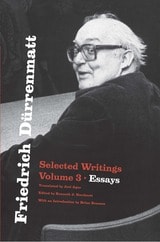
Friedrich Dürrenmatt
Selected Writings, Volume 3, EssaysFriedrich Dürrenmatt
University of Chicago Press, 2006
These translations of Friedrich Dürrenmatt’s essays introduce the writer to a new generation of readers.
The Swiss writer Friedrich Dürrenmatt (1921–90) was one of the most important literary figures of the second half of the twentieth century. During the years of the cold war, arguably only Beckett, Camus, Sartre, and Brecht rivaled him as a presence in European letters. Yet outside Europe, this prolific author is primarily known for only one work, The Visit. With these long-awaited translations of his plays, fictions, and essays, Dürrenmatt becomes available again in all his brilliance to the English-speaking world.
Dürrenmatt’s essays, gathered in this third volume of Selected Writings, are among his most impressive achievements. Their range alone is astonishing: he wrote with authority and charm about art, literature, philosophy, politics, and the theater. The selections here include Dürrenmatt’s best-known essays, such as “Theater Problems” and “Monster Essay on Justice and Law,” as well as the notes he took on a 1970 journey in America (in which he finds the United States “increasingly susceptible to every kind of fascism”). This volume also includes essays that shade into fiction, such as “The Winter War in Tibet,” a fantasy of a third world war waged in a vast subterranean labyrinth—a Plato’s Cave allegory rewritten for our own troubled times.
Dürrenmatt has long been considered a great writer, but one unfairly neglected in the modern world of letters. With these elegantly conceived and expertly translated volumes, a new generation of readers will rediscover his greatest works.
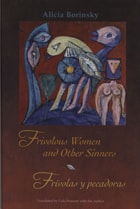
Frivolous Women and Other Sinners / Frívolas y pecadoras
Alicia Borinsky
Swan Isle Press, 2009
Frivolous Women invites us to visit the darker and lighter sides of laughter and love and feel the tenderness of recovered memories as we cross the bridges of relationships and stroll down the mysterious streets of childhood. Alicia Borinsky reminds us that the revelations of poetry are always intimate and dangerous. Cola Franzen’s agile and insightful translation, crafted in close collaboration with the poet, is faithful to the letter and spirit of the original Spanish in this bilingual edition.
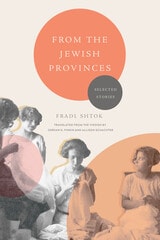
From the Jewish Provinces
Selected StoriesFradl Shtok; Translated from the Yiddish by Jordan D. Finkin and Allison Schachter
Northwestern University Press, 2022
From the Jewish Provinces showcases a brilliant and nearly forgotten voice in Yiddish letters. An insistently original writer whose abrupt departure from the literary scene is the stuff of legend, Fradl Shtok composed stories that describe the travails of young women looking for love and desire in a world that spurns them. These women struggle with disability, sexual violence, and unwanted marriage, striving to imagine themselves as artists or losing themselves in fantasy worlds. The men around them grapple with their own frustrations and failures to live up to stifling social expectations. Through deft portraits of her characters’ inner worlds Shtok grants us access to unnoticed corners of the Jewish imagination.
Set alternately in the Austro‑Hungarian borderlands and in New York City, Shtok’s stories interpret the provincial worlds of the Galician shtetl and the Lower East Side with literary sophistication, experimenting with narrative techniques that make her stories expertly alive to women’s aesthetic experiences.
Fugues
Claribel Alegría, translated from the Spanish by D. J. Flakoll
Northwestern University Press, 1995