Results by title
28167 books match the query 'History' and 1092 start with f
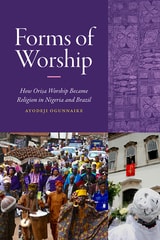
Forms of Worship
How Orisa Worship Became Religion in Nigeria and BrazilAyodeji Ogunnaike
Duke University Press, 2026

Formulas for Motherhood in a Chinese Hospital
Suzanne Gottschang
University of Michigan Press, 2018
Formulas for Motherhood follows a group of women over eighteen months as they visited a Beijing Baby- Friendly Hospital over the course of their pregnancies and throughout their postpartum recoveries. The book shows how the space of the hospital operates as a microcosm of the larger social, political, and economic forces that urban Chinese women navigate in the process of becoming a mother. Relations between biomedical practices, heightened expectations of femininity and sexuality demanded by a consumer culture, alongside international and national agendas to promote maternal and child health, reveal new agents of maternal governance emerging at the very moment China’s economy heats up. This ethnography provides insight into how women’s creative pragmatism in a rapidly changing society leads to their views and decisions about motherhood.

Fornes
Theater in the Present TenseDiane Lynn Moroff
University of Michigan Press, 1996
Diane Lynn Moroff focuses on Fornes's major plays, providing illuminating readings of her unique and irreverent body of work. The book traces the career of this influential playwright, director, and teacher, including the reception of her plays, the range of critical responses (particularly those of feminist critics), and an introduction to Fornes's theatrical philosophies. It looks at such critical issues in Fornes's work as the representation of female subjectivity, theater as metaphor and context, art as ritual, and the role of the spectator. In a final chapter, Fornes's plays including Abingdon Square and her most recent work, What of the Night? are examined in the context of the sexualization of character, an ongoing theme for Fornes.
Fornes: Theater in the Present Tense will appeal to scholars and students in theater studies and women's studies and to anyone interested or engaged in contemporary theater.
Diane Lynn Moroff is Assistant Professor of English, Oglethorpe University.
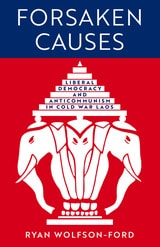
Forsaken Causes
Liberal Democracy and Anticommunism in Cold War LaosRyan Wolfson-Ford
University of Wisconsin Press, 2024
Forsaken Causes offers a groundbreaking intellectual history of the Royal Lao Government (RLG) from 1945 to 1975. In Ryan Wolfson-Ford’s account, the Lao people emerge as not merely pawns of the superpowers but agents in their own right, with the Lao elite wielding particular influence over the nation’s trajectory. Their prevailing ideologies—liberal democracy and anticommunism—were not imposed from outside, but rather established by Lao themselves in the fight against French colonialism. These ideologies were rooted in Lao culture, which prized its traditional monarchy, Buddhist faith, French learning, and nationalist conception of a Lao race. Against histories that have dismissed Lao elites as instruments of foreign powers, Wolfson-Ford shows that the RLG charted its own course, guided by complex motivations, rationales, and beliefs. During this time Lao enjoyed unprecedented democratic freedoms, many of which have not been seen since the government fell to communist takeover in 1975.
By recentering the Lao in their own history, Wolfson-Ford restores our understanding of this robust but often forgotten liberal democracy, recovers lost voices, and broadens our understanding of postcolonial and Cold War Southeast Asia as a whole.

Forsaken
The Menstruant in Medieval Jewish MysticismSharon Faye Koren
Brandeis University Press, 2011
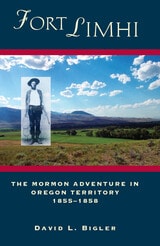
Fort Limhi
The Mormon Adventure in Oregon Territory, 1855-1858David L. Bigler
Utah State University Press, 2004
In May 1855 twenty-seven men set out from the young Mormon settlements in Utah to establish the northernmost colony of the Kingdom of God, "the Northern Mission to the Remnants of the House of Jacob"-American Indians. More colonists, including families, would join them later. Building a fort in the Limhi Valley, four hundred miles to the north and at the foot of the pass by which Lewis and Clark had crossed the Continental Divide, they began to proselyte among Sacagawea's Shoshone relatives as well as members of the Bannock, Nez Percé, and other tribes. Three years later, some of their expected and actual Indian converts violently drove the colonists out and destroyed Fort Limhi.
In Fort Limhi: The Mormon Adventure in Oregon Territory, 1855-1858, David Bigler shows that the colony, known as the Salmon River Mission, played a pivotal role in the Utah War of 1857-1858 and that the catastrophic end of the mission was critical in keeping that conflict from becoming an all out war between Mormon Utah and the United States. In the process, he uses a multitude of primary sources, many newly uncovered or previously overlooked, to reconstruct a dramatic and compelling story involving stalwart Mormon frontiersmen, Brigham Young, a variety of Native American individuals and groups, the U. S. Army, and "mountaineers," as the surviving fur trade veterans now commonly known as "mountain men" called themselves.
Fort Meade, 1849–1900
Canter Brown
University of Alabama Press, 1995
The oldest town in interior south Florida, Fort Meade lies about 50 miles east of Tampa and 10 miles south of Polk County's seat of Bartow. In this volume, Polk County native Canter Brown recounts the intriguing story of the founding and evolution of Fort Meade during the last half of the 19th century, when it was first established as a military outpost to separate Seminoles from white pioneer families desirous of cattle-grazing lands. A civilian community coalesced at Fort Meade under the pressures of the Billy Bowlegs War of 1855-58. Quickly the village developed as a cattle-industry center, which was important to the Confederacy until its destruction in 1864 by home-grown Union forces.
In the postwar era the cattle industry revived, and the community prospered. The railroads arrived in the 1880s, bringing new settlers, and the village grew into a town. Opportunities expanded as well with the growth of citrus, phosphate mining, truck farming, and tobacco industries. A boom-and-bust economy alternately bolstered and rocked the town, and the disastrous freezes of 1894Ð95 almost delivered a fatal blow.
Little has been written about town development on the Florida frontier. This book portrays the extremely complicated and often exciting processes and influences at play in interior south Florida, and the very precarious hold that town life possessed on that frontier.Local history the way it should be written. Canter Brown has managed to score several significant accomplishments in Fort Meade, 1849-1900. The book contributes to the growing body of good, solid monographs dealing with Florida state and local history and represents the building blocks necessary for a state and regional synthesis. The cumulative research compiled for this volume is impressive and daunting. Canter Brown proves that good local history requires considerable detective work and far-ranging inquiries.
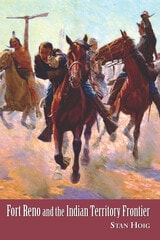
Fort Reno and the Indian Territory Frontier
Stan Hoig
University of Arkansas Press, 2005
The story of Fort Reno, as detailed here by Stan Hoig, touches on several of the most important topics of nineteenth-century Western history: the great cattle drives, Indian pacification and the Plains Wars, railroads, white settlement, and the Oklahoma land rushes. Hoig deals not only with Fort Reno, but also with Darlington agency, the Chisolm Trail, and the trading activities in Indian Territory from 1874 to approximately 1900. The author includes maps, photographs, and illustrations to enhance the narrative and guide the reader, like a scout, through a time of treacherous but fascinating events in the Old West.
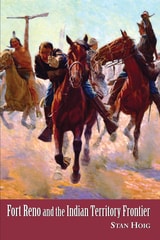
Fort Reno and the Indian Territory Frontier
Stan Hoig
University of Arkansas Press, 2005
The story of Fort Reno, as detailed here by Stan Hoig, touches on several of the most important topics of nineteenth-century Western history: the great cattle drives, Indian pacification and the Plains Wars, railroads, white settlement, and the Oklahoma land rushes. Hoig deals not only with Fort Reno, but also with Darlington agency, the Chisolm Trail, and the trading activities in Indian Territory from 1874 to approximately 1900. The author includes maps, photographs, and illustrations to enhance the narrative and guide the reader, like a scout, through a time of treacherous but fascinating events in the Old West.

Fort Ticonderoga, The Last Campaigns
The War in the North, 1777–1783Mark Edward Lender
Westholme Publishing, 2027
During the War for Independence, Fort Ticonderoga’s guns, sited critically between Lakes Champlain and George, dominated north-south communications in upstate New York that were vital to both the British and American war efforts. In the public mind Ticonderoga was the “American Gibraltar” or the “Key to the Continent,” and patriots considered holding the fort essential to the success of the Revolutionary cause. Ticonderoga was a primary target in British Lieutenant General John Burgoyne’s 1777 campaign to crush American resistance in the north and end the rebellion in a decisive stroke. American efforts to defend the fort in June against overwhelming odds entailed political and military intrigue, bungling, heroism, and ultimately a narrow escape for the Continental and provincial forces under Major General Arthur St. Clair. The loss of Ticonderoga stunned patriot morale and ignited one of the greatest political firestorms of the war. But the fortunes of war turned. Two months later, the rebels mounted a sensational—if little known—counter-attack on Ticonderoga that had major implications for Burgoyne’s eventual defeat at Saratoga in October. Yet Saratoga brought no peace, and Ticonderoga would be central to additional military and political maneuverings—many of them known only to specialist historians—that would keep the region on edge until the end of the war in 1783.
Based on new archival research and taking advantage of the latest scholarship, Fort Ticonderoga, The Last Campaigns: The War in the North, 1777-1783 by distinguished historian Mark Edward Lender highlights the strategic importance of the fort as British, American, and regional forces (including those of an independent Vermont Republic) fought for control of the northern front at a critical point in the war. The book tells the Ticonderoga story in all of its complexity and drama, correcting misconceptions embedded in many previous accounts, and sheds vital new light on this key chapter in America’s struggle for independence.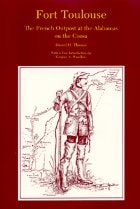
Fort Toulouse
The French Outpost at the Alabamas on the CoosaDaniel H Thomas, with an introduciton by Gregory A. Waselkov
University of Alabama Press, 1989
Situated at the head of the Alabama River system—at the juncture of the Coosa and Tallapoosa rivers—Fort Toulouse in 1717 was planned to keep the local Indians neutral, if not loyal, to the French and contain the British in their southernmost Atlantic colonies. Unlike the usual frontier settlements, Fort Toulouse was both a diplomatic post, since its officers acted as resident ministers, and a military post. Because it was located in a friendly territory adjoining an area under a rival (British) influence, the post participated in psychological warfare rather than in blood-letting. It used trade and aid, and was familiar with spies and double-agents—welcoming and debriefing British defectors; no cannon was discharged in anger at Toulouse.
The most eminent figure to have been connected directly with Fort Toulouse was General Andrew Jackson, who established a military post there during the War of 1812 after his victory over the Indians at Horseshoe Bend. The outpost was named Fort Jackson in his honor and played a key role in the treaty negotiations and eventual settlement of the Indian land by Americans.
In addition to discussing geopolitical and military affairs and diplomatic relations with Indian chiefs, Thomas describes daily life at the post and the variety of interactions between residents and visitors. Waselkov's introduction places the original 1960 book within the context of the existing scholarship of that time and adds an extensive and enlightening review of the most recent archaeological and historical research to Thomas' pioneering work.

Fort Worth Characters
Richard F. Selcer
University of North Texas Press, 2009

Fort Worth Characters 2
Richard F. Selcer
University of North Texas Press, 2025
Fort Worth Stories
Richard F. Selcer
University of North Texas Press, 2021
Fort Worth from World War II to 1960
Harold Rich
University of North Texas Press, 2025

Forth to the Mighty Conflict
Alabama and World War IIAllen Cronenberg
University of Alabama Press, 1995
From the home front to the front lines—Alabama’s pivotal role in shaping victory in World War II.
Alabama and its people played a conspicuous role in World War II. Not only were thousands of servicemen trained at military facilities in the state—at Fort McClellan, Camp Rucker, Camp Sibert, Maxwell Air Field, and Tuskegee Army Air Field—but Axis prisoners of war were interned in camps on Alabama soil. The state of Alabama held a significant number of these prisoners, over seventeen thousand in four camps across the state: Camp Aliceville, Camp Opelika, Fort McClellan, and Fort Rucker. This study focuses on Camp Aliceville and Camp Opelika which provide a sample that frames and highlights the national prisoner of war program. Through this example, one can see the lasting legacy of the prisoner of war program and its role in transforming the United States and forever changing the lives of thousands of prisoners, guards, and local citizens. An analysis of the Alabama camps also reveals how memory is constructed and how one narrative can ultimately emerge as the dominant story. In addition, a survey of the landscape reveals the importance of place and its role in the process of remembering and forgetting.
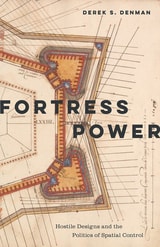
Fortress Power
Hostile Designs and the Politics of Spatial ControlDerek S. Denman
University of Minnesota Press, 2025
A compelling treatise on the relationship between power and enclosure
Fortress Power presents a genealogy of fortification as a material and political technology intent on obstruction, tracing its implementation across battlefields, borders, and urban environments. Drawing on the influential work of philosophers Michel Foucault and Giorgio Agamben, Derek S. Denman places the fortress alongside the archetypes of the prison and the camp, citing them as paradigmatic of how space is transformed into a tool of domination and control.
Focusing on the defensive architecture of bastion fortresses, urban design, and border landscapes, Fortress Power charts the rise of a form of governance grounded in hostility, extending the scope of its subject from a piece of military construction to a much broader political concept. Detailing how power manifests in everything from city centers to international boundaries, the book analyzes the logic of fortification as it moves through various contexts in the advancement of surveillance, exploitation, warfare, and political authority.
Through a unique blend of architecture and design studies, political theory, international relations, geography, and migration studies, Denman outlines the disquieting legacy of the fortress to highlight its role in the formation of modern government and the enactment of violence. In an era marked by the increasing prevalence of authoritarian power and conflicting geopolitical boundaries, he presents an insightful investigation of the weaponization of the built environment.
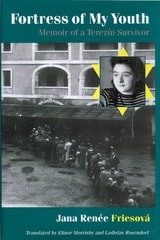
Fortress of My Youth
Memoir of a Terezín SurvivorJana Renée Friesová
University of Wisconsin Press, 2011
Jana Renée Friesová was fifteen when she was imprisoned by the Nazis in the Czech ghetto town of Terezín. Her memoir tells the poignantly familiar story of a young girl who, even under the most abominable circumstances, engages in intense adolescent friendships, worries with her companions over her looks, and falls in love.
Anne Frank’s diary ends with deportation to a concentration camp; Fortress of My Youth, in contrast, takes the reader deep into the horrors of daily life in a camp that were faced by a young girl and her family. But Friesová also tells of love, joy, sacrifice, and the people who shared in the most profound experiences of her life.
Fortunate People in a Fortunate Land
At Home in Santa Monica's Rent-Controlled HousingLauren E. M. Everett
Temple University Press, 2025
Everett seeks to understand the extent to which individuals feel at home or not at home and what factors contribute to those experiences. She also explores the nexus of Santa Monica’s tenant protection policies, infrastructure, and resources and the extent to which they inform stability—both perceived and actual—and life decisions.
The first scholarly book to take a tenant-centered approach to examining the benefits and problems of rent control, Fortunate People in a Fortunate Land examines the residential experience in this specific local context and explains how it relates to policy and other externalities in cities where homeownership is not financially viable for most renters.
In the series Urban Life, Landscape, and Policy

Fortune and Faith in Old Chicago
A Dual Biography of Mayor Augustus Garrett and Seminary Founder Eliza Clark GarrettCharles H. Cosgrove
Southern Illinois University Press, 2020
This engaging biography of Augustus Garrett and Eliza Clark Garrett tells two equally compelling stories: an ambitious man’s struggle to succeed and the remarkable spiritual journey of a woman attempting to overcome tragedy. By contextualizing the couple’s lives within the rich social, political, business, and religious milieu of Chicago’s early urbanization, author Charles H. Cosgrove fills a gap in the history of the city in the mid-nineteenth century.
The Garretts moved from the Hudson River Valley to a nascent Chicago, where Augustus made his fortune in the land boom as an auctioneer and speculator. A mayor during the city’s formative period, Augustus was at the center of the first mayoral election scandal in Chicago. To save his honor, he resigned dramatically and found vindication in his reelection the following year. His story reveals much about the inner workings of Chicago politics and business in the antebellum era.
The couple had lost three young children to disease, and Eliza arrived in Chicago with deep emotional scars. Her journey exemplifies the struggles of sincere, pious women to come to terms with tragedy in an age when most people attributed unhappy events to divine punishment. Following Augustus’s premature death, Eliza developed plans to devote her estate to founding a women’s college and a school for ministerial training, and in 1853 she endowed a Methodist theological school, the Garrett Biblical Institute (now the Garrett-Evangelical Theological Seminary), thereby becoming the first woman in North America to found an institution of higher learning.
In addition to illuminating our understanding of Chicago from the 1830s to the 1850s, Fortune and Faith in Old Chicago explores American religious history, particularly Presbyterianism and Methodism, and its attention to gender shows how men and women experienced the same era in vastly different ways. The result is a rare, fascinating glimpse into old Chicago through the eyes of two of its important early residents.

Forty Miles from the Sea
Xalapa, the Public Sphere, and the Atlantic World in Nineteenth-Century MexicoRachel A. Moore
University of Arizona Press, 2011
Over the course of the nineteenth century, despite its inland location, Xalapa became an important Atlantic community as it came to represent both a haven and a place of fortification for residents of Veracruz. Yellow fever, foreign invasion, and domestic discord drove thousands of residents of Veracruz, as well as foreign travelers, to seek refuge in Xalapa. At the same time, these adverse circumstances prompted the Mexican government to use Xalapa as a bulwark against threats originating in the Atlantic.
The influence of the Atlantic world thus stretched far into central Mexico, thanks to both the instability of the coastal region and the desire of government officials to “protect” central Mexico from volatile Atlantic imports. The boundaries established at Xalapa, however, encouraged goods, information, and people to collect in the city and thereby immerse the population in the developments of the Atlantic sphere. Thus, in seeking to protect the center of the country, government authorities more firmly situated Xalapa in the Atlantic world. This connection would be trumped by national affiliation only when native residents of Xalapa became more comfortable with their participation in the Mexican public sphere later in the nineteenth century.
The interdisciplinary and comparative nature of this study will make it appeal to those studying Atlantic history, including historians of Britain, the United States, Latin America, and Africa, as well as those studying communication, print culture, and postal history more broadly.
Forty Years In The Wilderness
Impressions Of Nevada, 1940-1980James W. Hulse
University of Nevada Press, 1986
A view of Nevada history by native Nevadan and historian Hulse that suggests prosperity be based on diverse businesses rather than on a gaming-financed economy.
Forward Pass
The Play That Saved FootballPhilip L. Brooks
Westholme Publishing, 2007
In 1913, a small, up-and-coming school came to West Point to challenge the great Army football team. The opposing quarterback dropped back, raised the football, and threw a perfect spiral to his wide open teammate. Again and again the quarterback and his receiver completed passes, resulting in a stunning 35-13 defeat of Army. That school was Notre Dame and the receiver was Knute Rockne: the game of football was transformed. The story of Notre Dame’s passing attack goes back seven years, when the forward pass was first legalized as a means of opening the game up to avoid the fatalities that plagued early football and nearly saw the game banned. A student of the legendary Amos Alonzo Stagg, Jesse Harper, envisioned a mixture of precision passing and running throughout the game, and after arriving at Notre Dame, he schooled his team in his new-fangled approach.
In Forward Pass: The Play That Saved Football, Philip L. Brooks introduces the reader to the dirt, spectacle, and emotion of the great teams of the early twentieth century, including Jim Thorpe and the Carlisle Indians, Stagg’s University of Chicago Maroons, Fielding Yost’s Michigan Wolverines, Johnny Heisman’s Georgia Tech Yellow Jackets, and Gil Dobie’s Washington Huskies. While most teams experimented with passing, it was Jesse Harper and Knute Rockne who showed how the forward pass could be used as the ultimate offensive strategy and key to the brilliant future of football.
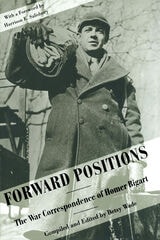
Forward Positions
The War Correspondence of Homer BigartHomer Bigart
University of Arkansas Press, 1992
Among journalists—and particularly war correspondents—Homer Bigart was both legend and example. In a career of four decades, first with the New York Herald Tribuneand then, through 1972, with The New York Times, Bigart distinguished himself as a superb writer and tireless digger for the realities that could be learned only in the field and not at headquarters. In 1943 Bigart sailed for England to cover the air war and was soon on mule-back in Sicily, and hanging on at Anzio. He then went to the Pacific, where his dispatches won him his first Pulitzer Prize for foreign correspondence. When hostilities erupted in Korea he was again on the front lines in the front lines in the Orient, and again recipient of a Pulitzer. By the time of the American involvement in Vietnam, he was an old-timer, a seasoned correspondent admired and celebrated for his wit but regarded with awe for his masterly stories, in which straightforward prose, informed by tenacious reporting, cut to the heart of the issues.
Previously available only n crumbling library copies of the Tribune and the Times, or in microfilm repositories, his dispatches, with their rare insights into warefar and he minds of those who wage war, are now collected in Forward Positions: The War Correspondence of Home Bigart, edited by Betsy Wade and introduced by Harrison E. Salisbury, himself the winner of a Pulitzer Prize for journalism.
Forward Positions does honor to a breed of journalist that had passed into history by the time of Bigart’s death. It includes one of the first accounts of the atomic annihilation of Hiroshima, a report on the war-crimes trial of Adolf Eichmann, a number of dispatches on “hot” battles of the Cold War, and a probing dispatch on Lieutenant William Calley’s testimony on the Mỹ Lai Massacre. With this representative selection of more than fifty of Bigart’s accounts of war on the ground, in the air, and in the courtroom, Wade provides a wealth of background material about his career, as well as glimpses of his impact on journalism. The book promises hours of captivating and informative reading for journalists, historians, veterans, and anyone who likes a good story tautly told.
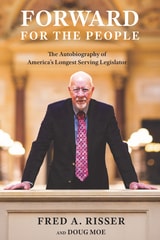
Forward for the People
The Autobiography of America's Longest Serving LegislatorFred A. Risser and Doug Moe
Wisconsin Historical Society Press, 2025
When Fred Risser retired from the Wisconsin Senate in 2021, his sixty-four years in state government made him the longest serving legislator in US history. Now, in this candid and illuminating autobiography, Risser shares his singular perspective on events that transformed the state and the nation over the course of his remarkable career. From his role in the “Joe Must Go” drive to recall US Senator Joseph McCarthy in the 1950s to his position as the senior senator among the “Fab Fourteen” Wisconsin Democrats who opposed Governor Scott Walker’s Act 10 legislation against collective bargaining in 2011, Risser was a leader in state politics for decades, always maintaining an unwavering belief that political action can change people’s lives for the better.
Forward for the People provides a unique peek behind the political curtain from the viewpoint of someone who saw it all. Risser worked with thirteen governors and authored more than 240 bills that became law, championing public health and safety, environmental protection, women’s and reproductive rights, organized labor, civil rights, and social justice, among many other causes. Risser also recounts interactions with prominent national politicians, including Robert La Follette Jr., Hubert Humphrey, Jimmy Carter, and Bill Clinton. More than forty photographs from Risser’s personal collection and the Wisconsin Senate paint a vivid picture of his six-decade journey through Wisconsin politics.
Forward for the People details Risser’s experiences out of state, from a stint in the Panama Canal Zone as a navy hospital corpsman to his undergraduate debate-team days at Minnesota’s Carleton College to his years studying law at the University of Oregon and his travels to all seven continents. The book also depicts the quirky habits that made Risser a memorable and beloved politician: biking his age in miles every birthday and never taking the elevator in his sixty-four years at the Wisconsin State Capitol. Enhanced with details sourced from correspondence, personal notes, newspaper accounts, and recollections from friends and former colleagues, Risser and coauthor Doug Moe have crafted an engaging account of an extraordinary life in public service.
Forward for the People
The Autobiography of America's Longest Serving LegislatorFred A. Risser and Doug Moe
Wisconsin Historical Society Press, 2026
When Fred Risser retired from the Wisconsin Senate in 2021, his sixty-four years in state government made him the longest serving legislator in US history. Now, in this candid and illuminating autobiography, Risser shares his singular perspective on events that transformed the state and the nation over the course of his remarkable career. From his role in the “Joe Must Go” drive to recall US Senator Joseph McCarthy in the 1950s to his position as the senior senator among the “Fab Fourteen” Wisconsin Democrats who opposed Governor Scott Walker’s Act 10 legislation against collective bargaining in 2011, Risser was a leader in state politics for decades, always maintaining an unwavering belief that political action can change people’s lives for the better.
Forward for the People provides a unique peek behind the political curtain from the viewpoint of someone who saw it all. Risser worked with thirteen governors and authored more than 240 bills that became law, championing public health and safety, environmental protection, women’s and reproductive rights, organized labor, civil rights, and social justice, among many other causes. Risser also recounts interactions with prominent national politicians, including Robert La Follette Jr., Hubert Humphrey, Jimmy Carter, and Bill Clinton.
Forward for the People details Risser’s experiences out of state, from a stint in the Panama Canal Zone as a navy hospital corpsman to his undergraduate debate-team days at Minnesota’s Carleton College to his years studying law at the University of Oregon and his travels to all seven continents. The book also depicts the quirky habits that made Risser a memorable and beloved politician: biking his age in miles every birthday and never taking the elevator in his sixty-four years at the Wisconsin State Capitol. Enhanced with details sourced from correspondence, personal notes, newspaper accounts, and recollections from friends and former colleagues, Risser and coauthor Doug Moe have crafted an engaging account of an extraordinary life in public service.
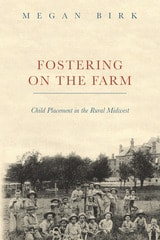
Fostering on the Farm
Child Placement in the Rural MidwestMegan Birk
University of Illinois Press, 2019
Drawing on institution records, correspondence from children and placement families, and state reports, Megan Birk scrutinizes how the farm system developed--and how the children involved may have become some of America's last indentured laborers. Between 1850 and 1900, up to one-third of farm homes contained children from outside the family. Birk reveals how the nostalgia attached to misplaced perceptions about healthy, family-based labor masked the realities of abuse, overwork, and loveless upbringings endemic in the system. She also considers how rural people cared for their own children while being bombarded with dependents from elsewhere. Finally, Birk traces how the ills associated with rural placement eventually forced reformers to transition to a system of paid foster care, adoptions, and family preservation.
Foucault and the Iranian Revolution
Gender and the Seductions of IslamismJanet Afary and Kevin B. Anderson
University of Chicago Press, 2005
In this important and controversial account, Janet Afary and Kevin B. Anderson illuminate Foucault's support of the Islamist movement. They also show how Foucault's experiences in Iran contributed to a turning point in his thought, influencing his ideas on the Enlightenment, homosexuality, and his search for political spirituality. Foucault and the Iranian Revolution informs current discussion on the divisions that have reemerged among Western intellectuals over the response to radical Islamism after September 11. Foucault's provocative writings are thus essential for understanding the history and the future of the West's relationship with Iran and, more generally, to political Islam. In their examination of these journalistic pieces, Afary and Anderson offer a surprising glimpse into the mind of a celebrated thinker.

Foucault and the Kamasutra
The Courtesan, the Dandy, and the Birth of Ars Erotica as Theater in IndiaSanjay K. Gautam
University of Chicago Press, 2016
Gautam shows how closely intertwined the history of erotics in Indian culture is with the history of theater-aesthetics grounded in the discourse of love, and Foucault provides the framework for opening up an intellectual horizon of Indian thought. To do this, Gautam looks to the history of three inglorious characters in classical India: the courtesan and her two closest male companions—her patron, the dandy consort; and her teacher and advisor, the dandy guru. Foucault’s distinction between erotic arts and the science of sexuality drives Gautam’s exploration of the courtesan as a symbol of both sexual-erotic and aesthetic pleasure. In the end, by entwining together Foucault’s works on the history of sexuality in the West and the classical Indian texts on eros, Gautam transforms our understanding of both, even as he opens up new ways of investigating erotics, aesthetics, gender relations, and subjectivity.
Foucault in Iran
Islamic Revolution after the EnlightenmentBehrooz Ghamari-Tabrizi
University of Minnesota Press, 2016
Were the thirteen essays Michel Foucault wrote in 1978–1979 endorsing the Iranian Revolution an aberration of his earlier work or an inevitable pitfall of his stance on Enlightenment rationality, as critics have long alleged? Behrooz Ghamari-Tabrizi argues that the critics are wrong. He declares that Foucault recognized that Iranians were at a threshold and were considering if it were possible to think of dignity, justice, and liberty outside the cognitive maps and principles of the European Enlightenment.
Foucault in Iran centers not only on the significance of the great thinker’s writings on the revolution but also on the profound mark the event left on his later lectures on ethics, spirituality, and fearless speech. Contemporary events since 9/11, the War on Terror, and the Arab Uprisings have made Foucault’s essays on the Iranian Revolution more relevant than ever. Ghamari-Tabrizi illustrates how Foucault saw in the revolution an instance of his antiteleological philosophy: here was an event that did not fit into the normative progressive discourses of history. What attracted him to the Iranian Revolution was precisely its ambiguity.
Theoretically sophisticated and empirically rich, this interdisciplinary work will spark a lively debate in its insistence that what informed Foucault’s writing was not an effort to understand Islamism but, rather, his conviction that Enlightenment rationality has not closed the gate of unknown possibilities for human societies.

Foundation of Urology at the University of Michigan
Emergence of a Medical Specialty, 1919–1970David A. Bloom
Michigan Publishing Services, 2027
In 1919, urology came to the University of Michigan when Hugh Cabot arrived from Boston, attracted by the fulltime position of surgery chair. The celebrity urologist created a multi-specialty surgery department and, two years later, became the Dean of the Medical School. He trained Reed Nesbit who became the Chief of Urology in 1930; Nesbit made Ann Arbor an epicenter of international urological practice, education, and research until his retirement in 1967. In this history of urology at the university, David Bloom recounts Cabot and Nesbit’s careers, the introduction of hemodialysis to Michigan, and the role of the Ann Arbor Sarns corporation in worldwide hemodialysis technology.
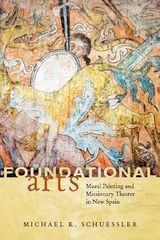
Foundational Arts
Mural Painting and Missionary Theater in New SpainMichael K. Schuessler
University of Arizona Press, 2013
In Foundational Arts Michael K. Schuessler asserts that the literature of New Spain begins with missionary theater and its intimate relationship to mural painting. In particular, he examines the relationships between texts and visual images that emerged in Mexico at two Augustinian monasteries in Hidalgo, Mexico, during the century following the Spanish Conquest. The forced combination of the ideographical tradition of Nahuatl with Latin-based language alphabets led to a fascinating array of new cultural expressions.
Missionary theater was organized by ingenious friars with the intent to convert and catechize indigenous populations. Often performed in Nahuatl or other local languages, the actors combined Latin-based language texts with visual contexts that corresponded to indigenous ways of knowing: murals, architectural ornamentation, statuary, altars, and other modes of visual representation. By concentrating on the interrelationship between mural painting and missionary theater, Foundational Arts explores the artistic and ideological origins of Mexican plastic arts and literature.

Foundations and Methods from Mathematics to Neuroscience
Essays Inspired by Patrick SuppesEdited by Colleen E Crangle, Adolfo García de la Sienra, and Helen E. Longino
CSLI, 2014

Foundations of Colonial Rule
Rebuilding Lima after the Earthquake of 1687Judith Mansilla
University of Alabama Press, 2026
Foundations of Colonial Rule analyzes diverse primary documents to understand how the viceroyalty, the Catholic clergy, local authorities, and everyday citizens of Lima, Peru, managed and rebuilt after the 1687 earthquake.
Foundations of Feeling
Theorizing Emotions in Late Medieval LiteratureJessica Rosenfeld
University of Chicago Press, 2026
A fresh reading of medieval literature as deeply concerned with thinking about feelings.
Are emotions primarily bodily or cognitive? Do “natural” emotions exist? What is the relationship between emotion and gender? In Foundations of Feeling, Jessica Rosenfeld shows how medieval literature informs contemporary ideas about how emotions operate. Ranging widely from love poetry to pastoral and theological writings, to political satire and more, Rosenfeld reveals a wealth of attention to emotions in both scientific and philosophical discourses of the time. By mining Latin, medieval French, and Middle English traditions, she relates medieval concerns to the most central, current debates (and impasses) in the fields of history of emotion and affect theory today, reframing how we think about and define feelings.
Foundations of Paleoecology
Classic Papers with CommentariesEdited by S. Kathleen Lyons, Anna K. Behrensmeyer, and Peter J. Wagner
University of Chicago Press, 2019
This book brings together forty-four classic papers published between 1924 and 1999 that trace the origins and development of paleoecology. The articles cross taxonomic groups, habitat types, geographic areas, and time and have made substantial contributions to our knowledge of the evolution of life. Encompassing the full breadth of paleoecology, the book is divided into six parts: community and ecosystem dynamics, community reconstruction, diversity dynamics, paleoenvironmental reconstruction, species interaction, and taphonomy. Each paper is also introduced by a contemporary expert who gives context and explains its importance to ongoing paleoecological research. A comprehensive introduction to the field, Foundations of Paleoecology will be an essential reference for new students and established paleoecologists alike.

Foundations of World Order
The Legalist Approach to International Relations, 1898–1922Francis Anthony Boyle
Duke University Press, 1999
Although both the League of Nations and the Permanent Court of International Justice were rejected by the U.S. Senate, Boyle shows how the early governance of these institutions—precursors, respectively, to the United Nations and the International Court of Justice—informed later efforts to reduce and regulate transnational threats and the use of military force. Delving into such topics as the United States and its initial stance of neutrality in World War I and its imperial policy toward Latin America and the Caribbean, Boyle offers detailed readings of the relevant treaties, tribunals, and conferences, and assesses the political actors involved. Taking up the legalist point of view, he discusses the codification of customary international law, the obligatory arbitration of international disputes, and the creation of a new regime for the settlement of such disputes.
Boyle has provided in Foundations of World Order a compelling portrait of the relationship between political power and law, and of the impact of these forces on U.S. diplomacy. This volume will serve as a valuable resource to students, scholars, and practitioners of international law; it will also be of great interest to historians and political scientists engaged with issues of U.S. foreign policy and diplomatic history.

Foundations of the Portuguese Empire, 1415-1580
Bailey W. Diffie and George D. Winius
University of Minnesota Press, 1978
Foundations of the Portuguese Empire, 1415-1580 was first published in 1977. Minnesota Archive Editions uses digital technology to make long-unavailable books once again accessible, and are published unaltered from the original University of Minnesota Press editions.
This account traces the history of the Portuguese overseas discoveries, following the expansion into the Atlantic island, the Madeiras, and the Azores. It continues the account with the history of Portuguese discoveries along the African coast, at Guinea, the Congo, and Good Hope, then follows the voyages of Vasco da Gama to India and to Cabra, Brazil, and the expansion in the early years of the sixteen century to Malacca, China, and the East Indies. The volume presents not only a useful narrative of the spread of Portuguese empire but also new interpretations and analyses of the Portuguese overseas history.

Foundations of the Portuguese empire, 1415-1580
Bailey W. Diffie
University of Minnesota Press, 1977
Founders of the Future
The Science and Industry of Spanish ModernizationÓscar Iván Useche
Bucknell University Press, 2022
Founding Choices
American Economic Policy in the 1790sEdited by Douglas A. Irwin and Richard Sylla
University of Chicago Press, 2010
The political decisions made by the founding fathers were crucial to the success of the early republic. But the economic decisions they made were just as pivotal, ensuring the general welfare and common defense of the United States for decades to come. Founding Choices explores these economic choices and their profound influence on American life, westward expansion, and influence abroad. Among the topics covered are finance, trade, and monetary and banking policy, with a focus on the factors guiding those policies and their end result.
This book redresses the relative neglect of the economic achievements of the founders. It will be essential reading for historians and economists alike.
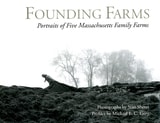
Founding Farms
Portraits of Five Massachusetts Family FarmsStanley E. Sherer
University of Massachusetts Press, 1993
With each passing year, the number of family farms in the United States diminishes. Fewer people have the persistence and ingenuity to wrest a livelihood from the land in an era of corporate ownership and mass production. Yet some family farms survive.
Through words and photographs, this book documents the long lives of five of the oldest farms in Massachusetts. Each has remained in the same family for more than two, sometimes three, centuries and each has a distinctive history. The devotion to the land and family heritage is palpable in the stories these five families tell.
Stan Sherer’s remarkable photographs depict the activities of the family members as they go about their daily labors, planting crops, feeding animals, applying new technologies to ancient tasks, and coping with the vagaries of weather and state regulations. Michael E. C. Gery’s narrative traces how the farms began, what has sustained them through the generations, and how the families who run them today feel about their past, present, and future. These stories are told largely through the words of the people themselves.
The result is a complex portrait that moves beyond traditional stereotypes to reveal the realities of family farm life in an increasingly urbanized society.
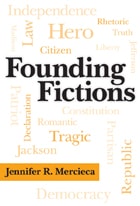
Founding Fictions
Jennifer R. Mercieca
University of Alabama Press, 2010
Founding Fictions develops the concept of a “political fiction,” or a narrative that people tell about their own political theories, and analyzes how republican and democratic fictions positioned American citizens as either romantic heroes, tragic victims, or ironic partisans. By re-telling the stories that Americans have told themselves about citizenship, Mercieca highlights an important contradiction in American political theory and practice: that national stability and active citizen participation are perceived as fundamentally at odds.
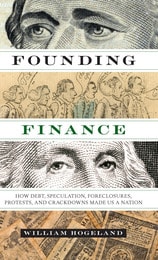
Founding Finance
How Debt, Speculation, Foreclosures, Protests, and Crackdowns Made Us a NationBy William Hogeland
University of Texas Press, 2014
Recent movements such as the Tea Party and anti-tax “constitutional conservatism” lay claim to the finance and taxation ideas of America’s founders, but how much do we really know about the dramatic clashes over finance and economics that marked the founding of America? Dissenting from both right-wing claims and certain liberal preconceptions, Founding Finance brings to life the violent conflicts over economics, class, and finance that played directly, and in many ways ironically, into the hardball politics of forming the nation and ratifying the Constitution—conflicts that still continue to affect our politics, legislation, and debate today.
Mixing lively narrative with fresh views of America’s founders, William Hogeland offers a new perspective on America’s economic infancy: foreclosure crises that make our current one look mild; investment bubbles in land and securities that drove rich men to high-risk borrowing and mad displays of ostentation before dropping them into debtors’ prisons; depressions longer and deeper than the great one of the twentieth century; crony mercantilism, war profiteering, and government corruption that undermine any nostalgia for a virtuous early republic; and predatory lending of scarce cash at exorbitant, unregulated rates, which forced people into bankruptcy, landlessness, and working in the factories and on the commercial farms of their creditors. This story exposes and corrects a perpetual historical denial—by movements across the political spectrum—of America’s all-important founding economic clashes, a denial that weakens and cheapens public discourse on American finance just when we need it most.

Founding Mothers of the Society for Ethnomusicology
Charlotte J. Frisbie
University of Illinois Press, 2026
An enlightening eyewitness account, Founding Mothers of the Society for Ethnomusicology is an invaluable window into the work and contributions of women scholars and the obstacles they faced.
Four Classic Mormon Village Studies
Howard M. Bahr
University of Utah Press, 2014
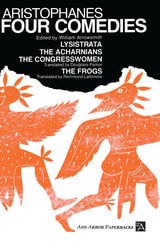
Four Comedies
Aristophanes
University of Michigan Press, 1969
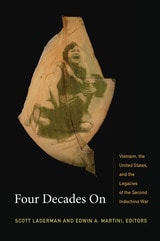
Four Decades On
Vietnam, the United States, and the Legacies of the Second Indochina WarScott Laderman and Edwin A. Martini, eds.
Duke University Press, 2013
Contributors. Alex Bloom, Diane Niblack Fox, H. Bruce Franklin, Walter Hixson, Heonik Kwon, Scott Laderman, Mariam B. Lam, Ngo Vinh Long, Edwin A. Martini, Viet Thanh Nguyen, Christina Schwenkel, Charles Waugh
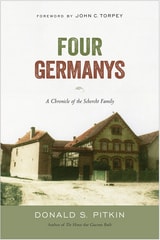
Four Germanys
A Chronicle of the Schorcht FamilyDonald S. Pitkin
Temple University Press, 2016
In this last book by the late Donald Pitkin, author of The House that Giacomo Built, comes a story of the Schorcht family, through whose fortunes and struggles one can see the transformations of Germany through the long twentieth century.
Each chapter of Four Germanys is reflective of generational rather than historical time. In 1922, Edwin Schorcht inherited his family farm, and in Part One, Pitkin traces the derivation of this farmstead. Part Two focuses on Schorcht’s children who came of age in Hitler’s Germany. Part Three has the Schorchts growing up in the Ulbricht years (1950–73) of the German Democratic Republic. The book concludes with the great-granddaughter, Maria, looking back to the past in relation to the new Germany that history had bequeathed her.
Ultimately, Four Germanys reflects the impact of critical historical events on ordinary East Germans while it also reveals how one particular family managed its own historical adaptation to these events.