Results by title
22279 books match the query 'Social Science' and 955 start with f

Freaks of History
Two Performance TextsJames MacDonald
Intellect Books, 2017
MacDonald, who is cerebral palsied, recognizes that disability narratives are rarely written by and for disabled people. Therefore his plays, accompanied by critical essays and director’s notes, are a welcome addition to the emerging discourse of Crip theory, and essential reading for disability students and academics alike.

Fred Allen's Radio Comedy
Alan Havig
Temple University Press, 1991

Fred in Love
Felice Picano
University of Wisconsin Press, 2005
But when an acquaintance brought his female cat to be serviced by Fred, an entire new set of experiences opened up for the cat-and for Picano, who'd never had the nerve to befriend her owner, his ideal man. The course of love seldom runs straight for cats or for men, and this time would prove (hilariously) no different.
This is another of Picano's distinguished portraits of a vanished era, when a new gay domain was solidifying only a few years after the Stonewall Riots, and the still nascent gay literary world that Picano would help invent was just a conception. Fred in Love is a charming, nostalgic, funny, gossipy, involving, and ultimately enlightening story about how we learn and grow, and how we love-whether the object of our affection is a cat or another human being. It's sure to take its place next to Picano's now classic literary memoirs Ambidextrous, Men Who Loved Me, and A House on the Ocean, a House on the Bay.

Fredric Jameson and Film Theory
Marxism, Allegory, and Geopolitics in World CinemaKeith B. Wagner
Rutgers University Press, 2022

Fredrik Barth
An Intellectual BiographyThomas Hylland Eriksen
Pluto Press, 2015
Free Black Communities and the Underground Railroad
The Geography of ResistanceCheryl Janifer LaRoche
University of Illinois Press, 2013
Free Burma
Transnational Legal Action and Corporate AccountabilityJohn G. Dale
University of Minnesota Press, 2010
Through the experience of the Free Burma movement, John G. Dale demonstrates how social movements create and appropriate legal mechanisms for generating new transnational political opportunities. He presents three corporate accountability campaigns waged by the Free Burma movement. The cases focus on the legislation of “Free Burma” laws in local governments throughout the United States; the effort to force the state of California to de-charter Unocal Oil Corporation for its flagrant abuse of human rights; and the first-ever use of the U.S. Alien Tort Claims Act to sue a corporation in a U.S. court for human rights abuses committed abroad. Dale’s work also raises the issue of how foreign policies of so-called constructive engagement actually pose a threat to the hope of Burma’s activists—and others worldwide—for more democratic economic development.
Free Love in Utopia
John Humphrey Noyes and the Origin of the Oneida CommunityCompiled by George Wallingford Noyes
University of Illinois Press, 2001
Free Love in Utopia provides the first in-depth account of how complex marriage was introduced among previously monogamous or single Oneida Community members. Bringing together vivid, firsthand writings by members of the community--including personal correspondence, memoranda on spiritual and material concerns, and official pronouncements--this volume portrays daily life in Oneida and the deep religious commitment that permeated every aspect of it. It also presents a complex portrait of the community's founder, John Humphrey Noyes, who demanded not only complete religious loyalty from his followers but also minute control over their sexual lives. It recounts the formidable legal suits faced by the community--one of which almost forced it to disband in 1852--and the critical behind-the-scenes work of Noyes's second-in-command, John L. Miller. Most important, Free Love in Utopia describes in detail how Oneida's "enlarged family" was created and how its unorthodox practices affected its members.
Key selections from a large collection of primary documents detailing Oneida's early years were compiled by George Wallingford Noyes, nephew of the founder. The present volume, astutely edited and introduced by noted communitarian scholar Lawrence Foster, marks the first publication of G. W. Noyes's remarkable manuscript, excerpted from the irreplaceable original documents that were deliberately burned after his death. The volume also reproduces Oneida's First Annual Report, which contains the sexual manifesto that underlay the community.
Free Society and Moral Crisis
Robert Cooley Angell
University of Michigan Press, 1958
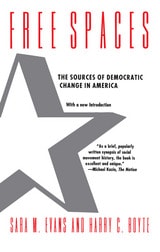
Free Spaces
The Sources of Democratic Change in AmericaSara M. Evans and Harry C. Boyte
University of Chicago Press, 1992
In Free Spaces, Sara M. Evans and Harry C. Boyte argue for a new understanding of the foundations for democratic politics by analyzing the settings in which people learn to participate in democracy. In their new Introduction, the authors link the concept of free spaces to recent theoretical discussions about community, public life, civil society, and social movements.
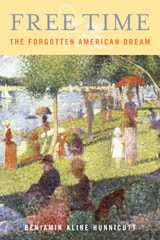
Free Time
The Forgotten American DreamBenjamin Hunnicutt
Temple University Press, 2013
Hunnicutt provides an incisive intellectual, cultural, and political history of the original "American Dream" from the colonial days to the present. Taking his cue from Walt Whitman's "higher progress," he follows the traces of that dream, cataloging the myriad voices that prepared for and lived in an opening "realm of freedom."
Free Time reminds Americans of the forgotten, best part of the "American Dream"-that more and more of our lives might be lived freely, with an enriching family life, with more time to enjoy nature, friendship, and the adventures of the mind and of the spirit.
Free Trade & Uneven Development
North American Apparel Industry After Naftaedited by Gary Gereffi, David Spener and Jennifer Bair
Temple University Press, 2002

Free Trade In The Bermuda Triangle
And Other Tales Of CounterglobalizationBrett Neilson
University of Minnesota Press, 2003
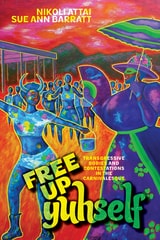
Free Up Yuhself
Transgressive Bodies and Contestations in the CarnivalesqueNikoli A. Attai
Rutgers University Press, 2025
Free Up Yuhself explores and theorizes what it means to embody and be empowered by the chaos of transgression, evaluating the implications for people who destabilize the Caribbean region’s dominant gender and sexuality politics within the Caribbean and the Caribbean diaspora. This book examines how people actively utilize the carnivalesque—spaces of festivity and places of excitement, the extraordinary, the ritualistic—to confront, negotiate, disrupt, and transgress normative trends, boundaries, and perspectives in the Caribbean and Caribbean diaspora communities. This book is particularly concerned with the ways that Caribbean people contest sexual and gendered expectations through their bodily performances across regional and diasporic festival spaces. Through illustrative, analytical, evaluative, and reflective chapters, the collection contemplates the themes of freedom, belonging, acceptance, and recognition as these affect the experience of people’s sense of being. The authors reflect on “freeing up” as a contentious politics, understanding that people have the capacity to enact their freedom through transgressive movements and performances that persistently grapple with notions of respectability, agency, empowerment, disruption, and the meanings and consequences of their varied social and political locations.
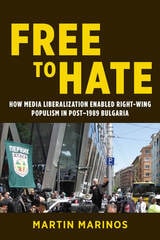
Free to Hate
How Media Liberalization Enabled Right-Wing Populism in Post-1989 BulgariaMartin Marinos
University of Illinois Press, 2023
Bulgaria’s media-driven pivot to right-wing populism parallels political developments taking place around the world. Martin Marinos applies a critical political economy approach to place Bulgarian right-wing populism within the structural transformation of the country’s media institutions. As Marinos shows, media concentration under Western giants like Westdeutsche Allgemeine Zeitung and News Corporation have led to a neoliberal turn of commercialization, concentration, and tabloidization across media. The Right have used the anticommunism and racism bred by this environment to not only undermine traditional media but position their own outlets to boost new political entities like the nationalist party Ataka. Marinos’s ethnographic observations and interviews with local journalists, politicians, and media experts add on-the-ground detail to his account. He also examines several related issues, including the performative appeal of populist media and the money behind it.
A timely and innovative analysis, Free to Hate reveals where structural changes in media intersect with right-wing populism.
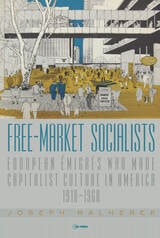
Free-Market Socialists
European Émigrés Who Made Capitalist Culture in America, 1918–1968Joseph Malherek
Central European University Press, 2022
The Hungarian artist-designer László Moholy-Nagy, the Austrian sociologist Paul Lazarsfeld, and his fellow Viennese Victor Gruen—an architect and urban planner—made careers in different fields. Yet they shared common socialist politics, Jewish backgrounds, and experience as refugees from the Nazis. This book tells the story of their intellectual migration from Central Europe to the United States, beginning with the collapse of the Habsburg Empire, and moving through the heady years of newly independent social-democratic republics before the descent into fascism. It follows their experience of exile and adaptation in a new country, and culminates with a surprising outcome of socialist thinking: the opening of the first fully enclosed, air-conditioned suburban shopping center in the United States. Although the American culture they encountered ostensibly celebrated entrepreneurial individualism and capitalistic “free enterprise,” Moholy-Nagy, Lazarsfeld, and Gruen arrived at a time of the progressive economic reforms of the New Deal and an extraordinary open-mindedness about social democracy. This period of unprecedented economic experimentation nurtured a business climate that, for the most part, did not stifle the émigrés’ socialist idealism but rather channeled it as the source of creative solutions to the practical problems of industrial design, urban planning, and consumer behavior.
Based on a vast array of original sources, Malherek interweaves the biographies of these three remarkable personalities and those of their wives, colleagues, and friends with whom they collaborated on innovative projects that would shape the material environment and consumer culture of their adopted home. The result is a narrative of immigration and adaptation that challenges the crude binary of capitalism and socialism with a story of creative economic hybridization.
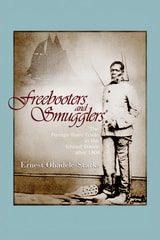
Freebooters and Smugglers
The Foreign Slave Trade in the United States after 1808Ernest Obadele-Starks
University of Arkansas Press, 2007
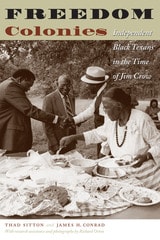
Freedom Colonies
Independent Black Texans in the Time of Jim CrowBy Thad Sitton and James H. Conrad
University of Texas Press, 2005
Friends of the Dallas Public Library Award, 2006
Best Book on East Texas, East Texas Historical Association, 2007
In the decades following the Civil War, nearly a quarter of African Americans achieved a remarkable victory—they got their own land. While other ex-slaves and many poor whites became trapped in the exploitative sharecropping system, these independence-seeking individuals settled on pockets of unclaimed land that had been deemed too poor for farming and turned them into successful family farms. In these self-sufficient rural communities, often known as "freedom colonies," African Americans created a refuge from the discrimination and violence that routinely limited the opportunities of blacks in the Jim Crow South.
Freedom Colonies is the first book to tell the story of these independent African American settlements. Thad Sitton and James Conrad focus on communities in Texas, where blacks achieved a higher percentage of land ownership than in any other state of the Deep South. The authors draw on a vast reservoir of ex-slave narratives, oral histories, written memoirs, and public records to describe how the freedom colonies formed and to recreate the lifeways of African Americans who made their living by farming or in skilled trades such as milling and blacksmithing. They also uncover the forces that led to the decline of the communities from the 1930s onward, including economic hard times and the greed of whites who found legal and illegal means of taking black-owned land. And they visit some of the remaining communities to discover how their independent way of life endures into the twenty-first century.
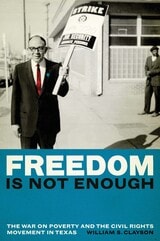
Freedom Is Not Enough
The War on Poverty and the Civil Rights Movement in TexasBy William S. Clayson
University of Texas Press, 2010
Led by the Office of Economic Opportunity, Lyndon Johnson's War on Poverty reflected the president's belief that, just as the civil rights movement and federal law tore down legalized segregation, progressive government and grassroots activism could eradicate poverty in the United States. Yet few have attempted to evaluate the relationship between the OEO and the freedom struggles of the 1960s. Focusing on the unique situation presented by Texas, Freedom Is Not Enough examines how the War on Poverty manifested itself in a state marked by racial division and diversity—and by endemic poverty.
Though the War on Poverty did not eradicate destitution in the United States, the history of the effort provides a unique window to examine the politics of race and social justice in the 1960s. William S. Clayson traces the rise and fall of postwar liberalism in the Lone Star State against a backdrop of dissent among Chicano militants and black nationalists who rejected Johnson's brand of liberalism. The conservative backlash that followed is another result of the dramatic political shifts revealed in the history of the OEO, completing this study of a unique facet in Texas's historical identity.
Freedom Is a Constant Struggle
The Mississippi Civil Rights Movement and Its LegacyKenneth T. Andrews
University of Chicago Press, 2004
Freedom Is a Constant Struggle is also the first book of its kind to detail the activities of white supremacists in Mississippi, revealing how white repression and intimidation sparked black activism and simultaneously undermined the movement's ability to achieve far-reaching goals. Andrews shows that the federal government's role was important but reactive as federal actors responded to the sustained struggles between local movements and their opponents. He tracks the mobilization of black activists by the NAACP, the creation of Freedom Summer, efforts to galvanize black voters, the momentous desegregation of public schools and the rise of all-white private academies, and struggles over the economic development of black communities. From this complex history, Andrews shows how the civil rights movement built innovative organizations and campaigns that empowered local leadership and had a lasting legacy in Mississippi and beyond.
Based on an original and creative research design that combines extensive archival research, interviews with activists, and quantitative historical data, Freedom Is a Constant Struggle provides many new insights into the civil rights struggle, and it presents a much broader theory to explain whether and how movements have enduring impacts on politics and society. What results is a work that will be invaluable to students of social movements, democratic politics, and the struggle for racial freedom in the U.S.
Freedom Is an Endless Meeting
Democracy in American Social MovementsFrancesca Polletta
University of Chicago Press, 2002
Polletta traces the history of democracy in early labor struggles and pre-World War II pacifism, in the civil rights, new left, and women's liberation movements of the sixties and seventies, and in today's faith-based organizing and anti-corporate globalization campaigns. In the process, she uncovers neglected sources of democratic inspiration—Depression-era labor educators and Mississippi voting registration workers, among them—as well as practical strategies of social protest. But Freedom Is an Endless Meeting also highlights the obstacles that arise when activists model their democracies after familiar nonpolitical relationships such as friendship, tutelage, and religious fellowship. Doing so has brought into their deliberations the trust, respect, and caring typical of those relationships. But it has also fostered values that run counter to democracy, such as exclusivity and an aversion to rules, and these have been the fault lines around which participatory democracies have often splintered. Indeed, Polletta attributes the fragility of the form less to its basic inefficiency or inequity than to the gaps between activists' democratic commitments and the cultural models on which they have depended to enact those commitments. The challenge, she concludes, is to forge new kinds of democratic relationships, ones that balance trust with accountability, respect with openness to disagreement, and caring with inclusiveness.
For anyone concerned about the prospects for democracy in America, Freedom Is an Endless Meeting will offer abundant historical, theoretical, and practical insights.
"This is an excellent study of activist politics in the United States over the past century. . . . Assiduously researched, impressively informed by a great number of thoughtful interviews with key members of American social movements, and deeply engaged with its subject matter, the book is likely to become a key text in the study of grass-roots democracy in America."—Kate Fullbrook, Times Literary Supplement
"Polletta's portrayal challenges the common assumption that morality and strategy are incompatible, that those who aim at winning must compromise principle while those who insist on morality are destined to be ineffective. . . . Rather than dwell on trying to explain the decline of 60s movements, Polletta shows how participatory democracy has become the guiding framework for many of today's activists."—Richard Flacks, Los Angeles Times Book Review
"In Freedom Is an Endless Meeting, Francesca Polletta has produced a remarkable work of historical sociology. . . . She provides the fullest theoretical work of historical sociology. . . . She provides the fullest theoretical picture of participatory democracy, rich with nuance, ambiguity, and irony, that this reviewer has yet seen. . . . This wise book should be studied closely by both academics and by social change activists."—Stewart Burns, Journal of American History
Freedom Not Yet
Liberation and the Next World OrderKenneth Surin
Duke University Press, 2009
Surin begins by examining the current regime of accumulation—the global domination of financial markets over traditional industrial economies—which is used as an instrument for the subordination and dependency of poorer nations. He then moves to the constitution of subjectivity, or the way humans are produced as social beings, which he casts as the key arena in which struggles against dispossession occur. Surin critically engages with the major philosophical positions that have been posed as models of liberation, including Derrida’s notion of reciprocity between a subject and its other, a reinvigorated militancy in political reorientation based on the thinking of Badiou and Zizek, the nomad politics of Deleuze and Guattari, and the politics of the multitude suggested by Hardt and Negri. Finally, Surin specifies the material conditions needed for liberation from the economic, political, and social failures of our current system. Seeking to illuminate a route to a better life for the world’s poorer populations, Surin investigates the philosophical possibilities for a Marxist or neo-Marxist concept of liberation from capitalist exploitation and the regimes of power that support it.
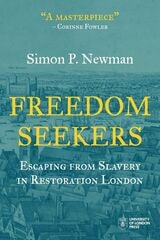
Freedom Seekers
Escaping from Slavery in Restoration LondonSimon P. Newman
University of London Press, 2021
This book brings the history of slavery in England to light, revealing the powerful untold stories of resistance by enslaved workers from Africa, South Asia, and First-Nations America forced to work in London as sailors and dockworkers, wet-nurses and washerwomen. Featuring a series of original case studies on those enslaved people who escaped captivity, this volume provides a rich source of information about slavery in eighteenth-century mainland Britain and the “freedom seekers” therein. Using maps, photographs, newspaper advertisements, and more, the book details escape routes, the networks of slaveholders, and the community of people of color across the London region.
Freedom Seekers demonstrates that not only were enslaved people present in Restoration London but that white Londoners were intimately involved in the construction of the system of racial slavery, a process traditionally regarded as happening in the colonies rather than the British Isles. Freedom Seekers is an utterly unmissable and important book that seeks to delve into Britain’s colonial past.
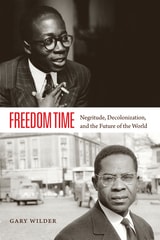
Freedom Time
Negritude, Decolonization, and the Future of the WorldGary Wilder
Duke University Press, 2015

Freedom as Form
Gavin Jantjes, Anti-Apartheid, and the Transnational Avant-GardeAllison K. Young
Duke University Press, 2027
Freedom as Marronage
Neil Roberts
University of Chicago Press, 2015
Roberts examines the liminal and transitional space of slave escape in order to develop a theory of freedom as marronage, which contends that freedom is fundamentally located within this space—that it is a form of perpetual flight. He engages a stunning variety of writers, including Hannah Arendt, W. E. B. Du Bois, Angela Davis, Frederick Douglass, Samuel Taylor Coleridge, and the Rastafari, among others, to develop a compelling lens through which to interpret the quandaries of slavery, freedom, and politics that still confront us today. The result is a sophisticated, interdisciplinary work that unsettles the ways we think about freedom by always casting it in the light of its critical opposite.
Freedom from the Press
Journalism and State Power in SingaporeCherian George
National University of Singapore Press, 2011

Freedom in Entangled Worlds
West Papua and the Architecture of Global PowerEben Kirksey
Duke University Press, 2012
Freedom in Fulani Social Life
An Introspective EthnographyPaul Riesman
University of Chicago Press, 1977
"Freedom in Fulani Social Life richly documents how the ethnographer's own personal and cultural background is implicated in the research process. . . . For this reason, [Riesman's] book will be of paramount interest to all ethnographers."—Philip L. Kilbride, Reviews in Anthropology
"A remarkably well-written and insightful account of Fulani life. . . . In addition to using the conventional approaches of participating in and observing the daily activities of the Jelgobe . . . Riesman enriches his account by examining his personal feelings about particular incidents."—Library Journal
"An interesting and provocative study."—Choice
At the time of his death in 1988, Paul Riesman was an anthropologist who taught at Carleton College.
Freedom in White and Black
A Lost Story of the Illegal Slave Trade and Its Global LegacyEmma Christopher
University of Wisconsin Press, 2020
This story can be told because of an exceptional trove of court documents that provides unparalleled insight into one small link in the great, horrific chain of slavery. Emma Christopher follows a trail of evidence across four continents to examine the lives of this barracoon's owners, their workers, and their tragic human merchandise. She reveals how an American, Charles Mason, escaped justice, while British subjects Robert Bostock and John McQueen were arrested. In court five African men—Tamba, Tom Ball, Yarra, Noah, and Sessay—courageously testified against their former owners/captors. They, and 233 other liberated men, women, and children, were relocated to Freetown, Sierra Leone. There they endured harsh lives of "freedom," while the punishment of Bostock and McQueen was fleeting.
From the fragmented facts of these lives, Christopher sheds fascinating light on the early development of the nations of Sierra Leone, Liberia, and Australia (where Bostock and McQueen were banished) and the role of former slaves in combatting the illegal trade.

Freedom with Violence
Race, Sexuality, and the US StateChandan Reddy
Duke University Press, 2011
Freedom without Permission
Bodies and Space in the Arab RevolutionsFrances S. Hasso and Zakia Salime, editors
Duke University Press, 2016
Freedom's Ballot
African American Political Struggles in Chicago from Abolition to the Great MigrationMargaret Garb
University of Chicago Press, 2014
Freedom’s Ballot is the history of three generations of African American activists—the ministers, professionals, labor leaders, clubwomen, and entrepreneurs—who transformed twentieth-century urban politics. This is a complex and important story of how black political power was institutionalized in Chicago in the half-century following the Civil War. Margaret Garb explores the social and political fabric of Chicago, revealing how the physical makeup of the city was shaped by both political corruption and racial empowerment—in ways that can still be seen and felt today.

Freedom's Port
The African American Community of Baltimore, 1790-1860Christopher Phillips
University of Illinois Press, 1997
He shows how it grew from a transient aggregate of individuals, many fresh from slavery, to a strong, overwhelmingly free community less wracked by class and intraracial divisions than were other cities. Almost from the start, Phillips states, Baltimore's African Americans forged their own freedom and actively defended it--in a state that maintained slavery and whose white leadership came to resent the liberties the city's black people had achieved.
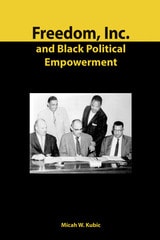
Freedom, Inc. and Black Political Empowerment
Micah W. Kubic
University of Missouri Press, 2016
Much has been written about black urban empowerment and about the candidates—particularly the winning candidates—who are the public face of such shifts in power. Authors invariably mention the important role played by black political organizations in electing black officials or organizing communities, but Micah W. Kubic goes further, making, for the first time, one such organization the focus of a book-length study. Kubic tells the story of black political empowerment in Kansas City through the prism of Freedom, Inc., the nation’s oldest existing black political organization.
Using interviews and observation of participants as well as archival research, Kubic offers historical and political analysis of Freedom, Inc. from its founding in 1962 through its role in municipal elections of 2007. Kubic asserts that strong local organizations are living, dynamic organisms and that they, rather than charismatic candidates or interracial alliances, are the crucial players in both determining political outcomes and advancing black interests in urban areas.
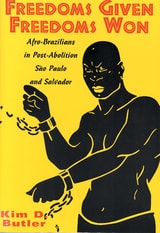
Freedoms Given, Freedoms Won
Afro-Brazilians in Post-Abolition São Paolo and SalvadorButler, Kim D
Rutgers University Press, 1998
Freedoms Given, Freedoms Won explores the ways Afro-Brazilians in two major cities adapted to the new conditions of life after the abolition of slavery and how they confronted limitations placed on their new freedom. The book sets forth new ways of understanding why the abolition of slavery did not yield equitable fruits of citizenship, not only in Brazil, but throughout the Americas and the Caribbean.
Afro-Brazilians in Sao Paulo and Salvador lived out their new freedom in ways that raise issues common to the entire Afro-Atlantic diaspora. In Sao Paulo, they initiated a vocal struggle for inclusion in the creation of the nation's first black civil rights organization and political party, and they appropriated a discriminatory identity that isolated blacks. In contrast, African identity prevaled over black identity in Salvador, where social protest was oriented toward protecting the right of cultural pluralism.
Of all the eras and issues studied in Afro-Brazilian history, post-abolition social and political action has been the most neglected. Butler provides many details of this period for the first time in English and supplements published sources with original oral histories, Afro-Brazilian newspapers, and new state archival documents currently being catalogued in Bahia. Freedoms Given, Freedoms Won sets the Afro-Brazilian experience in a national context as well as situating it within the Afro-Atlantic diaspora through a series of explicit parallels, particularly with Cuba and Jamaica.
Freedom’s Ring
Literatures of Liberation from Civil Rights to the Second WaveJacqueline Foertsch
Rutgers University Press, 2021
Freeing Black Girls
A Black Feminist Bible on Racism and Revolutionary MotheringTamura Lomax
Duke University Press, 2025
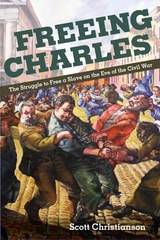
Freeing Charles
The Struggle to Free a Slave on the Eve of the Civil WarScott Christianson
University of Illinois Press, 2010
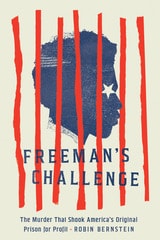
Freeman's Challenge
The Murder That Shook America's Original Prison for ProfitRobin Bernstein
University of Chicago Press, 2024
An award-winning historian tells a gripping, morally complicated story of murder, greed, race, and the true origins of prison for profit.
In the early nineteenth century, as slavery gradually ended in the North, a village in New York State invented a new form of unfreedom: the profit-driven prison. Uniting incarceration and capitalism, the village of Auburn built a prison that enclosed industrial factories. There, “slaves of the state” were leased to private companies. The prisoners earned no wages, yet they manufactured furniture, animal harnesses, carpets, and combs, which consumers bought throughout the North. Then one young man challenged the system.
In Freeman’s Challenge, Robin Bernstein tells the story of an Afro-Native teenager named William Freeman who was convicted of a horse theft he insisted he did not commit and sentenced to five years of hard labor in Auburn’s prison. Incensed at being forced to work without pay, Freeman demanded wages. His challenge triggered violence: first against him, then by him. Freeman committed a murder that terrified and bewildered white America. And white America struck back—with aftereffects that reverberate into our lives today in the persistent myth of inherent Black criminality. William Freeman’s unforgettable story reveals how the North invented prison for profit half a century before the Thirteenth Amendment outlawed slavery “except as a punishment for crime”—and how Frederick Douglass, Harriet Tubman, and other African Americans invented strategies of resilience and resistance in a city dominated by a citadel of unfreedom.
Through one Black man, his family, and his city, Bernstein tells an explosive, moving story about the entangled origins of prison for profit and anti-Black racism.
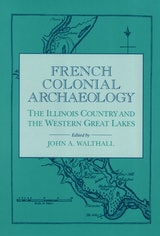
French Colonial Archaeology
The Illinois Country and the Western Great LakesEdited by John A. Walthall
University of Illinois Press, 1991
results of many of the investigations of French colonial sites made in
the mid-continent during the last decade. It includes work done at Fort
St. Louis, Fort de Chartres, Fort Massac, French Peoria, Cahokia, Prairie
du Pont, Prairie du Rocher, and other locations controlled by the French
during a time when their dominance in North America was more than twice
that of Britain and Spain combined.
Five of the book's fifteen chapters summarize major excavations at colonial
fortifications, four of which are public monuments that currently attract
thousands of visitors each year. Another five chapters deal with French
colonial villages, and the remainder of the book is devoted to diet, trade,
the role of historic documents in the reconstruction of life on the French
colonial frontier, and other topics.

French Colonial Documentary
Mythologies of HumanitarianismPeter J. Bloom
University of Minnesota Press, 2008
Despite altruistic goals, humanitarianism often propagates foreign, and sometimes unjust, power structures where it is employed. Tracing the visual rhetoric of French colonial humanitarianism, Peter J. Bloom’s unexpected analysis reveals how the project of remaking the colonies in the image of France was integral to its national identity.
French Colonial Documentary investigates how the promise of universal citizenship rights in France was projected onto the colonies as a form of evolutionary interventionism. Bloom focuses on the promotion of French education efforts, hygienic reform, and new agricultural techniques in the colonies as a means of renegotiating the social contract between citizens and the state on an international scale. Bloom’s insightful readings disclose the pervasiveness of colonial iconography, including the relationship between “natural man” and colonial subjectivity; representations of the Senegalese Sharpshooters as obedient, brave, and sexualized colonial subjects; and the appeal of exotic adventure narratives in the trans-Saharan film genre.
Examining the interconnection between French documentary realism and the colonial enterprise, Bloom demonstrates how the colonial archive is crucial to contemporary debates about multiculturalism in France.
Peter J. Bloom is associate professor of film and media studies at the University of California-Santa Barbara.y debates about multiculturalism in France.
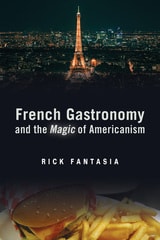
French Gastronomy and the Magic of Americanism
Rick Fantasia
Temple University Press, 2019
A tectonic shift has occurred in the gastronomic field in France, upsetting the cultural imagination. In a European country captivated by a high-stakes power struggle between chefs and restaurants in the culinary field, the mass marketing of factory-processed industrial cuisine and fast foods has created shock waves in French society, culture, and the economy.
In this insightful book, French Gastronomy and the Magic of Americanism, Rick Fantasia examines how national identity and the dynamics of cultural meaning-making within gastronomy have changed during a crucial period of transformation, from the 1970s through the 1990s. He illuminates the tensions and surprising points of cooperation between the skill, expertise, tradition, artistry, and authenticity of grand chefs and the industrial practices of food production, preparation, and distribution.
Fantasia examines the institutions and beliefs that have reinforced notions of French cultural supremacy—such as the rise and reverence of local cuisine—as well as the factors that subvert those notions, such as when famous French chefs lend their names to processed, frozen, and pre-packaged foods available at the supermarket. Ultimately, French Gastronomy and the Magic of Americanism shows what happens to a cultural field, like French gastronomy, when the logic and power of the economic field imposes itself upon it.
French Modern
Norms and Forms of the Social EnvironmentPaul Rabinow
University of Chicago Press, 1995
French Primitivism and the Ends of Empire, 1945-1975
Daniel J. Sherman
University of Chicago Press, 2011
For over a century, the idea of primitivism has motivated artistic modernism. Focusing on the three decades after World War II, known in France as “les trentes glorieuses” despite the loss of most of the country’s colonial empire, this probing and expansive book argues that primitivism played a key role in a French society marked by both economic growth and political turmoil.
French Thinking about Animals
Louisa Mackenzie
Michigan State University Press, 2015
French in Michigan
Russell M. Magnaghi
Michigan State University Press, 2016
The colonial French served as explorers, soldiers, missionaries, fur traders, and colonists. Later, French priests and nuns were influential in promoting Catholicism in the state and in developing schools and hospitals. Father Gabriel Richard fled the violence of the French Revolution and became a prominent and influential citizen of the state as a U.S. Congressman and one of the founders of the University of Michigan. French observers of Michigan life included Alexis de Tocqueville. French entrepreneurs opened copper mines and a variety of service-oriented businesses. Louis Fasquelle became the first foreign-language instructor at the University of Michigan, and François A. Artault introduced photography to the Upper Peninsula. As pioneers of the early automobile, the French made a major contribution to the language used in auto manufacturing.
Fresh Blood
THE NEW AMERICAN IMMIGRANTSSanford J. Ungar
University of Illinois Press, 1998
end of the country to the other, veteran journalist Sanford J. Ungar documents
the real-life struggles and triumphs of America's newest immigrants. He
finds that the self-chosen who arrive every day, most of them legally,
still enrich our national character and experience and make invaluable
political, economic, social, cultural, and even gastronomic contributions.
"First-class journalism, a book scholars will use decades from now
to find out what it 'felt like' to be an immigrant in the 90s. I do not
know of a better description and analysis of contemporary immigration."
-- Roger Daniels, author of Coming to America: A History of Immigration
and Ethnicity in American Life
"An excellent overview of contemporary immigration issues set within
the context of developments in the past fifty years. Ungar makes a strong
case for the contributions of recent immigrants and for maintaining a
relatively open door in the face of sometimes shrill opposition."
-- Thomas Dublin, editor of Immigrant Voices: New Lives in America
"Exactly the right book at the right time. [Ungar] looks at the
national controversy over immigration policy with a clear eye, producing
a history and a convincing argument why this is no time to reverse a liberal
welcome to newcomers that has always—in good times and bad—made
this a better and more prosperous democracy." -- Ben H. Bagdikian,
author of Double Vision
Freud Upside Down
African American Literature and Psychoanalytic CultureBadia Sahar Ahad
University of Illinois Press, 2010
Freud in Oz
At the Intersections of Psychoanalysis and Children’s LiteratureKenneth B. Kidd
University of Minnesota Press, 2011
Children’s literature has spent decades on the psychiatrist’s couch, submitting to psychoanalysis by scores of scholars and popular writers alike. Freud in Oz turns the tables, suggesting that psychoanalysts owe a significant and largely unacknowledged debt to books ostensibly written for children. In fact, Kenneth B. Kidd argues, children’s literature and psychoanalysis have influenced and interacted with each other since Freud published his first case studies.
In Freud in Oz, Kidd shows how psychoanalysis developed in part through its engagement with children’s literature, which it used to articulate and dramatize its themes and methods, turning first to folklore and fairy tales, then to materials from psychoanalysis of children, and thence to children’s literary texts, especially such classic fantasies as Peter Pan and Alice’s Adventures in Wonderland. He traces how children’s literature, and critical response to it, aided the popularization of psychoanalytic theory. With increasing acceptance of psychoanalysis came two new genres of children’s literature—known today as picture books and young adult novels—that were frequently fashioned as psychological in their forms and functions.
Freud in Oz offers a history of reigning theories in the study of children’s literature and psychoanalysis, providing fresh insights on a diversity of topics, including the view that Maurice Sendak and Bruno Bettelheim can be thought of as rivals, that Sendak’s makeover of monstrosity helped lead to the likes of the Muppets, and that “Poohology” is its own kind of literary criticism—serving up Winnie the Pooh as the poster bear for theorists of widely varying stripes.