Results by title
18284 books match the query 'United States' and 783 start with f
From Washington to Moscow
US-Soviet Relations and the Collapse of the USSRLouis Sell
Duke University Press, 2016
From Welfare to Work
Judith M. Gueron
Russell Sage Foundation, 1991

From White Dwarfs to Black Holes
The Legacy of S. ChandrasekharEdited by G. Srinivasan
University of Chicago Press, 1999
Over the course of more than six decades of active research Chandrasekhar investigated a dizzying array of subjects. G. Srinivasan notes in the preface to this book that "the range of Chandra's contributions is so vast that no one person in the physics or astronomy community can undertake the task of commenting on his achievements." Thus, in this collection, ten eminent scientists evaluate Chandrasekhar's contributions to their own fields of specialization. Donald E. Osterbrock closes the volume with a historical discussion of Chandrasekhar's interactions with graduate students during his more than quarter century at Yerkes Observatory.
Contributors are James Binney, John L. Friedman, Norman R. Lebovitz, Donald E. Osterbrock, E. N. Parker, Roger Penrose, A. R. P. Rau, George B. Rybicki, E. E. Salpeter, Bernard F. Schutz, and G. Srinivasan.
From Winchester to Cedar Creek
The Shenandoah Campaign of 1864Jeffry D. Wert
Southern Illinois University Press, 2010
In the Shenandoah Valley campaign of 1864, U.S. Major General Philip H. Sheridan led his army to a series of decisive victories for the Union over Lieutenant General Jubal A. Early and the Confederate Army of the Valley. In From Winchester to Cedar Creek, author Jeffry D. Wert highlights Sheridan’s victories in the critical area of the Virginia Valley as defining moments of the Civil War. Sheridan’s campaign ensured Confederate defeat in Virginia and ultimately contributed to Lincoln’s reelection and the Union’s victory in the Civil War.
Drawing on manuscript collections and many published sources, Wert offers vivid descriptions of the battles of Third Winchester, Fisher’s Hill, Tom’s Brook, and Cedar Creek. The book also explores how the interplay of the strengths and weaknesses of the Union and Confederate commanders, Sheridan and Early, resulted in victories for Sheridan’s Army of the Shenandoah. Grounded in detailed research, Wert’s compelling narrative portrays the military strategies these commanders employed and how their tactical decisions impacted civilian sacrifice in the Valley.
First published in 1987, Wert’s chronicle remains the definitive book on Sheridan’s command and the Shenandoah Campaign of 1864. Offering a balanced treatment of both Union and Confederate experiences during the campaign, Wert emphasizes its importance as a turning point in the war from both military and civilian points of view.
Supplemented with situation maps and photographs, From Winchester to Cedar Creek not only documents and dynamically recounts the events that unfolded in the summer and fall of 1864 in the Virginia Valley, but it also details the political, strategic, and tactical forces that made the Shenandoah Valley campaign so important to the outcome of the Civil War.
From Yahweh to Yahoo!
The Religious Roots of the Secular PressDoug Underwood
University of Illinois Press, 2001
Presenting religion as journalism's silent partner, From Yahweh to Yahoo!provides a fresh and surprising view of the religious impulses at work in contemporary newsrooms. Focusing on how the history of religion in the United States entwines with the growth of the media, Doug Underwood argues that American journalists draw from the nation's moral and religious heritage and operate, in important ways, as personifications of the old religious virtues.
Underwood traces religion's influence on mass communication from the biblical prophets to the Protestant Reformation, from the muckraker and Social Gospel campaigns of the late nineteenth and early twentieth centuries to the modern age of mass media. While forces have pushed journalists away from identifying themselves with religion, they still approach such secular topics as science, technology, and psychology in reverential ways. Underwood thoughtful analysis covers the press's formulaic coverage of spiritual experience, its failure to cover new and non-Christian religions in America, and the complicity of the mainstream media in launching the religious broadcasting movement.
From Yorktown to Valmy
The Transformation of the French Army in an Age of RevolutionSamuel F. Scott
University Press of Colorado, 1998
From a Taller Tower
The Rise of the American Mass ShooterBy Seamus McGraw
University of Texas Press, 2021
We, as a nation, have become desensitized to the shock and pain in the wake of mass shootings. In the bottomless silence between gunshots, as political stalemate ensures inaction, the killing continues; the dying continues. From a Taller Tower attends to the silence that has left us empty in the aftermath of these atrocities. Veteran journalist Seamus McGraw chronicles the rise of the mass shooter to dismantle the myths we have constructed around the murderers and ourselves.
In 1966, America’s first mass shooter, from atop the University of Texas tower, unleashed a new reality: the fear that any of us may be targeted by a killer, and the complicity we bear in granting these murderers the fame or infamy they crave. Addressing individual cases in the epidemic that began in Austin, From a Taller Tower bluntly confronts our obsession with the shooters—and explores the isolation, narcissism, and sense of victimhood that fan their obsessions. Drawing on the experiences of survivors and first responders as well as the knowledge of mental health experts, McGraw challenges the notion of the “good guy with a gun,” the idolization of guns (including his own), and the reliability of traumatized memory. Yet in this terrible history, McGraw reminds us of the humanity that can stop the killing and the dying.

From good will to civil rights
transforming federal disability policyRichard K. Scotch
Temple University Press, 1984
From the Ballroom to Hell
Grace and Folly in Nineteenth-Century DanceElizabeth Aldrich
Northwestern University Press, 1991
From the Ballroom to Hell collects over 100 little-known excerpts from dance, etiquette, beauty, and fashion manuals from the nineteenth century. Included are instructions for performing various dances, as well as musical scores, costume patterns, and the proper way to hold one's posture, fork, gloves, and fan. While of particular interest to dancers, dance historians, and choreographers, anyone fascinated by the ways and mores of the period will find From the Ballroom to Hell an endearing and informative glimpse of America's past.
From the Battlefront to the Bridal Suite
Media Coverage of British War Brides, 1942-1946Barbara G. Friedman
University of Missouri Press, 2007
With their gregarious natures and casual styles, American GIs in wartime England were instantly attractive to British women—especially in the absence of their fighting men. As a result, some seventy thousand British war brides returned to the United States—with many on the home front at first suspecting that the GIs were somehow being exploited.
The war brides’ stories have been told in memoirs, romantic novels, and immigration history. Barbara Friedman sheds new light on their experiences by focusing on media representations of sexuality and marriage in wartime, showing how mass media interpretations turned from public suspicion of war brides to popular acceptance.
Friedman tells how British media first insisted that GIs had come to fight, not to woo the locals, and shrugged off the first brides as an “American problem.” Yet, as Friedman shows, the British media were complicit in encouraging the relationships in the first place: the British press promoted a hospitality program that deemed the entertainment of American troops “patriotic duty,” while women’s magazines hailed American men as ideal husbands and the United States as a promised land.
From the American perspective, Friedman reveals, despite rules against foreign marriages, the U.S. Army encouraged GI-civilian fraternization through armed service publications, attitudes toward GI sexuality, and participation in the hospitality program. Armed service publications went from depicting British women as “frowsy dames” to honoring them as models of domesticity, while newspapers back home eventually legitimized the marriages by casting the brides as welcome additions to American society. Meanwhile, American women’s magazines viewed them as more similar to than different from their American counterparts and called on readers to help British brides master American homemaking.
By combining letters and diaries of brides with published accounts, Friedman identifies accuracies and inaccuracies in the media record as well as gaps in coverage. She considers how the brides saw themselves compared to their media images and shows how the media co-opted brides as symbols of the Anglo-American “special friendship,” postwar power imbalance, and gendered ideals of marriage and domestication.
From the Battlefront to the Bridal Suite is the untold story of overlooked participants in the most celebrated drama of the twentieth century—women whose lives were shaped profoundly by a war that was more than just a male enterprise. It shows the power of the press in the most unlikely matters and suggests a broader definition of the wartime experience.

From the Center of America
Steamboats and Shipyards Along the Lower Ohio RiverRobert H. Swenson
Southern Illinois University Press, 2026
Charting the legacy of mid-America's shipyards and iconic steamboats
Before the railroad stitched together the American landscape, the dominant mode of transportation in the United States was by steamboat. These grand vessels, their iconic paddlewheels churning the country’s rivers, have long captured the national imagination as symbols of innovation and adventure.
In the heart of America, four major rivers converge—the Cumberland and Tennessee with the Ohio; then the Ohio with the Mississippi. These three confluences, which author Robert Swenson christens the Four Rivers Reach, played a unique role in the development of the steamboats that dominated American continental transport for almost 100 years. Between 1825 and 1936, the river towns of Smithland, Paducah, Metropolis, Mound City, and Cairo launched 295 wood-hulled, steam-powered vessels. Drawing from a wealth of archival sources, Swenson presents detailed histories of these steamboats over a span of 110 years, accompanied by nearly one hundred illustrations and photographs.
The book focuses on distinct events in steamboat history, tracing the impact of these shipyards on the economies and communities of the river towns where they were built. It reveals how the availability of steamboats along this sixty-mile Reach affected migration, politics, and the US economy of the nineteenth century. Steamboats built at the Four Rivers Reach played pivotal roles in the forced relocation of Native Americans from southern Appalachia to Oklahoma, the outcome of the Civil War, and the Montana gold rush. From the Center of America demonstrates how steamboat building shaped the culture, people, and economy of this region—and how, in turn, the area and its steamships influenced the growth of the young United States.
From the Center of Tradition
Critical Perspective on Linda HoganBarbara J. Cook
University Press of Colorado, 2003

From the Civil War to the Apocalypse
Postmodern History and American FictionTimothy Parrish
University of Massachusetts Press, 2008
In addressing the postmodernist claim that history works no differently than fiction, Timothy Parrish rejects the implication that history is dead or hopelessly relativistic. Rather, he shows how the best postmodern novelists compel their readers to accept their narratives as true in the same way that historians expect their readers to accept their narratives as true. These novelists write history as a form of fiction.
If the great pre-modernist American historians are Francis Parkman, George Bancroft, and Henry Adams, who are the great modernist or postmodernist historians? In the twentieth century, Parrish argues, the most powerful works of American history were written by William Faulkner, Toni Morrison, Thomas Pynchon, Don DeLillo, Joan Didion, and Cormac McCarthy. What survives a reading of these novels is the sense that writers otherwise identified as multicultural or postmodern share the view that nothing matters more than history and what one believes its possibilities to be. In other words, Parrish concludes, history, not identity, is the ground of postmodern American fiction.

From the Dance Hall to Facebook
Teen Girls, Mass Media, and Moral Panic in the United States, 1905-2010Shayla Thiel-Stern
University of Massachusetts Press, 2014
In From the Dance Hall to Facebook, Shayla Thiel-Stern takes a close look at several historical snapshots, including working-class girls in dance halls of the early 1900s; girls' track and field teams in the 1920s to 1940s; Elvis Presley fans in the mid-1950s; punk rockers in the late 1970s and early 1980s; and girls using the Internet in the early twenty-first century. In each case, issues of gender, socioeconomic status, and race are explored within their historical context. The book argues that by marginalizing and stereotyping teen girls over the past century, mass media have perpetuated a pattern of gendered crisis that ultimately limits the cultural and political power of the young women it covers.

From the Edge
Chicana/o Border Literature and the Politics of PrintFagan, Allison E
Rutgers University Press, 2016
From the Fiery Furnace to the Promise Land
Stories of a Tennessee Reconstruction CommunitySerina K. Gilbert and Learotha Williams Jr.
Vanderbilt University Press, 2025
In time the community encompassed approximately 1,000 acres with more than 50 homes, several stores, three churches, and an elementary school. But by the mid‑twentieth century, the community had dwindled to just a handful of families. Now all that remains physically is a church and the old school building. But in the hearts of the descendants of those families, Promise Land remains a vital and thriving community of friends, family, and, albeit virtual, neighbors who continue to support each other.
This is the story of this town told through the memories of the people who lived there. Serina Gilbert grew up in the community and is now one of the revered storytellers and story‑keepers of Promise Land. Along with historian Learotha Williams, she is sharing the history of a community that thrived and continues to thrive in the face of almost insurmountable obstacles.
From the Grassroots to the Supreme Court
Brown v. Board of Education and American DemocracyPeter F. Lau, ed.
Duke University Press, 2004
The contributors illuminate the breadth of developments that led to Brown, from the parallel struggles for social justice among African Americans in the South and Mexican, Asian, and Native Americans in the West during the late nineteenth century to the political and legal strategies implemented by the National Association for the Advancement of Colored People (naacp) in the twentieth century. Describing the decision’s impact on local communities, essayists explore the conflict among African Americans over the implementation of Brown in Atlanta’s public schools as well as understandings of the ruling and its relevance among Puerto Rican migrants in New York City. Assessing the legacy of Brown today, contributors analyze its influence on contemporary law, African American thought, and educational opportunities for minority children.
Contributors
Tomiko Brown-Nagin
Davison M. Douglas
Raymond Gavins
Laurie B. Green
Christina Greene
Blair L. M. Kelley
Michael J. Klarman
Peter F. Lau
Madeleine E. Lopez
Waldo E. Martin Jr.
Vicki L. Ruiz
Christopher Schmidt
Larissa M. Smith
Patricia Sullivan
Kara Miles Turner
Mark V. Tushnet
From the Ground Up
A History of Mining in Utahedited by Colleen K. Whitley
Utah State University Press, 2025
Mining had an enormous role, only partly measurable, in the history of Utah. Its multidimensional impact continues today. Economically, it made a major long-term contribution to the wealth, employment, and tax base of the state and stimulated a seemingly endless range of secondary businesses and enterprises. It helped shape the state's social history, determining the location, distribution, and composition of many communities and bringing transportation systems and a wide variety of institutions to them. It developed cultural diversity by drawing to Utah miners and families from otherwise underrepresented ethnic and national backgrounds. It ignited strife, particularly between labor and management, but those issues often spread into or connected with other conflicts in and between communities, classes, and factions. It influenced political platforms, generated candidates, and helped decide elections. Throughout the state, mining dramatically transformed the landscape, most obviously at what has been called the world's largest open-pit mine, which removed much of a mountain on the west side of Salt Lake Valley, but at innumerable other places too.
Despite all mining has done and meant, there has not been, until now, a book that surveyed its history in Utah. From the Ground Up fills that gap in a collection of essays by leading experts, among them historians Thomas G. Alexander, Martha Sonntag Bradley-Evans, James E. Fell Jr., Laurence P. James, Brigham D. Madsen, Philip F. Notarianni, Allen Kent Powell, W. Paul Reeve, Raye C. Ringholz, and Janet Burton Seegmiller and geologists J. Wallace Gwynn and William T. Parry. The book is divided into three comprehensive parts. The first looks at "The Ground of Utah Mining": the geology that has produced extractable minerals, the economic history of the industry, "father of Utah mining" Patrick E. Connor, and the lore of mines and miners. Part II reviews the history of a handful of particularly significant mineral industries: salines, coal, uranium, and beryllium. The last part takes a region-by-region approach to survey the important, primarily for hard-rock mining, areas of the state, including places from Silver Reef to Alta, the East Tintic Range to the Uinta Basin, and Park City to Frisco.

From the Jewish Heartland
Two Centuries of Midwest FoodwaysEllen F. Steinberg and Jack H. Prost
University of Illinois Press, 2013

From the Lookout
Memories of Peninsula State Park’s Summer Camp for GirlsKathleen Harris
Wisconsin Historical Society Press, 2020
With big ideas, little money, and no experience, Alice Orr Clark and Frances Louise “Kidy” Mabley founded Meenahga as a place for young women to refine their manners, enjoy outdoor leisure activities, and learn woodcraft. From the Lookout is an account of these experiences, a history of Camp Meenahga informed by what campers, counselors, and others left behind, including letters home, notes from Clark and Mabley, and many pages from the camp yearbook and newsletter Pack and Paddle.
Brimming with nostalgia, From the Lookout brings to life the sights, sounds, and smells of an idyllic summer retreat, one that long after it closed lived on as a place of respite in the memories of those who knew and loved it best.

From the Modernist Annex
American Women Writers in Museums and LibrariesKarin Roffman
University of Alabama Press, 2010

From the Mountains to the Sea
Protecting Nature in Postwar New HampshireKimberly A. Jarvis
University of Massachusetts Press, 2020
Shaped by New Hampshire's unique conservation focus on both resource use and preservation that developed during the first years of the twentieth century, as well as on the tradition of home rule in the state, the outcome of each campaign relied on the insight into, appreciation for, and dedication to protecting the historic and aesthetic values of these three places.
From the Republic of the Rio Grande
A Personal History of the Place and the PeopleBy Beatriz de la Garza
University of Texas Press, 2013
The Republic of the Rio Grande had a brief and tenuous existence (1838–1840) before most of it was reabsorbed by Mexico and the remainder annexed by the United States, yet this region that straddles the Rio Grande has retained its distinctive cultural identity to the present day. Born on one side of the Rio Grande and raised on the other, Beatriz de la Garza is a product of this region. Her birthplace and its people are the subjects of this work, which fuses family memoir and borderlands history.
From the Republic of the Rio Grande brings new insights and information to the study of transnational cultures by drawing from family papers supplemented by other original sources, local chronicles, and scholarly works. De la Garza has fashioned a history of this area from the perspective of individuals involved in the events recounted. The book is composed of nine sections spanning some two hundred years, beginning in the mid-1700s. Each section covers not only a chronological period but also a particular theme relating to the history of the region. De la Garza takes a personal approach, opening most sections with an individual observation or experience that leads to the central motif, whether this is the shared identity of the inhabitants, their pride in their biculturalism and bilingualism, or their deep attachment to the land of their ancestors.

From the Skin
Defending Indigenous Nations Using Theory and PraxisEdited by J. Jeffery Clark and Elise Boxer; Foreword by Nick Estes
University of Arizona Press, 2023
In this volume, contributors demonstrate the real-world application of Indigenous theory to the work they do in their own communities and how this work is driven by urgency, responsibility, and justice—work that is from the skin.
In From the Skin, contributors reflect on and describe how they apply the theories and concepts of Indigenous studies to their communities, programs, and organizations, and the ways the discipline has informed and influenced the same. They show the ways these efforts advance disciplinary theories, methodologies, and praxes. Chapters cover topics including librarianship, health programs, community organizing, knowledge recovery, youth programming, and gendered violence. Through their examples, the contributors show how they negotiate their peoples’ knowledge systems with knowledge produced in Indigenous studies programs, demonstrating how they understand the relationship between their people, their nations, and academia.
Editors J. Jeffery Clark and Elise Boxer propose and develop the term practitioner-theorist to describe how the contributors theorize and practice knowledge within and between their nations and academia. Because they live and exist in their community, these practitioner-theorists always consider how their thinking and actions benefit their people and nations. The practitioner-theorists of this volume envision and labor toward decolonial futures where Indigenous peoples and nations exist on their own terms.
Contributors
Randi Lynn Boucher-Giago
Elise Boxer
Shawn Brigman
J. Jeffery Clark
Nick Estes
Eric Hardy
Shalene Joseph
Jennifer Marley
Brittani R. Orona
Alexander Soto
From the Temple of Zeus to the Hyperloop
University of Cincinnati StoriesEdited by Greg Hand
University of Minnesota Press, 2018
Former Ohio Governor Bob Taft remembers his law school days in a building named for his great-grandfather. Broadway star Faith Prince recalls her musical theater start at UC’s College-Conservatory of Music. More than thirty-five contributors provide their own unique perceptions of this extraordinary urban university. Some are well-known names like Taft and Prince, while others are current students and alumni whose education and futures were profoundly shaped by memorable experiences connected to UC. Clark Beck recounts the struggles he initially faced upon coming to UC and offers readers an inspiring story of perseverance and tenacity. Sid Thatham gives a captivating tale of his move from India and the home base he made in Cincinnati with UC graduate students. Other contributors celebrate the relationships, such as that between the strong-willed duo of Jack Rouse and Helen Laird, that give UC its storied past.
In From the Temple of Zeus to the Hyperloop, anyone can find a person, whether it be the trailblazing Lucy Braun or the celebrated Carl Blegen, or a place, be it the changing landscape of Ludlow Avenue or the new frontier for the DAAP College, to which he or she can relate. Such figures, places, and stories present a sampling of the UC experience. From the Temple of Zeus to the Hyperloop offers readers an inside look at the many lives that have influenced UC and the opportunity to envision how their own stories can be a part of its future.
Just as Hand titles his introduction, “a dedicated crew of bearcats assembled this book,” the University of Cincinnati and its story continue to be a community effort, deeply intertwined with the lives of the people who have made up the university and its two-hundred years.
From the Uyu River to Omaha Beach and Beyond
The Life of General Willard G. WymanJed Wyman
University of Missouri Press, 2027
While many scholarly works explore the lives and careers of the United States’ senior WWII commanders—Eisenhower, Bradley, Patton, and MacArthur in particular—the stories of the brigadier and major generals who led at the division and corps level have not received the same degree of focus. Jed Wyman gives these general officers their due by telling the story of his grandfather, General Willard G. Wyman in From the Uyu River to Omaha Beach and Beyond: The Life of General Willard G. Wyman. Although General Wyman is best known for his decisive action on Omaha Beach as assistant division commander of the First Infantry Division, for which he won the Distinguished Service Cross, his career both before and after D-Day is as varied and fascinating as those of his more familiar colleagues.
Wyman’s WWII story is exceptional in its range both geographical—he was one of only a handful of general officers to serve in both the Asian/Pacific and European Theaters—and in rank, as he rose from colonel to major general and division commander over the course of the war. The array of important individuals he encountered and worked with during this demanding time is equally exceptional, including such military luminaries as Joseph Stilwell, Omar Bradley, George Patton, Dwight Eisenhower. There were political encounters as well, the most significant with Chinese Nationalist leader Chiang Kai-shek in Burma, and encounters with prominent journalists and entertainers. None of these people meant as much, however, to Wyman as the GIs under his command, for whom he worked tirelessly to ensure a safe and free return to a normal life.
While many questions about Wyman remain unanswered, the author brings him to life as a reliable, efficient combat commander unhindered by the extreme caution associated with General Lucas at Anzio, free from the impetuous nature exhibited by General Patton with the Brolo landing and Hammelburg raid, and lacking in the vainglorious publicity-seeking of some other prominent generals. More broadly, From the Uyu River to Omaha Beach and Beyond conveys the energy, stamina, presence of mind, critical thinking skills, and rapid decision-making of a number of the United States’ lesser-known brigadier and major generals.

Front Office Fantasies
The Rise of Managerial Sports MediaBranden Buehler
University of Illinois Press, 2023
Front office executives have become high-profile commentators, movie and video game protagonists, and role models for a generation raised in the data-driven, financialized world of contemporary sports. Branden Buehler examines the media transformation of these once obscure management figures into esteemed experts and sporting idols.
Moving from Moneyball and Football Manager to coverage of analytics gurus like Daryl Morey, Buehler shows how a fixation on managerial moves has taken hold across the entire sports media landscape. Buehler’s chapter-by-chapter look at specific media forms illustrates different facets of the managerial craze while analyzing the related effects on what fans see, hear, and play. Throughout, Buehler explores the unsettling implications of exalting the management class and its logics, in the process arguing that sports media’s managerial lionization serves as one of the clearest reflections of major material and ideological changes taking place across culture and society.
Insightful and timely, Front Office Fantasies reveals how sports media moved the action from the field to the executive suite.
Front Page Economics
Gerald D. Suttles, with Mark D. Jacobs
University of Chicago Press, 2010
In an age when pundits constantly decry overt political bias in the media, we have naturally become skeptical of the news. But the bluntness of such critiques masks the highly sophisticated ways in which the media frame important stories. In Front Page Economics, Gerald Suttles delves deep into the archives to examine coverage of two major economic crashes—in 1929 and 1987—in order to systematically break down the way newspapers normalize crises.
Poring over the articles generated by the crashes—as well as the people in them, the writers who wrote them, and the cartoons that ran alongside them—Suttles uncovers dramatic changes between the ways the first and second crashes were reported. In the intervening half-century, an entire new economic language had arisen and the practice of business journalism had been completely altered. Both of these transformations, Suttles demonstrates, allowed journalists to describe the 1987 crash in a vocabulary that was normal and familiar to readers, rendering it routine.
A subtle and probing look at how ideologies are packaged and transmitted to the casual newspaper reader, Front Page Economics brims with important insights that shed light on our own economically tumultuous times.
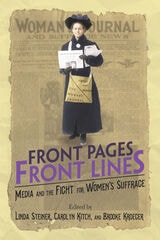
Front Pages, Front Lines
Media and the Fight for Women's SuffrageEdited by Linda Steiner, Carolyn Kitch, and Brooke Kroeger
University of Illinois Press, 2020
This collection offers new research on media issues related to the women's suffrage movement. Contributors incorporate media theory, historiography, and innovative approaches to social movements while discussing the vexed relationship between the media and debates over suffrage. Aiming to correct past oversights, the essays explore overlooked topics such as coverage by African American and Mormon-oriented media, media portrayals of black women in the movement, suffragist rhetorical strategies, elites within the movement, suffrage as part of broader campaigns for social transformation, and the influence views of white masculinity had on press coverage.
Contributors: Maurine H. Beasley, Sherilyn Cox Bennion, Jinx C. Broussard, Teri Finneman, Kathy Roberts Forde, Linda M. Grasso, Carolyn Kitch, Brooke Kroeger, Linda J. Lumsden, Jane Marcellus, Jane Rhodes, Linda Steiner, and Robin Sundaramoorthy
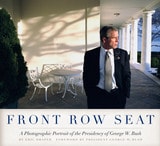
Front Row Seat
A Photographic Portrait of the Presidency of George W. BushBy Eric Draper
University of Texas Press, 2013
America’s forty-third president, George W. Bush, presided over eight of the most dramatic years in recent history, from the 9/11 attacks early in his administration to the worldwide economic crisis of 2008. By his side, recording every event from the momentous to the intimate, was his personal White House photographer, Eric Draper. From a collection of nearly one million photographs, Draper has selected more than one hundred images of President Bush that portray both the public figure and the private man.
Front Row Seat presents a compelling, behind-the-scenes view of the presidency of George W. Bush. Through Draper’s lens, we follow Bush through moments of crisis that called for strong leadership, such as 9/11; emotional meetings with troops in war zones, wounded soldiers at home, and Katrina survivors; and happy, relaxed times with his wife Laura, daughters Barbara and Jenna, and parents President George H. W. and Barbara Bush. We also see Bush at work within his inner circle of trusted advisors, including Vice President Richard Cheney, National Security Advisor and Secretary of State Condoleezza Rice, and Secretary of Defense Donald Rumsfeld.
Capturing moments that reveal the essence of the man, Front Row Seat is an irreplaceable portrait of George W. Bush.
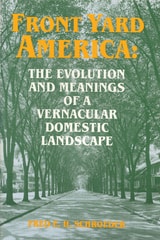
Front Yard America
The Evolution and Meanings of a Vernacular Domestic LandscapeFred E.H. Schroeder
University of Wisconsin Press, 1993
Throughout Front Yard America, Schroeder inquires into the functions, values, and meanings that Americans have found in the domestic landscapes of back yards and front yards, walls and fences, porches and patios.

Front-Page Detective
William J. Burns and the Detective Profession, 1880–1930William R. Hunt
University of Wisconsin Press, 1990

Frontier Doctor
Observations on Central Oregon and the Changing WestUrling C. Coe
Oregon State University Press, 1996
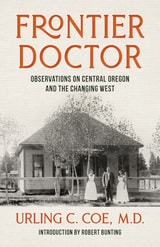
Frontier Doctor
Observations on Central Oregon and the Changing WestUrling C. Coe
Oregon State University Press, 1940
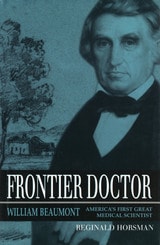
Frontier Doctor
William Beaumont, America's First Great Medical ScientistReginald Horsman
University of Missouri Press, 1996
In Frontier Doctor, Reginald Horsman provides the first modern, scholarly biography of a colorful backwoods doctor whose pioneering research on human digestion gained him international renown as a physiologist. Before William Beaumont's work, there was still considerable controversy as to the nature of human digestion; his research established beyond a doubt that digestion is a chemical process.
Beaumont received his medical training as an apprentice in a small town in Vermont and served as a surgeon's mate in the War of 1812. After the war, he practiced in Plattsburgh, New York, before making his career as an army surgeon. His chance for fame came in 1822, when he was serving at the lonely post of Fort Mackinac in Michigan Territory. A Canadian voyageur--Alexis St. Martin--was accidentally shot in the stomach at close range, and his wound healed in such a way as to leave a permanent opening. This enabled Beaumont to insert food directly into the stomach, to siphon gastric juice, and to experiment on the process of digestion both inside and outside the stomach.
Because Beaumont had considerable difficulty in persuading St. Martin to stay with him so he could continue his research, his study was carried out sporadically over a number of years. In the early 1830s, with the support of Joseph Lovell, the surgeon general of the army, Beaumont and St. Martin went to the East Coast, where additional experiments were carried out. In 1833, Beaumont published Experiments and Observations on the Gastric Juice and the Physiology of Digestion, a book based upon his research on St. Martin and the work upon which his reputation primarily rests. His observations revealed more about digestion in the human stomach than had ever before been known, and his work was immediately praised in both the United States and Europe.
After he left the army, Beaumont established a successful private practice in St. Louis, Missouri, where he spent the latter part of his life. Beaumont, a fascinating, argumentative character, was often engaged in public controversy. He was also good friends with several notable men, including the young Robert E. Lee.
Frontier Doctor sheds welcome new light on the state of medicine both inside and outside the army in the early nineteenth century and provides absorbing information on the early experi-ments that set the research into human digestion irrevocably on the right course.
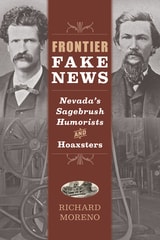
Frontier Fake News
Nevada's Sagebrush Humorists and HoaxstersRichard Moreno
University of Nevada Press, 2023
When readers see the names Mark Twain and Dan De Quille, fake news may not be the first thing that comes to mind. But these legendary journalists were some of the original, and most prolific, fake news writers in the early years of Nevada’s history. Frontier Fake News puts a spotlight on the hoaxes, feuds, pranks, outright lies, witty writing, and other literary devices utilized by a number of the Silver State’s frontier newsmen from the mid-nineteenth through the early twentieth centuries. Often known collectively as the Sagebrush School, these journalists were opinionated, talented, and individualistic.
While Mark Twain (Samuel Clemens), who got his start at Virginia City’s Territorial Enterprise, and Dan De Quille (William Wright), who some felt was a better writer than Twain, are the most well-known members of the Sagebrush School, author Richard Moreno includes others such as Fred Hart, who concocted a fake social club and reported on its gatherings for Austin’s Reese River Reveille, and William Forbes, who enjoyed sprinkling clever puns with political undertones in his newspaper articles.
Moreno traces the beginnings of genuine fake news from founding father Benjamin Franklin’s “Supplement to the Boston Independent Chronicle, Number 705, March 1782,” a fake newspaper aimed at swaying British public opinion, to the fake news articles of New York and Baltimore papers in the early 1800s. But these examples are only a prelude to the amazing accounts of petrified men, freeze-inducing solar armor, magically magnetic rocks, blood-curdling massacres, and other nonsense stories that appeared in Nevada’s frontier newspapers and beyond.
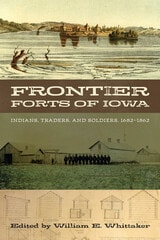
Frontier Forts of Iowa
Indians, Traders, and Soldiers, 1682-1862William E. Whittaker
University of Iowa Press, 2009
At least fifty-six frontier forts once stood in, or within view of, what is now the state of Iowa. The earliest date to the 1680s, while the latest date to the Dakota uprising of 1862. Some were vast compounds housing hundreds of soldiers; others consisted of a few sheds built by a trader along a riverbank. Regardless of their size and function—William Whittaker and his contributors include any compound that was historically called a fort, whether stockaded or not, as well as all military installations—all sought to control and manipulate Indians to the advantage of European and American traders, governments, and settlers. Frontier Forts of Iowa draws extensively upon the archaeological and historical records to document this era of transformation from the seventeenth-century fur trade until almost all Indians had been removed from the region.
The earliest European-constructed forts along the Mississippi, Des Moines, and Missouri rivers fostered a complex relationship between Indians and early traders. After the Louisiana Purchase of 1804, American military forts emerged in the Upper Midwest, defending the newly claimed territories from foreign armies, foreign traders, and foreign-supported Indians. After the War of 1812, new forts were built to control Indians until they could be moved out of the way of American settlers; forts of this period, which made extensive use of roads and trails, teamed a military presence with an Indian agent who negotiated treaties and regulated trade. The final phase of fort construction in Iowa occurred in response to the Spirit Lake massacre and the Dakota uprising; the complete removal of the Dakota in 1863 marked the end of frontier forts in a state now almost completely settled by Euro-Americans.
By focusing on the archaeological evidence produced by many years of excavations and by supporting their words with a wealth of maps and illustrations, the authors uncover the past and connect it with the real history of real places. In so doing they illuminate the complicated and dramatic history of the Upper Midwest in a time of enormous change. Past is linked to present in the form of a section on visiting original and reconstructed forts today.
Gayle F. Carlson
Jeffrey T. Carr
Lance M. Foster
Kathryn E. M. Gourley
Marshall B. McKusick
Cindy L. Nagel
David J. Nolan
Cynthia L. Peterson
Leah D. Rogers
Regena Jo Schantz
Christopher M. Schoen
Vicki L. Twinde-Javner
William E. Whittaker
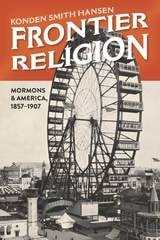
Frontier Religion
Mormons and America, 1857–1907Konden Smith Hansen
University of Utah Press, 2019
In Frontier Religion Konden Smith Hansen examines the dramatic influence these perceptions of the frontier had on Mormonism and other religions in America. Endeavoring to better understand the sway of the frontier on religion in the United States, this book follows several Mormon-American conflicts, from the Utah War and the antipolygamy crusades to the Reed Smoot hearings. The story of Mormonism’s move toward American acceptability represents a larger story of the nation’s transition to modernity and the meaning of religious pluralism. This book challenges old assumptions and provokes further study of the ever changing dialectic between society and faith.
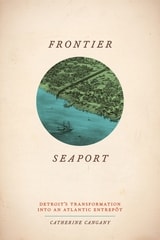
Frontier Seaport
Detroit's Transformation into an Atlantic EntrepôtCatherine Cangany
University of Chicago Press, 2014
In Frontier Seaport, Catherine Cangany details this seldom-discussed chapter of Detroit’s history. She argues that by the time of the American Revolution, Detroit functioned much like a coastal town as a result of the prosperous fur trade, serving as a critical link in a commercial chain that stretched all the way to Russia and China—thus opening Detroit’s shores for eastern merchants and other transplants. This influx of newcomers brought its own transatlantic networks and fed residents’ desires for popular culture and manufactured merchandise. Detroit began to be both a frontier town and seaport city—a mixed identity, Cangany argues, that hindered it from becoming a thoroughly “American” metropolis.
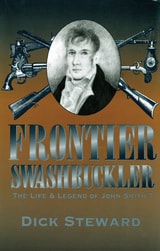
Frontier Swashbuckler
The Life and Legend of John Smith TDick Steward
University of Missouri Press, 2000
Few frontiersmen in the late eighteenth century and early nineteenth century epitomized the reckless energies of the West and the lust for adventure as did John Smith T—pioneer, gunfighter, entrepreneur, militia colonel, miner, judge, and folk hero. In this fascinating biography, Dick Steward traces the colorful Smith T's life from his early days in Virginia through his young adulthood. He then describes Smith T's remarkable career in the wilds of Missouri and his armed raids to gain land from Indians, Spaniards, and others.
Born into the fifth generation of Virginia gentry, young Smith first made his name on the Tennessee frontier. It was there that he added the "T" to his name to distinguish his land titles and other enterprises from those of the hosts of other John Smiths. By the late 1790s he owned or laid claim to more than a quarter million acres in Tennessee and northern Alabama.
In 1797, Smith T moved to Missouri, then a Spanish territory, and sought to gain control of its lead-mining district by displacing the most powerful American in the region, Moses Austin. He acquired such public positions as judge of the court of common pleas, commissioner of weights and levies, and lieutenant colonel of the militia, which enabled him to mount a spirited assault on Austin's virtual monopoly of the lead mines. Although neither side emerged a winner from that ten-year-old conflict, it was during this period that Smith T's fame as a gunfighter and duelist spread across the West. Known as the most dangerous man in Missouri, he was said to have killed fourteen men in duels.
Smith T was also recognized by many for his good works. He donated land for churches and schools and was generous to the poor and downtrodden. He epitomized the opening of the West, helping to build towns, roads, and canals and organizing trading expeditions.
Even though Smith T was one of the most notorious characters in Missouri history, by the late nineteenth century he had all but disappeared from the annals of western history. Frontier Swashbuckler seeks to rescue both the man and the legend from historical obscurity. At the same time, it provides valuable insights into the economic, political, and social dynamics of early Missouri frontier history.
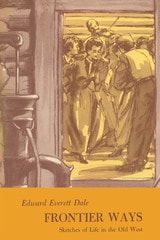
Frontier Ways
Sketches of Life in the Old WestBy Edward Everett Dale
University of Texas Press, 1959
Edward Everett Dale gives a first-hand account of the way pioneer families and cowboys of the frontier lived. Dr. Dale has lived in a sod house, and he once rode the range as cook to a group of cowboys. In this book he draws on his varied experiences to describe all aspects of frontier life—the building of a home, the problems of finding wood and water, the procuring and cooking of food, medical practices, and the cultural, social, and religious life of pioneer families.
This edition is a digital facsimile of the 1959 edition.
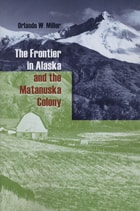
Frontier in Alaska and the Matanuska Colony
Orlando W. Miller
University of Alaska Press, 2008
During the Great Depression, Franklin D. Roosevelt gave more than two hundred families from some of the poorest areas in Minnesota, Wisconsin, and Michigan the opportunity to start their farms anew in the undeveloped land of Matanuska in Alaska. These transplanted midwesterners soon found themselves in a startling new climate and landscape that presented many unexpected challenges. Available for the first time in paperback, The Frontier in Alaska and the Matanuska Colony examines several case studies of these original families, dispelling many frontier myths and describing the reality of pioneering in Alaska. Despite the many impediments, Orlando W. Miller argues, much of the current agricultural success in Matanuska can be directly credited to the innovative farmers who settled there in the 1930s.

Frontiers Of Illusion
Science, Technology, and the Politics of ProgressDaniel Sarewitz
Temple University Press, 1996
For the past fifty years, science and technology—supported with billions of dollars from the U.S. government—have advanced at a rate that would once have seemed miraculous, while society's problems have grown more intractable, complex, and diverse. Yet scientists and politicians alike continue to prescribe more science and more technology to cure such afflictions as global climate change, natural resource depletion, overpopulation, inadequate health care, weapons proliferation, and economic inequality.
Daniel Sarewitz scrutinizes the fundamental myths that have guided the formulation of science policy for half a century—myths that serve the professional and political interests of the scientific community, but often fail to advance the interests of society as a whole. His analysis ultimately demonstrates that stronger linkages between progress in science and progress in society will require research agendas that emerge not from the intellectual momentum of science, but from the needs and goals of society.
Frontiers in the Economics of Aging
Edited by David A. Wise
University of Chicago Press, 1998
Frontiers in the Economics in Aging directs attention to four topics: the role of retirement accounts, such as IRAs and 401(k)s in personal saving; the economics of health care; new advances in research methodology; and aging in relation to inequality. Some of the issues analyzed within these topics are the implications of rising personal retirement saving in recent years, how health and health insurance affect labor supply, and the effects of pensions on the distribution of wealth.
David Wise's lucid introduction provides an overview of each paper. In addition to this book's appeal for specialists and microeconomists, it offers immediately practical ideas and methods for shaping public policy. In fact, one of the papers in this volume, "The Taxation of Pensions: A Shelter Can Become a Trap," helped to spur new legislation that reformed laws on pension distribution.
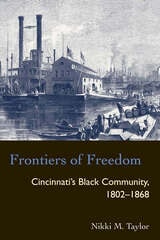
Frontiers of Freedom
Cincinnati’s Black Community 1802–1868Nikki M. Taylor
Ohio University Press, 2004
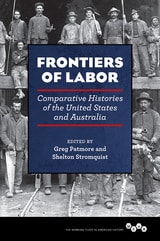
Frontiers of Labor
Comparative Histories of the United States and AustraliaEdited by Greg Patmore and Shelton Stromquist
University of Illinois Press, 2018
Greg Patmore and Shelton Stromquist curate innovative essays that use transnational and comparative analysis to explore the two nations’ differences. The contributors examine five major areas: World War I’s impact on labor and socialist movements; the history of coerced labor; patterns of ethnic and class identification; forms of working-class collective action; and the struggles related to trade union democracy and independent working-class politics. Throughout, many essays highlight how hard-won transnational ties allowed Australians and Americans to influence each other’s trade union and political cultures.
Contributors: Robin Archer, Nikola Balnave, James R. Barrett, Bradley Bowden, Verity Burgmann, Robert Cherny, Peter Clayworth, Tom Goyens, Dianne Hall, Benjamin Huf, Jennie Jeppesen, Marjorie A. Jerrard, Jeffrey A. Johnson, Diane Kirkby, Elizabeth Malcolm, Patrick O’Leary, Greg Patmore, Scott Stephenson, Peta Stevenson-Clarke, Shelton Stromquist, and Nathan Wise

Frozen
Mary Casanova
University of Minnesota Press, 2013
Sixteen-year-old Sadie Rose hasn’t said a word in eleven years—ever since the day she was found lying in a snowbank during a howling storm. Like her voice, her memories of her mother and what happened that night were frozen.
Set during the roaring 1920s in the beautiful, wild area on Rainy Lake where Minnesota meets Canada, Frozen tells the remarkable story of Sadie Rose, whose mother died under strange circumstances the same night that Sadie Rose was found, unable to speak, in a snowbank. Sadie Rose doesn’t know her last name and has only fleeting memories of her mother—and the conflicting knowledge that her mother had worked in a brothel. Taken in as a foster child by a corrupt senator, Sadie Rose spends every summer along the shores of Rainy Lake, where her silence is both a prison and a sanctuary.
One day, Sadie Rose stumbles on a half dozen faded, scandalous photographs—pictures, she realizes, of her mother. They release a flood of puzzling memories, and these wisps of the past send her at last into the heart of her own life’s great mystery: who was her mother, and how did she die? Why did her mother work in a brothel—did she have a choice? What really happened that night when a five-year-old girl was found shivering in a snowbank, her voice and identity abruptly shattered?
Sadie Rose’s search for her personal truth is laid against a swirling historical drama—a time of prohibition and women winning the right to vote, political corruption, and a fevered fight over the area’s wilderness between a charismatic, unyielding, powerful industrialist and a quiet man battling to save the wide, wild forests and waters of northernmost Minnesota. Frozen is a suspenseful, moving testimonial to the haves and the have-nots, to the power of family and memory, and to the extraordinary strength of a young woman who has lost her voice in nearly every way—but is utterly determined to find it again.

Frustrated Empire
US Foreign Policy, 9/11 to IraqDavid Ryan
Pluto Press, 2007

Fuel Cycle to Nowhere
U.S. Law and Policy on Nuclear WasteRichard Burleson Stewart
Vanderbilt University Press, 2011
The first comprehensive history and overview of U.S. nuclear waste law and regulation, Fuel Cycle to Nowhere traces sixty years of nuclear weapons programs, the growth of nuclear power, and their waste legacies, the rise of environmentalism, and the responses of federal agencies. Richard and Jane Stewart expertly analyze the changing policies for storing low-level waste, transuranic waste, spent nuclear fuel, and high-level waste and for regulating their transport by rail and by truck. They also chronicle "a tale of two repositories"--one, the Waste Isolation Pilot Plant in New Mexico, known as WIPP, the world's only operating deep geologic nuclear waste disposal facility, which emerged from a contentious but ultimately successful struggle between federal and state interests; the other, Yucca Mountain, mandated top down by Congress and a failure.
Fuel Cycle to Nowhere provides the critical information and analysis on the waste disposal issues and solutions that the commission, Congress, the administration, journalists, policymakers, and the public so urgently need.
This book is a project of the Consortium for Risk Evaluation with Stakeholder Participation (CRESP), a Vanderbilt University-led, multi-university consortium supported as a cooperative agreement by the U.S. Department of Energy, Office of Environmental This book is a project of the Consortium for Risk Evaluation with Stakeholder Participation (CRESP), a Vanderbilt University-led, multi-university consortium supported as a cooperative agreement by the U.S. Department of Energy, Office of Environmental Management to support safe, effective, publicly credible, risk informed management of existing and future nuclear waste from government and civilian sources through independent strategic analysis, review, applied research and education.
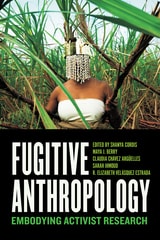
Fugitive Anthropology
Embodying Activist ResearchEdited by Shanya Cordis, Maya J. Berry, Claudia Chávez Argüelles, Sarah Ihmoud, and R. Elizabeth Velásquez Estrada
University of Texas Press, 2026
A personal, provocative, and boundary-breaking volume on the power relations that racialized, gendered, and sexualized researchers grapple with while conducting activist research.
Fugitive Anthropology is a transnational, intergenerational engagement that extends feminist theory, activist research methodologies, and the discipline of anthropology in new directions. Contributors examine the tensions that arise from conducting politically engaged, collaborative research alongside communities in struggle, in particular theorizing from the experiences of racialized women, queer, trans, and gender nonconforming researchers across distinct geographies. Essays contend with the matrices of colonial, imperial, and patriarchal violence that afflict the researchers and communities with which they seek political alignment.
Articulating an ethnographic practice grounded in Black and Indigenous political struggles and committed to collective liberation, the volume reflects on what it means to navigate violent relations of power, systemic inequities, and current onslaughts shaping field research and US academia. Ultimately, Fugitive Anthropology argues that a feminist ethos—one that embraces embodied knowledges and fugitive sensibilities—forges liberatory spaces that break from dominant masculinist frames of the “political” and challenge colonial regimes within and beyond the neoliberal university.