Results by title
5550 books match the query 'Biography & Autobiography' and 222 start with f
Fighting Theory
Avital Ronell, in conversation with Anne Dufourmantelle
University of Illinois Press, 2010
International interest in the work of Avital Ronell has expressed itself in reviews, articles, essays, and dissertations. For Fighting Theory, psychoanalyst and philosopher Anne Dufourmantelle conducted twelve interviews with Ronell, each focused on a key topic in one of Ronell's books or on a set of issues that run throughout her work.
What do philosophy and literary studies have to learn from each other? How does Ronell place her work within gender studies? What does psychoanalysis have to contribute to contemporary thought? What propels one in our day to Nietzsche, Derrida, Nancy, Bataille, and other philosophical writers? How important are courage and revolt? Ronell's discussions of such issues are candid, thoughtful, and often personal, bringing together elements from several texts, illuminating hints about them, and providing her up-to-date reflections on what she had written earlier.
Intense and often ironic, Fighting Theory is a poignant self-reflection of the worlds and walls against which Avital Ronell crashed.
Fighting Words
Independent Journalists in TexasBy James McEnteer
University of Texas Press, 1992
Fighting Words profiles five journalists who published the truth as they saw it, no matter how their reporting angered politicians, social and religious leaders, or other journalists.
The five journalists are William Brann (1855–1898), Don Biggers (1868–1957), John Granbery (1874–1953), Archer Fullingim (1902–1984), and Stoney Burns [Brent Stein] (1942–2011). Though they lived in different eras, all these men dealt with issues that society continues to face—racism, official corruption, religious freedom, educational reform, political extremism of the left and right, the clash of urban and rural values, and the fear of change. Their lives and work constitute a unique, alternative perspective on Texas history and the history of journalism itself.
In addition to the troubling questions they raised on social issues, these independent journalists challenge us, as they challenged the mainline media of their own times, to define the function of journalism and to examine the mandate of the First Amendment. We may doubt the wisdom of some of their convictions, but not the courage they needed to express them in the face of ridicule, hostility, intimidation, and even death. More than the specific causes they fought for, the independents’ passion for truth and their absolute belief in free speech constitute their greatest legacy to us and to journalism.
Fighting for Equality
A Life of May Wright SewallRay E. Boomhower
Indiana Historical Society Press, 2007
Fighting for the Forty-Ninth Star
C. W. Snedden and the Crusade for Alaska StatehoodTerrence Cole
University of Alaska Press, 2010
C.W. "Bill" Snedden, the publisher of America's farthest north daily newspaper, the Fairbanks Daily News-Miner, helped lead the battle of the Far North against the Deep South. Working behind the scenes with his protege, a young attorney named Ted Stevens, and a fellow Republican newspaperman, Secretary of Interior Fred Seaton, Snedden's "magnificent obsession" would open the door to development of the oil fields at Prudhoe Bay, inspire establishment of the Arctic Wildlife Range (now the Arctic National Wildlife Refuge), and add the forty-ninth star to the flag.
Fighting for the Forty-Ninth Star is the story of how the publisher of a little newspaper four thousand miles from Washington, D.C., helped convince Congress that Alaskans should be second-class citizens no more.

Films That Explode Like Grenades
Robert Kramer and the Search for a Radical CinemaWhitney Strub
University of Chicago Press, 2026
Robert Kramer (1939–99) was the emblematic filmmaker of the late-1960s New Left in the United States. Yet because most of his three dozen films have been out of circulation for decades, he has long been neglected by film historians and the Left. Kramer was the cofounder of the leftist documentary collective Newsreel and the director of underground films such as Ice (1970), Milestones (1975), and Route One/USA (1989). His films provide distinctive insights into how America’s political terrain has changed over time, capturing each era’s revolutionary ethos and its contradictions. Whitney Strub’s Films That Explode Like Grenades tracks the histories of leftist film and global revolutionary movements via Kramer’s life and travels. Moving among New York City, Chicago, North Vietnam, Paris, Portugal, Angola, and other crucial flashpoints, Kramer left a major and influential body of work in his wake that has fundamentally shaped the work of radical filmmakers across the globe.
For Strub, Kramer’s career is a key thread in an intimate history of the 1960s New Left, one that emphasizes the complexities of the movement’s internal tensions and its legacies. Drawing on visual analysis, extensive archival research across the United States and France, and myriad interviews with Kramer contemporaries, including Bernardine Dohrn, Tom Hayden, Jonas Mekas, and Kramer’s relatives, Strub transforms Kramer’s life story into a dynamic and engaging social history of 1960s radicalism and its generational legacies.
With detailed mapping of Robert Kramer’s many social and artistic contexts, Films That Explode Like Grenades restores him to a place of global importance in leftist cinema.
Final Negotiations
A Story of Love, Loss, and Chronic IllnessCarolyn Ellis
Temple University Press, 2018
Taking an autoethnographic perspective, Ellis focuses on her feeling and thinking self in relationships, narrating particular lived experiences that offer a gateway into understanding interpersonal and cultural life. In her new epilogue, “From New Endings to New Beginnings,” Ellis describes her changed identity and how Final Negotiations informs her life and her understanding of how she and her current partner grow older together. She hopes her book provides companionship and comfort to readers who also will suffer loss in their lives.
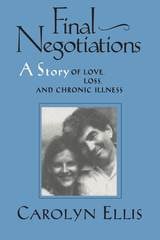
Final Negotiations
A Story of Love, and Chronic IllnessCarolyn Ellis
Temple University Press, 1995
When Carolyn Ellis, a graduate student, and Gene Weinstein, her Professor, fell in love, he was experiencing the first stages of emphysema. As he became increasingly disabled and immobile, these two intensely connected partners fought to maintain their love and to live a meaningful life. They learned to negotiate their daily lives in a way that enabled each of them to feel sufficiently autonomous—him not always like a patient and her not always like a caretaker. Writing as a sociologist, Ellis protrays their life together as a way to understand the complexities of romance, of living with a progressive illness, and, in the final negotiation and reversal of positions, of coping with the loss of a loved one.
This rare memoir full of often raw details and emotions becomes an intimate conversation about the intricacies of feeling and relating in a relationship. What Ellis calls experimental ethnography is a finely crafted, forthright, and daring story framed by the author's reflections on writing about and analyzing one's own life. Casting off the safe distance of most social science inquiry, she surrenders the private shroud of a complex relationship to bring sociology closer to literature.
Financial Founding Fathers
The Men Who Made America RichRobert E. Wright and David J. Cowen
University of Chicago Press, 2006
Robert E. Wright and David J. Cowen here chronicle how a different group of founding fathers forged the wealth and institutions necessary to transform the American colonies from a diffuse alliance of contending business interests into one cohesive economic superpower. From Alexander Hamilton to Andrew Jackson, the authors focus on the lives of nine Americans in particular—some famous, some unknown, others misunderstood, but all among our nation’s financial founding fathers. Such men were instrumental in creating and nurturing a financial system that drove economic growth in the nascent United States because they were quick to realize that wealth was as crucial as the Constitution in securing the blessings of liberty and promoting the general welfare. The astonishing economic development made possible by our financial founding fathers was indispensable to the preservation of national unity and of support for a government that was then still a profoundly radical and delicate political experiment.
Grand in scope and vision, Financial Founding Fathers is an entertaining and inspiring history of the men who made America rich and steered her toward greatness.

Find Me When You're Ready
PoemsPerry Janes
Northwestern University Press, 2024
A powerful debut and a lyric coming-of-age narrative that interrogates the myths we carry
In Find Me When You’re Ready, Perry Janes traces a sweeping journey from Detroit to Los Angeles. As he leaves home and forges toward California, the speaker in these poems considers how we learn and mislearn ideas about manhood, confronts the aftershocks of childhood sexual abuse, and questions the human need for belonging. By embracing the touchstones of youth—movies, lore, graphic novels—these poems assert the speaker’s defiant right to childhood even amid damage.
As the collection arcs toward adulthood, the speaker embodies a vision of healing that refuses easy binaries and embraces the joys of intimacy. Across each of its five acts, Perry Janes’s debut collection is driven by an interest troubling our creation myths, asking who built them, why we carry them, and how we might set them aside.

Find Your Story, Write Your Memoir
Lynn C. Miller and Lisa Lenard-Cook
University of Wisconsin Press, 2013
Bronze winner, Foreword Book of the Year, Writing Guides
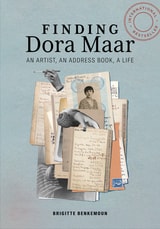
Finding Dora Maar
An Artist, an Address Book, a LifeBrigitte Benkemoun
J. Paul Getty Trust, The, 2020
“[A] spirited and deeply researched project…. [Benkemoun’s] affection for her subject is infectious. This book gives a satisfying treatment to a woman who has been confined for decades to a Cubist’s limited interpretation.” — Joumana Khatib, The New York Times
Merging biography, memoir, and cultural history, this compelling book, a bestseller in France, traces the life of Dora Maar through a serendipitous encounter with the artist’s address book.
In search of a replacement for his lost Hermès agenda, Brigitte Benkemoun’s husband buys a vintage diary on eBay. When it arrives, she opens it and finds inside private notes dating back to 1951—twenty pages of phone numbers and addresses for Balthus, Brassaï, André Breton, Jean Cocteau, Paul Éluard, Leonor Fini, Jacqueline Lamba, and other artistic luminaries of the European avant-garde.
After realizing that the address book belonged to Dora Maar—Picasso’s famous “Weeping Woman” and a brilliant artist in her own right—Benkemoun embarks on a two-year voyage of discovery to learn more about this provocative, passionate, and enigmatic woman, and the role that each of these figures played in her life.
Longlisted for the prestigious literary award Prix Renaudot, Finding Dora Maar is a fascinating and breathtaking portrait of the artist.
This work received support from the French Ministry of Foreign Affairs and the Cultural Services of the French Embassy in the United States through their publishing assistance program.
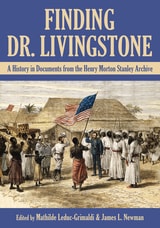
Finding Dr. Livingstone
A History in Documents from the Henry Morton Stanley ArchivesMathilde Leduc-Grimaldi
Ohio University Press, 2020
This eye-opening perspective on Stanley’s expedition reveals new details about the Victorian explorer and his African crew on the brink of the colonial Scramble for Africa.
In 1871, Welsh American journalist Henry M. Stanley traveled to Zanzibar in search of the “missing” Scottish explorer and missionary David Livingstone. A year later, Stanley emerged to announce that he had “found” and met with Livingstone on Lake Tanganyika. His alleged utterance there, “Dr. Livingstone, I presume,” was one of the most famous phrases of the nineteenth century, and Stanley’s book, How I Found Livingstone, became an international bestseller.
In this fascinating volume Mathilde Leduc-Grimaldi and James L. Newman transcribe and annotate the entirety of Stanley’s documentation, making available for the first time in print a broader narrative of Stanley’s journey that includes never-before-seen primary source documents—worker contracts, vernacular plant names, maps, ruminations on life, lines of poetry, bills of lading—all scribbled in his field notebooks.
Finding Dr. Livingstone is a crucial resource for those interested in exploration and colonization in the Victorian era, the scientific knowledge of the time, and the peoples and conditions of Tanzania prior to its colonization by Germany.
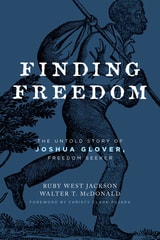
Finding Freedom
The Untold Story of Joshua Glover, Freedom SeekerRuby West Jackson
Wisconsin Historical Society Press, 2022
Finding Higher Ground
A Life Of TravelsCatharine Savage Brosman
University of Nevada Press, 2003
Essayist Catharine Savage Brosman explores the relationship of human beings to their environment, traveling from American deserts to dense European urban settings. Whether sipping wine in a Parisian café, partying with the jet set in Aspen, or contemplating the arid desert West that she loves, Brosman inhabits these settings, and many others, with a sense of adventure and discovery. To read these essays is to enjoy the company of a lively, thoughtful, original mind. Brosman’s "higher ground" is that place we all seek, where we can find and express our own best selves.
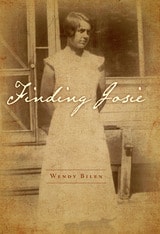
Finding Josie
Wendy Bilen
Wisconsin Historical Society Press, 2008
With a focus squarely on the Midwest, Wendy Bilen pieces together the history of her grandmother, Josie Broadhead, born in 1911 and raised on the North Dakota prairie. Josie married a Wisconsin farmer and moved to a large dairy farm outside La Crosse; along the way she began taking in people in need of a home: ". . . beggars and drunks and children of drunks, mentally ill children and children with mentally ill parents. Brothers and cousins and sisters and in-laws and strangers."
By taking on these challenges that no one else wanted, Josie left an almost mythical legacy. Years after Josie's death, Bilen embarks on a journey to unearth Josie's story and quickly realizes that the search is about her, too. As she discovers her grandmother's complicated nature ("a woman proud and humble, loving and unaffectionate, strict and visionary, joyful and troubled, a woman held together by contradictions like an arch and its capstone"), she learns much about herself and her own choices. And as she breathes life into Josie and her family, friends, and neighbors, the author evokes a powerful sense of place of small towns and farms, of prairie, of Josie's home, all of which feel both fresh and satisfyingly familiar.
Much more than mere memoir or family history, this dual story about Bilen's journey illuminates the surprising ways our lives intersect with our ancestors'. An extraordinary story about a seemingly ordinary woman, Finding Josie will inspire readers to explore their own family history in their own way.
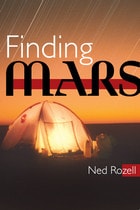
Finding Mars
Ned Rozell
University of Alaska Press, 2011
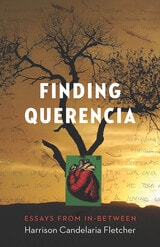
Finding Querencia
Essays from In-BetweenHarrison Candelaria Fletcher
The Ohio State University Press, 2022
With its roots in the Spanish verb querer—“to want, to love”—the term querencia has been called untranslatable but has come to mean a place of safety and belonging, that which we yearn for when we yearn for home. In this striking essay collection, Harrison Candelaria Fletcher shows that querencia is also a state of being: the peace that arises when we reconcile who we are. A New Mexican of mixed Latinx and white ethnicity, Candelaria Fletcher ventures into the fault lines of culture, landscape, and spirit to discover the source of his lifelong hauntings. Writing in the persona of coyote, New Mexican slang for “mixed,” he explores the hyphenated elements within himself, including his whiteness. Blending memory, imagination, form, and language, each essay spirals outward to investigate, accept, and embrace hybridity. Ultimately, Finding Querencia offers a new vocabulary of mixed-ness, a way to reconcile the crosscurrents of self and soul.
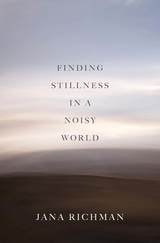
Finding Stillness in a Noisy World
Jana Richman
University of Utah Press, 2018
In these wide-ranging personal essays, Richman travels interior roads through fear, kindness, ignorance, darkness, wildness, compassion, solitude, loneliness, and more—always asking how external geography informs our internal geography. From the monsoonal rains in the carved slot canyons of the Escalante to the eroticism of dirt on skin in a remote slice of the Grand Canyon; from the defiance of academic authority to the curled, arthritic fingers of her mother and grandmothers, Richman sinks into the realities that make us human and fallible and blessed.
Inspired by masters of the traditional personal essay such as E.B. White and M.F.K. Fisher, Richman adds a unique, deeply intimate—and often humorous—voice to the concurrence of human experience. Like a desert stream, human meaning meanders before coming to rest. Richman’s authentic voice illuminates the place where internal and external landscapes merge into meaning. Time with these genuine, inclusive pieces is time well spent.
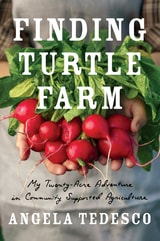
Finding Turtle Farm
My Twenty-Acre Adventure in Community-Supported AgricultureAngela Tedesco
University of Minnesota Press, 2022
The story of starting and running an organic farm—told by the woman who owned one of the first Community-Supported Agriculture operations in the Upper Midwest
On a twenty-acre farm in Iowa in 1995, Angela Tedesco planted the seeds (quite literally) of a quiet revolution. While American agriculture had strayed so far afield, her farm would raise food that served the earth and the community as well as the palate. In Finding Turtle Farm, Tedesco recounts this adventure in all its down-and-dirty work and wonder, from plan and plot to harvest, with nods along the way to the vagaries of weather, pests, and human nature.
Introducing Community-Supported Agriculture to Iowa, Tedesco’s Turtle Farm educated its customers along with providing seasonal boxes of produce—an undertaking that continues here, as Tedesco describes what it takes to establish and run an organic operation, bringing to bear all her experience growing up on a family farm, studying chemistry and horticulture, and shepherding a religious education program. From ordering seeds and tending greenhouses to surviving floods and a personal health crisis, Tedesco tells a story of transforming a piece of land and the life within it. She includes practical information about harvesting and preserving food, the discoveries of research conducted on the farm and bonds established between farmers, and even recipes to make delicious use of the produce in your CSA box.
Looking forward to a healthier, happier future when crops are more than mere commodities and food feeds the soul of a community, Finding Turtle Farm is an enlightening, hard-won, and ultimately hopeful account of what it means to meet the most basic of human needs.

Finding the Beautiful Commons
Confessions of a Bourgeois EnvironmentalistCathy Gere
University of Chicago Press, 2027
A call to pleasurable and sustainable action that centers our shared stewardship of shared spaces.
Environmentally-conscious decision-making can seem like an exercise in self-denial: don’t fly, don’t drive, don’t eat meat. But bringing our tote bags to the grocery store will never be enough to solve the climate crisis, nor will dropping out of society. Many of us crave a collective movement that acknowledges the value of comfort, a framework for making choices that are inherently imperfect, but ones we can live with.
In Finding the Beautiful Commons, historian Cathy Gere offers a relatable and inspiring guide to environmental action in a consumerist culture. Recounting her experiences as a young activist at the Greenham Common Women’s Peace Camp in Berkshire, as an anarchist and guerrilla gardener in a New York City squat, and as an academic working to decarbonize the University of California system, Gere argues for initiatives grounded in common property—streets, libraries, parks, and other shared spaces—where our communal interests can drive sustainability. These are also sites where we can put bourgeois values like beauty and personal enjoyment to good use protecting local landscapes and resources.
Funny, wise, and honest about the contradictions of life during climate crisis, Gere shows us that the commons we already know—the everyday infrastructure of mass transit, natural reserves, and public beaches—is the very foundation for a livable future.
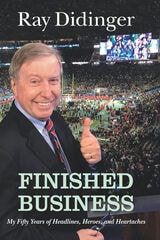
Finished Business
My Fifty Years of Headlines, Heroes, and HeartachesRay Didinger
Temple University Press, 2021
Ray Didinger opens his lively memoir Finished Business with the Philadelphia Eagles’ upset win in Super Bowl LII. When the Eagles finally hoist the Lombardi Trophy, Didinger does his best to straddle the emotions of a working reporter and a long-suffering Philly fan. His ability to do that is why he has built up such a loyal following.
Didinger began following the Eagles as a kid, hanging out in his grandfather’s bar in Southwest Philadelphia. He spent his summers at the team's training camp in Hershey. It was there he met his idol, flanker Tommy McDonald. He would later write a play, Tommy and Me, about their friendship and his efforts to see McDonald enshrined in the Pro Football Hall of Fame.
Didinger has been covering the Eagles as a newspaper columnist or TV analyst since 1970. Over the years, he wrote sports for the Philadelphia Bulletin and the Philadelphia Daily News. He later produced Emmy Award–winning documentaries for NFL Films before transitioning to sports talk radio and TV analysis.
In five decades, across multiple media platforms, he has interviewed everyone from Hank Aaron, Wayne Gretzky, Muhammad Ali, Julius Erving, Jack Nicklaus, to Mike Schmidt, as well as writing film scripts for Hollywood stars such as Bruce Willis and Alec Baldwin. He went to the White House with the U.S. Olympic team and even explored the bizarre world of professional wrestling.
His stories, told in his familiar, breezy style, capture his enthusiasm for sports and his affection for the fans who still mourn the pennant that eluded the Phillies in 1964. Didinger has become synonymous with Philadelphia sports, and his memoir is as passionate as an autumn Sunday at Lincoln Financial Field.

Fireweed
A Political AutobiographyGerda Lerner
Temple University Press, 2003
First Fruits
The Lewellings and the Birth of the Pacific Coast Fruit IndustryLinda Ziedrich
Oregon State University Press, 2025
2025 Choice Outstanding Academic Title
First Fruits offers a fascinating look at the lives of Pacific Coast horticulturists Henderson, Jonathan, and Seth Lewelling. Traveling across the Overland Trail—Henderson to Oregon in 1847, with a wagonload of fruit trees, and Seth and John to California three years later—the brothers would establish themselves as pioneers in the West’s growing fruit industry. By recounting how Henderson planted the first orchard of grafted fruit trees in Oregon, how Seth originated the Black Republican and Bing cherries, and how John led the development of the Napa Valley wine industry, First Fruits preserves the Lewellings’ place in history.
However, the Lewellings were not simply planters, grafters, and breeders. They were also adventurers, colonists, gold seekers, reformists, and explorers—experiencing firsthand the westward expansion of the nation. Their stories provide a unique glimpse into the social, economic, and political history of the day. From their Quaker upbringing in North Carolina and Indiana to Henderson’s attempt to start a utopian colony in Honduras, John’s efforts to grow the Grange in California, and Seth’s contribution to democratic reforms in Oregon, the Lewellings’ legacy extends far beyond their agricultural endeavors.
In the first biography to reclaim the brothers’ histories, Linda Ziedrich splendidly captures their dedicated support of one another and their communities, their contributions to the development of the modern fruit industry, and their lasting influence on the cultivation of fruits synonymous with the Pacific Coast region.
First Lady from Plains
Rosalynn Carter
University of Arkansas Press, 1994
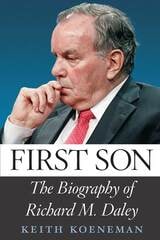
First Son
The Biography of Richard M. DaleyKeith Koeneman
University of Chicago Press, 2013
"Mayor Richard M. Daley dropped the bomb at a routine news conference at City Hall on Tuesday. With no prelude or fanfare, Mr. Daley announced that he would not seek re-election when his term expires next year. 'Simply put, it's time,' he said." New York Times, September 7, 2010
With those four words, an era ended. After twenty-two years, the longest-serving and most powerful mayor in the history of Chicago—and, arguably, America—stepped down, leaving behind a city that was utterly transformed, and a complicated legacy we are only beginning to evaluate.
With Koeneman as our guide, we follow young Daley from his beginnings as an average Bridgeport kid thought to lack his father's talent and charisma to his unlikely transformation into an iron-fisted leader. Daley not only escaped the giant shadow of his father but also transformed Chicago from a gritty, post-industrial Midwestern capital into a beautiful, sophisticated global city widely recognized as a model for innovative metropolises throughout the world.
But in spite of his many accomplishments, Richard M. Daley's record is far from flawless. First Son sets the dramatic improvement of certain parts of the city against the persistent realities of crime, financial stress , failing public housing, and dysfunctional schools. And it reveals that while in many ways Daley broke with the machine politics of his father, he continued to reward loyalty with favors, use the resources of city government to overwhelm opponents, and tolerate political corruption.
A nuanced portrait of a complex man, First Son shows Daley to be sensitive yet tough, impatient yet persistent, a street-smart fighter and detail-driven policy expert who not only ran Chicago, but was Chicago.
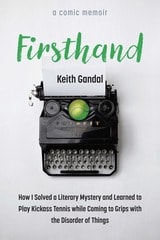
Firsthand
How I Solved a Literary Mystery and Learned to Play Kickass Tennis while Coming to Grips with the Disorder of ThingsKeith Gandal
University of Michigan Press, 2024
Keith Gandal combines this scholarly detective story with a comic personal narrative about how a midlife crisis accidentally sent him on a journey to write a research monograph that many in his profession—including at times himself—were dubious about. While researching how Hemingway, Fitzgerald, and Faulkner faced their forgotten crises of masculinity, Gandal discovers that his own crisis is instrumental to his creative process. Incorporating stories from Gandal’s comic romp through the hyper-competitive world of middle-aged men’s tennis, adopting pitbulls, and discussing Michel Foucault, Firsthand gives readers an inside look at how to acquire accurate knowledge—about the world, about history, and about oneself.
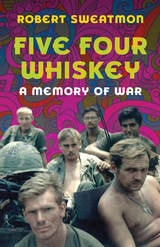
Five Four Whiskey
A Memory of WarRobert Sweatmon
Westholme Publishing, 2014
In late 1969, twenty-year-old Robert Sweatmon received a letter informing him that he had ten days to report to the United States Army. Like thousands of others, he had been drafted. Assigned as a rifleman with a mechanized unit, the author began a year-long odyssey in the Southeast Asian wilderness that would change his and his fellow soldiers’ lives forever.
Taking its title from the nighttime radio code call and response between base camp and those on ambush patrol, Five Four Whiskey: A Memory of War is a moving account of life as a combat soldier in the Vietnam War. Set mostly in the sprawling woods and rubber plantations northwest of Saigon, the author explains what his unit was asked to do and what obstacles they faced, including an elusive but deadly enemy, multiple kinds of booby traps, and antitank mines. The author, a notable television personality following the war, does not sensationalize his account; rather, his book allows a new generation to understand the emotional and physical pressures of the times. Coming of age in the maelstrom of civil rights and the free love culture, the author and his fellow soldiers saw their idealism quickly vaporize in the face of the grim realities of war. Here they learned to compartmentalize their lives as a way to survive, but it was their strong bonds that ultimately kept them from succumbing to the madness that surrounded them. Kept in the field for almost the entire time of his tour, the author was in a unit selected to conduct a clandestine reconnaissance in Cambodia and then lead the 1970 invasion, where he was wounded. Following his convalescence, he was sent to Nui Ba Den, the fabled ghost mountain haunted by the spirit of a Vietnamese princess, until he received his papers that he had completed his combat service. At that moment, his year-long mental wall between soldier and civilian fell away as he counted the last terrifying hours before he was safely out of Vietnam. A tour-de-force of military memoir, written in an objective and often literary prose, Five Four Whiskey perfectly captures how ordinary civilian-soldiers survived an ordeal set in one of the most turbulent times in American history.

Five Lives in Music
Women Performers, Composers, and Impresarios from the Baroque to the PresentCecelia Hopkins Porter
University of Illinois Press, 2014
Representing a historical cross-section of performance and training in Western music since the seventeenth century, Five Lives in Music brings to light the private and performance lives of five remarkable women musicians and composers. Elegantly guiding readers through the Thirty Years War in central Europe, elite courts in Germany, urban salons in Paris, Nazi control of Germany and Austria, and American musical life today, as well as personal experiences of marriage, motherhood, and widowhood, Cecelia Hopkins Porter provides valuable insights into the culture in which each woman was active.
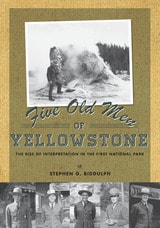
Five Old Men of Yellowstone
The Rise of Interpretation in the First NationalStephen Biddulph
University of Utah Press, 2013
Biddulph’s masterfully woven narrative—part biography, part historical narrative—offers both fascinating factual details about Yellowstone and charming colloquial story telling. The interpretive initiatives of the rangers—nature walks, campfire programs, game stalks, and auto caravans—are enlivened by the colorful personalities of the five men who conducted them. Historians will find that Five Old Men of Yellowstone provides a missing link in the park’s extensive literature, while its humor and sentiment make for an accessible book that will be enjoyed by park history buffs and curious visitors alike.
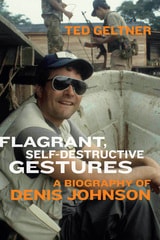
Flagrant, Self-Destructive Gestures
A Biography of Denis JohnsonTed Geltner
University of Iowa Press, 2025
The year was 1988, and Denis Johnson was at a low point. He caught malaria on a reporting trip into the jungles of the Philippines and was nearly pronounced dead. The disease left him unable to write. His second wife left him. He didn’t have enough money to pay his taxes. His publisher was waiting for a book that he hadn’t started. But in the life of Denis Johnson, when things were at their bleakest, something good was usually waiting around the next corner. This time, what emerged from the chaos was his masterpiece Jesus’ Son, a book that would tap into the zeitgeist of the 1990s and become a bible for Generation X and an American classic.
Flagrant, Self-Destructive Gestures tells the complete story of Johnson’s fascinating life, his thrill-seeking trips into war zones as a magazine correspondent, his battles with addiction, his live-it-before-you-write-it style of fiction. It follows the arc of his tremendous body of work as a novelist, journalist, poet, and playwright, and in the process recovers the true stories from the hazy myths that one of our most beloved, yet enigmatic, writers left behind.

Flannery O’Connor - American Writers 54
University of Minnesota Pamphlets on American WritersStanley Edgar Hyman
University of Minnesota Press, 1966
Flannery O'Connor - American Writers 54 was first published in 1966. Minnesota Archive Editions uses digital technology to make long-unavailable books once again accessible, and are published unaltered from the original University of Minnesota Press editions.
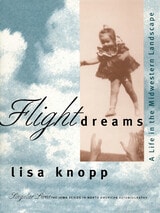
Flight Dreams
A Life in the Midwestern LandscapeLisa Knopp
University of Iowa Press, 1998
“When I was eleven the world was filled with birds,”writes Lisa Knopp of her girlhood in Burlington, Iowa. Picking up where she left off in her first book, Field of Vision, Knopp knits together sections of her life story through a pattern of images drawn from nature. The most prevalent of these unifying themes are metaphors of flight—birds, wind, moving upward and outward and across the midwestern landscape from Nebraska and Iowa to southern Illinois.
Reminiscent of Thoreau's introspective nature writing and Dillard's taut, personal prose, each chapter in Flight Dreams stands alone as a distinct narrative, yet each is linked by profoundly personal descriptions of dreams, the natural world, defining experiences, and chance encounters with people that later prove to be fateful. Part Eastern meditation, part dream sequence, part historical reconstruction, Flight Dreams testifies to a deep understanding of how the natural world—its visible and invisible elements—guides our destinies.

Flowers, Guns, and Money
Joel Roberts Poinsett and the Paradoxes of American PatriotismLindsay Schakenbach Regele
University of Chicago Press, 2023
Joel Roberts Poinsett’s (1779–1851) brand of self-interested patriotism illuminates the paradoxes of the antebellum United States. He was a South Carolina investor and enslaver, a confidant of Andrew Jackson, and a secret agent in South America who fought surreptitiously in Chile’s War for Independence. He was an ambitious Congressman and Secretary of War who oversaw the ignominy of the Trail of Tears and orchestrated America’s longest and costliest war against Native Americans, yet also helped found the Smithsonian. In addition, he was a naturalist, after whom the poinsettia—which he appropriated while he was serving as the first US ambassador to Mexico—is now named.
As Lindsay Schakenbach Regele shows in Flowers, Guns, and Money, Poinsett personified a type of patriotism that emerged following the American Revolution, one in which statesmen served the nation by serving themselves, securing economic prosperity and military security while often prioritizing their own ambitions and financial interests. Whether waging war, opposing states’ rights yet supporting slavery, or pushing for agricultural and infrastructural improvements in his native South Carolina, Poinsett consistently acted in his own self-interest. By examining the man and his actions, Schakenbach Regele reveals an America defined by opportunity and violence, freedom and slavery, and nationalism and self-interest.
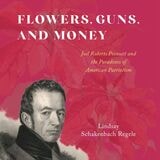
Flowers, Guns, and Money
Joel Roberts Poinsett and the Paradoxes of American PatriotismLindsay Schakenbach Regele
University of Chicago Press, 2023
A fascinating historical account of a largely forgotten statesman, who pioneered a form of patriotism that left an indelible mark on the early United States.
Joel Roberts Poinsett’s (1779–1851) brand of self-interested patriotism illuminates the paradoxes of the antebellum United States. He was a South Carolina investor and enslaver, a confidant of Andrew Jackson, and a secret agent in South America who fought surreptitiously in Chile’s War for Independence. He was an ambitious Congressman and Secretary of War who oversaw the ignominy of the Trail of Tears and orchestrated America’s longest and costliest war against Native Americans, yet also helped found the Smithsonian. In addition, he was a naturalist, after whom the poinsettia—which he appropriated while he was serving as the first US ambassador to Mexico—is now named.
As Lindsay Schakenbach Regele shows in Flowers, Guns, and Money, Poinsett personified a type of patriotism that emerged following the American Revolution, one in which statesmen served the nation by serving themselves, securing economic prosperity and military security while often prioritizing their own ambitions and financial interests. Whether waging war, opposing states’ rights yet supporting slavery, or pushing for agricultural and infrastructural improvements in his native South Carolina, Poinsett consistently acted in his own self-interest. By examining the man and his actions, Schakenbach Regele reveals an America defined by opportunity and violence, freedom and slavery, and nationalism and self-interest.
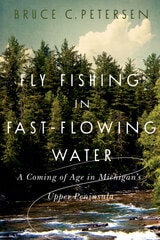
Fly Fishing in Fast-Flowing Water
A Coming of Age in Michigan's Upper PeninsulaBruce C. Petersen
Michigan State University Press, 2027
With its rugged forests and swift rivers, Michigan’s Upper Peninsula offers the perfect setting for fly fishing. Following in the footsteps of Ernest Hemingway’s character Nick Adams, Bruce C. Petersen creates a unique coming-of-age memoir that departs from the typical story of growing from teen to adulthood. Instead, Petersen explores his seventh decade, chasing trout in the challenging waters of Northern Michigan while grappling with what it means to grow old. In this absorbing memoir, he relives his most memorable days as a fly fisher and offers thoughtful reflections on the healing power of nature, aging gracefully, and the unstoppable passage of time.
Fly in the Buttermilk
The Life Story of Cecil ReedCecil A. Reed
University of Iowa Press, 1993
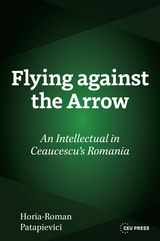
Flying Against the Arrow
An Intellectual in Ceausescu's RomaniaHoria-Roman Patapievici
Central European University Press, 2003
The ‘unbearable 80s’, as the last decade of the Ceauşescu era has been called in Romania, are in the focus of this quasi-autobiographical work. The book vividly portrays the difficulties encountered by a young intellectual trying to shape himself under the oppressive regime and provides a stark depiction of a man’s intellectual suffocation under hard-line socialist rule.
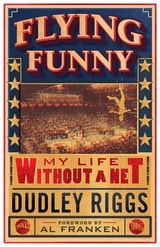
Flying Funny
My Life without a NetDudley Riggs
University of Minnesota Press, 2017
The unusual, gravity-defying first act of improvisational theater’s founding father—now in paperback
Dudley Riggs didn’t have to run away from home to join the circus: home was the circus. Son of the acclaimed aerial flyers Riggs and Riggs, he made his circus debut as a polar prince parading in a wagon pulled by a polar bear. At the age of five, he graduated to a risqué vaudeville act during the circus off- season; at eight, he outgrew his cutes (and his child stardom) and joined his high-flying parents on the trapeze. Eventually he had to learn to “fly funny” because he grew too tall to fly straight. In one way or another, Riggs has been flying ever since.
The rest, as they say, is history. And what a story it is. In Flying Funny, Riggs shares many highs and lows while describing circus life and the evolution of America’s popular entertainment during the twentieth century. From his early life in circus and vaudeville to his creation of the Brave New Workshop, we see how his show business experience and instincts helped him create in Minneapolis what became the “next wave” in American entertainment—improvisation.
As a young man, Riggs lost everything in a tornado, got an education on the fly, and sailed with the All American circus to post–war Japan. On a slow boat home and restless about his future, he developed the idea of Word Jazz—creating a script on stage as it is being performed—and shortly after he opened the Instant Theater in New York. Later, he moved to Minneapolis where he founded the Brave New Workshop, launching the careers of comic greats such as Penn and Teller, The Flying Karamazov Brothers, Louie Anderson, Peter Tolan, Pat Proft, Nancy Steen, Liz Winstead, Al Franken and many others. Today, the Brave New Workshop thrives as the longest running improvisational theater in America.
From flying funny on the trapeze to theater without a net, Dudley Riggs’s story is filled with hearty laughs and eyebrow-raising insights. With a wry sense of humor and infectious warmth, he shares the exhilaration of flying whether through the air or on the stage.
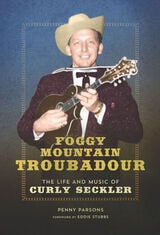
Foggy Mountain Troubadour
The Life and Music of Curly SecklerPenny Parsons
University of Illinois Press, 2016
Written in close collaboration with Mr. Seckler and those who know him, Foggy Mountain Troubadour is the first full-length biography of an American original. Penny Parsons follows a journey from North Carolina schoolhouses to the Grand Ole Opry stage and the Bluegrass Hall of Fame, from boarding houses to radio studios and traveling five to a car on two-lane roads to make the next show. Throughout, she captures the warm humor, hard choices, and vivid details of a brilliant artist's life as he criss-crosses a nation and a century making music.
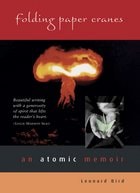
Folding Paper Cranes
An Atomic MemoirLeonard Bird
University of Utah Press, 2005
Among the monuments to tragedy and hope in Hiroshima’s Peace Park stands a statue of Sadako Sasaki holding a crane in her outstretched arms. Sadako was two years old when the atomic bomb was dropped on her city; she was diagnosed with leukemia ten years later. According to popular Japanese belief, folding a thousand paper cranes brings good fortune. Sadako spent the last months of her young life folding hundreds of paper cranes. She folded 644 before she died.
As he journeys from the Geiger counters, radioactive dust, and mushroom clouds of the Nevada desert to the bronze and ivory memorials for the dead in Japan, Bird—himself a survivor of radiation-induced cancer—seeks to make peace with his past and with a future shadowed by nuclear proliferation. His paper cranes are the poetry and prose of this haunting memoir.
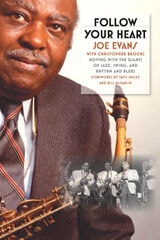
Follow Your Heart
Moving with the Giants of Jazz, Swing, and Rhythm and BluesJoe Evans with Christopher Brooks
University of Illinois Press, 2008
Detailing the fascinating career of Joe Evans, Follow Your Heart chronicles the nearly thirty years that he spent immersed in one of the most exciting times in African American music history. An alto saxophonist who between 1939 and 1965 performed with some of America's greatest musicians, including Louis Armstrong, Cab Calloway, Charlie Parker, Jay McShann, Andy Kirk, Billie Holiday, Bill "Bojangles" Robinson, Lionel Hampton, and Ivory Joe Hunter, Evans warmly recounts his wide range of experience in the music industry. Readers follow Evans from Pensacola, Florida, where he first learned to play, to such exotic destinations as Tel Aviv and Paris, which he visited while on tour with Lionel Hampton. Evans also comments on popular New York City venues used for shaping and producing black music, such as the Apollo Theater, the Savoy, Minton's Playhouse, and the Rhythm Club.
Revealing Evans as a master storyteller, Follow Your Heart describes his stints as a music executive, entrepreneur, and musician. Evans provides rich descriptions of jazz, swing, and rhythm and blues culture by highlighting his experiences promoting tracks to radio deejays under Ray Charles's Tangerine label and later writing, arranging, and producing hits for the Manhattans and the Pretenders. Leading numerous musical ventures that included a publishing company and several labels--Cee Jay Records (with Jack Rags), Revival, and Carnival Records--Evans remained active in the music industry even after he stopped performing regularly. As one of the few who enjoyed success as both performer and entrepreneur, he offers invaluable insight into race relations within the industry, the development of African American music and society from the 1920s to 1970s, and the music scene of the era.
Follow the Signs
Searching for Linda Goodman, America’s Forgotten Astrology QueenCourtney Ann LaFaive
University of Iowa Press, 2026
In 1973, Goodman’s daughter was found dead and the police declared it a suicide; Goodman believed otherwise. She spent years depleting her fortune, chasing down leads that might uncover the real truth about her beloved daughter’s death. Headlines criticized and discredited Goodman, ultimately overshadowing the revolutionary nature of her work.
Courtney Ann LaFaive first discovered Goodman’s books as a teenager. Reading her astrological wisdom decades after its heyday, LaFaive contemplates the redemption of Goodman as a literary and spiritual figure, all the while reckoning with her own impulsive forays into love and relationships. Follow the Signs asks what it means when facts become stranger than fiction and who we become when we must walk away from those we love.
Following Michigan's Ink Trails
Writing Michigan, Reading MichiganDave Dempsey
Michigan State University Press, 2027
Michigan is renowned for its natural beauty and automotive history, yet its rich literary heritage often goes unrecognized. This engaging and extensively researched book aims to change that by providing vivid portraits of both well-known and overlooked authors. It also offers an enjoyable tour through the state’s libraries and bookstores. The book takes readers on a fascinating journey across the back roads and highways of Michigan writing, showcasing the remarkable diversity of authors who have called the state home as well as those who have found it inspirational. It is perfect for anyone interested in reading, Michigan’s literary heritage, and its culture.

Following the Barn Quilt Trail
Suzi Parron
Ohio University Press, 2016
Suzi Parron, in cooperation with Donna Sue Groves, documented the massive public art project known as the barn quilt trail in her 2012 book Barn Quilts and the American Quilt Trail Movement. The first of these projects began in 2001, when Groves and community members created a series of twenty painted quilt squares in Adams County, Ohio. Since then, barn quilts have spread throughout forty-eight states and several Canadian provinces.
In Following the Barn Quilt Trail, Parron brings readers along as she, her new love, Glen, their dog Gracie, and their converted bus Ruby, leave the stationary life behind. Suzi and Glen follow the barn quilt trail through thirty states across thirteen thousand miles as Suzi collects the stories behind the brightly painted squares. With plentiful color photographs, this endearing hybrid of memoir and travelogue is for quilt lovers, Americana and folk art enthusiasts, or anyone up for a good story.
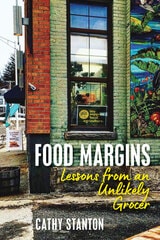
Food Margins
Lessons from an Unlikely GrocerCathy Stanton
University of Massachusetts Press, 2024
Winner of the 2025 New England Society Book Award for Specialty Titles
Winner of the 2024 Readable Feast Award for Social Consciousness
Named one of Food Tank's 20 Food Systems Reads that Will Inspire You this Summer
In a food industry shaped by the abundance, cheapness, and convenience that giant corporations can offer, small-scale ventures struggle to survive, as anthropologist Cathy Stanton discovered when she joined the effort to save a small food co-op in a former mill town in western Massachusetts. On the margins of the dominant system, Stanton found herself reckoning with its deep racial and class inequities, and learning that making real change requires a fierce commitment to community and a willingness to change herself as well.
Part memoir and part history lesson, Food Margins traces the tangled economic and political histories of the plantation, the factory, and the supermarket through the life of one New England town. Stanton tells a complex and compelling story of a rural community imagining and creating a viable alternative to the mainstream in a time of increasingly urgent need to build a more socially and ecologically just food system.
Food Margins
Lessons from an Unlikely GrocerCathy Stanton
University of Massachusetts Press, 2024
Winner of the 2025 New England Society Book Award for Specialty Titles
Winner of the 2024 Readable Feast Award for Social Consciousness
Named one of Food Tank's 20 Food Systems Reads that Will Inspire You this Summer
In a food industry shaped by the abundance, cheapness, and convenience that giant corporations can offer, small-scale ventures struggle to survive, as anthropologist Cathy Stanton discovered when she joined the effort to save a small food co-op in a former mill town in western Massachusetts. On the margins of the dominant system, Stanton found herself reckoning with its deep racial and class inequities, and learning that making real change requires a fierce commitment to community and a willingness to change herself as well.
Part memoir and part history lesson, Food Margins traces the tangled economic and political histories of the plantation, the factory, and the supermarket through the life of one New England town. Stanton tells a complex and compelling story of a rural community imagining and creating a viable alternative to the mainstream in a time of increasingly urgent need to build a more socially and ecologically just food system.
Fool for Love
F. Scott FitzgeraldScott Donaldson
University of Minnesota Press, 2012
Fool for Love is Scott Donaldson’s masterful biography of F. Scott Fitzgerald—written from a fresh and highly intimate perspective. Fool for Love follows Fitzgerald from his birthplace in St. Paul, Minnesota, to Princeton and upward into the highest reaches of literary and public success—and ultimately to Fitzgerald’s untimely death in Hollywood at the age of forty-four, broke and nearly forgotten. This engrossing, definitive study explores two classic Fitzgerald themes throughout—love and class—and the result is a striking portrayal of one of the twentieth century’s greatest writers, whose legacy and influence only continue to grow.
Foothold on a Hillside
Memories of a Southern IllinoisanCharless Caraway. Foreword by Paul Simon
Southern Illinois University Press, 1986
In a style reminiscent of the master storytellers of yore, Charless Caraway recounts the story of his life, as a man and a boy, on small farms in Saline and Jackson counties, particularly around Eldorado, Makanda, and Etherton Switch. He makes no bones about the hardships of those "old days," first helping his father eke out a living from the land, then scrambling for a living as a sharecropper and fruit picker, as he scrimped and saved for the day when he and his young wife, Bessie Mae Rowan Caraway, could buy a piece of land of their own.
The one-room school, the general store, the trips by wagon over roads that choked you in summer and swallowed you in winter, the home that burned: all are described in a matter-of-fact yet moving way. Many of the locations, buildings, and people are represented in equally unromanticized photographs from the family’s collection. Some of the stories and photos recall the common disasters of the frontier: drought, flood, and the tornado of 1925.
It is clear from these stories that each aspect of life exacted a price, but the Caraways paid that price without regret and rallied to go on their way. Charless and his family and friends fill this book with courage, strength, and an unshakable faith in the value of human endeavor.
Footloose in Farm Service
Autobiographical Recollections of John DickieMarjory Harper
Aberdeen University Press, 2013
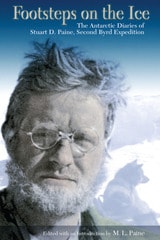
Footsteps on the Ice
The Antarctic Diaries of Stuart D. Paine, Second Byrd ExpeditionStuart D. Paine, Edited & Intro by M. L. Paine
University of Missouri Press, 2007
In 1933 Antarctica was essentially unexplored. Admiral Richard Byrd launched his Second Expedition to chart the southernmost continent, primarily relying on the muscle power of dog teams and their drivers who skied or ran beside the loaded sledges as they traveled. The life-threatening challenges of moving glaciers, invisible crevasses, and horrific storms compounded the difficulties of isolation, darkness, and the unimaginable cold that defined the men’s lives.
Stuart Paine was a dog driver, radio operator, and navigator on the fifty-six-man expedition, the bold and complex venture that is now famous for Byrd’s dramatic rescue from Bolling Advance Weather Base located 115 miles inland. Paine’s diaries represent the only published contemporary account written by a member of the Second Expedition. They reveal a behind-the-scenes look at the contentiousness surrounding the planned winter rescue of Byrd and offer unprecedented insights into the expedition’s internal dynamics.
Equally riveting is Paine’s breathtaking narrative of the fall and summer field operations as the field parties depended on their own resources in the face of interminable uncertainty and peril. Undertaking the longest and most hazardous sledging journey of the expedition, Paine guided the first American party from the edge of the Ross Sea more than seven hundred miles up the Ross Ice Shelf and the massive Thorne (Scott) Glacier to approach the South Pole. He and two other men skied more than fourteen hundred miles in eighty-eight days to explore and map part of Antarctica for the first time.
Footsteps on the Ice reveals the daily struggles, extreme personalities, and the matter-of-fact bravery of early explorers who are now fading into history. Detailing the men’s frustrations, annoyances, and questioning of their leader, Paine’s entries provide rare insight into how Byrd conducted his expeditions. Paine exposes the stresses of living under the snow in Little America during the four-month-long winter night, trapped in dim, crowded huts and black tunnels, while the men uneasily mulled over their leader’s isolation at Advance Base. The fates of Paine’s dogs, which provided some of his most difficult and rewarding experiences, are also described—his relationship with Jack, his lead dog, is an entrancing story in itself.
Featuring previously unpublished photographs and illustrations, Footsteps on the Ice documents the period in Antarctic exploration that bridged the “heroic era” and the modern age of mechanized travel. Depicting almost incomprehensible mental and physical duress and unhesitating courage, Paine’s tale is one of the most compelling stories in polar history, surpassing other accounts with its immediacy and adventure as it captures the majesty and mystery of the untouched Antarctic.