Results by title
28167 books match the query 'History' and 1092 start with f
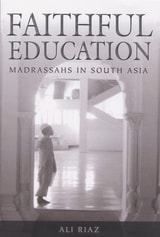
Faithful Education
Madrassahs in South AsiaRiaz, Ali
Rutgers University Press, 2008
Ali Riaz responds to these questions through an in-depth examination of the madraassahs in Pakistan, Bangladesh, and India. In Faithful Education, he examines these institutions and their roles in relation to current international politics.
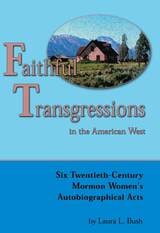
Faithful Transgressions In The American West
Six Twentieth-Century Mormon Women's Autobiographical ActsLaura L. Bush
Utah State University Press, 2004
The central issue Bush finds in these works is how their authors have dealt with the authority of Mormon Church leaders. As she puts it in her preface, "I use the phrase 'faithful transgression' to describe moments in the texts when each writer, explicitly or implicitly, commits herself in writing to trust her own ideas and authority over official religious authority while also conceiving of and depicting herself to be a 'faithful' member of the Church." Bush recognizes her book as her own act of faithful transgression. Writing it involved wrestling, she states, "with my own deeply ingrained religious beliefs and my equally compelling education in feminist theories that mean to liberate and empower women."
Faithful Transgressions examines a remarkable group of authors and their highly readable and entertaining books. In producing the first significant book-length study of Mormon women's autobiographical writing, Bush rides a wave of memoir publishing and academic interest in autobiography and other life narratives. As she elucidates these works in relation to the religious tradition that played a major role in shaping them, she not only positions them in relation to feminist theory and current work on women's life writings but ties them to the long literary tradition of spiritual autobiography.

Faithful Translators
Authorship, Gender, and Religion in Early Modern EnglandJaime Goodrich
Northwestern University Press, 2014

Faithful Unto Death
Becky Thacker
University of Michigan Press, 2011
Benzonia, Michigan, 1894: a sleepy Congregationalist community, dedicated to the education of hardworking and virtuous young people of both sexes and all races. Anna Spencer Thacker is the daughter of missionaries, a faithful wife, and mother of five, pious to a fault. She is suddenly stricken with a mysterious ailment that soon proves fatal. Was it truly an unfortunate illness? Or was it murder—or suicide?
Taking a true story of a murder in her own family, Becky Thacker has crafted a historical mystery novel whose cast of characters rapidly builds, including William Henry Thacker as deputy sheriff, deacon in his church, a kind man . . . but perhaps just a trifle too fond of the attractive young housekeeper; and Charlotte Spencer, the pretty missionary sister, almost saintly in her efforts to bring Jesus to the Armenians in the mountains of Turkey, though a bit prone to exaggeration. She could be a suspect—or the next target.
The children are Roy, 19: musical, a good student, but a little too wild for Benzonia; Ralph, 17: trying to shoulder the responsibilities of farm and family; and Lottie, 14: a talented young artist trying to take care of young Will and Josie. Faithful Unto Death provides a window into the daily lives of small-town Michiganders at the turn of the century wrapped up in a riveting whodunit.
Cover image by Hemera/Thinkstock

Faithful to Our Tasks
Arkansas's Women and the Great WarElizabeth Griffin Hill
Butler Center for Arkansas Studies, 2017
The United States was a vital, if brief, participant in World War I—spending only eighteen months fighting in “the Great War.” But that short span marked an era of tremendous change for women as they moved out of the Victorian nineteenth century and came into their own as social activists during the early years of the twentieth century.
Faithful to Our Tasks provides the context for women’s actions and reactions during the war. It incorporates the mitigating factors and experiences of American women in general and compares Arkansas women’s Progressive Era actions with those of other southern women. The contextual underpinnings provide a rich tapestry as we attempt to understand our grandmothers and great-grandmothers’ responses to wartime needs.
Primary records of the World War I era, accessed in archives in central Arkansas, reveal that the state’s organized women were suddenly faced with a devastating world war for which they were expected to make a significant contribution of time and effort. “Club women” were already tackling myriad problems to be found in abundance within a poor, rural state as they worked for better schools, a centralized education system, children’s well-being, and improved medical care.
Under wartime conditions, their contributions were magnified as the women followed a barrage of directions from Washington, DC, within a disconcerting display of micromanagement by the federal government. The important takeaway, however, is that the Great War created a scenario in which Arkansas’s organized women—as well as women throughout the nation—would step forward and excel as men and governments stood up and took notice. After the war, these same organized women won the right to vote.
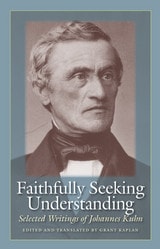
Faithfully Seeking Understanding
Selected Writings of Johannes KuhnJohannes Kuhn
Catholic University of America Press, 2009

Faking Liberties
Religious Freedom in American-Occupied JapanJolyon Baraka Thomas
University of Chicago Press, 2019
Through a fresh analysis of pre-war Japanese law, Jolyon Baraka Thomas demonstrates that the occupiers’ triumphant narrative obscured salient Japanese political debates about religious freedom. Indeed, Thomas reveals that American occupiers also vehemently disagreed about the topic. By reconstructing these vibrant debates, Faking Liberties unsettles any notion of American authorship and imposition of religious freedom. Instead, Thomas shows that, during the Occupation, a dialogue about freedom of religion ensued that constructed a new global set of political norms that continue to form policies today.
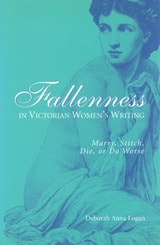
Fallenness in Victorian Women's Writing
Marry, Stitch, Die, Or Do WorseDeborah Anna Logan
University of Missouri Press, 1998
The Angel-in-the-House is an ideal commonly used to define sexual standards of the Victorian Age. Although widely considered to be the cultural "norm," the Victorian Angel, revered for her morality, domestic virtue, and dedication to the family, is more frequently depicted in the literature of the time as an anomaly. In fact, a primary concern of Victorian literature appears to be the many exceptions to this unattainable ideal, which, according to the period's madonna-or-harlot polarity, casts these exceptions as fallen women. Deborah Anna Logan presents an unusual study of this image of fallenness in Victorian literature, focusing on the links among angelic ideology, sexuality, and, more important, social deviance.
Fallenness, according to Logan, does not refer simply to women who have sexually strayed from morality; besides prostitutes, the ranks of the fallen include unmarried mothers, needlewomen, alcoholics, the insane, the childless, the anorexic, slaves, and harem women. All of these women are presented as fallen because they fail to conform to sexual and social norms. In some cases, economic need was responsible for women's failure to uphold the ideals of domesticity and motherhood that were so revered in nineteenth- century society. But other examples illustrate the power of angelic ideology to construct deviancy even out of nonsexual behaviors.
Logan's study is distinguished by its exclusive focus on women writers, including Charlotte Brontë, George Eliot, Elizabeth Gaskell, Harriet Martineau, Elizabeth Barrett Browning, Florence Nightingale, Sarah Grand, and Mary Prince. Logan utilizes primary texts from these Victorian writers as well as contemporary critics such as Catherine Gallagher and Elaine Showalter to provide the background on social factors that contributed to the construction of fallen-woman discourse. Examining novels, short stories, poetry, and travel journals, Logan successfully demonstrates the rich links between these writers and their fallen characters--links in which, for women, even the act of writing becomes a type of fallenness.
Fallenness in Victorian Women's Writing is a significant and original contribution to the study of literature. Logan's thoroughly researched and attractively presented book will be of special interest to students of Victorian and women's studies, as well as to the general reader.
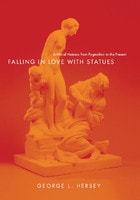
Falling in Love with Statues
Artificial Humans from Pygmalion to the PresentGeorge L. Hersey
University of Chicago Press, 2009
Hersey’s history of statue love begins in Cyprus, home of the legendary sculptor Pygmalion, who famously grew enamored of his own creation. Examining the island’s prehistoric images of Aphrodite—the love goddess who brought Pygmalion’s sculpture to life—Hersey traces the origins of statue love back to the Cypriot followers who adored her terra-cotta likenesses. He goes on to explore ideas about human replicas in the works of Empedocles, Aristotle, Lucretius, and Ovid, whose definitive account of the Pygmalion myth introduced the notion that statues have the potential to induce physical responses in their viewers. Finding avatars of Ovid’s living image in everything from pagan idols and early Christian statuary to eighteenth-century painting to modern action figures and marionettes, Hersey concludes by investigating the concern that these automata will eventually replace humans.
In the process, he narrates a powerful history of artificial life at a moment when—with the development of robot soldiers, ever more sophisticated genetic engineering, and a continually expanding digital universe—it seems more real than ever.

Fallout Shelter
Designing for Civil Defense in the Cold WarDavid Monteyne
University of Minnesota Press, 2011
In 1961, reacting to U.S. government plans to survey, design, and build fallout shelters, the president of the American Institute of Architects, Philip Will, told the organization’s members that “all practicing architects should prepare themselves to render this vital service to the nation and to their clients.” In an era of nuclear weapons, he argued, architectural expertise could “preserve us from decimation.”
In Fallout Shelter, David Monteyne traces the partnership that developed between architects and civil defense authorities during the 1950s and 1960s. Officials in the federal government tasked with protecting American citizens and communities in the event of a nuclear attack relied on architects and urban planners to demonstrate the importance and efficacy of both purpose-built and ad hoc fallout shelters. For architects who participated in this federal effort, their involvement in the national security apparatus granted them expert status in the Cold War. Neither the civil defense bureaucracy nor the architectural profession was monolithic, however, and Monteyne shows that architecture for civil defense was a contested and often inconsistent project, reflecting specific assumptions about race, gender, class, and power.
Despite official rhetoric, civil defense planning in the United States was, ultimately, a failure due to a lack of federal funding, contradictions and ambiguities in fallout shelter design, and growing resistance to its political and cultural implications. Yet the partnership between architecture and civil defense, Monteyne argues, helped guide professional design practice and influenced the perception and use of urban and suburban spaces. One result was a much-maligned bunker architecture, which was not so much a particular style as a philosophy of building and urbanism that shifted focus from nuclear annihilation to urban unrest.
Fallout
Nuclear Diplomacy in an Age of Global FractureGrégoire Mallard
University of Chicago Press, 2014
In Fallout, Grégoire Mallard seeks to understand why some nations agreed to these limitations of their sovereign will—and why others decidedly did not. He builds his investigation around the 1968 signing of the Nuclear Nonproliferation Treaty (NPT), which, though binding in nature, wasn’t adhered to consistently by all signatory nations. Mallard looks at Europe’s observance of treaty rules in contrast to the three holdouts in the global nonproliferation regime: Israel, India, and Pakistan. He seeks to find reasons for these discrepancies, and makes the compelling case that who wrote the treaty and how the rules were written—whether transparently, ambiguously, or opaquely—had major significance in how the rules were interpreted and whether they were then followed or dismissed as regimes changed. In honing in on this important piece of the story, Mallard not only provides a new perspective on our diplomatic history, but, more significantly, draws important conclusions about potential conditions that could facilitate the inclusion of the remaining NPT holdouts. Fallout is an important and timely book sure to be of interest to policy makers, activists, and concerned citizens alike.
False Dawn
The New Deal and the Promise of Recovery, 1933–1947George Selgin
University of Chicago Press, 2025
CHOSEN AS ONE OF THE WALL STREET JOURNAL’S 10 BEST BOOKS OF 2025
A definitive history of the United States’ recovery from the Great Depression—and the New Deal's true part in it.
FDR’s New Deal has long enjoyed a special place in American history and policy—both because it redefined the government’s fundamental responsibilities and because Roosevelt’s “bold experimentation” represented a type of policymaking many would like to see repeated.
But “the thing about bold experiments,” economist George Selgin reminds us, “is that they often fail.” In False Dawn Selgin draws on both contemporary sources and numerous studies by economic historians to show that, although steps taken during the Roosevelt administration’s first days raised hopes of a speedy recovery from the Great Depression, instead of fulfilling those hopes, subsequent New Deal policies proved so counterproductive that over seventeen percent of American workers—more than the peak unemployment rate during the COVID-19 crisis—were still either unemployed or on work relief six years later.
By distinguishing the New Deal’s successes from its failures, and explaining how the U.S. finally managed to lay the specter of mass unemployment to rest, Selgin draws salient lessons for dealing with future recessions.
False Dawn
The Rise and Decline of Public Health NursingKaren Buhler-Wilkerson
Rutgers University Press, 2021
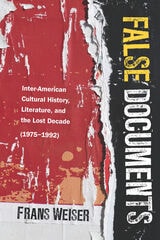
False Documents
Inter-American Cultural History, Literature, and the Lost Decade (1975–1992)Frans Weiser
The Ohio State University Press, 2020
After deconstructing economic accounts of the “two Americas" model of the hemisphere, including the lost decade (1981–1992) and the “end of history” (1975–1992), Weiser considers six case studies during the same period that reach very different conclusions by drawing on cultural history, including works by Tomás Eloy Martínez, Laura Antillano, Ana Maria Machado, Silviano Santiago, John Updike, and Jay Cantor. In order to expose how governments controlled and misrepresented recent events, these writers created false documents, or fake historical texts, that presented themselves as legitimate eyewitness accounts or archival documents. Weiser establishes how this alternative to postmodern irony more effectively galvanized citizen responses. As the first book to contextualize the parallel, hemispheric evolutions of postwar literary criticism and cultural historiography, False Documents responds to the methodological impasse between Latin American and American studies as well as the antagonism between history and literature, arguing that collaboration and synthesis are particularly vital at a moment when the humanities is increasingly under attack.
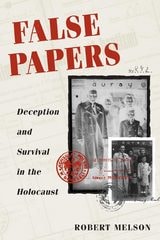
False Papers
DECEPTION AND SURVIVAL IN THE HOLOCAUSTRobert Melson
University of Illinois Press, 2000
Armed with their new lives and their new pasts, the Count and Countess Zamojski and their son, Count Bobi, took shelter in the very shadow of the Nazi machine, hiding day after day in plain sight behind a façade of elegant good manners and cultivated self-assurance, even arrogance: "you had to shout [the Gestapo] down or they would kill you." Melson's father took advantage of his flawless German to build a lucrative business career while working for a German businessman of the Schindler type. The Zamojskis acquired beautiful homes in the German quarter of Krakow and in Prague, where they had maids and entertained Nazi officials. Their masquerade enabled them to save not only themselves and their son but also an uncle and three Jewish women, one of whom became part of the family.
False Papers is a candid, sometimes funny account of a stylish couple who dazzled the Nazis with flamboyant theatrics then gradually, tragically fell apart after the war. Particularly arresting is Melson himself, who was just a child when his family embarked on their grand charade. A resilient boy who had to negotiate bewildering shifts of identify–-now Catholic, now Jewish; now European aristocrat, now penniless refugee who becomes an American college student--Melson closes each chapter of his parents' recollections with his childhood perceptions of the same events.
Against the totalizing, flattening, unrelenting Nazi behemoth, Melson says, "I wished to pit our very bodies, our quirky, sexy, funny, wicked, frail, ordinary selves." By balancing the adults' maneuvering with the perspective of a child, Melson crafts an account of the Holocaust that is at once poignant, entertaining, and troubling.
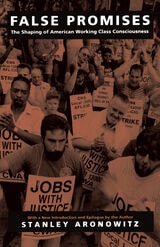
False Promises
The Shaping of American Working Class ConsciousnessStanley Aronowitz
Duke University Press, 1992
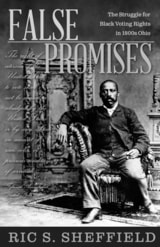
False Promises
The Struggle for Black Voting Rights in 1800s OhioRic S. Sheffield
Ohio University Press, 0
Brings to life the struggle for Black suffrage in nineteenth-century Ohio
In False Promises, the fight for Black voting rights in Ohio comes alive through narratives of men of color who defied the state’s nineteenth-century restrictions on suffrage. Though ratification of the Fifteenth Amendment ostensibly extended the franchise, state election laws still forced men of color into a perilous struggle for full citizenship. Ric S. Sheffield depicts their courage and determination, revealing their humanity through stories of sacrifice, resistance, and hope.
Drawing on Saidiya Hartman’s concept of critical fabulation, Sheffield weaves together historical records with imaginative reconstructions of dialogue, setting, and descriptive elements beyond the dusty courthouse pages. Grounded in archival evidence yet reimagined to fill in the silences, these stories recount the lived experiences of those who risked everything to exercise their right to vote.
False Promises also connects these historical battles to the present, illustrating how voter-suppression tactics in today’s Ohio have roots in the racial exclusions of the nineteenth century. By exposing the enduring legacy of white supremacist policies, the book challenges the widespread misconception that racial disenfranchisement was solely a southern problem. Ohio’s complex racial history—noted for its role in the Underground Railroad but also for its repressive Black Laws—also includes a fierce and ongoing struggle over the right to vote. Through compelling storytelling, historical analysis, and a reclamation of voices lost to history, False Promises urges readers to reconsider their understanding of democracy and the right to vote.
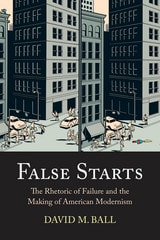
False Starts
The Rhetoric of Failure and the Making of American ModernismDavid M. Ball
Northwestern University Press, 2014
Fame, Money, and Power
The Rise of Peisistratos and "Democratic" Tyranny at AthensB. M. Lavelle
University of Michigan Press, 2005
--David Tandy, University of Tennessee
"Well researched and engaging, [Fame, Money, and Power] painstakingly builds [its] case for how the various phases of Peisistratos's career developed."
--Tony Podlecki, University of British Columbia
The Athenian "golden age" occurred in the fifth century B.C.E. and was attributed to their great achievements in art, literature, science, and philosophy. However, the most important achievement of the time was the political movement from tyranny to democracy. Though tyranny is thought to be democracy's opposite and deadly enemy, that is not always the case. In Fame, Money, and Power, Brian Lavelle states that the perceived polarity between tyranny and democracy does not reflect the truth in this instance.
The career of the tyrant Peisistratos resembles the careers and successes of early democratic soldier-politicians. As with any democratic political system, Peisistratos' governance depended upon the willingness of the Athenians who conceded governance to him. This book attempts to show how the rise of Peisistratos fits into an essentially democratic system already entrenched at Athens in the earlier sixth century B.C.E.
Emerging from the apparent backwater of eastern Attika, Peisistratos led the Athenians to victory over their neighbors, the Megarians, in a long, drawn out war. That victory earned him great popularity from the Athenians and propelled him along the road to monarchy. Yet, political success at Athens, even as Solon implies in his poems, depended upon the enrichment of the Athenian d?mos, not just fame and popularity. Peisistratos tried and failed two times to "root" his tyranny, his failures owing to a lack of sufficient money with which to appease the demos. Exiled from Athens, he spent the next ten years amassing money to enrich the Athenians and power to overcome his enemies. He then sustained his rule by grasping the realities of Athenian politics. Peisistratos' tyrannies were partnerships with the d?mos, the first two of which failed. His final formula for success, securing more money than his opponents possessed and then more resources for enriching the d?mos, provided the model for future democratic politicians of Athens who wanted to obtain and keep power in fifth-century Athens.
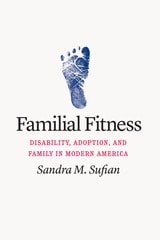
Familial Fitness
Disability, Adoption, and Family in Modern AmericaSandra M. Sufian
University of Chicago Press, 2022
Disability and child welfare, together and apart, are major concerns in American society. Today, about 125,000 children in foster care are eligible and waiting for adoption, and while many children wait more than two years to be adopted, children with disabilities wait even longer. In Familial Fitness, Sandra M. Sufian uncovers how disability operates as a fundamental category in the making of the American family, tracing major shifts in policy, practice, and attitudes about the adoptability of disabled children over the course of the twentieth century.
Chronicling the long, complex history of disability, Familial Fitness explores how notions and practices of adoption have—and haven’t—accommodated disability, and how the language of risk enters into that complicated relationship. We see how the field of adoption moved from widely excluding children with disabilities in the early twentieth century to partially including them at its close. As Sufian traces this historical process, she examines the forces that shaped, and continue to shape, access to the social institution of family and invites readers to rethink the meaning of family itself.
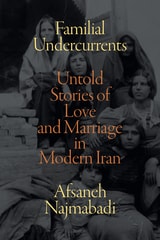
Familial Undercurrents
Untold Stories of Love and Marriage in Modern IranAfsaneh Najmabadi
Duke University Press, 2022
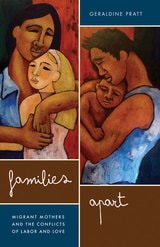
Families Apart
Migrant Mothers and the Conflicts of Labor and LoveGeraldine Pratt
University of Minnesota Press, 2012
In a developing nation like the Philippines, many mothers provide for their families by traveling to a foreign country to care for someone else’s. Families Apart focuses on Filipino overseas workers in Canada to reveal what such arrangements mean for families on both sides of the global divide.
The outcome of Geraldine Pratt’s collaboration with the Philippine Women Centre of British Columbia, this study documents the difficulties of family separation and the problems that children have when they reunite with their mothers in Vancouver. Aimed at those who have lived this experience, those who directly benefit from it, and those who simply stand by and watch, Families Apart shows how Filipino migrant domestic workers—often mothers themselves—are caught between competing neoliberal policies of sending and receiving countries and how, rather than paying rich returns, their ambitions as migrants often result in social and economic exclusion for themselves and for their children. This argument takes shape as an open-ended series of encounters, moving between a singular academic voice and the “we” of various research collaborations, between Vancouver and the Philippines, and between genres of “evidence-based” social scientific research, personal testimony, theatrical performance, and nonfictional narrative writing.
Through these experiments with different modes of storytelling, Pratt seeks to transform frameworks of perception, to create and collect sympathetic witnesses—in short, to promote a wide-ranging public discussion and debate about a massive worldwide shift in family (and nonfamily) relations of intimacy and care.
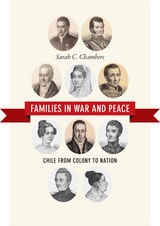
Families in War and Peace
Chile from Colony to NationSarah C. Chambers
Duke University Press, 2015

Families, Lovers, and their Letters
Italian Postwar Migration to CanadaSonia Cancian
University of Manitoba Press, 2010
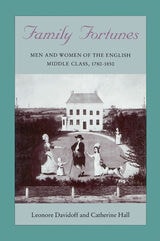
Family Fortunes
Men and Women of the English Middle Class, 1780-1850Leonore Davidoff and Catherine Hall
University of Chicago Press, 1987
"The book explores how the middle class constructed its own institutions, material culture and values during the industrial revolution, looking at two settings—urban manufacturing Birmingham and rural Essex—both centers of active capitalist development. The use of sources is dazzling: family business records, architectural designs, diaries, wills and trusts, newspapers, prescriptive literature, sermons, manuscript census tracts, the papers of philanthropic societies, popular fiction, and poetry.
"Family Fortunes occupies a place beside Mary Ryan's The Cradle of the Middle Class and Suzanne Lebsock's Free Women of Petersburg. It provides scholars with a definitive study of the middle class in England, and facilitates a comparative perspective on the history of middle-class women, property, and the family."—Judith Walkowitz, Johns Hopkins University
Family Matters
James Dobson and Focus on the Family’s Crusade for the Christian HomeHilde Løvdal Stephens
University of Alabama Press, 2019
James Dobson—child psychologist, author, radio personality, and founder of the Christian conservative organization Focus on the Family—published his first book, Dare to Discipline, in 1970 and quickly became the go-to family expert for evangelical parents across the United States as American evangelicalism rose as a major political force. The family expert became a leading voice in the Reagan Revolution, and played a role in making American evangelicals even more firmly associated with the Republican Party. Dobson’s principle beliefs are that the family is the center of Christian America and that the traditional family must be defended from perceived threats such as gay rights, feminism, abortion, and the secularization of public schools. Dobson and Focus on the Family dominated Christian media through print, radio, and online venues, and their message reached millions of American evangelical households, shaping the cultural sensibilities and political attitudes of evangelical families throughout the culture wars from the 1980s into the 2000s.
Family Matters: James Dobson and Focus on the Family’s Crusade for the Christian Home by Hilde Løvdal Stephens is an insightful history and analysis of James Dobson’s rise to fame, effect on American evangelical culture, and subsequent descent from relevance. Extensively researched, Løvdal Stephens scoured through Dobson’s books, articles, and other materials published by Focus on the Family in order to explore how evangelicals defined and defended the traditional family as an ideal and as a symbol in an ever-changing world.
By contextualizing the history of Dobson’s reign, Løvdal Stephens’s discerning analysis fills an important gap in our understandings of the politics and culture of late twentieth-century conservative Christianity in the United States. She explores complex topics ranging from Dobson’s celebration of what he believes are timeless biblical values, such as maintaining strict and defined gender roles, to the ways Dobson and Focus on the Family balanced their basic ideals with real everyday lives of average American evangelical families, facing the realities of divorce, working mothers, and other perceived threats to the traditional family.

Family Practice Stories
Memories, Reflections, and Stories of Hoosier Family Doctors of the Mid-Twentieth CenturyRichard Feldman
Indiana Historical Society Press, 2013
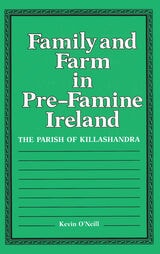
Family and Farm in Pre-Famine Ireland
The Parish of KillashandraKevin O'Neill
University of Wisconsin Press, 1985
Now available in paperback, Kevin O’Neill’s highly praised study of rural Ireland in the years leading up to the "Great Hunger" of the 1840s explicates the social, economic, and demographic conditions of the era. He argues that overpopulation and deprivation were inextricably linked to a third variable—the rapid economic development of rural Ireland that was shaped by British interests.
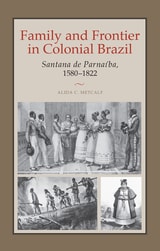
Family and Frontier in Colonial Brazil
Santana de Parnaíba, 1580–1822By Alida C. Metcalf
University of Texas Press, 2005
Family and Frontier in Colonial Brazil was originally published by the University of California Press in 1992. Alida Metcalf has written a new preface for this first paperback edition.
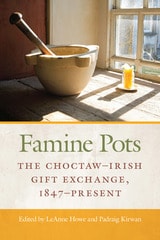
Famine Pots
The Choctaw–Irish Gift Exchange, 1847–PresentLeAnne Howe
Michigan State University Press, 2020
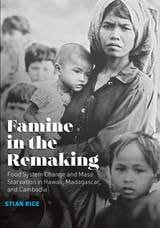
Famine in the Remaking
Food System Change and Mass Starvation in Hawaii, Madagascar, and CambodiaStian Rice
West Virginia University Press, 2020
Famine in the Remaking examines the relationship between the reorganization of food systems and large-scale food crises through a comparative historical analysis of three famines: Hawaii in the 1820s, Madagascar in the 1920s, and Cambodia in the 1970s. This examination identifies the structural transformations—that is, changes to the relationships between producers and consumers—that make food systems more vulnerable to failure. Moving beyond the economic and political explanations for food crisis that have dominated the literature, Stian Rice emphasizes important socioecological interactions, developing a framework for crisis evolution that identifies two distinct temporal phases and five different types of causal mechanisms involved in food system failure. His framework contributes to current work in famine prevention and, animated by a commitment to social justice, offers the potential for early intervention in emerging food crises.
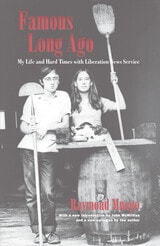
Famous Long Ago
My Life and Hard Times with Liberation News ServiceRaymond Mungo
University of Massachusetts Press, 2012
Originally published in 1970, Raymond Mungo's picaresque account of his adventures with Liberation News Service in the wild years of 1967 and 1968 has been variously described as youthful, passionate, lyrical, demented, and an iconic symbol of the sixties counterculture. A review in The Nation described it as “hip Huck Finn.”
A college editor at the height of the Vietnam War, Mungo found himself smack in the middle of a mad swirl of activism and dissent, vigorously protesting everything from the draft to abortion laws to the university itself. Then he connected with Marshall Bloom to cofound LNS in Washington, D.C., as a news service catering to the burgeoning underground press. One thing led to another, until LNS, like so many other radical organizations, eventually disintegrated into violently warring factions. Mungo's memoir tracks its development and destruction with wicked humor and literary panache.
In an introduction to this new edition, John McMillian discusses the enduring appeal of Famous Long Ago and situates it within its broader historical context, while the author provides his own retrospective take in a new afterword.

Fan Phenomena
Game of ThronesEdited by Kavita Mudan Finn
Intellect Books, 2017
With the seventh season of the HBO series in production, Game of Thrones has been nominated for multiple awards, its cast has been catapulted to celebrity, and references to it proliferate throughout popular culture. Often positioned as the grittier antithesis to J. R. R. Tolkien’s Lord of the Rings, Martin’s narrative focuses on the darker side of chivalry and heroism, stripping away these higher ideals to reveal the greed, amorality, and lust for power underpinning them.
Fan Phenomena: Game of Thrones is an exciting new addition to the Intellect series, bringing together academics and fans of Martin’s universe to consider not just the content of the books and HBO series, but fan responses to both. From trivia nights dedicated to minutiae to forums speculating on plot twists to academics trying to make sense of the bizarre climate of Westeros, everyone is talking about Game of Thrones. Edited by Kavita Mudan Finn, the book focuses on the communities created by the books and television series and how these communities envision themselves as consumers, critics, and even creators of fanworks in a wide variety of media, including fiction, art, fancasting, and cosplay.
Fanatical Schemes
Proslavery Rhetoric and the Tragedy of ConsensusPatricia Roberts-Miller
University of Alabama Press, 2009
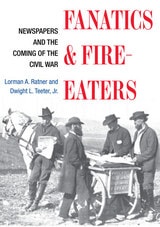
Fanatics and Fire-eaters
Newspapers and the Coming of the Civil WarLorman A. Ratner and Dwight L. Teeter Jr.
University of Illinois Press, 2003
In the troubled years leading up to the Civil War, newspapers in the North and South presented the arguments for and against slavery, debated the right to secede, and in general denounced opposing viewpoints with imagination and vigor. At the same time, new technologies like railroads and the telegraph lent the debates an immediacy that both enflamed emotions and brought the slavery issue into every home.
Lorman A. Ratner and Dwight L. Teeter Jr. look at the power of America's fast-growing media to influence perception and the course of events prior to the Civil War. Drawing on newspaper accounts from across the United States, the authors look at how the media covered—and the public reacted to—major events like the Dred Scott decision, John Brown's raid on Harper's Ferry, and the election of 1860. They find not only North-South disputes about the institution of slavery but differing visions of the republic itself—and which region was the true heir to the legacy of the American Revolution.

Fangirls
Scenes from Modern Music CultureBy Hannah Ewens
University of Texas Press, 2020
"To be a fan is to scream alone together." This is the discovery Hannah Ewens makes in Fangirls: how music fandom is at once a journey of self-definition and a conduit for connection and camaraderie; how it is both complicated and empowering; and how now, more than ever, fandoms composed of girls and young queer people create cultures that shape and change an entire industry.
This book is about what it means to be a fangirl.
Speaking to hundreds of fans from the UK, US, Europe, and Japan, Ewens tells the story of music fandom using its own voices, recounting previously untold or glossed-over scenes from modern pop and rock music history. In doing so, she uncovers the importance of fan devotion: how Ariana Grande represents both tragedy and resilience to her followers, or what it means to meet an artist like Lady Gaga in person. From One Directioners, to members of the Beyhive, to the author's own fandom experiences, this book reclaims the "fangirl" label for its young members, celebrating their purpose, their power, and, most of all, their passion for the music they love.
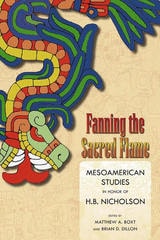
Fanning the Sacred Flame
Mesoamerican Studies in Honor of H. B. NicholsonMatthew A. Boxt
University Press of Colorado, 2020
Covering all of Mesoamerica across all time periods, contributors include Patricia R. Anawalt, Alfredo López Austin, Anthony Aveni, Robert M. Carmack, David C. Grove, Richard D. Hansen, Leonardo López Luján, Kevin Terraciano, and more. Eloise Quiñones Keber provides a thorough biographical sketch, detailing Nicholson's academic and professional journey. Publication supported, in part, by The Patterson Foundation and several private donors.
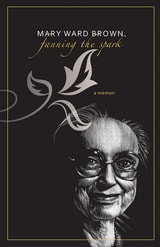
Fanning the Spark
A MemoirMary Ward Brown
University of Alabama Press, 2009
Where ordinary lives kindle extraordinary reckonings.
In 1986, after years of publishing stories in literary magazines and periodicals, Mary Ward Brown published her first book, the story collection Tongues of Flame. It soon received regional and national attention, and the following year won the PEN/Hemingway Award for fiction. Mary Ward Brown was sixty-nine years old. Though she would go on to write and publish many more stories and a well-received second collection, It Wasn’t All Dancing, Mary Ward Brown’s late acclaim hardly hints at the rich and varied life that prepared the way for her success.
Fanning the Spark is the story of her life as a writer—her upbringing in rural Alabama; the joys of college, marriage, and motherhood; the sorrows of becoming a widow; and a lifelong devotion to writing, writers, and literature, and the company of those who shared those loves, nurturing and feeding her interior life in the face of many challenges, losses, and obstacles, both emotional and material.
Here, in prose every bit as eloquent, evocative, and incisive as her stories, are her remembrances of loved ones; her letters fraught with worry to her son in Vietnam; periods of emotional isolation and unbidden silence; her invaluable friendships with renowned writers, editors, and agents; her love of community and place; and immeasurable delight with every award, speech, and public reading, the many recognitions she has garnered late in life. Above all, it is the story of the competing demands of art and of life, the constant struggle between her need to write and the practicalities of family, duty, and day to day living.
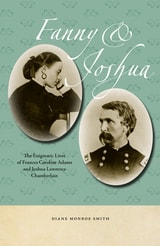
Fanny & Joshua
The Enigmatic Lives of Frances Caroline Adams and Joshua Lawrence ChamberlainDiane Monroe Smith
University Press of New England, 2013

Fanny Fern
An Independent WomanWarren, Joyce W
Rutgers University Press, 1992
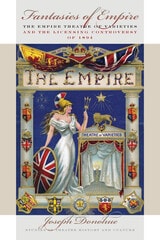
Fantasies of Empire
The Empire Theatre of Varieties and the Licensing Controversy of 1894Joseph Donohue
University of Iowa Press, 2005
Fantasies of Empire is the first book to recount in full the story of the Empire licensing controversy in all its captivating detail. Contemporaneous accounts are interwoven with Donohue’s identification and analysis of the larger issues raised: What the controversy reveals about contemporary sexual and social relations, what light it sheds on opposing views regarding the place of art and entertainment in modern society, and what it says about the pervasive effect of British imperialism on society’s behavior in the later years of Queen Victoria’s reign. Donohue connects the controversy to one of the most interesting developments in the history of modern theatre, the simultaneous emergence of a more sophisticated, varied, and moneyed audience and a municipal government insistent on its right to control and regulate that audience’s social and cultural character and even its moral behavior.
Rich in illustrations and entertainingly written, Fantasies of Empire will appeal to theatre, dance, and social historians and to students of popular entertainment, the Victorian period, urban studies, gender studies, leisure studies, and the social history of architecture.
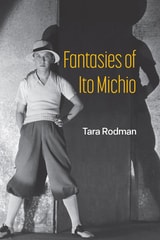
Fantasies of Ito Michio
Tara Rodman
University of Michigan Press, 2024
Winner of the 2025 Dance Studies Association Oscar Brockett Book Prize
Born in Japan and trained in Germany, dancer and choreographer Ito Michio (1893–1961) achieved prominence in London before moving to the U.S. in 1916 and building a career as an internationally acclaimed artist. During World War II, Ito was interned for two years, and then repatriated to Japan, where he contributed to imperial war efforts by creating propaganda performances and performing revues for the occupying Allied Forces in Tokyo. Throughout, Ito continually invented stories of voyages made, artists befriended, performances seen, and political activities carried out—stories later dismissed as false.
Fantasies of Ito Michio argues that these invented stories, unrealized projects, and questionable political affiliations are as fundamental to Ito’s career as his ‘real’ activities, helping us understand how he sustained himself across experiences of racialization, imperialism, war, and internment. Tara Rodman reveals a narrative of Ito’s life that foregrounds the fabricated and overlooked to highlight his involvement with Japanese artists, such as Yamada Kosaku and Ishii Baku, and global modernist movements. Rodman offers “fantasy” as a rubric for understanding how individuals such as Ito sustain themselves in periods of violent disruption and as a scholarly methodology for engaging the past.
Fantasies of Neglect
Imagining the Urban Child in American Film and FictionPamela Robertson Wojcik
Rutgers University Press, 2016

Fantasies of Nina Simone
Jordan Alexander Stein
Duke University Press, 2024

Fantasy, Fashion, and Affection
Editions of Robert Herrick's Poetry for the Common Reader, 1810–1968Jay Gertzman
University of Wisconsin Press, 1986

Far Afield
French Anthropology between Science and LiteratureVincent Debaene
University of Chicago Press, 2014
The relationship between anthropology and literature in France is one of careful curiosity. Literary writers are wary about anthropologists’ scientific austerity but intrigued by the objects they collect and the issues they raise, while anthropologists claim to be scientists but at the same time are deeply concerned with writing and representational practices. Debaene elucidates the richness that this curiosity fosters and the diverse range of writings it has produced, from Proustian memoirs to proto-surrealist diaries. In the end he offers a fascinating intellectual history, one that is itself located precisely where science and literature meet.

Far East, Down South
Asians in the American SouthEdited by Raymond A. Mohl, John E. Van Sant, and Chizuru Saeki
University of Alabama Press, 2016
Uncovering the overlooked histories of Asians in the American South.
In sharp contrast to the “melting pot” reputation of the United States, the American South—with its history of slavery, Jim Crow, and the civil rights movement—has been perceived in stark and simplistic demographic terms. In Far East, Down South, editors Raymond A. Mohl, John E. Van Sant, and Chizuru Saeki provide a collection of essential essays that restores and explores an overlooked part of the South’s story—that of Asian immigration to the region.
These essays form a comprehensive overview of key episodes and issues in the history of Asian immigrants to the South. During Reconstruction, southern entrepreneurs experimented with the replacement of slave labor with Chinese workers. As in the West, Chinese laborers played a role in the development of railroads. Japanese farmers also played a more widespread role than is usually believed. Filipino sailors recruited by the US Navy in the early decades of the twentieth century often settled with their families in the vicinity of naval ports such as Corpus Christi, Biloxi, and Pensacola. Internment camps brought Japanese Americans to Arkansas. Marriages between American servicemen and Japanese, Korean, Filipina, Vietnamese, and nationals in other theaters of war created many thousands of blended families in the South. In recent decades, the South is the destination of internal immigration as Asian Americans spread out from immigrant enclaves in West Coast and Northeast urban areas.
Taken together, the book’s essays document numerous fascinating themes: the historic presence of Asians in the South dating back to the mid-nineteenth century; the sources of numerous waves of contemporary Asian immigration to the South; and the steady spread of Asians out from the coastal port cities. Far East, Down South adds a vital new dimension to popular understanding of southern history.
Far Out
Countercultural Seekers and the Tourist Encounter in NepalMark Liechty
University of Chicago Press, 2017
Emerging from centuries of political isolation but eager to engage the world, Nepalis struggled to make sense of the hordes of exotic, enthusiastic foreigners. They quickly embraced the phenomenon, however, and harnessed it to their own ends by building tourists’ fantasies into their national image and crafting Nepal as a premier tourist destination. Liechty describes three distinct phases: the postwar era, when the country provided a Raj-like throwback experience for rich Americans; Nepal’s emergence as an exotic outpost of hippie counterculture in the 1960s; and its rebranding into a hip adventure destination, which began in the 1970s and continues today. He shows how Western projections of Nepal as an isolated place inspired creative enterprises and, paradoxically, allowed locals to participate in the global economy. Based on twenty-five years of research, Far Out blends ethnographic analysis, a lifelong passion for Nepal, and a touch of humor to produce the first comprehensive history of what tourists looked for—and found—on the road to Kathmandu.
Far from Home in Early Modern France
Three Women’s StoriesMarie Guyart de l’Incarnation, Anne-Marie Fiquet du Boccage, and Henriette-Lucie Dillon de la Tour du Pin
Iter Press, 2022
This book showcases three Frenchwomen who ventured far from home at a time when such traveling was rare. In 1639, Marie de l’Incarnation embarked for New France where she founded the first Ursuline monastery in present-day Canada. In 1750, Madame du Boccage set out at the age of forty on her first “grand tour.” She visited England, the Netherlands, and Italy where she experienced firsthand the intellectual liberty offered there to educated women. As the Reign of Terror gripped France, the Marquise de la Tour du Pin fled to America with her husband and their two young children, where they ran a farm from 1794 to 1796. The writings these women left behind detailing their respective journeys abroad represent significant contributions to early modern travel literature. This book makes available to anglophone readers three texts that are rich in both historical and literary terms.
Far from Mecca
Globalizing the Muslim CaribbeanAliyah Khan
Rutgers University Press, 2020
Far from Mecca: Globalizing the Muslim Caribbean is the first academic work on Muslims in the English-speaking Caribbean. Khan focuses on the fiction, poetry, and music of Islam in Guyana, Trinidad, and Jamaica. Combining archival research, ethnography, and literary analysis, Khan argues for a historical continuity of Afro- and Indo-Muslim presence and cultural production in the Caribbean. Case studies explored range from Arabic-language autobiographical and religious texts written by enslaved Sufi West Africans in nineteenth-century Jamaica, to early twentieth-century fictions of post-indenture South Asian Muslim indigeneity and El Dorado, to the attempted government coup in 1990 by the Jamaat al-Muslimeen in Trinidad, as well as the island’s calypso music, to contemporary judicial cases concerning Caribbean Muslims and global terrorism. Khan argues that the Caribbean Muslim subject, the “fullaman,” a performative identity that relies on gendering and racializing Islam, troubles discourses of creolization that are fundamental to postcolonial nationalisms in the Caribbean.