Results by title
4038 books match the query 'Social aspects' and 176 start with f

Fencing in Democracy
Border Walls, Necrocitizenship, and the Security StateMiguel Díaz-Barriga and Margaret Dorsey
Duke University Press, 2019

Fernando
A Song by ABBAKay Dickinson
Duke University Press, 2025
Festivals in Focus
Dragan Klaic
Central European University Press, 2014
Fictions Inc.
The Corporation in Postmodern Fiction, Film, and Popular CultureClare, Ralph
Rutgers University Press, 2014
Fifty Maps and the Stories they Tell
Jerry Brotton and Nick Millea
Bodleian Library Publishing, 2019
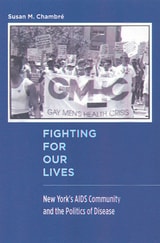
Fighting For Our Lives
New York's AIDS Community and the Politics of DiseaseChambré, Susan M
Rutgers University Press, 2006
In the first decade of the AIDS epidemic, New York City was struck like no other. By the early nineties, it was struggling with more known cases than the next forty most infected cities, including San Francisco, combined.
Fighting for Our Lives is the first comprehensive social history of New York's AIDS community-a diverse array of people that included not only gay men, but also African Americans, Haitians, Latinos, intravenous drug users, substance abuse professionals, elite supporters, and researchers. Looking back over twenty-five years, Susan Chambré focuses on the ways that these disparate groups formed networks of people and organizations that-both together and separately-supported persons with AIDS, reduced transmission, funded research, and in the process, gave a face to an epidemic that for many years, whether because of indifference, homophobia, or inefficiency, received little attention from government or health care professionals.
Beyond the limits of New York City, and even AIDS, this case study also shows how any epidemic provides a context for observing how societies respond to events that expose the inadequacies of their existing social and institutional arrangements. By drawing attention to the major faults of New York's (and America's) response to a major social and health crisis at the end of the twentieth century, the book urges more effective and sensitive actions-both governmental and civil-in the future.

Fighting For Time
Shifting Boundaries of Work and Social LifeCynthia Fuchs Epstein
Russell Sage Foundation, 2004
Fighting for Andean Resources
Extractive Industries, Cultural Politics, and Environmental Struggles in PeruVladimir R. Gil Ramón, Foreword by Enrique Mayer
University of Arizona Press, 2020
2021 American Anthropological Association´s, finalist of the Association for Political and Legal Anthropology Book Prize in Critical Anthropology
Mining investment in Peru has been presented as necessary for national progress; however, it also has brought socioenvironmental costs, left unfulfilled hopes for development, and has become a principal source of confrontation and conflict.
Fighting for Andean Resources focuses on the competing agendas for mining benefits and the battles over their impact on proximate communities in the recent expansion of the Peruvian mining frontier. The book complements renewed scrutiny of how globalization nurtures not solely antagonism but also negotiation and participation.
Having mastered an intimate knowledge of Peru, Vladimir R. Gil Ramón insightfully documents how social technologies of power are applied through social technical protocols of accountability invoked in defense of nature and vulnerable livelihoods. Although analyses point to improvements in human well-being, a political and technical debate has yet to occur in practice that would define what such improvements would be, the best way to achieve and measure them, and how to integrate dimensions such as sustainability and equity.
Many confrontations stem from frustrated expectations, environmental impacts, and the virtual absence of state apparatus in the locations where new projects emerged. This book presents a multifaceted perspective on the processes of representation, the strategies in conflicts and negotiations of development and nature management, and the underlying political actions in sites affected by mining.
Fighting for Recognition
Identity, Masculinity, and the Act of Violence in Professional WrestlingR. Tyson Smith
Duke University Press, 2014

Figurative Inquisitions
Conversion, Torture, and Truth in the Luso-Hispanic AtlanticErin Graff Zivin
Northwestern University Press, 2014
Winner, 2015 LAJSA Best Book in Latin American Jewish Studies
The practices of interrogation, torture, and confession have resurfaced in public debates since the early 2000s following human rights abuses around the globe. Yet discussion of torture has remained restricted to three principal fields: the legal, the pragmatic, and the moral, eclipsing the less immediate but vital question of what torture does.Figurative Inquisitions seeks to correct this lacuna by approaching the question of torture from a literary vantage point.
This book investigates the uncanny presence of the Inquisition and marranismo (crypto-Judaism) in modern literature, theater, and film from Mexico, Brazil, and Portugal. Through a critique of fictional scenes of interrogation, it underscores the vital role of the literary in deconstructing the relation between torture and truth. Figurative Inquisitions traces the contours of a relationship among aesthetics, ethics, and politics in an account of the "Inquisitional logic" that continues to haunt contemporary political forms. In so doing, the book offers a unique humanistic perspective on current torture debates.

Figures of Speech
Six Histories of Language and Identity in the Age of RevolutionsTim Cassedy
University of Iowa Press, 2018
Tim Cassedy’s fascinating study examines the role that language played at the turn of the nineteenth century as a marker of one’s identity. During this time of revolution (U.S., French, and Haitian) and globalization, language served as a way to categorize people within a world that appeared more diverse than ever. Linguistic differences, especially among English-speakers, seemed to validate the emerging national, racial, local, and regional identity categories that took shape in this new world order.
Focusing on six eccentric characters of the time—from the woman known as “Princess Caraboo” to wordsmith Noah Webster—Cassedy shows how each put language at the center of their identities and lived out the possibilities of their era’s linguistic ideas. The result is a highly entertaining and equally informative look at how perceptions about who spoke what language—and how they spoke it—determined the shape of communities in the British American colonies and beyond.
This engagingly written story is sure to appeal to historians of literature, culture, and communication; to linguists and book historians; and to general readers interested in how ideas about English developed in the early United States and throughout the English-speaking world.

Figures of Time
Affect and the Television of PreemptionToni Pape
Duke University Press, 2019

Filipino Crosscurrents
Oceanographies of Seafaring, Masculinities, and GlobalizationKale Bantigue Fajardo
University of Minnesota Press, 2011
Filipino seamen currently compose approximately twenty percent of the 1.2 million international maritime transportation workers. Ninety percent of the world’s goods and commodities are transported by ship. Taken together, these statistics attest to the critical role Filipino seamen play in worldwide maritime trade. In Filipino Crosscurrents, an interdisciplinary ethnography, Kale Bantigue Fajardo examines the cultural politics of seafaring, Filipino maritime masculinities, and globalization in the Philippines and the Filipino diaspora.
Drawing on fieldwork conducted on ships and in the ports of Manila and Oakland, as well as on an industrial container ship that traveled across the Pacific, Fajardo argues that Filipino seamen have become key figures through which the Philippine state and economic elites promote Filipino masculinity and neoliberal globalization. From government officials to working-class seamen and seafarers’ advocates, Fajardo’s wide-ranging analysis exposes the gaps in dominant narratives of Filipino seamen in national, regional, and global contexts.
Writing in a hybrid style that weaves together ethnographic description, cultural critique, travelogue, and autobiography, Fajardo invites readers to reconsider the meanings of masculinity and manhood.

Film and the American Moral Vision of Nature
Theodore Roosevelt to Walt DisneyRonald B. Tobias
Michigan State University Press, 2011

Film in the Middle East and North Africa
Creative DissidenceEdited by Josef Gugler
University of Texas Press, 2011
This is the first study to cover cinemas from Iran to Morocco. Nine essays present the region's major national cinemas, devoting special attention to the work of directors who have given image and voice to dissent from political regimes, from patriarchal customs, from fundamentalist movements, and from the West. These country essays are complemented by in-depth discussions of eighteen films that have been selected for both their excellence and their critical engagement with pressing current issues. The introduction provides a comprehensive overview of filmmaking throughout the region, including important films produced outside the national cinemas. The long history of Iranian cinema, its international renown, and the politics of directors confronting the state, earns it a special place in this volume. The other major emphasis is on the Israel/Palestine conflict, featuring films by Palestinian directors, Israelis, and an Egyptian working in Syria.
Nineteen authors collaborated on this book, among them Walter Armbrust, Roy Armes, Kevin Dwyer, Eric Egan, Nurith Gertz, Lina Khatib, Florence Martin, and Nadia Yaqub. About half of the contributors are film scholars; the others range across literary studies and the social sciences to two film directors and a novelist. Beyond differences in disciplinary orientation, there is considerable variation among contributors in the perspectives that inform their writing. They offer an illuminating range of approaches to the cinemas of the region.
The book is richly illustrated with posters of the featured films, photos of their directors at work, and stills illustrating critical arguments in the film essays.

Film on The Faultline
Edited by Alan Wright
Intellect Books, 2015
Filming the City
Urban Documents, Design Practices and Social Criticism through the LensEdited by Edward Clift, Mirko Guaralda, and Ari Mattes
Intellect Books, 2016
Filtering Histories
The Photographic Bureaucracy in Mozambique, 1960 to Recent TimesDrew A. Thompson
University of Michigan Press, 2021
Photographers and their images were critical to the making of Mozambique, first as a colony of Portugal and then as independent nation at war with apartheid in South Africa. When the Mozambique Liberation Front came to power, it invested substantial human and financial resources in institutional structures involving photography, and used them to insert the nation into global debates over photography's use. The materiality of the photographs created had effects that neither the colonial nor postcolonial state could have imagined.
Filtering Histories: The Photographic Bureaucracy in Mozambique, 1960 to Recent Times tells a history of photography alongside state formation to understand the process of decolonization and state development after colonial rule. At the center of analysis are an array of photographic and illustrated materials from Mozambique, South Africa, Portugal, and Italy. Thompson recreates through oral histories and archival research the procedures and regulations that engulfed the practice and circulation of photography. If photographers and media bureaucracy were proactive in placing images of Mozambique in international news, Mozambicans were agents of self-representation, especially when it came to appearing or disappearing before the camera lens. Drawing attention to the multiple images that one published photograph may conceal, Filtering Histories introduces the popular and material formations of portraiture and photojournalism that informed photography's production, circulation, and archiving in a place like Mozambique. The book reveals how the use of photography by the colonial state and the liberation movement overlapped, and the role that photography played in the transition of power from colonialism to independence.

Financial Derivatives and the Globalization of Risk
Edward LiPuma and Benjamin Lee
Duke University Press, 2005
LiPuma and Lee explain how derivatives are essentially wagers—often on the fluctuations of national currencies—based on models that aggregate and price risk. They describe how these financial instruments are changing the face of capitalism, undermining the power of nations and perpetrating a new and less visible form of domination on postcolonial societies. As they ask: How does one know about, let alone demonstrate against, an unlisted, virtual, offshore corporation that operates in an unregulated electronic space using a secret proprietary trading strategy to buy and sell arcane financial instruments? LiPuma and Lee provide a necessary look at the obscure but consequential role of financial derivatives in the global economy.
Finding Augusta
Habits of Mobility and Governance in the Digital EraHeidi Rae Cooley
Dartmouth College Press, 2014

Finding the Singing Spruce
Musical Instrument Makers and Appalachia's Mountain ForestsJasper Waugh-Quasebarth
West Virginia University Press, 2023
Environment, craft, and meaning in the work of Appalachian instrument makers.
How can the craft of musical instrument making help reconnect people to place and reenchant work in Appalachia? How does the sonic search for musical tone change relationships with trees and forests? Following three craftspeople in the mountain forests of Appalachia through their processes of making instruments, Finding the Singing Spruce considers the meanings of work, place, and creative expression in drawing music from wood.
Jasper Waugh-Quasebarth explores the complexities and contradictions of instrument-making labor, which is deeply rooted in mountain forests and expressive traditions but also engaged with global processes of production and consumption. Using historical narratives and sensory ethnography, among other approaches, he finds that the craft of lutherie speaks to the past, present, and future of the region’s work and nature.
Finite Media
Environmental Implications of Digital TechnologiesSean Cubitt
Duke University Press, 2017
Fire and Desire
Mixed-Race Movies in the Silent EraJane M. Gaines
University of Chicago Press, 2001
Fire and Desire offers a penetrating look at the black independent film movement during the silent period. Gaines traces the profound influence that D. W. Griffith's racist epic The Birth of a Nation exerted on black filmmakers such as Oscar Micheaux, the director of the newly recovered Within Our Gates. Beginning with What Happened in the Tunnel, a movie that played with race and sex taboos by featuring the first interracial kiss in film, Gaines also explores the cinematic constitution of self and other through surprise encounters: James Baldwin sees himself in the face of Bette Davis, family resemblance is read in Richard S. Robert's portrait of an interracial family, and black film pioneer George P. Johnson looks back on Micheaux.
Given the impossibility of purity and the co-implication of white and black, Fire and Desire ultimately questions the category of "race movies" itself.
First Nations Gaming in Canada
Yale D. Belanger
University of Manitoba Press, 2011
First Strike
Educational Enclosures in Black Los AngelesDamien M. Sojoyner
University of Minnesota Press, 2016
California is a state of immense contradictions. Home to colossal wealth and long portrayed as a bastion of opportunity, it also has one of the largest prison populations in the United States and consistently ranks on the bottom of education indexes. Taking a unique, multifaceted insider’s perspective, First Strike delves into the root causes of its ever-expansive prison system and disastrous educational policy.
Recentering analysis of Black masculinity beyond public rhetoric, First Strike critiques the trope of the “school-to-prison pipeline” and instead explores the realm of public school as a form of “enclosure” that has influenced the schooling (and denial of schooling) and imprisonment of Black people in California. Through a fascinating ethnography of a public school in Los Angeles County, and a “day in the life tour” of the effect of prisons on the education of Black youth, Damien M. Sojoyner looks at the contestation over education in the Black community from Reconstruction to the civil rights and Black liberation movements of the past three decades.
Policy makers, school districts, and local governments have long known that there is a relationship between high incarceration rates and school failure. First Strike is the first book that demonstrates why that connection exists and shows how school districts, cities and states have been complicit and can reverse a disturbing and needless trend. Rather than rely upon state-sponsored ideological or policy-driven models that do nothing more than to maintain structures of hierarchal domination, it allows us to resituate our framework of understanding and begin looking for solutions in spaces that are readily available and are immersed in radically democratic social visions of the future.
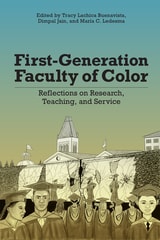
First-Generation Faculty of Color
Reflections on Research, Teaching, and ServiceTracy Lachica Buenavista
Rutgers University Press, 2023

Fit Nation
The Gains and Pains of America's Exercise ObsessionNatalia Mehlman Petrzela
University of Chicago Press, 2022
If a shared American creed still exists, it’s a belief that exercise is integral to a life well lived. A century ago, working out was the activity of a strange subculture, but today, it’s almost impossible to avoid exhortations to exercise: Walk 5K to cure cancer! Awaken your inner sex kitten at pole-dancing class! Sweat like (or even with) a celebrity in spin class! Exercise is everywhere.
Yet the United States is hardly a “fit nation.” Only 20 percent of Americans work out consistently, over half of gym members don’t even use the facilities they pay for, and fewer than 30 percent of high school students get an hour of exercise a day. So how did fitness become both inescapable and inaccessible?
Spanning more than a century of American history, Fit Nation answers these questions and more through original interviews, archival research, and a rich cultural narrative. As a leading political and intellectual historian and a certified fitness instructor, Natalia Mehlman Petrzela is uniquely qualified to confront the complex and far-reaching implications of how our contemporary exercise culture took shape. She explores the work of working out not just as consumers have experienced it, but as it was created by performers, physical educators, trainers, instructors, and many others.
For Petrzela, fitness is a social justice issue. She argues that the fight for a more equitable exercise culture will be won only by revolutionizing fitness culture at its core, making it truly inclusive for all bodies in a way it has never been. Examining venues from the stage of the World’s Fair and Muscle Beach to fat farms, feminist health clinics, radical and evangelical college campuses, yoga retreats, gleaming health clubs, school gymnasiums, and many more, Fit Nation is a revealing history that shows fitness to be not just a matter of physical health but of what it means to be an American.
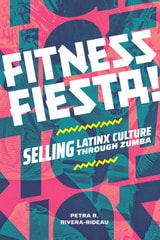
Fitness Fiesta!
Selling Latinx Culture through ZumbaPetra R. Rivera-Rideau
Duke University Press, 2024
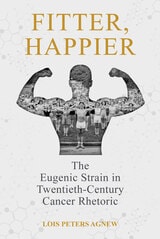
Fitter, Happier
The Eugenic Strain in Twentieth-Century Cancer RhetoricLois Peters Agnew
University of Alabama Press, 0
A critical investigation into how eugenic logics quietly animated twentieth‑century cancer rhetoric, reshaping cultural narratives of health, risk, and human worth.
Fitter, Happier: The Eugenic Strain in Twentieth-Century Cancer Rhetoric is a thought-provoking exploration of the relationship between cancer rhetoric, American ideals, and eugenic influences in the twentieth century. This groundbreaking work delves into the paradoxical interplay between acknowledging the genuine threat of cancer and the ingrained American ethos of confidence and control.
Agnew’s meticulous research traces the topic’s historical context, unveiling how cancer discourses evolved from a hushed personal concern to a public issue thanks to the rise of cancer research centers and advocacy organizations. However, she unearths a troubling dimension to these discussions—subtle yet persistent eugenic ideologies that taint cancer arguments and advocacy groups. By dissecting prevailing cancer narratives, Agnew brings into focus how ideals rooted in eliminating imperfections and embracing progress converge with concerns for safeguarding societal fitness.
Fitter, Happier scrutinizes the military origins and metaphors that permeate government policies and medical research, the transformation of cancer’s association with melancholy into a rallying cry for a positive outlook, and the nuanced implications of prevention-focused dialogues. Reflecting on the varied experiences of actual cancer patients, Agnew resists the neat assimilation of these stories into a eugenic framework. Agnew’s insights prompt readers to contemplate the societal meanings of disease and disability as well as how language constructs our shared reality.

Fixers
Agency, Translation, and the Early Global History of LiteratureZrinka Stahuljak
University of Chicago Press, 2024
In this book, Zrinka Stahuljak challenges scholars in both medieval and translation studies to rethink how ideas and texts circulated in the medieval world. Whereas many view translators as mere conduits of authorial intention, Stahuljak proposes a new perspective rooted in a term from journalism: the fixer. With this language, Stahuljak captures the diverse, active roles medieval translators and interpreters played as mediators of entire cultures—insider informants, local guides, knowledge brokers, art distributors, and political players. Fixers offers nothing less than a new history of literature, art, translation, and social exchange from the perspective not of the author or state but of the fixer.

Fixing Sex
Intersex, Medical Authority, and Lived ExperienceKatrina Karkazis
Duke University Press, 2008
Drawing extensively on interviews with adults with intersex conditions, parents, and physicians, Karkazis moves beyond the heated rhetoric to reveal the complex reality of how intersexuality is understood, treated, and experienced today. As she unravels the historical, technological, social, and political forces that have culminated in debates surrounding intersexuality, Karkazis exposes the contentious disagreements among theorists, physicians, intersex adults, activists, and parents—and all that those debates imply about gender and the changing landscape of intersex management. She argues that by viewing intersexuality exclusively through a narrow medical lens we avoid much more difficult questions. Do gender atypical bodies require treatment? Should physicians intervene to control the “sex” of the body? As this illuminating book reveals, debates over treatment for intersexuality force reassessment of the seemingly natural connections between gender, biology, and the body.
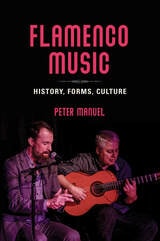
Flamenco Music
History, Forms, CulturePeter Manuel
University of Illinois Press, 2023
An iconic symbol of Spain, flamenco has become a global phenomenon. Peter Manuel offers English-language readers a rare portrait of the music’s history, styles, and cultural impact. Beginning with flamenco’s Moorish and Roma influences, Manuel follows the music’s evolution through its consolidation in the mid-1800s and on to the vibrant contemporary scene. An investigation of flamenco’s major song-types looks at rhythm and compás, guitar technique, and many other aspects of the music while Manuel’s description and analysis of the repertoire range from soleares and bulerías to tangos. His overview of contemporary flamenco culture provides insight into issues that surround the music, including globalization, gender dynamics, notions of ownership, and the ongoing debates on purity versus innovation and the relative roles played by Gitanos and non-Gitanos.
Multifaceted and entertaining, Flamenco Music is an in-depth study of the indelible art form that inspires enthusiasts and practitioners around the world.

Flash Effect
Science and the Rhetorical Origins of Cold War AmericaDavid J. Tietge
Ohio University Press, 2002
The ways science and technology are portrayed in advertising, in the news, in our politics, and in the culture at large inform the way we respond to these particular facts of life. The better we are at recognizing the rhetorical intentions of the purveyors of information and promoters of mass culture, the more adept we become at responding intelligently to them.
Flash Effect, a startling book by David J. Tietge, documents the manner in which those at the highest levels of our political and cultural institutions conflated the rhetoric of science and technology with the rhetorics of religion and patriotism to express their policies for governance at the onset of the Cold War and to explain them to the American public.
Professor Tietge details our cultural attitudes about science in the early years of the Cold War, when on the heels of a great technological victory Americans were faced with the possibility of destruction by the very weapons that had saved them.
In Flash Effect we learn how, by symbolizing the scientist as both a father figure and a savior—and by celebrating the technological objects of his labor—the campaign to promote science took hold in the American consciousness. The products of that attitude are with us today more than ever.
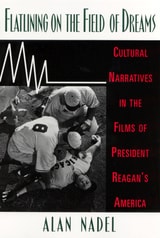
Flatlining on the Field of Dreams
Cultural Narratives in the Films of President Reagan's AmericaNadel, Alan
Rutgers University Press, 1997
-Film Quarterly
"From Back to the Future to Forrest Gump, Nadel shows not only how notions of cinematic time re-script political change but how our very conceptualizations of change are thematized by our experiences of watching movies. This is not simply film history, or film as history, but film affirming "history" in the same way that Ronald Reagan affirmed film narratives."
-Susan Jeffords, University of Washington
"Flatlining on the Field of Dreams brilliantly restages the cultural narratives associated with Reaganism within a neo-imperialist cinematic space and reveals the heretofore unexamined role class played in the reproduction of those narratives."
-Donald E. Pease, Dartmouth College
Flatlining on the Field of Dreams demonstrates, with witty prose and careful analysis, how the overindulgent, image-conscious years of the Reagan administration are reflected in sundry aspects of American films produced during that era. Discussing dozens of films, including Home Alone, Beetlejuice, Ghost, The Little Mermaid, Working Girl, Who Framed Roger Rabbit?, and Trading Places, Alan Nadel identifies narratives about credit, deregulation, gender, race, and masculinity that defined "President Reagan's America." Linking the way Hollywood films work to the stories they tell, he explains how the ideas and values of Reaganism became the symbolic food of a hyper-consumptive society. The book provides hard-to-ignore demonstrations of the extensive synergy between politics, history, and popular culture.

Fleshing the Archive
An Intimate Genealogy of Chicana Knowledge PraxisMaría Eugenia Cotera
University of Texas Press, 2025
The history of the Chicana por mi Raza Digital Memory Collective, an archive dedicated to preserving Chicana feminist knowledge of the 1970s and memory work.
The late 1960s and early 1970s witnessed an explosion of publishing by Chicana activists as they took part in the Movimiento against oppression of ethnic Mexicans in the United States. Today, thousands of these documents, including written works and oral histories, have been assembled by the Chicana por mi Raza Digital Memory Collective. Drawing on these unique resources, Fleshing the Archive traces the innovative Chicana knowledge projects of the Movimiento years.
Seeking to think with the past rather than about it, María Cotera explores transgressive sites and discourses of Chicana knowledge, from poems and essays to newspapers, bibliographies, and testimonies. Often published independently and distributed by readers themselves, these works embodied a praxis of feminist and queer consciousness-raising. Observing the startling convergences between Chicana praxis of the 1970s and digital knowledge production in the present, Cotera argues that the Chicana archive enables transformative moments of recognition across time that unsettle supposedly objective accounts of history. The materials preserved by Chicana por mi Raza offer Chicana scholars a model of teaching and learning liberated from a corporate academy that is increasingly hostile to intellectual inquiry.
Flexible Families
Nicaraguan Transnational Families in Costa RicaCaitlin Fouratt
Vanderbilt University Press, 2022
The book situates transnational families in an analysis of the history of unstable family life in Nicaragua due to decades of war and economic crisis, rather than in the migration process itself, which is often blamed for family breakdown in public discourse. Fouratt argues that the kinds of family configurations often seen as problematic consequences of migration—specifically single mothers, absent fathers, and grandmother caregivers—represent flexible family configurations that have enabled Nicaraguan families to survive the chronic crises of the past decades. By examining the work that goes into forging and sustaining transnational kinship, the book argues for a rethinking of national belonging and discourses of solidarity.
In parallel, the book critically examines conditions in Costa Rica, especially the ways the instabilities and inequalities that have haunted the rest of the region have begun to take shape there, resulting in perceptions of increased crime rates and a declining quality of life. By linking this crisis of Costa Rican exceptionalism to recent immigration reform, the book also builds on scholarship about the production and experiences of immigrant exclusion. Flexible Families offers insight into the impacts of increasingly restrictive immigration policies in the everyday lives of transnational families within the developing world.
Flight Lines
A Poetics of Black SpaceElleza Kelley
Duke University Press, 2026
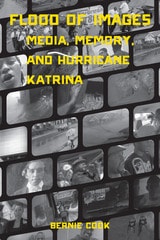
Flood of Images
Media, Memory, and Hurricane KatrinaBy Bernie Cook
University of Texas Press, 2015
Anyone who was not in New Orleans during Hurricane Katrina and the subsequent flooding of the city experienced the disaster as a media event, a flood of images pouring across television and computer screens. The twenty-four-hour news cycle created a surplus of representation that overwhelmed viewers and complicated understandings of the storm, the flood, and the aftermath. As time passed, documentary and fictional filmmakers took up the challenge of explaining what had happened in New Orleans, reaching beyond news reports to portray the lived experiences of survivors of Katrina. But while these narratives presented alternative understandings and more opportunities for empathy than TV news, Katrina remained a mediated experience.
In Flood of Images, Bernie Cook offers the most in-depth, wide-ranging, and carefully argued analysis of the mediation and meanings of Katrina. He engages in innovative, close, and comparative visual readings of news coverage on CNN, Fox News, and NBC; documentaries including Spike Lee’s When the Levees Broke and If God Is Willing and Da Creek Don’t Rise, Tia Lessin and Carl Deal’s Trouble the Water, and Dawn Logsdon and Lolis Elie’s Faubourg Treme; and the HBO drama Treme. Cook examines the production practices that shaped Katrina-as-media-event, exploring how those choices structured the possible memories and meanings of Katrina and how the media’s memory-making has been contested. In Flood of Images, Cook intervenes in the ongoing process of remembering and understanding Katrina.
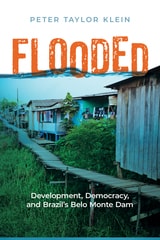
Flooded
Development, Democracy, and Brazil’s Belo Monte DamPeter Taylor Klein
Rutgers University Press, 2022
In the middle of the twentieth century, governments ignored the negative effects of large-scale infrastructure projects. In recent decades, many democratic countries have continued to use dams to promote growth, but have also introduced accompanying programs to alleviate these harmful consequences of dams for local people, to reduce poverty, and to promote participatory governance. This type of dam building undoubtedly represents a step forward in responsible governing. But have these policies really worked?
Flooded provides insights into the little-known effects of these approaches through a close examination of Brazil’s Belo Monte hydroelectric facility. After three decades of controversy over damming the Xingu River, a tributary of the Amazon, the dam was completed in 2019 under the left-of-center Workers’ Party, becoming the world’s fourth largest. Billions of dollars for social welfare programs accompanied construction. Nonetheless, the dam brought extensive social, political, and environmental upheaval to the region. The population soared, cost of living skyrocketed, violence spiked, pollution increased, and already overextended education and healthcare systems were strained. Nearly 40,000 people were displaced and ecosystems were significantly disrupted. Klein tells the stories of dam-affected communities, including activists, social movements, non-governmental organizations, and public defenders and public prosecutors. He details how these groups, as well as government officials and representatives from private companies, negotiated the upheaval through protests, participating in public forums for deliberation, using legal mechanisms to push for protections for the most vulnerable, and engaging in myriad other civic spaces. Flooded provides a rich ethnographic account of democracy and development in the making. In the midst of today’s climate crisis, this book showcases the challenges and opportunities of meeting increasing demands for energy in equitable ways.

Flourishing Thought
Democracy in an Age of Data HoardsRuth A. Miller
University of Michigan Press, 2016
Miller’s argument has shattering implications for the debates over the proper use and disposal of embryonic tissue, alarms about data gathering by the state and corporations, and other major ethical, social, and security issues.
Fluent Bodies
Ayurvedic Remedies for Postcolonial ImbalanceJean M. Langford
Duke University Press, 2002
Interweaving theory with narrative, Langford explores the strategies of contemporary practitioners who reconfigure Ayurvedic knowledge through institutions and technologies such as hospitals, anatomy labs, clinical trials, and sonograms. She shows how practitioners appropriate, transform, or circumvent the knowledge practices implicit in these institutions and technologies, destabilizing such categories as medicine, culture, science, symptom, and self, even as they deploy them in clinical practice. Ultimately, this study points to the future of Ayurveda in a transnational era as a remedy not only for the wounds of colonialism but also for an imagined cultural emptiness at the heart of global modernity.
Flunking Democracy
Schools, Courts, and Civic ParticipationMichael A. Rebell
University of Chicago Press, 2018
In Flunking Democracy, Michael A. Rebell makes the case that this is not a recent problem, but rather that for generations now, America’s schools have systematically failed to prepare students to be capable citizens. Rebell analyzes the causes of this failure, provides a detailed analysis of what we know about how to prepare students for productive citizenship, and considers examples of best practices. Rebell further argues that this civic decline is also a legal failure—a gross violation of both federal and state constitutions that can only be addressed by the courts. Flunking Democracy concludes with specific recommendations for how the courts can and should address this deficiency, and is essential reading for anyone interested in education, the law, and democratic society.
Folklore in the Public Square
How the Study of Traditional Culture Can Solve Contemporary Social ProblemsAndrea Kitta
Utah State University Press, 2026
Folklore is often positioned at the center of critical social issues. While folklorists have acknowledged this power and explored how folklore has been used for political ends, far less attention has been paid to the role folklorists and folklore scholarship can play in addressing contemporary social issues in public discourse. Folklore in the Public Square explores how folklorists apply their research to engage general audiences and address the challenging issues we face daily.
Folklore in the Public Square brings together folklorists working in the humanities and the social sciences committed to applying their research to help solve contemporary social challenges, formalizing an undercurrent of thought that has gained growing attention. Case studies apply ethical research to address pervasive questions about the environment, poverty, health and healthcare, political partisanship, war, tourism, stigma, racism, and conspiracy theories, among others. Building on conversations raised by folklorists who have contributed to public programming or conducted collaborative research in local communities, this book appeals to anyone interested in contemporary social issues, applied research, or collaborative and ethical fieldwork.
Follow Your Conscience
The Catholic Church and the Spirit of the SixtiesPeter Cajka
University of Chicago Press, 2021
Peter Cajka’s erudite book shows how even staunch Catholics were transformed by the maelstrom of the American Sixties, turning away from powerful and corrupt institutions and toward the inner moral compass provided by their own consciences.
What is your conscience? Is it, as Peter Cajka asks in this provocative book, “A small, still voice? A cricket perched on your shoulder? An angel and devil who compete for your attention?” Going back at least to the thirteenth century, Catholics viewed their personal conscience as a powerful and meaningful guide to align their conduct with worldly laws. But, as Cajka shows in Follow Your Conscience, during the national cultural tumult of the 1960s, the divide between the demands of conscience and the demands of the law, society, and even the church itself grew increasingly perilous. As growing numbers of Catholics started to consider formerly stout institutions to be morally hollow—especially in light of the Vietnam War and the church’s refusal to sanction birth control—they increasingly turned to their own consciences as guides for action and belief. This abandonment of higher authority had radical effects on American society, influencing not only the broader world of Christianity, but also such disparate arenas as government, law, health care, and the very vocabulary of American culture. As this book astutely reveals, today’s debates over political power, religious freedom, gay rights, and more are all deeply infused by the language and concepts outlined by these pioneers of personal conscience.
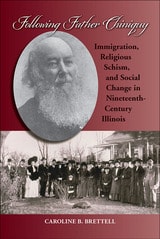
Following Father Chiniquy
Immigration, Religious Schism, and Social Change in Nineteenth-Century IllinoisCaroline B. Brettell
Southern Illinois University Press, 2015
Winner, ISHS Certificate of Excellence, 2016
In the late 1850s and early 1860s, the attention of the Catholic and Protestant religious communities around the world focused on a few small settlements of French Canadian immigrants in northeastern Illinois. Soon after arriving in their new home, a large number of these immigrants, led by Father Charles Chiniquy, the charismatic Catholic priest who had brought them there, converted to Protestantism. In this anthropological history, Caroline B. Brettell explores how Father Chiniquy took on both the sacred and the secular authority of the Catholic Church to engineer the religious schism and how the legacy of this rift affected the lives of the immigrants and their descendants for generations. This intriguing study of a nineteenth-century migration of French Canadians to the American Midwest offers an innovative perspective on the immigrant experience in America.
Brettell chronicles how Chiniquy came to lead approximately one thousand French Canadian families to St. Anne, Illinois, in the early 1850s and how his conflict with the Catholic hierarchy over the ownership and administration of church property, delivery of the mass in French instead of Latin, and access to the Bible by laymen led to his excommunication. Drawing on the concept of social drama—a situation of intensely lived conflict that emerges within social groups—Brettell explains the religious schism in terms of larger ethnic and religious disagreements that were happening elsewhere in the United States and in Canada. Brettell also explores legal disputes, analyzes the reemergence of Catholicism in St. Anne in the first decade of the twentieth century, addresses the legacy of Chiniquy in both the United States and Quebec, and closely examines the French Canadian immigrant communities, focusing on the differences between the people who converted to Protestantism and those who remained Catholic.
Occurring when nativism was pervasive and the anti-immigrant Know-Nothing Party was at its height, Chiniquy’s religious schism offers an opportunity to examine a range of important historical and anthropological issues, including immigration, ethnicity, and religion; changes in household and family structure; the ways social identities are constructed and reconstructed through time; and the significance of charismatic leadership in processes of social and religious change. Through its multidisciplinary approach, Brettell’s enlightening study provides a pioneering assessment of larger national tensions and social processes, some of which are still evident in modern immigration to the United States.
Food Across Borders
Garcia, Matt
Rutgers University Press, 2017
The stories told in Food Across Borders highlight the contiguity between the intimate decisions we make as individuals concerning what we eat and the social and geopolitical processes we enact to secure nourishment, territory, and belonging.
Published in cooperation with the William P. Clements Center for Southwest Studies, Southern Methodist University.
Food And Evolution
Toward a Theory of Human Food Habitsedited by Marvin Harris and Eric B. Ross
Temple University Press, 1989
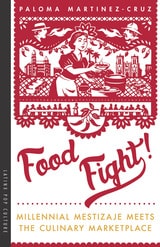
Food Fight!
Millennial Mestizaje Meets the Culinary MarketplacePaloma Martinez-Cruz
University of Arizona Press, 2019
In Food Fight! author Paloma Martinez-Cruz takes us on a Chicanx gastronomic journey that is powerful and humorous. Martinez-Cruz tackles head on the real-world politics of food production from the exploitation of farmworkers to the appropriation of Latinx bodies and culture, and takes us right into transformative eateries that offer a homegrown, mestiza consciousness.
The hard-hitting essays in Food Fight! bring a mestiza critique to today’s pressing discussions of labeling, identity, and imaging in marketing and dining. Not just about food, restaurants, and coffee, this volume employs a decolonial approach and engaging voice to interrogate ways that mestizo, Indigenous, and Latinx peoples are objectified in mainstream ideology and imaginary.
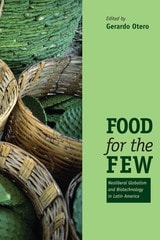
Food for the Few
Neoliberal Globalism and Biotechnology in Latin AmericaEdited by Gerardo Otero
University of Texas Press, 2008
Recent decades have seen tremendous changes in Latin America's agricultural sector, resulting from a broad program of liberalization instigated under pressure from the United States, the IMF, and the World Bank. Tariffs have been lifted, agricultural markets have been opened and privatized, land reform policies have been restricted or eliminated, and the perspective has shifted radically toward exportation rather than toward the goal of feeding local citizens. Examining the impact of these transformations, the contributors to Food for the Few: Neoliberal Globalism and Biotechnology in Latin America paint a somber portrait, describing local peasant farmers who have been made responsible for protecting impossibly vast areas of biodiversity, or are forced to specialize in one genetically modified crop, or who become low-wage workers within a capitalized farm complex. Using dozens of examples such as these, the deleterious consequences are surveyed from the perspectives of experts in diverse fields, including anthropology, economics, geography, political science, and sociology.
From Kathy McAfee's "Exporting Crop Biotechnology: The Myth of Molecular Miracles," to Liz Fitting's "Importing Corn, Exporting Labor: The Neoliberal Corn Regime, GMOs, and the Erosion of Mexican Biodiversity," Food for the Few balances disturbing findings with hopeful assessments of emerging grassroots alternatives. Surveying not only the Latin American conditions that led to bankruptcy for countless farmers but also the North's practices, such as the heavy subsidies implemented to protect North American farmers, these essays represent a comprehensive, keenly informed response to a pivotal global crisis.
Food in the Civil War Era
The NorthHelen Zoe Veit
Michigan State University Press, 2014