Results by title
1861 books match the query 'Social life and customs' and 83 start with f
Fragments of Culture
The Everyday of Modern TurkeyKandiyoti, Deniz
Rutgers University Press, 2002
In this volume, some of the most innovative scholars of post 1980s Turkey address the complex ways that suburbanization and the growth of a globalized middle class have altered gender and class relations, and how Turkish society is being shaped and redefined through consumption. They also explore the increasingly polarized cultural politics between secularists and Islamists, and the ways that previously repressed Islamic elements have reemerged to complicate the idea of an "authentic" Turkish identity. Contributors examine a range of issues from the adjustments to religious identity as the Islamic veil becomes marketed as a fashion item, to the media's increased attention in Turkish transsexual lifestyle, to the role of folk dance as a ritualized part of public life. Fragments of Culture shows how attention to the minutiae of daily life can successfully unravel the complexities of a shifting society. This book makes a significant contribution to both modern Turkish studies and the scholarship on cross-cultural perspectives in Middle Eastern studies.
Fragments of Death, Fables of Identity
An Athenian AnthropographyEleni Panourgia
University of Wisconsin Press, 1996
The death of her grandfather sets Neni Panourgiá and her readers on a path through the rituals of mourning and memory in modern urban Greece. Blending emotional richness and intellectual rigor, the anthropologist returns home in this exploration of kinship and identity within her own family and native city of Athens. What emerges is not only a new anthropological view of contemporary Greek culture, but also a reflective consideration of the self and subject.
Following men and women grappling with questions of mortality, Panourgiá moves through the streets and neighborhoods of Athens, seaside resorts and pistachio groves, the corridors and rooms of the Cancer Institute, wakes in apartments and observances in cemeteries. She mingles popular culture, venerable traditions, and contemporary theory as she considers how individuals define their identity as Athenians, as members of a family, as subjects of a polity, in sickness and in health, in death or in mourning. Memory is their guide as it negotiates their relationships with a personal, collective, and cultural past—and the memory of many deaths challenges and reaffirms, deconstructs and reconstructs who they are.
As intellectually ambitious as it is moving, Fragments of Death, Fables of Identity reconfigures the subject and object of anthropological study and recasts the line where experience ends and analysis begins.

Framing Oak Cliff
A Visual Diary of a Dallas NeighborhoodRichard Doherty
University of North Texas Press, 2024

Francesca Caccini at the Medici Court
Music and the Circulation of PowerSuzanne G. Cusick
University of Chicago Press, 2009
Suzanne G. Cusick argues that Caccini’s career depended on the usefulness of her talents to the political agenda of Grand Duchess Christine de Lorraine, Tuscany’s de facto regent from 1606 to 1636. Drawing on Classical and feminist theory, Cusick shows how the music Caccini made for the Medici court sustained the culture that enabled Christine’s power, thereby also supporting the sexual and political aims of its women.
In bringing Caccini’s surprising story so vividly to life, Cusick ultimately illuminates how music making functioned in early modern Italy as a significant medium for the circulation of power.

Francois Vallé and His World
Upper Louisiana before Lewis and ClarkCarl J. Ekberg
University of Missouri Press, 2002
Winner of the Kemper & Leila Williams Prize in Louisiana History for excellence in historical scholarship for the year 2002, awarded by The Historic New Orleans Collection, The Louisiana Historical Association.
Free Up Yuhself
Transgressive Bodies and Contestations in the CarnivalesqueNikoli A. Attai
Rutgers University Press, 2025
Free Up Yuhself explores and theorizes what it means to embody and be empowered by the chaos of transgression, evaluating the implications for people who destabilize the Caribbean region’s dominant gender and sexuality politics within the Caribbean and the Caribbean diaspora. This book examines how people actively utilize the carnivalesque—spaces of festivity and places of excitement, the extraordinary, the ritualistic—to confront, negotiate, disrupt, and transgress normative trends, boundaries, and perspectives in the Caribbean and Caribbean diaspora communities. This book is particularly concerned with the ways that Caribbean people contest sexual and gendered expectations through their bodily performances across regional and diasporic festival spaces. Through illustrative, analytical, evaluative, and reflective chapters, the collection contemplates the themes of freedom, belonging, acceptance, and recognition as these affect the experience of people’s sense of being. The authors reflect on “freeing up” as a contentious politics, understanding that people have the capacity to enact their freedom through transgressive movements and performances that persistently grapple with notions of respectability, agency, empowerment, disruption, and the meanings and consequences of their varied social and political locations.
Freedom in Fulani Social Life
An Introspective EthnographyPaul Riesman
University of Chicago Press, 1977
"Freedom in Fulani Social Life richly documents how the ethnographer's own personal and cultural background is implicated in the research process. . . . For this reason, [Riesman's] book will be of paramount interest to all ethnographers."—Philip L. Kilbride, Reviews in Anthropology
"A remarkably well-written and insightful account of Fulani life. . . . In addition to using the conventional approaches of participating in and observing the daily activities of the Jelgobe . . . Riesman enriches his account by examining his personal feelings about particular incidents."—Library Journal
"An interesting and provocative study."—Choice
At the time of his death in 1988, Paul Riesman was an anthropologist who taught at Carleton College.
French in Michigan
Russell M. Magnaghi
Michigan State University Press, 2016
The colonial French served as explorers, soldiers, missionaries, fur traders, and colonists. Later, French priests and nuns were influential in promoting Catholicism in the state and in developing schools and hospitals. Father Gabriel Richard fled the violence of the French Revolution and became a prominent and influential citizen of the state as a U.S. Congressman and one of the founders of the University of Michigan. French observers of Michigan life included Alexis de Tocqueville. French entrepreneurs opened copper mines and a variety of service-oriented businesses. Louis Fasquelle became the first foreign-language instructor at the University of Michigan, and François A. Artault introduced photography to the Upper Peninsula. As pioneers of the early automobile, the French made a major contribution to the language used in auto manufacturing.
Frenchtown Chronicles of Prairie du Chien
History and Folklore from Wisconsin's FrontierMary Elise Antoine
Wisconsin Historical Society Press, 2016
Albert Coryer, the grandson of a fur trade voyageur-turned-farmer, had a gift for storytelling. Born in 1877, he grew up in Prairie du Chien hearing tales of days gone by from his parents, grandparents, and neighbors who lived in the Frenchtown area. Throughout his life, Albert soaked up the local oral traditions, including narratives about early residents, local landmarks, interesting and funny events, ethnic customs, myths, and folklore.
Late in life, this lively man who had worked as a farm laborer and janitor drew a detailed illustrated map of the Prairie du Chien area and began to write his stories out longhand, in addition to sharing them in an interview with a local historian and folklore scholar. The map, stories, and interview transcript provide a colorful account of Prairie du Chien in the late nineteenth century, when it was undergoing significant demographic, social, and economic change. With sharp historical context provided by editors Lucy Eldersveld Murphy and Mary Elise Antoine, Coryer’s tales offer an unparalleled window into the ethnic community comprised of the old fur trade families, Native Americans, French Canadian farmers, and their descendants.

Friendly Fire
Kathryn Chetkovich
University of Iowa Press, 1998

From Azaleas to Zydeco
My 4,600-Mile Journey through the SouthMark W. Nichols
Butler Center for Arkansas Studies, 2013
From Beneath the Volcano
The Story of a Salvadoran Campesino and His FamilyMichael Gorkin and Marta Evelyn Pineda
University of Arizona Press, 2011
Luis, his mother, his wife, his in-laws, his children, and some neighbors recall in a simple and often eloquent manner their experiences of everyday life before, during, and after the civil war. Nina Bonafacia, Luis’s mother, tells of the days before the war when two of her daughters were murdered and she fled with her family to a refugee camp. Julia, Luis’s wife, recounts her life as a guerrillera during which, incidentally, she gave birth to the first two of her eight children. Joaquin, a neighbor and comrade-in-arms, discusses how he and others took control of the land of Comunidad Guazapa and began rebuilding in those turbulent days and months right after the war. Margarita and Francisco, the two oldest children, with candor and insight discuss the trajectory of their lives and that of the postwar generation. And at the center of all these stories stands Luis, the guerrillero, farmer, neighbor, husband, father—and raconteur par excellence.
In sum, the multiple voices in From Beneath the Volcano combine to form a rich tapestry displaying a story of war, family, and community and provide a never-before-seen view of both the past and present El Salvador.
From Can See to Can’t
Texas Cotton Farmers on the Southern PrairiesBy Thad Sitton and Dan K. Utley
University of Texas Press, 1997
Cotton farming was the only way of life that many Texans knew from the days of Austin's Colony up until World War II. For those who worked the land, it was a dawn-till-dark, "can see to can't," process that required not only a wide range of specialized skills but also a willingness to gamble on forces often beyond a farmer's control—weather, insects, plant diseases, and the cotton market.
This unique book offers an insider's view of Texas cotton farming in the late 1920s. Drawing on the memories of farmers and their descendants, many of whom are quoted here, the authors trace a year in the life of south central Texas cotton farms. From breaking ground to planting, cultivating, and harvesting, they describe the typical tasks of farm families—as well as their houses, food, and clothing; the farm animals they depended on; their communities; and the holidays, activities, and observances that offered the farmers respite from hard work.
Although cotton farming still goes on in Texas, the lifeways described here have nearly vanished as the state has become highly urbanized. Thus, this book preserves a fascinating record of an important part of Texas' rural heritage.

From Canton Restaurant to Panda Express
A History of Chinese Food in the United StatesLiu, Haiming
Rutgers University Press, 2015
Finalist in the Culinary History category of the 2016 Gourmand World Cookbook Awards
From Canton Restaurant to Panda Express takes readers on a compelling journey from the California Gold Rush to the present, letting readers witness both the profusion of Chinese restaurants across the United States and the evolution of many distinct American-Chinese iconic dishes from chop suey to General Tso’s chicken. Along the way, historian Haiming Liu explains how the immigrants adapted their traditional food to suit local palates, and gives readers a taste of Chinese cuisine embedded in the bittersweet story of Chinese Americans.
Treating food as a social history, Liu explores why Chinese food changed and how it has influenced American culinary culture, and how Chinese restaurants have become places where shared ethnic identity is affirmed—not only for Chinese immigrants but also for American Jews. The book also includes a look at national chains like P. F. Chang’s and a consideration of how Chinese food culture continues to spread around the globe.
Drawing from hundreds of historical and contemporary newspaper reports, journal articles, and writings on food in both English and Chinese, From Canton Restaurant to Panda Express represents a groundbreaking piece of scholarly research. It can be enjoyed equally as a fascinating set of stories about Chinese migration, cultural negotiation, race and ethnicity, diverse flavored Chinese cuisine and its share in American food market today.
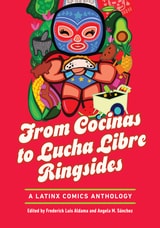
From Cocinas to Lucha Libre Ringsides
A Latinx Comics AnthologyEdited by Frederick Luis Aldama and Angela M. Sánchez
The Ohio State University Press, 2025
Contributors:
Aleasha Acevedo, José Alaniz, Frederick Luis Aldama, Julio Anta, Charlene Bowles, David Bowles, Adrian Carrillo, José Cabrera, Valerie Martinez Cabrera, Mauricio Alberto Cordero, Jaime Crespo, Celeste Cruz, Ernesto Cuevas Jr., Chris Escobar, Rolando Esquivel, Tim Fielder, Dustin Garcia, Eric J. García, Jorge Garza, Oscar Garza, Lucas Gattoni, Blas Goncalves-Borrego, Estella González, Carina Guevara, Aaron Guzman, Javier Hernandez, Sam Jimenez, Eric Kittelberger, Alberto Ledesma, Pablo Leon, Darren López, Patrick Lugo, Jarred A. Luján, Eliamaría Madrid, Miguel Martinez, Paloma Martínez-Cruz, Carlos Meyer, Marisol Meyer Driovínto, Paul Meyer, Rosie Murillo, Rafael Navarro, Daniel Parada, Stephanie Nina Pitsirilos, Jazmin Puente, Raúl the Third, Anna Maria Richardson, Hector Rodriguez III, Theresa Rojas, Rafael Rosado, Andrea Rosales, Justin Rueff, Irma Ruiz, Angela M. Sánchez, Serenity Serseción, Javier Solórzano, Josh Trujillo, Cayetano Valenzuela, Diana “Dianita” Vargas Sampieri, Andrés Vera Martínez
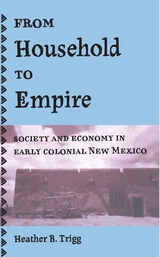
From Household to Empire
Society and Economy in Early Colonial New MexicoHeather B. Trigg
University of Arizona Press, 2005
William P. Clements Center for Southwest Studies, Southern Methodist University
Settlers at Santa Fe and outlying homesteads during the seventeenth century established a thriving economy that saw the exchange of commodities produced by indigenous peoples, settlers, and Franciscan friars for goods manufactured as far away as China, France, and Turkey. This early Spanish colonial period in New Mexico provides an opportunity to explore both economic activity within a colony and the relations between colony and homeland. By examining the material remains of this era from 1598 to 1680, Heather Trigg reveals a more complete picture of colonial life. Drawing on both archaeological and historical sources, Trigg analyzes the various levels of economic activity that developed: production of items in colonial households, exchanges between households, and trade between the colony and Mexico. Rather than focusing only on the flow of products and services, she also explores the social mechanisms that likely had a significant impact on the economic life of the colony. Because economic activity was important to so many aspects of daily life, she is able to show how and why colonial society worked the way it did. While focusing on the colonists, she also explores their relations with Pueblo peoples. Through her analysis of these two pools of data, Trigg generates insights not usually gleaned from the limited texts of the period, providing information about average colonists in addition to the governors and clergy usually covered in historical accounts. By using specific examples from historical documents and archaeological materials, she shows that colonists from all levels of society modified both formal and informal rules of economic behavior to better fit the reality of the colonial frontier. With its valuable comparative data on colonization, From Household to Empire provides a novel way of examining colonial economies by focusing on the maintenance and modification of social values. For all readers fascinated by the history of the Southwest, this book provides a fuller picture of life in early New Mexico than has previously been seen.
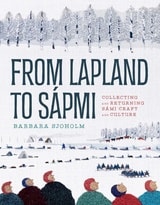
From Lapland to Sápmi
Collecting and Returning Sámi Craft and CultureBarbara Sjoholm
University of Minnesota Press, 2023
A cultural history of Sápmi and the Nordic countries as told through objects and artifacts
Material objects—things made, used, and treasured—tell the story of a people and place. So it is for the Indigenous Sámi living in Norway, Sweden, Finland, and Russia, whose story unfolds across borders and centuries, in museums and private collections. The objects created by the Sámi for daily and ceremonial use were purchased and taken by Scandinavians and foreign travelers in Lapland from the seventeenth century to the present, and the collections described in From Lapland to Sápmi map a complex history that is gradually shifting to a renaissance of Sámi culture and craft, along with the return of many historical objects to Sápmi, the Sámi homeland.
The Sámi objects first collected in Lapland by non-Indigenous people were drums and other sacred artifacts, but later came to include handmade knives, decorated spoons, clothing, and other domestic items owned by Sámi reindeer herders and fishers, as well as artisanal crafts created for sale. Barbara Sjoholm describes how these objects made their way via clergy, merchants, and early scientists into curiosity cabinets and eventually to museums in Copenhagen, Stockholm, Oslo, and abroad. Musicians, writers, and tourists also collected Sámi culture for research and enjoyment. Displays of Sámi material culture in Scandinavia and England, Germany, and other countries in museums, exhibition halls, and even zoos often became part of racist and colonial discourse as examples of primitive culture, and soon figured in the debates of ethnographers and curators over representations of national folk traditions and “exotic” peoples. Sjoholm follows these objects and collections from the Age of Enlightenment through the twentieth century, when artisanship took on new forms in commerce and museology and the Sámi began to organize politically and culturally. Today, several collections of Sámi objects are in the process of repatriation, while a new generation of artists, activists, and artisans finds inspiration in traditional heritage and languages.
Deftly written and amply illustrated, with contextual notes on language and Nordic history, From Lapland to Sápmi brings to light the history of collecting, displaying, and returning Sámi material culture, as well as the story of Sámi creativity and individual and collective agency.
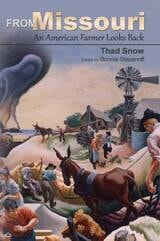
From Missouri
An American Farmer Looks BackThad Snow, Edited by Bonnie Stepenoff
University of Missouri Press, 2012
After years of subjecting the editors of St. Louis newspapers to eloquent letters on subjects as diverse as floods, tariffs, and mules, Thad Snow published his memoir From Missouri in his mid-seventies in 1954. He was barely retired from farming for more than half a century, mostly in the Missouri Bootheel, or “Swampeast Missouri,” as he called it. Now back in print with a new introduction by historian Bonnie Stepenoff, these sketches of a life, a region, and an era will delight readers new to this distinctive American voice as well as readers already familiar with this masterpiece of the American Midwest.
Snow purchased a thousand acres of southeast Missouri swampland in 1910, cleared it, drained it, and eventually planted it in cotton. Although he employed sharecroppers, he grew to become a bitter critic of the labor system after a massive flood and the Great Depression worsened conditions for these already-burdened workers. Shocking his fellow landowners, Snow invited the Southern Tenant Farmers Union to organize the workers on his land. He was even once accused of fomenting a strike and publicly threatened with horsewhipping.
Snow’s admiration for Owen Whitfield, the African American leader of the Sharecroppers’ Roadside Demonstration, convinced him that nonviolent resistance could defeat injustice. Snow embraced pacifism wholeheartedly and denounced all war as evil even as America mobilized for World War II after the attack on Pearl Harbor. In the late 1940s and early 1950s, he became involved with creating Missouri’s conservation movement. Near the end of his life, he found a retreat in the Missouri Ozarks, where he wrote this recollection of his life.
This unique and honest series of personal essays expresses the thoughts of a farmer, a hunter, a husband, a father and grandfather, a man with a soft spot for mules and dogs and all kinds of people. Snow’s prose reveals much about a way of life in the region during the first half of the twentieth century, as well as the social and political events that affected the entire nation. Whether arguing that a good stock dog should be left alone to do its work, explaining the process of making swampland suitable for agriculture, or putting forth his case for world peace, Snow’s ideas have a special authenticity because they did not come from an ivory tower or a think tank—they came From Missouri.
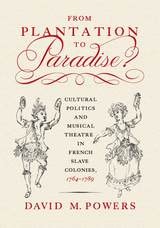
From Plantation to Paradise?
Cultural Politics and Musical Theatre in French Slave Colonies, 1764–1789David M. Powers
Michigan State University Press, 2014
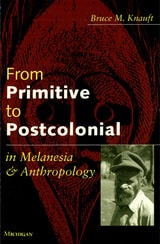
From Primitive to Postcolonial in Melanesia and Anthropology
Bruce M. Knauft
University of Michigan Press, 1999
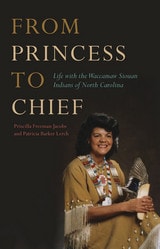
From Princess to Chief
Life with the Waccamaw Siouan Indians of North CarolinaPriscilla Freeman Jacobs
University of Alabama Press, 2013
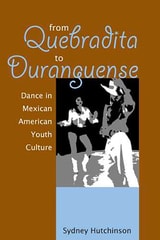
From Quebradita to Duranguense
Dance in Mexican American Youth CultureSydney Hutchinson
University of Arizona Press, 2007
Quebradita, meaning “little break,” is a modern Mexican American dance style that became hugely popular in Los Angeles and across the southwestern United States during the early to mid 1990s. Over the decade of its popularity, this dance craze offered insights into the social and cultural experience of Mexican American youth. Accompanied by banda, an energetic brass band music style, quebradita is recognizable by its western clothing, hat tricks, and daring flips. The dance’s combination of Mexican, Anglo, and African American influences represented a new sensibility that appealed to thousands of young people. Hutchinson argues that, though short-lived, the dance filled political and sociocultural functions, emerging as it did in response to the anti-immigrant and English-only legislation that was then being enacted in California. Her fieldwork and interviews yield rich personal testimony as to the inner workings of the quebradita’s aesthetic development and social significance. The emergence of pasito duranguense, a related yet distinct style originating in Chicago, marks the evolution of the Mexican American youth dance scene.
Like the quebradita before it, pasito duranguense has picked up the task of demonstrating the relevance of regional Mexican music and dance within the U.S. context.
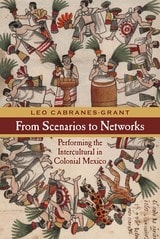
From Scenarios to Networks
Performing the Intercultural in Colonial MexicoLeo Cabranes-Grant
Northwestern University Press, 2016
In this innovative study, Leo Cabranes-Grant analyzes four intercultural events in the Viceroyalty of New Spain that took place between 1566 and 1690. Rather than relying on racial labels to describe alterations of identity, Cabranes-Grant focuses on experimentation, rehearsal, and the interaction between bodies and objects. His analysis shows how scenarios are invested with affective qualities, which in turn enable cultural and semiotic change. Central to his argument is Bruno Latour’s Actor-Network Theory, which figures society as a constantly evolving web of relationships among objects, people, and spaces. In examining these scenarios, Cabranes-Grant attempts to discern the reasons why the conditions of an intensified moment within this ceaseless flow take on a particular value and inspire their re-creation. Cabranes-Grant offers a fresh perspective on Latour’s theory and reorients debates concerning history and historiography in the field of performance studies.
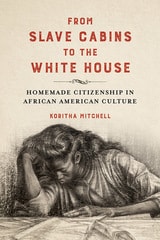
From Slave Cabins to the White House
Homemade Citizenship in African American CultureKoritha Mitchell
University of Illinois Press, 2021
Koritha Mitchell analyzes canonical texts by and about African American women to lay bare the hostility these women face as they invest in traditional domesticity. Instead of the respectability and safety granted white homemakers, black women endure pejorative labels, racist governmental policies, attacks on their citizenship, and aggression meant to keep them in "their place."
Tracing how African Americans define and redefine success in a nation determined to deprive them of it, Mitchell plumbs the works of Frances Harper, Zora Neale Hurston, Lorraine Hansberry, Toni Morrison, Michelle Obama, and others. These artists honor black homes from slavery and post-emancipation through the Civil Rights era to "post-racial" America. Mitchell follows black families asserting their citizenship in domestic settings while the larger society and culture marginalize and attack them, not because they are deviants or failures but because they meet American standards.
Powerful and provocative, From Slave Cabins to the White House illuminates the links between African American women's homemaking and citizenship in history and across literature.
From Tribalism to Nationalism
The Anthropological Turn in Laos – A Tribute to Grant EvansEdited by Yves Goudineau and Vanina Bouté
National University of Singapore Press, 2022

From Uncertain to Blue
By Keith Carter
University of Texas Press, 2011
"In the beginning, there was no real plan, just a road trip that became a journey." In the years 1986 and 1987, Keith Carter and his wife, Patricia, visited one hundred small Texas towns with intriguing names like Diddy Waw Diddy, Elysian Fields, and Poetry. He says, "I tried to make my working method simple and practical: one town, one photograph. I would take several rolls of film but select only one image to represent that dot on my now-tattered map. The titles of the photographs are the actual names of the small towns. . . ." Carter created a body of work that evoked the essence of small-town life for many people, including renowned playwright and fellow Texan, Horton Foote. In 1988, Carter published his one town/one picture collection in From Uncertain to Blue, a landmark book that won acclaim both nationally and internationally for the artistry, timelessness, and universal appeal of its images—and established Carter as one of America's most promising fine art photographers.
Now a quarter century after the book's publication, From Uncertain to Blue has been completely re-envisioned and includes a new essay in which Carter describes how the search for photographic subjects in small towns gradually evolved into his first significant work as an artist. He also offers additional insight into his creative process by including some of his original contact sheets. And Patricia Carter gives her own perspective on their journey in her amplified notes about many of the places they visited as they discovered the world of possibilities from Uncertain to Blue.

From the Blue Windows
Recollections of Life in Queenstown, Singapore, in the 1960s and 1970sTan Kok Yang
National University of Singapore Press, 2013
From the Blue Windows is a collection of Tan Kok Yang's memories of growing up in Queenstown back when the tallest residential building there was fourteen storeys, the Alexandra Canal flooded regularly, and wayang shows were a regular feature on Mei Ling Street. He stayed in Princess Estate, an area that was colloquially known as "the Blue Windows" because of its unique blue glass louvred windows.
With nostalgia and a sense of loss, this memoir is a personal tribute to and celebration of Queenstown and a simple but fulfilling way of life that has all but vanished from modern Singapore.

From the Jewish Heartland
Two Centuries of Midwest FoodwaysEllen F. Steinberg and Jack H. Prost
University of Illinois Press, 2013
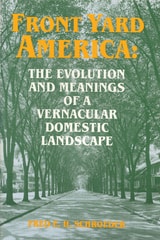
Front Yard America
The Evolution and Meanings of a Vernacular Domestic LandscapeFred E.H. Schroeder
University of Wisconsin Press, 1993
Throughout Front Yard America, Schroeder inquires into the functions, values, and meanings that Americans have found in the domestic landscapes of back yards and front yards, walls and fences, porches and patios.
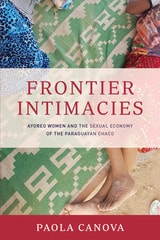
Frontier Intimacies
Ayoreo Women and the Sexual Economy of the Paraguayan ChacoBy Paola Canova
University of Texas Press, 2020
Until the 1960s, the Ayoreo people of Paraguay's Chaco region had remained uncontacted by the world. But as development encroached on their territory, the Ayoreo began to experience rapid cultural change. Paola Canova looks at one aspect of this change in Frontier Intimacies: the sexual practices of Ayoreo women, specifically the curajodie, or single women who exchange sex for money or material goods with non-Ayoreo men, often Mennonite settlers.
Weaving personal anecdotes into her extensive research, Canova shows how the advancement of economic and missionary frontiers has reconfigured gender roles, sexual ethics, and notions of desire in the region. Ayoreo women, she shows, have reappropriated their sexual practices, approaching intimate liaisons on their own terms and seeing the involvement of money not as morally problematic but as constitutive of sexual encounters. By using their sexuality to construct an intimate frontier operating according to their own logics, Canova reveals, Ayoreo women expose the fractured workings of frontier capitalism in spaces of rapid transformation. Inviting broader examination of the ways in which contemporary frontier economies are constructed and experienced, Frontier Intimacies brings a captivating new perspective to the economic development of the Chaco region.
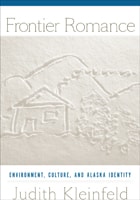
Frontier Romance
Environment, Culture, and Alaska IdentityJudith Kleinfeld
University of Alaska Press, 2012
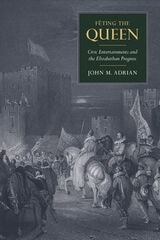
Fêting the Queen
Civic Entertainments and the Elizabethan ProgressJohn M Adrian
University of Massachusetts Press, 2021
While previous scholars have studied Elizabeth I and her visits to the homes of influential courtiers, Fêting the Queen places a new emphasis on the civic communities that hosted the monarch and their efforts to secure much needed support. Case studies of the cities of Oxford, Canterbury, Sandwich, Bristol, Worcester, and Norwich focus on the concepts of hospitality and space—including the intimate details of the built environment.
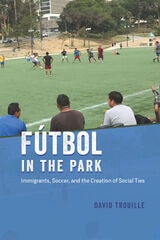
Fútbol in the Park
Immigrants, Soccer, and the Creation of Social TiesDavid Trouille
University of Chicago Press, 2021