Results by title
4155 books match the query 'State & Local' and 177 start with f
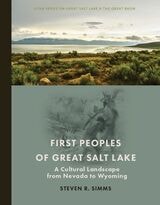
First Peoples of Great Salt Lake
A Cultural Landscape from Nevada to WyomingSteven R. Simms
University of Utah Press, 2023
Great Salt Lake is a celebrated, world-recognized natural landmark. It, and the broader region bound to it, is also a thoroughly cultural landscape; generations of peoples made their lives there. In an eminently readable narrative, Steven Simms, one of the foremost archaeologists of the region, traces the scope of human history dating from the Pleistocene, when First Peoples interacted with the lapping waters of Lake Bonneville, to nearly the present day. Through vivid descriptions of how people lived, migrated, and mingled, with persistence and resilience, Simms honors the long human presence on the landscape.
First Peoples of Great Salt Lake takes a different approach to understanding the ancients than is typical of archaeology. De-emphasizing categories and labels, it traces changing environments, climates, and peoples through the notion of place. It challenges the "Pristine Myth," the cultural bias that Indigenous peoples were timeless, changeless, primitive, and the landscapes they lived in sparsely populated and perpetually pristine. First Peoples and their descendants modified the forests and understory vegetation, shaped wildlife populations, and adapted to long-term climate change. Native Americans of Great Salt Lake were very much part of their world, and the story here is one of long continuity through dramatic cultural change.

Fish For All
An Oral History of Multiple Claims and Divided Sentiment on Lake MichiganMichael J. Chiarappa
Michigan State University Press, 2003
The contentious claims of groups seeking to use Lake Michigan’s fisheries resources were at the center of modern America’s emerging environmental politics in the middle of the twentieth century. Inheriting the environmental abuse, political oversights, and cultural inclinations of an earlier era, Lake Michigan’s later twentieth century fisheries stakeholders found themselves relentlessly divided by a series of disputes arising from the promotion of sport fishing over commercial fishing, policy-making positions of state government, the ecological changes wrought by nonindigenous species, and the reclamation of treaty-rights fishing by Native Americans.
Going beyond the chronicling of past events, Fish for All contextualizes the shared experiences that shape each group’s collective memory and presents their historical narratives as discourse that legitimizes their current claims to the resource. Fish for All highlights the historically charged consciousness of fishing communities and points to the evolving communication that will take place between them, fisheries historians, fisheries anthropologists, scientists, and policymakers.
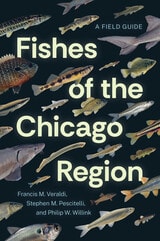
Fishes of the Chicago Region
A Field GuideFrancis M. Veraldi, Stephen M. Pescitelli, and Philip W. Willink
University of Chicago Press, 2025
“A must-have field guide for fans of Second City area fish.”—Robert Ito, The New York Times Book Review • “A treasure of hardcore fish intelligence and delightful tidbits of fish history.”—Dale Bowman, Chicago Sun-Times
Fish don’t heed state boundaries, and neither does this comprehensive, photo-filled guide to the diverse species of Chicago and beyond.
Encompassing southern Lake Michigan, northeastern Illinois, and adjacent areas of Indiana, Michigan, and Wisconsin, the Chicago Region is home to rare habitats supporting diverse fish populations. From small creeks to large rivers and from small ponds to one of the world’s largest freshwater ecosystems, Lake Michigan, these systems are home to some 164 fish species representing 31 families. In this essential field guide, the most complete and up-to-date reference for fishes in the Chicago Region, we meet them all—lampreys, sturgeon, paddlefish, gars, drum, darters, perches, sticklebacks, sculpins, and more. Written by leading local ecologists and featuring a pictorial family key, color photographs, detailed species distribution maps, and natural history observations unique to the region, this go-to guide belongs on the shelf—and in the boat—of every angler, naturalist, fisheries manager, and biologist.

Fishing for Buffalo
A Guide to the Pursuit and Cuisine of Carp, Suckers, Eelpout, Gar, and Other Rough FishRob Buffler
University of Minnesota Press, 2009
The definitive guide to the eccentric and surprisingly popular sport of rough fishing
Is a carpsucker a carp or a sucker? Where can you find the largest eelpout in the United States? Can you catch creek chubs and fry them for supper?
These questions and more are answered within the pages of Fishing for Buffalo. Rob Buffler and Tom Dickson dispel myths and rumors about rough fish with credible biological information while also demonstrating the joy of angling for nontraditional fish. Its wealth of information qualifies this book as a fishing bible for the growing number of rough fishing enthusiasts in the United States and makes it easy to identify the rough fish you may catch. It even includes a sampling of Dickson and Buffler’s favorite recipes, such as Burbot Boulangère and Deviled Grilled Cisco.Rough fish may be a lot of things—ugly, unruly, or elusive—but they are definitely not boring.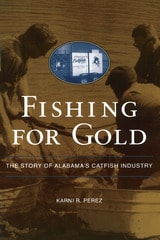
Fishing for Gold
The Story of Alabama's Catfish IndustryKarni R. Perez
University of Alabama Press, 2006
A captivating story of the industry's rise in Alabama.
With a wonderful ear for dialogue and in flowing narrative style, Karni Perez weaves together oral histories collected from early hatchery owners, catfish farmers, processors, and researchers to recount the important contributions made by Alabamians to the channel catfish industry. Perez describes the struggles and glories of fish culture from its early days as an experimental venture to the thriving present-day commercial enterprise that supplies warmwater fish for the American food industry.
As Perez states, "The catfish industry started out in Alabama as a do-it-yourself and figure-it out-yourself kind of enterprise." We hear how men who were mostly cattle farmers learned to nudge male and female fish into spawning in crudely constructed aquaria, how growers discovered the dissolved oxygen needs of their "herd" when big die-offs occurred, how Lenson Montz and Otis Breland designed the first paddle aerator to remedy the problem, how farmers eventually trained a bottomfeeding species to rise to the water surface to eat so their numbers could be better estimated. In one dramatic story, we learn how a man experimenting with the first skinning machine lost a piece of his hand in front of a crowd of horrified locals. (After it was retrieved from the skin basket, it was reattached by a town doctor and healed perfectly.) Ironically, the man was a representative of the engineering firm tasked with designing the machine; he had never before seen a catfish in his life. The machine was modified and became an essential component of modern fish processing.
In addition to telling the remarkable stories of individual contributions by farmers and researchers, Perez explains the positive effects played by improved public infrastructure, continued biological research, state legislation, and federal recognition of aquaculture as agriculture.
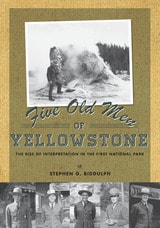
Five Old Men of Yellowstone
The Rise of Interpretation in the First NationalStephen Biddulph
University of Utah Press, 2013
Biddulph’s masterfully woven narrative—part biography, part historical narrative—offers both fascinating factual details about Yellowstone and charming colloquial story telling. The interpretive initiatives of the rangers—nature walks, campfire programs, game stalks, and auto caravans—are enlivened by the colorful personalities of the five men who conducted them. Historians will find that Five Old Men of Yellowstone provides a missing link in the park’s extensive literature, while its humor and sentiment make for an accessible book that will be enjoyed by park history buffs and curious visitors alike.

Five Rings
The Super Bowl History of the New England Patriots (So Far)Jerry Thornton
University Press of New England, 2018
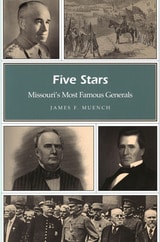
Five Stars
Missouri's Most Famous GeneralsJames F. Muench
University of Missouri Press, 2006

Fixing Illinois
Politics and Policy in the Prairie StateJim Nowlan and J. Thomas Johnson
University of Illinois Press, 2014
- An overhaul of state pension systems that includes more reasonable benefits and raising of the retirement age, among other changes;
- Broadening of the tax base to include services and reductions in rates;
- Raising funds with capital construction bonds to update and integrate the antiquated information systems used by state agencies;
- Uprooting the state's entrenched culture of corruption via public financing of elections, redistricting reform, and revolving door prohibitions for lawmakers
Pointed, honest, and pragmatic, Fixing Illinois is a plan for effective and honest government that seeks an even nobler end: restoring our faith in Illinois's institutions and reviving a sense of citizenship and state pride.

Flames after Midnight
Murder, Vengeance, and the Desolation of a Texas Community, Revised EditionBy Monte Akers
University of Texas Press, 2011
What happened in Kirven, Texas, in May 1922, has been forgotten by the outside world. It was a coworker's whispered words, "Kirven is where they burned the [Negroes]," that set Monte Akers to work at discovering the true story behind a young white woman's brutal murder and the burning alive of three black men who were almost certainly innocent of it. This was followed by a month-long reign of terror as white men killed blacks while local authorities concealed the real identity of the white probable murderers and allowed them to go free.
Writing nonfiction with the skill of a novelist, Akers paints a vivid portrait of a community desolated by race hatred and its own refusal to face hard truths. He sets this tragedy within the story of a region prospering from an oil boom but plagued by lawlessness, and traces the lynching's repercussions down the decades to the present day. In the new epilogue, Akers adds details that have come to light as a result of the book's publication, including an eyewitness account of the burnings from an elderly man who claimed to have castrated two of the men before they were lynched.

Flavor of Wisconsin for Kids
A Feast of History, with Stories and Recipes Celebrating the Land and People of Our StateTerese Allen
Wisconsin Historical Society Press, 2012
What are some food favorites in Wisconsin, and why are they special to us? How have our landscape and the people who have inhabited it contributed to our food heritage? This unique blend of history book and cookbook gives kids a real taste for hands-on history by showing them how to create and sample foods that link us to the resources found in our state and the heritage of those who produce them.
Designed for kids and adults to use together, The Flavor of Wisconsin for Kids draws upon the same source material that makes The Flavor of Wisconsin by Harva Hachten and Terese Allen a fascinating and authoritative document of the history and traditions of food in our state, and presents it in a colorful, kid-friendly format that’s both instructional and fun. Mindful of the importance of teaching kids about where the foods they eat come from, each chapter examines a different food source—forests; waters; vegetable, meat, and dairy farms; gardens; and communities. The authors explore our state’s foodways, from their origins to how they have changed over the years, and then offer a selection of related recipes. The recipes are written for modern kitchens but use many traditional ingredients and techniques. Level of difficulty is clearly noted, as well as whether a recipe requires a heat source to prepare.

Fleur de Lys and Calumet
Being the Penicaut Narrative of French Adventure in LouisianaEdited by Richebourg McWilliams
University of Alabama Press, 1988
Andre Penicaut, a carpenter, sailed with Iberville to the French province of Louisiana in 1699 and did not return to France until 1721. The book he began in the province and finished upon his return to France is an eyewitness account of the first years of the French colony, which stretched along the Gulf Coast from Florida to Texas and in the Mississippi Valley from the Balize to the Illinois country. As a ship carpenter, Penicaut was chosen as a member of several important expeditions: he accompanied Le Sueur up the Mississippi River in 1700 to present-day Minnesota, and he went with Juchereau de St. Denis on the first journey from Mobile to the Red River and overland to the Rio Grande, to open trade with the Spaniards in Mexico. Penicaut helped to build the first post in Louisiana, at Old Biloxi, and the second post on the Mobile River.
Penicaut was at his best when describing the lives and social customs of the Indians of the region. He saw them in realistic terms, showing no prejudice toward their native habits. Neither were his French colleagues cast in heroic or villainous molds—though their accomplishments must strike modern readers as truly epic.
When first published, Fleur de Lys and Calumet was a major stimulus to scholarship in the field. This new edition will be welcomed by a new generation of scholars and readers interested in the colonial history of the Deep South and the Mississippi Valley.
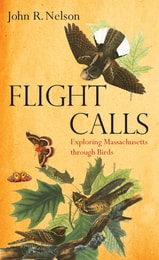
Flight Calls
Exploring Massachusetts through BirdsJohn R. Nelson
University of Massachusetts Press, 2019
With style, humor, and a sense of wonder, Nelson blends his field adventures with a history of the birding community; natural and cultural history; bird stories from authors such as Henry David Thoreau, Emily Dickinson, and Mary Oliver; current scientific research; and observations about the fascinating habits of birds and their admirers. These essays are capped off with a plea for bird conservation, in Massachusetts and beyond.
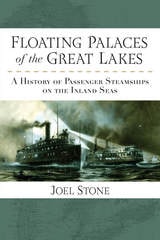
Floating Palaces of the Great Lakes
A History of Passenger Steamships on the Inland SeasJoel Stone
University of Michigan Press, 2015
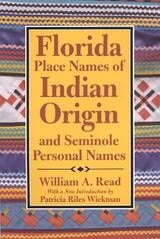
Florida Place-Names of Indian Origin and Seminole Personal Names
William A. Read
University of Alabama Press, 2003
A compendium of Indian-derived names from the three languages of the Muskhogean family—Seminole, Hitchiti, and Choctaw.
The first Native peoples of what is now the United States who met and interacted with Europeans were the people of the lower Southeast. They were individuals of the larger Maskókî linguistic family who inhabited much of present-day Florida, Georgia, Alabama, Mississippi, South Carolina, and eastern portions of Tennessee, Kentucky, and Louisiana. Today, sixteen federally recognized tribes trace their heritage from these early Maskókî peoples, and many of them in both Florida and Oklahoma still speak and understand this root language.
The continuing vitality of this core language, and of Seminole culture and influence, makes this linguistic examination by William Read ever more valuable. A companion to his study of Indian Place Names in Alabama, this long out-of-print guide offers a new introduction from Patricia Wickman in which she provides current understandings of Seminole language and derivations and a brief analysis of Read's contribution to the preservation of the Native linguistic record.
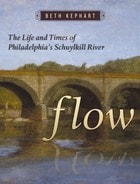
Flow
The Life and Times of Philadelphia's Schuylkill RiverBeth Kephart
Temple University Press, 2014
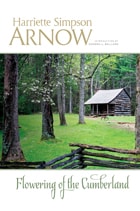
Flowering of the Cumberland
Harriette Simpson Arnow
Michigan State University Press, 2013
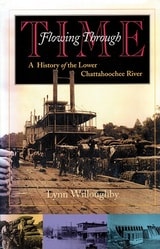
Flowing Through Time
A History of the Lower Chattahoochee RiverLynn Willoughby
University of Alabama Press, 1998
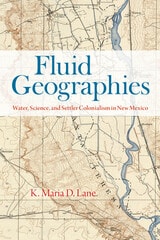
Fluid Geographies
Water, Science, and Settler Colonialism in New MexicoK. Maria D. Lane
University of Chicago Press, 2024
Maria Lane’s Fluid Geographies traces New Mexico’s transition from a community-based to an expert-led system of water management during the pre-statehood era. To understand this major shift, Lane carefully examines the primary conflict of the time, which pitted Indigenous and Nuevomexicano communities, with their long-established systems of irrigation management, against Anglo-American settlers, who benefitted from centralized bureaucratic management of water. The newcomers’ system eventually became settled law, but water disputes have continued throughout the district courts of New Mexico’s Rio Grande watershed ever since.
Using a fine-grained analysis of legislative texts and nearly two hundred district court cases, Lane analyzes evolving cultural patterns and attitudes toward water use and management in a pivotal time in New Mexico’s history. Illuminating complex themes for a general audience, Fluid Geographies helps readers understand how settler colonialism constructed a racialized understanding of scientific expertise and legitimized the dispossession of nonwhite communities in New Mexico.

Fluid New York
Cosmopolitan Urbanism and the Green ImaginationMay Joseph
Duke University Press, 2013
Joseph considers New York's relation to the water that surrounds and defines it. Her reflections reach back to the city's heyday as a world-class port—a past embodied in a Dutch East India Company cannon recently unearthed from the rubble at the World Trade Center site—and they encompass the devastation caused by Hurricane Sandy in 2012. They suggest that New York's future lies in the reclamation of its great water resources—for artistic creativity, civic engagement, and ecological sustainability.
Fluorspar Mining
Photos from Illinois and Kentucky, 1905-1995Herbert K. Russell
Southern Illinois University Press, 2019
This first-ever pictorial record of the people and methods of the Illinois-Kentucky Fluorspar District from the 1900s to the 1990s covers early and modern means of extracting, hoisting, processing, and transporting the mineral from mine mouth to end user. Nearly one hundred images carefully selected by author Herbert K. Russell show early pick-and-shovel extraction and open-flame lighting as well as primitive drilling methods and transportation by barrels, buckets, barges, mule teams, and trams, in addition to the use of modern equipment and sophisticated refinement procedures such as froth flotation. Russell also provides an overview of the many industrial uses of fluorspar, from metal work by ancient Romans to the processing of uranium by scientists seeking to perfect the atomic bomb. Preserving what is known about the industry by miners, managers, and museums, this detailed and fascinating pictorial history looks both above and below ground at fluorspar mining.

Fly in the Buttermilk
The Life Story of Cecil ReedCecil A. Reed
University of Iowa Press, 1993

Folded Selves
Colonial New England Writing in the World SystemMichelle Burnham
Dartmouth College Press, 2014

Folk Songs from the West Virginia Hills
PATRICK W. GAINER
West Virginia University Press, 2017
Folk Songs from the West Virginia Hills stands out as a book with multiple audiences. As a musical text, it offers comparatively easy access to a rich variety of folk songs that could provide a new repertoire for Appalachian singers. As an ethnographic text, it has the potential to reintroduce significant data about the musical lives of many West Virginians into conversations around Appalachian music—discourses that are being radically reshaped by scholars working in folklore, ethnomusicology, and Appalachian studies. As a historical document, it gives readers a glimpse into the research methods commonly practiced by mid-twentieth-century folklorists. And when read in conjunction with John Harrington Cox’s Folk Songs of the South (also available from WVU Press), it sheds important light on the significant role that West Virginia University has played in documenting the state’s vernacular traditions.

Folksongs of Another America
Field Recordings from the Upper Midwest, 1937–1946James P. Leary
University of Wisconsin Press, 2018
America's Upper Midwest is a distinctive region where many indigenous and immigrant peoples have maintained, merged, and modified their folk song traditions for more than two centuries. In the 1930s and 40s, Sidney Robertson, Alan Lomax, and Helene Stratman-Thomas—with support from the Library of Congress and armed with bulky microphones, blank disks, spare needles, and cumbersome disk-cutting machines—recorded roughly 2000 songs and tunes throughout Michigan, Minnesota, and Wisconsin. Spanning dance tunes, ballads, lyric songs, hymns, laments, versified taunts, political anthems, street cries, and recitations, these field recordings—made by people born before or shortly after 1900—were captured at a transformative moment when America was in the throes of the Great Depression, World War II was erupting, and market-driven mass entertainment media were expanding rapidly. Yet, except for a handful of Anglo-American performances, these remarkable field recordings in more than twenty-five languages have remained largely unknown, along with the lives of their mostly immigrant, indigenous, rural, and working class performers.
Since the 1970s, folklorist James P. Leary has worked steadily to bring the folk music of the Upper Midwest to a larger public. Folksongs of Another America presents 187 representative performances by more than 200 singers and musicians, carefully restored in digital form from deteriorating original formats. The accompanying book provides an introduction, full texts of all lyrics in the original languages and in English translation, extensive notes about each song and tune, biographical sketches and photographs of many of the performers, and details about Robertson, Lomax, and Stratman-Thomas and their fieldwork efforts as song collectors. These restored performances reveal with clarity and power a nearly lost sonic portrait of another America.
Available here for the first time is the remarkably diverse folk music of America's Upper Midwest, captured in field recordings by collectors for the Library of Congress from 1937 to 1946. This landmark multimedia work challenges and considerably broadens popular and scholarly understanding of folk music in American culture. Although Eastern, Southern, and Western musical traditions are familiar to fans of American roots music, the restored images and performances of Folksongs of Another America weave the songs and spirit of the Upper Midwest's peoples into the nation's folksong fabric.
187 songs and tunes, digitally restored
Songs in more than 25 languages, with full original lyrics and English translations
More than 200 performers, with biographical notes and many photographs
BOXED SET INCLUDES
Illustrated book Folksongs of Another America
300 pp. (est.), 94 black and white photographs and illustrations
CDs & DVD
CD 1 Pigtown Fling: The Sidney Robertson Recordings
Recordings of lumberjack, Finnish, Scots Gaelic, and Serbian performers captured by fieldworker Sidney Robertson in Wisconsin and Minnesota in 1937.
CD 2 The River in the Pines: The Wisconsin Lumberjacks Recordings
Performances of the acclaimed Wisconsin Lumberjacks band of Rice Lake, Wisconsin, recorded by both Sidney Robertson and Alan Lomax during National Folk Festivals in Chicago and Washington, D.C., in 1937 and 1938.
CD 3 Harps and Accordions: The Alan Lomax Recordings Alan Lomax's 1938 Michigan field recordings of lumberjack, Finnish, French Canadian, German, Irish, Lithuanian, Ojibwe, Polish, and Swedish performers.
CD 4 When the Dance is Over: Helene Stratman-Thomas Recordings, Part 1 CD 5 My Father Was a Dutchman: Helene Stratman-Thomas Recordings, Part 2 Recordings made throughout Wisconsin in 1940, 1941, and 1946, encompassing not only Finns, French Canadians, Germans, Irish, Lithuanians, Ojibwe, Poles, Scots, Serbs, and Swedes, but also African American, Austrian, Belgian, Cornish, Croatian, Czech, Danish, Dutch, Ho-Chunk, Icelandic, Italian, Luxemburger, Norwegian, Oneida, Swiss, and Welsh performers.
DVD Alan Lomax Goes North The new documentary film combines digitally restored silent color film footage, related field recordings, voice-over readings from Lomax's correspondence and field notes, and onscreen text to create an audiovisual narrative featuring the performers and scenes that captivated Alan Lomax during his 1938 Upper Midwestern foray.
Funding for this project was provided by the National Endowment for the Humanities, the Brittingham Trust, the University of Wisconsin–Madison Graduate School with funding from the Wisconsin Alumni Research Foundation, the University of Wisconsin–Madison Department of Scandinavian Studies' Birgit Baldwin professorship, and the Finlandia Foundation.
Follow the Blue Blazes
A Guide To Hiking Ohio's Buckeye TrailRobert J. Pond
Ohio University Press, 2003
Unique among hiking trails is the one that forms a complete loop around the state of Ohio. That 1,200-mile trail is called the Buckeye Trail. Showing the way on tree trunks, rocks, and other natural signposts are the blue painted markings called “the blue blazes.” In Follow the Blue Blazes, the reader embarks on a journey to discover a part of Ohio largely unseen except along this great path.
Beginning with the startling rock formations and graceful waterfalls of Old Man’s Cave in southern Ohio, and leading clockwise around the state to visit expansive forests, lovely parks, ancient mounds, historic canals and battlefields, and scenic river trails, experienced trailsman Robert J. Pond provides a captivating look at each section of the trail.
Each chapter features an overview of a 100-mile section of the trail and three self-guided featured hikes. The overviews, with accompanying maps, may be read consecutively to acquaint the reader with the entire course of the blue blazes. But most readers will best enjoy the Buckeye Trail by taking the guide along on featured hikes. Each hike is supported by a detailed but easy-to-follow map and includes explicit directions to trailheads and approximate hiking times.
In addition to many outlying areas, the extensive Buckeye Trail is accessible in or near Cincinnati, Dayton, Toledo, Cleveland, and Akron. Robert Pond has supplemented each description with interesting details about the geology and the diverse habitats of flora and fauna. Readers, too, can enjoy the beauty and wonders of Ohio if they Follow the Blue Blazes.
Following Father Chiniquy
Immigration, Religious Schism, and Social Change in Nineteenth-Century IllinoisCaroline B. Brettell
Southern Illinois University Press, 2015
Winner, ISHS Certificate of Excellence, 2016
In the late 1850s and early 1860s, the attention of the Catholic and Protestant religious communities around the world focused on a few small settlements of French Canadian immigrants in northeastern Illinois. Soon after arriving in their new home, a large number of these immigrants, led by Father Charles Chiniquy, the charismatic Catholic priest who had brought them there, converted to Protestantism. In this anthropological history, Caroline B. Brettell explores how Father Chiniquy took on both the sacred and the secular authority of the Catholic Church to engineer the religious schism and how the legacy of this rift affected the lives of the immigrants and their descendants for generations. This intriguing study of a nineteenth-century migration of French Canadians to the American Midwest offers an innovative perspective on the immigrant experience in America.
Brettell chronicles how Chiniquy came to lead approximately one thousand French Canadian families to St. Anne, Illinois, in the early 1850s and how his conflict with the Catholic hierarchy over the ownership and administration of church property, delivery of the mass in French instead of Latin, and access to the Bible by laymen led to his excommunication. Drawing on the concept of social drama—a situation of intensely lived conflict that emerges within social groups—Brettell explains the religious schism in terms of larger ethnic and religious disagreements that were happening elsewhere in the United States and in Canada. Brettell also explores legal disputes, analyzes the reemergence of Catholicism in St. Anne in the first decade of the twentieth century, addresses the legacy of Chiniquy in both the United States and Quebec, and closely examines the French Canadian immigrant communities, focusing on the differences between the people who converted to Protestantism and those who remained Catholic.
Occurring when nativism was pervasive and the anti-immigrant Know-Nothing Party was at its height, Chiniquy’s religious schism offers an opportunity to examine a range of important historical and anthropological issues, including immigration, ethnicity, and religion; changes in household and family structure; the ways social identities are constructed and reconstructed through time; and the significance of charismatic leadership in processes of social and religious change. Through its multidisciplinary approach, Brettell’s enlightening study provides a pioneering assessment of larger national tensions and social processes, some of which are still evident in modern immigration to the United States.

Food Storage in Michigan's Late Woodland
The Work of Indigenous WomenKathryn M. Frederick
University of Alabama Press, 2026
Incorporates experimental archaeology to understand the food-caching strategies led by Indigenous women in Late Woodland Michigan.
This experimental archaeology book centers on the decision of Indigenous women in Michigan’s Late Woodland to store food in cache pits for later use, to ensure a stable food supply. These food storage techniques were efforts to increase communal chances of survival in direct responses to sociopolitical changes. Kathryn M. Frederick highlights the importance of food storage in these communities and the decision-making and behaviors behind it.
To discover why food storage became a popular practice at that period, Frederick considered the efficacy of subterranean food storage and constructed experiments to understand the timing and use of cache pits and to test their reliability and efficiency. She also compiled ethnographic data on location, environmental conditions, movement strategies, and types of foodstuffs stored for dozens of hunter-gatherer groups. Two distinct patterns of food storage emerged: “reliant” and “redundant.” Frederick argues that the Indigenous women utilized a system of reliant storage during times of abundance but could switch to a redundant system as the socioeconomic climate shifted. This book will interest a wide swath of archaeologists and others interested in Indigenous foodways and women’s key roles.

Football Town
The Rough and Tumble Gridiron History of St. LouisMark Pierce
University of Missouri Press, 2027
For 49 years St. Louis was home to two NFL football franchises comprising many colorful and even great players, but ever since the Rams moved back to Los Angeles in 2016, the Gateway City has secured a solid reputation as an NFL ghost town. In Football Town:The Rough and Tumble Gridiron History of St. Louis, the first scholarly treatment of the history of all professional football in St. Louis, Mark Pierce challenges the standard narrative, chronicling the city’s rich yet largely forgotten history of pro football, celebrating its more successful moments on the gridiron, and proving that St. Louis has long been and still is far more than a “Baseball Town.”
Pierce begins with St. Louis’s efforts to compete in the burgeoning NFL in 1923 and 1934-1936, yet the city’s pro football history begins in earnest with the arrival of the Cardinals from Chicago in 1960. The author chronicles the team’s entire 28-season stay in St. Louis, including its most successful period under head coach Don Coryell, from 1973 to 1977, and the inconsistency that prevailed after his tenure. Eventually, revenue concerns, failed stadium negotiations, and other issues culminated in the owner of the franchise’s decision to move the team to Phoenix after the 1987 season, despite offers of better terms at Busch Stadium and the promise of the construction of a new downtown stadium by city and state government leaders.
Even after the loss of the Cardinals, a craving for pro football persisted in St. Louis, and the search for a new team commenced almost immediately thereafter. Pierce documents the tumultuous process of securing the Rams’ 1995 move from their native Los Angeles to St. Louis, a deal concluded through high-stakes negotiations despite efforts by NFL insiders to prevent the move entirely. Nevertheless, by April that year, St. Louis fans could once again emotionally invest in the NFL—and they did so in earnest. In addition to detailing the ups and downs of the Ram’s subsequent twenty years in the city, Pierce closely examines the “poison pill” made in its original lease agreement with the St. Louis Convention and Visitors Commission, which would ultimately lead to disaster.
Football Town is built on a foundation of 25 interviews the author personally conducted with former players, coaches, and broadcasters, including Pro Football Hall of Famers Dick Vermeil and Jackie Smith; Baseball Hall of Fame broadcaster Joe Buck; Cardinals greats Jim Hart, Mel Gray, O.J. Anderson, and Roy Green; and Rams’ Super Bowl champions Mike Martz, Trent Green, Adam Timmerman, Keith Lyle, and Adam Timmerman.
Accompanied by dozens of photos not seen in decades, Football Town allows those who played the game in St. Louis to tell their stories and share their thoughts on the city’s rich and colorful football history.
Foothold on a Hillside
Memories of a Southern IllinoisanCharless Caraway. Foreword by Paul Simon
Southern Illinois University Press, 1986
In a style reminiscent of the master storytellers of yore, Charless Caraway recounts the story of his life, as a man and a boy, on small farms in Saline and Jackson counties, particularly around Eldorado, Makanda, and Etherton Switch. He makes no bones about the hardships of those "old days," first helping his father eke out a living from the land, then scrambling for a living as a sharecropper and fruit picker, as he scrimped and saved for the day when he and his young wife, Bessie Mae Rowan Caraway, could buy a piece of land of their own.
The one-room school, the general store, the trips by wagon over roads that choked you in summer and swallowed you in winter, the home that burned: all are described in a matter-of-fact yet moving way. Many of the locations, buildings, and people are represented in equally unromanticized photographs from the family’s collection. Some of the stories and photos recall the common disasters of the frontier: drought, flood, and the tornado of 1925.
It is clear from these stories that each aspect of life exacted a price, but the Caraways paid that price without regret and rallied to go on their way. Charless and his family and friends fill this book with courage, strength, and an unshakable faith in the value of human endeavor.

For Duty and Destiny
The Life and Civil War Diary of William Taylor Stott, Hoosier Soldier and EducatorLloyd A. Hunter
Indiana Historical Society Press, 2011

For Faith and Fortune
The Education of Catholic Immigrants in Detroit, 1805-1925JoEllen McNergney Vinyard
University of Illinois Press, 1998
JoEllen McNergney Vinyard's comprehensive examination of parochial education in Detroit within the broader context of that city's urbanization patterns yields a richly detailed addition to our understanding of the European immigrant experience.
For Faith and Fortune will be of interest to historians and scholars of urban studies, particularly immigration, schooling, and the Catholic experience.

For Love and Money
Portraits of Wisconsin Family BusinessesCarl Corey
Wisconsin Historical Society Press, 2014

For Rent
Understanding Landlords, Rental Housing, and Evictions in PhiladelphiaJohn Balzarini and Melody L. Boyd
Temple University Press, 2027
Landlords are often painted as “rich, indifferent, and miserly.” For Rent humanizes small-scale landlords who are highly involved in their property management and tenant interaction. John Balzarini and Melanie Boyd interview small-scale landlords in Philadelphia to understand how they think, why they invest in rental housing, and how their experiences as housing providers shape both their supportive and detrimental behaviors toward renters. They reveal an earnest desire to provide decent rental housing and resolve rent issues through communication, flexibility, and compromise rather than eviction.
For Rent describes these landlords’ challenges, from social problems connected to high poverty rates, to the increasing consolidation of rental housing by large-scale corporate landlords, which can push small-scale landlords out of the rental housing market. The authors argue that the decline of small-scale landlords could reduce housing affordability and increase evictions. Instead, collectively valuing rental housing and implementing policies that support small-scale landlords can strengthen housing stability and improve outcomes for renters.
Providing a regional focus that is indicative of national trends, For Rent shows the many advantages small-scale landlords have over their corporate competitors, while also critically analyzing the broader housing system that places them on the front lines of managing market contradictions.

For the Love of Mike
More of the Best of Mike RoykoMike Royko
University of Chicago Press, 2001
Royko, a nationally syndicated Pulitzer Prize winner, wrote for three major Chicago newspapers in the course of his 34 years as a daily columnist. Chosen from more than 7,000 columns, For the Love of Mike brings back more than a hundred vintage Royko pieces-most of which have not appeared since their initial publication-for readers across the country to enjoy. This second collection includes Royko's riffs on the consequences of accepting a White House dinner invitation (not surprisingly, he turned it down); his explanation of the notorious Ex-Cub Factor in World Series play; and his befuddlement at a private screening of Beyond the Valley of the Dolls, to which he was invited by his pal Ebert, the screenplay's author. The new collection also illuminates Royko's favorite themes, topics he returned to again and again: his skewering of cultural trends, his love of Chicago, and his rage against injustice. By turns acerbic, hilarious, and deeply moving, Royko remains a writer of wit and passion who represents the best of urban journalism.
"To read these columns again is to have Mike back again, nudging, chuckling, wincing, deflating pomposity, sticking up for the little guy, defending good ideas against small-minded people," writes Roger Ebert in his foreword to the book. For the Love of Mike does indeed bring Mike back again, and until a Chicago newspaper takes up Ebert's suggestion that it begin reprinting each of Royko's columns, one a day, this collection will more than satisfy Royko's loyal readers.

Forced Out
A Nikkei Woman's Search for a Home in AmericaJudy Y. Kawamoto
University Press of Colorado, 2020
Forced Out: A Nikkei Woman’s Search for a Home in America offers insight into “voluntary evacuation,” a little-known Japanese American experience during World War II, and the lasting effects of cultural trauma. Of the roughly 120,000 people forced from their homes by Executive Order 9066, around 5,000 were able to escape incarceration beforehand by fleeing inland. In a series of beautifully written essays, Judy Kawamoto recounts her family’s flight from their home in Washington to Wyoming, their later moves to Montana and Colorado, and the influence of those experiences on the rest of her life. Hers is a story shared by the many families who lost everything and had to start over in often suspicious and hostile environments.
Kawamoto vividly illustrates the details of her family’s daily life, the discrimination and financial hardship they experienced, and the isolation that came from experiencing the horrors of the 1940s very differently than many other Japanese Americans. Chapters address her personal and often unconscious reactions to her parents’ trauma, as well as her own subsequent travels around much of the world, exploring, learning, enjoying, but also unconsciously acting out a continual search for a home.
Showing how the impacts of traumatic events are collective and generational, Kawamoto draws
interconnections between her family’s displacement and later aspects of her life and juxtaposes the impact of her early experiences and questions of identity, culture, and assimilation. Forced Out will be of great interest to the general reader as well as students and scholars of ethnic studies, Asian American studies, history, education, and mental health.
2022 Asian/Pacific American Award for Literature, Honor Title, Adult Non-Fiction Literature
2022 Evans Handcart Award Winner
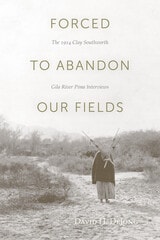
Forced to Abandon Our Fields
The 1914 Clay Southworth Gila River Pima InterviewsDavid H. DeJong
University of Utah Press, 2011
During the nineteenth century, upstream diversions from the Gila River decreased the arable land on the Gila River Indian Reservation to only a few thousand acres. As a result the Pima Indians, primarily an agricultural people, fell into poverty. Many Pima farmers and leaders lamented this suffering and in 1914 the United States Indian Irrigation Service assigned a 33-year-old engineer named Clay “Charles” Southworth to oversee the Gila River adjudication. As part of that process, Southworth interviewed 34 Pima elders, thus putting a face on the depth of hardships facing many Indians in the late nineteenth century.

Forever Struggle
Activism, Identity, and Survival in Boston's Chinatown, 1880–2018Michael Liu
University of Massachusetts Press, 2020
In writing about Boston Chinatown's long history, Michael Liu, a lifelong activist and scholar of the community, charts its journey and efforts for survival—from its emergence during a time of immigration and deep xenophobia to the highway construction and urban renewal projects that threatened the neighborhood after World War II to its more recent efforts to keep commercial developers at bay. At the ground level, Liu depicts its people, organizations, internal battles, and varied and complex strategies against land-taking by outside institutions and public authorities. The documented courage, resilience, and ingenuity of this low-income immigrant neighborhood of color have earned it a place amongst our urban narratives. Chinatown has much to teach us about neighborhood agency, the power of organizing, and the prospects of such neighborhoods in rapidly growing and changing cities.

Forever in the Path
The Black Experience at Michigan State UniversityPero G Dagbovie
Michigan State University Press, 2025
Michigan State University—founded in 1855 as the Agricultural College of the State of Michigan—has a fascinating past, a history shaped by vacillating local and national contexts as well as by people from different walks of life. The first Black students arrived on campus during the late nineteenth and early twentieth centuries, and the first full-time Black faculty member was hired in the late 1940s. Before and after the modern Civil Rights Movement, African Americans from various backgrounds were transformed by MSU while also profoundly contributing in vital ways to the institution’s growth and evolving identity.
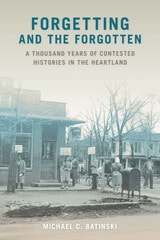
Forgetting and the Forgotten
A Thousand Years of Contested Histories in the HeartlandMichael C. Batinski
Southern Illinois University Press, 2022
Revealing the forgotten in community histories
Histories try to forget, as this evocative study of one community reveals. Forgetting and the Forgotten details the nature of how a community forged its story against outsiders. Historian Michael C. Batinski explores the habits of forgetting that enable communities to create an identity based on silencing competing narratives. The white settlers of Jackson County, Illinois, shouldered the hopes of a community and believed in the justice of their labor as it echoed the national story. The county’s pastkeepers, or keepers of the past, emphasizing the white settlers’ republican virtue, chose not to record violence against Kaskaskia people and African Americans and to disregard the numerous transient laborers. Instead of erasing the presence of outsiders, the pastkeepers could offer only silence, but it was a silence that could be broken.
Batinski’s historiography critically examines local historical thought in a way that illuminates national history. What transpired in Jackson County was repeated in countless places throughout the nation. At the same time, national history writing rarely turns to experiences that can be found in local archives such as court records, genealogical files, archaeological reports, coroner’s records, and veterans’ pension files. In this archive, juxtaposed with the familiar actors of Jackson County history—Benningsen Boon, John A. Logan, and Daniel Brush—appear the Sky People, Italian immigrant workers, black veterans of the Civil War and later champions of civil rights whose stories challenge the dominant narrative.

Forging Arizona
A History of the Peralta Land Grant and Racial Identity in the WestAnita Huizar-Hernández
Rutgers University Press, 2019
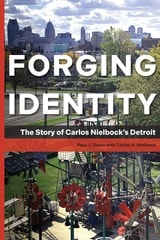
Forging Identity
The Story of Carlos Nielbock's DetroitPaul J Draus
Michigan State University Press, 2025
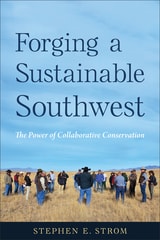
Forging a Sustainable Southwest
The Power of Collaborative ConservationStephen E. Strom
University of Arizona Press, 2024
Forging a Sustainable Southwest introduces readers to four conservation efforts that provide insight into how diverse groups of citizens have worked collaboratively to develop visions for land use that harmonized sometimes conflicting ecological, economic, cultural, and community needs. Through the voices of more than seventy individuals involved in these efforts, we learn how they’ve developed plans for protecting, restoring, and stewarding lands sustainably; the management and funding tools they’ve used; and their perceptions of the challenges that remain and how to meet them.
This book details efforts to craft the Sonoran Desert Conservation Plan, establish Las Cienegas National Conservation Area, protect Cienega Ranch, and create the Malpai Borderlands Group. It will appeal to anyone interested in grassroots efforts to protect the vital ecosystems of the western United States.
These inspiring stories of citizens and groups working together demonstrate a path for the future built day-by-day: breaking bread at potlucks, holding informal front-porch discussions, and later finding common purpose in community-wide meetings. Might their efforts reveal a path to rebuilding our democratic systems from the ground up?
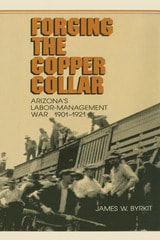
Forging the Copper Collar
Arizona's Labor-Management War of 1901–1921James W. Byrkit
University of Arizona Press, 1982
Just after dawn, two thousand armed vigilantes took to the streets of this remote Arizona mining town to round up members and sympathizers of the radical Industrial Workers of the World. Before the morning was over, nearly twelve hundred alleged Wobblies had been herded onto waiting boxcars. By day's end, they had been hauled off to New Mexico.
While the Bisbee Deportation was the most notorious of many vigilante actions of its day, it was more than the climax of a labor-management war—it was the point at which Arizona donned the copper collar. That such an event could occur, James Byrkit contends, was not attributable so much to the marshaling of public sentiment against the I.W.W. as to the outright manipulation of the state's political and social climate by Eastern business interests.
In Forging the Copper Collar, Byrkit paints a vivid picture of Arizona in the early part of this century. He demonstrates how isolated mining communities were no more than mercantilistic colonies controlled by Eastern power, and how that power wielded control over all the Arizona's affairs—holding back unionism, creating a self-serving tax structure, and summarily expelling dissidents.
Because the years have obscured this incident and its background, the writing of Copper Collar involved extensive research and verification of facts. The result is a book that captures not only the turbulence of an era, but also the political heritage of a state.

Forgotten Kingdom
The Mormon Theocracy in the American West, 1847-1896David Bigler
Utah State University Press, 1998
Forgotten Towns of Southern New Jersey
Beck, Henry
Rutgers University Press, 1983
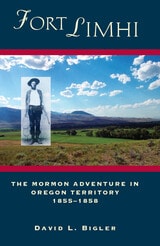
Fort Limhi
The Mormon Adventure in Oregon Territory, 1855-1858David L. Bigler
Utah State University Press, 2004
In May 1855 twenty-seven men set out from the young Mormon settlements in Utah to establish the northernmost colony of the Kingdom of God, "the Northern Mission to the Remnants of the House of Jacob"-American Indians. More colonists, including families, would join them later. Building a fort in the Limhi Valley, four hundred miles to the north and at the foot of the pass by which Lewis and Clark had crossed the Continental Divide, they began to proselyte among Sacagawea's Shoshone relatives as well as members of the Bannock, Nez Percé, and other tribes. Three years later, some of their expected and actual Indian converts violently drove the colonists out and destroyed Fort Limhi.
In Fort Limhi: The Mormon Adventure in Oregon Territory, 1855-1858, David Bigler shows that the colony, known as the Salmon River Mission, played a pivotal role in the Utah War of 1857-1858 and that the catastrophic end of the mission was critical in keeping that conflict from becoming an all out war between Mormon Utah and the United States. In the process, he uses a multitude of primary sources, many newly uncovered or previously overlooked, to reconstruct a dramatic and compelling story involving stalwart Mormon frontiersmen, Brigham Young, a variety of Native American individuals and groups, the U. S. Army, and "mountaineers," as the surviving fur trade veterans now commonly known as "mountain men" called themselves.
Fort Meade, 1849–1900
Canter Brown
University of Alabama Press, 1995
The oldest town in interior south Florida, Fort Meade lies about 50 miles east of Tampa and 10 miles south of Polk County's seat of Bartow. In this volume, Polk County native Canter Brown recounts the intriguing story of the founding and evolution of Fort Meade during the last half of the 19th century, when it was first established as a military outpost to separate Seminoles from white pioneer families desirous of cattle-grazing lands. A civilian community coalesced at Fort Meade under the pressures of the Billy Bowlegs War of 1855-58. Quickly the village developed as a cattle-industry center, which was important to the Confederacy until its destruction in 1864 by home-grown Union forces.
In the postwar era the cattle industry revived, and the community prospered. The railroads arrived in the 1880s, bringing new settlers, and the village grew into a town. Opportunities expanded as well with the growth of citrus, phosphate mining, truck farming, and tobacco industries. A boom-and-bust economy alternately bolstered and rocked the town, and the disastrous freezes of 1894Ð95 almost delivered a fatal blow.
Little has been written about town development on the Florida frontier. This book portrays the extremely complicated and often exciting processes and influences at play in interior south Florida, and the very precarious hold that town life possessed on that frontier.Local history the way it should be written. Canter Brown has managed to score several significant accomplishments in Fort Meade, 1849-1900. The book contributes to the growing body of good, solid monographs dealing with Florida state and local history and represents the building blocks necessary for a state and regional synthesis. The cumulative research compiled for this volume is impressive and daunting. Canter Brown proves that good local history requires considerable detective work and far-ranging inquiries.
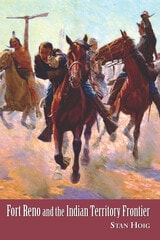
Fort Reno and the Indian Territory Frontier
Stan Hoig
University of Arkansas Press, 2005
The story of Fort Reno, as detailed here by Stan Hoig, touches on several of the most important topics of nineteenth-century Western history: the great cattle drives, Indian pacification and the Plains Wars, railroads, white settlement, and the Oklahoma land rushes. Hoig deals not only with Fort Reno, but also with Darlington agency, the Chisolm Trail, and the trading activities in Indian Territory from 1874 to approximately 1900. The author includes maps, photographs, and illustrations to enhance the narrative and guide the reader, like a scout, through a time of treacherous but fascinating events in the Old West.
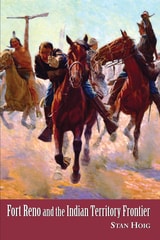
Fort Reno and the Indian Territory Frontier
Stan Hoig
University of Arkansas Press, 2005
The story of Fort Reno, as detailed here by Stan Hoig, touches on several of the most important topics of nineteenth-century Western history: the great cattle drives, Indian pacification and the Plains Wars, railroads, white settlement, and the Oklahoma land rushes. Hoig deals not only with Fort Reno, but also with Darlington agency, the Chisolm Trail, and the trading activities in Indian Territory from 1874 to approximately 1900. The author includes maps, photographs, and illustrations to enhance the narrative and guide the reader, like a scout, through a time of treacherous but fascinating events in the Old West.