Results by title
3388 books match the query 'Fiction' and 135 start with f
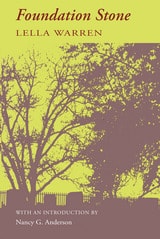
Foundation Stone
Lella Warren
University of Alabama Press, 1986
Using the history of Alabama and the stories of her pioneering ancestors, Lella Warren created the Whetstone clan who settled Alabama in the 1820s, helped lead it into the prosperity of the 1850s, and fought for it in the War Between the States. The historical background of Foundation Stone is authentic, but, more, it is a compelling story about believable characters. The story of these people—three generations of Whetstones—captures the American pioneering spirit. As an unidentified reviewer described the novel, “Lella Warren’s ‘Foundation Stone’ is the long, well-told chronicle of a family that loved and hoped and struggled in a difficult world, unaware that they symbolized an era and a way of life.” Foundation Stone was published in September 1940 and was on the Publishers Weekly bestseller list September 1940-February 1941, along with Hemingway’s For Whom the Bell Tolls and Wolfe’s You Can’t Go Home Again.
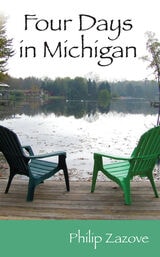
Four Days in Michigan
A NovelPhilip Zazove
Gallaudet University Press, 2012
As a young, deaf Jewish woman living in a small town in Michigan in 1942, Sandra Horowitz felt deeply frustrated by her limited prospects. Even though she had just graduated from junior college, she knew that she had two strikes against her in fulfilling her dream to become a veterinarian. Better to marry Jacob Winter, her parents urged her, a deaf Jewish man who made a good living. Then, Sandra met Rudy Townsend, a hearing soldier on leave before shipping out to the war in Europe.
In just four days, both Sandra and Rudy’s worlds were turned upside down. Sandra’s parents feared him for being hearing and a Gentile, while Rudy’s parents expressed openly their bias against her ethnic background and her deafness. Even so, Sandra and Rudy soon realized that they had fallen in love, deeply and passionately. As they shared the brief time they had together, they learned about each other’s dreams for the future — Sandra’s desire to be a vet and Rudy’s determination to serve in Congress. Then, Rudy had to leave for the war.
Philip Zazove’s novel Four Days in Michigan captures perfectly the power of irrepressible love between two individuals from opposite backgrounds. The struggles they encounter in an era when such differences were never more sharply drawn also reveal great detail about deaf and hearing life. Despite all, their triumph comes ultimately because of their long-lasting individual respect and love.
Four for a Quarter
FictionsMichael Martone
University of Alabama Press, 2011
Fourteen Stories, None of Them Are Yours
A NovelLuke B. Goebel
University of Alabama Press, 2014
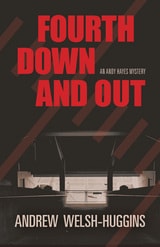
Fourth Down and Out
An Andy Hayes MysteryAndrew Welsh-Huggins
Ohio University Press, 2015
The job seems easy enough at first for private investigator Andy Hayes: save his client’s reputation by retrieving a laptop and erasing a troublesome video from its hard drive. But that’s before someone breaks into Andy’s apartment in Columbus; before someone else, armed with a shotgun, relieves him of the laptop; and before the FBI suddenly shows up on his doorstep asking questions.
Soon, there’s a growing list of people with a claim on the computer, all of them with secrets they don’t want uncovered. When one of those people ends up dead, Andy has his hands full convincing authorities he’s not responsible, while trying to figure out who is—and who’s got the laptop—before someone else dies. Soon the trail leads to the last place Andy wants to go: back to Ohio State University, where few have forgiven him for a mistake he made two decades earlier in his days as the Buckeyes’ star quarterback. That misjudgment sent him on a downward spiral that cost him a playing career, two marriages, several wrecked relationships, and above all his legacy in Ohio’s capital city, where the fortunes of the OSU team are never far from people’s minds.
As Andy tracks a laptop and a killer from the toniest of the city’s suburbs to its grittiest neighborhoods, he must confront a dark figure from his past and prove that this time he won’t drop the ball.
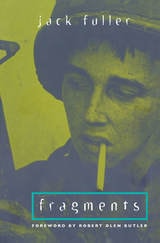
Fragments
Jack Fuller
University of Chicago Press, 1997
"[Fragments] makes the usual semi-autobiographical account [of the Vietnam War] . . . seem flimsy and discursive in comparison. . . . The shapeliness and sense of larger design [is] so elegantly executed in Fragments."—Michiko Kakutani, New York Times
"The plot is believable, the characters sharply drawn, the prose clean and distinctive. . . . Stand[s] with Tim O'Brien's Going After Cacciato, James Webb's Fields of Fire, Josiah Bunting's The Lionheads and John Del Vecchio's The 13th Valley. . . . A strong, compelling novel."—Marc Leepson, Washington Post
"There have been many books on Vietnam, and there will be many others. This is more a novel than the rest. . . . Fuller has reassembled the exploded grenade."—Bob MacDonald, Boston Sunday Globe
"Should our children ask about Vietnam, we would not go wrong to place this book in their hands. . . . [Fragments] purveys more than information—it gives the war a literary form."—David Myers, New York Times
"The best novel yet about the Vietnam War. . . . It ranks with Norman Mailer's The Naked and the Dead and James Jones's From Here to Eternity."—Daniel Kornstein, Wall Street Journal
Fragments of a Mortal Mind
A Nonfiction NovelDonald Anderson
University of Nevada Press, 2021
At once a memoir, a reading journal, and a novel, Fragments of a Mortal Mind is a daring, contemporary commonplace book. Donald Anderson, critically acclaimed author of Gathering Noise from My Life and Below Freezing, shows us how the disparate elements of our lives collect to construct our deepest selves and help us to make sense of it all. Anderson layers his personal experiences and reflections with those of others who have wrestled with inner and outer social, cultural, and political memories that are not as accurate as history might suggest but that each of us believe nonetheless. He challenges the reader’s sense of memory and fact, downplaying the latter in explaining how each of us crafts our own personal histories.
As Anderson weaves his voice among numerous other voices and ideas that rest upon other ideas, we are faced with larger issues of human existence: war, memory, trauma, mortality, religion, fear, joy, ugliness, and occasional beauty. What we have here is a meditation on living in America. We are shown how the world we consume becomes us as we metabolize it. How we, as humans, through our own fragments of memories, influences, and experiences become our true selves. By charting fragments of thoughts over a lifetime, Anderson exposes a way of thinking and perceiving the world that is refreshingly intuitive and desperately needed. Fragments of a Mortal Mind is a powerful masterpiece that closely resembles our lived experiences and is a vivid reflection of our time.
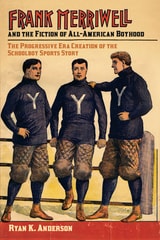
Frank Merriwell and the Fiction of All-American Boyhood
The Progressive Era Creation of the Schoolboy Sports StoryRyan K. Anderson
University of Arkansas Press, 2015
Merriwell came to symbolize the Progressive Era debate about how sport and school made boys into men. The saga featured the attractive Merriwell distinguishing between “good” and “bad” girls and focused on his squeaky-clean adventures in physical development and mentorship. By the serial’s conclusion, Merriwell had opened a school for “weak and wayward boys” that made him into a figure who taught readers how to approximate his example.
In Frank Merriwell and the Fiction of All-American Boyhood, Anderson treats Tip Top Weekly as a historical artifact, supplementing his reading of its text, illustrations, reader letters, and advertisements with his use of editorial correspondence, memoirs, trade journals, and legal documents. Anderson blends social and cultural history, with the history of business, gender, and sport, along with a general examination of childhood and youth in this fascinating study of how a fictional character was used to promote a homogeneous “normal” American boyhood rooted in an assumed pecking order of class, race, and gender.
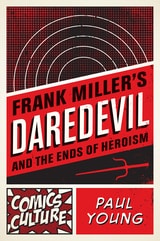
Frank Miller's Daredevil and the Ends of Heroism
Young, Paul
Rutgers University Press, 2016
In the late 1970s and early 1980s, writer-artist Frank Miller turned Daredevil from a tepid-selling comic into an industry-wide success story, doubling its sales within three years. Lawyer by day and costumed vigilante by night, the character of Daredevil was the perfect vehicle for the explorations of heroic ideals and violence that would come to define Miller’s work.

Frankenstein, or the Modern Prometheus
The 1818 TextMary Wollstonecraft Shelley
University of Chicago Press, 1982
When Mary Shelley published Frankenstein in 1818, she created a legend that, like the monster of her story, grew far beyond anything she could ever have dreamed of, or that anyone could ever control. With one book, she founded the field of science fiction, pushed the gothic into new territory, and gave us an unforgettable character capable of being monster, man, and metaphor, a symbol simultaneously of the potential and perils of science--even of humanity itself.
The novel was originally published in three volumes in March 1818. In 1831, a different publisher issued a single-volume edition that had been heavily rewritten by an older Mary Shelley. That edition served as the standard Frankenstein for well over a century. In recent decades, however, growing awareness of the role of Shelley's husband, Percy Bysshe Shelley, in the revision process, and corresponding interest in giving readers access to the original text from Mary Shelley's hand, has led to increasing attention to the original 1818 edition.
This edition reproduces the text of the 1818 edition with the addition, clearly indicated within the book, of minor changes that Mary Shelley made by hand in 1823. It also preserves the original three-volume structure within this single book, helping readers better understand the symmetries within the story as Shelley constructed it. Explanatory notes, meanwhile, explain references and provide historical and cultural context.
The result is a new look at a lasting classic, one that has as much to say to readers today as it did when first published more than two centuries ago.
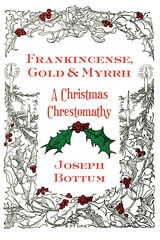
Frankincense, Gold, and Myrrh
A Christmas ChrestomathyJoseph Bottum
St. Augustine's Press, 2024
There’s the comic: “Tinsel. No one needs tinsel. Even the word is a tinselly kind of word.” There’s the sentimental: “Her hair was the same thin shade of gray as the weather-beaten pickets of the fence around her frozen garden.” There’s the reminiscent: “Christmas was books, and books Christmas, in those days now mostly washed down to the cold sea.” Along the way, there’s the theological, the learned, the mystical, and the musical.
“Tastefulness is just small-mindedness pretending to be art,” he writes in praise of mad and cluttered holidays. “Christmas will not be defined by our failures to apply its lessons and carols,” he explains about Yuletide poetry. To see these essays and short stories gathered in one place—in a beautiful illustrated edition from St. Augustine’s Press—is to see the whole of the vision that Joseph Bottum has been painting for decades: a picture of Christmas as a thin place in the wall between the natural and the numinous, where a burning grace slips into a cold winter world.
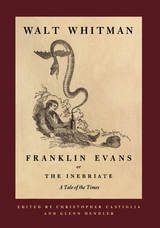
Franklin Evans, or The Inebriate
A Tale of the TimesWalt Whitman
Duke University Press, 2007
The novel tells the rags-to-riches story of Franklin Evans, an innocent young man from the Long Island countryside who seeks his fortune in New York City. Corrupted by music halls, theaters, and above all taverns, he gradually becomes a drunkard. Until the very end of the tale, Evans’s efforts to abstain fail, and each time he resumes drinking, another series of misadventures ensues. Along the way, Evans encounters a world of mores and conventions rapidly changing in response to the vicissitudes of slavery, investment capital, urban mass culture, and fervent reform. Although Evans finally signs a temperance pledge, his sobriety remains haunted by the often contradictory and unsettling changes in antebellum American culture.
The editors’ substantial introduction situates Franklin Evans in relation to Whitman’s life and career, mid-nineteenth-century American print culture, and many of the developments and institutions the novel depicts, including urbanization, immigration, slavery, the temperance movement, and new understandings of class, race, gender, and sexuality. This edition includes a short temperance story Whitman published at about the same time as he did Franklin Evans, the surviving fragment of what appears to be another unfinished temperance novel by Whitman, and a temperance speech Abraham Lincoln gave the same year that Franklin Evans was published.
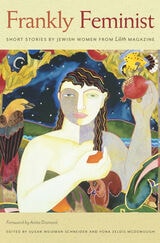
Frankly Feminist
Short Stories by Jewish Women from Lilith MagazineEdited by Susan Weidman Schneider and Yona Zeldis McDonough
Brandeis University Press, 2022
Short story collections focusing on Jewish writers have—no surprise—typically given women authors short shrift. This new volume represents the best Jewish feminist fiction published in Lilith magazine, and does what no other collection has done before in its geographic scope, its inclusion of twenty-first-century stories, and its Jewish feminist focus.
This collection showcases a wide range of stories offering variegated cultures and contexts and points of view: Persian Jews; a Biblical matriarch; an Ethiopian mother in modern Israel; suburban American teens; Eastern European academics; a sexual questioner; a Jew by choice; a new immigrant escaping her Lower East Side sweatshop; a Black Jewish marcher for justice; in Vichy France, a toddler’s mother hiding out; and more.
Organized by theme, the stories in this book emphasize a breadth of content, and our hope is that in reading you’ll appreciate the liveliness of the burgeoning self-awareness brought to life in each tale, and the occasional funny, call-your-friend-and-tell-her-about-it moment. Skip around, encounter an author whose other work you may know, be enticed by a title, or an opening line. We hope you’ll find both pleasure and enlightenment—and sometimes revelation—within these pages.
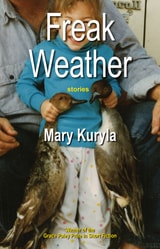
Freak Weather
storiesMary Kuryla
University of Massachusetts Press, 2017

Fred in Love
Felice Picano
University of Wisconsin Press, 2005
But when an acquaintance brought his female cat to be serviced by Fred, an entire new set of experiences opened up for the cat-and for Picano, who'd never had the nerve to befriend her owner, his ideal man. The course of love seldom runs straight for cats or for men, and this time would prove (hilariously) no different.
This is another of Picano's distinguished portraits of a vanished era, when a new gay domain was solidifying only a few years after the Stonewall Riots, and the still nascent gay literary world that Picano would help invent was just a conception. Fred in Love is a charming, nostalgic, funny, gossipy, involving, and ultimately enlightening story about how we learn and grow, and how we love-whether the object of our affection is a cat or another human being. It's sure to take its place next to Picano's now classic literary memoirs Ambidextrous, Men Who Loved Me, and A House on the Ocean, a House on the Bay.
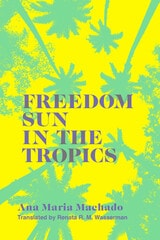
Freedom Sun in the Tropics
Ana Maria Machado, Translated by Renata R. M. Wasserman
Tagus Press, 2020
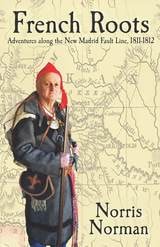
French Roots
Adventures along the New Madrid Fault Line, 1811-1812Norris Norman
Parkhurst Brothers, Inc., 2017
"Norris Norman has picked a very difficult subject for his book and has done wonders with it. There is probably no more obscure part of the history of Arkansas than the period in which this book is situated, namely, the second decade of the nineteenth century. Mr. Norman makes it come alive in a very convincing way. His main character, a French/Indian mixed-blood or metis, is carefully crafted and is ideally positioned to tell the tale of the New Madrid earthquake, the early White settlers of a newly-American Arkansas, and the daily lives of Indians and Europeans alike..."
-- Hon. Morris S. Arnold, author of Unequal Laws Unto a Savage Race: European Legal Traditions in Arkansas 1686-1836
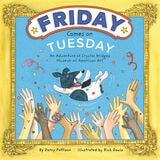
Friday Comes on Tuesday
An Adventure at Crystal Bridges Museum of American ArtDarcy Pattison
University of Arkansas Press, 2021
Winner, 2022 Susannah DeBlack Award, Arkansas Historical Association
The delightful story of Friday, a dog who discovers that the world of art is filled with many wonderful friends.
A dog in an art museum? Maybe not most dogs, but Friday goes to the museum every Tuesday to visit his friends. One day Friday must say goodbye for the winter. Join the fun as Friday trots through the galleries, taking photos and saying goodbye to Maman the spider, Rosie the Riveter, George Washington, and many others.
Looking back on his day, Friday realizes that the works of art in a museum are more than just bronze and steel, paint and canvas, ink and paper. Instead, the art connects him—and us—to a diversity of cultures, stories, and dreams.
Through the art collection at Crystal Bridges, all of us—even a dog—become part of the American experience.
Lexile Level: 570L
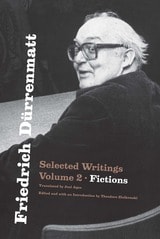
Friedrich Dürrenmatt
Selected Writings, Volume 2, FictionsFriedrich Dürrenmatt
University of Chicago Press, 2006
These translations of Friedrich Dürrenmatt’s fiction introduce the writer to a new generation of readers.
The Swiss writer Friedrich Dürrenmatt (1921–90) was one of the most important literary figures of the second half of the twentieth century. During the years of the cold war, arguably only Beckett, Camus, Sartre, and Brecht rivaled him as a presence in European letters. Yet outside Europe, this prolific author is primarily known for only one work, The Visit.
This second volume of Selected Writings reveals a writer who may stand as Kafka’s greatest heir. Dürrenmatt’s novellas and short stories are searing, tragicomic explorations of the ironies of justice and the corruptibility of institutions. The most well-known work included here is The Pledge, a requiem to the detective story that was made into a film starring Jack Nicholson. The evocative novellas The Assignment tells the story of a woman filmmaker investigating a mysterious murder in an unnamed Arab country; it has been hailed by Sven Birkerts as “a parable of hell for an age consumed by images.” The novella Traps, meanwhile, is a chilling comic novella about a traveling salesman who agrees to play the role of the defendant in a mock trial among dinner companions—and then pays the ultimate penalty.
Dürrenmatt has long been considered a great writer, but one unfairly neglected in the modern world of letters. With these elegantly conceived and expertly translated volumes, a new generation of readers will rediscover his greatest works.
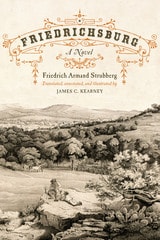
Friedrichsburg
A NovelBy Friedrich Armand Strubberg
University of Texas Press, 2012
Summerfield G. Roberts Award for a Work of Creative Writing, Sons of the Texas Republic, 2013
First published in Germany in 1867, this fascinating autobiographical novel of German immigrants on the antebellum Texas frontier provides a trove of revelations about the myriad communities that once called the Hill Country home.
Founded in 1846, Fredericksburg, Texas, was established by German noblemen who enticed thousands of their compatriots to flee their overcrowded homeland with the prospect of free land in a place that was portrayed as a new Garden of Eden. Few of the settlers, however, were prepared for the harsh realities of the Texas frontier or for confrontation with the Comanche. In his 1867 novel Friedrichsburg, Friedrich Armand Strubberg, a.k.a. Dr. Schubbert, interwove his personal story with a fictional romance to capture the flavor of Fredericksburg, Texas, during its founding years when he served as the first colonial director.
Now available in a contemporary translation, Friedrichsburg brings to life the little-known aspects of life among these determined but often ill-equipped settlers who sought to make the transition to a new home and community on the Texas frontier. Opening just as a peace treaty is being negotiated between the German newcomers and the Comanches, the novel describes the unlikely survival of these fledgling homesteads and provides evidence that support from the Delaware Indians, as well as the nearby Mormon community of Zodiac, was key to the Germans’ success. Along the way, Strubberg also depicts the laying of the cornerstone to the Vereinskirche, the blazing of an important new road to Austin, exciting hunting scenes, and an admirable spirit of cultural cohesion and determined resilience. In so doing, he resurrects a fascinating lost world.
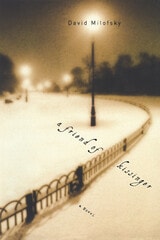
Friend of Kissinger
A NovelDavid Milofsky
University of Wisconsin Press, 2003
In this lively coming-of-age novel, young Danny Meyer lays bare a landscape of illness and despair but emerges triumphant, with a new awareness of the limitations of security and the lessons of eternity. Danny’s bubble-like existence in paradisal Madison is broken when his father, a concert pianist and professor, is stricken with illness and must give up his professorship. The family is forced to move to Milwaukee to live at the brink of poverty while his father gets sicker, his artistic mother struggles as bread-winner, and his brother becomes delusional. Here, Danny finds himself in the uncertain position of having to accept the responsibilities of manhood while still struggling with adolescence.
In a world that keeps shifting, Danny befriends the son of a gangster and, through his brushes with that compelling world of crime, finds his way to a new confidence. Realistically portrayed, A Friend of Kissinger, captures an authentic sense of place that is one part arty, heartland Main Street and one part shady, small-time gangsterland.
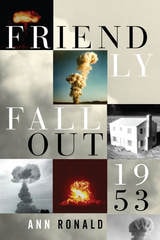
Friendly Fallout 1953
Ann Ronald
University of Nevada Press, 2011
Friendly Fallout 1953 is a hybrid work of literature that combines the actual history of aboveground atomic testing in the Nevada desert in 1953 with fictional vignettes that explore the impact of the tests on the people who participated in them and on civilian "downwinders." The book brings to life a turbulent era when Cold War fears, patriotic enthusiasm, scientific progress, and unacknowledged political agendas often collided with the welfare of ordinary citizens and the environment.
Friendly Fire
Kathryn Chetkovich
University of Iowa Press, 1998
Friends and Relations
A NovelElizabeth Bowen
University of Chicago Press, 2012
In his introduction to a collection of criticism on the Anglo-Irish author Elizabeth Bowen, Harold Bloom wrote, “What then has Bowen given us except nuance, bittersweet and intelligent? Much, much more.” Born in 1899, Bowen became part of the famous Bloomsbury scene, and her novels have a much-deserved place in the modernist canon. In recent years, however, her work has not been as widely read or written about, and as Bloom points out, her evocative and sometimes enigmatic prose requires careful parsing. Yet in addition to providing a fertile ground for criticism, Bowen’s novels are both wonderfully entertaining, with rich humor, deep insight, and a tragic sense of human relationships.
Friends and Relations follows the exploits of four wealthy families whose lives are changed forever by a torrid affair. The Studdart sisters each take a husband; for beautiful Laurel there is Edward Tilney, and for the introverted Janet there is Rodney Meggatt. But the marriages are complicated by changeable passions, and each character must navigate the conflict between familial piety and individual desire. With Bowen’s signature blend of tragedy and comedy, Friends and Relations is truly an investigation into the human heart, and the book is as beautiful, mysterious, and moving as its subject.
From Inner Worlds to Outer Space
The Multimedia Performances of Dan KwongDan Kwong
University of Michigan Press, 2004
"Somehow, Kwong has held onto his sense of childlike wonder about the cosmos, and that awe informs his free-wheeling and uproarious performance."
-Asian Week
"He weaves striking, multi-focus stage pictures around simple monologues about his Chinese and Japanese grandfathers, ironic accounts of his own childhood, and litanies of the trials facing Asian American males."
-L.A. Times
"Saturated with high-spirited enthusiasm . . . a refreshingly forthright approach to his often dark material."
-Chicago Tribune
"Kwong's humor is warm and loving . . . it stems from a delightfully twisted taste for the absurdity of human behavior. . . . Be prepared to laugh, to be moved, and to fall in love with a performer."
-L.A. Reader
Dan Kwong's performances delve into the complexities of growing up as a working-class Chinese-Japanese-American male in L.A., land of Hollywood and Disney. Kwong's remarkable performances, a potent array of multimedia effects and athletic physicalization, investigate questions of identity and the intersecting effects of race, culture, class, gender, and sexuality. From Inner Worlds to Outer Space brings together Kwong's scripts with illuminating commentary by critic Robert Vorlicky. The book includes interviews that reveal Kwong's personal and artistic influences, his evolution as an artist, and his philosophical and technical approach to art-making.

From Myth to Fiction
The Saga of HadingusGeorges Dumézil
University of Chicago Press, 1973
As Professor Dumézil and others have shown, some Indo-European peoples, after their conversion to Christianity, have reordered an earlier mythology to constitute the epic of their origins. For instance, Celtic mythology became history in one case and a source of fiction in another; and from the two texts, Welsh and Irish, by comparison one can reconstruct the original myth.
The Scandinavian nations provide a unique case, for here the pre-Christian texts are still read and have preserved much of the area's mythology in its original form. In addition, we have the work of Saxo and other known writers who composed and signed human transpositions of this mythology purporting to be history. This permits Professor Dumézil to make observations of a rare kind, for knowing something of the author's personality facilitates an understanding of the process of transposition itself.
Professor Dumézil shows how Saxo began by wanting only to tell the story of Denmark and its rulers as nobly as he could—and then later on to extend that narrative back in time. This led him to the only extant Scandinavian literature—that centered on Iceland—that he reordered and reinterpreted to the greater glory of Denmark.
In order to provide a content for the reign of the third king of the Danish Skoldunger dynasty, Hadingus, Saxo simply reworked a Scandinavian account of the career of the god Njördr. In this light Professor Dumézil reads The Saga of Hadingus as a fascinating substitution of a psychological and completely personal narrative for a story of purely social value.
This book contains six appendixes including two that consider the relationship between myth and folklore. They complement Professor Dumézil's careful exegeses and imaginative scholarship to make this the most important, specialized work on Scandinavian mythology available in English.
From Sleep Unbound
Andrée Chedid
Ohio University Press, 1983
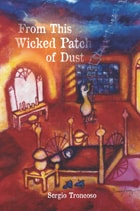
From This Wicked Patch of Dust
Sergio Troncoso
University of Arizona Press, 2011
Spanning four decades, this is a story of a family’s struggle to become American and yet not be pulled apart by a maelstrom of cultural forces. As a young adult, daughter Julieta is disenchanted with Catholicism and converts to Islam. Youngest son Ismael, always the bookworm, is accepted to Harvard but feels out of place in the Northeast where he meets and marries a Jewish woman. The other boys—Marcos and Francisco—toil in their father’s old apartment buildings, serving as the cheap labor to fuel the family’s rise to the middle class. Over time, Francisco isolates himself in El Paso while Marcos eventually leaves to become a teacher, but then returns, struggling with a deep bitterness about his work and marriage. Through it all, Pilar clings to the idea of her family and tries to hold it together as her husband’s health begins to fail.
This backdrop is then shaken to its core by the historic events of 2001 in New York City. The aftermath sends shockwaves through this newly American family. Bitter conflicts erupt between siblings and the physical and cultural spaces between them threaten to tear them apart. Will their shared history and once-common dreams be enough to hold together a family from Ysleta, this wicked patch of dust?
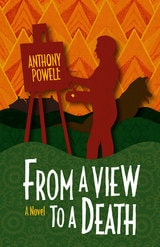
From a View to a Death
A NovelAnthony Powell
University of Chicago Press, 2014
From a View to a Death takes us to a dilapidated country estate where an ambitious artist of questionable talent, a family of landed aristocrats wondering where the money has gone, and a secretly cross-dressing squire all commingle among the ruins.
Written from a vantage point both high and necessarily narrow, Powell’s early novels nevertheless deal in the universal themes that would become a substantial part of his oeuvre: pride, greed, and what makes people behave as they do. Filled with eccentric characters and piercing insights, Powell’s work is achingly hilarious, human, and true.
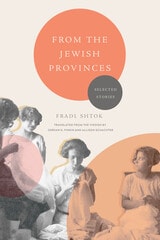
From the Jewish Provinces
Selected StoriesFradl Shtok; Translated from the Yiddish by Jordan D. Finkin and Allison Schachter
Northwestern University Press, 2022
From the Jewish Provinces showcases a brilliant and nearly forgotten voice in Yiddish letters. An insistently original writer whose abrupt departure from the literary scene is the stuff of legend, Fradl Shtok composed stories that describe the travails of young women looking for love and desire in a world that spurns them. These women struggle with disability, sexual violence, and unwanted marriage, striving to imagine themselves as artists or losing themselves in fantasy worlds. The men around them grapple with their own frustrations and failures to live up to stifling social expectations. Through deft portraits of her characters’ inner worlds Shtok grants us access to unnoticed corners of the Jewish imagination.
Set alternately in the Austro‑Hungarian borderlands and in New York City, Shtok’s stories interpret the provincial worlds of the Galician shtetl and the Lower East Side with literary sophistication, experimenting with narrative techniques that make her stories expertly alive to women’s aesthetic experiences.

Frozen
Mary Casanova
University of Minnesota Press, 2013
Sixteen-year-old Sadie Rose hasn’t said a word in eleven years—ever since the day she was found lying in a snowbank during a howling storm. Like her voice, her memories of her mother and what happened that night were frozen.
Set during the roaring 1920s in the beautiful, wild area on Rainy Lake where Minnesota meets Canada, Frozen tells the remarkable story of Sadie Rose, whose mother died under strange circumstances the same night that Sadie Rose was found, unable to speak, in a snowbank. Sadie Rose doesn’t know her last name and has only fleeting memories of her mother—and the conflicting knowledge that her mother had worked in a brothel. Taken in as a foster child by a corrupt senator, Sadie Rose spends every summer along the shores of Rainy Lake, where her silence is both a prison and a sanctuary.
One day, Sadie Rose stumbles on a half dozen faded, scandalous photographs—pictures, she realizes, of her mother. They release a flood of puzzling memories, and these wisps of the past send her at last into the heart of her own life’s great mystery: who was her mother, and how did she die? Why did her mother work in a brothel—did she have a choice? What really happened that night when a five-year-old girl was found shivering in a snowbank, her voice and identity abruptly shattered?
Sadie Rose’s search for her personal truth is laid against a swirling historical drama—a time of prohibition and women winning the right to vote, political corruption, and a fevered fight over the area’s wilderness between a charismatic, unyielding, powerful industrialist and a quiet man battling to save the wide, wild forests and waters of northernmost Minnesota. Frozen is a suspenseful, moving testimonial to the haves and the have-nots, to the power of family and memory, and to the extraordinary strength of a young woman who has lost her voice in nearly every way—but is utterly determined to find it again.

Fruit of the Month
Abby Frucht
University of Iowa Press, 1988
This fine debut of twelve stories explores a topography of the interior, probing the thoughts, motivations, and little-understood impulses behind moments of aggression, jealousy, and loneliness. Turning her eye on the academic landscape as well as the workaday world, Frucht keenly observes people forging friendships, groping for greater self-understanding, and attempting to find meaning in their lives and loves.
Whether writing about a couple trying to conceive a much-wanted child or a lonely husband mourning the changing political attitudes of his wife, Frucht brings her characters and their lives into memorable focus. She builds a fictional world that resonates with the immediate and the familiar.
Although many books of contemporary fiction document the ways people often fail to communicate, the essential quality of Abby Frucht's characters is that they do communicate—connect—and gain part of what they want from life as a result. These stories are never about despair without also being about hope. They speak to each other as playfully and accidentally as memories do.
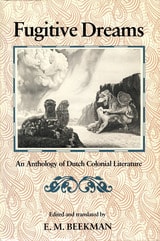
Fugitive Dreams
An Anthology of Dutch Colonial LiteratureE. M. Beekman
University of Massachusetts Press, 1988
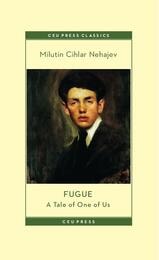
Fugue
A Tale of One of UsMilutin Nehajev
Central European University Press, 2024

Full Metal Jhacket
Matthew Derby
University of Michigan Press, 2014