Results by title
4030 books match the query 'Language Arts & Disciplines' and 150 start with f

French Modal Syntax in the Sixteenth Century
Newton S. Bement
University of Michigan Press, 1934
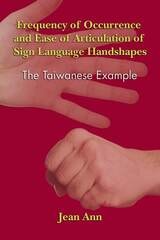
Frequency of Occurrence and Ease of Articulation of Sign Language Handshapes
The Taiwanese ExampleJean Ann
Gallaudet University Press, 2006
Ann employs a straightforward methodology in her examination of the use of Taiwan Sign Language (TSL) handshapes in five succinct chapters. In the first chapter, she discusses the two approaches linguists have taken toward understanding languages, and how these theories have influenced sign language researchers’ consideration of the ease of articulation and frequency of handshapes. In her second chapter, Ann delineates the physiology of hands and explains why certain digits move with greater dexterity than others.
Ann applies this physiological information in the third chapter to construct a model for determining the ease of articulation of any logically possible handshape. She divides the handshapes into three categories, ranging from impossible to easy. In the fourth chapter, she applies her model to examine the patterns of TSL, first by describing the 56 handshapes identified in TSL, then determining how often each is used. She then compares the usage data to the handshapes’ ease of formation. The final chapter summarizes her findings and suggests implications of this work that are bound to generate further speculation and study on sign language handshapes in the future.
Friendship Fictions
The Rhetoric of Citizenship in the Liberal ImaginaryMichael A. Kaplan
University of Alabama Press, 2010
A criticism often leveled at liberal democratic culture is its emphasis on the individual over community and private life over civic participation. However, liberal democratic culture has a more complicated relationship to notions of citizenship. As Michael Kaplan shows, citizenship comprises a major theme of popular entertainment, especially Hollywood film, and often takes the form of friendship narratives; and this is no accident. Examining the representations of citizenship-as-friendship in four Hollywood films (The Big Chill, Thelma & Louise, Lost in Translation, and Smoke), Kaplan argues that critics have misunderstood some of liberal democracy’s most significant features: its resilience, its capacity for self-revision, and the cultural resonance of its model of citizenship.

From A to A
Keywords of MarkupBradley Dilger
University of Minnesota Press, 2010
From A to investigates the relationship between media and culture by articulating questions regarding the role of markup. How do the codes of HTML, CSS, PHP, and other markup languages affect the Web's everyday uses? How do these languages shape the Web's communicative functions? This novel inquiry positions markup as the basis of our cultural, rhetorical, and communicative understanding of the Web.
Contributors: Sarah J. Arroyo, CSU Long Beach; Jennifer L. Bay, Purdue U; Helen J. Burgess, U of Maryland, Baltimore County; Michelle Glaros, Centenary College of Louisiana; Matthew K. Gold, NYCC of Technology; Cynthia Haynes, Clemson U; Rudy McDaniel, U of Central Florida; Colleen A. Reilly, UNC, Wilmington; Thomas Rickert, Purdue U; Brendan Riley, Columbia College Chicago; Sae Lynne Schatz, U of Central Florida; Bob Whipple, Creighton U; Brian Willems, U of Split, Croatia.

From A to Zine
Julie Bartel
American Library Association, 0
From A to Zine
Building a Winning Zine Collection in Your LibraryJulie Bartel
American Library Association, 2004
From Black Sox to Three-Peats
A Century of Chicago's Best Sportswriting from the "Tribune," "Sun-Times," and Other NewspapersEdited by Ron Rapoport
University of Chicago Press, 2013
In From Black Sox to Three-Peats, veteran Chicago sports columnist Ron Rapoportassembles one hundred of the best columns and articles from the Tribune, Sun-Times, Daily News, Defender, and other papers to tell the unforgettable story of a century of Chicago sports. From Ring Lardner to Rick Telander, Westbrook Pegler to Bob Verdi, Mike Royko to Hugh Fullerton , Melissa Isaacson to Brent Musburger, and on and on, this collection reminds us that Chicago sports fans have enjoyed a wealth of talent not just on the field, but in the press box as well. Through their stories we relive the betrayal of the Black Sox, the cocksure power of the ’85 Bears, the assassin’s efficiency of Jordan’s Bulls, the Blackhawks’ stunning reclamation of the Stanley Cup, the Cubs’ century of futility—all as seen in the moment, described and interpreted on the spot by some of the most talented columnists ever to grace a sports page.
Sports are the most ephemeral of news events: once you know the outcome, the drama is gone. But every once in a while, there are those games, those teams, those players that make it into something more—and great writers can transform those fleeting moments into lasting stories that become part of the very identity of a city. From Black Sox to Three-Peats is Chicago history at its most exciting and celebratory. No sports fan should be without it.
From Chariots of Fire to The King's Speech
Writing Biopics and DocudramasAlan Rosenthal
Southern Illinois University Press, 2014
Over the past decade, movie audiences have become hungry for films based on real people and historical events. Never was this more evident than during the best-picture showdown between The King’s Speech and The Social Network during the 2011 Academy Awards, a scene then repeated, with Argo, Lincoln and Zero Dark Thirty in the 2013 awards.. While Hollywood moguls have come to recognize the box-office revenue and critical acclaim that accompany such films and are now fast-tracking many docudramas into theaters, there remains a need for more reality-based film scripts.
In From “Chariots of Fire” to “The King’s Speech,” writer, director, and producer Alan Rosenthal presents a manual for screenwriters to develop their bio-pic or docudrama from concept to completion. This comprehensive guide begins with an overview of the genre before providing screenwriters with all the techniques and insights needed to navigate the often intimidating landscape of screenwriting for reality-based scripts. Included within the volume are tips for such challenges as inception and research, developing dialogue and narration, and capably addressing any legal and rights issues that may arise. Also included are appendixes containing useful marketing tips and broadcast guidelines.
A practical, down-to-earth manual for experienced and novice screenwriters alike, From “Chariots of Fire” to “The King’s Speech” is the only manual dedicated explicitly to writing the bio-pic and docudrama. Rosenthal shares his decades of experience in the film industry, along with hands-on tools and maps, to help screenwriters completely master this popular film genre.
From Children's Literature to Readers Theatre
Elizabeth A. Poe
American Library Association, 2013
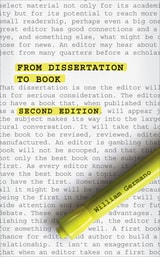
From Dissertation to Book, Second Edition
William Germano
University of Chicago Press, 2013
Since its publication in 2005, From Dissertation to Book has helped thousands of young academic authors get their books beyond the thesis committee and into the hands of interested publishers and general readers. Now revised and updated to reflect the evolution of scholarly publishing, this edition includes a new chapter arguing that the future of academic writing is in the hands of young scholars who must create work that meets the broader expectations of readers rather than the narrow requirements of academic committees.
At the heart of From Dissertation to Book is the idea that revising the dissertation is fundamentally a process of shifting its focus from the concerns of a narrow audience—a committee or advisors—to those of a broader scholarly audience that wants writing to be both informative and engaging. William Germano offers clear guidance on how to do this, with advice on such topics as rethinking the table of contents, taming runaway footnotes, shaping chapter length, and confronting the limitations of jargon, alongside helpful timetables for light or heavy revision.
Germano draws on his years of experience in both academia and publishing to show writers how to turn a dissertation into a book that an audience will actually enjoy, whether reading on a page or a screen. Germano also acknowledges that not all dissertations can or even should become books and explores other, often overlooked, options, such as turning them into journal articles or chapters in an edited work.
With clear directions, engaging examples, and an eye for the idiosyncrasies of academic writing, From Dissertation to Book reveals to recent PhDs the secrets of careful and thoughtful revision—a skill that will be truly invaluable as they add “author” to their curriculum vitae.
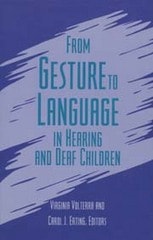
From Gesture to Language in Hearing and Deaf Children
Virginia Volterra
Gallaudet University Press, 1994
Renowned scholars contributing to this volume include Ursula Bellugi, Judy Snitzer Reilly, Susan Goldwin-Meadow, Andrew Lock, M. Chiara Levorato, and many others.

From Iberian Romani to Iberian Para-Romani Varieties
Zuzana Krinková
Karolinum Press, 2015
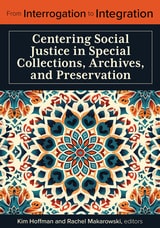
From Interrogation to Integration
Centering Social Justice in Special Collections, Archives, and PreservationKim Hoffman
Assoc of College & Research Libraries, 2025
From Interrogation to Integration: Centering Social Justice in Special Collections, Archives, and Preservation collects case studies, research projects, lesson plans, stories, practical strategies, color illustrations, and accessible, low-cost solutions from authors who have grappled directly with the legacy of harm present in their own institutions. The volume is organized into five themes:
- Research
- Description
- Preservation and Access
- Outreach
- Instruction
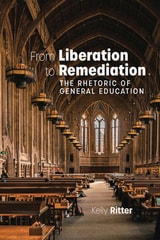
From Liberation to Remediation
The Rhetoric of General EducationKelly Ritter
Utah State University Press, 2026
Kelly Ritter addresses how lawmakers, for-profit testing companies, and even universities fuel public misconceptions of what Gen Ed can provide for our democracy and the role that a broad-based college education plays in social uplift. Tracing the history of the public rhetoric that persuades parents and students to see these courses as a set of interchangeable precollege credits to gain (or game) by any means necessary, she examines how positive and negative public responses to the curricula affected the position of core subjects in US universities, focusing on first-year writing. She also explores the role local, state, and organizational politics played in Gen Ed’s positioning, including decisions related to race, social class, and educational attainment; the impact credit-by-exemption and seamless transfer had on the quality and import of Gen Ed programming in both high schools and colleges; and the perceived use-value of the courses themselves in the face of rising college costs. Finally, she considers which student populations have benefited from the denigration of Gen Ed’s value and which have been left behind.
Drawing on archival research and case studies, From Liberation to Remediation raises important questions about equity, access, and the role of General Education in US higher education’s future and demonstrates that recovering the original post-war democratizing principles and practices of Gen Ed is critical to the continuance of a literate, empathetic, and civic-minded democracy for the twenty-first century.
From Military to Academy
The Writing and Learning Transitions of Student-VeteransMark Blaauw-Hara
Utah State University Press, 2021
From Military to Academy is a detailed picture of how student-veterans may experience the shift to the college experience and academic writing. Grounding his research in the experiences of student-veterans at a community college, Blaauw-Hara integrates adult learning theory, threshold concepts, genre analysis, and student-veteran scholarship to help readers understand the challenges student-veterans experience and the strengths they bring as they enter the academic writing environment. Each chapter takes a different theoretical approach to frame student-veterans’ experiences, and Blaauw-Hara ends each chapter with specific, actionable pedagogical suggestions.
Composition studies scholars especially have demonstrated an ongoing interest in and commitment to understanding the experiences of student-veterans from military service to postsecondary education. From Military to Academy helps college writing faculty and writing program administrators understand and support the growing numbers of student-veterans who are making the transition to higher education.
From Notes to Narrative
Writing Ethnographies That Everyone Can ReadKristen Ghodsee
University of Chicago Press, 2016
From Notes to Narrative picks up where methodological training leaves off. Kristen Ghodsee, an award-winning ethnographer, addresses common issues that arise in ethnographic writing. Ghodsee works through sentence-level details, such as word choice and structure. She also tackles bigger-picture elements, such as how to incorporate theory and ethnographic details, how to effectively deploy dialogue, and how to avoid distracting elements such as long block quotations and in-text citations. She includes excerpts and examples from model ethnographies. The book concludes with a bibliography of other useful writing guides and nearly one hundred examples of eminently readable ethnographic books.
From Papyrus to Hypertext
Toward the Universal Digital LibraryChristian Vandendorpe. Translated by Phyllis Aronoff & Howard Scott.
University of Illinois Press, 2008
Surveying the conventions of reading and writing that have appeared and disappeared in the Internet's wake, Vandendorpe considers various forms of organization, textual design, the use (and distrust) of illustrations, and styles of reference and annotation. He also examines the novel components of digital texts, including hyperlinks and emoticons, and looks at emergent, collaborative genres such as blogs and wikis, which blur the distinction between author and reader. Looking to the future, reading and writing will continue to evolve based on the current, contested trends of universal digitization and accessibility.
From Plot to Narrative
Ellis, Elizabeth
Parkhurst Brothers, Inc., 2012
Each of the twelve chapters represents a rung on the ladder of dynamic narrative development. Beginning with the most basic plot outline, Ellis leads readers through exercises and discussions of elements that build a story into a memorable reading or listening experience. The chapters include many topics of interest to all writers, regardless of medium, but some will speak most potently to those writing either fiction or personal narrative. Chapters include Characterization, Point of View, Emotion, Context, Imagery, and Connection [with the reader]. Herself a leading professional storyteller, Ellis also includes a chapter especially for those who plan to craft stories for oral performance.

From Quirky Case to Representing Space
Papers in Honor of Annie ZaenenEdited by Tracy Holloway King and Valeria de Paiva
CSLI, 0

From Small Talk to Microaggression
A History of ScaleMichael Lempert
University of Chicago Press, 2024
In this ambitious, wide-ranging book, anthropologist Michael Lempert offers a conceptual history that explores how, why, and with what effects we have come to think of interactions as “scaled.” Focusing on the sciences of interaction in midcentury America, Lempert traces how they harnessed diverse tools and media technologies, from dictation machines to 16mm film, to study communication “microscopically.” In looking closely, many hoped to transform interaction: to improve efficiency, grow democracy, curb racism, and much else. Yet their descent into a microworld created troubles, with some critics charging that these scientists couldn’t see the proverbial forest for the trees. Exploring talk therapy and group dynamics studies, social psychology and management science, conversation analysis, “micropolitics,” and more, Lempert shows how scale became a defining problem across the behavioral sciences.
Ultimately, he argues, if we learn how our objects of study have been scaled in advance, we can better understand how we think and interact with them—and with each other—across disciplinary and ideological divides. Even as once-fierce debates over micro and macro have largely subsided, Lempert shows how scale lives on and continues to affect the ethics and politics of language and communication today.

From Syntax to Text
The Janus Face of Functional Sentence PerspectiveLibuse Dusková
Karolinum Press, 2015
From Topic Boundaries to Omission
New Research on InterpretationMelanie Metzger
Gallaudet University Press, 2003
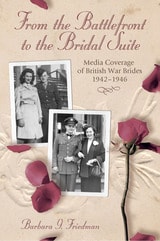
From the Battlefront to the Bridal Suite
Media Coverage of British War Brides, 1942-1946Barbara G. Friedman
University of Missouri Press, 2007
With their gregarious natures and casual styles, American GIs in wartime England were instantly attractive to British women—especially in the absence of their fighting men. As a result, some seventy thousand British war brides returned to the United States—with many on the home front at first suspecting that the GIs were somehow being exploited.
The war brides’ stories have been told in memoirs, romantic novels, and immigration history. Barbara Friedman sheds new light on their experiences by focusing on media representations of sexuality and marriage in wartime, showing how mass media interpretations turned from public suspicion of war brides to popular acceptance.
Friedman tells how British media first insisted that GIs had come to fight, not to woo the locals, and shrugged off the first brides as an “American problem.” Yet, as Friedman shows, the British media were complicit in encouraging the relationships in the first place: the British press promoted a hospitality program that deemed the entertainment of American troops “patriotic duty,” while women’s magazines hailed American men as ideal husbands and the United States as a promised land.
From the American perspective, Friedman reveals, despite rules against foreign marriages, the U.S. Army encouraged GI-civilian fraternization through armed service publications, attitudes toward GI sexuality, and participation in the hospitality program. Armed service publications went from depicting British women as “frowsy dames” to honoring them as models of domesticity, while newspapers back home eventually legitimized the marriages by casting the brides as welcome additions to American society. Meanwhile, American women’s magazines viewed them as more similar to than different from their American counterparts and called on readers to help British brides master American homemaking.
By combining letters and diaries of brides with published accounts, Friedman identifies accuracies and inaccuracies in the media record as well as gaps in coverage. She considers how the brides saw themselves compared to their media images and shows how the media co-opted brides as symbols of the Anglo-American “special friendship,” postwar power imbalance, and gendered ideals of marriage and domestication.
From the Battlefront to the Bridal Suite is the untold story of overlooked participants in the most celebrated drama of the twentieth century—women whose lives were shaped profoundly by a war that was more than just a male enterprise. It shows the power of the press in the most unlikely matters and suggests a broader definition of the wartime experience.
From the Dance Hall to Facebook
Teen Girls, Mass Media, and Moral Panic in the United States, 1905-2010Shayla Thiel-Stern
University of Massachusetts Press, 2014
In From the Dance Hall to Facebook, Shayla Thiel-Stern takes a close look at several historical snapshots, including working-class girls in dance halls of the early 1900s; girls' track and field teams in the 1920s to 1940s; Elvis Presley fans in the mid-1950s; punk rockers in the late 1970s and early 1980s; and girls using the Internet in the early twenty-first century. In each case, issues of gender, socioeconomic status, and race are explored within their historical context. The book argues that by marginalizing and stereotyping teen girls over the past century, mass media have perpetuated a pattern of gendered crisis that ultimately limits the cultural and political power of the young women it covers.
Front Office Fantasies
The Rise of Managerial Sports MediaBranden Buehler
University of Illinois Press, 2023
Front office executives have become high-profile commentators, movie and video game protagonists, and role models for a generation raised in the data-driven, financialized world of contemporary sports. Branden Buehler examines the media transformation of these once obscure management figures into esteemed experts and sporting idols.
Moving from Moneyball and Football Manager to coverage of analytics gurus like Daryl Morey, Buehler shows how a fixation on managerial moves has taken hold across the entire sports media landscape. Buehler’s chapter-by-chapter look at specific media forms illustrates different facets of the managerial craze while analyzing the related effects on what fans see, hear, and play. Throughout, Buehler explores the unsettling implications of exalting the management class and its logics, in the process arguing that sports media’s managerial lionization serves as one of the clearest reflections of major material and ideological changes taking place across culture and society.
Insightful and timely, Front Office Fantasies reveals how sports media moved the action from the field to the executive suite.
Front Page Economics
Gerald D. Suttles, with Mark D. Jacobs
University of Chicago Press, 2010
In an age when pundits constantly decry overt political bias in the media, we have naturally become skeptical of the news. But the bluntness of such critiques masks the highly sophisticated ways in which the media frame important stories. In Front Page Economics, Gerald Suttles delves deep into the archives to examine coverage of two major economic crashes—in 1929 and 1987—in order to systematically break down the way newspapers normalize crises.
Poring over the articles generated by the crashes—as well as the people in them, the writers who wrote them, and the cartoons that ran alongside them—Suttles uncovers dramatic changes between the ways the first and second crashes were reported. In the intervening half-century, an entire new economic language had arisen and the practice of business journalism had been completely altered. Both of these transformations, Suttles demonstrates, allowed journalists to describe the 1987 crash in a vocabulary that was normal and familiar to readers, rendering it routine.
A subtle and probing look at how ideologies are packaged and transmitted to the casual newspaper reader, Front Page Economics brims with important insights that shed light on our own economically tumultuous times.
Front Pages, Front Lines
Media and the Fight for Women's SuffrageEdited by Linda Steiner, Carolyn Kitch, and Brooke Kroeger
University of Illinois Press, 2020
This collection offers new research on media issues related to the women's suffrage movement. Contributors incorporate media theory, historiography, and innovative approaches to social movements while discussing the vexed relationship between the media and debates over suffrage. Aiming to correct past oversights, the essays explore overlooked topics such as coverage by African American and Mormon-oriented media, media portrayals of black women in the movement, suffragist rhetorical strategies, elites within the movement, suffrage as part of broader campaigns for social transformation, and the influence views of white masculinity had on press coverage.
Contributors: Maurine H. Beasley, Sherilyn Cox Bennion, Jinx C. Broussard, Teri Finneman, Kathy Roberts Forde, Linda M. Grasso, Carolyn Kitch, Brooke Kroeger, Linda J. Lumsden, Jane Marcellus, Jane Rhodes, Linda Steiner, and Robin Sundaramoorthy
Frontier Fake News
Nevada's Sagebrush Humorists and HoaxstersRichard Moreno
University of Nevada Press, 2023
When readers see the names Mark Twain and Dan De Quille, fake news may not be the first thing that comes to mind. But these legendary journalists were some of the original, and most prolific, fake news writers in the early years of Nevada’s history. Frontier Fake News puts a spotlight on the hoaxes, feuds, pranks, outright lies, witty writing, and other literary devices utilized by a number of the Silver State’s frontier newsmen from the mid-nineteenth through the early twentieth centuries. Often known collectively as the Sagebrush School, these journalists were opinionated, talented, and individualistic.
While Mark Twain (Samuel Clemens), who got his start at Virginia City’s Territorial Enterprise, and Dan De Quille (William Wright), who some felt was a better writer than Twain, are the most well-known members of the Sagebrush School, author Richard Moreno includes others such as Fred Hart, who concocted a fake social club and reported on its gatherings for Austin’s Reese River Reveille, and William Forbes, who enjoyed sprinkling clever puns with political undertones in his newspaper articles.
Moreno traces the beginnings of genuine fake news from founding father Benjamin Franklin’s “Supplement to the Boston Independent Chronicle, Number 705, March 1782,” a fake newspaper aimed at swaying British public opinion, to the fake news articles of New York and Baltimore papers in the early 1800s. But these examples are only a prelude to the amazing accounts of petrified men, freeze-inducing solar armor, magically magnetic rocks, blood-curdling massacres, and other nonsense stories that appeared in Nevada’s frontier newspapers and beyond.

Fulfulde (Maasina) - English - French Lexicon
A Root-Based Compilation Drawn from Extant SourcesDonald W. Osborn
Michigan State University Press, 1993
The Lexicon brings together lexical material from a wide range of published and non-published sources to create an extensive compilation of the vocabulary of Fulfulde as it is spoken in that part of central Mali known as Masina (in Fulfulde, Maasina). The Lexicon is intended primarily for non-Fulfulde speakers who are learning the language at the intermediate or advanced levels and who need access to a comprehensive reference source on Fulfulde vocabulary. Scholars, development workers, and others whose research or fieldwork involves use of the Fulfulde of Masina may find it helpful as well in clarifying nuances of meaning and standardized spelling for the less familiar terms they might encounter. It is also intended that the present work, beyond the matter of organizing vocabulary, will contribute significantly to the expanding lexicographical and linguistic investigations of Fulfulde.
Fundamental Issues in the Romance Languages
Edited by Danièle Godard
CSLI, 2010
Fundamental Issues in the Romance Languages compares six Romance languages—Catalan, French, Spanish, Italian, Portuguese, and Romanian—and summarizes the last thirty years of scholarship in the fields of morphology, syntax, semantics, and discourse for each language. The up-to-date analyses in this volume make it essential for undergraduate and graduate students as well as scholars of each language.
Fundamentals for the Academic Liaison
Richard Moniz
American Library Association, 2014
Fundamentals of Children's Services
Michael Sullivan
American Library Association, 2013
Fundamentals of Children's Services
Michael Sullivan
American Library Association, 2005
Fundamentals of Collection Development and Management
Peggy Johnson
American Library Association, 2018
Technical Services Quarterly declared that the third edition “must now be considered the essential textbook for collection development and management … the first place to go for reliable and informative advice." For the fourth edition expert instructor and librarian Johnson has revised and freshened this resource to ensure its timeliness and continued excellence. Each chapter offers complete coverage of one aspect of collection development and management, including numerous suggestions for further reading and narrative case studies exploring the issues. Thorough consideration is given to
- traditional management topics such as organization of the collection, weeding, staffing, and policymaking;
- cooperative collection development and management;
- licenses, negotiation, contracts, maintaining productive relationships with vendors and publishers, and other important purchasing and budgeting topics;
- important issues such as the ways that changes in information delivery and access technologies continue to reshape the discipline, the evolving needs and expectations of library users, and new roles for subject specialists, all illustrated using updated examples and data; and
- marketing, liaison activities, and outreach.
As a comprehensive introduction for LIS students, a primer for experienced librarians with new collection development and management responsibilities, and a handy reference resource for practitioners as they go about their day-to-day work, the value and usefulness of this book remain unequaled.
Fundamentals of Collection Development and Management
Peggy Johnson
American Library Association, 2009
Fundamentals of Collection Development and Management
Peggy Johnson
American Library Association, 2014
Fundamentals of Collection Development and Management, Fifth Edition
Peggy Johnson and Mary Beth Weber
American Library Association, 2024
- traditional management topics such as organization of the collection, staffing, planning, and policymaking;
- the continuing relevance and importance of the discipline in an increasingly digital environment;
- open access, the Big Ten Open Books collection, and moving toward a digital library ownership model;
- e-book lending, including purchasing models (PDA, DDA, EBA) and controlled digital lending;
- collaborative collection development and management;
- licenses, negotiation, contracts, maintaining productive relationships with vendors and publishers, and other important purchasing and budgeting topics;
- self-published books and their path into library collections;
- collection analysis and weeding, including both print and e-resources;
- timely issues such as the ways in which collecting practices have changed post-pandemic, the evolving needs and expectations of library users, diversity in library collections, and ensuring accessibility, all illustrated using updated examples and data; and
- marketing, liaison activities, and outreach, through coverage expanded for this edition.
Fundamentals of Electronic Resources Management
Alana Verminski
American Library Association, 2022
Whether it's networking with vendor reps or poring over data, the continually evolving field of electronic resources management (ERM) is always throwing something new your way. Alana Verminski and Kelly Marie Blanchat were once new on the job themselves, crossing over from research instruction and the vendor side of scholarly publishing. They share what they've learned along the way in this hands-on guide. Cutting through the complexity of a role that's changing rapidly, inside you'll find to-the-point advice on methods and tools that will help you stay on top of things, including coverage of such key topics as
- the full range of purchasing options, from Big Deals to unbundling to pay-per-view;
- conversation starters that will help build productive relationships with vendor reps;
- questions to ask vendors about accessibility;
- common clauses of licensing agreements and what they mean;
- understanding the four types of authentication;
- using a triage approach to troubleshooting hitches in accessing articles;
- conducting an overlap analysis to evaluate new content;
- the basic principles of usage statistics, and four ways to use COUNTER reports when evaluating renewals;
- tips for activating targets in your knowledge base;
- five steps to developing an effective marketing plan; and
- how to master the lingo, with clear explanations of jargon, important terms, and acronyms.
Fundamentals of Government Information
Mining, Finding, Evaluating, and Using Government ResourcesCassandra J. Hartnett
American Library Association, 2016
Fundamentals of Library Instruction
Monty L. McAdoo
American Library Association, 2012
Fundamentals of Library Supervision
Beth McNeil
American Library Association, 2017
Fundamentals of Library Supervision
Joan Giesecke
American Library Association, 2010
Fundamentals of Library Supervision, Fourth Edition
Beth McNeil; Foreword by Janice Welburn
American Library Association, 2026
Supervising a library, managing people, stepping forward as a mentor, and being a leader in your community, whether you run a small, one-person library or work in a large research university library, is no small feat. The new fourth edition of this "classic text" (Library Journal) shares practical advice on many of today’s management opportunities and challenges. Whether you're new to supervision or already have experience, you will find that the topics covered here, along with examples from various libraries, provide an overview of the many tasks and responsibilities of a manager and supervisor. Packed with clear and concise wisdom that will give you confidence in the role, inside this handbook you will discover
- step-by-step guidance on fundamental skills such as hiring, onboarding and orientation, scheduling and service provision, performance appraisal and management, budgeting, space planning and safety, and conducting meetings;
- insights on core leadership competencies essential for supervisors to balance organizational priorities with the individual needs and desires of staff;
- guidance on helping library employees to learn and grow in their jobs, becoming adept at change management, setting priorities and managing time effectively and efficiently, being a good collaborator, modeling self-awareness and emotional intelligence, and other keys to success as a supervisor;
- a new discussion of the changed organizational climate and how to create and sustain environments that foster a sense of belonging among all staff;
- chapter summaries with critical takeaways; and
- helpful extras like a positive messaging worksheet, new employee welcome email template, and information about additional resources.
Fundamentals of Managing Reference Collections
Carol A. Singer
American Library Association, 2012
Fundamentals of Planning and Assessment for Libraries
Rachel A. Fleming-May and Regina Mays
American Library Association, 2021
The concepts of planning and assessment are intrinsically linked—and understanding them is essential for raising the library’s profile and strengthening its position among stakeholders and the community. Even if you're an LIS student or are new to the profession, or if planning or assessment are not your primary areas of responsibility, you still have a role to play in the success of organizational efforts. Fleming-May has more than a decade of experience in planning and assessment initiatives and instruction, and Mays was her institution’s first assessment librarian; their primer draws from theory, research, and their first-hand observations to illuminate such topics as
- characteristics of bad planning strategy that can help to illustrate a better approach;
- reasons why using economic models, like ROI, fall short;
- how to mix the three types of planning;
- guidelines to ensure that assessment is meaningful and actionable;
- tips for creating effective surveys;
- emphasizing users’ needs with a critical assessment framework;
- data analysis for surveys, interviews, focus groups, and observation;
- four questions to ask about audience level before you develop a report;
- a sample 3-year assessment plan that can be customized; and
- seven steps for developing a culture of ongoing assessment.
Fundamentals of Reference
Carolyn M. Mulac
American Library Association, 2012
Fundamentals of Technical Services
John Sandstrom
American Library Association, 2015
Funnier
A New Theory for the Practice of ComedyAnne Libera
Northwestern University Press, 2026
A roadmap for understanding and creating comedy from the visionary Second City comedy director
Great comedy can feel ineffable—and unlearnable. Debunking the myth that “either you are funny, or you aren’t,” Libera breaks the magic of comedy down into an innovative theory and practical toolkit. Developed over the course of thirty years as a director for The Second City and professor of comedy studies in their training center, Libera’s approach is effective across stand-up, sketch, film, and television comedy, as evidenced by her powerhouse students: Amy Poehler, Kristen Schaal, Steven Yeun, and many more of your favorites.
This book starts with a way to think about comedy and then guides you through concrete strategies for making your work smarter, richer, funnier. Libera covers everything from generating material to revising and performing to fostering social connection through comedy. In the book’s final section, Libera draws from her personal life to make a profound case for why future comedy writers should consider the ethics of their art and their responsibility to their fellow human beings in the audience. Readers won’t just be funnier because of this book—they’ll be better people.
Future Libraries
Dreams, Madness and RealityAmerican Library Association, 1995
Futures of Digital Scholarly Editing
Matt Cohen
University of Minnesota Press, 2025
Exploring technology, ethics, and culture to unlock digital scholarship’s future
Futures of Digital Scholarly Editing navigates the ever-shifting terrain of digital academia, examining practical and ethical considerations as technology continues to evolve. In this indispensable collection, digital humanities practitioners and scholars work with a wide range of archival materials to confront key challenges surrounding the adaptation and sustainability of digital editorial projects as well as their societal impact.
Broaching essential questions at the nexus of technology and culture, Futures of Digital Scholarly Editing is organized around three principal frameworks: access, sustainability, and interoperability; ethics and community involvement; and the evolution of textual scholarship. From addressing outdated technical infrastructures to fostering new collaborations, this volume serves as a beacon guiding scholars and institutions through the complexities of digital editing in an era of profound technological and societal transformation.
Contributors: Stephanie P. Browner, The New School; Julia Flanders, Northeastern U; Ed Folsom, U of Iowa; Nicole Gray, U of Nebraska–Lincoln; Cassidy Holahan, U of Nevada, Las Vegas; Fotis Jannidis, U of Würzburg; Aylin Malcolm, U of Guelph; Sarah Lynn Patterson, U of Massachusetts Amherst; Elena Pierazzo, U of Tours; K.J. Rawson, Northeastern U; Whitney Trettien, U of Pennsylvania; John Unsworth, U of Virginia; Dirk Van Hulle, U of Oxford; Robert Warrior, U of Kansas; Marta L. Werner, Loyola U Chicago.
Retail e-book files for this title are screen-reader friendly with images accompanied by short alt text and/or extended descriptions.