Results by title
4917 books match the query 'Philosophy' and 136 start with f
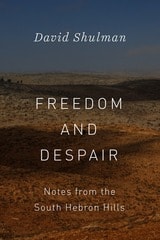
Freedom and Despair
Notes from the South Hebron HillsDavid Shulman
University of Chicago Press, 2018
David Shulman knows intimately what it takes to live your beliefs, to return, day after day, to the struggle, despite knowing you are often more likely to lose than win. Interweaving powerful stories and deep meditations, Freedom and Despair offers vivid firsthand reports from the occupied West Bank in Palestine as seen through the eyes of an experienced Israeli peace activist who has seen the Israeli occupation close up as it impacts on the lives of all Palestinian civilians.
Alongside a handful of beautifully written and often shocking tales from the field, Shulman meditates deeply on how to understand the evils around him, what it means to persevere as an activist decade after decade, and what it truly means to be free. The violent realities of the occupation are on full display. We get to know and understand the Palestinian shepherds and farmers and Israeli volunteers who face this situation head-on with nonviolent resistance. Shulman does not hold back on acknowledging the daily struggles that often leave him and his fellow activists full of despair. Inspired by these committed individuals who are not prepared to be silent or passive, Shulman suggests a model for ordinary people everywhere. Anyone prepared to take a risk and fight their oppressive political systems, he argues, can make a difference—if they strive to act with compassion and to keep hope alive.
This is the moving story of a man who continues to fight for good in the midst of despair. An indispensable book in our era of reactionary politics and refugee crises, political violence and ecological devastation, Freedom and Despair is a gripping memoir of struggle, activism, and hope for peace.
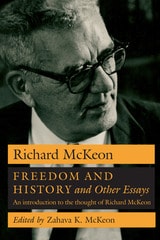
Freedom and History and Other Essays
An Introduction to the Thought of Richard McKeonRichard McKeon
University of Chicago Press, 1990
Freedom and Nature
The Voluntary and the InvoluntaryPaul Ricoeur
Northwestern University Press, 1966
Freedom and Nature
The Voluntary and the InvoluntaryPaul Ricoeur
Northwestern University Press, 2007
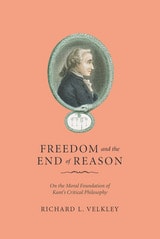
Freedom and the End of Reason
On the Moral Foundation of Kant's Critical PhilosophyRichard L. Velkley
University of Chicago Press, 1989
Freedom and the Human Person
Richard Velkley
Catholic University of America Press, 2007
Freedom as Marronage
Neil Roberts
University of Chicago Press, 2015
Roberts examines the liminal and transitional space of slave escape in order to develop a theory of freedom as marronage, which contends that freedom is fundamentally located within this space—that it is a form of perpetual flight. He engages a stunning variety of writers, including Hannah Arendt, W. E. B. Du Bois, Angela Davis, Frederick Douglass, Samuel Taylor Coleridge, and the Rastafari, among others, to develop a compelling lens through which to interpret the quandaries of slavery, freedom, and politics that still confront us today. The result is a sophisticated, interdisciplinary work that unsettles the ways we think about freedom by always casting it in the light of its critical opposite.
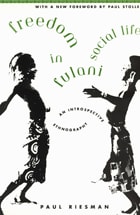
Freedom in Fulani Social Life
An Introspective EthnographyPaul Riesman
University of Chicago Press, 1977
"Freedom in Fulani Social Life richly documents how the ethnographer's own personal and cultural background is implicated in the research process. . . . For this reason, [Riesman's] book will be of paramount interest to all ethnographers."—Philip L. Kilbride, Reviews in Anthropology
"A remarkably well-written and insightful account of Fulani life. . . . In addition to using the conventional approaches of participating in and observing the daily activities of the Jelgobe . . . Riesman enriches his account by examining his personal feelings about particular incidents."—Library Journal
"An interesting and provocative study."—Choice
At the time of his death in 1988, Paul Riesman was an anthropologist who taught at Carleton College.
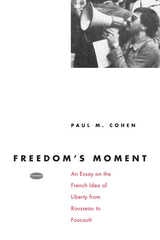
Freedom's Moment
An Essay on the French Idea of Liberty from Rousseau to FoucaultPaul M. Cohen
University of Chicago Press, 1997
Arranged not according to the lives and times of its protagonists but to the narrative themes and structures they held in common, Cohen’s study discerns a single master narrative of liberty in modern France. He captures these radicals, whose tradition bids them to resist the authority of power structures and public opinion. They denounce bourgeois and utilitarian values, the power of Church and State, and the corrupting influence of everyday politics, and they dream of a revolutionary rupture, a fleeting instant of sometimes violent but always meaningful transgression.
An eloquent and insightful work on French political culture, Freedom's Moment also helps explain how France, even as it has oscillated between political stagnation and crisis, has held onto its faith that liberty, equality, and fraternity remain within its grasp.
Examines the ideas of Rousseau, Robespierre, Stendahl, Michelet, Bergson, Peguy, Sartre, and Foucault.
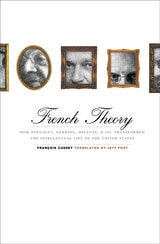
French Theory
How Foucault, Derrida, Deleuze, & Co. Transformed the Intellectual Life of the United StatesFrancois Cusset
University of Minnesota Press, 2008
“A great story, full of twists and turns. . . . Careers made and ruined, departments torn apart, writing programs turned into sensitivity seminars, political witch hunts, public opprobrium, ignorant media attacks, the whole ball of wax. Read it and laugh or read it and weep. I can hardly wait for the movie.” —Stanley Fish, Think Again, New York Times
“In such a difficult genre, full of traps and obstacles, French Theory is a success and a remarkable book in every respect: it is fair, balanced, and informed. I am sure this book will become the reference on both sides of the Atlantic.” —Jacques Derrida
“The Atlantic Ocean has two sides, and so does French Theory. Reinvented in America and betrayed in its own country, it has become the most radical intellectual movement in the West with global reach, rewriting Marx in light of late capitalism. Breathtakingly moving back and forth between the two cultures, Francois Cusset takes us through a dazzling intellectual adventure that illuminates the past thirty years, and many more decades to come.” —Sylvere Lotringer
During the last three decades of the twentieth century, a disparate group of radical French thinkers achieved an improbable level of influence and fame in the United States. Compared by at least one journalist to the British rock ‘n’ roll invasion, the arrival of works by Michel Foucault, Jacques Derrida, Jean-François Lyotard, Jean Baudrillard, Gilles Deleuze, and Félix Guattari on American shores in the late 1970s and 1980s caused a sensation.
Outside the academy, “French theory” had a profound impact on the era’s emerging identity politics while also becoming, in the 1980s, the target of right-wing propagandists. At the same time in academic departments across the country, their poststructuralist form of radical suspicion transformed disciplines from literature to anthropology to architecture. By the 1990s, French theory was woven deeply into America’s cultural and intellectual fabric.
French Theory is the first comprehensive account of the American fortunes of these unlikely philosophical celebrities. François Cusset looks at why America proved to be such fertile ground for French theory, how such demanding writings could become so widely influential, and the peculiarly American readings of these works. Reveling in the gossipy history, Cusset also provides a lively exploration of the many provocative critical practices inspired by French theory. Ultimately, he dares to shine a bright light on the exultation of these thinkers to assess the relevance of critical theory to social and political activism today-showing, finally, how French theory has become inextricably bound with American life.
François Cusset, a writer and intellectual historian, teaches contemporary French thought in Paris at the Institut d’Etudes Politiques and at Columbia University’s Reid Hall. His books include Queer Critics and La Décennie.
Jeff Fort is assistant professor of French at the University of California, Davis. He has translated works by Maurice Blanchot, Jean Genet, and Jean-Luc Nancy.

Friedrich Nietzsche and the Politics of Transfiguration (expanded ed.)
Tracy B. Strong
University of Illinois Press, 2000

Friedrich Schlegel’s Lucinde and the Fragments
Translated by Peter FirchowIntroduction by Peter Firchow
University of Minnesota Press, 1971
Friedrich Schlegel's Lucinde and the Fragments was first published in 1971. Minnesota Archive Editions uses digital technology to make long-unavailable books once again accessible, and are published unaltered from the original University of Minnesota Press editions.
For the last century and a half, Friedrich Schlegel (1772–1829) has enjoyed a reputation for being the critical grey eminence behind the coming to power of the Romantic Movement. It was Schlegel, in his three series of aphoristic fragments (Lyceum, Athenaeum, and Ideas), who actually first defined and employed the word "romantic" in the present sense; and it was he who in a chaotic, fragmentary, and often mysterious but forceful manner first proclaimed the doctrine that was to usher in the modern age in literature. He too was among the first to put his new program into practice in the shape of his unfinished Lucinde,a work variously denounced as pornography and heralded as a forerunner of modern novelistic experimentation, and probably the most famous novel to come out of German Romanticism.
Both the Fragments and Lucinde,along with a brilliant tour de force, the "Essay on Incomprehensibility," are available now for the first time in a complete English translation in this volume, together with a brief scholarly introduction. This translation will enable non-German readers to examine at first hand the work of a man whom Rene Wellck has called "one of the greatest critics of history." At a time when the function of criticism is coming once again under close skeptical scrutiny, Friedrich Schlegel's unorthodox, unsystematic but seminal critical mind—all of literature, philosophy, art, and history were grist to his mill—should find many sympathetic readers. The book will be of particular interest to theorists of literature and fiction, comparative literature scholars, and historians of the intellectual history of Germany, and it is appropriate for course use in German and comparative literature classes.

Friendship and Love, Ethics and Politics
Studies in Mediaeval and Early Modern HistoryEva Österberg
Central European University Press, 2010
From A to A
Keywords of MarkupBradley Dilger
University of Minnesota Press, 2010
From A to investigates the relationship between media and culture by articulating questions regarding the role of markup. How do the codes of HTML, CSS, PHP, and other markup languages affect the Web's everyday uses? How do these languages shape the Web's communicative functions? This novel inquiry positions markup as the basis of our cultural, rhetorical, and communicative understanding of the Web.
Contributors: Sarah J. Arroyo, CSU Long Beach; Jennifer L. Bay, Purdue U; Helen J. Burgess, U of Maryland, Baltimore County; Michelle Glaros, Centenary College of Louisiana; Matthew K. Gold, NYCC of Technology; Cynthia Haynes, Clemson U; Rudy McDaniel, U of Central Florida; Colleen A. Reilly, UNC, Wilmington; Thomas Rickert, Purdue U; Brendan Riley, Columbia College Chicago; Sae Lynne Schatz, U of Central Florida; Bob Whipple, Creighton U; Brian Willems, U of Split, Croatia.

From Biological Practice to Scientific Metaphysics
William C. Bausman
University of Minnesota Press, 2024
How analyzing scientific practices can alter debates on the relationship between science and reality
Numerous scholarly works focus solely on scientific metaphysics or biological practice, but few attempt to bridge the two subjects. This volume, the latest in the Minnesota Studies in the Philosophy of Science series, explores what a scientific metaphysics grounded in biological practices could look like and how it might impact the way we investigate the world around us.
From Biological Practice to Scientific Metaphysics examines how to reconcile the methods of biological practice with the methods of metaphysical cosmology, notably regarding the origins of life. The contributors take up a wide range of traditional metaphysics and philosophy of science topics, including natural kinds, medicine, ecology, genetics, scientific pluralism, reductionism, operationalism, mechanisms, the nature of information, and more. Many of the chapters represent the first philosophical treatments of significant biological practices.
From causality and complexity to niche constructions and inference, the contributors review and discuss long-held objections to metaphysics by natural scientists. They illuminate how, in order to learn about the world as it truly is, we must look not only at what scientists say but also what they do: for ontology cannot be read directly from scientific claims.
Contributors: Richard Creath, Arizona State U; Marc Ereshefsky, U of Calgary; Marie I. Kaiser, Bielefeld U; Thomas A. C. Reydon, Leibniz U Hannover and Michigan State U; Lauren N. Ross, U of California, Irvine; Rose Trappes, U of Exeter; Marcel Weber, U of Geneva; William C. Wimsatt, U of Chicago.
Retail e-book files for this title are screen-reader friendly with images accompanied by short alt text and/or extended descriptions.
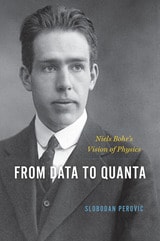
From Data to Quanta
Niels Bohr’s Vision of PhysicsSlobodan Perovic
University of Chicago Press, 2021
Niels Bohr was a central figure in quantum physics, well known for his work on atomic structure and his contributions to the Copenhagen interpretation of quantum mechanics. In this book, philosopher of science Slobodan Perović explores the way Bohr practiced and understood physics, and analyzes its implications for our understanding of modern science. Perović develops a novel approach to Bohr’s understanding of physics and his method of inquiry, presenting an exploratory symbiosis of historical and philosophical analysis that uncovers the key aspects of Bohr’s philosophical vision of physics within a given historical context.
To better understand the methods that produced Bohr’s breakthrough results in quantum phenomena, Perović clarifies the nature of Bohr’s engagement with the experimental side of physics and lays out the basic distinctions and concepts that characterize his approach. Rich and insightful, Perović’s take on the early history of quantum mechanics and its methodological ramifications sheds vital new light on one of the key figures of modern physics.
From Dickinson to Dylan
Visions of Transcendence in Modernist LiteratureGlenn Hughes
University of Missouri Press, 2020
This work is unique in its extended focus, in a comparative study spanning a century, on the persistence and centrality in modernist literature of the struggle to understand and articulate the dependence of human meaning on the mystery of transcendent meaning. Hughes shows us that each of these authors is a mystic in his or her way, and that none are tempted by the modern inclination to suppose that meaning originates with human beings. Together, they address one of the most difficult and important challenges of modern literature: how to be a mystic in modernity.

From Doctor to Healer
The Transformative JourneySt. John, Gloria
Rutgers University Press, 1998
Why would a successful physician who has undergone seven years of rigorous medical training take the trouble to seek out and learn to practice alternative methods of healing such as homeopathy and Chinese medicine? From Doctor to Healer answers this question as it traces the transformational journeys of physicians who move across the philosophical spectrum of American medicine from doctor to healer. Robbie Davis-Floyd and Gloria St. John conducted extensive interviews to discover how and why physicians make the move to alternative medicine, what sparks this shift, and what beliefs they abandon or embrace in the process.
After outlining the basic models of American health care-the technocratic, humanistic, and holistic-the authors follow the thoughts and experiences of forty physicians as they expand their horizons in order to offer effective patient care. The book focuses on the radical shift from one end of the spectrum to the other-from the technocratic approach to holism-made by most of the interviewees. Because many American physicians find such a drastic change too threatening, the authors also address the less radical transition to humanism-a movement toward compassionate care arising from within the medical system.
From Kant and Royce to Heidegger
Essays in Modern PhilosophyCharles Sherover
Catholic University of America Press, 2019
From Liberal Values to Democratic Transition
Essays in Honor of Janos KisRonald Dworkin
Central European University Press, 2004
From Mastery to Mystery
A Phenomenological Foundation for an Environmental EthicBryan E. Bannon
Ohio University Press, 2014
From Mastery to Mystery is an original and provocative contribution to the burgeoningfield of ecophenomenology. Informed by current debates in environmental philosophy, Bannon critiques the conception of nature as u200a“substance” that he finds tacitly assumed by the major environmental theorists. Instead, this book reconsiders the basic goals of an environmental ethic by questioning the most basic presupposition that most environmentalists accept: that nature is in need of preservation.
Beginning with Bruno Latour’s idea that continuing to speak of nature in the way we popularly conceive of it is ethically and politically disastrous, this book describes a way in which the concept of nature can retain its importance in our discussion of the contemporary state of the environment. Based upon insights from the phenomenological tradition, specifically the work of Martin Heidegger and Maurice Merleau-Ponty, the concept of nature developed in the book preserves the best antihumanistic intuitions of environmentalists without relying on either a reductionistic understanding of nature and the sciences or dualistic metaphysical constructions.
From Point to Pixel
A Genealogy of Digital AestheticsMeredith Hoy
Dartmouth College Press, 2017
From Text to Action
Essays in Hermeneutics, IIPaul Ricoeur
Northwestern University Press, 1991
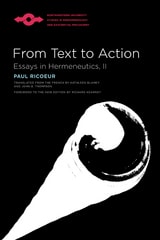
From Text to Action
Essays in Hermeneutics, IIPaul Ricoeur, Translated from the French by Kathleen Blamey and John B. Thompson, Foreword to the new edition by Richard Kearney
Northwestern University Press, 2007
From Text to Action is an essential companion to the classic The Conflict of Interpretations. Here, Ricoeur continues and extends his project of constructing a general theory of interpretation, positioning his work in relation to its philosophical background: Hegel, Husserl, Gadamer, and Weber. He also responds to contemporary figures like K. O. Apel and Jürgen Habermas, connecting his own theorization of ideology to their critique of ideology.
This new edition includes a foreword by Richard Kearney. It and other new editions of Ricoeur's texts published by Northwestern University Press have joined the canon of contemporary continental philosophy and continue to contribute to emergent discussions in the twenty-first century.

From Text to Context
The Turn to History in Modern JudaismIsmar Schorsch
Brandeis University Press, 1994
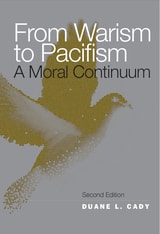
From Warism to Pacifism
A Moral ContinuumAuthored by Duane Cady
Temple University Press, 2010
Duane Cady views warism and pacifism as polar extremes on a continuum that embraces a full spectrum of ethical positions on the morality of war and peace. Realizing that he could not intellectually defend the notions of just-war theory, he found that he was a reluctant pacifist. In this new edition of From Warism to Pacifism, Cady continues to expose the pervasive, subconscious warism that is the dominant ideology in modern Western culture. He explores the changes over the last twenty years—from the end of the Cold War to the ongoing “war on terror,” as well as Barack Obama winning the Nobel Prize for Peace.
Like racism and sexism, the uncritical presumption that war is morally justifiable, even morally required, misguides our attitudes and institutions. In its place, Cady proposes the development of a positive concept of peace. Citing common objections to pacifist values, he describes peace as something more than the mere absence of war and demonstrates that pacifism is a defensible position.

From the Alien to the Alone
A Study of Soul in PlotinusGary M. Gurtler, SJ
Catholic University of America Press, 2022
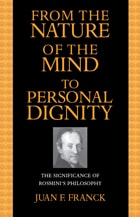
From the Nature of the Mind to Personal Dignity
The Significance of Rosmini's PhilosophyJuan F. Franck
Catholic University of America Press, 2006

Frontiers Of Illusion
Science, Technology, and the Politics of ProgressDaniel Sarewitz
Temple University Press, 1996
For the past fifty years, science and technology—supported with billions of dollars from the U.S. government—have advanced at a rate that would once have seemed miraculous, while society's problems have grown more intractable, complex, and diverse. Yet scientists and politicians alike continue to prescribe more science and more technology to cure such afflictions as global climate change, natural resource depletion, overpopulation, inadequate health care, weapons proliferation, and economic inequality.
Daniel Sarewitz scrutinizes the fundamental myths that have guided the formulation of science policy for half a century—myths that serve the professional and political interests of the scientific community, but often fail to advance the interests of society as a whole. His analysis ultimately demonstrates that stronger linkages between progress in science and progress in society will require research agendas that emerge not from the intellectual momentum of science, but from the needs and goals of society.
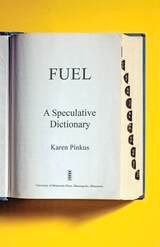
Fuel
A Speculative DictionaryKaren Pinkus
University of Minnesota Press, 2016
Fuel is an idiosyncratic, speculative dictionary of fuels, real and imagined, historical and futuristic, hopeless and utopian. Drawing on literature, film, and scientific treatises—most produced long before “climate change” was in circulation—Fuel argues for a distinction between energy (a system of power) and fuel (a substance, which can be thought of as “potentiality”) as it endeavors to undo the dream that we can simply switch to renewables and all will be golden.
From “Air” to “Zyklon B,” entries in this unusual “dictionary” include Algae, Clathrates, Dilithium, Fleece, Goats, Theology, Whale Oil, and many, many more. The tone of the entries ranges as widely as the topics: from historical anecdotes (the Ford Fiesta “boozemobile”) to eccentric readings of the classics of “energy lit” (Germinal and Oil!); from literary observations (a high octane Odyssey?) to excursions into literary theory. The dictionary draws from an eccentric canon, including works by Jules Verne, George Eliot’s Silas Marner, Paolo Bacigalupi’s Windup Girl, and the Tom Cruise vehicle Oblivion, among others.
A message from this ambitious project is that energy can be understood as a heterogeneous set of self-mystifying systems or machines that block access to thought as they fascinate us. Fuels emerge as more primal elements that the audience can grasp at various points along the way to consumption/combustion. This dictionary can help scramble our thinking about fuel—not in order to demonize energy and not in order to create a new hierarchy in which certain renewables take over from fossil fuels but instead to open up potential ways of interacting with real and imaginary substances, by wrenching them out of narrative and placing them into an idiosyncratic dictionary to be applied by readers into new narratives.
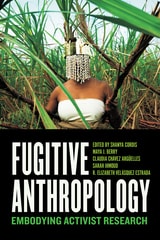
Fugitive Anthropology
Embodying Activist ResearchEdited by Shanya Cordis, Maya J. Berry, Claudia Chávez Argüelles, Sarah Ihmoud, and R. Elizabeth Velásquez Estrada
University of Texas Press, 2026
A personal, provocative, and boundary-breaking volume on the power relations that racialized, gendered, and sexualized researchers grapple with while conducting activist research.
Fugitive Anthropology is a transnational, intergenerational engagement that extends feminist theory, activist research methodologies, and the discipline of anthropology in new directions. Contributors examine the tensions that arise from conducting politically engaged, collaborative research alongside communities in struggle, in particular theorizing from the experiences of racialized women, queer, trans, and gender nonconforming researchers across distinct geographies. Essays contend with the matrices of colonial, imperial, and patriarchal violence that afflict the researchers and communities with which they seek political alignment.
Articulating an ethnographic practice grounded in Black and Indigenous political struggles and committed to collective liberation, the volume reflects on what it means to navigate violent relations of power, systemic inequities, and current onslaughts shaping field research and US academia. Ultimately, Fugitive Anthropology argues that a feminist ethos—one that embraces embodied knowledges and fugitive sensibilities—forges liberatory spaces that break from dominant masculinist frames of the “political” and challenge colonial regimes within and beyond the neoliberal university.
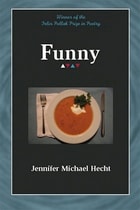
Funny
Jennifer Michael Hecht
University of Wisconsin Press, 2005
Future Medicine
Ethical Dilemmas, Regulatory Challenges, and Therapeutic Pathways to Health Care and Healing in Human TransformationMichael H. Cohen
University of Michigan Press, 2002

Future of Art in a Digital Age
From Hellenistic to Hebraic ConsciousnessMel Alexenberg
Intellect Books, 2006
This work develops the thesis that the transition from pre-modernism to postmodernism in art of the digital age represents a paradigm shift from the Hellenistic to the Hebraic roots of Western culture.
Semiotic and morphological analysis of art and visual culture demonstrate the contemporary confluence between the deep structure of Hebraic consciousness and new directions in art that arise along the interface between scientific inquiry, digital technologies, and multicultural expressions.
Complementing these two analytic methodologies, alternative methodologies of kabbalah and halakhah provide postmodern methods for extending into digital age art forms. Exemplary artworks are described in the text and illustrated with photographs.
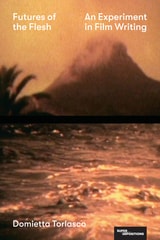
Futures of the Flesh
An Experiment in Film WritingDomietta Torlasco
Northwestern University Press, 2026
Exploring alternative possibilities of viewpoint through cinematic experimentation
In this boldly multidimensional work, Domietta Torlasco alternates between theoretical writings, film essays, and fragmented excerpts from an original screenplay to construct a temporal as well as spatial architecture for her critical intervention. Futures of the Flesh posits that cinematic experimentation holds the strongest potential to reimagine life—its forms, rhythms, and affects—beyond the division between subject and object, human and animal, animate and inanimate. Such potential cannot be clearly located in either space or time but, on the contrary, requires that we think according to momentum, diffraction, and difference.
As a novel notion and the formative medium of both subject and object, the flesh affirms the openness and indefinite generativity of being, allowing for the appearance of new perceptual relations and forms of kinship. Torlasco stages a dialogue between thinkers including Hortense Spillers and Maurice Merleau-Ponty and turns to canonical films, including Blade Runner and Solaris, classic sci-fi literature, such as Octavia Butler’s Kindred, and contemporary video art to elucidate how these media imaginatively rework the distinction between categories of being. This book endeavors to redefine the relation between theory and practice, analysis and creation, to name the primary relations that, under specific techno-aesthetic conditions, enable the emergence of porous, un-bordered forms of life.
Futures of the Sun
The Struggle over Renewable LifeImre Szeman
University of Minnesota Press, 2024
Who will lead the transition from fossil fuel–dependent societies into renewable energy futures?
Energy transition is crucial to the struggle against climate change. But even while embracing the death of fossil fuels, some want to preserve the current social and political order. Futures of the Sun explores the competing eco-stories being offered by people intent on shaping the transition to fit their vision and version of a renewable society. Imre Szeman explains how and why key players are working hard to make sure a greener, cleaner future will look much like the world we live in today. He examines the rhetoric, ideology, and politics of liberal nationalists intent on fighting a war against climate change, billionaire solar entrepreneurs who believe only in themselves, and the populist far right who want no change at all.
Offering possible new critical and political avenues, Szeman reveals how those on the environmental left can ensure their vision of egalitarianism beyond the status quo can become the reality of our renewable future.