3785 books match the query 'Poetry' and 124 start with f
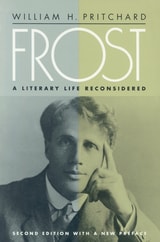
cover of Frost: A Literary Life Reconsidered

Frost

A Literary Life Reconsidered

William H. Pritchard

University of Massachusetts Press, 1993

Although this book does not attempt to revive the image of Frost as a benign, white-haired sage, it does present him in a strikingly different light than did Lawrence Thompson’s controversial three-volume biography. William H. Pritchard sees Frost whole, demonstrating the complex interaction between the poet’s life and work. Based not only on the poetry, but on letters, notebooks, recorded interviews, and public appearances as well, Frost: A Literary Life Reconsidered examines the most interesting and significant aspects of Frost’s life and poetry and offers an attentive, sensitive portrait of an artist whose critical reputation continues to grow.
[more]
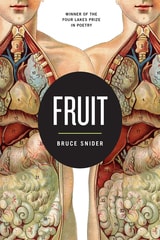
cover of Fruit

Fruit

Bruce Snider

University of Wisconsin Press, 2020
Bruce Snider’s third poetry collection grapples with what it means to be childless in a world obsessed with procreation. Poems move between the scientific and the biblical, effortlessly sliding from the clinical landscape of a sperm bank to Mount Moriah as Abraham prepares Isaac for sacrifice. Exploring issues of sexuality, lineage, and mortality, Snider delves into subjects as varied as the Creation Museum in Petersburg, Kentucky; same-sex couple adoption; and Gregor Mendel’s death in 1884. Each poem builds into a broader examination of power and fragility, domesticity and rebellion, violence and devotion: heartrending vignettes of the aches and joys of growing up and testing the limits of nature and nurture. In language both probing and sensitive, Fruit delivers its own conflicted and celebratory answers to pressing questions of life, death, love, and biology.
[more]
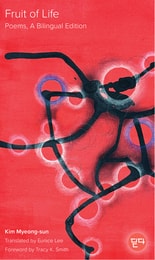
cover of Fruit of Life: Poems, A Bilingual Edition

Fruit of Life

Poems, A Bilingual Edition

Kim Myeong-sun

Rutgers University Press, 2026

Kim Myeong-sun is Korea's first published woman writer. Fruit of Life: Poems (생명의 과실: 김명순 시선) is the first book-length, Korean-to-English translation of her poetry. Kim’s poems offer a raw portrait of 1920s–30s Korea, driven by her personal experiences of sexual assault, misogynistic journalism and criticism, displacement, and poverty during the Japanese colonial occupation (1910–1945). Alongside feminist critique, Kim also writes about sapphic desire, familial affection, and nature, in styles that range from the traditional to the experimental. While Kim’s work was erased from the canon by Korea’s misogynistic literary establishment, Fruit of Life celebrates the legacy of Kim’s radical, versatile poetry, which paved the way for contemporary Korean women writers.
 

English-Korean Bilingual Edition 
영-한 이중언어판

This book is published with the support of the Literature Translation Institute of Korea (LTI Korea).

‘한국 여성 최초 등단 작가’ 김명순의 시가 영문 완역본 『생명의 과실: 김명순 시선』으로 영어권 독자들을 만난다. 1920–30년대 조선 사회의 민낯을 강렬하고 가감 없는 언어로 담아낸 김명순의 시는, 일제강점기 아래 성폭력과 여성혐오적 언론 및 비평, 이주와 빈곤을 직접 겪어낸 작가의 여성주의적·반식민주의적 저항 정신을 생생히 드러낸다. 또한 전통과 실험을 넘나드는 다채로운 형식과 기법으로 여성 간 연대와 사랑, 가족애, 자연에 대하여 노래한다. 『생명의 과실: 김명순 시선』은 여성혐오적 문단으로부터 소외당한 김명순의 작품을 재조명하며, 한국 여성문학의 새로운 지평을 연 그의 업적을 기념한다.

[more]
cover of Fuchsia in Cambodia: Poems

Fuchsia in Cambodia

Poems

Roy Jacobstein

Northwestern University Press, 2008
Suffused with tenderness and humor, the poems in this new collection take readers on a journey through emotions, across national boundaries, and even along the geographic timeline. The quick mind of author Jacobstein creates fluid verse that can take on the singular geography of his native Michigan or the story of an immigrant cab driver with ease. His elegant rhyme and clever rhythm are suited equally to an ode to the stegosaurus and to his many poems for his adopted daughter. He moves readers from Washington, D.C., to Delhi, from adolescence to fatherhood, and between heaven and earth. With its immersive voice and sensitive examinations, this set of verses retains its sense of wonder at all the beautiful hellos and good-byes that humans come to know well in their too-short lifetimes.
[more]
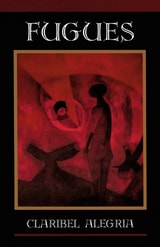
cover of Fugues

Fugues

Claribel Alegría, translated from the Spanish by D. J. Flakoll

Northwestern University Press, 1995
Well-known for her incisive descriptions of war and violence in El Salvador, Claribel Alegría is one of Central America's most eminent poets. In Fugues, a lucid and strikingly beautiful original collection, she looks squarely into the face of mortality, love, and aging, to explore the personal as well as universal questions that face each human being.
[more]
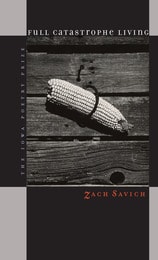
cover of Full Catastrophe Living

Full Catastrophe Living

Zach Savich

University of Iowa Press, 2009

Merging the spirits of Don Quixote, Shakespearean fools, Theodore Roethke, Frank O’Hara, James Merrill, and the Marx Brothers, Zach Savich’s first book does more than showcase the innovative fluency of its roving forms and moods: these poetic hybrids are not hothouse blossoms but minotaurs. With ebullient intelligence and high-stakes insistence on the panic, lust, and suffering of the sensual world, Full Catastrophe Living uses the self as an instrument to investigate art, love, and the hardest honesty.

In meditations, songs, slapstick sequences, sonnets, narratives, and tightly carved fragments, Savich explores the conflicts between romance and reality, between inventing a new world and staying true to this one. Relishing both traditional and experimental poetics, he takes refreshing, ecumenical risks to show the “strange grace / of bells that ring with a rag’s polishing.” Like a Fourth of July band conductor guiding planes to land, his poetic wit alters what’s real. This book will change the ways that readers think about poetry, language’s expressive capacity, and the robust world around us.
[more]
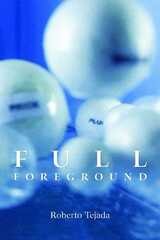
cover of Full Foreground

Full Foreground

Roberto Tejada

University of Arizona Press, 2012

Poet Roberto Tejada uses lyrical poems to explore and give a voice to the troubles of global citizenship, US–Mexico relations, Latino identity, and the political emotion of queer sexualities. His collection provides a holistic ground-level view of pivotal world events from the mid 1990s to a more recent present.

Tejada’s innovative work dramatically widens the scope of Latina/o literature, showing us exactly what it can accomplish. The poems move very much like a three-act play, in which the first act is one of origins; the second, a staging of desire; and the third, a symbiosis. These acts magnify one another when unified. Each poem within the collection positions itself within the avant-garde, in which the artful use of language aims to dazzle, surprise, and enliven. The poems dance by, preserving a tension between hurry and delay, momentum and stasis, and every line is like a newly launched firecracker, sending out startling patterns of spark and flare.

Tejada’s exuberant language stretches the limits of selfhood and the way it is represented in poetry. He illuminates the tangled webs that are woven when identities are linked to sexuality, nationality, privilege, and temporality. The concerns and obsessions voiced here turn the construction of desire on its head, forcing us to ask ourselves what is worthy of our attentions.
[more]
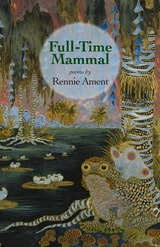
cover of Full-Time Mammal

Full-Time Mammal

Rennie Ament

University of Iowa Press, 2026

In Full-Time Mammal, perception becomes both subject and site of excavation. Rennie Ament wrestles with what it means to be awake and aware in a disorienting world. How are you supposed to know what you don’t know? As ancient defense mechanisms fail, the brain must be retrained, and poetry becomes a divination tool, a game, a portal, a potential weapon, a way through fog.

Survival requires becoming a poet-cum-scientist. Drool becomes data. Ants carry thoughts to rot beneath earth. Animals, plants, and objects are not symbols but companionate presences. This collection feels its way through the failure of imagination at the heart of preordained systems, turning to the natural world not for refuge, but reinvention.
 

[more]
cover of Function Of Criticism: Problems and Exercises

Function Of Criticism

Problems and Exercises

Yvor Winters

Ohio University Press, 1957

The Function of Criticism: Problems and Exercises brings together five essays by Yvor Winters: “Problems for the Modern Critic of Literature,” “The Audible Reading of Poetry,” “The Poetry of Gerard Manley Hopkins,” “Robert Frost, Or the Spiritual Drifter as Poet,” and “English Literature in the Sixteenth Century.”
[more]
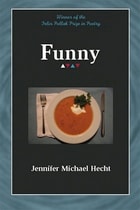
cover of Funny

Funny

Jennifer Michael Hecht

University of Wisconsin Press, 2005

A tour de force, Funny is a masterpiece of poetic, as well as philosophic and comic, invention. It creates a musing world, where the issues are philosophical but the focus is always on people, on our most private ways of balancing our accounts. The poems are psychological; tender and humane, and somehow ruthless. This is poetry that swarms with ideas, that revels in rhythmic intricacy and literary references, but is also clear as a bell, and tells marvelous stories.
[more]
cover of Furious Cooking

Furious Cooking

Maureen Seaton

University of Iowa Press, 1996
By turns chic, romantic, sardonic, droll, seductive, and in your face, Maureen Seaton is a cornucopia of attitudes and styles, a street-smart, deeply talented woman who wryly contemplates the charades that the self and the world assume—and how hard it is to stay in focus the morning after. It gets very, very hot in Seaton's kitchen and in her poems. As this inventive and imaginative poet states, “Furious Cooking is a stew of accidents and incidents rolling across universes.”
Seaton creates curious and energetic juxtapositions; she revisits violence and assesses its damages. The poet/woman in the thick of this caldron instigates polarities and assumes the roles of inquisitor and heretic, perpetrator and child, painter and artifact, scientist and specimen. She careens circularly through the hypocrisies and atrocities of church and partner, established sanctioned realities, the seeming senseless death of loved ones in this life and long ago. 
[more]
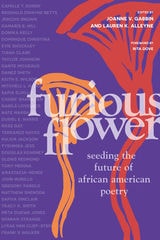
cover of Furious Flower: Seeding the Future of African American Poetry

Furious Flower

Seeding the Future of African American Poetry

Edited by Joanne V. Gabbin and Lauren K. Alleyne; Foreword by Rita Dove

Northwestern University Press, 2020

Furious Flower: Seeding the Future of African American Poetry is an anthology of poems by more than one hundred award-winning poets, including Jericho Brown, Justin Philip Reed, and Tracy K. Smith, with themed essays on poetics from celebrated scholars such as Kwame Dawes, Meta DuEwa Jones, and Evie Shockley. The Furious Flower Poetry Center is the nation’s first academic center for Black poetry. In this eponymous collection, editors Joanne V. Gabbin and Lauren K. Alleyne bring together many of the paramount voices in Black poetry and poetics active today, composing an electrifying mosaic of voices, generations, and aesthetics that reveals the Black narrative in the  work of twentieth- and twenty-first-century writers. Intellectually enlightening and powerfully enlivening, Furious Flower explores and celebrates the idea of the Black poetic voice by posing the question, What’s next for Black poetic expression?
[more]
cover of Furious Lullaby

Furious Lullaby

Oliver de la Paz

Southern Illinois University Press, 2007

Furious Lullaby is both a celebration of and a eulogy to the body in the twenty-first century. The collection, which examines the larger concepts of salvation and temptation in a world of blossoming strife, includes a series of aubades – dramatic poems culminating with the separation of lovers at dawn. The lovers suffer a metaphysical crisis, seeking to know what is good, what is evil, and how to truly know the difference. Knowing, however, invites the terrible into their world. The Devil, a seductive trickster, haunts the landscape as a voice who dares each inquisitor to learn about mortality, morality, the beautiful, and the unspeakable through direct experience. Furious Lullaby offers a departure from the lighter prose poetry of de la Paz’s Names above Houses and preserves the author’s concern with the nature of human grace.

[more]
cover of Furs Not Mine

Furs Not Mine

Andrea Cohen

Four Way Books, 2015
The poems in Furs Not Mine display Andrea Cohen’s masterful craft and lyricism and her keen wit. In Cohen’s elegiac shoals, we see how “Great griefs are antidotes / for lesser sorrows,” and in her strange, surprising narratives, we glimpse a man darting into traffic for a hubcap, “meaning to build his dream / vehicle from scrap.” These poems, too, have the feel of dreamy constructions, in which bliss “from a distance, can look like pain.” That’s the magic of this collection: it holds loss and promise in the same image—sometimes even the same word.
[more]
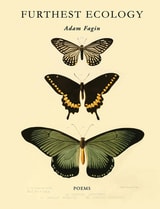
cover of Furthest Ecology

Furthest Ecology

Adam Fagin

University Press of Colorado, 2019
Furthest Ecology takes up the life and labor of Abbott Thayer, the prickly, irrepressible American painter and naturalist nicknamed “the father of camouflage.” In 1896, Thayer discovered countershading, also known as “Thayer’s Law,” the theory of animal coloration often credited for laying the groundwork for military camouflage in World War I. Fagin’s poetry follows Thayer through “pure leafy space” ringing with “hypertelic / rhythms of a redpoll,” examining in lush, panoramic detail “the clairvoyance of the artist’s attention.” But this idyllic portrait unravels as Thayer’s story proceeds. Grieving the death of his first wife and, later, cutting a frenzied path through wartime Europe, Thayer encounters darker forces, within and without. With spare beauty and sharp-edged syntax, Fagin conjures the painter’s world: Loss, despair, obsession, ecstasy, and the aesthetic sublime. Furthest Ecology is a vivid and powerful debut that will haunt readers with its singular vision of artistic pursuit.
[more]
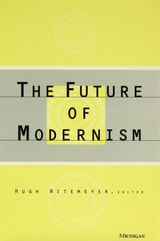
cover of Future of Modernism

Future of Modernism

Hugh Witemeyer, Editor

University of Michigan Press, 1997

The modernism of the future will not look like the modernism of the past. Over the past twenty years, W. B. Yeats, James Joyce, T. S. Eliot, Ezra Pound, and other major figures of the modernist movement have been subject to postmodernist critiques that have seen them as reactionary upholders of oppressive class, gender, racial, or other hierarchies; these critiques have permanently altered conceptions of the program and the canon of modernism. Today, revolutions in editing and publishing seem likely to transform them still further. The contributors to The Future of Modernism take these sea-changes into account, acknowledging and learning from the developments of recent years. Some interrogate the antithesis between modernism and postmodernism, showing that the former contains many features commonly claimed for the latter. Other essays dissociate modernism from the New Critical formalism with which it is often confused. Still others explore the modernist legacy of engagement with political and social events, challenging characterizations of modernism as an ahistorical, universalistic ideology. Together, these eleven essays by distinguished scholars contest facile dismissals of modernist writing and affirm an unshakable conviction of its continuing relevance and value. Although they project no unified vision or prophecy, the essays suggest a variety of lively trajectories into the next century.
[more]
cover of feast gently

feast gently

G.C. Waldrep

Tupelo Press, 2018
In his most autobiographically transparent (and most comical) collection to date, Waldrep explores the intersections between body and spirit, faith and action. These are lyrics of incarnation, of method and meat-hood, of illness and the vicissitudes of love, earthly as well as heavenly, occupying the space between desire and gratification, between pain and praise.
[more]
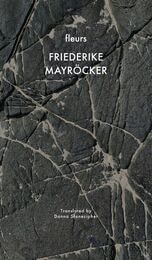
cover of fleurs

fleurs

Friederike Mayröcker

Seagull Books, 2026

An uncompromising masterpiece that transforms memory and renewal into a wild world of words.

Fleurs—flowers, flower petals—a title that might suggest a gentle world of blooming fields and soft breezes. But in the hands of Friederike Mayröcker, one of the greatest German-language poets of the twentieth and twenty-first centuries, this is a book of a very different kind. It is a wild, vivid journey into a rich, elemental landscape.

If you follow Mayröcker’s path, you find not a comfortable meadow but steep, stony ground—a place where her inimitable voice rings out in all its power and purity. Unsentimental and crystal clear, Mayröcker’s writing is driven by a single purpose: to create images of remarkable vividness in a language as free, bold, and fresh as if it were newly invented.

The final installment of Mayröcker’s trilogy, following études and cahier, fleurs is a book of memory and renewal, protest and revelation—a testimony to the enduring magic of writing itself.
[more]
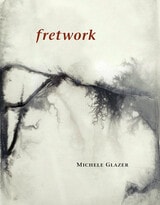
cover of fretwork

fretwork

Glazer, Michele

University of Iowa Press, 2021

Fretwork hazards a response to its dilemma by turning, skeptically and resiliently, toward the materials of lyric poetry and empathetic action, however fragmented and fragile. Glazer’s poems are sculpted word by word, their forms evoking both organic process and machined exactness. Their voice blends command and humility, openness and terseness, generosity and rigor, gravity and mordant humor.
[more]
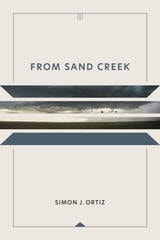
cover of from Sand Creek

from Sand Creek

Simon J. Ortiz

University of Arizona Press, 2000

The massacre of Cheyenne and Arapaho women and children by U.S. soldiers at Sand Creek in 1864 was a shameful episode in American history, and its battlefield was proposed as a National Historic Site in 1998 to pay homage to those innocent victims. Poet Simon Ortiz had honored those people seventeen years earlier in his own way. That book, from Sand Creek, is now back in print.

Originally published in a small-press edition, from Sand Creek makes a large statement about injustices done to Native peoples in the name of Manifest Destiny. It also makes poignant reference to the spread of that ambition in other parts of the world—notably in Vietnam—as Ortiz asks himself what it is to be an American, a U.S. citizen, and an Indian. Indian people have often felt they have had no part in history, Ortiz observes, and through his work he shows how they can come to terms with this feeling. He invites Indian people to examine the process they have experienced as victims, subjects, and expendable resources—and asks people of European heritage to consider the motives that drive their own history and create their own form of victimization.

Through the pages of this sobering work, Ortiz offers a new perspective on history and on America. Perhaps more important, he offers a breath of hope that our peoples might learn from each other:

This America
has been a burden
of steel and mad
death,
but, look now,
there are flowers
and new grass
and a spring wind
rising
from Sand Creek.
[more]
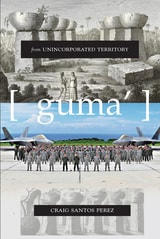
cover of from unincorporated territory [guma’]

from unincorporated territory [guma’]

Craig Santos Perez

Omnidawn, 2014
Craig Santos Perez, a native Chamoru from the Pacific Island of Guåhan (Guam), has lived for two decades away from his homeland. This new collection maps the emotional and geographic cartographies of his various migrations, departures, and arrivals. Through a variety of poetic forms, the poet highlights the importance of origins and customs amidst new American cultures and terrains. Furthermore, this book draws attention to, and protests, the violent currents of colonialism and militarism currently threatening Guåhan, a “strategic” US territory since 1898. The poet memorializes what his people have lost and insists that we must protect and defend what we have left of home. This collection will engage those interested in Pacific literature, multicultural, indigenous poetry, mixed-genre, multilingual experiments, ecopoetics, and those who want to explore intersections between poetry, politics, history, and culture.
[more]
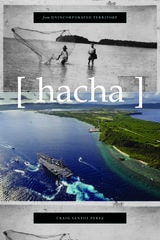
cover of from unincorporated territory [hacha]

from unincorporated territory [hacha]

Craig Santos Perez

Omnidawn, 2017
from unincorporated territory [hacha] is the first book of native Chamorro poet Craig Santos Perez’s ongoing series about his homeland, the Western Pacific Island of Guåhan (Guam). Perez weaves avant-garde, eco-poetic, indigenous, documentary, multilingual, and abstract expressionist modes to tell the complex story of Guam’s people, culture, history, politics, and ecologies. Since its original publication in 2008, [hacha] has received positive reviews, and it has been taught in universities throughout Asia, the Pacific, the United States, Canada, and Europe. This new and revised edition aims to bring the book to a new generation of readers.
[more]
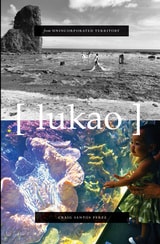
cover of from unincorporated territory [lukao]

from unincorporated territory [lukao]

Craig Santos Perez

Omnidawn, 2017

from unincorporated territory [lukao] is the fourth book in native Chamorro poet Craig Santos Perez’s ongoing series about his homeland, the Western Pacific Island of Guåhan (Guam), and his current home, Hawai?i. He utilizes eco-poetic, decolonial, diasporic, indigenous, documentary, epic, and avant-garde modes to weave stories of creation, birth, migration, food sovereignty, and parenting. This work not only protests the devastating impacts of colonialism, militarism, and environmental injustice across the Pacific, it also expresses a vision of a sustainable and hopeful future.
[more]
cover of from unincorporated territory [saina]

from unincorporated territory [saina]

Craig Santos Perez

Omnidawn, 2010

With the Saina as his figurative vessel—a ship built in modern times as an exact replica of the swift outriggers designed and sailed by the Chamorro people until banned by their oppressors—Craig Santos Perez deftly navigates the complexities in his bracing exploration of the personal, historical, cultural, and natural elements of his native Guam and its people. As the title—from unincorporated territory [saina]—suggests, by understanding where we are from, we can best determine where we are going. Perez collages primary texts and oral histories of the colonial domination and abuse brought by the Spanish, the Japanese, the United States, and the capitalist entertainment/travel industry, with intimate stories of his childhood experiences on Guam, his family’s immigration to the US, and the evocatively fragmentary myths of his ancestors. Resonant too in Perez’s title, and throughout this work, is this poet’s evocation of the unincorporated and unfathomed elements of our natures, as he seeks the means to access an expansiveness that remains inexpressible in any language. Perez is not afraid to press language beyond the territories of ‘the known’ as he investigates both the anguish and the possibilities that horizon as one attempts to communicate the spoken and unspoken languages of one’s native people, while fully appreciating the suffering inherent in every word he will use that is pronounced in, and thus pronounces, the language of their oppressors.
[more]