Results by title
5159 books match the query 'Biography' and 245 start with f
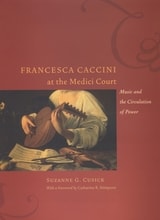
Francesca Caccini at the Medici Court
Music and the Circulation of PowerSuzanne G. Cusick
University of Chicago Press, 2009
Suzanne G. Cusick argues that Caccini’s career depended on the usefulness of her talents to the political agenda of Grand Duchess Christine de Lorraine, Tuscany’s de facto regent from 1606 to 1636. Drawing on Classical and feminist theory, Cusick shows how the music Caccini made for the Medici court sustained the culture that enabled Christine’s power, thereby also supporting the sexual and political aims of its women.
In bringing Caccini’s surprising story so vividly to life, Cusick ultimately illuminates how music making functioned in early modern Italy as a significant medium for the circulation of power.
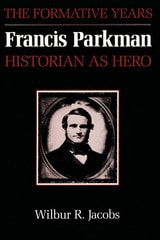
Francis Parkman, Historian as Hero
The Formative YearsBy Wilbur R. Jacobs
University of Texas Press, 1991
A historian who lived the kind of history he wrote, Francis Parkman is a major—and controversial—figure in American historiography. His narrative style, while popular with readers wanting a "good story," has raised many questions with professional historians. Was Parkman writing history or historical fiction? Did he color historical figures with his own heroic self-image? Was his objectivity compromised by his "unbending, conservative, Brahmin" values? These are some of the many issues that Wilbur Jacobs treats in this thought-provoking study.
Jacobs carefully considers the "apprenticeship" of Francis Parkman, first spent in facing the rigors of the Oregon Trail and later in struggling to write his histories despite a mysterious, frequently incapacitating illness. He shows how these events allowed Parkman to create a heroic self-image, which impelled his desire for fame as a historian and influenced his treatment of both the "noble" and the "savage" characters of his histories.
In addition to assessing the influence of Parkman's development and personality on his histories, Jacobs comments on Parkman's relationship to basic social and cultural issues of the nineteenth century. These include the slavery question, Native American issues, expansion of the suffrage to new groups, including women, and anti-Catholicism.
Francis Warrington Dawson and the Politics of Restoration
South Carolina, 1874-1889E. Culpepper Clark
University of Alabama Press, 1980
A revealing biography of a powerful Southern editor at the center of South Carolina’s post‑Reconstruction political transformation.
In the decades following the Civil War, South Carolina—like much of the South—struggled to redefine its political identity amid the collapse of Reconstruction and the rise of conservative “Redeemer” governments. In Francis Warrington Dawson and the Politics of Restoration, historian E. Culpepper Clark offers a deeply researched and incisive study of this transformation through the life and work of Francis Warrington Dawson, one of the state’s most influential newspaper editors.
Dawson was far more than a chronicler of events. As a powerful voice in South Carolina’s political press, he helped shape public opinion, broker alliances among conservative factions, and articulate the ideological foundations of post‑Reconstruction governance. Clark situates Dawson at the center of the struggles among Redeemers, Straight‑Out Democrats, agrarian reformers, and emerging political leaders such as Ben Tillman, revealing a political landscape marked by rivalry, class conflict, and competing visions of the New South.
Drawing on extensive manuscript collections, newspapers, and political correspondence, Clark explores the close relationship between journalism and power in the late nineteenth century and demonstrates how newspapers functioned as active political actors rather than neutral observers. The result is both a compelling political biography and a broader analysis of how restoration politics operated at the state level.
Francis Warrington Dawson and the Politics of Restoration is an essential work for readers interested in Southern history, Reconstruction and its aftermath, the history of American journalism, and the forces that shaped the political culture of the modern South.
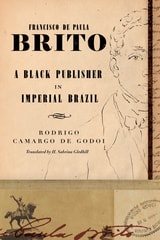
Francisco de Paula Brito
A Black Publisher in Imperial BrazilRodrigo Camargo de Godoi
Vanderbilt University Press, 2020
During that period, Francisco de Paula Brito became one of the central figures in the cultural and political scene in the Imperial capital, particularly through his work as a publisher. Paula Brito’s success was due in part to his ability to forge solid alliances with the Empire’s ruling elite—among them leading politicians responsible for the unification of the vast Brazilian territory and for the maintenance of slavery and the illegal trafficking of Africans. Consequently, through the books and newspapers he published, Francisco de Paula Brito became part of a much larger project.
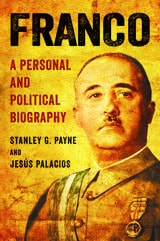
Franco
A Personal and Political BiographyStanley G. Payne and Jesús Palacios
University of Wisconsin Press, 2018
Franco: A Personal and Political Biography depicts his early life, explains his career and rise to prominence as an army officer who became Europe's youngest interwar brigadier general in 1926, and then discusses his role in the affairs of the troubled Second Spanish Republic (1931–36). Stanley G. Payne and Jesús Palacios examine in detail how Franco became dictator and how his leadership led to victory in the Spanish Civil War that consolidated his regime. They also explore Franco's role in the great repression that accompanied the Civil War—resulting in tens of thousands of executions—and examine at length his controversial role in World War II. This masterful biography highlights Franco's metamorphoses and adaptations to retain power as politics, culture, and economics shifted in the four decades of his dictatorship.
Best Books for General Audiences, selected by the American Association of School Librarians
Best Books for General Audiences, selected by the Public Library Reviewers
“An important book, destined to elicit a heated academic debate surrounding the man who ruled Spain for forty years and whose figure still casts a long shadow four decades after his death.”—Journal of Modern History
Francois Vallé and His World
Upper Louisiana before Lewis and ClarkCarl J. Ekberg
University of Missouri Press, 2002
Winner of the Kemper & Leila Williams Prize in Louisiana History for excellence in historical scholarship for the year 2002, awarded by The Historic New Orleans Collection, The Louisiana Historical Association.
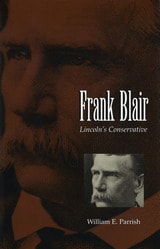
Frank Blair
Lincoln's ConservativeWilliam E. Parrish
University of Missouri Press, 1998
Known for his fearlessness in both the political arena and the battlefield, Frank Blair is a Missouri legend. As a member of one of the most prominent and powerful political families in America during the nineteenth century, possibly the equivalent of the twentieth-century Kennedys, Frank was steeped in politics at an early age. The youngest son of Francis Preston Blair, editor of Andrew Jackson's Washington Globe and adviser to Presidents Andrew Jackson through Andrew Johnson, Frank Blair was greatly influenced by his father, who had high political expectations of him.
Volatile and combative, Blair was either strongly admired or hated by the public figures of his day. He held adamantly to his opinions and fought hard for his political causes. He was an ardent supporter of Abraham Lincoln and championed the president's program in Congress and in Missouri against the frequent assaults of the Radicals. Credited with being the principal leader in saving Missouri for the Union in 1861, Blair later served with great distinction at Vicksburg, Chattanooga, and in the Sherman campaigns throughout Georgia and the Carolinas. He is one of only two Missourians ever honored by his state in Statuary Hall in the U.S. Capitol.
Frank Blair: Lincoln's Conservative reveals the full extent of Blair's importance as a national political figure. Specialists in nineteenth-century America, students of Missouri history, and Civil War buffs will welcome this study, which will long stand as the definitive work on this influential and colorful character.
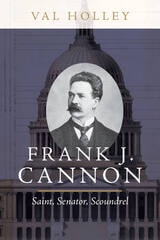
Frank J. Cannon
Saint, Senator, ScoundrelVal Holley
University of Utah Press, 2020
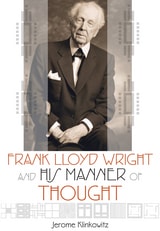
Frank Lloyd Wright and His Manner of Thought
Jerome Klinkowitz
University of Wisconsin Press, 2014
Klinkowitz presents a critical biography driven by the architect's own work and intellectual growth, focusing on the evolution of Wright's thinking and writings from his first public addresses in 1894 to his last essay in 1959. Did Wright reject all of Victorian thinking about the home, or do his attentions to a minister's sermon on "the house beautiful" deserve closer attention? Was Wright echoing the Transcendentalism of Ralph Waldo Emerson, or was he more in step with the philosophy of William James? Did he reject the Arts and Crafts movement, or repurpose its beliefs and practices for new times? And, what can be said of his deep dissatisfaction with architectural concepts of his own era, the dominant modernism that became the International Style? Even the strongest advocates of Frank Lloyd Wright have been puzzled by his objections to so much that characterized the twentieth century, from ideas for building to styles of living.
In Frank Lloyd Wright and His Manner of Thought, Klinkowitz, a widely published authority on twentieth-century literature, thought, and culture, examines the full extent of Wright's books, essays, and lectures to show how he emerged from the nineteenth century to anticipate the twenty-first.
Outstanding Book, selected by the American Association of School Librarians
Best Books for General Audiences, selected by the Public Library Reviewers
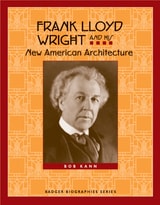
Frank Lloyd Wright and His New American Architecture
Bob Kann
Wisconsin Historical Society Press, 2010
From boyhood adventures to the creation of visionary buildings like the Guggenheim Museum, Frank Lloyd Wright and His New American Architecture chronicles the vibrant life of one of the world's most famous architects.
Wright's love of architecture was nurtured early on-from paintings of European cathedrals hung in his childhood room; to "Froebel Gifts" building blocks, which he crafted into crude structures; to long walks near the Wisconsin River, where his mother pointed out patterns and colors in nature. Wright also learned, from summers spent on his uncle's Spring Green farm, that adversity is part of life. And perhaps this helped him weather a life beset with both tragedy and triumph.
Wright's prolific career spanned more than 70 years, and he created more than 1,100 designs. Author Bob Kann brings readers into the eccentric stories behind some of Wright's landmark buildings. Find out about Wright's Oak Park home, known to locals as "the house with a tree growing through it;" the Robie House, which is shaped like a battleship; and Fallingwater, which is built on a waterfall. Learn how Wright successfully built the Imperial Hotel in Tokyo to withstand earthquakes, and how the Johnson Wax Building and Guggenheim Museum set new standards in institutional architecture.
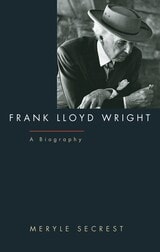
Frank Lloyd Wright
A BiographyMeryle Secrest
University of Chicago Press, 1998
The result is the most engaging and thorough account ever of Wright's life, work, and professional and personal circle, a gripping account of a complicated, challenging genius.
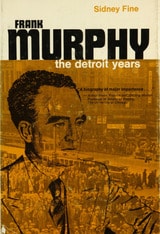
Frank Murphy
The Detroit YearsSidney Fine
University of Michigan Press, 1975
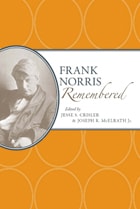
Frank Norris Remembered
Edited by Jesse S. Crisler and Joseph R. McElrath Jr.
University of Alabama Press, 2013
Frank Norris Remembered is a collection of reminiscences by Norris’s contemporaries, friends, and family that illuminate the life of a popular American novelist.
Considering his undergraduate education spent studying art at Académie Julian in Paris and creative writing at Harvard and his journalism career reporting from the far reaches of South Africa and Cuba, it is difficult to fathom how Frank Norris also found time to compose seven novels during the course of his brief life. But despite his adventures abroad, Norris turned out novels at a dizzying pace. He published Moran of the Lady Letty in 1898, McTeague early in 1899, Blix later that year, A Man’s Woman in February 1900, and The Octopus, the first in his ultimately unfinished “Epic of the Wheat” trilogy, in 1901. By informing his novels with his own experiences abroad, Norris composed works that were politically charged and culturally relevant and that made considerable contributions to the character of American literature in the twentieth century.
Frank Norris died at the age of thirty-two in 1902 from peritonitis resulting from a burst appendix, leaving behind a wife, a daughter, and an unfinished series of novels (two of which, The Pit and Vandover and the Brute, were published posthumously). The aim of Frank Norris Remembered, edited by Jesse S. Crisler and Joseph R. McElrath Jr., is to re-create the short, spectacular life of this American author through the eyes of those who knew him best. The fifty reminiscences included in this book feature the voices of Frank N. Doubleday; William Dean Howells; Hamlin Garland; Norris’s wife, Jeannette; and many others who were lucky enough to form a relationship with this vital twentieth-century American author, artist, and adventurer.
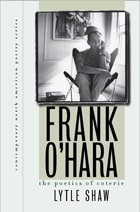
Frank O'Hara
The Poetics of CoterieLytle Shaw
University of Iowa Press, 2006
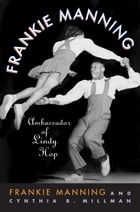
Frankie Manning
Ambassador of Lindy HopFrankie Manning
Temple University Press, 2008
In the early days of swing dancing, Frankie Manning stood out for his moves and his innovative routines; he created the "air step" in the Lindy hop, a dance that took the U.S. and then the world by storm. In this fascinating autobiography, the choreographer and Tony Award winner (Black and Blue) Frankie Manning recalls how his first years of dancing as a teenager at Harlem's Savoy Ballroom led to his becoming chief choreographer and a lead dancer for Whitey's Lindy Hoppers, a group that appeared on Broadway, in Hollywood musicals, and on stages around the globe. Manning brings the Swing Era vividly back to life with his recollections of the crowded ballrooms, and of Lindy hoppers trying to outdo each other in spectacular performances. His memories of the many headliners and film stars, as well as uncelebrated dancers with whom he shared the stage, create a unique portrait of an era in which African American performers enjoyed the spotlight if not a star's prerogatives and salary.
With collaborator Cynthia Millman, Manning traces the evolution of swing dancing from its early days in Harlem through the post-World War II period, until it was eclipsed by rock 'n' roll and then disco. When swing made a comeback, Manning's 30-year hiatus ended. He has been performing, choreographing, and teaching ever since.
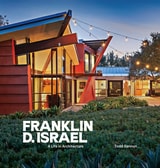
Franklin D. Israel
A Life in ArchitectureTodd Gannon
J. Paul Getty Trust, The, 2024
Acclaimed Los Angeles architect Franklin D. Israel (1945–1996) created innovative residential projects and office interiors that made him one of the most talked-about designers of his generation. In this vivid account, architectural historian Todd Gannon draws on archival resources, analyses of Israel’s buildings, and recent interviews with the architect’s colleagues, clients, and contemporaries, including Frank Gehry, Thom Mayne, and Robert A. M. Stern. Gannon traces Israel’s development from his early years and career on the East Coast to his formative world travels and residence at the American Academy in Rome. The author guides readers through the Los Angeles architectural context, Israel’s influential teaching at UCLA, his dalliance with Hollywood, and the personal motivations behind his architecture and design work—all aspects of an influential career that was cut short by his death from AIDS-related complications at the age of fifty.
Franklin D. Israel is a compelling work of architectural history and biography, chronicling one gay man’s engagement with the largely heteronormative world of American architectural culture. It explores the achievement of this central figure in the still largely unstudied history of late twentieth-century avant-garde Los Angeles architecture.
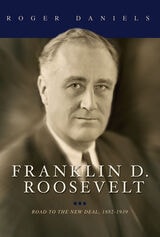
Franklin D. Roosevelt
Road to the New Deal, 1882-1939Roger Daniels
University of Illinois Press, 2015
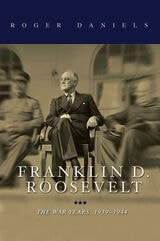
Franklin D. Roosevelt
The War Years, 1939-1945Roger Daniels
University of Illinois Press, 2016
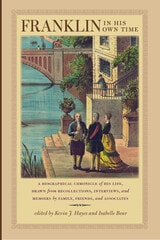
Franklin in His Own Time
A Biographical Chronicle of His Life, Drawn from Recollections, Interviews, and Memoirs by Family, Friends, and AssociatesKevin J. Hayes
University of Iowa Press, 2011
@font-face { font-family: "Courier New";}@font-face { font-family: "Times";}@font-face { font-family: "Cambria";}@font-face { font-family: "Palatino";}p.MsoNormal, li.MsoNormal, div.MsoNormal { margin: 0in 0in 0.0001pt; font-size: 12pt; font-family: "Times New Roman"; }div.Section1 { page: Section1; }
In his time Benjamin Franklin (1706–1790) was the most famous American in the world. Even those personally unacquainted with the man knew him as the author of Poor Richard’s Almanack, as a pioneer in the study of electricity and a major figure in the American Enlightenment, as the creator of such life-changing innovations as the lightning rod and America’s first circulating library, and as a leader of the American Revolution. His friends also knew him as a brilliant conversationalist, a great wit, an intellectual filled with curiosity, and most of all a master anecdotist whose vast store of knowledge complemented his conversational skills. In Franklin in His Own Time, by reprinting the original documents in which those anecdotes occur, Kevin Hayes and Isabelle Bour restore those oft-told stories to their cultural contexts to create a comprehensive narrative of his life and work.
The thirty-five recollections gathered in Franklin in His Own Time form an animated, collaborative biography designed to provide a multitude of perspectives on the “First American.” Opening with an account by botanist Peter Kalm showing that Franklin was doing all he could to encourage the development of science in North America, it includes on-the-spot impressions from Daniel Fisher’s diary, the earliest surviving interview with Franklin, recollections from James Madison and Abigail Adams, Manasseh Cutler’s detailed description of the library at Franklin Court, and extracts from Alexander Hamilton’s unvarnished Minutes of the Tuesday Club. Franklin’s political missions to Great Britain and France, where he took full advantage of rich social and intellectual opportunities, are a source of many reminiscences, some published here in new translations. Genuine memories from such old friends as Thomas Jefferson and John Adams, as opposed to memories influenced by the Autobiography, clarify Franklin’s reputation. Robert Carr may have been the last remaining person who knew Franklin personally, and thus his recollections are particularly signific
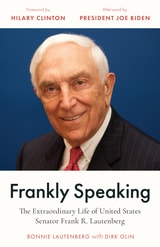
Frankly Speaking
The Extraordinary Life of United States Senator Frank R. LautenbergBonnie Lautenberg
Rutgers University Press, 2024
Told by one of the people who knew him best, his widow Bonnie, Frankly Speaking reveals the political strategies that made Lautenberg one of the Senate’s most powerful advocates for the health and safety of America’s citizens. He championed seemingly minor, unglamorous reforms that made a big difference to everyday lives, from raising the national drinking age to preventing domestic abusers from purchasing guns. These campaigns earned him powerful enemies in the alcohol, tobacco, and firearms industries, and he was subjected to some of the most brutal campaign mudslinging in American history. Yet, as this inspiring biography reveals, New Jersey’s longest-serving senator was not afraid to take big political risks if it meant standing up for his principles, whether that meant opposing the Iraq War or protecting LGBTQ and women’s rights.
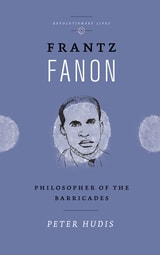
Frantz Fanon
Philosopher of the BarricadesPeter Hudis
Pluto Press, 2015
With FranzFanon, Peter Hudis presents a penetrating critical biography of the activist’s life and work. Countering the prevailing belief that Fanon’s contributions to modern thought can be wholly defined by an advocacy of violence, Hudis presents his work instead as an integrated whole, showing that its nuances—and thus its importance—can only be appreciated in light of Fanon’s efforts to fuse philosophical theory and actual practice. By taking seriously Fanon’s philosophical and psychological contributions, as well as his political activism, Hudis presents a powerful and perceptive new view of the man and his achievement.
This brief, richly perceptive introduction to Fanon will give new force to his ideas, his life, and his example for people engaged in radical political theory and taking action against oppression around the world today.
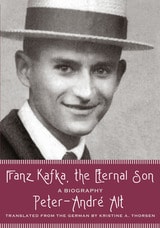
Franz Kafka, the Eternal Son
A BiographyPeter-André Alt, Translated from the German by Kristine A. Thorsen
Northwestern University Press, 2018
Franz Kafka remains one of the most influential writers of the twentieth century. His novels, stories, and letters are still regarded today as the epitome of the dark, fascinating, and uncanny, a model of the modernist aesthetic. Peter-André Alt’s landmark biography, Franz Kafka, the Eternal Son, recounts and explores Kafka’s life and literary work throughout the cultural and political upheavals of central Europe.
Alt’s biography explores Franz Kafka’s own view of life and writing as a unity that shaped his identity. He locates links and echoes among the author’s work, life, and surroundings, situating him within the traditions of Prague's German literature, modernity, psychoanalysis, and philosophy as well as within its Jewish culture, arts, theater, and intellectual tradition.
In this biographical tour de force, Kafka emerges as an observant flaneur and wistful loner, an anxious ascetic, an ecstatic and skeptic, a specialist in terror, and a master of irony. Alt masterfully illuminates Kafka's life not as source material but as a mirror of his literary genius. Readers begin to see Kafka’s unforgettable novels and stories as shards reflecting the life of their creator.
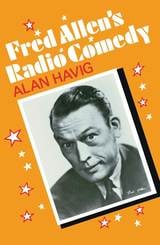
Fred Allen's Radio Comedy
Alan Havig
Temple University Press, 1991

Fred in Love
Felice Picano
University of Wisconsin Press, 2005
But when an acquaintance brought his female cat to be serviced by Fred, an entire new set of experiences opened up for the cat-and for Picano, who'd never had the nerve to befriend her owner, his ideal man. The course of love seldom runs straight for cats or for men, and this time would prove (hilariously) no different.
This is another of Picano's distinguished portraits of a vanished era, when a new gay domain was solidifying only a few years after the Stonewall Riots, and the still nascent gay literary world that Picano would help invent was just a conception. Fred in Love is a charming, nostalgic, funny, gossipy, involving, and ultimately enlightening story about how we learn and grow, and how we love-whether the object of our affection is a cat or another human being. It's sure to take its place next to Picano's now classic literary memoirs Ambidextrous, Men Who Loved Me, and A House on the Ocean, a House on the Bay.
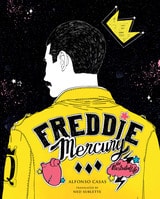
Freddie Mercury
An Illustrated LifeAlfonso Casas; translated by Ned Sublette
University of Texas Press, 2020
The music of Queen and powerhouse lead singer Freddie Mercury are best experienced with the volume turned all the way up. Alfonso Casas’s Freddie Mercury delivers a sonorous homage to the formidable singer and the turning points that produced a game-changing body of music that continues to inspire fans around the globe.
First published in Spain and now available worldwide, this luminous work covers Freddie's three “births”: his birth as Farrokh Bulsara in Zanzibar; his adoption of the last name of Mercury and the launch of Queen with Brian May and Roger Taylor; and the emergence of the lasting legend after Freddie’s death at the age of forty-five. Casas's evocative illustrations highlight the key moments in the singer’s transformation from child prodigy to superstar, bringing to life the bold innovator who broke free of his conventional upbringing. Chronicling events from Freddie’s marriage to Mary Austin and early fame in London’s 1970s glam scene, to the making of multiple megahits (including the six-minute chart-topper “Bohemian Rhapsody”), to his final years in a lasting relationship with Jim Hutton, Freddie Mercury is an exhilarating, poignant portrait of a creative genius who lived life to the hilt.
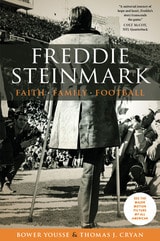
Freddie Steinmark
Faith, Family, FootballBy Bower Yousse and Thomas J. Cryan
University of Texas Press, 2015
Freddie Steinmark tells the story of a legendary University of Texas football player whose courage on the field and in battling cancer still inspires the Longhorn nation.
Freddie Steinmark started at safety for the undefeated University of Texas Longhorns in 1969. In the thrilling “Game of the Century,” a come-from-behind victory against Arkansas that ensured Texas the national championship, Steinmark played with pain in his left leg. Two days later, X-rays revealed a bone tumor so large that it seemed a miracle Steinmark could walk, let alone play football. Within a week of the Arkansas game, his leg was amputated.
A gritty, undersized player, Steinmark had quickly become a fan favorite at Texas. What he endured during the Longhorns’ memorable 1969 season, and what he encountered afterward, captivated not only Texans but the country at large. Americans watched closely as Steinmark confronted life’s ultimate challenge, and his openness during his battle against savage odds helped reframe the national conversation surrounding cancer and the ongoing race for a cure.
Written with unfettered access to the Steinmark family and archives, Freddie Steinmark: Faith, Family, Football is the exploration of a brief but full life, one that began humbly but ended on a grand stage. It is a fitting tribute to a legendary Longhorn whose photograph, emblazoned with the word “Heart,” flashes on the Freddie Steinmark Scoreboard’s Jumbotron prior to each home football game in UT’s Darrell K Royal–Texas Memorial Stadium at Joe Jamail Field.

Frederic Manning
An Unfinished LifeJonathan L. Marwil
Duke University Press, 1988
How did a classical and noncommercial author come to write a grittily realistic war novel? Manning fled from the attendant publicity, avoiding the limelight assiduously and successfully. Marwil's search for the answer to this riddle and for the details of his life (in some ways the search is as interesting and revealing as the results) and his account of Manning's life and work reveal a great deal of the intellectual and social world of Edwardian and Georgian England.
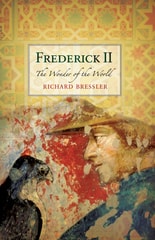
Frederick II
The Wonder of the WorldRichard Bressler
Westholme Publishing, 2010
One of the most remarkable personalities of the Middle Ages, Frederick II of Hohenstaufen was born in 1194. His parents—the reigning Holy Roman Emperor and the heiress to the Kingdom of Sicily—belonged to two of the leading ruling families in medieval Europe. The lands controlled by these two families extended from southern Denmark to Sicily, from modern Belgium to Bohemia. Frederick II eventually ruled the joint kingdom, and the story of how he gained and maintained this status is the primary thread running through his life. As a child in Sicily, Frederick was a ward of Pope Innocent III. When he came of age, he sought to be crowned Holy Roman Emperor but only succeeded in 1220 after many years of negotiations with the Vatican, which was reluctant to give up or share power. Resenting the influence and pressure from the papacy, Frederick became its leading opponent. As a result, the new pope, Gregory IX, condemned Frederick as the Antichrist. However, Frederick believed he was a sincere Christian, and led the Sixth Crusade to the Holy Land while under excommunication.
Frederik Pohl
Michael Page
University of Illinois Press, 2015
Fredric Jameson and Film Theory
Marxism, Allegory, and Geopolitics in World CinemaKeith B. Wagner
Rutgers University Press, 2022
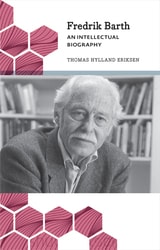
Fredrik Barth
An Intellectual BiographyThomas Hylland Eriksen
Pluto Press, 2015
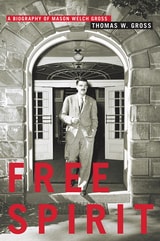
Free Spirit
A Biography of Mason Welch GrossThomas W. Gross
Rutgers University Press, 2022
Free Spirit explores how Gross helped reshape Rutgers from a sleepy college into a world-renowned public research university. It also reveals how he steered the university through the tumult of the Red Scare, civil rights era, and the Vietnam War by taking principled stands in favor of both racial equality and academic freedom. This biography tells the story of how, from an early age, Gross came to believe in the importance of doing what was right, even when the backlash took a toll on his own health.
Written by his youngest son Thomas, this book offers a uniquely well-rounded portrait of Gross as both a public figure and a private person. Covering everything from his service in World War II to his stints as a game-show personality, Free Spirit introduces the reader to a remarkable academic leader.
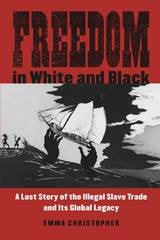
Freedom in White and Black
A Lost Story of the Illegal Slave Trade and Its Global LegacyEmma Christopher
University of Wisconsin Press, 2020
This story can be told because of an exceptional trove of court documents that provides unparalleled insight into one small link in the great, horrific chain of slavery. Emma Christopher follows a trail of evidence across four continents to examine the lives of this barracoon's owners, their workers, and their tragic human merchandise. She reveals how an American, Charles Mason, escaped justice, while British subjects Robert Bostock and John McQueen were arrested. In court five African men—Tamba, Tom Ball, Yarra, Noah, and Sessay—courageously testified against their former owners/captors. They, and 233 other liberated men, women, and children, were relocated to Freetown, Sierra Leone. There they endured harsh lives of "freedom," while the punishment of Bostock and McQueen was fleeting.
From the fragmented facts of these lives, Christopher sheds fascinating light on the early development of the nations of Sierra Leone, Liberia, and Australia (where Bostock and McQueen were banished) and the role of former slaves in combatting the illegal trade.
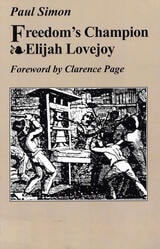
Freedom's Champion
Elijah LovejoyElijah Lovejoy. Revised by Paul Simon. Foreword by Clarence Page
Southern Illinois University Press, 1994
In this revised edition of his earlier biography, Paul Simon provides an inspiring account of the life and work of Elijah Lovejoy, an avid abolitionist in the 1830s and the first martyr to freedom of the press in the United States.
Lovejoy was a native New Englander, the son of a Congregational minister. He came to the Midwest in 1827 in pursuit of a teaching career and succeeded in running his own school for two years in St. Louis. Teaching failed to challenge Lovejoy, however, so he bought a half interest in the St. Louis Times and became its editor. In 1832, after experiencing a religious conversion, he returned east to study for the ministry at Princeton Theological Seminary. After his graduation, Lovejoy was called back to St. Louis by a group of Christian businessmen to serve as the editor of a new religious newspaper, the Observer, promoting religion, morality, and education. It was through this forum that Lovejoy took an ever stronger stance against slavery.
In the slave state of Missouri, such a view was not onlyunpopular, but in the eyes of many, criminal. As a result, Lovejoy and his family suffered repeated persecution and acts of violence from angry mobs. In July 1836, in hopes of finding a more tolerant community in a "free" state, he moved both his printing press and his family across the Mississippi River to Alton, Illinois.
The move to Alton was a fateful one. Lovejoy’s press was dismantled and thrown into the river by a mob on the night of its arrival. Lovejoy ordered a new printing press, and it, too, was destroyed eleven months later. A determined and dedicated man, Lovejoy ordered a third press, and city officials took special precautions to ensure its safety after delivery. Nevertheless, an organized and angry mob rolled this third press, still in its crate, into the river exactly one month after Lovejoy’s second press had been destroyed. A fourth press, housed in a large stone warehouse and guarded by Lovejoy and his supporters, met the same fate but only after a drunken mob had killed Lovejoy himself. He was buried two days later, 9 November 1837, on his thirty-fifth birthday. No one was ever convicted of his murder.
Rather than suppressing the abolitionist movement, Lovejoy’s death caused an eruption of antislavery activity throughout the nation. At a protest meeting in Ohio, John Brown dedicated his life to fighting slavery, and Wendell Phillips emerged from a Lovejoy protest meeting in Boston to become a leader in the antislavery fight.
Simon defines Lovejoy’s fight as a struggle for human dignity and the oppressed. He distinguishes Lovejoy as a courageous and admirable individual and his story as an important and enduring one for both the cause of freedom for the slaves and the cause of freedom of the press.
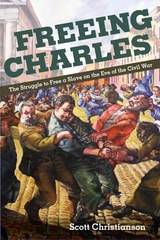
Freeing Charles
The Struggle to Free a Slave on the Eve of the Civil WarScott Christianson
University of Illinois Press, 2010
Fremont
Explorer For A Restless NationFerol Egan
University of Nevada Press, 1985
French Lessons
A MemoirAlice Kaplan
University of Chicago Press, 1993
The daughter of a Jewish lawyer who prosecuted Nazi war criminals at Nuremburg, Kaplan grew up in the 1960s in the Midwest. After her father's death when she was seven, French became her way of "leaving home" and finding herself in another language and culture. In spare, midwestern prose, by turns intimate and wry, Kaplan describes how, as a student in a Swiss boarding school and later in a junior year abroad in Bordeaux, she passionately sought the French "r," attentively honed her accent, and learned the idioms of her French lover.
When, as a graduate student, her passion for French culture turned to the elegance and sophistication of its intellectual life, she found herself drawn to the language and style of the novelist Louis-Ferdinand Celine. At the same time she was repulsed by his anti-Semitism. At Yale in the late 70s, during the heyday of deconstruction she chose to transgress its apolitical purity and work on a subject "that made history impossible to ignore:" French fascist intellectuals. Kaplan's discussion of the "de Man affair" — the discovery that her brilliant and charismatic Yale professor had written compromising articles for the pro-Nazi Belgian press—and her personal account of the paradoxes of deconstruction are among the most compelling available on this subject.
French Lessons belongs in the company of Sartre's Words and the memoirs of Nathalie Sarraute, Annie Ernaux, and Eva Hoffman. No book so engrossingly conveys both the excitement of learning and the moral dilemmas of the intellectual life.
French Lessons
A MemoirAlice Kaplan
University of Chicago Press, 2018
The daughter of a Jewish lawyer who prosecuted Nazi war criminals at Nuremburg, Kaplan grew up in the 1960s in the Midwest. After her father's death when she was seven, French became her way of "leaving home" and finding herself in another language and culture. In spare, midwestern prose, by turns intimate and wry, Kaplan describes how, as a student in a Swiss boarding school and later in a junior year abroad in Bordeaux, she passionately sought the French "r," attentively honed her accent, and learned the idioms of her French lover.
When, as a graduate student, her passion for French culture turned to the elegance and sophistication of its intellectual life, she found herself drawn to the language and style of the novelist Louis-Ferdinand Celine. At the same time she was repulsed by his anti-Semitism. At Yale in the late 70s, during the heyday of deconstruction she chose to transgress its apolitical purity and work on a subject "that made history impossible to ignore:" French fascist intellectuals. Kaplan's discussion of the "de Man affair" — the discovery that her brilliant and charismatic Yale professor had written compromising articles for the pro-Nazi Belgian press—and her personal account of the paradoxes of deconstruction are among the most compelling available on this subject.
French Lessons belongs in the company of Sartre's Words and the memoirs of Nathalie Sarraute, Annie Ernaux, and Eva Hoffman. No book so engrossingly conveys both the excitement of learning and the moral dilemmas of the intellectual life.
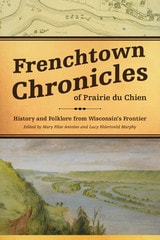
Frenchtown Chronicles of Prairie du Chien
History and Folklore from Wisconsin's FrontierMary Elise Antoine
Wisconsin Historical Society Press, 2016
Albert Coryer, the grandson of a fur trade voyageur-turned-farmer, had a gift for storytelling. Born in 1877, he grew up in Prairie du Chien hearing tales of days gone by from his parents, grandparents, and neighbors who lived in the Frenchtown area. Throughout his life, Albert soaked up the local oral traditions, including narratives about early residents, local landmarks, interesting and funny events, ethnic customs, myths, and folklore.
Late in life, this lively man who had worked as a farm laborer and janitor drew a detailed illustrated map of the Prairie du Chien area and began to write his stories out longhand, in addition to sharing them in an interview with a local historian and folklore scholar. The map, stories, and interview transcript provide a colorful account of Prairie du Chien in the late nineteenth century, when it was undergoing significant demographic, social, and economic change. With sharp historical context provided by editors Lucy Eldersveld Murphy and Mary Elise Antoine, Coryer’s tales offer an unparalleled window into the ethnic community comprised of the old fur trade families, Native Americans, French Canadian farmers, and their descendants.
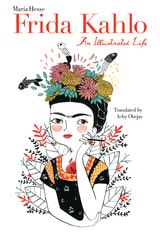
Frida Kahlo
An Illustrated LifeBy María Hesse, translated by Achy Obejas
University of Texas Press, 2018
One of the most important artists of the twentieth century and an icon of courageous womanhood, Frida Kahlo lives on in the public imagination, where her popularity shows no signs of waning. She is renowned for both her paintings and her personal story, which were equally filled with pain and anguish, celebration and life. Thousands of words, including her own, have been written about Kahlo, but only one previous biography has recorded her fascinating, difficult life. Frida Kahlo by María Hesse offers a highly unique way of getting to know the artist by presenting her life in graphic novel form, with striking illustrations that reimagine many of Kahlo’s famous paintings.
Originally published in Spanish in 2016, Frida Kahlo has already found an enthusiastic audience in the Spanish-speaking world, with some 20,000 copies sold in just a few months. This translation introduces English-language readers to Kahlo’s life, from her childhood and the traumatic accident that would change her life and her artwork, to her complicated love for Diego Rivera and the fierce determination that drove her to become a major artist in her own right. María Hesse tells the story in a first-person narrative, which captures both the depths of Frida’s suffering and her passion for art and life.
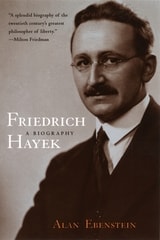
Friedrich Hayek
A BiographyAlan Ebenstein
University of Chicago Press, 2003

Friend
The Story of George Fox and the QuakersJane Yolen
QuakerPress, 2006

Friends of Alice Wheeldon
Sheila Rowbotham
Pluto Press, 1986
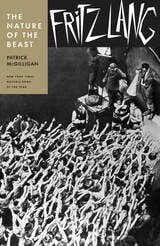
Fritz Lang
The Nature of the BeastPatrick McGilligan
University of Minnesota Press, 2013
The name of Fritz Lang—the visionary director of Metropolis, M, Fury, The Big Heat, and thirty other unforgettable films—is hallowed the world over. But what lurks behind his greatest legends and his genius as a filmmaker? Patrick McGilligan, placed among “the front rank of film biographers” by the Washington Post, spent four years in Europe and America interviewing Lang’s dying contemporaries, researching government and film archives, and investigating the intriguing life story of Fritz Lang. This critically acclaimed biography—lauded as one of the year’s best nonfiction books by Publishers Weekly—reconstructs the compelling, flawed human being behind the monster with the monocle.
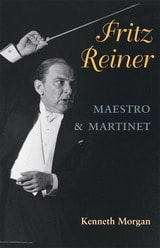
Fritz Reiner, Maestro and Martinet
Kenneth Morgan
University of Illinois Press, 2010
This award-winning book, now available in paperback, is the first solid appraisal of the legendary career of the eminent Hungarian-born conductor Fritz Reiner (1888-1963). Personally enigmatic and often described as difficult to work with, he was nevertheless renowned for the dynamic galvanization of the orchestras he led, a nearly unrivaled technical ability, and high professional standards. Reiner's influence in the United States began in the early 1920s and lasted until his death. Reiner was also deeply committed to serious music in American life, especially through the promotion of new scores. In Fritz Reiner, Maestro and Martinet, Kenneth Morgan paints a very real portrait of a man who was both his own worst enemy and one of the true titans of his profession.
Fritz Reiner
A BiographyPhilip Hart
Northwestern University Press, 1996
From Anzio to the Alps
An American Soldier's StoryLloyd M. Wells
University of Missouri Press, 2019

From Behind the Veil
A STUDY OF AFRO-AMERICAN NARRATIVERobert B. Stepto
University of Illinois Press, 1991
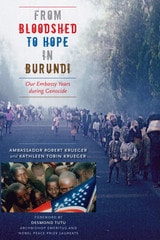
From Bloodshed to Hope in Burundi
Our Embassy Years during GenocideBy Ambassador Robert Krueger and Kathleen Tobin Krueger
University of Texas Press, 2007
In 1994, while nations everywhere stood idly by, 800,000 people were slaughtered in eight weeks in Rwanda. Arriving as U.S. Ambassador to neighboring Burundi a few weeks later, Bob Krueger began drawing international attention to the genocide also proceeding in Burundi, where he sought to minimize the killing and to preserve its fledgling democratic government from destruction by its own army. From Bloodshed to Hope in Burundi is a compelling eyewitness account of both a horrific and persistent genocide and of the ongoing efforts of many courageous individuals to build a more just society.
Krueger and his wife Kathleen graphically document the slaughter occurring all around them, as well as their repeated efforts to get the U.S. government and the international community to take notice and take action. Bob Krueger reconstructs the events of the military coup that precipitated the Burundi genocide and describes his efforts to uncover the truth by digging up graves and interviewing survivors. In straightforward and powerful language, Kathleen Krueger recounts her family's experience living amid civil war, including when she faced down a dozen AK-47-wielding African soldiers to save the life of a household worker.
From Bloodshed to Hope in Burundi shines a piercing light on a genocide that has gone largely unreported, and identifies those responsible for it. It also offers hope that as the truth emerges and the perpetrators are brought to account, the people of Burundi will at last achieve peace and reconciliation.
From Bondage to Belonging
The Worcester Slave NarrativesB. Eugene McCarthy
University of Massachusetts Press, 2007
First published between 1842 and 1895, the autobiographical narratives gathered in this volume document the experiences of eight former slaves who eventually took up residence in Worcester, Massachusetts. Each narrative tells a gripping individual story, its author clearly visible in the dress of his or her own words. Together they illuminate not only the inhumanity of slavery but also the dreams and dilemmas of emancipation, tracing the personal journeys of seven men and one woman from bondage to freedom.
In their well-researched introduction, B. Eugene McCarthy and Thomas L. Doughton situate the Worcester slave narratives within a broader historical framework and analyze their meaning and significance. Drawing on a wide range of sources, they reconstruct the black community of Worcester and compare it with other New England black communities of the time, describing how the town evolved from a society with slaves in the colonial era to a hub for free blacks by the eve of the Civil War. They explain why these writings must be understood as part of a long-established tradition of African American self-representation, and show how the four narratives published before 1865 focus on the experience of slavery, while the four written after the war offer the fresh perspective of living in freedom. Headnotes describe the distinctive literary features of each narrative and provide additional information about the lives of the authors. The editors discuss why these ex-slaves came to Worcester, the circumstances in which each wrote his or her narrative, and the audiences they had in mind. No other collection of slave narratives offers such a diverse range of testimony within a specific historical and literary context, or a more compelling account of the transition from bondage to belonging.