Results by title
1677 books match the query 'Archaeology' and 26 start with g
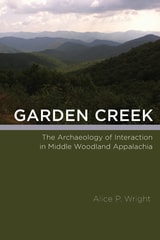
Garden Creek
The Archaeology of Interaction in Middle Woodland AppalachiaAlice P. Wright
University of Alabama Press, 2020
Presents archaeological data to explore the concept of glocalization as applied in the Hopewell world
Originally coined in the context of twentieth-century business affairs, the term glocalization describes how the global circulation of products, services, or ideas requires accommodations to local conditions, and, in turn, how local conditions can significantly impact global markets and relationships. Garden Creek: The Archaeology of Interaction in Middle Woodland Appalachia presents glocalization as a concept that can help explain the dynamics of cross-cultural interaction not only in the present but also in the deep past.
Alice P. Wright uses the concept of glocalization as a framework for understanding the mutual contributions of large-scale and small-scale processes to prehistoric transformations. Using geophysical surveys, excavations, and artifact analysis, Wright shows how Middle Woodland cultural contact wrought changes in religious practices, such as mound building and the crafting of ritual objects for exchange or pilgrimage.
Wright presents and interprets original archaeological data from the Garden Creek site in western North Carolina as part of a larger study of the Hopewell Interaction Sphere, a well-known but poorly understood episode of cross-cultural interaction that linked communities across eastern North America during the Middle Woodland period. Although Hopewellian culture contact did not encompass the entire planet, it may have been “global” to those who experienced and created it, as it subsumed much of the world as Middle Woodland people knew it. Reimagining Hopewell as an episode of glocalization more fully accounts for the diverse communities, interests, and processes involved in this “global” network.
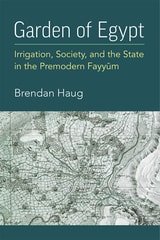
Garden of Egypt
Irrigation, Society, and the State in the Premodern FayyumBrendan Haug
University of Michigan Press, 2024
2025 American Society of Papyrologists Book Prize Winner
Garden of Egypt: Irrigation, Society, and the State in the Premodern Fayyūm is the first environmental history of Egypt’s Fayyūm depression. The volume studies human relationships with flowing water, from the third century BCE to the thirteenth century CE. Until the arrival of modern perennial irrigation in the nineteenth century, the Fayyūm was the only region of premodern Egypt to be irrigated by a network of artificial canals. By linking large numbers of rural communities together in shared dependence on this public irrigation infrastructure, canalization introduced to Egypt a radically new way of interacting both with the water of the Nile and with fellow farmers. Drawing upon ancient Greek papyri, medieval Arabic literature, and modern comparative evidence, this book explores the ways in which the Nile’s water, local farmers, and state power together continually reshaped this irrigated landscape over more than thirteen centuries. Following human/water relationships through both space and time further helps to erode disciplinary boundaries and bring multiple periods of Egyptian history into contact with one another.
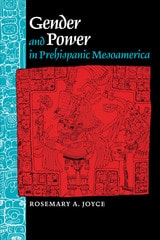
Gender and Power in Prehispanic Mesoamerica
By Rosemary A. Joyce
University of Texas Press, 2001
Gender was a fluid potential, not a fixed category, before the Spaniards came to Mesoamerica. Childhood training and ritual shaped, but did not set, adult gender, which could encompass third genders and alternative sexualities as well as "male" and "female." At the height of the Classic period, Maya rulers presented themselves as embodying the entire range of gender possibilities, from male through female, by wearing blended costumes and playing male and female roles in state ceremonies.
This landmark book offers the first comprehensive description and analysis of gender and power relations in prehispanic Mesoamerica from the Formative Period Olmec world (ca. 1500-500 BC) through the Postclassic Maya and Aztec societies of the sixteenth century AD. Using approaches from contemporary gender theory, Rosemary Joyce explores how Mesoamericans created human images to represent idealized notions of what it meant to be male and female and to depict proper gender roles. She then juxtaposes these images with archaeological evidence from burials, house sites, and body ornaments, which reveals that real gender roles were more fluid and variable than the stereotyped images suggest.
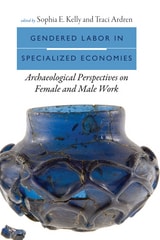
Gendered Labor in Specialized Economies
Archaeological Perspectives on Female and Male WorkSophia E. Kelly
University Press of Colorado, 2016
Chapters are organized by four interrelated themes crucial for understanding the implications of gender in the organization of craft production: craft specialization and the political economy, combined effort in specialized production, the organization of female and male specialists, and flexibility and rigidity in the gendered division of labor. Contributors consider how changes to the gendered division of labor in craft manufacture altered other types of production or resulted from modifications in the organization of production elsewhere in the economic system.
Striking a balance between theoretical and methodological approaches and presenting case studies from sites around the world, Gendered Labor in Specialized Economies offers a guide to the major issues that will frame future research on how men’s and women’s work changes, predisposes, and structures the course of economic development in various societies.
Contributors: Alejandra Alonso Olvera, Traci Ardren, Michael G. Callaghan, Nigel Chang, Cathy Lynne Costin, Pilar Margarita Hernández Escontrías, A. Halliwell, Sue Harrington, James M. Heidke, Sophia E. Kelly, Brigitte Kovacevich, T. Kam Manahan, Ann Brower Stahl, Laura Swantek, Rita Wright, Andrea Yankowski
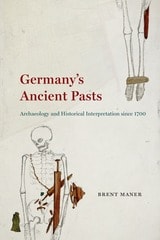
Germany's Ancient Pasts
Archaeology and Historical Interpretation since 1700Brent Maner
University of Chicago Press, 2018
In Germany’s Ancient Pasts, Brent Maner offers a vivid portrait of the development of antiquarianism and archaeology, the interaction between regional and national history, and scholarly debates about the use of ancient objects to answer questions of race, ethnicity, and national belonging. While excavations in central Europe throughout the eighteenth and nineteenth centuries fed curiosity about the local landscape and inspired musings about the connection between contemporary Germans and their “ancestors,” antiquarians and archaeologists were quite cautious about using archaeological evidence to make ethnic claims. Even during the period of German unification, many archaeologists emphasized the local and regional character of their finds and treated prehistory as a general science of humankind. As Maner shows, these alternative perspectives endured alongside nationalist and racist abuses of prehistory, surviving to offer positive traditions for the field in the aftermath of World War II. A fascinating investigation of the quest to turn pre- and early history into history, Germany’s Ancient Pasts sheds new light on the joint sway of science and politics over archaeological interpretation.
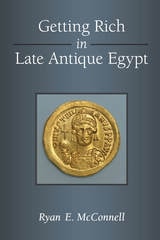
Getting Rich in Late Antique Egypt
Ryan E. McConnell
University of Michigan Press, 2017
Ryan E. McConnell connects the family’s rise in wealth and status to its role in tax collection on behalf of the Byzantine state, rather than a reliance on productive surpluses. Close analysis of low- and high-level accounts from the Apion estate, as well as documentation from comparable Roman and Byzantine Egyptian estates, corroborate this conclusion. Additionally, McConnell offers a third way into the ongoing debate over whether the Apions’ relationship with the state was antagonistic or cooperative, concluding that the relationship was that of parties in a negotiation, with each side seeking to maximize its own benefit. The application of modern economic concepts—as well as comparisons to the economies of Athens, Rome, Ptolemaic Egypt, and Early Modern France—further illuminate the structure and function of the estate in Late Antique Egypt.
Getting Rich in Late Antique Egypt will be a valuable resource for philologists, archaeologists, papyrologists, and scholars of Late Antiquity. It will also interest scholars of agricultural, social, and economic history.
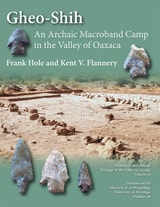
Gheo-Shih
An Archaic Macroband Camp in the Valley of OaxacaFrank Hole and Kent V. Flannery
University of Michigan Press, 2024
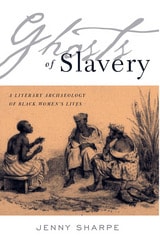
Ghosts Of Slavery
A Literary Archaeology of Black Women’s LivesJenny Sharpe
University of Minnesota Press, 2002
Questions traditional assumptions about power and agency in slave women’s everyday lives.
Through their open defiance, women like Harriet Tubman and Sojourner Truth had a significant impact on the institution of slavery. But what of the countless other women who did not commit public or even private acts of resistance? Are their stories worthy of our attention? While some scholars imply that only the struggle for freedom was legitimate, Jenny Sharpe complicates the linear narrative-from slavery to freedom and literacy-that emerged from the privileging of autobiographical accounts like that of Frederick Douglass. She challenges a paradigm that equates agency with resistance and self-determination, and introduces new ways to examine negotiations for power within the constraints of slavery.
In Ghosts of Slavery, Sharpe introduces a wider range of everyday practices by examining the lives of three distinctive Caribbean women: a maroon leader, a mulatto concubine, and a fugitive slave. Through them she explains how the diasporic experience of slavery enabled black women to claim an authority that they didn’t possess in Africa, how concubines empowered themselves through their mimicry of white women, and how less-privileged slave women manipulated situations that they were powerless to change. Finding the highly mediated portrayal of slave women in the historical records limited and sometimes misleading, Sharpe turns to unconventional sources for investigating these women’s lives. In this fascinating and historically rich account, she calls for new strategies of reading that question traditional narratives of history, and she finds alternative ways to integrate oral storytelling, slave songs, travel writing, court documents, proslavery literature, and contemporary literature into black history. Ultimately, this layered approach not only produces a more complex picture of the slave women’s agency than conventional readings, it encourages a more nuanced understanding of the roles of slaves in the history of slavery.
Giant Sloths and Sabertooth Cats
Extinct Mammals and the Archaeology of the Ice Age Great BasinDonald K. Grayson
University of Utah Press, 2016
Were these animals abundant in the Great Basin? A detailed analysis of the distinctive assemblages of plants that now live in this region leads to a surprising, and perhaps controversial, conclusion about those abundances.
If you are interested in Ice Age mammals or in the Ice Age archaeology of North America, if you are interested in the natural history of the Great Basin or the ways in which the plants of today’s landscapes might be used to understand the deeper past, you will be fascinated by this book.
Giza and the Pyramids
The Definitive HistoryMark Lehner and Zahi Hawass
University of Chicago Press, 2017
The celebrated Great Pyramid of Khufu, or Cheops, is the only one of the seven wonders of the ancient world still standing, but there is much more to Giza. Though we imagine the pyramids of Khufu, Khafre, and Menkaure and the Sphinx rising from the desert, isolated and enigmatic, they were once surrounded by temples, noble tombs, vast cemeteries, and even harbors and teeming towns. This unparalleled account describes that past life in vibrant detail, along with the history of exploration, the religious and social function of the pyramids, how the pyramids were built, and the story of Giza before and after the Old Kingdom. Hundreds of illustrations, including vivid photographs of the monuments, excavations, and objects, as well as plans, reconstructions, and images from remote-controlled cameras and laser scans, help bring these monuments to life.
Through the ages, Giza and the pyramids have inspired extraordinary speculations and wild theories, but here, in this definitive account, is the in-depth story as told by the evidence on the ground and by the leading authorities on the site.
Glen Canyon Archaeological Survey Part II
UUAP 39.2Don D. Fowler
University of Utah Press, 1959
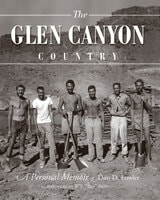
Glen Canyon Country, The
A Personal MemoirDon D Fowler
University of Utah Press, 2011
In his new book, The Glen Canyon Country, archaeologist Don D. Fowler shares the history of a place and the peoples who sojourned there over the course of several thousand years. To tell this story, he weaves his personal experience as a student working on the Glen Canyon Salvage Project with accounts of early explorers, geologists, miners, railroad developers, settlers, river runners, and others who entered this magical place. The book details the canyon’s story via historical and scientific summaries, biographical sketches, personal memoir, and previously unpublished photos of the land and its explorers.
Glen Canyon
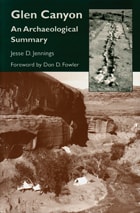
An Archaeological SummaryJesse D Jennings
University of Utah Press, 1998
In 1956, Congress passed legislation that provided authorization and funds for emergency research to be conducted in Glen Canyon in response to the threat of losses posted by the construction of the Glen Canyon Dam in northern Arizona. For eight years, scientists worked against the clock to record the archaeology, geology, history, and paleontology of the region before the waters of Lake Powell covered the area.
In this highly interpretive summary, Jesse Jennings preserves the achievements of the salvage team and explains how the finds affected previous conclusions. Maps and photographs capture archaeological artifacts as well as the landscape of the area. This book also highlights the larger consequences of the massive salvage project — among them the stimulation of additional Southwest research, the applications of techniques made in response to emergency situations, and a valuable perspective on the Pueblo culture. Because this area is becoming increasingly controversial, with a raging debate over whether Lake Powell should be drained, Glen Canyon: An Archaeological Summary stands as more than a model of salvage archaeology. It is also a record and testament of the rich history of Glen Canyon.
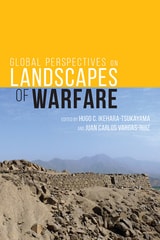
Global Perspectives on Landscapes of Warfare
Hugo C. Ikehara-Tsukayama
University Press of Colorado, 2021
Global Perspectives on Landscapes of Warfare examines the effects of conflict on landscapes and the ways landscapes have shaped social and political boundaries over time. Contributors from different archaeological traditions introduce a variety of methodologies and theories to understand and explain how territories and geographies in antiquity were modified in response to threat.
Drawing from eleven case studies from periods ranging over eight thousand years in the Americas, Asia, and Europe, contributors consider how social groups moved and concentrated residences, built infrastructure, invested resources, created alliances and negotiated with human and nonhuman entities for aid, formed and reformed borders, and memorialized sites and territories. Because landscapes of warfare deal with built environments, chapters are presented with rich graphic documentation—detailed maps, site plans, and artifacts—to support the analysis and interpretations.
Territories that have been appropriated and transformed by communities at war illustrate how built landscapes not only reflect immediate events but also influence subsequent generations. With a diverse array of case studies and an explicit focus on landscapes, Global Perspectives on Landscapes of Warfare will be of great interest to students and scholars of conflict archaeology and the anthropology and history of violence across the globe.
Contributors: Elizabeth Arkush, Viktor A. Borzunov, Igor V. Chechushkov, Tiffany Earley-Spadoni, Nam C. Kim, Lauren Kohut, Takehiko Matsugi, Kerry Nichols, Russell S. Quick, Lizzie Scholtus, James T. Williams
God-Apes and Fossil Men
Paleoanthropology of South AsiaKenneth A. R. Kennedy
University of Michigan Press, 2000
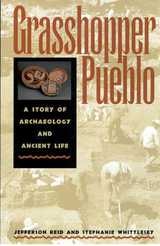
Grasshopper Pueblo
A Story of Archaeology and Ancient LifeJefferson Reid and Stephanie Whittlesey
University of Arizona Press, 1999
Written for general readers—and for the White Mountain Apache, on whose land Grasshopper Pueblo is located and who have participated in the excavations there—the book conveys the simple joys and typical problems of an ancient way of life as inferred from its material remains. Reid and Whittlesey's account reveals much about the human capacity for living under what must strike modern readers as adverse conditions. They describe the environment with which the people had to cope; hunting, gathering, and farming methods; uses of tools, pottery, baskets, and textiles; types of rooms and households; and the functioning of social groups. They also reconstruct the sacred world of Grasshopper as interpreted through mortuary ritual and sacred objects and discuss the relationship of Grasshopper residents with neighbors and with those who preceded and followed them.
Grasshopper Pueblo not only thoroughly reconstructs this past life at a mountain village, it also offers readers an appreciation of life at the field school and an understanding of how excavations have proceeded there through the years. For anyone enchanted by mysteries of the past, it reveals significant features of human culture and spirit and the ultimate value of archaeology to contemporary society.
Great Basin Rock Art
Archaeological PerspectivesAngus R. Quinlan
University of Nevada Press, 2007
Rock art is one of humankind’s most ancient forms of artistic expression, and one of its most enigmatic. For centuries, scholars and other observers have struggled to interpret the meaning of the mysterious figures incised or painted on natural rocks and to understand their role in the lives of their long-vanished creators. The Great Basin of the American West is especially rich in rock art, but until recently North American archaeologists have largely ignored these most visible monuments left by early Native Americans and have given little attention to the terrain surrounding them. In Great Basin Rock Art, twelve respected rock art researchers examine a number of significant sites from the dual perspectives of settlement archaeology and contemporary Native American interpretations of the role of rock art in their cultural past. The authors demonstrate how modern archaeological methodology and interpretations are providing a rich physical and cultural context for these ancient and hitherto puzzling artifacts. They offer exciting new insights into the lives of North America’s first inhabitants. This is essential reading for anyone interested in the petroglyphs of the American West and in the history of the Great Basin and its original peoples.
Great House Communities across the Chacoan Landscape
John Kantner
University of Arizona Press, 2000
Great Maya Droughts in Cultural Context
Case Studies in Resilience and VulnerabilityGyles Iannone
University Press of Colorado, 2014
The Great Maya Droughts in Cultural Context offers new insights into the complicated series of events that impacted the decline of Maya civilization. This significant contribution to our increasingly comprehensive understanding of ancient Maya culture will be of interest to students and scholars of archaeology, anthropology, geography, and environmental studies.
Greater Chaco Landscape
Ancestors, Scholarship, and AdvocacyRuth M. Van Dyke
University Press of Colorado, 2020
Contributors analyze many different dimensions of the Chacoan landscape and present the most effective, innovative, and respectful means of studying them, focusing on the significance of thousand-year-old farming practices; connections between early great houses outside the canyon and the rise of power inside it; changes to Chaco’s roads over time as observed in aerial imagery; rock art throughout the greater Chaco area; respectful methods of examining shrines, crescents, herraduras, stone circles, cairns, and other landscape features in collaboration with Indigenous colleagues; sensory experiences of ancient Chacoans via study of the sightlines and soundscapes of several outlier communities; and current legal, technical, and administrative challenges and options concerning preservation of the landscape.
An unusually innovative and timely volume that will be available both in print and online, with the online edition incorporating video chapters presented by Acoma, Diné, Zuni, and Hopi cultural experts filmed on location in Chaco Canyon, The Greater Chaco Landscape is a creative collaboration with Native voices that will be a case study for archaeologists and others working on heritage management issues across the globe. It will be of interest to archaeologists specializing in Chaco and the Southwest, interested in remote sensing and geophysical landscape-level investigations, and working on landscape preservation and phenomenological investigations such as viewscapes and soundscapes.
Contributors: R. Kyle Bocinsky, G. B. Cornucopia, Timothy de Smet, Sean Field, Richard A. Friedman, Dennis Gilpin, Presley Haskie, Tristan Joe, Stephen H. Lekson, Thomas Lincoln, Michael P. Marshall, Terrance Outah, Georgiana Pongyesva, Curtis Quam, Paul F. Reed, Octavius Seowtewa, Anna Sofaer, Julian Thomas, William B. Tsosie Jr., Phillip Tuwaletstiwa, Ernest M. Vallo Jr., Carla R. Van West, Ronald Wadsworth, Robert S. Weiner, Thomas C. Windes, Denise Yazzie, Eurick Yazzie
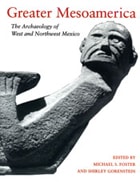
Greater Mesoamerica
The Archaeology of West and Northwest MexicoMichael S Foster
University of Utah Press, 2000
Edited by Michael S. Foster and Shirley Gorenstein
Archaeology
Mesoamerican studies, as they are still practiced today, are framed by the Spanish colonial intrusion into Mexico from the east, and subsequent involvement with the Aztec Empire. Greater Mesoamerica expands the definition of "Mesoamerica" beyond the more traditionally accepted central Mexican areas to both western and northwestern Mexico where sophisticated cultures were flourishing outside the realm of Spanish influence. It is the first comprehensive overview of both regions since the Handbook of Middle American Indians was published in the early 1970s.
Based on recent archaeological surveys and excavations, the chapters in this volume provide current, comprehensive, area-by-area summaries of the region's Precolumbian past, noting the discovery of new cultural configurations, new connections, and new complexities.
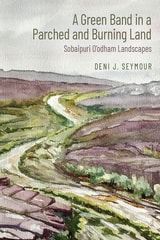
Green Band in a Parched and Burning Land
Sobaipuri O’odham Landscapesby Deni J. Seymour
University Press of Colorado, 2022
First and foremost irrigation farmers, the Sobaipuri O’odham permanently occupied verdant strips along all the major rivers in the region—including the headwaters of the San Pedro and various other areas thought to be beyond their domain. Seymour draws on career-spanning fieldwork, conversations with direct descendants (the O’odham residents of Wa:k), and recent breakthroughs in archaeological, ethnographic, and ethnohistorical research to shed light on their unique forms of landscape use, settlement patterns, and way of life. She details the building materials, linear site layout, and other elements of their singular archaeological signature; newly established dating for individual sites, complex building episodes, and occupational sequences; and evidence of cumulative village occupation as well as the habitation of river valleys and other locales long after supposed abandonment. The book also explains the key relationships between site distributions and landscape characteristics.
Addressing some of the longest-standing archaeological and historical questions about the Sobaipuri O’odham, A Green Band in a Parched and Burning Land reorients the discussion of their crucial place in the history of the region in constructive new directions.
Green Corn Ceremonialism in the Eastern Woodlands
John Witthoft
University of Michigan Press, 1949
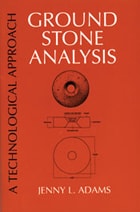
Ground Stone Analysis
A Technological ApproachJenny L Adams
University of Utah Press, 2002
Archaeologists refer to stone artifacts that are altered by or used to alter other items through abrasion, pecking, or polishing as "ground stone." This includes mortars, and pestles used to process vegetal materials, pigments, clays, and tempers; abraders, polishing stones, and hammerstones for manufacturing other artifacts; and artifacts shaped by abrasion or pecking, such as axes, pipes, figurines, ornaments, and architectural pieces. Because there is a fuzzy line between flaked and ground stone artifacts, some analysts state that ground stone includes any stone item not considered flaked.
This manual presents a flexible yet structured method for analyzing stone artifacts and classifying them in meaningful categories. The analysis techniques record important attributes based on design, manufacture, and use.
Part I contains discussions on determining function, classification, attributes of grinding technology, use-wear analysis, modeling tool use, utilization of ethnographic and experimental resources, and research suggestions. Part II contains definitions and descriptions of artifact types. Here the author also seeks to unravel the knot that has developed around conflicting application of terms.
A significant reference for any archaeological fieldworker or student who encounters such artifacts.
Ground Stone Analysis
A Technological ApproachJenny L. Adams
University of Utah Press, 2014
Archaeologists define stone artifacts that are altered by or used to alter other items through abrasion, pecking, or polishing as “ground stone.” This includes mortars and pestles, abraders, polishers stones, and hammerstones, and artifacts shaped by abrasion or pecking, such as axes, pipes, figurines, ornaments, and architectural pieces.
The first edition of Ground Stone Analysis sparked interest around the world. In the decade following its publication, there have been many advances in scientific technology and developments in ethnographic and experimental research. The second edition incorporates these advances, including examples of international research that have utilized a technological approach to ground stone analysis. This study presents a flexible yet structured method for analyzing and classifying stone artifacts. These techniques record important attributes based on design, manufacturing, and use and are applicable to any collection in the world.
The methods presented guide quantitative and qualitative assessments of artifacts and assemblages. Recording forms and instructions for completing them will be available on the University of Utah Press’s open access portal at www.UofUpress.com. Ground Stone Analysis is an important, useful reference for any archaeological field worker or student who encounters ground stone artifacts and is interested in learning more about the people who used them.
Click here to view Appendices A-F
Growing the Taraco Peninsula
Indigenous Agricultural LandscapesMaria C. Bruno
University Press of Colorado, 2024
Beginning with the first small-scale communities of the Formative period (1500 BCE–500 CE) through the development of the Tiwanaku state (500–1100 CE), Bruno draws upon ethnographic insights from modern-day Indigenous farming practices on the peninsula as well as archaeological evidence from excavations at four sites to explore the landscapes and human-plant relationships that Taraco communities created through their agricultural practices. Through evaluation of environmental data on climate and land-use dynamics—rainfall, lake level, and soil character and distribution—she proposes a new hypothesis of how raised-field agriculture may have emerged in the region. With a detailed analysis of foodways at the Kala Uyuni site, her study reveals how Indigenous Taraco communities sustainably incorporated crops and wild plants into their daily and special-occasion meals, connecting the agricultural landscapes to local and regional social and political dynamics.
Bringing together several indicators of the region’s long-term history and demonstrating that shifts in agriculture do not neatly correspond to the changes traditionally highlighted by archaeological culture histories, Growing the Taraco Peninsula reveals Indigenous landscape creation through farming on the Taraco peninsula as a critical example of sustainability. This valuable contribution to Andean archaeology is also of interest to scholars, students, and the general reader concerned about the environment, sustainable farming, sustainability, Andean history, and the Indigenous peoples of the Americas.