Results by title
354 books match the query 'Authors, American' and 11 start with g
Garland in His Own Time
A Biographical Chronicle of His Life, Drawn from Recollections, Interviews, and Memoirs by Family, Friends, and AssociatesKeith Newlin
University of Iowa Press, 2013
Gary Snyder and the Pacific Rim
Creating Countercultural CommunityTimothy Gray
University of Iowa Press, 2006
Gray’s introduction tracks the increased use of “Pacific Rim discourse” by politicians and business leaders following World War II. Ensuing chapters analyze Snyder’s countercultural invocation of this regional idea, concentrating on the poet’s migratory or “creaturely” sensibility, his gift for literary translation, his physical embodiment of trans-Pacific ideals, his role as tribal spokesperson for Haight-Ashbury hippies, and his burgeoning interest in environmental issues. Throughout, Gray’s citations of such writers as Allen Ginsberg, Philip Whalen, and Joanne Kyger shed light on Snyder’s communal role, providing an amazingly intimate portrait of the west coast counterculture. An interdisciplinary project that utilizes models of ecology, sociology, and comparative religion to supplement traditional methods of literary biography, Gary Snyder and the Pacific Rim offers a unique perspective on Snyder’s life and work.
This book will fascinate literary and Asian studies scholars as well as the general reader interested in the Beat movement and multicultural influences on poetry.
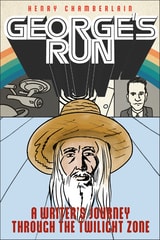
George's Run
A Writer's Journey through the Twilight ZoneHenry Chamberlain
Rutgers University Press, 2023
Later in life, Johnson befriended comics journalist and artist Henry Chamberlain, and the two had long chats about his amazing life and career. Now Chamberlain pays tribute to his late friend in the graphic novel George’s Run, which brings Johnson’s creative milieu to life in vividly illustrated color panels. The result feels less like reading a conventional biography and more like sitting in on an intimate conversation between friends as they recollect key moments in pop culture history, as well as the colorful band of writers known as the “Rat Pack of Science Fiction.”
Glenway Wescott Personally
A BiographyJerry Rosco
University of Wisconsin Press, 2002
As a writer, Glenway Wescott (1901–1987) left behind several novels, including The Grandmothers and The Pilgrim Hawk, noted for their remarkable lyricism. As a literary figure, Wescott also became a symbol of his times. Born on a Wisconsin farm in 1901, he associated as a young writer with Hemingway, Stein, and Fitzgerald in 1920s Paris and subsequently was a central figure in New York’s artistic and gay communities. Though he couldn’t finish a novel after the age of forty-five, he was just as famous as an arts impresario, as a diarist, and for the company he kept: W. H. Auden, Christopher Isherwood, Marianne Moore, Somerset Maugham, E. M. Forster, Joseph Campbell, and scores of other luminaries.
In Glenway Wescott Personally, Jerry Rosco chronicles Wescott’s long and colorful life, his early fame and later struggles to write, the uniquely privileged and sometimes tortured world of artistic creation. Rosco sensitively and insightfully reveals Wescott’s private life, his long relationship with Museum of Modern Art curator Monroe Wheeler, his work with sex researcher Alfred Kinsey that led to breakthrough findings on homosexuality, and his kinship with such influential artists as Jean Cocteau, George Platt-Lynes, and Paul Cadmus.

God In The Street
New York Writing from The Penny Press to MelvilleHans Bergmann
Temple University Press, 1995
In the fast changing culture of antebellum New York, writers of every stripe celebrated "the City" as a stage for the daily urban encounter between the familiar and the inexplicable. Probing into these richly varied texts, Hans Bergmann uncovers the innovations in writing that accompanied the new market society— the penny newspapers' grandiose boastings, the poetic catalogues of Walt Whitman, the sentimental realism of charity workers, the sensationalism of slum visitors, and the complex urban encounters of Herman Melville's fiction.
The period in which New York, the city itself, became firmly established as a subject invented a literary form that attempts to capture the variety of the teeming city and the flaneur, the walking observer. But Bergmann does not simply lead a parade of images and themes; he explores the ways in which these observers understood what was happening around them and to them, always attentive to class struggle and race and gender issues.
God in the Street shows how the penny press and Whitman's New York poetry create a new mass culture hero who interprets and dignifies the city's confusions. New York writers, both serious and sensationalist, meditate upon street encounters with tricksters and confidence-men and explore the meanings of encounters. Melville's "Bartleby, the Scrinever" underlines the unrelenting isolation and inability to control the interpreter. Bergmann reinterprets Melville's The Confidence Man as an example of how a complex literary form arises directly from its own historical materials and is itself socially symbolic. Bergmann sees Melville as special because he recognizes his inability to make sense of the surface of chaotic images and encounters. In mid-century New York City, Melville believes God is in the street, unavailable and unrecognizable, rather than omnipresent and guiding.
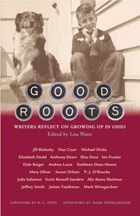
Good Roots
Writers Reflect on Growing Up in OhioLisa Watts
Ohio University Press, 2007
Winner of the Ohioana Library’s 2008 Ohio Legacy Citation
2014-2015 Choose to Read Ohio selection
“A good place to be from.” That’s how some people might characterize the Buckeye State. The writings in Good Roots: Writers Reflect on Growing Up in Ohio, are testimony to the truth of that statement. By prominent writers such as P. J. O’Rourke, Susan Orlean, and Alix Kates Shulman, these contributions are alternately nostalgic, irreverent, and sincere, and offer us a personal sense of place. Their childhoods are as varied as their work. Some were raised in urban Cleveland, Akron, and Cincinnati, others in the small Ohio towns that typify the Midwest, and still others in the countryside. Yet what they have to tell us about their roots resonates with a shared heritage, a sense of what is universal and enduring about growing up in the heartland.
Their collective résumé reads like a literary Who’s Who, including four Pulitzer Prizes, several National Book Awards, and many prestigious fellowships. Good Roots is also plain good reading from some of our country’s most accomplished contemporary writers.
Contributors include: Jill Bialosky, Dan Cryer, Michael Dirda, Elizabeth Dodd, Anthony Doerr, Rita Dove, Ian Frazier, Dale Keiger, Andrea Louie, Kathleen Dean Moore, Mary Oliver, Susan Orlean, P. J. O’Rourke, Julie Salamon, Scott Russell Sanders, Alix Kates Shulman, Jeffery Smith, James Toedtman, and Mark Winegardner.
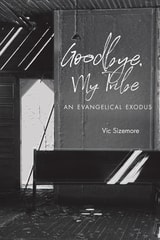
Goodbye, My Tribe
An Evangelical ExodusVic Sizemore
University of Alabama Press, 2020
Sizemore began writing these essays with the aim of exploring and understanding what happened when the mythology of his “tribe” crumbled from beneath his feet. He draws heavily on his upbringing and his family history as a framework for how his “tribe” of white evangelicals have found ways to reconcile Christianity with what the author finds to be troubling stances on many social issues, among them race, gender, sexuality, materialism, anti-intellectualism, and white supremacy.
In a clear-eyed and eloquent voice, Sizemore grapples movingly with his own bewilderment and chagrin as he struggles to reconcile the essential philosophical and moral decay that he believes many evangelicals have come to embrace. His insights, arranged topically and thematically and told through graceful and accessible prose, toggle between memoir and literary journalism, along a spectrum that touches on history, philosophy, theology, and personal reflections.
.
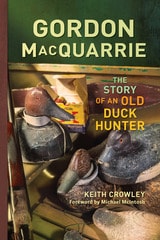
Gordon MacQuarrie
The Story of an Old Duck HunterKeith Crowley
Wisconsin Historical Society Press, 2003
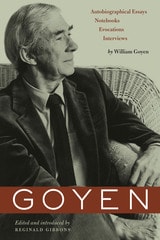
Goyen
Autobiographical Essays, Notebooks, Evocations, InterviewsBy William Goyen
University of Texas Press, 2007
William Goyen (1915-1983) was an American original, acclaimed nationally and internationally, and one of the most important writers ever to be associated with the regional culture and literary history of Texas. Called "one of the great American writers of short fiction" by the New York Times Book Review, Goyen also authored the novels The House of Breath, In a Farther Country, Come, the Restorer, and Arcadio, as well as plays, poetry, and nonfiction. His literary works manifest an intimate intensity of feeling and an inimitable tone of voice, reflecting Goyen's lifelong desire to create art that was at once a spiritual quest for universal truths and an evocation of the rhythms of speech and storytelling of his native East Texas.
This volume contains all of the uncollected autobiographical writings of William Goyen, including essays previously published in American periodicals and literary journals; interviews published in Paris Review, TriQuarterly, and the French magazine Masques; and previously unpublished materials drawn from Goyen's papers in the Harry Ransom Humanities Research Center at the University of Texas at Austin. The writings span Goyen's entire adult life, from youthful journals to autobiographical sketches to his long sketch for an autobiographical book, Six Women, which profiles women whom Goyen felt had influenced him deeply: Frieda Lawrence, Dorothy Brett, Mabel Dodge Luhan, Margo Jones, Millicent Rogers, and Katherine Anne Porter. The volume also contains late essays on growing up in Houston, writing from life, and illness and recovery.
While most of William Goyen's work was autobiographical, writing a traditional autobiography proved to be inimical to his artistic sensibility and style. Thus, the pieces collected in Goyen constitute the most complete autobiography that we will ever have from this highly regarded writer.
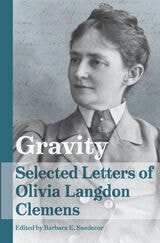
Gravity
Selected Letters of Olivia Langdon ClemensEdited by Barbara E. Snedecor
University of Missouri Press, 2023
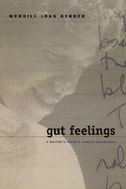
Gut Feelings
A Writer'S Truths And Minute InventionsMerrill Joan Gerber
University of Wisconsin Press, 2003
Gerber writes of her apprenticeships with celebrated writing teachers Andrew Lytle and Wallace Stegner and recounts her ghostly (and ghastly) experiences during a month at Yaddo, the famous retreat for artists. Gerber includes three pieces in the book—originally published as stories—but which blur the line between fiction and memoir, demonstrating Gerber’s contention that the deepest secrets in life beget the most passionate fictions.