Results by title
5159 books match the query 'Biography' and 142 start with g
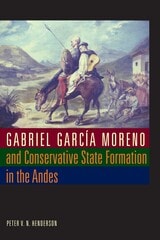
Gabriel García Moreno and Conservative State Formation in the Andes
By Peter V. N. Henderson
University of Texas Press, 2008
This book explores the life and times of Ecuador's most controversial politician within the broader context of the new political history, addressing five major themes of nineteenth-century Latin American history: the creation of political networks, the divisiveness of regionalism, the bitterness of the liberal-conservative ideological divide, the complicating problem of caudillismo, and the quest for progress and modernization.
Two myths traditionally associated with García Moreno's rule are debunked. The first is that he created a theocracy in Ecuador. Instead, the book argues that he negotiated a concordat with the Papacy giving the national government control over the church's secular responsibilities, and subordinated the clergy, many of whom were highly critical of García Moreno, to the conservative state. A second, frequently repeated generalization is that he created a conservative dictatorship out of touch with the liberal age in which he lived. Instead, the book argues that moderates held sway during the first nine years of García Moreno's period of influence, and only during his final term did he achieve the type of conservative state he thought necessary to advance his progressive nation-building agenda.
In sum, this book enriches our understanding of many of the notions of state formation by suggesting that conservatives like García Moreno envisioned a program of material progress and promoting national unity under a very different formula from that of nineteenth-century liberals.

Gabriel's Fire
A MemoirLuis Gabriel Aguilera
University of Chicago Press, 2000
Aguilera's memoir is not just an account of race relations and street life in the inner city, nor of the plight of the immigrant and the dilemma of class identity for a "minority" family. Gabriel's Fire also movingly recounts the peculiarly daunting and inspiring moments of a particular age, riddled with confusion, desires, and duties and recorded by an exceptionally observant and articulate young man. Aguilera writes that he "grew into" the English language when he was eleven or twelve, and his recollections reflect his newfound delight with words—the conversations, arguments, taunts, song lyrics, and casual interchanges of his youth are rendered here with an immediacy and directness rare in contemporary memoirs.
Both a picture of American culture of the 1980s and 1990s and a coming-of-age story, Gabriel's Fire counters mainstream and mass-mediated images of the inner city, Hispanic culture, and troubled youth. In its honesty and energy, it is a poignant and compelling story of one man's formative years.
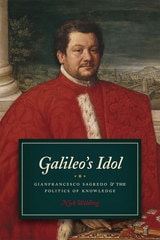
Galileo's Idol
Gianfrancesco Sagredo and the Politics of KnowledgeNick Wilding
University of Chicago Press, 2014
Nick Wilding uses as wide a variety of sources as possible—paintings, ornamental woodcuts, epistolary hoaxes, intercepted letters, murder case files, and others—to challenge the picture of early modern science as pious, serious, and ecumenical. Through his analysis of the figure of Sagredo, Wilding offers a fresh perspective on Galileo as well as new questions and techniques for the study of science. The result is a book that turns our attention from actors as individuals to shifting collective subjects, often operating under false identities; from a world made of sturdy print to one of frail instruments and mistranscribed manuscripts; from a complacent Europe to an emerging system of complex geopolitics and globalizing information systems; and from an epistemology based on the stolid problem of eternal truths to one generated through and in the service of playful, politically engaged, and cunning schemes.
Gandhi in India
In His Own WordsMahatma Gandhi and Martin Green
Brandeis University Press, 1987
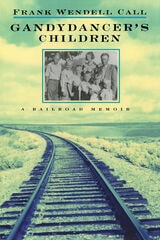
Gandydancer's Children
A Railroad MemoirFrank Wendell Call
University of Nevada Press, 2000
The late Frank Wendell Call is very much alive in these pages as he relates the fascinating tale of the rich, adventuresome existence he lived as a child in the Nevada desert along the Southern Pacific railroad line. In November 1928, Frank E. Call moved his young family from a comfortable home in Ogden, Utah to a tiny two-room shanty in an isolated railroad station in northeastern Nevada. He went to work as a gandydancer, a track laborer.
Meanwhile, Frank and Johanne Call's six lively children adapted to living alongside the tracks in primitive houses without electricity or indoor plumbing. The colorful narrative by the family's oldest child includes commentaries on railroading and the railroaders' language and describes social conditions and customs existing in tiny-town Nevada in the early twentieth century, from the viewpoint of the children themselves.

Gangs on Trial
Challenging Stereotypes and Demonization in the CourtsJohn M. Hagedorn
Temple University Press, 2022
John Hagedorn, who has long been an expert witness in gang-related court cases, claims that what transpires in the trials of gang members is a far cry from what we would consider justice. In Gangs on Trial, he recounts his decades of experience to show how stereotypes are used against gang members on trial and why that is harmful. Hagedorn uses real-life stories to explain how implicit bias often replaces evidence and how the demonization of gang members undermines fairness. Moreover, a “them and us” mentality leads to snap judgments that ignore the complexity of gang life in America.
Gangs on Trial dispels myths about gangs and recommends tactics for lawyers, mitigation specialists, and expert witnesses as well as offering insights for jurors. Hagedorn describes how minds are subconsciously “primed” when a defendant is identified as a gang member, and discusses the “backfire effect,” which occurs when jurors hear arguments that run counter to their beliefs. He also reveals how attributional errors, prejudice, and racism impact sentences of nonwhite defendants.
Hagedorn argues that dehumanization is the psychological foundation of mass incarceration. Gangs on Trial advocates for practical sentencing reforms and humanizing justice.
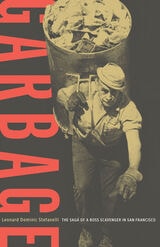
Garbage
The Saga of a Boss Scavenger in San FranciscoLeonard Dominic Stefanelli
University of Nevada Press, 2017
Stefanelli was trained to be a scavenger by his uncles in the 1940s and 50s at a time when rampant discrimination prevented Italian immigrants and their families from pursuing any other career. From there, he became a ‘boss scavenger’, married a garbage man’s daughter, and climbed the ranks of the Sunset Scavenger Company where he eventually took part in a corporate shakeup that made him the company’s president at only 31 years old. As one of the men at the helm of this booming industry, he became the chief advocate for increasingly innovative recycling and waste management practices in the Bay Area, and a foremost leader of environmentally-conscious business in the world.
Stefanelli’s lively memoir will enlighten readers to the waste management business, an industry that was once considered the lowest rung on the social ladder, but will also show his unparalleled capacity for transformation and vision.
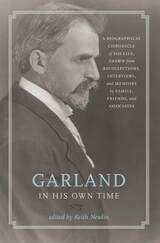
Garland in His Own Time
A Biographical Chronicle of His Life, Drawn from Recollections, Interviews, and Memoirs by Family, Friends, and AssociatesKeith Newlin
University of Iowa Press, 2013
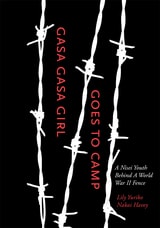
Gasa Gasa Girl Goes to Camp
A Nisei Youth Behind A World War II FenceLily Yuriko Nakai Havey
University of Utah Press, 2014
In this creative memoir, Lily Havey combines storytelling, watercolor, and personal photographs to recount her youth in two Japanese-American internment camps during World War II. In short vignettes snapshots of people, recreated scenes and events a ten-year-old girl develops into a teenager while confined. Vintage photographs reveal the historical, cultural, and familial contexts of that growth and of the Nakais’ dislocation. The paintings and her animated writing together pull us into a turbulent era when America disgracefully incarcerated, without due process, thousands of American citizens because of their race.
These stories of love, loss, and discovery recall a girl balancing precariously between childhood and adolescence. In turn wrenching, funny, touching, and biting but consistently engrossing, they elucidate the daily challenges of life in the camp and the internees’ many adaptations.
Winner of the Evans Biography Award.
Selected by the American Library Association as one the Best of the Best from University Presses.
Finalist in the cover design category in the Southwest Book Design and Production Awards.
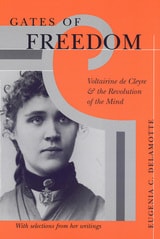
Gates of Freedom
Voltairine de Cleyre and the Revolution of the MindEugenia C. DeLamotte
University of Michigan Press, 2004
---Cary Nelson, University of Illinois
"The question of souls is old; we demand our bodies, now." These words are not from a feminist manifesto of the late twentieth century, but from a fiery speech given a hundred years earlier by Voltairine de Cleyre, a leading anarchist and radical thinker. A contemporary of Emma Goldman---who called her "the most gifted and brilliant anarchist woman America ever produced"---de Cleyre was a significant force in a major social movement that sought to transform American society and culture at its root. But she belongs to a group of late-nineteenth-century freethinkers, anarchists, and sex-radicals whose writing continues to be excluded from the U.S. literary and historical canon.
Gates of Freedom considers de Cleyre's speeches, letters, and essays, including her most well known essay, "Sex Slavery." Part I brings current critical concerns to bear on de Cleyre's writings, exploring her contributions to the anarchist movement, her analyses of justice and violence, and her views on women, sexuality, and the body. Eugenia DeLamotte demonstrates both de Cleyre's literary significance and the importance of her work to feminist theory, women's studies, literary and cultural studies, U.S. history, and contemporary social and cultural analysis. Part II presents a thematically organized selection of de Cleyre's stirring writings, making Gates of Freedom appealing to scholars, students, and anyone interested in Voltairine de Cleyre's fascinating life and rousing work.
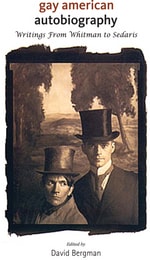
Gay American Autobiography
Writings from Whitman to SedarisDavid Bergman
University of Wisconsin Press, 2009
Volume editor David Bergman guides the reader chronologically through selected writings that give voice to every generation of gay writers since the nineteenth century, including a diverse array of American men of African, European, Jewish, Asian, and Latino heritage. Documenting a range of life experiences that encompass tattoo artists and academics, composers and drag queens, hustlers and clerks, it contains accounts of turn-of-the-century transvestites, gay rights activists, men battling AIDS, and soldiers attempting to come out in the army. Each selection provides important insight on the wide spectrum of ways gay men have defined and lived their lives, highlighting how self-awareness changes an author’s experience.
The volume includes an introduction by Bergman and headnotes for each of the nearly forty entries. Bringing many out-of-print and hard-to-find works to new readers, this challenging and comprehensive anthology chronicles American gay history and life struggles over the course of the past 150 years.

Gay Lives
Homosexual Autobiography from John Addington Symonds to Paul MonettePaul Robinson
University of Chicago Press, 1999
Paul Robinson reads the memoirs of French, British, and American gay authors—André Gide, Quentin Crisp, and Martin Duberman, among others—through the prism of sexual identity, asking fascinating questions about homosexuality and its relation to literary form. How did these authors discover their sexual identity? Did they embrace it or reject it? How did they express often conflicted desires in their words, which ranged from defiant and brutally frank to ambiguous and abstract? Robinson considers the choices each made—as a man and an author—to accommodate himself to society's homophobia or live in protest against his oppression.
Despite the threads that connect these stories, Gay Lives refutes the notion that there is a typical homosexual "career" by showing that gay men have led wildly dissimilar lives—from the exuberant to the miserable—and that they have found no less dissimilar meanings in those lives.
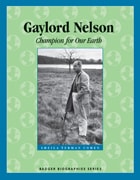
Gaylord Nelson
Champion for Our EarthSheila Terman Cohen
Wisconsin Historical Society Press, 2010
Born in Clear Lake, Wisconsin, in 1916, Gaylord grew up as immersed in his parents' political work and community service as he was in playing practical jokes and exploring the natural world surrounding his home town. Along the way he encountered experiences that would shape him in fundamental ways: as a man who stood up for what he believed in the face of opposition and yet who also understood how to treat his opponents with respect. Both traits would serve him well as he rose from law student to state senator to Wisconsin governor and finally to three terms as a United States Senator.
Nelson fought to treat all races equally and to condemn McCarthy-era paranoia, but his greatest contribution was to sound the alarm about another battle: the fight to save the natural world and the earth itself. It was his idea to use teach-ins to let people know that the environment needed their help. Thanks to him, more natural resources were conserved and new laws demanded clean air and water. Now, every year on April 22, people all over the world plant trees and pick up litter to celebrate Earth Day. The Earth and its inhabitants aren't safe yet, but Gaylord Nelson demonstrated that even one person can help to save the world.
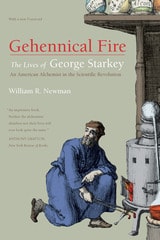
Gehennical Fire
The Lives of George Starkey, an American Alchemist in the Scientific RevolutionWilliam R. Newman
University of Chicago Press, 2002
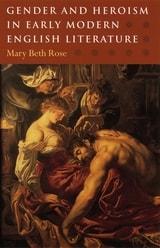
Gender and Heroism in Early Modern English Literature
Mary Beth Rose
University of Chicago Press, 2001
Interweaving discourses of gender, Rose explores ways in which this heroics of endurance became the dominant model. She examines the glamorous, failed destinies of heroes in plays by Shakespeare, Jonson, and Marlowe; Elizabeth I's creation of a heroic identity in her public speeches; the autobiographies of four ordinary women thrust into the public sphere by civil war; and the seduction of heroes into slavery in works by Milton, Aphra Behn, and Mary Astell. Ultimately, her study demonstrates the importance of the female in the creation of modern heroism, while offering a critique of both idealized action and suffering.
Gendered Memories
An Imaginary Museum for Ding Ling and Chinese Female Revolutionary MartyrsXian Wang
University of Michigan Press, 2025
General John Pope
A LIFE FOR THE NATIONPeter Cozzens
University of Illinois Press, 2000
Renowned Civil War scholar Peter Cozzens has mined Pope's own memoirs and a wealth of other primary sources to provide a complete picture of this gifted strategist. Uncovering new information about Pope's pre- and postwar career and his path to power, Cozzens delineates the political environment that surrounded Pope and provided the context for his actions.
Cozzens examines Pope's early career first as commander of the Army of the Mississippi and then as leader of a hastily formed Army of Virginia against Robert E. Lee. After his famous defeat at the Second Battle of Bull Run, Pope was sent to the frontier. There he held important commands on the western plains over the next twenty-four years, all the while struggling to clear his reputation of the events at Second Bull Run. A principal architect of the Red River War, which broke the resistance of the Southern Plains Indians, Pope espoused humanitarian treatment of subjugated tribes and was recognized as one of the army's leading authorities on Indian affairs.
In place of the simplistic caricature that has satisfied most historians, Cozzens has crafted an accurate, humane, balanced portrait of a complex man involved with the most complex issues of his day. A monumental work on a long-neglected figure, General John Pope offers a fresh look at a key nineteenth-century military leader as well as the most detailed analysis available of Federal leadership during the Second Bull Run campaign.
General Thomas Posey
Son of the American RevolutionJohn Thornton Posey
Michigan State University Press, 1992
Revolutionary War general Thomas Posey (1750-1818) lived his life against the backdrop of one of the most dramatic periods in American history. Posey, who played a minor role in the actual War for Independence, went on to participate in the development and foundation of several states in the transappalachian West. His experiences on the late 18th- and early 19th-century American frontier were varied and in a certain sense extraordinary; he served as Indian agent in Illinois Territory; as Lieutenant Governor of Kentucky, as U.S. Senator from Louisiana, and as Governor of Indiana during its transition from territorial status to statehood.
His biographer speculates on the contrasting influences of Thomas's ne'er-do-well father, Captain John Posey, and the family's close friend, General George Washington. Posey's progress is then followed as he raises his own family in the newly formed nation. Of particular interest is an appendix containing a detailed analysis of evidence available to support popular 29th-century speculation that Thomas Posey was, in fact, George Washington's illicit son.
Genius Belabored
Childbed Fever and the Tragic Life of Ignaz SemmelweisTheodore G. Obenchain
University of Alabama Press, 2016
The fascinating story of Ignaz Semmelweis, a nineteenth-century obstetrician ostracized for his strident advocacy of disinfection as a way to prevent childbed fever.
In Genius Belabored: Childbed Fever and the Tragic Life of Ignaz Semmelweis, Theodore G. Obenchain traces the life story of a nineteenth-century Hungarian obstetrician who was shunned and marginalized by the medical establishment for advancing a far-sighted but unorthodox solution to the appalling mortality rates that plagued new mothers of the day.
In engrossing detail, Obenchain recreates for readers the sights, smells, and activities within a hospital of that day. In an era before the acceptance of modern germ science, physicians saw little need for cleanliness or hygiene. As a consequence, antiseptic measures were lax and rudimentary. Especially vulnerable to contamination were new mothers, who frequently contracted and died from childbed fever (puerperal fever). Genius Belabored follows Semmelweis’s awakening to the insight that many of these deaths could be avoided with basic antiseptic measures like hand washing.
The medical establishment, intellectually unprepared for Semmelweis’s prescient hypothesis, rejected it for a number of reasons. It was unorthodox and went against the lingering Christian tradition that the dangers of childbirth were inherent to the lives of women. Complicating matters, colleagues did not consider Semmelweis an easy physician to work with. His peers described him as strange and eccentric. Obenchain offers an empathetic and insightful argument that Semmelweis suffered from bipolar disorder and illuminates how his colleagues, however dedicated to empirical science they might have been, misjudged Semmelweis’s methods based upon ignorance and their emotional discomfort with him.
In Genius Belabored, Obenchain identifies Semmelweis’s rightful place in the pantheon of scientists and physicians whose discoveries have saved the lives of millions. Obenchain’s biography of Semmelweis offers unique insights into the practice of medicine and the mindsets of physicians working in the premodern era. This fascinating study offers much of interest to general readers as well as those interested in germ theory, the history of medicine and obstetrics, or anyone wishing to better understand the trajectory of modern medicine.
Genre of Autobiography in Victorian Literature
Clinton Machann
University of Michigan Press, 1995

Gentle Flame
The Life and Verse of Dudley, Fourth Lord NorthDale B. J. Randall
Duke University Press, 1983
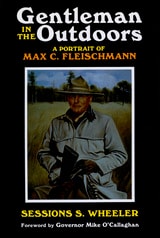
Gentleman in the Outdoors
Sessions S Wheeler
University of Nevada Press, 1985
The material which Wheeler collected for his book, Gentleman in the Outdoors : A Portrait of Max C. Fleischmann is particularly rich and complete; Mrs. Sarah H. Fleischmann gave Wheeler several boxes of her husband's files and photographs related to his outdoor activities such as fishing, hunting, sailing, and scientific expeditions. In addition, the Fleischmann materials included a thick binder, the contents of which Wheeler used extensively in his book. The binder included some material duplicated in the other Fleischmann files as well as correspondence between Wheeler and Fleischmann.
Gentleman in the Shadows
Benjamin C. Evans Jr. and the Central Intelligence AgencyDouglas A. Wissing
Indiana Historical Society Press, 2019
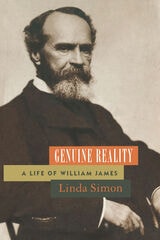
Genuine Reality
A Life of William JamesLinda Simon
University of Chicago Press, 1999
"William James . . . has never seemed so vulnerably human as in Linda Simon's biography. . . . [S]he vivifies James in such a way that his life and thought come freshly alive for the modern reader."—David S. Reynolds, New York Times Book Review
"Superb. . . . Genuine Reality is recommended reading for all soul-searchers."—George Gurley, Chicago Tribune
"Ms. Simon . . . has provided an ideal pathway for James's striding. . . . [Y]ou become engaged in his struggles as if they were your own."—Christopher Lehmann-Haupt, New York Times
"[A]n excellent narrative biography at once sensitively told and lucidly written."—John Patrick Diggins, Wall Street Journal
Geoffroy Saint-Hilaire
A Visionary NaturalistHerve Le Guyader
University of Chicago Press, 2003
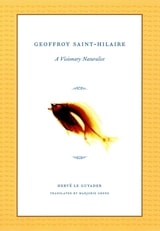
This was a revolutionary idea—and one vigorously opposed by Geoffroy's colleague Georges Cuvier, a great anatomist and one of the giants of French science. In 1830, their long-running disagreement erupted into furious public debate. Geoffroy argued that all vertebrates shared the same basic body plan not just with each other but with insects as well. Cuvier strenuously disputed this idea, which he saw as tantamount to a belief in "transformism"—arguing instead that each species had its own special and permanent form.
With Geoffroy Saint-Hilaire, Hervé Le Guyader provides an analysis not only of that infamous debate but also of Geoffroy's bold intuitions about anatomy and development. Featuring Geoffroy's published version of the 1830 debates—translated into English for the first time—the book also illustrates how Geoffroy's prescient insights foreshadowed some of the most recent discoveries in evolutionary and developmental biology.
Geography's Quantitative Revolutions
Edward A. Ackerman and the Cold War Origins of Big DataElvin Wyly
West Virginia University Press, 2019
Do you have a smartphone? Billions of people on the planet now navigate their daily lives with the kind of advanced Global Positioning System capabilities once reserved for the most secretive elements of America’s military-industrial complex. But when so many people have access to the most powerful technologies humanity has ever devised for the precise determination of geographical coordinates, do we still need a specialized field of knowledge called geography?
Just as big data and artificial intelligence promise to automate occupations ranging from customer service and truck driving to stock trading and financial analysis, our age of algorithmic efficiency seems to eliminate the need for humans who call themselves geographers—at the precise moment when engaging with information about the peoples, places, and environments of a diverse world is more popular than ever before. How did we get here? This book traces the recent history of geography, information, and technology through the biography of Edward A. Ackerman, an important but forgotten figure in geography’s “quantitative revolution.” It argues that Ackerman’s work helped encode the hidden logics of a distorted philosophical heritage—a dangerous, cybernetic form of thought known as militant neo-Kantianism—into the network architectures of today’s pervasive worlds of surveillance capitalism.
Georg Forster
Voyager, Naturalist, RevolutionaryJürgen Goldstein
University of Chicago Press, 2019
“Stunning. . . . Read this book: in equal measure it will give you hope and trouble your dreams.”—Laura Dassow Walls, author of Henry David Thoreau: A Life and Passage to Cosmos: Alexander von Humboldt’s Shaping of America
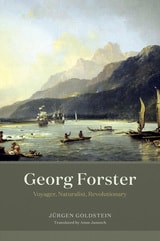
Georg Forster (1754–94) was in many ways self-taught and rarely had two cents to rub together, but he became one of the most dynamic figures of the Enlightenment: a brilliant writer, naturalist, explorer, illustrator, translator—and a revolutionary. Granted the extraordinary opportunity to sail around the world as part of Captain James Cook’s fabled crew, Forster touched icebergs, walked the beaches of Tahiti, visited far-flung foreign nations, lived with purported cannibals, and crossed oceans and the equator. Forster recounted the journey in his 1777 book A Voyage Round the World, a work of travel and science that not only established Forster as one of the most accomplished stylists of the time—and led some to credit him as the inventor of the literary travel narrative—but also influenced other German trailblazers of scientific and literary writing, most notably Alexander von Humboldt. A superb essayist, Forster made lasting contributions to our scientific—and especially botanical and ornithological—knowledge of the South Seas.
Having witnessed more egalitarian societies in the southern hemisphere, Forster returned after more than three years at sea to a monarchist Europe entering the era of revolution. When, following the French Revolution of 1789, French forces occupied the German city of Mainz, Forster became a leading political actor in the founding of the Republic of Mainz—the first democratic state on German soil.
In an age of Kantian reason, Forster privileged experience. He claimed a deep connection between nature and reason, nature and politics, nature and revolution. His politics was radical in its understanding of revolution as a natural phenomenon, and in this often overlooked way his many facets—as voyager, naturalist, and revolutionary—were intertwined.
Yet, in the constellation of the Enlightenment’s trailblazing naturalists, scientists, political thinkers, and writers, Forster’s star remains relatively dim today: the Republic of Mainz was crushed, and Forster died in exile in Paris. This book is the source of illumination that Forster’s journey so greatly deserves. Tracing the arc of this unheralded polymath’s short life, Georg Forster explores both his contributions to literature and science and the enduring relationship between nature and politics that threaded through his extraordinary four decades.
George A. Kubler and the Shape of Art History
Thomas F. Reese
J. Paul Getty Trust, The, 0
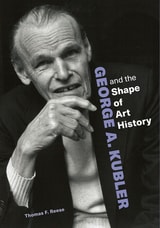
Art historian George A. Kubler (1912–1996) was a foundational scholar of ancient American art and archaeology as well as Spanish and Portuguese architecture. During over five decades at Yale University, he published seventeen books that included innovative monographs, major works of synthesis, and an influential theoretical treatise. In this biography, Thomas F. Reese analyzes the early formation, broad career, and writings of Kubler, casting nuanced light on the origins and development of his thinking.
Notable in Reese’s discussion and contextualization of Kubler’s writings is a revealing history and analysis of his Shape of Time—a book so influential to students, scholars, artists, and curious readers in multiple disciplines that it has been continuously in print since 1962. Reese reveals how pivotal its ideas were in Kubler’s own thinking: rather than focusing on problems of form as an ordering principle, he increasingly came to sequence works by how they communicate meaning. The author demonstrates how Kubler, who professed to have little interest in theory, devoted himself to the craft of art history, discovering and charting the rules that guided the propagation of structure and significance through time.
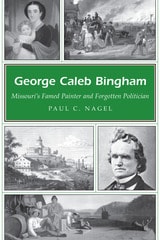
George Caleb Bingham
Missouri's Famed Painter and Forgotten PoliticianPaul C. Nagel
University of Missouri Press, 2005

George Cruikshank's Life, Times, and Art
George Cruikshank's Life, Times, and Art, vol. 1Patten, Robert L
Rutgers University Press, 1991
"Patten consistently manages with great deftness to intertwine the personal and the historical, the strands of Cruikshank's life and those of his caricatures, illustrations, and moralities without a sign of jargon or pedantry. . . . This is a monumental life and works."--Ronald Paulson, The Johns Hopkins University
"At last, an authoritative, exhaustively researched biography of one of nineteenth-century England's greatest popular artists! It will rescue him from the biographical obscurity in which he has dwelt and inspire a fresh estimate of his achievement as a rough-and-tumble caricaturist and prolific book illustrator."--Richard D. Altick, Ohio State University
The etchings and wood engravings by George Cruikshank (1792-1878) recorded, commented on, and satirized his times to such an extent that they have been frequently used to represent the age. Cruikshank, a popular artist in the propaganda war against Napoleon, an ardent campaigner for Reform and Temperance, and the foremost illustrator of such classics as Grimms' Fairy Tales, Scott's novels, and Dickens's Oliver Twist, is known for his versatility, imagination, humor, and incisive images. His long life, marked by a ceaseless struggle to win recognition for his art, intersected with many of Britain's important political, social, and cultural leaders.
Robert Patten provides the first documentary biography of Cruikshank. In this first volume of a two-volume work, which covers the artist's Regency caricatures and early book illustrations, Patten demonstrates the ways that Cruikshank was, as his contemporaries frequently declared, the Hogarth of the nineteenth century. Having reviewed over 8,500 unpublished letters and most of Cruikshank's 12,000 or more printed images, Patten gives a thorough and reliable account of the artist's career. He puts Cruikshank's achievement into a variety of larger contexts--publishing history, political and cultural history, the traditions of figurations practiced by Cruikshank's contemporaries, and the literary and social productions of nineteenth-century Britain.
Published to coincide with the Fall 1992 bicentennial celebrations of the artist's birth, this biography provides both the general reader and the specialist with a wealth of new information conveyed in a lively, non-technical prose. Patten's book contributes to current investigation of the rich interactions between high art and low art, texts and pictures, politics and imagination.
George Cukor
A Double LifePatrick McGilligan
University of Minnesota Press, 2013
One of the highest-paid studio contract directors of his time, George Cukor was nominated five times for an Academy Award as Best Director. In publicity and mystique he was dubbed the “women’s director” for guiding the most sensitive leading ladies to immortal performances, including Greta Garbo, Ingrid Bergman, Judy Garland, and—in ten films, among them The Philadelphia Story and Adam’s Rib—his lifelong friend and collaborator Katharine Hepburn. But behind the “women’s director” label lurked the open secret that set Cukor apart from a generally macho fraternity of directors: he was a homosexual, a rarity among the top echelon. Patrick McGilligan’s biography reveals how Cukor persevered within a system fraught with bigotry while becoming one of Hollywood’s consummate filmmakers.
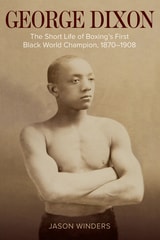
George Dixon
The Short Life of Boxing's First Black World Champion, 1870–1908Jason Winders
University of Arkansas Press, 2021
Winner, 2022 NASSH Book Award (Monograph)
On September 6, 1892, a diminutive Black prizefighter brutally dispatched an overmatched white hope in the New Orleans Carnival of Champions boxing tournament. That victory sparked celebrations across Black communities nationwide but fostered unease among sporting fans and officials, delaying public acceptance of mixed-race fighting for half a century. This turn echoed the nation’s disintegrating relations between whites and Blacks and foreshadowed America’s embrace of racial segregation.
In this work of sporting and social history we have a biography of Canadian-born, Boston-raised boxer George Dixon (1870–1908), the first Black world champion of any sport and the first Black world boxing champion in any division. George Dixon: The Short Life of Boxing’s First Black World Champion, 1870–1908 chronicles the life of the most consequential Black athlete of the nineteenth century and details for the first time his Carnival appearance, perhaps the most significant bout involving a Black fighter until Jack Johnson began his reign in 1908. Yet despite his triumphs, Dixon has been lost to history, overshadowed by Black athletes whose activism against white supremacy far exceeded his own.
George Dixon reveals the story of a man trapped between the white world he served and the Black world that worshipped him. By ceding control to a manipulative white promoter, Dixon was steered through the white power structure of Gilded Age prizefighting, becoming world famous and one of North America’s richest Black men. Unable to hold on to his wealth, however, and battered by his vices, a depleted Dixon was abandoned by his white supporters just as the rising tide of Jim Crow limited both his prospects and the freedom of Blacks nationwide.
George Eliot in Society
Travels Abroad and Sundays at the PrioryKathleen McCormack
The Ohio State University Press, 2013
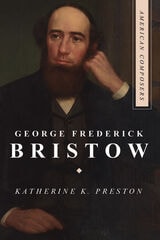
George Frederick Bristow
Katherine K. Preston
University of Illinois Press, 2020
Vivid and richly detailed, George Frederick Bristow enriches our perceptions of musical life in nineteenth-century America.
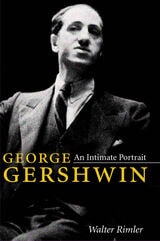
George Gershwin
An Intimate PortraitWalter Rimler
University of Illinois Press, 2009
He and his siblings received little love from their mother and no direction from their father. Older brother and lyricist Ira managed to create a home when he married Leonore Strunsky, a hard-edged woman who lived for wealth and status. The closest George came to domesticity was through his longtime relationship with Kay Swift. She was his lover, musical confidante, and fellow composer. But she remained married to another man while he went endlessly from woman to woman. Only in the final hours of his life, when they were separated by a continent, did he realize how much he needed her. Fatally ill, unprotected by (and perhaps estranged from) Ira, he was exiled by Leonore from the house she and the brothers shared, and he died horribly and alone at the age of thirty-eight.
Nor was Gershwin able to find a satisfying musical harbor. For years his songwriting genius could be expressed only in the ephemeral world of show business, as his brilliance as a composer of large-scale works went unrecognized by highbrow music critics. When he resolved this quandary with his opera Porgy and Bess, the critics were unable to understand or validate it. Decades would pass before this, his most ambitious composition, was universally regarded as one of music's lasting treasures and before his stature as a great composer became secure.
In George Gershwin: An Intimate Portrait, Walter Rimler makes use of fresh sources, including newly discovered letters by Kay Swift as well as correspondence between and interviews with intimates of Ira and Leonore Gershwin. It is written with spirited prose and contains more than two dozen photographs.
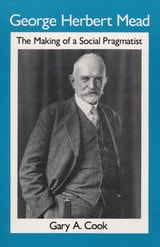
George Herbert Mead
THE MAKING OF A SOCIAL PRAGMATISTGary A. Cook
University of Illinois Press, 1993
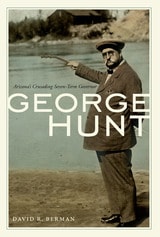
George Hunt
Arizona's Crusading Seven-Term GovernorDavid R. Berman
University of Arizona Press, 2015
Hunt was proof that style and physical appearance neither guarantee nor preclude political success, for the three-hundred-pound man of odd dress and bumbling speech had a political career that spanned the state’s Populism of the 1890s to the 1930s New Deal. Driven by causes, he was very active in public office but took little pleasure in doing the job. Called names by opponents and embarrassed by his lack of formal education, Hunt sometimes showed rage, self-pity, and bitterness at what he saw as betrayals and conspiracies against him.
The author assesses Hunt’s successes and failings as a political leader and take-charge governor struggling to produce results in a political system hostile to executive authority. Berman offers a nuanced look at Arizona’s first governor, providing an important new understanding of Arizona’s complex political history.
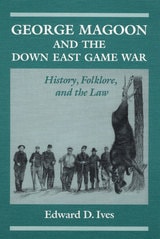
George Magoon and the Down East Game War
History, Folklore, and the LawEdward D. Ives
University of Illinois Press, 1988
moose and deer poacher in Maine, was the hero of scores of funny stories of
how he outwitted game wardens. Preserving these oral histories, Edward Ives
documents Magoon's life and explores his significance as a folk hero within
the context of the conservation movement, the cult of the sportsman, and Maine's
increasingly restrictive game laws.
"A rich and subtle book, an
important work by a major scholar. . . . It is a major contribution to folklore
studies, and to history and American studies as well."
-- Journal of American Folklore
George Peabody, A Biography
Franklin Parker
Vanderbilt University Press, 1995
George Q. Cannon
Politician, Publisher, Apostle of PolygamyKenneth L. Cannon II
Signature Books, 2023
George Sanders, Zsa Zsa, and Me
David R. Slavitt
Northwestern University Press, 2009
Taking its inspiration from Sanders’s own autobiography Memoirs of a Professional Cad (1960), this book is part witty, bawdy, and irreverent memoir, part moving meditation on the price of fame; like most of David Slavitt’s work, it defies easy categorization.In George Sanders, Zsa Zsa, and Me, Slavittlooks back to his career as a film critic in the glamorous—at least superficially—world of 1950s Hollywood, when he traveled in circles that included the talented British actor George Sanders (1906–1972) and his then-wife, Zsa Zsa Gabor, who was talented at, well, being famous.
Sanders, who seemed to maintain an ironic detachment from roles that were often beneath him, nonetheless couldn’t bear the decline of his later years and committed suicide at the age of sixty-five. Darkly humorous to the end, his note read, "Dear World, I am leaving because I am bored. I feel I have lived long enough. I am leaving you with your worries in this sweet cesspool. Good luck." Zsa Zsa, on the other hand, remains in the headlines (with her dubiously named husband Frédéric Prinz von Anhalt) at age ninety-two. Although he punctuates his story with witty asides—the author’s encounter with Marilyn Monroe is particularly memorable—Slavitt turns a critic’s eye toward questions of talent and art, while also tackling the difficult and universal questions of aging, relationships, and mortality.
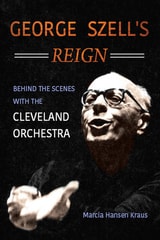
George Szell's Reign
Behind the Scenes with the Cleveland OrchestraMarcia Hansen Kraus
University of Illinois Press, 2019
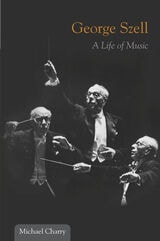
George Szell
A Life of MusicMichael Charry
University of Illinois Press, 2014
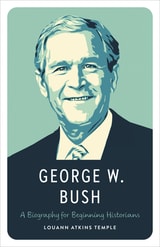
George W. Bush
A Biography for Beginning HistoriansLouann Atkins Temple
University of Texas Press, 2025
A brief biography of George W. Bush for young readers.
Louann Temple is a lifelong Texan with a personal passion for arts and education who believes that biography, with its emphasis on personalities, is ideal for introducing young people to history, with its focus on events. Temple is uniquely situated to write this biography for young readers, as she has been personally acquainted with many important people in presidential history, President George W. Bush included, and she has mentored countless middle and high school students, preparing them for college admission.
George W. Bush highlights the key events in the life of the forty-third president; explores the life lessons afforded by his legacy; and reflects on the broad historical issues during his time in the White House as president from 2001 to 2009. George W. Bush’s legacy as president is significant as he guided America through the events of 9/11. Enhanced with a carefully curated selection of black and white photographs from three presidential libraries, this biography for beginning historians is poised to bring the best of biography and history to a new generation of readers.
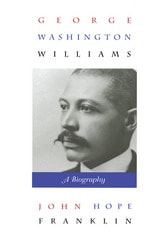
George Washington Williams
A BiographyJohn Hope Franklin
Duke University Press, 1998
Williams, who lived from 1849 to 1891, had a remarkable career as soldier, minister, journalist, lawyer, politician, freelance diplomat, and African traveler, as well as a historian. While Franklin reveals the accomplishments of this neglected figure and emphasizes the racism that curtailed Williams’s many talents, he also highlights the personal weaknesses that damaged Williams’s relationships and career. Williams led the way in presenting African American history accurately through the use of oral history and archival research, sought to legitimize it as a field of historical study, and spoke out in support of an American Negro Historical Society and as a critic of European imperialism in Africa. He also became erratic and faithless to his family and creditors and died at the age of forty-one, destitute and alienated from family and friends. George Washington Williams is nothing less than a classic biography of a brilliant though flawed individual whose History of the Negro Race in America remains a landmark in African American history and American intellectual history.
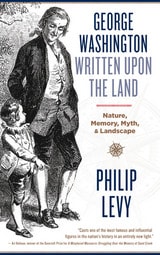
George Washington Written Upon the Land
Nature, Memory, Myth, and LandscapePhilip Levy
West Virginia University Press, 2015
George Washington’s childhood is famously the most elusive part of his life story. For centuries biographers have struggled with a lack of period documentation and an absence of late-in-life reflection in trying to imagine Washington’s formative years.
In George Washington Written upon the Land, Philip Levy explores this most famous of American childhoods through its relationship to the Virginia farm where much of it took place. Using approaches from biography, archaeology, folklore, and studies of landscape and material culture, Levy focuses on how different ideas about Washington’s childhood functioned—what sorts of lessons they sought to teach and how different epochs and writers understood the man and the past itself.
In a suggestive and far-reaching final chapter, Levy argues that Washington was present at the onset of the Anthropocene—the geologic era when human activity began to have a significant impact on world ecosystems. Interpreting Washington’s childhood farm through the lens of “big” history, he encourages scholars to break down boundaries between science and social science and between human and nonhuman.

George William Featherstonhaugh
The First U.S. Government GeologistEdmund Berkeley and Dororthy Berkeley
University of Alabama Press, 1988
—Choice
"For anyone interested in the history of American geology, knowledge of G. W. Featherstonhaugh (1780-1866) is both essential and hard to obtain. He was the force behind the first railroad in America; a pioneer in scientific agriculture; an essayist, poet, and novelist; a lobbyist; a linguist; and a daring diplomat who saved the king and queen of France from certain death. [Yet] his strongest tie was with the geology. [This] biography is interesting, well researched and well written. It is a balanced study of a complex man who did so much work and generated such controversy."
—Earth Sciences History
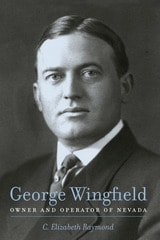
George Wingfield
Owner And Operator Of NevadaC. Elizabeth Raymond
University of Nevada Press, 2013
Banker, hotel owner, and political powerhouse George Wingfield was a significant figure in Nevada history. He was influential in developing Reno's gambling-and-divorce-related tourism. Raymond's biography depicts the man and his times, from his birth in Arkansas in 1876 until his death in Reno in 1959. Wilbur S. Shepperson Series in History and Humanities.
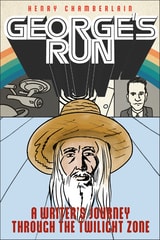
George's Run
A Writer's Journey through the Twilight ZoneHenry Chamberlain
Rutgers University Press, 2023
Later in life, Johnson befriended comics journalist and artist Henry Chamberlain, and the two had long chats about his amazing life and career. Now Chamberlain pays tribute to his late friend in the graphic novel George’s Run, which brings Johnson’s creative milieu to life in vividly illustrated color panels. The result feels less like reading a conventional biography and more like sitting in on an intimate conversation between friends as they recollect key moments in pop culture history, as well as the colorful band of writers known as the “Rat Pack of Science Fiction.”
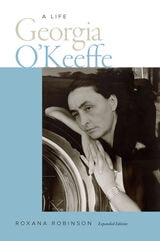
Georgia O'Keeffe
A LifeRoxana Robinson
Brandeis University Press, 2020
When Roxana Robinson’s definitive biography of O’Keeffe was first published in 1989, it received rave reviews and was named a New York Times Notable Book of the Year. This new edition features a new foreword by the author setting O’Keefe in an artistic context over the last thirty years since the book was first published, as well as previously unpublished letters of the young O’Keeffe to her lover, Arthur MacMahon. It also relates the story of Robinson’s own encounter with the artist. As interest in O’Keeffe continues to grow among museum-goers and scholars alike, this book remains indispensable for understanding her life and art.