Results by title
547 books match the query 'California' and 11 start with g
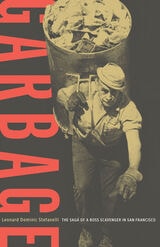
Garbage
The Saga of a Boss Scavenger in San FranciscoLeonard Dominic Stefanelli
University of Nevada Press, 2017
Stefanelli was trained to be a scavenger by his uncles in the 1940s and 50s at a time when rampant discrimination prevented Italian immigrants and their families from pursuing any other career. From there, he became a ‘boss scavenger’, married a garbage man’s daughter, and climbed the ranks of the Sunset Scavenger Company where he eventually took part in a corporate shakeup that made him the company’s president at only 31 years old. As one of the men at the helm of this booming industry, he became the chief advocate for increasingly innovative recycling and waste management practices in the Bay Area, and a foremost leader of environmentally-conscious business in the world.
Stefanelli’s lively memoir will enlighten readers to the waste management business, an industry that was once considered the lowest rung on the social ladder, but will also show his unparalleled capacity for transformation and vision.
Gardening at the Margins
Convivial Labor, Community, and ResistanceGabriel R. Valle
University of Arizona Press, 2022
Participants in La Mesa Verde home garden program engage in the practices of growing and sharing food to envision and continuously work to enact alternative food systems that connect people to their food and communities. They are building on ancestral knowledge, as well as learning new forms of farming, gardening, and healing through convivial acts of sharing.
The individuals featured in the book are imagining and building alternative worlds and futures amid the very real challenges they embody and endure. Climate change, for example, is forcing thousands of migrants to urban areas, which means recent immigrants’ traditional environmental, nutritional, and healing knowledge will continue to be threatened by the pervasiveness of modernity and the homogenization of global capitalism. Moreover, once rural people migrate to urban areas, their ability to retain traditional foodways will remain difficult without spaces of autonomy. The stories in this book reveal how people create the physical space to grow food and the political space to enact autonomy to revive and restore agroecological knowledge needed for an uncertain future.
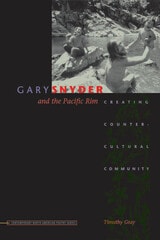
Gary Snyder and the Pacific Rim
Creating Countercultural CommunityTimothy Gray
University of Iowa Press, 2006
Gray’s introduction tracks the increased use of “Pacific Rim discourse” by politicians and business leaders following World War II. Ensuing chapters analyze Snyder’s countercultural invocation of this regional idea, concentrating on the poet’s migratory or “creaturely” sensibility, his gift for literary translation, his physical embodiment of trans-Pacific ideals, his role as tribal spokesperson for Haight-Ashbury hippies, and his burgeoning interest in environmental issues. Throughout, Gray’s citations of such writers as Allen Ginsberg, Philip Whalen, and Joanne Kyger shed light on Snyder’s communal role, providing an amazingly intimate portrait of the west coast counterculture. An interdisciplinary project that utilizes models of ecology, sociology, and comparative religion to supplement traditional methods of literary biography, Gary Snyder and the Pacific Rim offers a unique perspective on Snyder’s life and work.
This book will fascinate literary and Asian studies scholars as well as the general reader interested in the Beat movement and multicultural influences on poetry.
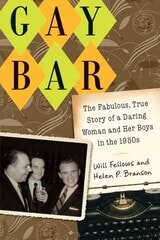
Gay Bar
The Fabulous, True Story of a Daring Woman and Her Boys in the 1950sWill Fellows and Helen P. Branson
University of Wisconsin Press, 2026
Vivacious, unconventional, candid, and straight, Helen Branson operated a gay bar in Los Angeles in the 1950s—America’s most anti-gay decade. After years of fending off drunken passes as an entertainer in cocktail bars, this divorced grandmother preferred the wit, variety, and fun she found among homosexual men. Enjoying their companionship and deploring their plight, she gave her gay friends a place to socialize. Though at the time California statutes prohibited homosexuals from gathering in bars, Helen’s place was relaxed, suave, and remarkably safe from police raids and other anti-homosexual hazards. In 1957 she published her extraordinary memoir Gay Bar, the first book by a heterosexual to depict the lives of homosexuals with admiration, respect, and love.
In this new edition of Gay Bar, Will Fellows interweaves Branson’s chapters with historical perspective provided through his own insightful commentary and excerpts gleaned from letters and essays appearing in gay publications of the period. Also included is the original introduction to the book by maverick 1950s psychiatrist Blanche Baker. The eclectic selection of voices gives the flavor of American life in that extraordinary age of anxiety, revealing how gay men saw themselves and their circumstances, and how others perceived them.
Outstanding Book, selected by the Public Library Association
Best Books for High Schools, selected by the American Association of School Libraries
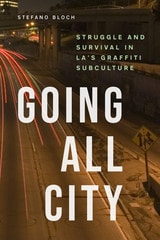
Going All City
Struggle and Survival in LA's Graffiti SubcultureStefano Bloch
University of Chicago Press, 2019
In the age of commissioned wall murals and trendy street art, it’s easy to forget graffiti’s complicated and often violent past in the United States. Though graffiti has become one of the most influential art forms of the twenty-first century, cities across the United States waged a war against it from the late 1970s to the early 2000s, complete with brutal police task forces. Who were the vilified taggers they targeted? Teenagers, usually, from low-income neighborhoods with little to their names except a few spray cans and a desperate need to be seen—to mark their presence on city walls and buildings even as their cities turned a blind eye to them.
Going All City is the mesmerizing and painful story of these young graffiti writers, told by one of their own. Prolific LA writer Stefano Bloch came of age in the late 1990s amid constant violence, poverty, and vulnerability. He recounts vicious interactions with police; debating whether to take friends with gunshot wounds to the hospital; coping with his mother’s heroin addiction; instability and homelessness; and his dread that his stepfather would get out of jail and tip his unstable life into full-blown chaos. But he also recalls moments of peace and exhilaration: marking a fresh tag; the thrill of running with his crew at night; exploring the secret landscape of LA; the dream and success of going all city.
Bloch holds nothing back in this fierce, poignant memoir. Going All City is an unflinching portrait of a deeply maligned subculture and an unforgettable account of what writing on city walls means to the most vulnerable people living within them.
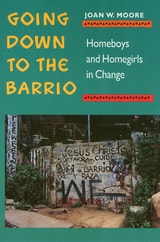
Going Down To The Barrio
Homeboys and Homegirls in ChangeJoan W. Moore
Temple University Press, 1991
In this illuminating look at two Chicano gangs in East Los Angeles, Joan W. Moore examines the changes and continuities among three generations of barrio gangs. As a sequel to the author's award-winning study, Homeboys (Temple, 1979), this book returns to the same neighborhoods to chart the development of gang behavior, especially in terms of violence and drug use, and to compare experiences of male and female gang members.
In a remarkable research collaborative effort, Moore and gang members worked together to develop an understanding of both male and female gangs and an internal vision of gang members' lives. By using excerpts from individual interviews, the author depicts more about the gangs than simply their life together as a unit; she gives them a voice. Gang members discuss their personal reaction to violence, drug using and selling, family relations and intra-gang dating; they share intimacies that reveal varying levels of loyalty to and dependency on their affiliations, which often become a family substitute.
After maintaining neighborhood ties for 17 years, Moore's research group has established a relationship with these communities that gives her a rare perspective. This is a fascinating and informative book for anyone interested in sociology, criminology, youth behavior and deviance, and ethnic studies.
Golden Rules
The Origins of California Water Law in the Gold RushMark Kanazawa
University of Chicago Press, 2015
For Golden Rules, Mark Kanazawa draws on previously untapped historical sources to trace the emergence of the current framework for resolving water-rights issues to California in the 1850s, when Gold Rush miners flooded the newly formed state. The need to circumscribe water use on private property in support of broader societal objectives brought to light a number of fundamental issues about how water rights ought to be defined and enforced through a system of laws. Many of these issues reverberate in today’s contentious debates about the relative merits of government and market regulation. By understanding how these laws developed across California’s mining camps and common-law courts, we can also gain a better sense of the challenges associated with adopting new property-rights regimes in the twenty-first century.
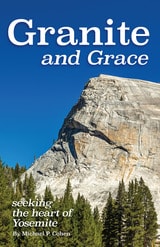
Granite and Grace
Seeking the Heart of YosemiteMichael P. Cohen
University of Nevada Press, 2019
Drawing together the humanistic and scientific significance of the wild landscapes he traverses, Michael uncovers relationships between people and places and meaning and substance, rendering this text part memoir—but also considerably more. On-the-rock encounters by hand and foot open up a dialogue between the heart of a philosopher and the mind of a geologist. Michael adds a literary softness to this hard landscape, blending excursions with exposition and literature with science. It is through his graceful representations that the geological becomes metaphorical, while the science turns mythological.
This high country, where in 1889 John Muir and Robert Underwood Johnson planned what would become Yosemite National Park, is significant for cultural as well as natural reasons. Discoursing on everything from Camus’s “Myths of Sisyphus” to the poems of Gary Snyder, Michael adds depth to an already splendorous landscape. Premier early geologists, such as François Matthes, shaped the language of Yosemite’s landscape. Even though Yosemite has changed over half a century, the rock has not. As Michael explores the beauty and grace of his familiar towering vistas, he demonstrates why, of the many aspects of the world to which one might get attached, the most secure is granite.
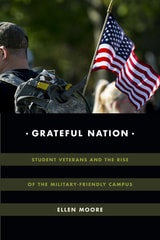
Grateful Nation
Student Veterans and the Rise of the Military-Friendly CampusEllen Moore
Duke University Press, 2017
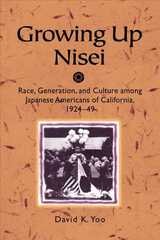
Growing Up Nisei
Race, Generation, and Culture among Japanese Americans of California, 1924-49David K. Yoo
University of Illinois Press, 2000
The place occupied by Japanese Americans within the annals of United States history often begins and ends with their cameo appearance as victims of incarceration after the bombing of Pearl Harbor. In this provocative work, David K. Yoo broadens the scope of Japanese American history to examine how the second generation—the Nisei—shaped its identity and negotiated its place within American society.
Tracing the emergence of a dynamic Nisei subculture, Yoo shows how the foundations laid during the 1920s and 1930s helped many Nisei adjust to the upheaval of the concentration camps. Schools, racial-ethnic churches, and the immigrant press served not merely as waystations to assimilation but as tools by which Nisei affirmed their identity in connection with both Japanese and American culture. The Nisei who came of age during World War II formed identities while negotiating complexities of race, gender, class, generation, economics, politics, and international relations.
A thoughtful consideration of the gray area between accommodation and resistance, Growing Up Nisei reveals the struggles and humanity of a forgotten generation of Japanese Americans.
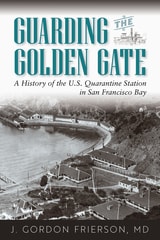
Guarding the Golden Gate
A History of the U.S. Quarantine Station in San Francisco BayJ. Gordon Frierson, MD
University of Nevada Press, 2022
Guarding the Golden Gate covers not only the creation and operation of the station, which is integral to San Francisco’s history, but also discusses the challenges of life on Angel Island—a small, exposed, and nearly waterless landmass on the north side of the Bay. The book reveals the steps taken to prevent the spread of diseases not only into the United States but also into other ports visited by ships leaving San Francisco; the political struggles over the establishment of a national quarantine station; and the day-to-day life of the immigrants and staff inhabiting the island. With the advancement of the understanding of infectious diseases and the development of treatments, the quarantine station’s activities declined in the 1930s, and the facility ultimately shuttered its doors in 1949.
While Angel Island is now a California state park, it remains as a testament to an influential period in the nation’s history that offers rich insights into efforts to maintain the public’s safety during health crises.