Results by title
401 books match the query 'Civil War, 1861-1865' and 9 start with g
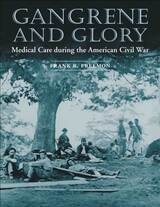
Gangrene and Glory
Medical Care during the American Civil WarFrank R. Freemon
University of Illinois Press, 1998
This unusual history of the Civil War takes a close look at the battlefield doctors in whose hands rested the lives of thousands of Union and Confederate soldiers and at the makeshift medicine they were forced to employ.
A medical doctor and a credentialed historian, Frank R. Freemon combines poignant, sometimes horrifying anecdotes of amputation, infection, and death with a clearheaded discussion of the state of medical knowledge, the effect of the military bureaucracy on medical supplies, and the members of the medical community who risked their lives, their health, and even their careers to provide appropriate care to the wounded. Freemon examines the impact on major campaigns--Manassas, Gettysburg, Vicksburg, Shiloh, Atlanta--of ignorance, understaffing, inexperience, overcrowded hospitals, insufficient access to ambulances, and inadequate supplies of essentials such as quinine.
Presenting the medical side of the war from a variety of perspectives--the Union, the Confederacy, doctors, nurses, soldiers, and their families--Gangrene and Glory achieves a peculiar immediacy by restricting its scope to the knowledge and perceptions available to its nineteenth-century subjects. Now available for the first time in paperback, this important volume takes a hard, close look at a neglected and crucial aspect of this bloody conflict.
[more]
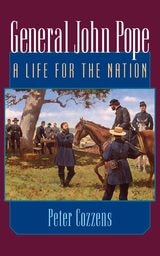
General John Pope
A LIFE FOR THE NATIONPeter Cozzens
University of Illinois Press, 2000
Ambitious and outspoken, John Pope was one of the most controversial figures to hold high command during the Civil War, Reconstruction, and in the American West. General John Pope: A Life for the Nation is the first full biography of this much maligned figure who played crucial roles in both the Eastern and the Western Theaters of the Civil War.
Renowned Civil War scholar Peter Cozzens has mined Pope's own memoirs and a wealth of other primary sources to provide a complete picture of this gifted strategist. Uncovering new information about Pope's pre- and postwar career and his path to power, Cozzens delineates the political environment that surrounded Pope and provided the context for his actions.
Cozzens examines Pope's early career first as commander of the Army of the Mississippi and then as leader of a hastily formed Army of Virginia against Robert E. Lee. After his famous defeat at the Second Battle of Bull Run, Pope was sent to the frontier. There he held important commands on the western plains over the next twenty-four years, all the while struggling to clear his reputation of the events at Second Bull Run. A principal architect of the Red River War, which broke the resistance of the Southern Plains Indians, Pope espoused humanitarian treatment of subjugated tribes and was recognized as one of the army's leading authorities on Indian affairs.
In place of the simplistic caricature that has satisfied most historians, Cozzens has crafted an accurate, humane, balanced portrait of a complex man involved with the most complex issues of his day. A monumental work on a long-neglected figure, General John Pope offers a fresh look at a key nineteenth-century military leader as well as the most detailed analysis available of Federal leadership during the Second Bull Run campaign.
[more]
Georgia Civil War Manuscript Collections
An Annotated BibliographyDavid H. Slay
University of Alabama Press, 2011
This book provides historians and genealogists with a one-stop guide to every Civil War–related manuscript collection stored in Georgia’s many repositories. With this guide in hand, researchers will no longer spend countless hours pouring through online catalogs, emailing archivists, and wondering if they have exhausted every lead in their pursuit of firsthand information about the war and the experiences of those who lived through and were impacted by it.
In assembling the first state-specific bibliography to be compiled since the Indiana and Illinois bibliographies were assembled for the Civil War Centennial in the 1960s, David Slay has expanded the scope of this survey to include works relating to women, African Americans, and social history, as well as the letters and diaries of soldiers who fought in the war, reflecting society’s evolving understanding and interest in this defining period of American life. In addition, this compilation is not confined to material produced from 1861 to 1865, but also includes collections spanning the lives of prominent Civil War figures, making it an invaluable source for biographers.
Organized by institution, Georgia Civil War Manuscript Collections has many time-saving features, all designed to increase efficiency of research. Each collection description contains the title and catalog number used in the holding institution. Where possible, collection descriptions have been improved upon, providing the researcher with information beyond what is listed in the holding institution’s card catalog and finding aid. It also cross-references duplicate collections that are held in two or more institutions as microfilm or photocopies. Simply put, Georgia Civil War Manuscript Collections takes the mystery out of Civil War research in Georgia.
[more]
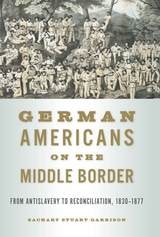
German Americans on the Middle Border
From Antislavery to Reconciliation, 1830–1877Zachary Stuart Garrison
Southern Illinois University Press, 2020
Before the Civil War, Northern, Southern, and Western political cultures crashed together on the middle border, where the Ohio, Mississippi, and Missouri Rivers meet. German Americans who settled in the region took an antislavery stance, asserting a liberal nationalist philosophy rooted in their revolutionary experience in Europe that emphasized individual rights and freedoms. By contextualizing German Americans in their European past and exploring their ideological formation in failed nationalist revolutions, Zachary Stuart Garrison adds nuance and complexity to their story.
Liberal German immigrants, having escaped the European aristocracy who undermined their revolution and the formation of a free nation, viewed slaveholders as a specter of European feudalism. During the antebellum years, many liberal German Americans feared slavery would inhibit westward progress, and so they embraced the Free Soil and Free Labor movements and the new Republican Party. Most joined the Union ranks during the Civil War.
After the war, in a region largely opposed to black citizenship and Radical Republican rule, German Americans were seen as dangerous outsiders. Facing a conservative resurgence, liberal German Republicans employed the same line of reasoning they had once used to justify emancipation: A united nation required the end of both federal occupation in the South and special protections for African Americans. Having played a role in securing the Union, Germans largely abandoned the freedmen and freedwomen. They adopted reconciliation in order to secure their place in the reunified nation. Garrison’s unique transnational perspective to the sectional crisis, the Civil War, and the postwar era complicates our understanding of German Americans on the middle border.
[more]
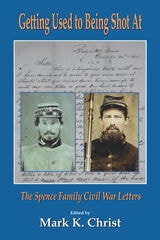
Getting Used to Being Shot At
Mark K. Christ
University of Arkansas Press, 2002
This collection of letters bears witness to the Civil War of the common soldiers and junior officers of the Army of Tennessee. Brothers Alex and Tom Spence described to their family in detail not only the many battles in which they served, but the hardship of campaigning (they marched literally thousands of miles), the pride of serving in battle-proven units, and the pain of losing comrades to bullets and disease. The Spences were a wealthy family who owned land, slaves, and the main hotel in Arkadelphia, Arkansas. With their successful careers and extensive property, they were among Clark County's most prominent families when the shadow of secession fell across Arkansas. Four years later, Arkansas would be ravaged by war, and Tom and Alex Spence would lie in soldiers' graves, far from home. Mark Christ has assembled their powerful letters from a collection in the Old State House Museum, weaving in other letters from their extended family and friends, brief but thorough introductions to each chapter, and evocative photographs. The story moves chronologically from the outset of war to the final letter from Alex's grieving fiancée.
[more]
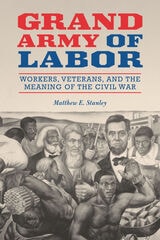
Grand Army of Labor
Workers, Veterans, and the Meaning of the Civil WarMatthew E. Stanley
University of Illinois Press, 2021
Enlisting memory in a new fight for freedom
From the Gilded Age through the Progressive era, labor movements reinterpreted Abraham Lincoln as a liberator of working people while workers equated activism with their own service fighting for freedom during the war. Matthew E. Stanley explores the wide-ranging meanings and diverse imagery used by Civil War veterans within the sprawling radical politics of the time. As he shows, a rich world of rituals, songs, speeches, and newspapers emerged among the many strains of working class cultural politics within the labor movement. Yet tensions arose even among allies. Some people rooted Civil War commemoration in nationalism and reform, and in time, these conservative currents marginalized radical workers who tied their remembering to revolution, internationalism, and socialism.
From the Gilded Age through the Progressive era, labor movements reinterpreted Abraham Lincoln as a liberator of working people while workers equated activism with their own service fighting for freedom during the war. Matthew E. Stanley explores the wide-ranging meanings and diverse imagery used by Civil War veterans within the sprawling radical politics of the time. As he shows, a rich world of rituals, songs, speeches, and newspapers emerged among the many strains of working class cultural politics within the labor movement. Yet tensions arose even among allies. Some people rooted Civil War commemoration in nationalism and reform, and in time, these conservative currents marginalized radical workers who tied their remembering to revolution, internationalism, and socialism.
An original consideration of meaning and memory, Grand Army of Labor reveals the complex ways workers drew on themes of emancipation and equality in the long battle for workers’ rights.
[more]
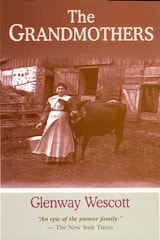
Grandmothers
A Family PortraitWith a New Introduction by Sargent Bush Jr.
University of Wisconsin Press, 1996
Glenway Wescott’s poignant story of nineteenth-century Wisconsin was first published in 1927 as the winner of the prestigious Harper Prize. Like F. Scott Fitzgerald and Ernest Hemingway, Wescott left the Midwest behind to live as a writer in 1920s Paris. In this novel, based on Wescott’s own life and family, the young Alwyn Tower leaves Wisconsin to travel in Europe, but finds himself haunted by a family of long-dead spirits—his grandparents and great-uncles and aunts, a generation whose young adulthood was shattered by the Civil War. Their images were preserved in fading family albums of daguerreotypes and in his own fragmented memories of stories told to him by his strong and enduring grandmothers. To disinter and finally lay to rest the family secrets that lingered insistently in his mind, Wescott writes, Alwyn was “obliged to live in imagination many lives already at an end.”
The Grandmothers is the chronicle of Alwyn’s ancestors: the bitter Henry Tower, who returned from Civil War battlefields to find his beautiful wife Serena lost in a fatal fever; Rose Hamilton, robust and eager, who yearned to leave the cabin of her bearded, squirrel-hunting brothers for the company of courteous Leander Tower; the boy-soldier Hilary Tower, whose worship of his brother made him desperate; fastidious Nancy Tower, whose love for her husband Jesse Davis could not overcome her disgust with the dirt under his fingernails; Ursula Duff, proud and silent, maligned among her neighbors by her venal husband; Alwyn’s parents, Ralph Tower and Marianne Duff, whose happiness is brought about only by the intervention of a determined spinster.
The Grandmothers is the chronicle of Alwyn’s ancestors: the bitter Henry Tower, who returned from Civil War battlefields to find his beautiful wife Serena lost in a fatal fever; Rose Hamilton, robust and eager, who yearned to leave the cabin of her bearded, squirrel-hunting brothers for the company of courteous Leander Tower; the boy-soldier Hilary Tower, whose worship of his brother made him desperate; fastidious Nancy Tower, whose love for her husband Jesse Davis could not overcome her disgust with the dirt under his fingernails; Ursula Duff, proud and silent, maligned among her neighbors by her venal husband; Alwyn’s parents, Ralph Tower and Marianne Duff, whose happiness is brought about only by the intervention of a determined spinster.
[more]
Guerrillas, Unionists, and Violence on the Confederate Home Front
Daniel E. Sutherland
University of Arkansas Press, 1999
Until recently, this localized violence was largely ignored, scholars focusing instead on large-scale operations of the war—the decisions and actions of generals and presidents. But as Daniel Sutherland reminds us, the impact of battles and elections cannot be properly understood without an examination of the struggle for survival on the home front, of lives lived in the atmosphere created by war. Sutherland gathers eleven essays by such noted Civil War scholars as Michael Fellman, Donald Frazier, Noel Fisher, and B. F. Cooling, each one exploring the Confederacy's internal war in a different state. All help to broaden our view of the complexity of war and to provide us with a clear picture of war's consequences, its impact on communities, homes, and families. This strong collection of essays delves deeply into what Daniel Sutherland calls "the desperate side of war," enriching our understanding of a turbulent and divisive period in American history.
[more]
Guide to Missouri Confederate Units, 1861-1865
James E. McGhee
University of Arkansas Press, 2010
Tracing the origins and history of Missouri Confederate units that served during the Civil War is nearly as difficult as comprehending the diverse politics that produced them. Deeply torn by the issues that caused the conflict, some Missourians chose sides enthusiastically, others reluctantly, while a number had to choose out of sheer necessity, for fence straddling held no sway in the state after the fighting began. The several thousand that sided with the Confederacy formed a variety of military organizations, some earning reputations for hard fighting exceeded by few other states, North or South. Unfortunately, the records of Missouri's Confederate units have not been adequately preserved—officially or otherwise—until now. James E. McGhee is a highly respected and widely published authority on the Civil War in Missouri; the scope of this book is startling, the depth of detail gratifying, its reliability undeniable, and the unit narratives highly readable. McGhee presents accounts of the sixty-nine artillery, cavalry, and infantry units in the state, as well as their precedent units and those that failed to complete their organization. Relying heavily on primary sources, such as rosters, official reports, order books, letters, diaries, and memoirs, he weaves diverse materials into concise narratives of each of Missouri's Confederate organizations. He lists the field-grade officers for battalions and regiments, companies and company commanders, and places of origin for each company when known. In addition to listing all the commanding officers in each unit, he includes a bibliography germane to the unit, while a supplemental bibliography provides the other sources used in preparing this unique and comprehensive resource.
[more]