Results by title
3388 books match the query 'Fiction' and 82 start with g
G-Strings and Sympathy
Strip Club Regulars and Male DesireKatherine Frank
Duke University Press, 2002
Frank’s ethnography draws on her work as an exotic dancer in five clubs, as well as on her interviews with over thirty regular customers—middle-class men in their late-twenties to mid-fifties. Reflecting on the customers’ dual desires for intimacy and visibility, she explores their paradoxical longings for "authentic" interactions with the dancers, the ways these aspirations are expressed within the highly controlled and regulated strip clubs, and how they relate to beliefs and fantasies about social class and gender. She considers how regular visits to strip clubs are not necessarily antithetical to marriage or long-term heterosexual relationships, but are based on particular beliefs about marriage and monogamy that make these clubs desirable venues. Looking at the relative "classiness" of the clubs where she worked—ranging from the city’s most prestigious clubs to some of its dive bars—she reveals how the clubs are differentiated by reputations, dress codes, cover charges, locations, and clientele, and describes how these distinctions become meaningful and erotic for the customers. Interspersed throughout the book are three fictional interludes that provide an intimate look at Frank’s experiences as a stripper—from the outfits to the gestures, conversations, management, coworkers, and, of course, the customers.
Focusing on the experiences of the male clients, rather than those of the female sex workers, G-Strings and Sympathy provides a nuanced, lively, and tantalizing account of the stigmatized world of strip clubs.
Gabriel Garcia Marquez and the Powers of Fiction
By Julio Ortega
University of Texas Press, 1988
Together with the late Jorge Luis Borges, Gabriel García Márquez, the 1982 Nobel laureate, stands at the pinnacle of Latin American literature. His work, in the words of Julio Ortega, "contains its own 'deconstructive' force—a literary power capable of reshaping natural order and rhetorical tradition in order to 'carnivalize' the Borges' library and allow us to hear the voices—and the laughter—of a culture, that of Latin America." This reshaping force invites us to read the works of García Márquez in a new way, one that bypasses the traditional, inadequate approaches through Latin American politics, history, and "magical realism."
In Gabriel García Márquez and the Powers of Fiction, noted scholars Julio Ortega, Ricardo Gutiérrez Mouat, Michael Palencia-Roth, Aníbal González, and Gonzalo Díaz-Migoyo offer English-speaking readers a new approach to García Márquez's work. Their poststructuralist readings focus on the peculiar sign-system, formal configuration, intradiscursivity, and unfolding representation in the novels One Hundred Years of Solitude, No One Writes to the Colonel, In Evil Hour, The Autumn of the Patriarch, and Chronicle of a Death Foretold and in several of the author's short stories. Also included as an appendix is a translation of García Márquez's Nobel Prize acceptance speech, "The Solitude of Latin America."
Gallery Bundu
A Story about an African PastPaul Stoller
University of Chicago Press, 2005
In Paul Stoller's work of fiction framed by African storytelling, David is the 52-year-old co-owner of Gallery Bundu, an African art shop in New York City. As a young man in the late 1960s, he joined the Peace Corps to avoid the draft. Assigned to teach English in Niger, he was eager to seek out adventure, and he found it—from drugged-out American expatriates and mamba-filled forests to seductive African women. In the course of his stay in Niger, David meets and falls in love with Zeinabou, a strikingly beautiful woman who professes her love to him, though David believes that he is not the only man she dates. Two weeks before his anticipated return to the United States, Zeinabou informs David that she is pregnant with what she believes is his child. Not knowing how to react, David flees Niger and returns to America ridden with guilt. The hastiness of David's decision will shadow his every move for the rest of his life and will lead him to eventually return to Niger and try to make amends.
Beautifully written and deeply felt, Gallery Bundu is a cautionary tale about the impulses of youth and the unyielding grip of regret. Stoller's vivid language and style allow readers, through David's recollections, to touch, taste, and smell the sensations of West Africa—the tasty aroma of a traditional African fish stew, the spectacle of witches, and the humorous and often frightening experiences of traveling in the bush. A lyrical novel of decisions and destiny, Gallery Bundu is rich in character and detail, bringing anthropology to a new literary height.
Gantenbein
Max Frisch
Seagull Books, 1965
A man walks out of a bar and is later found dead at the wheel of his car. On the basis of a few overheard remarks and his own observations, the narrator of this novel imagines the story of this stranger, or rather two alternative stories based on two identities the narrator has invented for him, one under the name of Enderlin, the other under the name Gantenbein.
Gaps
A NovelBohumil Hrabal
Northwestern University Press, 2011
Gaps is a more overtly political novel than either In-House Weddings or Vita Nuova. The 1968 Soviet invasion of Czechoslovakia and the subsequent repression of artistic freedom figure prominently. Hrabal is placed on the "liquidated writers" list, and copies of his novel Poupata (Buds) are disposed of at the paper salvage where he once worked. Hrabal's decision to tell his autobiography in his wife Eliska's voice highlights their very close relationship and lovingly details her deep influence on his work. Every movement, sound, fragrance, and color is detailed, creating a collage of Bohumil and Eliska's life together, an unforgettable picture that reveals the author's innermost attitudes to life, love, and the pursuit of his own art.

Gary In Your Pocket
Stories and Notebooks of Gary FisherGary Fisher
Duke University Press, 1996
A uniquely intimate, unflinching testimony of the experience of a young, African American gay man in the AIDS emergency, Gary in Your Pocket includes an introduction by Don Belton that describes Fisher’s achievement in the context of other work by Black gay men such as Marlon Riggs and Essex Hemphill, and a biographical afterword by Eve Kosofsky Sedgwick.

Gender and the Gothic in the Fiction of Edith Wharton
Kathy A. Fedorko
University of Alabama Press, 1995
Revealing the Gothic foundations of Edith Wharton's vision of gender and identity.
Gender and the Gothic in the Fiction of Edith Wharton is an innovative study that provides fresh insights into Wharton’s male characters while at the same time showing how Wharton’s imagining of a fe/male self evolves throughout her career. Using feminist archetypal theory and theory of the female Gothic, Kathy A. Fedorko shows how Wharton, in sixteen short stories and six major novels written during four distinct periods of her life, adopts and adapts Gothic elements to explore the nature of feminine and masculine ways of knowing and being and to dramatize the tension between them.
Edith Wharton’s contradictory views of women and men—her attitudes toward the feminine and the masculine—reflect a complicated interweaving of family and social environment, historical time, and individual psychology. Studies of Wharton have exhibited this same kind of contradiction, with some seeing her as disparaging men and the masculine and others depicting her as disparaging women and the feminine. The use of Gothic elements in her fiction provided Wharton, who was often considered the consummate realist, with a way to dramatize the conflict between feminine and masculine selves as she experienced them and to evolve an alternative to the dualism.
Fedorko’s work is unique in its careful consideration of Wharton’s sixteen Gothic works, which are seldom discussed. Further, the revelation of how these Gothic stories are reflected in her major realistic novels. In the novels with Gothic texts, Wharton draws multiple parallels between male and female protagonists, indicating the commonalities between women and men and the potential for a female self. Eventually, in her last completed novel and her last short story, Wharton imagines human beings who are comfortable with both gender selves.
General Firebrand and His Red Atlas
Tathagata Bhattacharya
Seagull Books, 2024
In a world on the brink of totalitarian rule, one man rises from the shadows to ignite a revolution and becomes the unlikely leader of a war of resistance that will shake the very foundations of power. General Firebrand, an unsocial and recovered alcoholic, considered a pariah by society, rises up against the country’s fascist regime. In this guerrilla war, Firebrand garners support from the unlikeliest allies. Beasts and birds of the jungle join the struggle. Spirits of historical figures from past wars and fictional characters with supernatural abilities lend their strength to the cause. As a devastating secret is revealed that moves Firebrand to the core, the battle for liberation takes on new dimensions, exposing the fragility of rationality and the weight of historical wrongs committed in the name of a supposedly humane ideology.
With zany, irreverent prose and a breakneck pace, General Firebrand and His Red Atlas is an explosive debut novel that challenges conventional wisdom and explores the complexities of courage, doubt, and the pursuit of justice in a world dominated by fear.
Genius
A NovelThomas Rayfiel
Northwestern University Press, 2016
Kara Bell spent her youth plotting escape from Witch’s Falls, Arkansas. Relentless focus and the spurning of all emotional attachment led to the doctoral program in philosophy at Columbia University. But Kara’s careful plans are upended by cancer, and suddenly she is home again, where she finds herself subject to her mother’s suffocating care, her brother’s puzzling love life, the local doctor’s meddling, and the strong gravitational pull of her old friend and obsession, Christy Lee. Will Kara find health and sanity? Will she learn what really happened to her father? Can she escape Witch’s Falls a second time, or will she succumb to the slow poison of local kindness and Snickers Salad?
In Genius, Thomas Rayfiel finds both poignancy and dark humor in deathly illness, family secrets, organized religion, parenting, abortion, gossip, senility, and the mysterious rhythms of small-town life.
Genre Worlds
Popular Fiction and Twenty-First-Century Book CultureKim Wilkins, Beth Driscoll, and Lisa Fletcher
University of Massachusetts Press, 2022
Works of genre fiction are a source of enjoyment, read during cherished leisure time and in incidental moments of relaxation. This original book takes readers inside popular genres of fiction, including crime, fantasy, and romance, to reveal how personal tastes, social connections, and industry knowledge shape genre worlds. Attuned to both the pleasure and the profession of producing genre fiction, the authors investigate contemporary developments in the field—the rise of Amazon, self-publishing platforms, transmedia storytelling, and growing global publishing conglomerates—and show how these interact with older practices, from fan conventions to writers’ groups.
Sitting at the intersection of literary studies, genre studies, fan studies, and studies of the book and publishing cultures, Genre Worlds considers how contemporary genre fiction is produced and circulated on a global scale. Its authors propose an innovative theoretical framework that unfolds genre fiction’s most compelling characteristics: its connected social, industrial, and textual practices. As they demonstrate, genre fiction books are not merely texts; they are also nodes of social and industrial activity involving the production, dissemination, and reception of the texts.

Geography and Plays
Gertrude Stein; Introduction by Cyrena N. Pondrom
University of Wisconsin Press, 1993
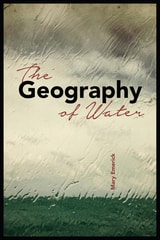
Geography of Water
Mary Emerick
University of Alaska Press, 2015
An abusive father and a broken home forces a teenage Winnie to seek the safety of a neighboring bay and a pair of unlikely father figures. Years later her mother goes missing, and Winnie returns to the hunting and fishing lodge she grew up in to find the world she knew gone. Her once-powerful father disfigured by a bear attack. Her childhood hero revealed as merely human. And her mother’s story rewritten by a stray note.
As Winnie uses the help of friends to sort out the details of her mother’s final exodus, she finds herself pulled into a murky swirl of family secrets and devastating revelations. As the search heads higher into the mountains, Winnie must learn to depend on her own strength in order to reach the one she loves.

George Eliot's Dialogue with John Milton
Anna K. Nardo
University of Missouri Press, 2003

Gerald Gray's Wife and Lily
A NovelSusan Petigru King. Edited by William H. Pease and Jane H. Pease.
Duke University Press, 1993
Lily, King's best known novel, was originally published by Harper and Brothers in 1855. In this work, King skewers the rituals of courtship that propel its wealthy young heroine toward marriage and a melodramatic death. Gerald Gray's Wife, King's last novel, plays out the ironies of a plain woman who survives—but barely—the revelations that destroy her seemingly perfect marriage and acquired beauty. In both novels, women's jealousies and men's deceptions are the forces that propel King's often satirical pen. Largely lacking the moral instruction so common among nineteenth-century domestic novelists, King's novels are differentiated by their critical perspective on women's position, their exploration of themes of failure and frustration, and their focus on the drawing room and ballroom rather than the kitchen and nursery.
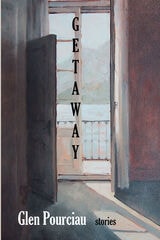
Getaway
Glen Pourciau
Four Way Books, 2021
Although the characters in Pourciau’s stories change face, story to story they all inhabit a world dominated by interior voices revealing fragmented selves. They find difficulty making their inner worlds, with their competing narratives and emotions, fit into the world surrounding them. As they confront everyday predicaments and encounters, they are oftentimes averse to expressing their thoughts, thereby leading themselves deeper into a conflicted interior landscape.
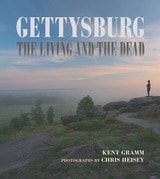
Gettysburg
The Living and the DeadKent Gramm. Photographs by Chris Heisey
Southern Illinois University Press, 2019
Creative nonfiction, fiction, dramatic dialogue, and poetry combine with full-color photographs to convey the essential reality of the famous battlefield as a place both terrible and beautiful. The living and the dead contained here include Confederates and Yankees, soldiers and civilians, male and female, young and old. Visitors to the battlefield after 1863, both well known and obscure, provide the voices of the living. They include a female admiral in the U.S. Navy and a man from rural Virginia who visits the battlefield as a way of working through the death of his son in Iraq. The ghostly voices of the dead include actual participants in the battle, like a fiery colonel and a girl in Confederate uniform, as well as their representatives, such as a grieving widow who has come to seek her husband.
Utilizing light as a central motif and fourscore and seven voices to evoke how Gettysburg continues to draw visitors and resound throughout history, alternately wounding and stitching the lives it touches, Gramm’s words and Heisey’s photographs meld for a historical experience unlike any other. Gettysburg: The Living and the Dead offers a panoramic view wherein the battle and battlefield of Gettysburg are seen through the eyes of those who lived through it and died on it as well as those who have sought meaning at the site ever since.
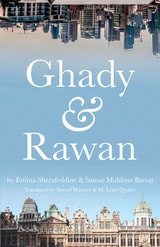
Ghady & Rawan
By Fatima Sharafeddine and Samar Mahfouz Barraj, translated by M. Lynx Qualey and Sawad Hussain
University of Texas Press, 2019
Ghady and Rawan is a heartfelt and timely novel by the award-winning author Fatima Sharafeddine (The Servant, Cappuccino) and Samar Mahfouz Barraj. The novel follows the close-knit friendship of two Lebanese teenagers, Ghady, who lives with his family in Belgium, and Rawan, who lives in Lebanon. Ghady’s family travels every summer to Beirut, where Ghady gets to spend all his time with Rawan and their other friends, enjoying their freedom from school. During the rest of the year, he and Rawan keep in touch by email. Through this correspondence, we learn about the daily ups and downs of their lives in Brussels and Beirut, including Ghady’s homesickness and his struggles with racism at school, as well as Rawan’s changing relationship to her family. The novel offers a glimpse into the lives of Lebanese adolescents while exploring a range of topics relevant to young people everywhere: bullying, parental conflicts, racism, belonging and identity, and peer pressure. Through the connection between the two main characters, Sharafeddine and Mahfouz Barraj show how the love and support of a good friend can help you through difficulties as well as sweeten life’s triumphs and good times.

Ghetto Kingdom
Tales of the Lodz GhettoIsaiah Spiegel
Northwestern University Press, 1998
The stories examine the relationship between inmates and their families, their friends, their Christian former neighbors, the German soldiers, and, ultimately, the world of hopelessness and desperation that surrounded them. In using his creative powers to transform the suffering and death of his people into stories that preserve their memory, Spiegel succeeds in affirming the humanity and dignity the Germans were so intent on destroying.
Originally published as Malchut geto (Malkhes geto) in Yiddish.
Ghosts of Chicago
StoriesJohn McNally
Northwestern University Press, 2010
Ghosts of New York
A NovelJim Lewis
West Virginia University Press, 2021
“A wondrous novel, with prose that sparkles like certain sidewalks after rain. . . . That’s it, I thought. That’s exactly what it’s like to live in New York.” —New York Times Book Review
Ghosts of New York is a novel in which the laws of time and space have been subtly suspended. It interweaves four strands: a photographer newly returned to the neighborhood where she grew up, after years spent living overseas; a foundling raised on 14th Street; a graduate student, his romantic partner, and his best friend entangled in a set of relationships with far-reaching personal and political repercussions; and a shopkeeper suffering from first love late in life. Mixing prophecy, history, and a hint of speculative fiction, its stories are bound together even as they are propelled into stranger territory. And undergirding it all is a song, which appears, disappears, and then resurfaces.
Ghosts of New York explores complex lives through indelible renderings of settings—a bar, a night market, a recording studio—that alternate between familiar and unsettling. The work of a celebrated novelist and veteran of the art, film, and music scenes in New York and Austin (described as “a rare talent” by the New York Times and “a powerful literary voice” by Jeffrey Eugenides), this novel will immediately absorb readers intrigued by creative people and the places that sustain and challenge them.
Giant Steps
Suffragettes and SoldiersMary Blair Immel
Indiana Historical Society Press, 2017
Gichigami
A NovelLindsey Steffes
University of Massachusetts Press, 2025
Winner, Edna Ferber Fiction Book Award
An eerie coming-of-age story of a young girl’s quest for her absent mother across the frozen terrain of Lake Superior
One December evening, when 13-year-old Marta crosses the frozen Lake Superior and reaches the home she shares with her father, she finds a woman standing at their door. As Marta approaches, she realizes the woman, who looks like a tropical bird caught in the snow, is her mother who’d abruptly left them six years before. Marta hopes this is a turning point, that her mother will stay this time—despite hating this town, this island, and their creaky, towering Victorian house. But not everyone in town is thrilled with her mother’s arrival, least of all her dad.
Almost as soon as she arrives, however, Marta’s mother abruptly vanishes again, nowhere to be found, leaving Marta with more questions than answers. Her father denies her mother was ever there and Marta is left with the mystery of her mother’s homecoming. She begins to wonder if he is lying, or if there is a deeper secret being kept from her by the entire tight-knit community. As Marta delves into her mother's sudden reappearance and subsequent disappearance, she seeks answers, visiting places that were significant to her mother and questioning people she knew. Desperate for answers that will shed light on the mystery, this quest leads her to uncover a web of secrets that threaten to unravel everything she thought she knew about her family and herself.
Gichigami is an eerie coming-of-age novel, weaving between Marta and the person desperately trying to keep Marta and her mother apart. This poignant exploration of the lives of women and girls of the Midwest shines a light on the struggles of absent mothers, runaway daughters, and those who yearn for more than life has offered them. With rich prose and vivid imagery, Lindsey Steffes spins a tale of loss, longing, and betrayal set against the backdrop of the harsh yet beautiful landscape of Lake Superior.
Ginseng and Other Tales from Manila
Marianne Villanueva
Calyx, 1991
Giovanna's 86 Circles
And Other StoriesPaola Corso
University of Wisconsin Press, 2007
These ten magical stories are primarily set in Pittsburgh-area river towns, where Italian American women and girls draw from their culture and folklore to bring life and a sense of wonder to a seemingly barren region of the Rust Belt. Each story catapults the ordinary into something original and unpredictable.
A skeptical journalist scopes out the bar where the town mayor, in seemingly perfect health, is drinking with his buddies and celebrating what he claims is the last day of his life. A woman donates her dead mother’s clothes to a thrift shop but learns that their destiny is not what she expected. A ten-year-old girl wrestles with the facts of life as she watches her neighbor struggle to get pregnant while her teenage sister finds it all too easy. A high school girl hallucinates in a steamy hospital laundry room and discovers she can see her coworkers’ futures. A developer’s wrecking ball is no match for the legend of Giovanna’s green thumb in the title story “Giovanna’s 86 Circles.”
Quirky and profound, Corso’s magical leaps uncover the everyday poetry of these women’s lives.
Finalist for the John Gardner Fiction Book Award
Selected for “Best Short Stories of 2005” in Montserrat Review
Best Books for Regional Special Interests, selected by the American Association of School Librarians, and Best Books for General Audiences, selected by the Public Library Association
Sons of Italy National Book Club Selection

Girl Beside Him
Cris Mazza
University of Alabama Press, 2026
Every shadow tells a story she’s not ready to share.
In her ninth work of fiction, Cris Mazza walks the fence between man and nature, instinct and compusion, all the while throwing rocks into the yawning gulch between the sexes. As a portrait of our species, Girl Beside Him is a powerful book.
As the novel unfolds, a moody naturalist obsessed with target shooting meets his pretty assistant, rebounding from her bitter divorce, via a classified ad. Brian and Leya work together in the Wyoming outback, a landscape quick with beauty, death and sex. Ostensibly they have joined forces to track wild cougar, but humanity is the most endangered species here.
As the story lopes along, the naturalists, made feral by heartbreak and the drone of pop culture, spend the summer tracking cougars.…
Taking Sartre's aphorism, hell is other people, to new, dreadful extremes, Mazza's varmits know that the only thing wrong with any landscape is who else is living in it. From deep inside her character's skins, Mazza brings a psychological awareness to her novel that would make Stephen King squirm.
Girl Imagined by Chance
Lance Olsen
University of Alabama Press, 2002
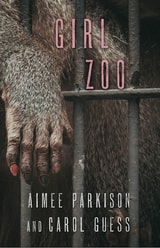
Girl Zoo
Aimee Parkison and Carol Guess
University of Alabama Press, 2019
Girl Zoo is an enthralling and sometimes unsettling collection of short stories that examines how women in society are confined by the limitations and expectations of pop culture, politics, advertising, fashion, myth, and romance. In each story, a woman or girl is literally confined or held captive, and we can only watch as they are transformed into objects of terror and desire, plotting their escape from their cultural cages.
Taken as a whole, this experimental speculative fiction invites parallels to social justice movements focused on sexuality and gender, as well as cautionary tales for our precarious political movement. Parkison and Guess offer no solutions to their characters’ captivity. Instead, they challenge their audience to read against the grain of conventional feminist dystopian narratives by inviting them inside the “Girl Zoo” itself.
Take a step inside the zoo and see for yourself. We dare you. Behind the bars, a world of wonder awaits.
Give Them Stones
Mary Beckett
Catholic University of America Press, 2024
Given Ground
Ann Pancake
University Press of New England, 2008
Giving Their Word
Conversations with Contemporary PoetsSteven Ratiner
University of Massachusetts Press, 2002
Based on a three-year series of interviews conducted by Steven Ratiner for the Christian Science Monitor, this book offers extended conversations with twelve of the most influential poets writing today. Their comments are wonderfully detailed, refreshingly honest, and provide the sort of intimate introduction to both poet and text that readers are rarely privileged to enjoy. Included are conversations with William Stafford, Mary Oliver, John Montague, Charles Simic, Seamus Heaney, Donald Hall, Maxine Kumin, Carolyn Forché, Martín Espada, Marge Piercy, Rita Dove, and Bei Dao. In the book's closing interview, Steven Ratiner makes a return visit to Donald Hall's New Hampshire farm shortly before the publication of Hall's collection Without, which focused on the death of his wife, poet Jane Kenyon.
Giving their word is what poets do; it is their stock-in-trade, their daily bread. In the hands of the most accomplished, a poet's words are transformed into a kind of window: looking inward toward the territory of memory, dream, personal mythology and opening out onto the landscape of the shared world where life and work are rooted. For each poet there is an intricate relationship between these two realms and poetry's third domain, the language that bridges both experiences and becomes the body of the poem. Giving Their Word shows us that the poet's fidelity to that relationship sustains his or her development over time, urges the writing toward new levels of discovery, and bestows on readers that most prized of commodities: a feeling of the authentic.
For poets, students of poetry, and that far-flung community of readers for whom the contemporary poem still provides a journey worth taking, this book will present a host of pleasures. Giving Their Word enlarges the frame through which we view the poet's text and yields significant insights into the craft and character of each of these writers.
Glass Eel
A NovelCasey Bell
University of Massachusetts Press, 2027
Exploring the power of female friendships in times of despair
In the near-future United States, abortion is criminalized. Women are not only stripped of bodily autonomy but are also arrested and put through various punishments, including a Christian fundamentalist rehabilitation program and manual labor. Thrown together in this harrowing corrections process, two women, E and M, form a deep bond. Rippling through time and space, Glass Eel illuminates an imminent nightmare while exploring the unbreakable force of female friendship in times of despair.
Before serving their sentences, E is a romantic who is prone to vivid, maladaptive daydreaming, and M is an empiricist studying to become a marine biologist. Isolated by her devout mother, E turns inward, developing a passion for poetry and myth. At the exact wrong time, she becomes involved with a married man. When E becomes pregnant, he gaslights her, denying their entire relationship. M, while working as a part-time performer at an underwater mermaid theater, carries the heavy responsibility of being the sole provider for her sick mother. One night, she reluctantly accompanies her roommate to a party where she’s raped. Both E and M make the difficult decision to terminate their pregnancies and are eventually arrested for it.
Brought together to serve their sentences, E and M painstakingly labor underground to unclog the Chicago sewers at night. By day, they wander the bleak shore of a radioactive industrial lake, home to mysterious unearthly creatures. E and M unravel psychologically, desperate to cope with their impossible new reality as they grasp at their last real connection—their friendship—to make it through this dystopian time. Glass Eel explores the bond between E and M to show how people hold each other together when everything feels like it is falling apart.
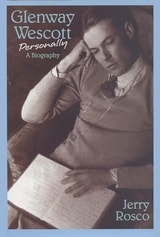
Glenway Wescott Personally
A BiographyJerry Rosco
University of Wisconsin Press, 2002
As a writer, Glenway Wescott (1901–1987) left behind several novels, including The Grandmothers and The Pilgrim Hawk, noted for their remarkable lyricism. As a literary figure, Wescott also became a symbol of his times. Born on a Wisconsin farm in 1901, he associated as a young writer with Hemingway, Stein, and Fitzgerald in 1920s Paris and subsequently was a central figure in New York’s artistic and gay communities. Though he couldn’t finish a novel after the age of forty-five, he was just as famous as an arts impresario, as a diarist, and for the company he kept: W. H. Auden, Christopher Isherwood, Marianne Moore, Somerset Maugham, E. M. Forster, Joseph Campbell, and scores of other luminaries.
In Glenway Wescott Personally, Jerry Rosco chronicles Wescott’s long and colorful life, his early fame and later struggles to write, the uniquely privileged and sometimes tortured world of artistic creation. Rosco sensitively and insightfully reveals Wescott’s private life, his long relationship with Museum of Modern Art curator Monroe Wheeler, his work with sex researcher Alfred Kinsey that led to breakthrough findings on homosexuality, and his kinship with such influential artists as Jean Cocteau, George Platt-Lynes, and Paul Cadmus.
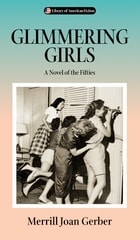
Glimmering Girls
A Novel of the FiftiesMerrill Joan Gerber
University of Wisconsin Press, 2005
Glory Hole
Stephen Beachy
University of Alabama Press, 2017
It’s 2006, and a cloud of darkness seems to have descended over the Earth—or at least over the minds of a ragtag assortment of Bay Area writers, drug dealers, social workers, porn directors, and Melvin, a street kid and refugee from his Mormon family. A shooter runs amok in an Amish schoolhouse, the president runs amok in the Middle East, a child is kidnapped from Disneyland, and on the local literary scene, a former child prostitute and wunderkind author that nobody has ever met has become a media sensation.
But something is fishy about this author, Huey Beauregard, and so Melvin and his friends Felicia and Philip launch an investigation into the webs of self-serving stories, lies, rumors, and propaganda that have come to constitute our sad, fractured reality.
Glory Hole is a novel about the ravages of time and the varied consequences of a romantic attitude toward literature and life. It is about AIDS, meth, porn, fake biographies, street outreach, the study of Arabic verb forms, Polish transgender modernists, obsession, and future life forms. It’s about getting lost in the fog, about prison as both metaphor and reality, madness, evil clowns, and mystical texts.
Vast and ambitious, comic and tragic, the novel also serves as a version of the I Ching, meaning it can be used as an oracle.

Glory
The Gospel of Judas, A NovelGiuseppe Berto
Rutgers University Press, 2024
In Glory, Italian modernist Giuseppe Berto’s final novel, Judas finally tells his side of the story. From his perspective, Jesus is the betrayer, a would-be political activist and social reformer who fails to live up to his promises. And by fulfilling his predestined role in the drama of Christ’s death and resurrection, Judas himself is partly responsible for humanity’s salvation, enabling them to be redeemed by Christ’s sacrifice. As the novel probes into the psychological motivations behind his rejection of Jesus’ authority, Judas emerges as a compelling conflicted character, a man who seeks to have agency even when he knows his actions are being scripted by a higher power. Through Judas’s searing tortured monologues, this late masterpiece from one of Italy’s greatest writers investigates deep questions about the nature of faith, rebellion, fate, and free will.
Glossary for the End of Days
StoriesIan Stansel
Acre Books, 2020
In Boulder, a man calls into a radio program with an altered tale of his brother’s murder—and faces the consequences when the story goes viral. In Tampa, a woman attends a convention of people believing themselves to be targets of clandestine government agencies. In Houston, a family with many secrets attempts to escape an oncoming tropical storm. In an East Coast college town, a professor has a charged run-in with a young woman from the radical right. And in Iowa, a cult suicide spurs the lone survivor to create a “glossary” in an effort to come to terms with his experience.
Simultaneously gritty and lyrical, grounded and visionary, Glossary for the End of Days gives us characters grappling with how to push on through dark days and dark times. This arresting, relevant collection tunes into and seeks to illuminate shared anxieties about the present—and future—of our world.

Go to the Store with Shakur!
A Shakur Series Board BookAndrea Sonnier
Gallaudet University Press, 2024
About the Shakur Series:
The Shakur Series features Black deaf characters who use American Sign Language, offering a unique and inclusive reading experience for children. The vibrant illustrations showcase a signing family and will captivate young minds, while the engaging text reinforces learning. These charming board books contain positive messages and practical lessons, support early childhood development, and encourage children to explore the world with Shakur. This series honors and celebrates Black deaf experiences through everyday adventures that will resonate with young children and their families.
Published in partnership with The Laurent Clerc National Deaf Education Center.
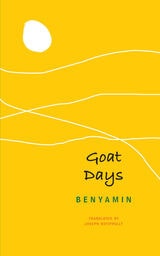
Goat Days
Benyamin
Seagull Books, 2016
In the southern Indian state of Kerala, Najeeb’s dearest wish is to work in a Persian Gulf country and earn enough money to send some back home. One day, he finally achieves this dream, only to be propelled by a series of incidents—grim and absurd—into a slave-like existence, herding goats in the middle of the Saudi desert. Memories of his loving family and of the lush, verdant landscape of his village haunt Najeeb, whose only solace is the companionship of goats. In the end, the lonely young man is forced to contrive a hazardous scheme to escape his desert prison.
An instant bestseller in India, Goat Days is available for the first time in English, translated by Joseph Koyippally. Benyamin is a brilliant new talent of Malayalam literature and his wry and tender telling transforms the strange and bitter comedy of Najeeb’s life in the desert into a universal tale of loneliness and alienation.
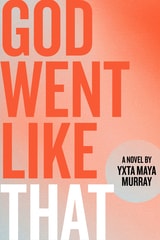
God Went Like That
A NovelYxta Maya Murray
Northwestern University Press, 2023
In award-winning legal scholar and novelist Yxta Maya Murray’s new novel, federal agent Reyna Rodriguez reports on a real-life nuclear reactor meltdown and accidents that occurred in 1959, 1964, and 1968 at the Santa Susana Field Laboratory. An infamous research and development complex in California’s Simi Valley, the lab was eventually dismantled by the US government—but not before it created a toxic legacy of contamination and numerous cancer clusters. Toxins and nuclear residue may have been further released by the 2018 Woolsey Fire and 2019 floods in the area.
God Went Like That takes the form of an EPA report in which Reyna presents riveting interviews with individuals affected by the disasters. With imagination and artistry, Murray brings to life an actual 2011 Department of Energy dossier that detailed the catastrophes and the ensuing public health fallout and highlights the high costs of governmental malfeasance and environmental racism.
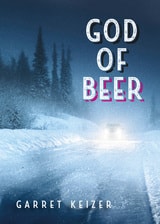
God of Beer
Garret Keizer
University Press of New England, 2016
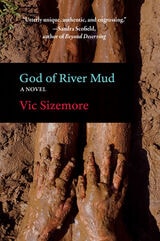
God of River Mud
A NovelVic Sizemore
West Virginia University Press, 2024
Winner, 2025 Tennessee Book Award, Fiction
Grappling with innate desires and LGBTQ identity, a family struggles under the oppressive expectations foisted on them by fundamentalist Christianity.
Told through alternating perspectives, God of River Mud chronicles the lives of Berna Minor, her husband, their four children, and Berna’s secret lover.
To escape a life of poverty and abuse, Berna Cannaday marries Zechariah Minor, a fundamentalist Baptist preacher, and commits herself to his faith, trying to make it her own. After Zechariah takes a church beside the Elk River in rural Clay, West Virginia, Berna falls in love with someone from their congregation—Jordan, a woman who has known since childhood that he was meant to be a man. Berna keeps her secret hidden as she struggles to be the wife and mother she believes God wants her to be. Berna and Zechariah’s children struggle as well, trying to reconcile the theology they are taught at home with the fast-changing world around them. And Jordan struggles to find a community and a life that allow him both to be safely and fully himself, as Jay, and to be loved for who he is.
As the decades and stories unfold, traditional evangelical Bible culture and the values of rural Appalachia clash against innate desires, LGBTQ identity, and gender orientation. Sympathies develop—sometimes unexpectedly—as the characters begin to reconcile their faith and their love. God of River Mud delves into the quandary of those marginalized and dehumanized within a religious patriarchy and grapples with the universal issues of identity, faith, love, and belonging.
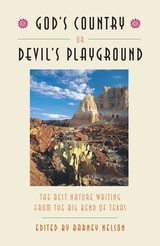
God's Country or Devil's Playground
The Best Nature Writing from the Big Bend of TexasEdited by Barney Nelson
University of Texas Press, 2002
The dramatic desert landscapes of the Big Bend country along the Texas-Mexico border reminded historian Walter Prescott Webb of "an earth-wreck in which a great section of country was shaken down, turned over, blown up, and set on fire." By contrast, naturalist Aldo Leopold considered the region a mountainous paradise in which even the wild Mexican parrots had no greater concern than "whether this new day which creeps slowly over the canyons is bluer or golder than its predecessors, or less so." Whether it impresses people as God's country or as the devil's playground, the Big Bend typically evokes strong responses from almost everyone who lives or visits there.
In this anthology of nature writing, Barney Nelson gathers nearly sixty literary perspectives on the landscape and life of the Big Bend region, broadly defined as Trans-Pecos Texas and northern Chihuahua, Mexico. In addition to Leopold and Webb, the collection includes such well-known writers as Edward Abbey, Mary Austin, Roy Bedichek, and Frederick Olmsted, as well as a wide range of voices that includes explorers, trappers, cowboys, ranch wives, curanderos, college presidents, scientists, locals, tourists, historians, avisadores, and waitresses. Following a personal introduction by Barney Nelson, the pieces are grouped thematically to highlight the distinctive ways in which writers have responded to the Big Bend.
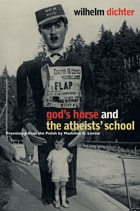
God's Horse and The Atheists' School
Wilhelm Dichter
Northwestern University Press, 2012
In spare, precise prose, Dichter brings to life the tensions between ideologues and pragmatists, Polish patriots and their Soviet masters. These evocative novels also provide a psychologically persuasive and profoundly moving portrait of the narrator. The author's alter ego, supported by his stalwart and overly indulgent mother, possesses the tenacity to transform himself from an awkward, traumatized child survivor into an unsettled but eventually independent-minded young man.
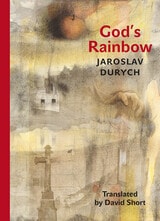
God's Rainbow
Jaroslav Durych
Karolinum Press, 2016
A leading Catholic intellectual of the early twentieth century, Durych became a literary and political throwback to the prewar Czechoslovak Republic and faced censorship under the Stalinist regime of the 1950s. As such, he was a man not unfamiliar with the ramifications of a changing society in which the minority becomes the rule-making political authority, only to end up condemned as criminals. Though Durych finished writing God’s Rainbow in 1955, he could not have hoped to see it published in his lifetime. Released in a still-censored form in 1969, God’s Rainbow is available here in full for the first time in English.
God
The AutobiographyFranco Ferrucci
University of Chicago Press, 1996
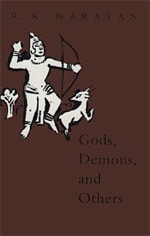
Gods, Demons, and Others
R. K. Narayan llustrated by R. K. Laxman
University of Chicago Press, 1993
"Mr. Narayan gives vitality and an original viewpoint to the most ancient of legends, lacing them with his own blend of satire, pertinent explanation and thoughtful commentary."—Santha Rama Rau, New York Times
"Narayan's narrative style is swift, firm, graceful, and lucid . . . thoroughly knowledgeable, skillful, entertaining. One could hardly hope for more."—Rosanne Klass, Times Literary Supplement
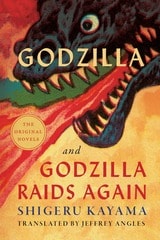
Godzilla and Godzilla Raids Again
Shigeru Kayama
University of Minnesota Press, 2023
The first English translations of the original novellas about the iconic kaijū Godzilla
Godzilla emerged from the sea to devastate Tokyo in the now-classic 1954 film, produced by Tōhō Studios and directed by Ishirō Honda, creating a global sensation and launching one of the world’s most successful movie and media franchises. Awakened and transformed by nuclear weapons testing, Godzilla serves as a terrifying metaphor for humanity’s shortsighted destructiveness: this was the intent of Shigeru Kayama, the science fiction writer who drafted the 1954 original film and its first sequel and, in 1955, published these novellas.
Although the Godzilla films have been analyzed in detail by cultural historians, film scholars, and generations of fans, Kayama’s two Godzilla novellas—both classics of Japanese young-adult science fiction—have never been available in English. This book finally provides English-speaking fans and critics the original texts with these first-ever English-language translations of Godzilla and Godzilla Raids Again. The novellas reveal valuable insights into Kayama’s vision for the Godzilla story, feature plots that differ from the films, and clearly display the author’s strong antinuclear, proenvironmental convictions.
Kayama’s fiction depicts Godzilla as engaging in guerrilla-style warfare against humanity, which has allowed the destruction of the natural world through its irresponsible, immoral perversion of science. As human activity continues to cause mass extinctions and rapid climatic change, Godzilla provides a fable for the Anthropocene, powerfully reminding us that nature will fight back against humanity’s onslaught in unpredictable and devastating ways.
Retail e-book files for this title are screen-reader friendly.

Goethe Dies
Thomas Bernhard
Seagull Books, 2019
Bernhard’s work can seem off-putting on first acquaintance, as he suffers no fools and offers no hand to assist the unwary reader. But those who make the effort to engage with Bernhard on his own uncompromising terms will discover a writer with powerful comic gifts, penetrating insight into the failings and delusions of modern life, and an unstinting desire to tell the whole, unvarnished, unwelcome truth. Start here, readers; the rewards are great.
Going
Kevin Oderman
West Virginia University Press, 2006
In Granada, a boy in a dress begs in the white alleys of the old town. A vulnerable runaway, he turns to an American painter who is living in the city for protection, Madeleine James. The boy also meets Madeleine's new friend, poet Cy Jacobs. Although the two adults mean to help the boy, they unwittingly expose him to more peril. Soon, all the characters in the story have been scraped on the touchstone of hard realities and made to show their mettle, be it base or gold. This novel, at times somber and at times flaring with intensity, calls up indelibly the difficulties of making a good life—or a good death—in a world in which we are all, in one way or another, going.
Going Through Ghosts
Mary Sojourner
University of Nevada Press, 2010
Maggie Foltz is a fifty-five-year-old cocktail waitress in a rundown casino in the southern Nevada Mojave Desert. She spends her days serving drinks to lonely old folks playing the slot machines and her nights trying to escape her bitter past. When she befriends Sarah, a young Native American woman who is hired to cook in the casino coffee shop, her life begins to change. Maggie finds herself falling in love with a memory-haunted Vietnam veteran and warily begins to hope that together they can find peace. Then Sarah is mysteriously murdered, and Sarah’s ghost enlists Maggie to accompany her on a quest for the wisdom that she needs in order to move into the next world. The story ranges from smoky casinos into the harsh magnificence of the desert and the reservation where Sarah’s people are trying to preserve their culture and find their own place in a modern world that seems to want them to be either shamans or losers. Sojourner’s characters are compellingly real, and the Mojave setting has rarely been depicted as sensitively or truthfully. This is a memorable story of love, redemption, and solace, told by one of the West’s finest writers.