Results by title
1104 books match the query 'Gender Studies' and 80 start with g

GENDER AND PETTY VIOLENCE IN LONDON, 1680-1720
JENNINE HURL-EAMON
The Ohio State University Press, 2005
Looking at a heretofore overlooked set of archival records of London in the late 17th and early 18th centuries, Hurl-Eamon reassesses the impact of gender on petty crime and its prosecution during the period. This book offers a new approach to the growing body of work on the history of violence in past societies. By focusing upon low-cost prosecutions in minor courts, Hurl-Eamon uncovers thousands of assaults on the streets of early modern London. Previous histories stressing the masculine nature of past violence are questioned here: women perpetrated one-third of all assaults. In looking at more mundane altercations rather than the homicidal attacks studied in previous histories, the book investigates violence as a physical language, with some forms that were subject to gender constraints, but many of which were available to both men and women. Quantitative analyses of various circumstances surrounding the assaults—including initial causes, weapons used, and injuries sustained—outline the patterns of violence as a language.
Hurl-Eamon also stresses the importance of focusing on the prosecutorial voice. In bringing the court’s attention to petty attacks, thousands of early modern men and women should be seen as agents rather than victims. This view is especially interesting in the context of domestic violence, where hundreds of wives and servants prosecuted patriarchs for assault, and in the Mohock Scare of 1712, where London’s populace rose up in opposition to aristocratic violence. The discussion is informed by a detailed knowledge of assault laws and the rules governing justices of the peace.

GLQ at Twenty-Five
Marcia Ochoa and Jennifer DeVere Brody, special issue editors
Duke University Press, 0
Contributors: Jafari S. Allen, Marlon M. Bailey, Gabby Benavente, Jennifer DeVere Brody, Andy Campbell, V Varun Chaudhry, Mel Y. Chen, Jih-Fei Cheng, Oliver Coates, Cathy Cohen, Rachel Corbman, Carolyn Dinshaw, Allen Durgin, Elizabeth Freeman, John S. Garrison, Julian Gill-Peterson, Chase Gregory, Sarah Haley, David M. Halperin, Christina B. Hanhardt, Scott Herring, Heather Love, Dana Luciano, Whitney Monaghan, Marcia Ochoa, John Petrus, Elliott H. Powell, Nic John Ramos, Chandan Reddy, Richard T. Rodríguez, Nayan Shah, Stephanie Shelton, C. Riley Snorton, Ragini Tharoor Srinivasan, L. H. Stallings, Susan Stryker, Omise’eke Natasha Tinsley, Karen Tongson, Salvador Vidal-Ortiz, Rachel Walerstein, Mary Zaborskis

Gabriela Mistral
The Audacious TravelerMarjorie Agosín
Ohio University Press, 2003
Gabriela Mistral is the only Latin American woman writer to be awarded the Nobel Prize in Literature. Even so, her extraordinary achievements in poetry, narrative, and political essays remain largely untold. Gabriela Mistral: The Audacious Traveler explores boldly and thoughtfully the complex legacy of Mistral and the way in which her work continues to define Latin America.
Edited by Professor Marjorie Agosín, Gabriela Mistral: The Audacious Traveler addresses for the first time the vision that Mistral conveyed as a representative of Chile during the drafting of the United Nations Human Rights Declaration. It depicts Mistral as a courageous social activist whose art and writings against fascism reveal a passionate voice for freedom and justice.
The book also explores Mistral’s Pan-American vision and her desire to be part of a unified American hemisphere as well as her concern for the Caribbean and Brazil. Readers will learn of her sojourn in Brazil, her turbulent years as consul in Madrid, and, finally, her last days on Long Island.
Students of her poetry, as well as general readers, will find Gabriela Mistral: The Audacious Traveler an insightful collection dedicated to the life and work of an inspiring and original artist.
The contributors are Jonathan Cohen, Joseph R. Slaughter, Verónica Darer, Patricia Varas, Eugenia Muñoz, Darrell B. Lockhart, Ivonne Gordon Vailakis, Santiago Daydí-Tolson, Diana Anhalt, Ana Pizarro, Randall Couch, Patricia Rubio, Elizabeth Horan, Emma Sepúlveda, Luis Vargas Saavedra, and Marie-Lise Gazarian-Gautier.
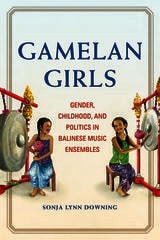
Gamelan Girls
Gender, Childhood, and Politics in Balinese Music EnsemblesSonja Lynn Downing
University of Illinois Press, 2019

Gather Your Ancestors
Gender, Language, and Belonging in Southeast AfricaRaevin Jimenez
University of Wisconsin Press, 2026
Historically, southeasternmost Africa has been home to a large variety of speech communities, including Nguni, East Bantu, Khoi, and San—the legacy of a long and complicated history of migration, interaction, assimilation, and disaggregation between many peoples. With detailed, careful analysis, Raevin Jimenez guides readers through a thousand years of human movement, cultural contact, and social development in this region. Taking a historical linguistics approach, she sheds new light on this history by focusing on Nguni speakers’ use of gendered practices—including initiation, marriage, and avoidant speech known as hlónipha—to blend multilingual and diverse communities.
Use of gendered institutions inaugurated variable social spaces that could either elide or accommodate difference and thus enabled a multiplicity of community types. Contrary to previous assumptions about the roles of men and women in precolonial southeasternmost Africa, Jimenez shows that gender impacted life and social interactions across a large variety of important domains and became a way of forming, negotiating, and maintaining community. These developments shaped and remain visible in southeastern African speech communities today, and understanding them is vital to understanding the region’s long history and current linguistic society.

Gay Men at the Movies
Cinema, Memory and the History of a Gay Male CommunityScott McKinnon
Intellect Books, 2016

Gay Shame
Edited by David M. Halperin and Valerie Traub
University of Chicago Press, 2009
Gay Shame seeks to lift this unofficial ban on the investigation of homosexuality and shame by presenting critical work from the most vibrant frontier in contemporary queer studies. An esteemed list of contributors tackles a range of issues—questions of emotion, disreputable sexual histories, dissident gender identities, and embarrassing figures and moments in gay history—as they explore the possibility of reclaiming shame as a new, even productive, way to examine lesbian and gay culture.
Gender Differences in Public Opinion
Values and Political ConsequencesMary-Kate Lizotte
Temple University Press, 2020
In this era in which more women are running for public office—and when there is increased activism among women—understanding gender differences on political issues has become critical. In her cogent study, Mary-Kate Lizotte argues that assessing the gender gap in public support for policies through a values lens provides insight into American politics today. There is ample evidence that men and women differ in their value endorsements—even when taking into account factors such as education, class, race, income, and party identification.
In Gender Differences in Public Opinion, Lizotte utilizes nationally representative data, mainly from the American National Election Study, to study these gender gaps, the explanatory power of values, and the political consequences of these differences. She examines the gender differences in several policy areas such as equal rights, gun control, the death penalty, and the environment, as well as social welfare issues. The result is an insightful and revealing study of how men and women vary in their policy positions and political attitudes.
Gender Equity in Education
An Annotated BibliographyBeverly Stitt
Southern Illinois University Press, 1994
Recent studies show that, either consciously or unconsciously, teachers are not practicing gender equity in the classroom. Boys are called on more in class than girls and are encouraged to pursue careers from which girls are excluded because they are thought to be less capable.
Serious questions arise for educators and counselors in this time of increasing awareness of the implications of gender bias, such as what comprises a gender-fair education and how can gender equity become part of the classroom curriculum? Guidance counselors and teachers share an important responsibility in seeking answers to these questions in order to avoid limiting students’ potential because of gender.
To achieve this end, Beverly A. Stitt has compiled an annotated bibliography of hundreds of books, articles, videos, classroom activities, and curriculum and workshop guides to help provide the tools needed for educators to become more gender conscious and to develop a gender–fair educational system.
The bibliography is divided into twenty-three categories under the headings of Agriculture and Industry, Business, Career Guidance, Communications, Computers, Discrimination, Displaced Homemakers/Reentry Women, Elementary Education, Family and Work Issues, Gender Role Stereotyping, History, Home Economics, In-service Training, Legislation, Male Focus, Math and Science, Nontraditional Careers, Pregnant and Parenting Teens, Recruitment, Special Needs, Teaching, Vocational Education, and Women’s Studies.
Each entry’s annotation provides a short description of the content, the age group to which the resource applies, and ordering information. The book concludes with an index in which entries are cross-referenced under various categories to further aid the reader’s research.
Gender Flashpoints
The Power of DialogueAbigail C. Saguy
Russell Sage Foundation, 2026
Americans are deeply divided about gender. Like other issues in the U.S., debates about gender are extremely polarized and can spark intense anger and conflict. These “gender flashpoints” include gender identity, gender and parenting, gender-neutral restrooms, the use of identifying pronouns, and participation in women’s sports. Even the term gender itself has become contested. In this divisive social context, advocates on both sides have reduced complex issues to all-or-nothing propositions. Many people are confused about these topics, embarrassed about what they do not know, or afraid that they will be called a bigot if they say the “wrong thing.” In Gender Flashpoints, sociologist Abigail C. Saguy gets to the root of these major disagreements about gender.
Saguy interviews activists across the full political spectrum about a wide range of contemporary debates over gender to better understand points of contention as well as surprising areas of agreement. She finds that at the crux of many of these debates are disputes about the goals of gender-related advocacy, the strategies to achieve these goals, and whose rights are being advocated for. For example, when discussing pregnancy-related policy issues, there is disagreement as to whether the term “pregnant person” or “pregnant woman” should be used. While some believe “pregnant person” affirms the existence of nonbinary people and trans men, others believe it erases women. These differences often appear to be simply about language, but they are, in fact, disagreements on worldviews, identities, and legitimacy.
One of the conflicts Saguy dives into is the issue of gender-neutral restrooms. She finds when interviewing different activists about what they thought of the topic, they initially repeated the familiar, mainstream polarized discourse. LGBTQ+ activists and mainstream feminists emphasized the importance of restroom access, especially for transgender and gender-nonconforming people. Conservatives and gender-critical feminists emphasized women’s and girls’ vulnerability and need for privacy and safety in public restrooms. Across the political spectrum, activists spoke about how those on the “other side” were unwilling to engage in productive dialogue. However, Saguy also finds that activists on both sides recognized the complexity of the issue and agreed on the need for public bathrooms that provided everyone with greater safety and privacy. Activists across the spectrum showed enthusiasm for desegregated public restrooms that include an open space for sinks and mirrors—along with toilets with European style, fully enclosed floor-to-ceiling doors. Saguy advocates for engaging in dialogue about charged issues, such as gender-neutral bathrooms, in order to help identify workable solutions to seemingly intractable social problems.
Gender Flashpoints is a fascinating and comprehensive view of the deeply personal and divisive topic of gender that offers hope for finding common ground and a path forward.
Gender Influences
Reading Student TextsDonnalee Rubin. Foreword by Nan Johnson
Southern Illinois University Press, 1993
Donnalee Rubin examines the responses of thirty-one freshman composition teachers to student writing and shows the negative effects of gender bias on assessment to prove that gender perceptions and expectations can influence assessment decisions that seem neutral on the surface. Arguing that certain pedagogies are more likely to minimize gender bias than others, Rubin believes that teachers are more likely to overcome the influence of gender bias on their teaching if they adopt a process-based method and work intimately with their students through nondirective, supportive conferences.
Rubin characterizes the conference/process-centered class as the type of environment in which maternal teaching can be cultivated. She stresses that maternal can describe any teacher, male or female, who exhibits the nurturing and supportive qualities that the conference/process approach embodies. With a primary focus on the student’s well-being and development as a person and a writer, the maternal teacher is in a better position to overcome gender bias that could distort the interpretation of student texts. In order for writing instructors to increase their sensitivity to gender issues in assessment, Rubin recommends that they self-consciously engage in what she calls "responsive reading." Responsive reading occurs when the teacher reads with an eye toward providing the sorts of supportive feedback and dialectic exchange that will encourage student writers to think for themselves and to revise effectively. Rubin argues that when teachers commit to a responsive-reading pedagogy, they are more likely to question their reactions to student writing along the lines of gender influence and to strive for self-conscious awareness of how their own inner male-female voices may distort their reading of student texts. She challenges all writing teachers to become more aware of the inevitable challenge gender influence presents.

Gender Justice
David Kirp, Mark Yudof, and Marlene Franks Strong
University of Chicago Press, 1985

Gender Knot Revised Ed
Unraveling Our Patriarchal LegacyAllan Johnson
Temple University Press, 2005
* the core characteristics of patriarchy and its power as a social system
* the relationship between individuals and social systems
* "men's movement" assessments of patriarchy and gender inequality
* key—and controversial—terms such as sexism, privilege, and political correctness
Gender Meets Genre in Postwar Cinemas
Edited by Christine Gledhill
University of Illinois Press, 2012
This remarkable collection uses genre as a fresh way to analyze the issues of gender representation in film theory, film production, spectatorship, and the contexts of reception. With a uniquely global perspective, these essays examine the intersection of gender and genre in not only Hollywood films but also in independent, European, Indian, and Hong Kong cinemas. Working in the area of postcolonial cinema, contributors raise issues dealing with indigenous and global cinemas and argue that contemporary genres have shifted considerably as both notions of gender and forms of genre have changed. The volume addresses topics such as the history of feminist approaches to the study of genre in film, issues of female agency in postmodernity, changes taking place in supposedly male-dominated genres, concepts of genre and its use of gender in global cinema, and the relationship between gender and sexuality in film.
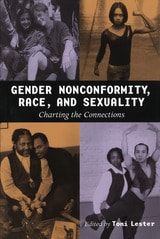
Gender Nonconformity, Race, and Sexuality
Charting the ConnectionsToni Lester
University of Wisconsin Press, 2002
How are culturally constructed stereotypes about appropriate sex-based behavior formed? If a person who is biologically female behaves in a stereotypically masculine manner, what are the social, political, and cultural forces that may police her behavior? And how will she manage her gendered image in response to that policing? Finally, how do race, ethnicity, or sexuality inform the way that sex-based roles are constructed, policed, or managed?
The chapters in this book address such questions from social science perspectives and then examine personal stories of reinvention and transformation, including discussions of the lives of dancers Isadora Duncan and Bill T. Jones, playwright Lorraine Hansberry, and surrealist artist Claude Cahun.Writers from fields as diverse as history, art, psychology, law, literature, sociology, and the activist community look at gender nonconformity from conceptual, theoretical, and empirical perspectives. They emphasize that gender nonconformists can be gay, lesbian, bisexual, transgender, or anyone else who does not fit a model of Caucasian heterosexual behavior characterized by binary masculine and feminine roles.
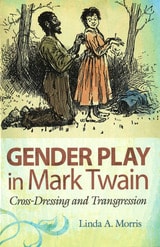
Gender Play in Mark Twain
Cross-Dressing and TransgressionLinda A. Morris
University of Missouri Press, 2007
Huckleberry Finn dressing as a girl is a famously comic scene in Mark Twain’s novel but hardly out of character—for the author, that is. Twain “troubled gender” in much of his otherwise traditional fiction, depicting children whose sexual identities are switched at birth, tomboys, same-sex married couples, and even a male French painter who impersonates his own fictive sister and becomes engaged to another man.
This book explores Mark Twain’s extensive use of cross-dressing across his career by exposing the substantial cast of characters who masqueraded as members of the opposite sex or who otherwise defied gender expectations. Linda Morris grounds her study in an understanding of the era’s theatrical cross-dressing and changing mores and even events in the Clemens household. She examines and interprets Twain’s exploration of characters who transgress gendered conventions while tracing the degree to which themes of gender disruption interact with other themes, such as his critique of race, his concern with death in his classic “boys’ books,” and his career-long preoccupation with twins and twinning.
Approaching familiar texts in surprising new ways, Morris reexamines the relationship between Huck and Jim; discusses racial and gender crossing in Pudd’nhead Wilson; and sheds new light on Twain’s difficulty in depicting the most famous cross-dresser in history, Joan of Arc. She also considers a number of his later “transvestite tales” that feature transgressive figures such as Hellfire Hotchkiss, who is hampered by her “misplaced sex.”
Morris challenges views of Twain that see his work as reinforcing traditional notions of gender along sharply divided lines. She shows that Twain depicts cross-dressing sometimes as comic or absurd, other times as darkly tragic—but that even at his most playful, he contests traditional Victorian notions about the fixity of gender roles.
Analyzing such characteristics of Twain’s fiction as his fascination with details of clothing and the ever-present element of play, Morris shows us his understanding that gender, like race, is a social construction—and above all a performance. Gender Play in Mark Twain: Cross-Dressing and Transgression broadens our understanding of the writer as it lends rich insight into his works.
Gender Play
Girls and Boys in SchoolThorne, Barrie
Rutgers University Press, 1993
Thorne observes children in schools in working-class communities, emphasizing the experiences of fourth and fifth graders. Most of the children she observed were white, but a sizable minority were Latino, Chicano, or African American. Thorne argues that the organization and meaning of gender are influenced by age, ethnicity, race, sexuality, and social class, and that they shift with social context. She sees gender identity not through the lens of individual socialization or difference, but rather as a social process involving groups of children. Thorne takes us on a fascinating journey of discovery, provides new insights about children, and offers teachers practical suggestions for increasing cooperative mixed-gender interaction.
Gender Play
Girls and Boys in SchoolBarrie Thorne
Rutgers University Press, 2024
A detailed and perceptive ethnography told with compassion and humor, Gender Play immerses readers in the everyday lives of a group of working-class children to examine the social interactions that shape their gender identities. This new Rutgers Classic edition of Gender Play contains an introduction from leading sociologists of gender Michael A. Messner and Raewyn Connell that places Thorne’s innovative research in historical context. It also includes a new afterword by one of Thorne’s own students, acclaimed sociologist C.J. Pascoe, reflecting on both the lasting influence of Thorne’s work and the ways that American children’s understandings of gender have shifted in the past thirty years.

Gender Politics
Citizenship, Activism and Sexual DiversitySurya Monro
Pluto Press, 2005
Gender Quotas and Democratic Participation
Recruiting Candidates for Elective Offices in GermanyLouise K. Davidson-Schmich
University of Michigan Press, 2016

Gender Relations in German History
Power, Agency, and Experience from the Sixteenth to the Twentieth CenturyLynn Abrams and Elizabeth Harvey, eds.
Duke University Press, 1997
Topics include childbirth, abortion, and the female body in early modern Germany; the roots of German feminism; gender, class, and medicine during World War I and during the Weimar republic; female homosexuality during the Nazi period; East and West German reconstruction following World War II and the formation of a gendered consumer culture.
This book will stimulate readers to think more deeply about the importance of gender in German history, and prove to be an invaluable resource for those interested in women’s studies and in German and European history.
Contributors. Lynn Abrams, Elizabeth Harvey, Dagmar Herzog, Kate Lacey, Katherine Pence, Ulinka Rublack, Claudia Schoppman, Regina Schulte, Cornelie Usborne, Heide Wunder
Gender Roles and Faculty Lives in Rhetoric and Composition
Theresa Enos
Southern Illinois University Press, 1997
Combining anecdotal evidence (the personal stories of rhetoric and composition teachers) with hard data, Theresa Enos offers documentation for what many have long suspected to be true: lower-division writing courses in colleges and universities are staffed primarily by women who receive minimal pay, little prestige, and lessened job security in comparison to their male counterparts. Male writing faculty, however, also are affected by factors such as low salaries because of the undervaluation of a field considered feminized. As Enos notes in her preface: "The rhetoric of our institutional lives is connected especially to the negotiations of gender roles in rhetoric and composition."
Enos describes and classifies narratives gathered from surveys, interviews, and campus visits and interweaves these narratives with statistical data gathered from national surveys that show gendered experiences in the profession. Enos discusses the ways in which these experiences affect the working conditions of writing teachers and administrators in various programs at different types of institutions.
Enos points out that fields in which women excel—and are acknowledged—receive less prestige than other fields. On the university level, those genres in which women have demonstrated competence are not taken as seriously as those dominated by men. In practical terms, academia affords more glory for teaching literature than for teaching rhetoric and composition.
Within the field of rhetoric and composition, however, Enos finds it difficult to determine why the accomplishments of women receive less credit than those of men. She speculates as to whether it is part of the larger pattern in society—and in academia—to value men more than women or something in the field itself that keeps women from real power, even though women make up the majority of composition and rhetoric teachers.
Enos provides fascinating personal histories of composition and rhetoric teachers whose work has been largely disregarded. She also provides information about writing programs, teaching, administrative responsibilities, ranks among teachers, ages, salary, tenure status, distribution of research, service responsibilities, records of publication, and promotion and tenure guidelines.

Gender Studies
New Directions in Feminist CriticismJudith A. Spector
University of Wisconsin Press, 1986

Gender Thinking
Steven G. Smith
Temple University Press, 1992
How can we accept the gender system in view of its ills? Yet, are we really at liberty to abolish gender differences, "when the gender system gives us benchmarks of personal identity and worth along with primary channels in which to pursue the rewards of love?" With this double question, Steven G. Smith introduces his inquiry into the idea of gender and how it is implicated in love, respect, equality, and personal character. Gender Thinking is the first comprehensive philosophical exploration of the concept of gender Asking the question, what is gender?—that is, what sort of thing do we take femininity and masculinity to be?—Smith considers how gender thinking is interwoven with ideas about human nature. He suggests ways in which ideas about race, class, culture age, temperament, and sexual orientation can be understood from clues found in gender thinking. And he calls for a renegotiated procreative partnership between women and men as the key to the redemption of gender.

Gender Violence and the Press
The St. Kizito StoryH. Leslie Steeves
Ohio University Press, 1997

Gender Violence and the Transnational Politics of the Honor Crime
Dana M. Olwan
The Ohio State University Press, 2021
More specifically, Olwan traces the term’s appearance in public and popular works that allow for its continued mass acceptance and circulation—from media depictions in Canada and beyond, to how it is taken up in national registers about migration and belonging in the US, to activism in Palestine that reveal the fault lines between activist and academic critiques of the honor crime, and finally to feminist efforts in Jordan and the wider Middle East to confront legal codes used to sanction gender-related violence. Through these cases, Olwan demonstrates how the honor crime functions as a signifier that governs and manages populations and how its meanings travel and circulate across and between separate and interconnected circuits of power and knowledge.
Gender Violence in Peace and War
States of ComplicitySanford, Victoria
Rutgers University Press, 2016
Gender and American Jews
Patterns in Work, Education, and Family in Contemporary LifeHarriet Hartman and Moshe Hartman
Brandeis University Press, 2009
Gender and Difference in the Middle Ages
Sharon Farmer
University of Minnesota Press, 2002
Exposes complex intersections between genders and other identities in medieval cultures.
Nothing less than a rethinking of what we mean when we talk about "men" and "women" of the medieval period, this volume demonstrates how the idea of gender-in the Middle Ages no less than now-intersected in subtle and complex ways with other categories of difference. Responding to the insights of postcolonial and feminist theory, the authors show that medieval identities emerged through shifting paradigms-that fluidity, conflict, and contingency characterized not only gender, but also sexuality, social status, and religion. This view emerges through essays that delve into a wide variety of cultures and draw on a broad range of disciplinary and theoretical approaches. Scholars in the fields of history as well as literary and religious studies consider gendered hierarchies in western Christian, Jewish, Byzantine, and Islamic areas of the medieval world.
Contributors: Daniel Boyarin, U of California, Berkeley; Ruth Mazo Karras, U of Minnesota; Mathew Kuefler, San Diego State U; Martha Newman, U of Texas; Kathryn M. Ringrose, U of California, San Diego; Elizabeth Robertson, U of Colorado; Everett Rowson, U of Pennsylvania; Michael Uebel, U of Kentucky; Ulrike Wiethaus, Wake Forest U.
Gender and Family Issues in the Workplace
Francine D. Blau
Russell Sage Foundation, 1997
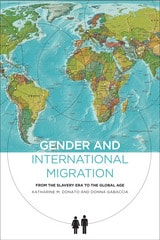
Gender and International Migration
KATHARINE M. DONATO is professor and chair of sociology at Vanderbilt University. DONNA GABACCIA is professor of history in the Department of Historical and Cultural Studies at the University of Toronto-Scarborough.
Russell Sage Foundation, 2015
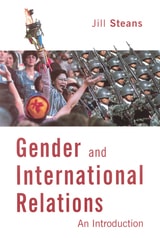
Gender and International Relations
An IntroductionSteans, Jill
Rutgers University Press, 1998
Until relatively recently, little had been written about gender issues in international relations despite the increased importance of the study of gender in other areas of the social sciences. Gender and International Relations fills that gap, providing a clear and accessible guide to the study of gender issues, feminist theories, and international relations. Steans illustrates how gender is central to nationalisms and political identity, the state, citizenship and conceptions of political community, security, and global political economy and development. Drawing on feminist scholarship from across the social sciences, she demonstrates the uses of feminism as critique. She also introduces readers to contemporary theoretical debates in international relations using concrete concerns and easily understandable issues to ground the discussion.
The book does not construct a single feminist theory of international relations nor does it advance a particular perspective of how gender can best be understood in an international or global context. Rather, the book argues that feminist theories have collectively produced insights crucial to the study of international relations and that these insights can be used to challenge conventional approaches to the discipline.

Gender and International Relations
An IntroductionSteans, Jill
Rutgers University Press, 1998
Until relatively recently, little had been written about gender issues in international relations despite the increased importance of the study of gender in other areas of the social sciences. Gender and International Relations fills that gap, providing a clear and accessible guide to the study of gender issues, feminist theories, and international relations. Steans illustrates how gender is central to nationalisms and political identity, the state, citizenship and conceptions of political community, security, and global political economy and development. Drawing on feminist scholarship from across the social sciences, she demonstrates the uses of feminism as critique. She also introduces readers to contemporary theoretical debates in international relations using concrete concerns and easily understandable issues to ground the discussion.
The book does not construct a single feminist theory of international relations nor does it advance a particular perspective of how gender can best be understood in an international or global context. Rather, the book argues that feminist theories have collectively produced insights crucial to the study of international relations and that these insights can be used to challenge conventional approaches to the discipline.
Gender and Planning
A ReaderServon, Lisa J
Rutgers University Press, 2005
Increasingly, experts recognize that gender has affected urban planning and the design of the spaces where we live and work. Too often, urban and suburban spaces support stereotypically male activities and planning methodologies reflect a male-dominated society.
To document and analyze the connection between gender and planning, the editors of this volume have assembled an interdisciplinary collection of influential essays by leading scholars. Contributors point to the ubiquitous single-family home, which prevents women from sharing tasks or pooling services. Similarly, they argue that public transportation routes are usually designed for the (male) worker's commute from home to the central city, and do not help the suburban dweller running errands. In addition to these practical considerations, many contributors offer theoretical perspectives on issues such as planning discourse and the construction of concepts of rationality.
While the essays call for an awareness of gender in matters of planning, they do not over-simplify the issue by moving toward a single feminist solution. Contributors realize that not all women gravitate toward communal opportunities, that many women now share the supposedly male commute, and that considerations of race and class need to influence planning as well. Among various recommendations, contributors urge urban planners to provide opportunities that facilitate women's needs, such as childcare on the way to work and jobs that are decentralized so that women can be close to their children.
Bringing together the most important writings of the last twenty-five years, this book is essential reading for students and scholars of planning theory as well as anyone concerned with gender and diversity.

Gender and Rhetorical Space in American Life, 1866-1910
Nan Johnson
Southern Illinois University Press, 2002
Nan Johnson demonstrates that after the Civil War, nonacademic or “parlor” traditions of rhetorical performance helped to sustain the icon of the white middle class woman as queen of her domestic sphere by promoting a code of rhetorical behavior for women that required the performance of conventional femininity. Through a lucid examination of the boundaries of that gendered rhetorical space—and the debate about who should occupy that space—Johnson explores the codes governing and challenging the American woman’s proper rhetorical sphere in the postbellum years.
While men were learning to preach, practice law, and set political policies, women were reading elocution manuals, letter-writing handbooks, and other conduct literature. These texts reinforced the conservative message that women’s words mattered, but mattered mostly in the home. Postbellum pedagogical materials were designed to educate Americans in rhetorical skills, but they also persistently directed the American woman to the domestic sphere as her proper rhetorical space. Even though these materials appeared to urge the white middle class women to become effective speakers and writers, convention dictated that a woman’s place was at the hearthside where her rhetorical talents were to be used in counseling and instructing as a mother and wife.
Aided by twenty-one illustrations, Johnson has meticulously compiled materials from historical texts no longer readily available to the general public and, in so doing, has illuminated this intersection of rhetoric and feminism in the nineteenth century. The rhetorical pedagogies designed for a postbellum popular audience represent the cultural sites where a rethinking of women’s roles becomes open controversy about how to value their words. Johnson argues this era of uneasiness about shifting gender roles and the icon of the “quiet woman” must be considered as evidence of the need for a more complete revaluing of women’s space in historical discourse.

Gender and Scientific Authority
Edited by Barbara Laslett, Sally Gregory Kohlstedt, Helen Longino, and Evelynn Hammonds
University of Chicago Press, 1996

Gender and Sexuality in Latin America, Volume 81
Gilbert M. Joseph, ed.
Duke University Press, 0
Sueann Caulfield, one of the most distinguished scholars of Latin American gender studies, leads off with an insightful historiographical analysis of the field. Building on the foundation laid by Caulfield, a forum of four younger scholars—Heidi Tinsman, Karin Rosemblatt, Elizabeth Hutchinson, and Thomas Klubock—examines the construction of gender and power in a variety of politically contested arenas, including agrarian reform, welfarism, and leftist activism. Focusing on twentieth-century Chile, the collection also includes essays by Pablo Piccato and Christina Rivera that analyze gender dynamics, class relations, and sexual violence in the context of the medical-legal state that emerged in early-twentieth-century Mexico. The issue concludes with Martin Nesvig’s essay, which negotiates the complex terrain of Latin American homosexuality and bisexuality.
This special issue will be a valuable resource for anyone teaching women’s history, gender history, the history of sexuality, or any course on Latin American history with a focus on gender and sexuality.
Contributors. Sueann Caulfield, Elizabeth Quay Hutchison, Gilbert M. Joseph, Thomas J. Klubock, Martin Nesvig, Pablo Piccato, Cristina Rivera Garza, Karin Rosemblatt, Heidi Tinsman

Gender and Sexuality in the Midwest
Historical PerspectivesKatherine Jellison
Ohio University Press, 2027
This book is a collection of eleven essays, an introduction, and a conclusion that discuss issues of gender and sexuality in the twelve states of the Midwest. The book covers 200 years of midwestern history—from the early nineteenth century to the early twenty-first century—and includes the experiences of midwesterners of diverse races, religions, and sexualities. The essays are arranged according to three topical categories. Essays in the first section of the book deal with some aspect of Memory and Methodology, those in the second section engage matters of Community and Belief, and the chapters in the final third of the manuscript address intersections of Biography and Politics. The authors of all eleven essays firmly ground their analyses within the categories of gender and/or sexuality. Essayists include discussion of men and masculinity as well as women and femininity. In addition, several of the essays address situations outside the realm of heterosexual monogamy: plural marriage, celibacy, LGBTQ+ relationships. In other words, the book engages with developments in subject matter and methodology that have changed the gender studies field over the past 15-30 years.
Authors have written their essays with an eye toward a broad audience. The book is appropriate reading for historians of women, gender, and sexuality; scholars of midwestern history and midwestern studies; undergraduate and graduate students in women’s and gender history courses; undergraduate and graduate students in women’s, gender, and sexuality studies courses; and non-academic readers with a particular interest in the Midwest or gender history.
Contributors
Kristin Mapel Bloomberg
Nikki Berg Burin
Stewart Davenport
Kara M. French
Barbara Handy-Marchello
Birgit Hans
Dean J. Kotlowski
David Mislin
Cynthia C. Prescott
Ashley Rattner
Jordan Zdinak

Gender and Slave Emancipation in the Atlantic World
Pamela Scully and Diana Paton, eds.
Duke University Press, 2005
Offering detailed analyses of slave emancipation in specific societies, the contributors discuss all of the diverse actors in emancipation: slaves, abolitionists, free people of color, state officials, and slave owners. Whether considering the construction of a postslavery masculine subjectivity in Jamaica, the work of two white U.S. abolitionist women with the Freedmen’s Bureau after the Civil War, freedwomen’s negotiations of labor rights in Puerto Rico, slave women’s contributions to the slow unraveling of slavery in French West Africa, or the ways that Brazilian abolitionists deployed representations of femininity as virtuous and moral, these essays demonstrate the gains that a gendered approach offers to understanding the complex processes of emancipation. Some chapters also explore theories and methodologies that enable a gendered reading of postslavery archives. The editors’ substantial introduction traces the reasons for and patterns of women’s and men’s different experiences of emancipation throughout the Atlantic world.
Contributors. Martha Abreu, Sheena Boa, Bridget Brereton, Carol Faulkner, Roger Kittleson, Martin Klein, Melanie Newton, Diana Paton, Sue Peabody, Richard Roberts, Ileana M. Rodriguez-Silva, Hannah Rosen, Pamela Scully, Mimi Sheller, Marek Steedman, Michael Zeuske
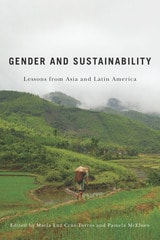
Gender and Sustainability
Lessons from Asia and Latin AmericaEdited by María Luz Cruz-Torres and Pamela McElwee
University of Arizona Press, 2012
Bringing together case studies from Asia and Latin America, this valuable collection adds new knowledge to our understanding of the interplay between local and global processes. Organized broadly by three major issues—forests, water, and fisheries—the scholarship ranges widely: the gender dimensions of the illegal trade in wildlife in Vietnam; women and development issues along the Ganges River; the role of gender in sustainable fishing in the Philippines; women’s inclusion in community forestry in India; gender-based confrontations and resistance in Mexican fisheries; environmentalism and gender in Ecuador; and women’s roles in managing water scarcity in Bolivia and addressing sustainability in shrimp farming in the Mekong Delta.
Together these chapters show why gender issues are important for understanding how communities and populations deal daily with the challenges of globalization and environmental change. Through their rich ethnographic research, the contributors demonstrate that gender analysis offers useful insights into how a more sustainable world can be negotiated—one household and one community at a time.
Contributors
Stephanie Buechler
María Luz Cruz-Torres
Linda D’Amico
Georgina Drew
James Eder
Lisa L. Gezon
Pamela McElwee
Neera Singh
Hong Anh Vu
Amber Wutich

Gender and Violence against Political Actors
Edited by Elin Bjarnegård and Pär Zetterberg
Temple University Press, 2023
Chapters focus on theoretical approaches demonstrating how different disciplinary starting points—e.g., politics, violence and gender—give rise to different lenses. Essays examine violence carried out during conflict and peacetime, and relate to the continuum of violence—physical, sexual, psychological, and online. In addition, six country case studies reveal how different types of political actors have been targets of violence.
Gender and Violence against Political Actors ends by providing various approaches to responding to the problem of gendered violence in politics while also evaluating policy responses.
Contributors: Kerryn Baker, Julie Ballington, Gabrielle Bardall, Gabriella Borovsky, Cheryl N. Collier, Sofia Collignon, Maria Eriksson Baaz, Eleonora Esposito, Nicole Haley, Rebekah Herrick, Sandra Håkansson, Roudabeh Kishi, Anne-Kathrin Kreft, Mona Lena Krook, Rebecca Kuperberg, Robert U. Nagel, Louise Olsson, Jennifer M. Piscopo, Tracey Raney, Juliana Restrepo Sanín, Paige Schneider, Maria Stern, Sue Thomas, and the editors

Gender and Violence in Haiti
Women’s Path from Victims to AgentsBenedetta Faedi Duramy
Rutgers University Press, 2014
Gender and Violence in Haiti is the product of more than a year of extensive firsthand observations and interviews with the women who have been caught up in the widespread violence plaguing Haiti. Drawing from the experiences of a diverse group of Haitian women, Faedi Duramy finds that both the victims and perpetrators of violence share a common sense of anger and desperation. Untangling the many factors that cause these women to commit violence, from self-defense to revenge, she identifies concrete measures that can lead them to feel vindicated and protected by their communities.
Faedi Duramy vividly conveys the horrifying conditions pervading Haiti, even before the 2010 earthquake. But Gender and Violence in Haiti also carries a message of hope—and shows what local authorities and international relief agencies can do to help the women of Haiti.

Gender and the Science of Difference
Cultural Politics of Contemporary Science and MedicineFisher, Jill A
Rutgers University Press, 2011
How does contemporary science contribute to our understanding about what it means to be women or men? What are the social implications of scientific claims about differences between "male" and "female" brains, hormones, and genes? How does culture influence scientific and medical research and its findings about human sexuality, especially so-called normal and deviant desires and behaviors? Gender and the Science of Difference examines how contemporary science shapes and is shaped by gender ideals and images.
Prior scholarship has illustrated how past cultures of science were infused with patriarchal norms and values that influenced the kinds of research that was conducted and the interpretation of findings about differences between men and women. This interdisciplinary volume presents empirical inquiries into today's science, including examples of gendered scientific inquiry and medical interventions and research. It analyzes how scientific and medical knowledge produces gender norms through an emphasis on sex differences, and includes both U.S. and non-U.S. cases and examples.

Gender in Latin America
Chant, Sylvia
Rutgers University Press, 2002
In Latin America, gender is a fundamental dimension of virtually every aspect of contemporary social, economic, and political life. Gender in Latin America is a comprehensive state-of-the-art review of gender in the region at the start of the twenty-first century. The authors draw on a wide range of research, including their own field-based expertise, to illuminate the importance of diversity in gender in this region. Debunking traditional stereotypes, the book charts changes and continuities in gender roles, relations and identities associated with the growing evidence produced by feminist scholarship and activism in the continent.
Chapters are arranged around themes such as gender and poverty, gender and population, gender and health, and gender and employment. Each chapter begins with an introduction to the core issues, and debates in the relevant field in order to set specific regional experiences within their global as well as regional contexts. The authors also refer to new bodies of literature on the subject, including those on men and masculinity, fatherhood, and sexuality.

Gender in Play on the Shakespearean Stage
Boy Heroines and Female PagesMichael Shapiro
University of Michigan Press, 1996
Shapiro's study centers on the five plays in which Shakespeare employed the figure of the "female page": The Two Gentlemen of Verona, The Merchant of Venice, As You Like It, Twelfth Night, and Cymbeline. Combining theater and social history, Shapiro locates Shakespeare's work in relation to controversies over gender roles and cross-dressing in Elizabethan England.
The popularity of the "female page" is examined as a playful literary and theatrical way of confronting, avoiding, or merely exploiting issues such as the place of women in a patriarchal culture and the representation of women on stage. Looking beyond and behind the stage for the cultural anxieties that found their way into Shakespearean drama, Shapiro considers such cases as cross-dressing women in London being punished as prostitutes and the alleged homoerotic practices of the apprentices who played female roles in adult companies. Shapiro also traces other Elizabethan dramatists' varied uses of the cross-dressing motif, especially as they were influenced by Shakespeare's innovations.
"Shapiro's engaging study is distinguished by the scope of interrelated topics it draws together and the balance of critical perspectives it brings to bear on them." --Choice
Michael Shapiro is Professor of English, University of Illinois, Urbana.

Gender in Play on the Shakespearean Stage
Boy Heroines and Female PagesMichael Shapiro
University of Michigan Press, 0
Gender on Campus
Issues for College WomenGmelch, Sharon B
Rutgers University Press, 1998
Gender on Campus is the first book to combine solid analyses of the broad range of gender issues for women in college with realistic approaches to heighten awareness and alleviate problems. Written for students, the book first clarifies the concept of feminism and then examines gender dynamics in a variety of settings and contexts-from the classroom to the sports field and from language to social life. Sharon Gmelch probes sexism, racism, and homophobia on campus and surveys the special issues facing diverse women students. The book also addresses issues relating to body image and sexuality. Its final chapters analyze the role gender continues to play after college-in the media, workplace, and politics.
After a thorough discussion of a topic, each chapter concludes with possibilities for action ("What You Can Do") as well as a selected bibliography of books, videos, and organizations that students can consult. Gender on Campus is an invaluable resource for students, parents, and administrators, as well as an excellent text for women's studies courses.

Gender, Emotions and Power, 1750–2020
Edited by Hannah Parker and Josh Doble
University of London Press, 2023
The fact that emotional expectations have gendered, racialized, and class-based components has only recently begun to be a topic of discussion in general society. This book tackles contemporary debates around the issue, considering the ways emotional expectations have been attained, stratified, and maintained by institutions, societies, media, and those with access to structural or personal power. The contributors draw upon a diverse set of case studies to present a chronologically and geographically broad intervention. The authors identify and explore connections between the depiction of twentieth-century transnational radical feminists, the settler colonies of southern Africa, post-unification Italy, Maoist China, the twentieth-century Soviet Union, and the medicalized spaces of the British Raj. Contributions also move across time from notions of eighteenth-century British masculinity through Victorian Britain to the Liverpool docks of the 1990s and contemporary Russia. Collectively, the volume’s authors seek to understand how the normalization of emotions as a range of gendered feelings forms the basis upon which notions of self and social identities are performed.
Gender, Intersections, and Institutions
Intersectional Groups Building Alliances and Gaining Voice in GermanyEdited by Louise K. Davidson-Schmich
University of Michigan Press, 2017
Gender, Sexual Identity, and Families
The Personal Is Political: Groves Monographs on Marriage and Family (Volume 5)Kevin P. Lyness
Michigan Publishing Services, 2020