Results by title
73 books match the query 'German literature' and 6 start with g
Genre, Race, and the Production of Subjectivity in German Romanticism
Stephanie Galasso
Northwestern University Press, 2024
Late Enlightenment philosophers and writers like Herder, Goethe, and Schiller broke with conventions of form and genre to prioritize an idealized, and racially coded, universality. Newly translated literatures from colonial contexts served as the basis for their evaluations of how to contribute to a distinctly “German” national literary tradition, one that valorized modernity and freedom and thus fortified crucial determinants of modern concepts of whiteness. Through close readings of both canonical and less-studied Romantic texts, Stephanie Galasso examines the intimately entwined histories of racialized subjectivity and aesthetic theory and shows how literary genre is both symptomatic and generative of the cultural violence that underpinned the colonial project.
Poetic expression and its generic conventions continue to exert pressure on the framing and reception of the stories that can be told about interpersonal and structural experiences of oppression. Genre, Race, and the Production of Subjectivity in German Romanticism explores how white subjectivity is guarded by symbolic and material forms of violence.
German Empires and Decolonial Fantasies, 1492–1942
Patricia Anne Simpson
University of Michigan Press, 2025
2026 DAAD/GSA Prize for the Best Book in History and Social Sciences Winner
German Empires and Decolonial Fantasies, 1492–1942 investigates the ways German-speaking Europe’s cultural narratives reflect histories of entanglement with the colonial world. Drawing from an impressive range of sources, Patricia Anne Simpson decodes the ironclad colonial logic that reproduces and inflects tropes of the conquistador, scientific explorer, and pioneers. She brings them into dialogue with a cast of historical agents who reimagine the cannibal, the enslaved, the conquered, Indigenous interlocutors, and the ungovernable. Throughout, intersectional attributes of race, gender, ethnicity, and religion reconfigure around shades of European whiteness. Individual chapters explore the Hohenzollern legacy in early modernity; debates about sovereignty and enslavement; recruitment literature, prose and fiction about migration and colonization in Africa and the Americas; and colonial memoirs driven by recolonial fantasies after 1918. German Empires and Decolonial Fantasies advances efforts to decolonize the multiple disciplines that intersect the field of German studies, including literary criticism, history, philosophy, art history, and anthropology.
German Empires and Decolonial Fantasies, 1492–1942 draws from a wide range of sources, from a seventeenth-century Brandenburg fort on the coast of Ghana to a novella about a beleaguered colonial administrator in German East Africa, to advance an interdisciplinary discourse at the nexus of colonial narratives and national imaginaries. Through detailed case studies, Simpson argues for the inclusion of voices that pushed back against imperialist expansion or intervention, as well as those historical actors who disputed the supremacy of whiteness and the persuasive power of German-centric national history.
German Literature on the Middle East
Discourses and Practices, 1000-1989Nina Berman
University of Michigan Press, 2013
German Literature on the Middle East explores the dynamic between German-speaking and Middle Eastern states and empires from the time of the Crusades to the end of the Cold War. This insightful study illuminates the complex relationships among literary and other writings on the one hand, and economic, social, and political processes and material dimensions on the other. Focusing on German-language literary and nonfiction writings about the Middle East (including historical documents, religious literature, travel writing, essays, and scholarship), Nina Berman evaluates the multiple layers of meaning contained in these works by emphasizing the importance of culture contact; a wide web of political, economic, and social practices; and material dimensions as indispensible factors for the interpretive process.
This analysis of literary and related writing reveals that German views about the Middle East evolved over the centuries and that various forms of action toward the Middle East differed substantially as well. Ideas about religion, culture, race, humanism, nation, and modernity, which emerged successively but remain operative to this day, have fashioned Germany's changed attitudes toward the Middle East. Exploring the interplay between textual discourses and social, political, and economic practices and materiality, German Literature on the Middle East offers insights that challenge accepted approaches to the study of literature, particularly approaches that insist on the centrality of the linguistic construction of the world. In addition, Berman presents evidence that the German encounter with the Middle East is at once distinct and yet at the same time characterized by patterns shared with other European countries. By addressing the individual nature of the German encounter in the larger European context, this study fills a considerable gap in current scholarship.
The interdisciplinary approach of German Literature on the Middle East will be of interest to the humanities in general, and specifically to scholars of German studies, comparative literature, Middle Eastern studies, and history.
Nina Berman is Professor of Comparative Studies at The Ohio State University.
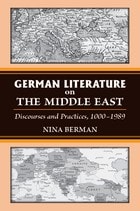
Jacket image: Map of Europe by Giovanni Magini, from his “Geography.” Venice, [1598]. From the University of Michigan Map Library.
Political Map of the World, April 2008. From the University of Texas Perry-Castañeda Library, Map Collection.
German Orientalisms
Todd Kontje
University of Michigan Press, 2004
-Russell Berman, Stanford University
"Intellectually rigorous and conceptually nuanced, Todd Kontje's German Orientalisms is a valuable contribution to the debate on identity politics in German cultural history. Through an erudite and insightful analysis of the German fictions of a broadly defined 'Orient' from the Middle Ages to the present, Kontje illustrates how German literature situated itself within a 'symbolic geography,' whose coordinates are defined by both its representations of the Orient and its affiliation with the Occident. German Orientalisms offers not only an admirable synthesis of the scholarship on German linguistic and cultural nationalism but also sophisticated interpretive strategies for a better understanding of our perceptions and misconceptions of alterity."
-Azade Seyhan, Bryn Mawr College
"This is a fascinating topic, and the book opens new scholarly vistas. In an age of increased specialization, Kontje takes a macro view, looking at German literature almost
from its beginnings to the present, from Wolfram to Özdamar. He also has the courage to link his well-researched work to topics like globalization, the culture wars, and canon formation. He doesn't merely proclaim literature's importance, he shows by example how the literary imagination-creative as it is, dodging dogmatism, and able to confound ideologies-can thrive in an era of cultural studies."
-Sara Friedrichsmeyer, University of Cincinnati
Todd Kontje's German Orientalisms offers a fresh examination of the role of the East in German literary imagination, ranging from the Middle Ages to the present. In its wide historical sweep, this book offers important new insights into many of the most famous writers in the German language, from Goethe to Thomas Mann to Günter Grass.
Building on Edward Said's Orientalism-which defined Orientalism as a form of Western knowledge directly linked to imperial power-Kontje offers a more nuanced version as seen through the lens of German literature of the last thousand years.
Said's focus was on British and French Orientalists-two nations with colonial interests in the East. Germany was different in that it had no stake in the Orient. Far from diminishing an Orientalist perspective, however, the absence of a German empire in the East produced a peculiarly German brand of Orientalism, one in which German writers alternated between identification with the rest of Europe and allying themselves with parts of the East against the West.
Above all, Kontje asks how German writers conceived of their place in "the land of the center" (das Land der Mitte) and how their literary works help to create the imagined community of the German nation.
German Writing, American Reading
Women and the Import of Fiction, 1866–1917Lynne Tatlock
The Ohio State University Press, 2012
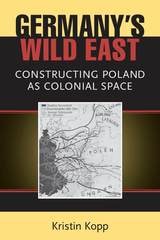
Germany's Wild East
Constructing Poland as Colonial SpaceKristin Kopp
University of Michigan Press, 2012
While conventional definitions locate colonial space overseas, Kristin Kopp argues that it was possible to understand both distant continents and adjacent Eastern Europe as parts of the same global periphery dependent upon Western European civilizing efforts. However, proximity to the source of aid translated to greater benefits for Eastern Europe than for more distant regions.