Results by title
260 books match the query 'Holocaust' and 4 start with g
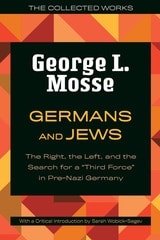
Germans and Jews
The Right, the Left, and the Search for a "Third Force" in Pre-Nazi GermanyGeorge L. Mosse
University of Wisconsin Press, 2023
This innovative perspective has implications for understanding not only the rise of fascism and Nazism in Germany but also the rise and fall of the New Left in the United States and Europe, which was occurring at the time of Mosse’s writing. A new critical introduction by Sarah Wobick-Segev, research associate at the University of Hamburg, places Mosse’s work in its historical and intellectual contexts and draws lessons for students and scholars today.
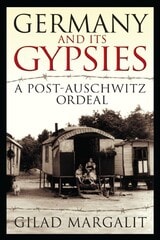
Germany and Its Gypsies
A Post-Auschwitz OrdealGilad Margalit
University of Wisconsin Press, 2002
Historian Gilad Margalit eloquently fills a tragic gap in the historical record with this sweeping examination of the plight of Gypsies in Germany before, during, and since the era of the Third Reich.
Germany and Its Gypsies reveals the painful record of the official treatment of the German Gypsies, a people whose future, in the shadow of Auschwitz, remains uncertain. Margalit follows the story from the heightened racism of the nineteenth century to the National Socialist genocidal policies that resulted in the murder of most German Gypsies, from the shifting attitudes in the two Germanys in 1945 through reunification and up to the present day.
Drawing upon a rich variety of sources, Margalit considers the pivotal historic events, legal arguments, debates, and changing attitudes toward the status of the German Gypsies and shines a vitally important light upon the issue of ethnic groups and their victimization in society. The result is a powerful and unforgettable testament.

Ghetto Kingdom
Tales of the Lodz GhettoIsaiah Spiegel
Northwestern University Press, 1998
The stories examine the relationship between inmates and their families, their friends, their Christian former neighbors, the German soldiers, and, ultimately, the world of hopelessness and desperation that surrounded them. In using his creative powers to transform the suffering and death of his people into stories that preserve their memory, Spiegel succeeds in affirming the humanity and dignity the Germans were so intent on destroying.
Originally published as Malchut geto (Malkhes geto) in Yiddish.
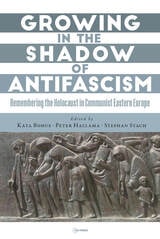
Growing in the Shadow of Antifascism
Remembering the Holocaust in State-Socialist Eastern EuropeKata Bohus
Central European University Press, 2022
Reined into the service of the Cold War confrontation, antifascist ideology overshadowed the narrative about the Holocaust in the communist states of Eastern Europe. This led to the Western notion that in the Soviet Bloc there was a systematic suppression of the memory of the mass murder of European Jews. Going beyond disputing the mistaken opposition between “communist falsification” of history and the “repressed authentic” interpretation of the Jewish catastrophe, this work presents and analyzes the ways as the Holocaust was conceptualized in the Soviet-ruled parts of Europe.
The authors provide various interpretations of the relationship between antifascism and Holocaust memory in the communist countries, arguing that the predominance of an antifascist agenda and the acknowledgment of the Jewish catastrophe were far from mutually exclusive. The interactions included acts of negotiation, cross-referencing, and borrowing. Detailed case studies describe how both individuals and institutions were able to use anti-fascism as a framework to test and widen the boundaries for discussion of the Nazi genocide. The studies build on the new historiography of communism, focusing on everyday life and individual agency, revealing the formation of a great variety of concrete, local memory practices.